International Organizational Behavior: Chapter 5 Page 1
CHAPTER 5
EFFECTIVE LEADERSHIP IN A MULTICULTURAL
ENVIRONMENT
CHAPTER INTRODUCTION
All of the great leaders have had one characteristic in common: it was the willingness to
confront unequivocally the major anxiety of their people in their time. This, and not much
else, is the essence of leadership.
—John Kenneth Galbraith
Fortunately, since the mid-2000s, attention to cultural influences on leadership behavior has
expanded greatly. This attention might be at the most opportune time. The impact of
globalization on world economies, and all that comes with it (e.g., demographic patterns, flows
of capital and goods, expanding supply chains), presents daunting challenges for today’s leaders.
Whether it is coordinating virtual teams from 10,000 miles away, to leading a foreign subsidiary
as an expatriate, to running a multicultural department in their home countries, it is tough to be a
International Organizational Behavior: Chapter 5 Page 2
CHAPTER REVIEW OUTLINE
EFFECTIVE LEADERSHIP IN AN INTERNATIONAL CONTEXT
Do managers behave differently across cultures in leadership roles? Do certain situations require
similar leadership behaviors, regardless of culture? Can corporate culture override or weaken
other cross-cultural effects with respect to leadership? Leaders help set things in motion in their
organizations—they guide the development of the firm’s vision and they enable employees to
accomplish goals that lead to achievement of that vision. Yet, what “leadership” means in
I. Leader Behavior across Cultures and Time
Leadership concepts, values, and styles continue to evolve around the world—especially in
global business circles. Leaders cannot assume that what was a valued leader attribute 20
A. How Do Leaders Behave?
A common distinction drawn by Western researchers is that two basic types of leader
behavior exist. Leaders engage in task-oriented behavior when they work to clarify
International Organizational Behavior: Chapter 5 Page 3
general agreement on these two main forms of leader actions, which type of behavior
produces the best performance?
Leaders in collectivistic cultures (e.g., Chile) may tend to use relationship-oriented
behaviors more than leaders in individualistic cultures (e.g., Australia).When
B. Alternative Views of Leader Behavior
Non-Western experts have proposed interesting alternatives to simplistic distinctions
between task- and relationship-oriented leader behaviors. Take India as an example—it
presents a challenging leadership environment. In the Culture Clash feature, what might
be an emerging, indigenous leadership style, done the Indian way, is described.
Combining everything into two behavioral dimensions can mask important cross-cultural
differences. A “paternalistic version” of relationship-oriented behavior may produce
positive reactions from employees in places like India, the Middle East, and parts of Latin
America. Consequently, international managers may get themselves into trouble if they
limit leadership to Western versions of task-oriented and relationship-oriented behaviors.
C. Culture and the Impact of Leader Behavior
International Organizational Behavior: Chapter 5 Page 4
According to experts testing Likert’s “System 4” model, there are leader behaviors that
produce the same positive effects across cultural contexts. Likert argued that there are
four basic systems of leadership.
1. In an exploitative authoritative organization (System 1), decision-making is reserved
by upper management, communication is top-down, and punishments are used to
motivate.
Likert suggested that all companies should move toward the more participative
approaches (Systems 3 and 4) because those tend to result in better employee
performance and morale. This suggestion is supported by research by scholars studying
American companies. Participative approaches appear to be a good match for low power
distance cultures such as the U.S. Would a paternalistic, autocratic leadership approach
fit better, and result in more productive workers, in a high power distance culture? The
International Organizational Behavior: Chapter 5 Page 5
D. Aligning leadership behavior with the cultural context
Global managers may need to alter and adapt their leadership style to expectations in
II. Transformational Leadership: Does It Work across Cultures?
In this section we consider transformational leadership, a recent and increasing popular
perspective in the U.S. A transformational leader is said to be able to galvanize employees,
even turning poorly performing companies into winners in a relatively short time. This
happens when the transformational leader creates an emotional bond with employees—
something that inspires intense loyalty and outstanding performance. This bond is the result
of four features about a leader:
1. Charisma arouses intense emotions among followers based on faith in and identification with
the leader.
A large-scale study of leadership and its effects in many different countries found that
behaviors associated with transformational leaders—such as charisma, confidence, and
trust—are widely accepted as key leader attributes. It is important to note that this finding
cuts across cultures widely viewed as very different, including some in Asia and the West.
International Organizational Behavior: Chapter 5 Page 6
to be one of the benefits of transformational leadership—something that does not
seem to be the case in the Middle East or India.
• Research suggests that, regardless of the type of positive impacts, they are driven by
• Other research suggests that the behavior of transformational leaders can actually
have negative effects on innovation in an international management context, as it did
III. Cross-Cultural Leadership Effectiveness: Pulling Everything Together
International managers are busy people who already have a tougher road to travel than
domestic managers. So, while they may appreciate the processes by which effective
A. The GLOBE Approach
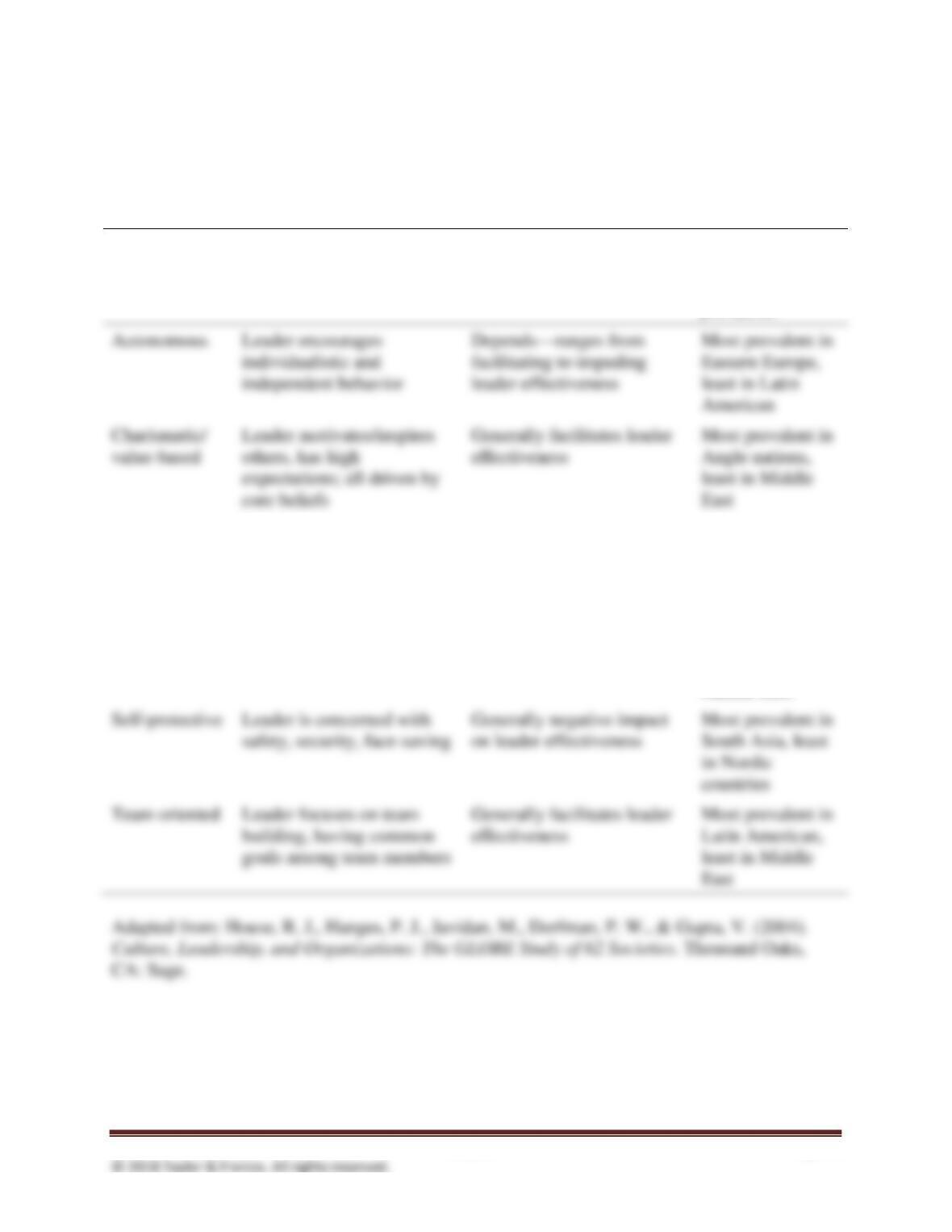
The GLOBE project uncovered six basic leadership dimensions, pinpointed because they
are potential drivers of leadership effectiveness. The study also suggested where these
B. The Path–Goal Leadership Approach
The path–goal leadership approach is one that is arguably the most prescriptive of all,
and one that has been tailored to include cultural variables. It predicts that leadership
effectiveness is contingent on matching leadership style to a particular business situation.
International Organizational Behavior: Chapter 5 Page 7
1. Directive. This is a common style that occurs when leaders provides clear
procedures and rules for subordinates to follow when doing their jobs.
A key prediction of the model is that leaders are most effective when they use the style
that best fits the demands of a particular situation. Several elements may shape which
style produces the highest motivation and performance among employees. Some experts
have factored consideration of cultural dimensions into the path–goal approach (see the
discussion of Hofstede in Chapter 2). These become other situational elements that
should be considered when adopting a more effective leader style.
IV. Leadership Development in Multinationals
The leadership challenges discussed in this chapter are daunting and add to an already
difficult job, as leaders are not always welcomed warmly or showered with positive feedback
International Organizational Behavior: Chapter 5 Page 8
Many multinationals undoubtedly hope that the increasing similarity of companies around
the world in terms of structure, technology, and strategy will weaken or overcome cross-
cultural differences and make their job a little easier. But these convergent forces may be
offset by factors that continue to maintain, or even accentuate, cultural differences. A safe
assumption is that a manager’s effectiveness will continue to depend, at least in part, on how
well he or she adapts approaches to the cultural circumstances.
Building a global workforce with a common set of values is very difficult. Simply working
for a multinational may accentuate local cultural values. Italians acted more “Italian” when
they worked for foreign firms than when they worked for an Italian one. Resistance is also
likely when multinationals push foreign employees to embrace corporate values that
explicitly conflict with local values.
V. Developing International Leadership Skills
International Organizational Behavior: Chapter 5 Page 9
Regardless of how they acquire it, international managers should have a perspective on
cultural issues that is not limited to a particular country or region. The continuing
globalization of business is increasing the variety of cross-cultural relationships with which
managers must contend. As a result, a country-based or regional set of experiences and skills
is insufficient over the long haul. Table 5.4 lists suggestions for leadership development
programs that could help close this suggested gap. Ultimately, managers need transnational
leadership skills to be effective, some examples of which are presented in Table 5.5.
CHAPTER SUMMARY
This chapter presented the challenge of leading across cultural boundaries. A key feature of this
review is that most leadership research was done by Americans, with all their accompanying
cultural baggage. If managers need to know which approaches and techniques work well
overseas, then what passes for common wisdom in the U.S. may be inappropriate in other
countries. A number of models and research findings that show how leadership behavior and
styles are effective (and expected) in the U.S. are suspect in their cross-cultural applicability.
What makes for effective leadership in an international context can vary in both quantitative and
qualitative ways.

International Organizational Behavior: Chapter 5 Page 10
concludes by examining cross-cultural leadership development from a multinational company
perspective. Multinationals need leaders with transnational skills throughout their ranks.
DISCUSSION QUESTIONS
1. How might a typical Western style of leadership differ from one used in Asia or the
Middle East?
• See Figure 5.2 for examples of leader attributes that are positive in most
places, negative in most places, and interpreted differently across cultures
2. What difficulties might managers encounter as they lead in another culture? What
problems might emerge when expatriate managers use their common leader style in a
foreign country?
• They may have problems altering and adapting their existing leadership style
to match expectations in specific countries.
3. Describe Likert’s System 4 approach. How can it explain why different leader
behaviors can have the same positive effects across cultures?
• See section I.C. above for a description of Likert’s System 4
International Organizational Behavior: Chapter 5 Page 11
4. How can corporations identify and develop managers with transnational leadership
skills?
• See Table 5.5
ADDITIONAL ACTIVITIES
DEVELOPING YOUR INTERNATIONAL CAREER – Thick as a BRIC: Leadership
Mindsets in the World Economic Powerhouses
BOXED FEATURES
CULTURE CLASH – Vineet Nayar: Changing the Leadership Culture, 1.2 Billion at a
Time
ADDITIONAL RESOURCES
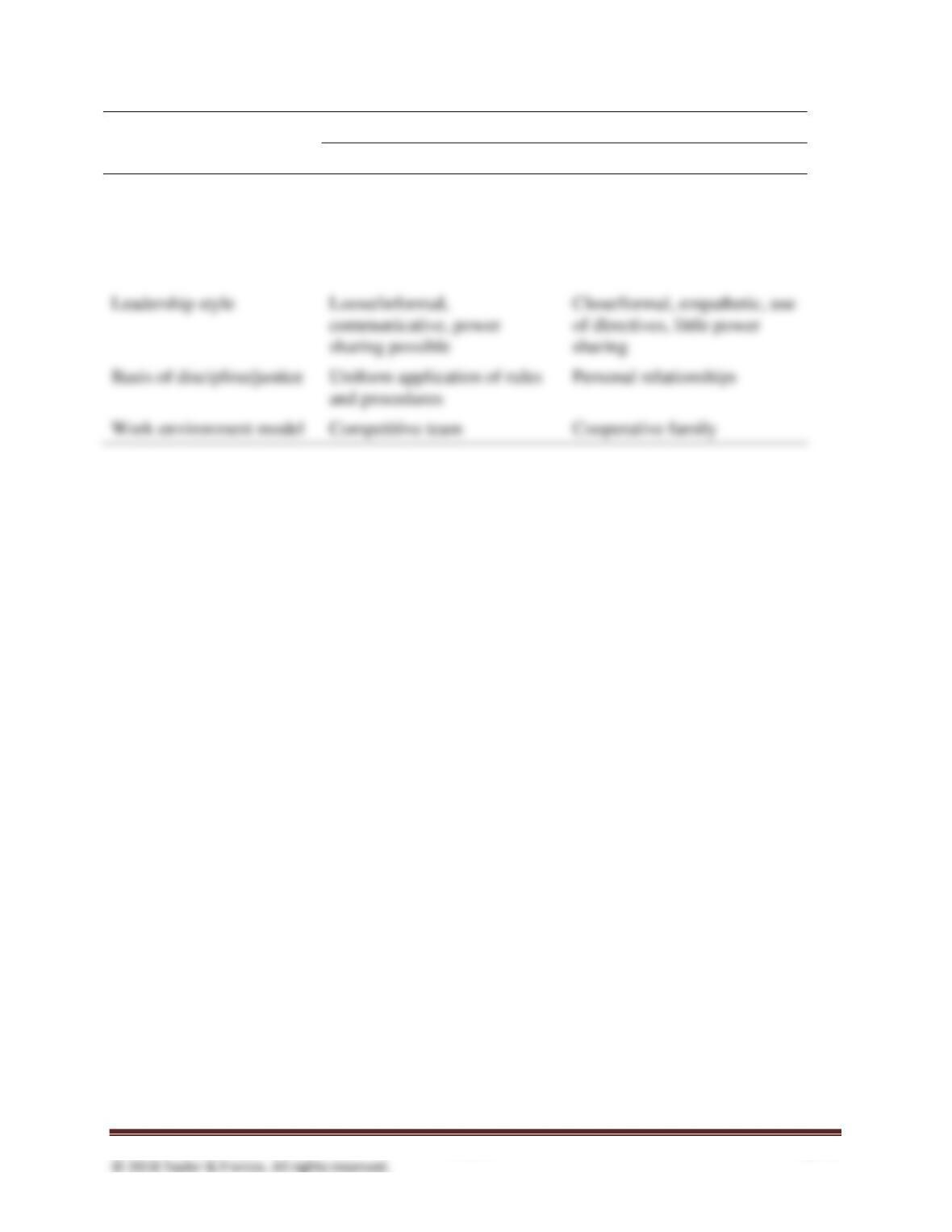
Table 5.1 Great Expectations: The Potential Gap between American and Mexican Managers
International Organizational Behavior: Chapter 5 Page 12
Leadership Issue
Management Expectations and Attitudes
American Managers
Mexican Managers
Valued subordinate
behaviors
Initiative, achievement, job
completion
Obedience, harmony
Key to subordinate
evaluation
Performance; meeting goals
Personal loyalty
communicative, power
sharing possible
of directives, little power
sharing
and procedures
Work environment model
Competitive team
Cooperative family
Adapted from: de Forest, M. E. (1994). Thinking of a plant in Mexico? Academy of Management
Executive, 8, 33–40.
International Organizational Behavior: Chapter 5 Page 13
Table 5.2 Leader Behavior Dimensions: Effectiveness and Prevalence across Cultural
Boundaries
Leader
behavior
dimension
Description of dimension
Dimension effective across
countries/cultures?
Where is
dimension
most/least
American
Charismatic/
value-based
Leader motivates/inspires
others, has high
expectations; all driven by
core beliefs
Generally facilitates leader
effectiveness
Most prevalent in
Anglo nations,
least in Middle
East
Humane
orientation
Leader is supportive,
generous, considerate,
compassionate
Modestly facilitates leader
effectiveness, but has little
impact in some places
Most prevalent in
South Asia, least
in Nordic
countries
Participative
Leader involves others in
making decisions
Generally positive impact
on leader effectiveness, but
considerable variation
Most prevalent in
Germanic
countries, least in
Middle East
Self-protective
Leader is concerned with
safety, security, face-saving
Generally negative impact
on leader effectiveness
Most prevalent in
South Asia, least
in Nordic
countries
Team oriented
Leader focuses on team
building, having common
goals among team members
Generally facilitates leader
effectiveness
Most prevalent in
Latin American,
least in Middle
East
International Organizational Behavior: Chapter 5 Page 14
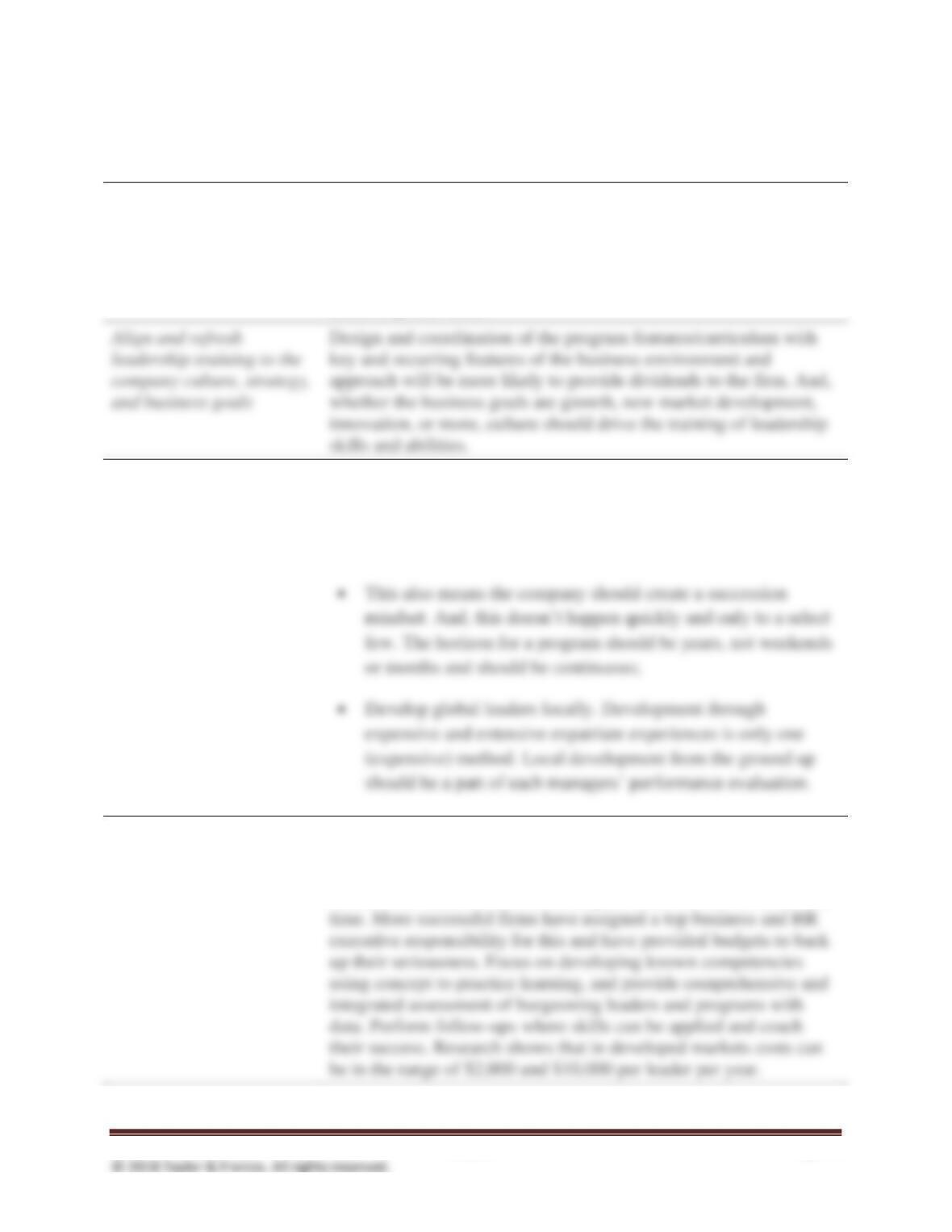
Table 5.3 Adding Cultural Contingencies to Path–Goal Theory: Identifying Compatible
Leadership Styles
Culture Dimension
Country
Example
Most Compatible Leadership Style
Directive
Supportive
Participative
Achievement
Large PD
France
X
Moderate PD
U.S.
X
X
Small PD
Sweden
X
Individualism–
Collectivism
Collectivist
Taiwan
X
X
Individualist
Denmark
X
Moderate
Argentina
X
Avoidance
Strong UA
Greece
X
Weak UA
England
X
X
Moderate
UA
Germany
X
X
International Organizational Behavior: Chapter 5 Page 15
Table 5.4 Some Hard Truths about Soft Skills: Suggestions for Building a Global
Leadership Pipeline
Get the CEO/top
executives’ commitment
(and other ‘champions’)
for the program
This will go a long way toward the success of any program, but
especially one that doesn’t appear clearly on an income statement.
Plus, many should recognize the value of leadership skills and
might wish to be directly involved in addressing the leader gap.
Ideally, actual involvement by executives in the training would add
credibility and value.
and business goals
whether the business goals are growth, new market development,
innovation, or more, culture should drive the training of leadership
skills and abilities.
Focus on key aspects of
developing leaders
• Develop leaders at all levels of the organization. This not only
trains for the long run, but is a recognition that companies are
‘run’ (they carry out strategy at the tactical level, make the
products and manage others that do too, so invest in them);
Implement an effective
leadership program
As suggested just above, companies need indigenous leadership
programs—ones that fit their needs/culture but also ones that
include methods shown by research to be effective, including many
of the above features. These can require a fair amount of funds and

International Organizational Behavior: Chapter 5 Page 16
International Organizational Behavior: Chapter 5 Page 17
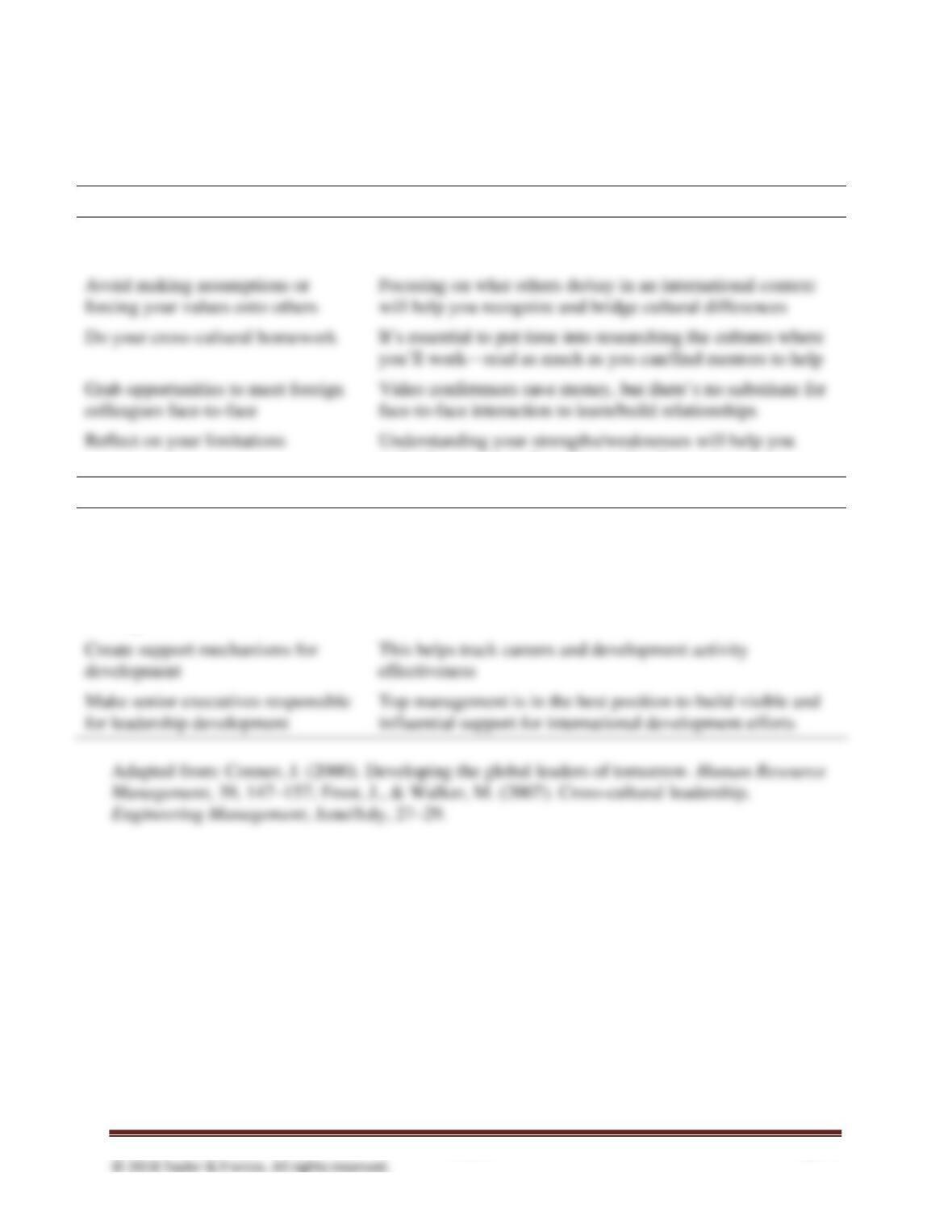
Table 5.5 Comparing Transnational and Traditional Skills for International Managers
Skill/Development
Area
A “Transnational” Manager …
A “Traditional” International
Manager …
World view
Understands the business
environment from a global
perspective
Focuses on managing relationships
between headquarters and a single
foreign country
Culture knowledge
Learns about a variety of cultures
Becomes an expert on a single
culture
integrates foreigners into parent
firm culture
Ability to adapt
Able to transition effectively to
living in a variety of foreign
cultures
Able to adapt to living in a single
foreign culture
Cross-cultural
interaction
Uses cross-cultural interaction skills
daily
Uses cross-cultural interaction skills
mainly on foreign assignments
Collaboration
Interacts with foreign managers as
equals
Interacts within defined hierarchies
of cultural and structural dominance
for career development
mechanism for getting a job done
International Organizational Behavior: Chapter 5 Page 18
Table 5.6 Individual and Corporate Suggestions for Developing Transnational Leadership
Skills
Suggestions for Individuals
Description/Explanation
Be open to new global experiences
both emotionally and intellectually
Key skill to develop is tolerance for ambiguity; treat
international experiences as learning opportunities
Avoid making assumptions or
forcing your values onto others
Focusing on what others do/say in an international context
will help you recognize and bridge cultural differences
Do your cross-cultural homework
Grab opportunities to meet foreign
colleagues face-to-face
Reflect on your limitations
Understanding your strengths/weaknesses will help you
make the most out of any international experience
Suggestions for Corporations
Description/Explanation
Emphasize overseas experience for
managers
Work experience is a key for developing international
managers
Make sure leadership development
and key human resource practices
are aligned
Building international skills into appraisal and promotion
processes reinforces the value of international development
Create support mechanisms for
development
This helps track careers and development activity
effectiveness
Make senior executives responsible
for leadership development
Top management is in the best position to build visible and
influential support for international development efforts