International Organizational Behavior2e Chapter 4 Page 1
CHAPTER 4
MOTIVATING EMPLOYEES ACROSS CULTURE
AND BORDERS
CHAPTER INTRODUCTION
Character consists of what you do on the third and fourth tries.
—John Michener
As illustrated by these quotes, there are some wide differences in views about motivation. Some
people believe that motivation is really all about effort or persistence (Michener). Some believe
it has a lot to do with the ability to inspire others (Laird), while others believe that structure can
impede or foster inherently high motivation (Covey). There are people all over the globe
International Organizational Behavior2e Chapter 4 Page 2
CHAPTER REVIEW OUTLINE
MOTIVATION ACROSS BORDERS
Motivating across borders or cultural contexts complicates matters and makes motivation an
even bigger challenge. Western approaches to motivation typically reflect person-focused and
goal-driven beliefs—features that created and shaped those cultures in the first place. This may
severely limit their applicability in places that or with employees who embrace different values.
Many experts believe that features that produce motivated employees and how those employees
respond to direction and feedback along the way may vary dramatically on cultural lines.
To be effective, managers need to know which motivation strategy works best for their
employees and what sort of culture-specific adaptation might be required. Few cross-cultural
“universals” exist when it comes to motivation.
I. Western Motivation Concepts Applied to Other Cultures: Content-Based Theories
Content-based theories are outlooks that focus on the substance of employees’ thinking as the
key driver of motivation. Two examples of these content perspectives are Maslow’s
1. Description of the model
Abraham Maslow claimed that we are all motivated by five distinct needs organized
in a pyramid-like structure in our heads, and that we pursue them sequentially. At the
bottom of the pyramid are the most basic, physiological needs such as food and
2. Cross-cultural applicability
We might expect that the motivation to pursue higher-order needs (such as self-
actualization) could be strongest in developed countries since, by definition, people
are wealthier and have higher standards of living. Those in developing countries have
greater challenges with lower-order survival needs more prominent in their lives.
B. Herzberg’s Two-Factor Theory
1. Description of the model
Frederick Herzberg suggested that without a minimum level of so called hygiene
factors, such as good pay and working conditions, employees will be unhappy and
2. Cross-cultural applicability
While Herzberg’s ideas are interesting and thought-provoking, research has produced
mixed results. Different studies suggest that his ideas do not fit other cultures
precisely and may again work best in an American context. It is in this context that
efforts to increase individual opportunity and performance are often attractive to
Herzberg’s motivators may also face some cultural impediments in developing
countries such as Indonesia, India, and Pakistan. These countries tend to be
collectivist, high in uncertainty avoidance and power distance, and low in
masculinity. Workers who are more collective in their views may also react poorly to
efforts aimed at enriching jobs on an individual basis. When feminine values hold
Implementing enriched jobs that provide autonomy and opportunities for achievement
is likely to foster deeper motivation and commitment more quickly in places where
individualistic and masculine values are strong (e.g., the U.S.). It may be better to
improve working conditions and relations with workers if managers want to create a
motivated and committed workforce in places where collectivism (e.g., Japan) or
feminine values tend to hold sway (e.g., Sweden).
II. Process-Based Theories
A. Reinforcement Theory: Connecting Behavior and Rewards
The central idea behind reinforcement theory is that the best way to motivate is to
clearly link valued consequences to desired employee behaviors. For example,
managers such as those at Mary Kay (as discussed in the Culture Clash feature) can
International Organizational Behavior2e Chapter 4 Page 6
1. Culture, context, and reinforcement techniques
Managers need to know what employees value to use positive reinforcement
effectively. Culture and societal context makes this more challenging than it seems on
the surface. Culture may also affect how employees interpret feedback they receive
about their performance. While employees react more favorably to positive feedback
than to negative feedback, this pattern is more pronounced in collectivistic cultures.
Moreover, employees in individualistic cultures tend to respond more to
individualized performance feedback rather than group performance feedback, with
employees in collectivistic cultures being more responsive to group-based feedback.
B. Expectancy Theory: Tying Goals to Rewards
The expectancy approach assumes that three factors determine employee effort in a given
situation:
• Employees must believe that working hard will result in good performance.
• Employees must believe rewards are forthcoming in response to good performance.
1. Cultural assumptions of expectancy theory
International Organizational Behavior2e Chapter 4 Page 7
These cultural differences help explain why the “outrage threshold” for executive
compensation is generally lower in Europe than in the U.S. The issue of excesses in
executive pay packages is much more salient in the minds of most Europeans. These
differences might affect the second key element of expectancy theory—the belief that
rewards should be tied to good performance. As an example, European executives in
major firms earn only about 40% of what their American counterparts take home.
C. Equity Theory: You Should Get What You Deserve
Equity theory proposes that if employees perceive that they have been treated unjustly,
they are motivated to restore a sense of fairness. This happens when employees compare
1. Applying equity concepts across cultures
How different cultures define, interpret, and assess fairness can vary considerably,
often in ways that are not well understood. Moreover, national culture is not the only
factor impacting employee views about equity. The corporate context (e.g., firm
International Organizational Behavior2e Chapter 4 Page 8
Chinese employees working for international joint ventures involving Western firms
were increasingly accepting of company norms that distributed rewards based on their
performance. This contradicts the fact that distributing rewards more equally among
workers would be more consistent with traditional Chinese values.
Multinational firms and managers sometimes forget that their approaches to
motivation reflect a particular combination of values not always shared by others.
Consequently, introducing those approaches in places where other norms hold sway
can be problematic, especially if companies have not taken steps to prepare
employees or to modify their approaches.
An alternative perspective emerging on equity theory in an international context is
that less focus should be given to broad fairness rules. Instead, we should concentrate
on understanding what goes into the mental equation employees “solve” when
judging fairness in different parts of the world. There may be fewer differences than
International Organizational Behavior2e Chapter 4 Page 9
understand and have similar views about broad norms like equity, how these are
What do these complex findings on an equity approach to motivation mean for
international managers? Managers should:
a. think through how their own cultural values might affect their use of equity
rules in doling out rewards; and
III. Conclusions about Motivation across Cultures
International managers would be well served to take culture and related factors into account
when designing and implementing motivation strategies for use abroad. This is a challenge,
especially since cultural values are constantly changing and managers may not recognize
A. Describe the motivation situation. How does the manager view the motivation issue(s)?
What perspectives do subordinates have? Purpose: to discover whether different
perspectives exist and whether they create conflict.
International Organizational Behavior2e Chapter 4 Page 10
CHAPTER SUMMARY
This chapter presents the challenge of understanding what motivates employees and management
across cultural boundaries. There are relatively few universal approaches when it comes to
motivation. Even if the underlying principles used are the same, how they are framed and
presented needs to reflect local values to be effective, at least to an extent. Something as
“simple” as feedback designed to reinforce good performance can have different effects when
applied elsewhere.
DISCUSSION QUESTIONS
1. What problems might a manager face when using the various motivation approaches
discussed in this chapter?
• Western approaches to motivation typically reflect person-focused and goal-
driven beliefs, and this may severely limit their applicability in places that or
with employees who embrace different values.
International Organizational Behavior2e Chapter 4 Page 11
2. What specific concerns might come up if managers were trying to motivate
employees from Spain, from Indonesia, or from Australia?
• Locate these three countries on Hofstede’s Culture Maps, since motivation is
3. What approaches should you consider in order to construct a culturally synergistic
approach to motivation? What difficulties might you encounter in trying to implement
those steps?
• Recommended approaches: see A–E under section III—Conclusions about
Motivation across Cultures
ADDITIONAL ACTIVITIES
DEVELOPING YOU INTERNATIONAL CAREER – How Are Your Cross-Cultural
Motivation Skills?
BOXED FEATURES
International Organizational Behavior2e Chapter 4 Page 12
ADDITIONAL RESOURCES
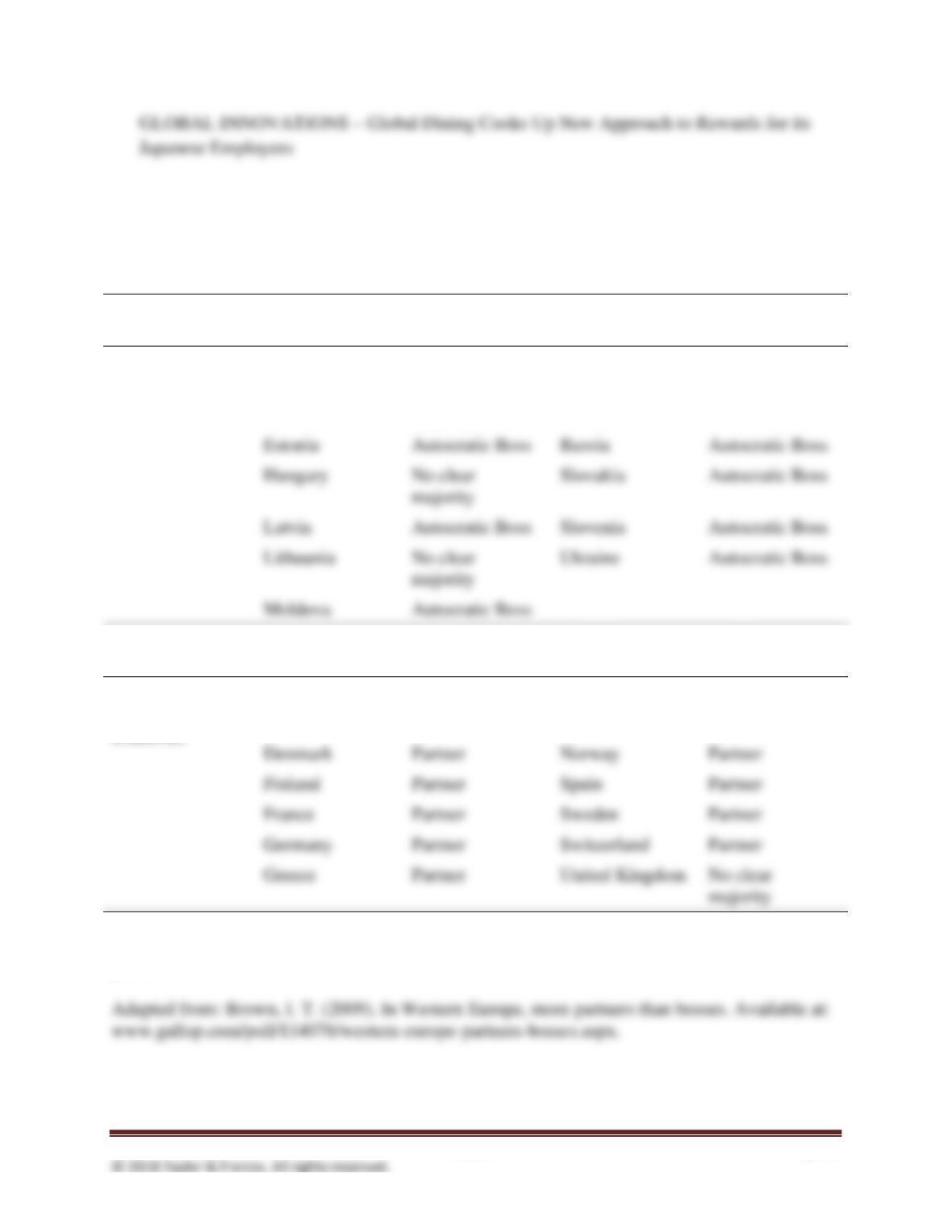
Table 4.1 Partner or Boss? How Employees in European Countries View their Supervisors
Country
View of
Supervisor
Country
View of
Supervisor
Eastern
European
Countries
Belarus
Autocratic Boss
Poland
Autocratic Boss
Czech Republic
No clear
majority
Romania
Partner
Estonia
Autocratic Boss
Russia
Autocratic Boss
Hungary
No clear
majority
Slovakia
Autocratic Boss
Latvia
Autocratic Boss
Slovenia
Autocratic Boss
majority
Moldova
Autocratic Boss
Country
View of
Supervisor
Country
View of
Supervisor
Western/Northern
European
Denmark
Partner
Norway
Partner
Finland
Partner
Spain
Partner
France
Partner
Sweden
Partner
Germany
Partner
Switzerland
Partner
Greece
Partner
United Kingdom
No clear
majority
Austria
Partner
Ireland
Partner
Belgium
Partner
Netherlands
Partner
Note: Classifications are based on the majority of respondents’ view of the supervisor as a
partner or boss.
International Organizational Behavior2e Chapter 4 Page 13
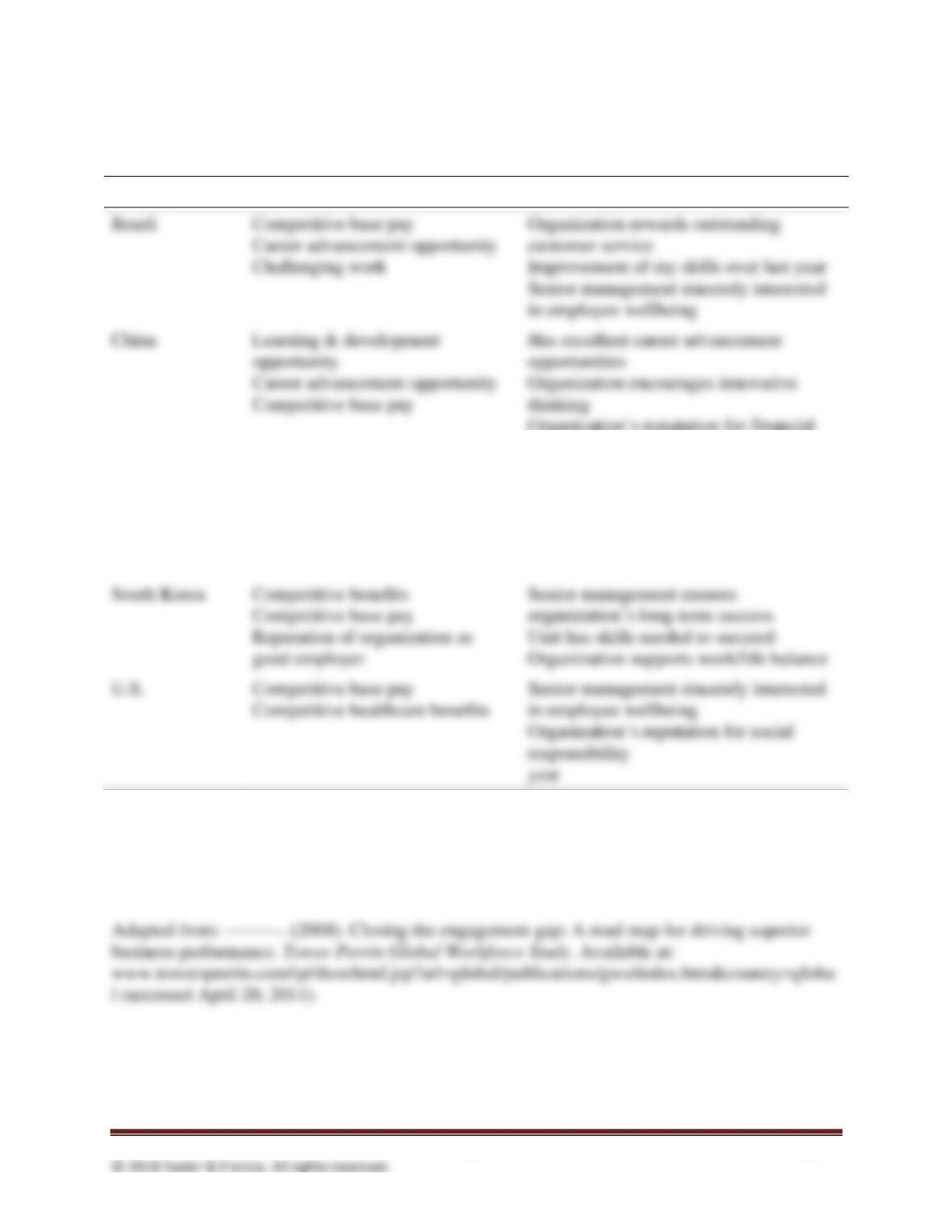
Table 4.2 What Drives Attraction to a Firm and Engages Employees Once They are There?
Country
Top 3 Attraction Drivers
Top 3 Engagement Drivers
in employee wellbeing
Competitive base pay
thinking
Organization’s reputation for financial
stability
India
Career advancement opportunity
Challenging work
Learning & development
opportunity
Input into decision making
Senior management actions consistent
with values
Organization’s reputation for social
responsibility
good employer
Organization supports work/life balance
U.S.
Competitive base pay
Competitive healthcare benefits
Senior management sincerely interested
in employee wellbeing
responsibility
year
Note: Results from an employee survey among nearly 90,000 employees in 18 countries, with
five example countries shown here. Attraction drivers refer to the things that bring a firm to an
employee’s attention or interest, whereas engagement drivers refer to things that get an employee
motivated once they join the firm. Items are presented in the order of average importance.