International Organizational Behavior 2e Chapter 3 Page 17
• several sides (two or more) are involved
I. Approaches to Negotiating
Because negotiation is so common in international business, it is a heavily researched
topic. Approaches can be classified into one of two well-established perspectives.
A. The macro strategic approach focuses on how negotiation outcomes are affected
by larger, strategic issues, such as the relative bargaining power of the parties
involved in the situation.
The accompanying Global Innovations box applies the low- and high-context
(LC/HC) concepts introduced earlier in this chapter to this important topic.
It is important to recognize that negotiation is a fairly elaborate process. A more
common, but incorrect, view of the essence of negotiation is that it is really all about
the jockeying back and forth across a conference table, the result being an agreement
II. International Negotiation: A Four-Stage Process
Many experts believe that negotiation involves a regular sequence of actions. And,
while there is professional disagreement about the number of stages involved and
what happens at each stage, one popular model divides the process into four main
phases.

International Organizational Behavior 2e Chapter 3 Page 18
A. Stage 1: Nontask sounding involves efforts to establish a rapport with one’s
business partner and to get to know them better. One important variable is the
amount of time spent on this stage. Interactions during this stage are not directly
B. Stage 2: Task-related exchange involves the task-related exchange of information.
Interactions here commonly entail an exchange of the parties’ needs and
preferences, and are often accompanied by clarification of background issues
relevant to the negotiation. Low-context negotiators (Americans) often give
C. Stage 3: Persuasion involves explicit attempts to modify each other’s positions.
To Americans, this is the most important step in the negotiating process, and one
that a lot of LC negotiators see at the heart of negotiation. In the persuasion stage,
an LC negotiator is now ready to “lay the cards on the table” (another sign that
this is where they believe the real negotiation takes place).
Consider the amount of time spent at this stage—LC negotiators expect to spend
much more time here than their HC counterparts. This may be one reason they
view the earlier stages as digressive and not of direct value. Other cultures, such

International Organizational Behavior 2e Chapter 3 Page 19
as the Japanese, take the time to sound each other out earlier, and therefore they
spend relatively less time engaging in the kind of overt persuasion that many
Americans are used to. In some cases, it just may not be necessary because of the
time spent earlier.
Table 3.8 presents some elements of what might be considered the stereotypic
American negotiating style. Many are relevant to the persuasion phase, but they
can also operate in the other stages. The prototypical American style is that of the
frontiersman or cowboy in the old West.
D. Stage 4: Agreement—negotiations result in an agreement being reached. In almost
all cultures, an agreement is only as good as the follow-through. All the
considerable time and effort invested in the previous three stages could be wasted
In HC cultures, negotiators hope that the ties that they spent so much time
building and strengthening in earlier stages of the process will now pay off. The
hope is that the general trust established in the nontask sounding stage will allow
a much more general agreement to be operational for each party. Table 3.9
presents a summary of common features observed across five sample countries in
the stages of negotiation and beyond.

International Organizational Behavior 2e Chapter 3 Page 20
general principles are probably worth abiding by to communicate effectively and
negotiate a lasting agreement.
CHAPTER SUMMARY
Understanding conflict is important and can head off its occurrence in cross-cultural business
settings; yet if it is so common, prevention itself will not suffice. We need ways to reduce
conflict once it does raise its head. There are many different styles that people in a number of
cultures use to deal with conflict issues once they arise. An important way to avoid, or at least
DISCUSSION QUESTIONS
1. List and briefly explain as many negative aspects to cross-cultural conflict as you can think
of. Can you also think of some positive impacts of conflict that might result from cultural
interaction?
2. How might each of the following characteristically deal with conflict? What is the typical
style of each, and what are the parts of the style that might rub the other cultures the wrong
way?
• Asians
3. What would you guess is the perceived order of importance of each of the four stages of
negotiation for the following?
• an American
• a Mexican

International Organizational Behavior 2e Chapter 3 Page 21
• a Saudi
See Tables 3.5 and 3.6
4. If you have traveled to a foreign country, try to determine the typical style in that country—
what stages might be emphasized there?
CHAPTER ACTIVITIES
DEVELOPING YOUR INTERNATIONAL CAREER – Researching a Foreign
Language
MAKING THE CASE FOR INTERNATIONAL UNDERSTANDING – Conflict
Crosses the Border: Negotiations between Mexicans and Americans
BOXED FEATURE
ADDITIONAL RESOURCES
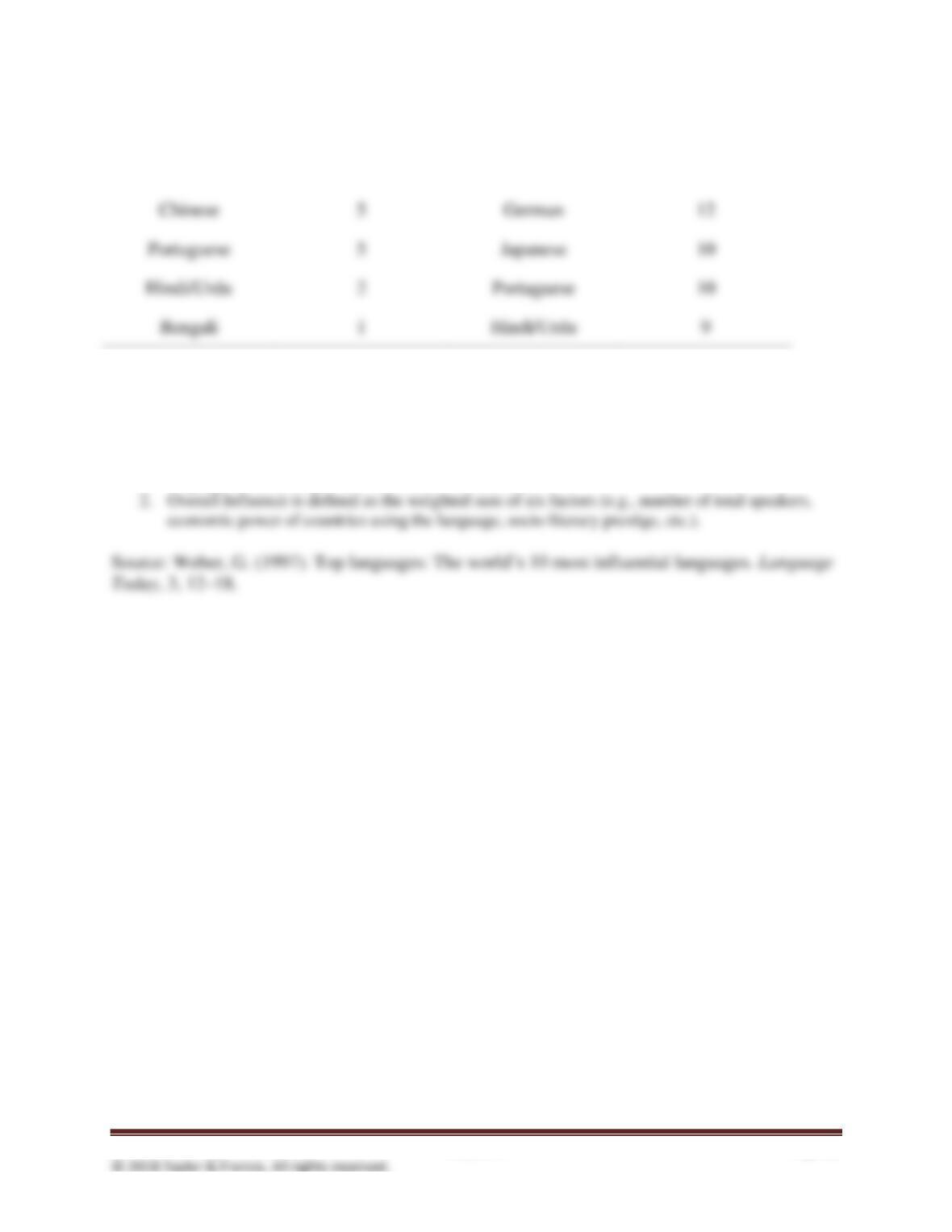
Table 3.1 Indices of Global Language Influence
Language
Number of
Countries in Which
Language was
Spoken
Language
Overall Influence of
Language
English
115
English
37
French
35
French
23
Arabic
24
20
International Organizational Behavior 2e Chapter 3 Page 22
Russian
16
Arabic
14
German
9
Chinese
13
Chinese
5
German
12
5
10
2
10
Bengali
1
9
Notes:
1. Number of countries includes core countries (language has full legal/official status), outer core
countries (some legal or official status and is influential minority language—such as English in
India), and fringe countries (no legal status, but influential in trade, tourism, and preferred
language of the young—such as French in Romania).

International Organizational Behavior 2e Chapter 3 Page 23
Table 3.2 How to Say “No” in Japanese
Phrase That Really Means No
A Common but Incorrect American Interpretation
“That would be very hard to do.”
Some adjustments are needed, but the deal is still
possible.
“It is very difficult.”
The matter is difficult but not impossible.
“I will consider it.”
The issue is under consideration for future use.
“We shall make efforts.”
Energy will be put into exploring options.
Silence/delay in response
The other party is thinking about the topic or they
are offended by our message; time is being wasted.
“I’ll think about it.”
The issue is still alive and under consideration.
“Yes, but …”
Conditional agreement
International Organizational Behavior 2e Chapter 3 Page 24
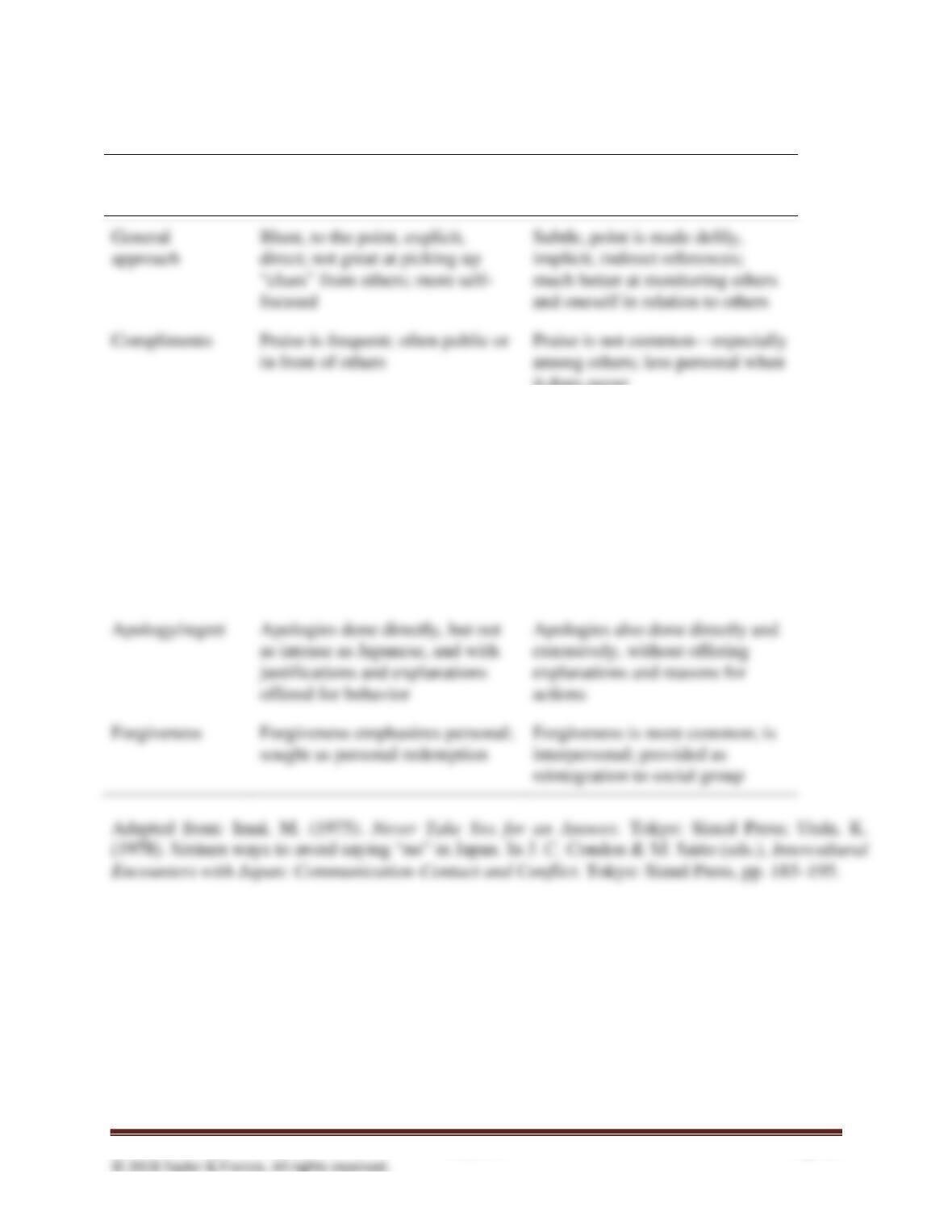
Table 3.3 Differences in the Approach to Common Communication Issues
Communication
Dimension
American (Individualistic)
Japanese (Collectivistic)
General
approach
Blunt, to the point, explicit,
direct; not great at picking up
focused
Subtle, point is made deftly,
implicit, indirect references;
much better at monitoring others
and oneself in relation to others
it does occur
Criticism
More direct criticism; directed at
individuals, occasionally with
anger but also constructive
suggestions
Passive criticism (reference to
third parties), ambiguous causal
statements
Embarrassment
More likely to involve out-group
members (acquaintances, friends
of friends, strangers); temporary
awkwardness
Involves in-group interactions
(with family, friends, coworkers);
more likely to feel longer lasting
shame
Forgiveness
Forgiveness emphasizes personal;
sought as personal redemption
Forgiveness is more common; is
interpersonal; provided as
reintegration to social group
International Organizational Behavior 2e Chapter 3 Page 25
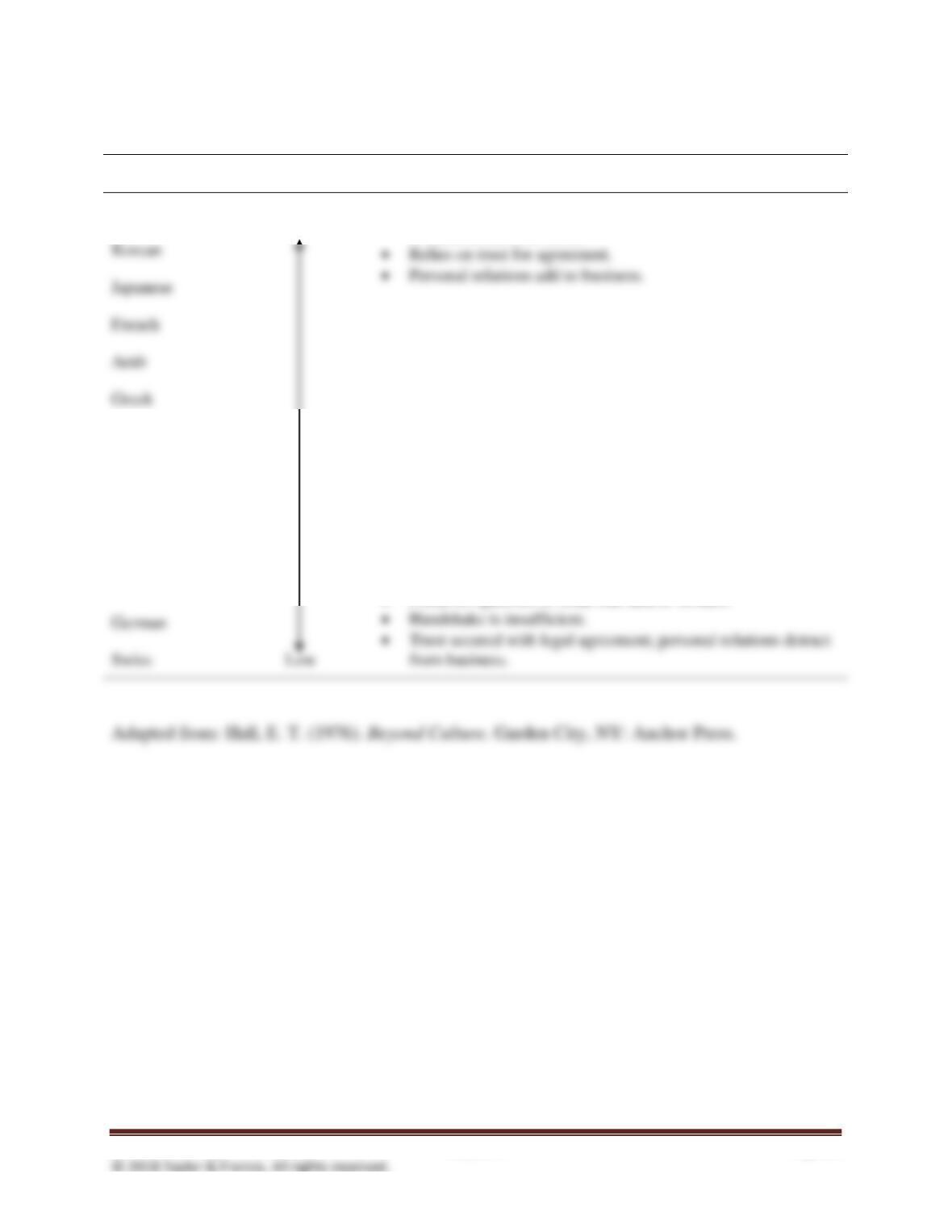
Table 3.4 Comparing High- and Low-Context Cultures
Culture Example
Context
Chinese
High
• What is unsaid but understood carries more weight than
written/verbal comments.
Korean
Japanese
French
Arab
Greek
Spanish
Italian
German
Swiss
British
American
Scandinavian

International Organizational Behavior 2e Chapter 3 Page 26
Table 3.5 The Road to Conflict is Paved with Misinterpretation: A Conversation between a
Greek and an American
Words Spoken
Perception/Interpretation by Each Party
American:
How long will it take you to
finish the report?
American:
I asked him to participate.
Greek:
His behavior makes no sense.
He is the boss. Why doesn’t
he tell me?
Greek:
I don’t know. How long
should it take?
American:
He has refused to take
responsibility.
Greek:
I asked him for an order.
American:
You are in the best position to
analyze the time requirements.
American:
I press him to take
responsibility for his actions.
Greek:
What nonsense—I’d better
give him an answer.
Greek:
Ten days.
American:
He lacks the ability to estimate
his time; this estimate is
totally inadequate.
American:
Take 15. Is it agreed? You will
do it in 15 days?
American:
I offer a contract.
These are my orders: 15 days.
International Organizational Behavior 2e Chapter 3 Page 27
Table 3.6 Examples of Differences in Approaches to Conflict in Five Different Countries
Views of
Conflict
Country
China
Germany
Japan
Saudi Arabia
U.S.
Avoid
conflict?
Yes
No
Yes
Yes/No
No
related
Use of Third
party/
mediation
Preferred (but a
familiar
mediator)
Not first
choice, but as
a way to break
deadlock
Can be used, but
not common
Yes; go-
between can
often smooth
relations and
air difficulties
Not first
choice/but
when used,
mediator
unfamiliar with
parties to
conflict
Face saving
tendency?
High
Low
High
High
Low

International Organizational Behavior 2e Chapter 3 Page 28
Table 3.7 Behavior in the Stages of Negotiation: Differences across Low- and High-Context
Cultures
Stage of
Negotiation
Low-Context Culture
High-Context Culture
Stage 1:
Nontask
sounding
• Briefly exchange social niceties
• Will get to the point (i.e., stage 3)
quickly
• Not especially concerned with status
of other group
• Will want to know all about you and
your company
• Long presentations, meetings in order
to get to know you
• Give careful attention to age, rank,
Stage 3:
Persuasion
• Argumentative
• The most important stage
• “To the point” negotiating style
• Cost-benefit approach; face saving
not very important
• Declarative
• The least important stage
• More guarded style
• Face saving very important
International Organizational Behavior 2e Chapter 3 Page 29
Table 3.8 Some Elements of the Stereotypic American Negotiating Style
American Style
Prescriptions for Use in Other Countries
1. Just call me John: Americans downplay
status and titles, as well as other formalities
like lengthy introductions.
1. Follow local customs: Our informality is
simply out of place in most other cultures;
foreign clients are more comfortable when we
follow their customs.
down to business.
other party is important in many countries.
3. Lay your cards on the table: We expect
honest information at the bargaining table
(“You tell me what you want and I’ll tell you
what I want”).
3. Hold something back: Foreign executives
seldom lay everything on the table; the
negotiating process is expected to take time
with concessions made along the way.
4. Don’t just sit there, speak up: Americans
don’t deal well with silence: we get into
trouble by feeling pressured to fill in silence
with possible concessions.
4. Silence can be a powerful negotiating
tool: Consider its use, but also be aware of its
use against you.
5. Don’t take no for an answer: We are
taught to be persistent and not to give up;
negotiation is mostly persuasion.
5. Minds are often changed behind the
questions; take a recess; try a more subtle
approach.
6. One thing at a time: Americans approach a
negotiating task sequentially (“Let’s settle the
quantity issue first, and then discuss price”).
6. Postpone concessions: Until you’ve had a
chance to get all issues on the table; don’t
measure progress by the number of issues that
have been settled.
International Organizational Behavior 2e Chapter 3 Page 30
Table 3.9 Examples of Differences in Negotiating Features in Five Different Countries
Element of
Negotiation
Country
China
Germany
Japan
Saudi Arabia
U.S.
Pretask
sounding
(rapport)
Extensive time
period in this
stage; very
useful for
progress in
latter stages
Short time
period; little
weight
placed on
this stage;
time is of
Exchange
Arguments
presented, but
Presentation
of logical
Extensive;
emphasis on
Less emphasis
on technical
Systematic and
large volume;
Extensive time
period; rely on this
information in
latter stages
Long period;
until trust
established;
hospitable and
gracious; status
important
Very short; little
weight; can be
bothered by
length of this
stage
proposal
stinks
elements
Close
approach
Decisions
made outside
of negotiation
room
Don’t
concede
easily; look
for common
ground
Flexibility more
evident between
meetings; won’t be
rushed; team
consensus
Team makes
recommendation
to senior
manager
Flexibility, as
reps often
provided with on
the spot
discretion over
negotiations
Post
agreement
Look to satisfy
general
mutual interest
Stick to
what they
details
important
Expect both parties
to live up to spirit
agreement
Personal
relationships are
success
Expect to live by
specific
conditions and
requirements on
both sides
Typical
Larger
Small
Teams often
membership can
Small to
Small team

International Organizational Behavior 2e Chapter 3 Page 31