Chapter 16
Additional Topics in International Capital
Budgeting
QUESTIONS
1. Why should the required rate of return for a capital budgeting problem be project specific?
Doesn’t the firm just have to satisfy an overall cost-of-capital requirement?
2. What is the conceptual foundation of the flow-to-equity approach to capital budgeting?
3. What is the weighted average cost of capital?
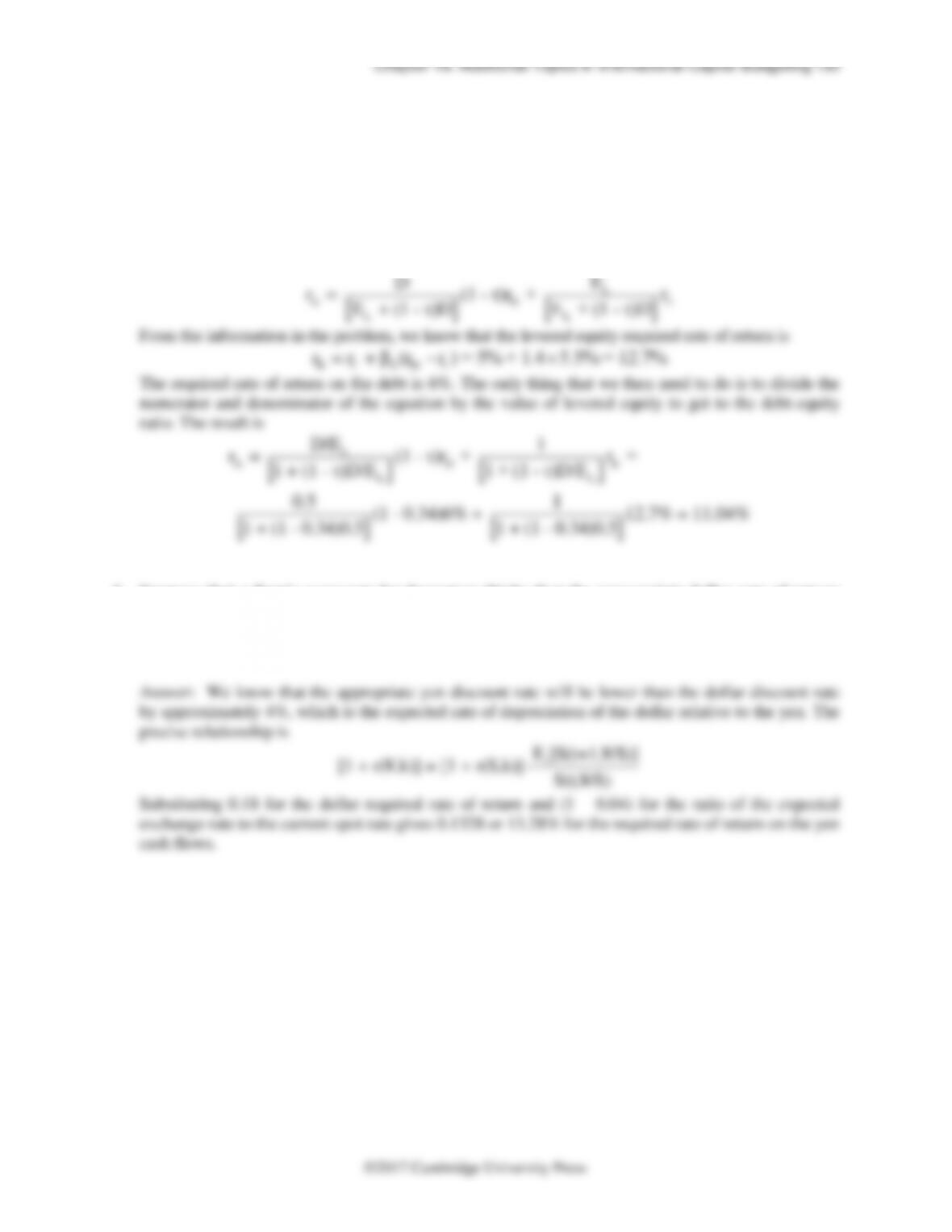
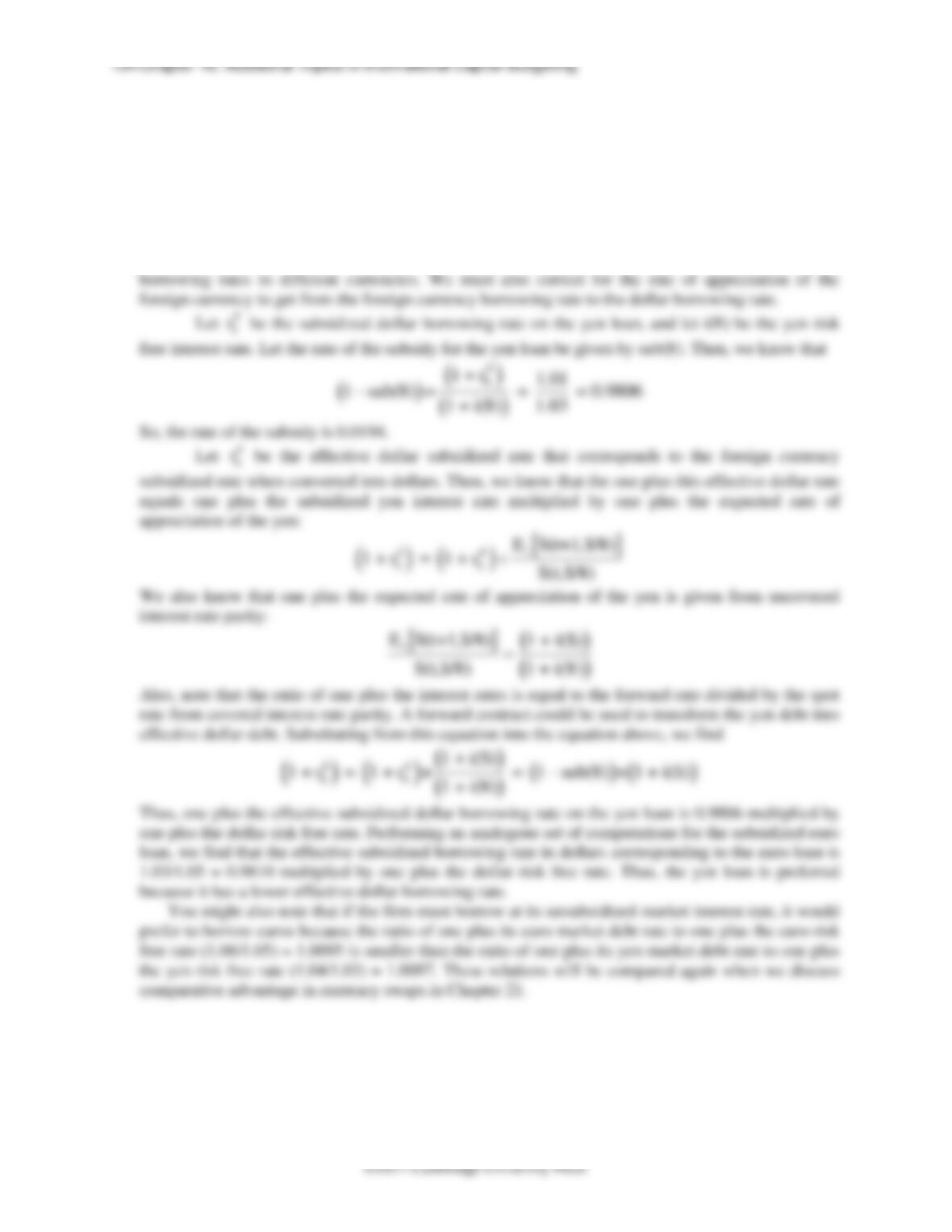
Answer: The weighted average cost of capital (WACC) approach to capital budgeting involves
forecasting the all-equity free cash flows of the firm and then finding the value of the levered firm by
Chapter 16: Additional Topics in International Capital Budgeting
136
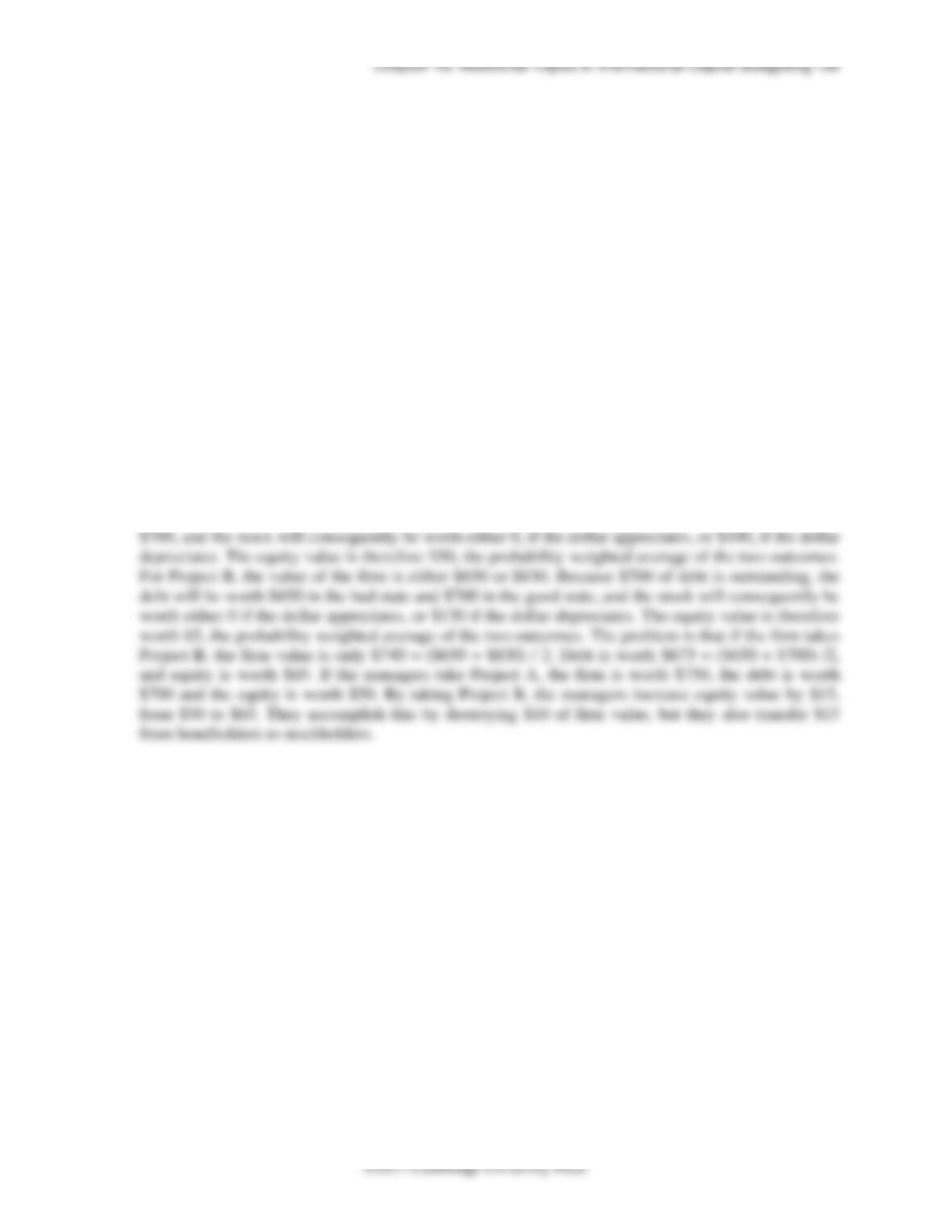
If the managers are acting in the interests of the shareholders, will they accept this project?
Why or why not?
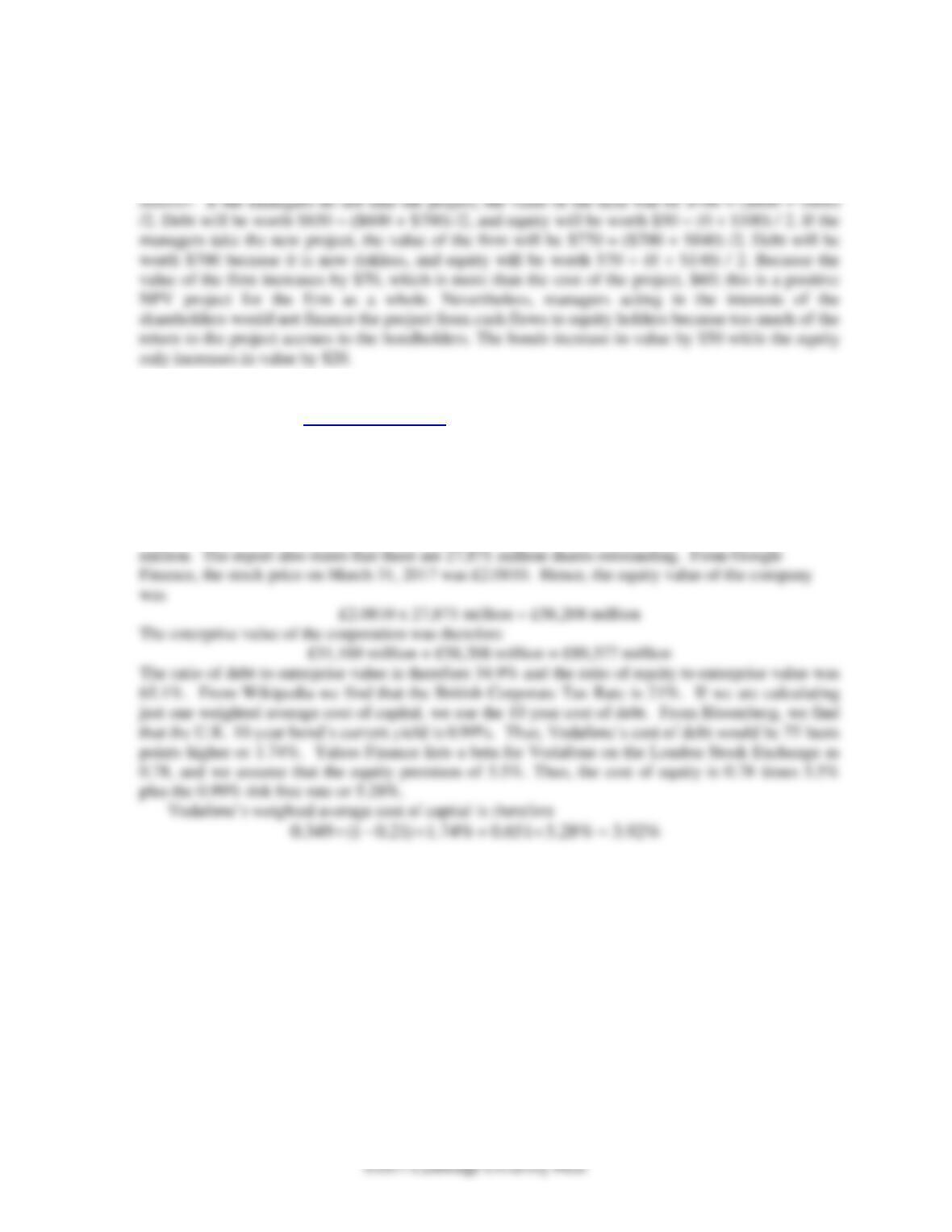
8. Web Question: Go to www.vodafone.com and determine the outstanding amounts of debt and
equity. If the required rate of return on its debt is 75 basis points over the 10-year U.K.
Treasury yield, and the equity premium is 5.5%, what is Vodafone’s weighted average cost of
capital? Hint: Don’t forget to find the U.K. tax rate.
From Vodafone’s Web site, we find the document Vodafone Group Plc Results, which has a
Consolidated Statement of Financial Position for March 31, 2017, listing long-term debt as £31,169