Chapter 1: ACTIVITIES: Culture in Business Context
CASE: Walmart Germany
See Teacher Notes
ACTIVITY: Paddle Sports
PaddleSports
Adapted from Jason Moehring Exercise, from Summer Institute for Intercultural Communication, 2011.
Objectives:
• Creation of an immediate challenge for savvy corporate participants.
• Group generation of context around global leadership competencies (inductive approach).
• A means of identifying personal weaknesses and strengths in knowledge and competencies.
Step 1: Scenario
Let’s start with a global leadership challenge that is small in scale and see what we can discover.
You have a handout in front of you that describes the business situation and objectives but I’ll
lay it out verbally first so you can ask any clarifying questions.
Case: You have been assigned to lead a virtual team to launch a new product line into select
markets. PaddleSports has designed a new series of consumer ping pong tables. The
manufacturing processes and design elements will give PaddleSports an opportunity to leapfrog
Again, you are identifying the most important issues and challenges that you and the team will
encounter. You will have 15 minutes. Any questions? No? OK. The clock is starting now. Go.
Step 2: Inventory
Let’s see what we came up with. I will organize the list into three buckets as we go:
We’ll take a few ideas from each group as we go until we exhaust our lists.
Step 3: Debrief
This is an extensive list.
Did any group have everything on this list?
Step 4: Ranking
Let’s rank and qualify the challenges and issues we have listed so we can prioritize and
determine where we might need to be more skillful and capable in our leadership role.
Step 5: Competencies Needed
Generate a competency list. Add additional insights based on your knowledge and experience.
Step 6: Self-Assessment
Here’s the list of required competencies related to key challenges. How good are you at each: 1
Step 7: Group Check-In
Step 8: Debrief
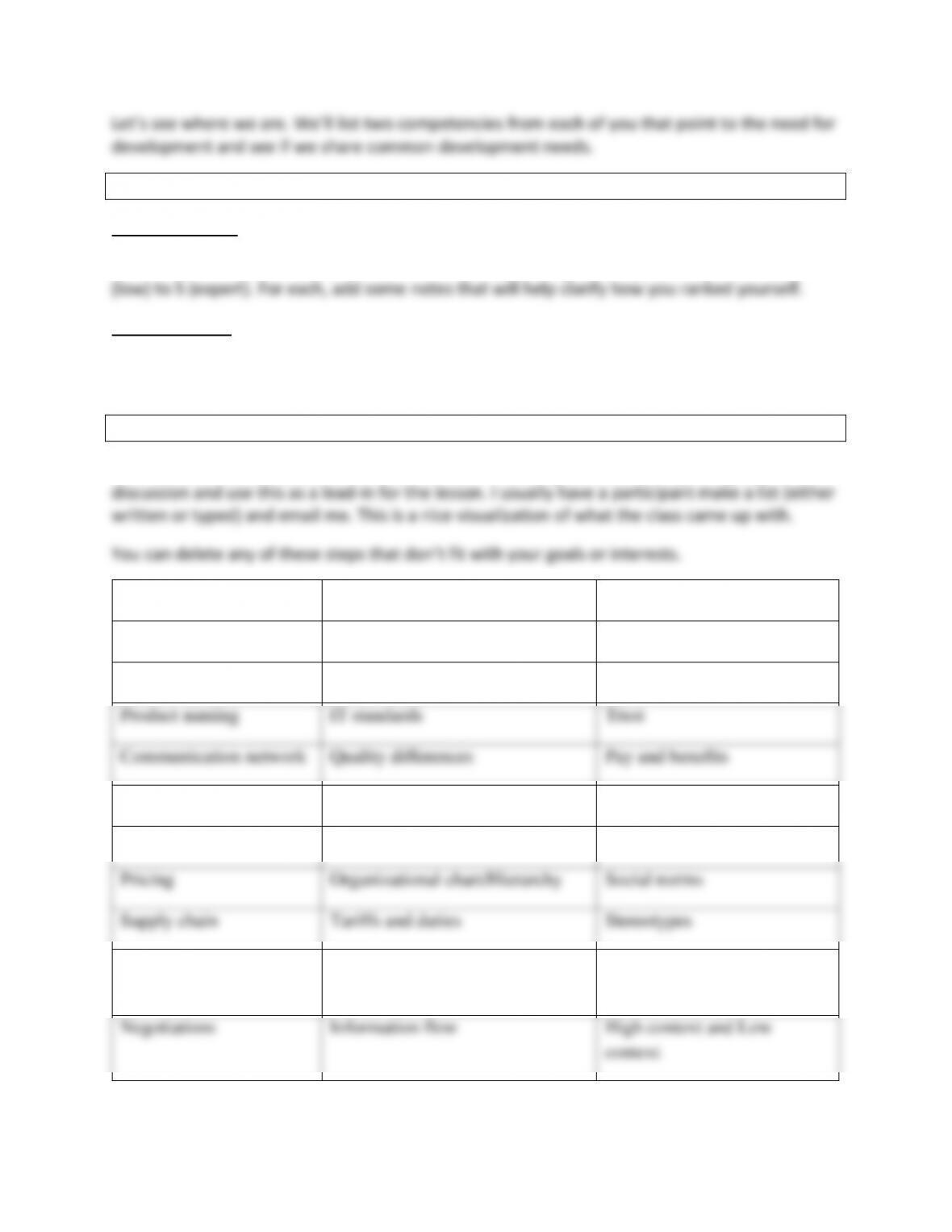
Self-Assessment
Make a list of required competencies related to key challenges. How good are you at each: 1
Group Check-In
Share one competency that points to a need for development—do we share common
development needs?
Step 9: Follow-Up Session
For the next class session, create a PPT slide with the lists generated through the group
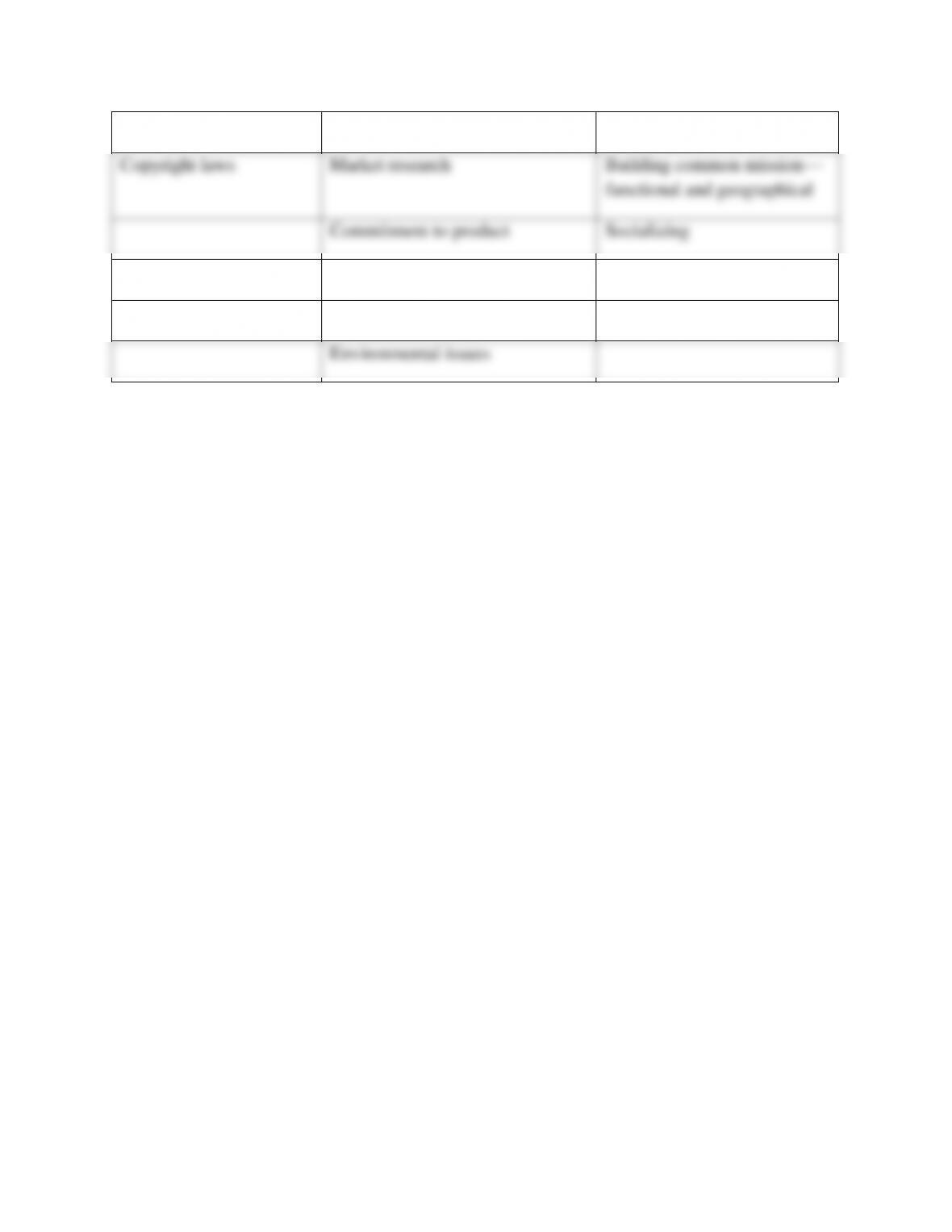
Logistic Considerations
Business Considerations
Relationship Considerations
Time zones
Holidays
Language
Shipping
Currency
Religion
Product naming
IT standards
Trust
Communication network
Quality differences
Pay and benefits
Access to technology
Regional competitors
Team building
Sales channels
Authority/Power
Translations
Pricing
Organizational chart/Hierarchy
Social norms
Supply chain
Tariffs and duties
Stereotypes
Manufacturing
International accounting and
finance
Morality and Ethics (Bribes)
Negotiations
Information flow
High context and Low
context
Intellectual property
Government regulations
Non-verbal communication
Copyright laws
Market research
Building common mission—
functional and geographical
Commitment to product
Socializing
Decision-making
Safety
Environmental issues
ACTIVITY: Images of Culture
Images of Culture © E.A. Tuleja 2016
Learning Objectives:
• To identify the important elements of culture.
• To engage in creative yet critical thinking.
Part I: Find an image on the internet that depicts your understanding of the concept of culture.
At end of the semester (if you choose):
Part II: Now that you have thought about culture and intercultural communication in business
for the past few weeks, find another image on the internet that depicts your understanding of
VIDEO: Lion, Witch & Wardrobe
From the film: Narnia: The Lion, the Witch and the Wardrobe (book by C. S. Lewis).
For class discussion:
• What happened in this encounter between two fundamentally different “beings” and their
initial meeting?
• What were some of the examples of culture?