International Organizational Behavior 2e Chapter 1 Page 1
CHAPTER 1
INTERNATIONAL ORGANIZATIONAL BEHAVIOR:
CHALLENGES AND OPTIONS FOR MANAGEMENT
CHAPTER INTRODUCTION
People need to come first in the mix. As companies seek to build local operations in
countries such as Brazil, Russia, India, and China, identifying and tapping local talent
pools becomes increasingly important. Striking the right balance between standardization
and localization is always a work-in-progress, but the vast cultural and language gaps
from country to country demand it. The days of overseas operations run exclusively by
expats are over.
—Miles White, CEO of Abbott
The aspects that I see motivating in global work are the excitement of how we overcome
small misunderstandings and other common challenges [of cross-cultural collaboration],
witnessing the people from totally different cultural backgrounds getting together for a
common goal and succeeding together.
—Oliver, an Italian employee working in a Finnish multinational corporation
International Organizational Behavior 2e Chapter 1 Page 2
CHAPTER REVIEW OUTLINE
MANAGING PEOPLE IN A DYNAMIC GLOBAL CONTEXT
The interdependence that is globalization produces ripple effects as rapidly growing nations such
as China and India are now producing home-grown firms that are challenging established
multinationals’ ability to keep up in everything from innovation to hiring the best talent. Several
developing countries now have a total gross domestic product (GDP) of over $2 trillion, with
I. Globalization: The Rise and Advance of Emerging Markets
The strongest growth in international business has been in developing countries rather
than in traditional economic heavyweights such as the European Union (EU), Japan,
and the United States. Between 1989 and 2015, China’s annual GDP growth rate
averaged over 9%, more than three times that of the U.S. Developed nations continue
to attract considerable investment; however, Brazil, Russia, India, China, and South
Africa (the “BRICS”) are developing countries on the move. In 2014, four of the top
five recipients of foreign direct investment (FDI) were developing countries,
including China and Brazil.
Especially attractive in developing countries are the innovative home-grown products
of native frugal innovators, priced to match the lower incomes of local citizens. For
example, in recent years, Indian firms have been designing and selling $100 stoves
and refrigerators. Established companies from developed nations have started paying
attention, creating locally designed products for emerging markets.
International Organizational Behavior 2e Chapter 1 Page 3
II. International Challenges in Doing Business and Managing Talent
Companies now face a dynamic competitive environment when they venture abroad,
and must cope with management challenges unique to international business. These
challenges include specific issues related to managing talent. However, international
managers must be able to grasp foreign cultures and adapt their own behavior
accordingly to be effective.
A. Emerging Market Complexity: The Case of China
Foreign firms in China face major regional differences in culture and language, as
well as a host of competitors. Foreign companies may struggle in China,
B. Another Headache: Currency Volatility
Challenges facing international managers include rapid changes in currency
values that produce havoc and have serious ripple effects across countries.
Currency swings can be a response to rapidly changing business dynamics or
merely whims of investors and traders. Consequently, international managers
must attend to currency swings to avoid sudden losses.
C. Offshoring and Onshoring: Recent Trends
1. Offshoring involves sending jobs abroad, often to places where labor is cheap.
Large and small firms alike have been engaging in offshoring for decades.
International Organizational Behavior 2e Chapter 1 Page 4
2. As a result of these challenges, some firms have shifted once-offshored jobs
back home. This trend, labeled onshoring, occurs when firms conclude that
the costs outweigh the benefits of offshoring (in a recent survey of
manufacturers, 55% were dissatisfied with offshoring). Firms are trying to
capitalize by offering themselves as alternatives to offshoring (see the boxed
feature Global Innovations).
D. The Best Talent Wins
The quality of a nation’s workforce relates to how competitive that country is in
job creation and its ability to produce outstanding companies that can excel
globally. Training, educational quality, motivation, and cutting-edge skills are
parts of the equation that determines the quality of a nation’s workforce. Table 1.1
International Organizational Behavior 2e Chapter 1 Page 5
E. Rising Workforce Diversity
One consequence of the global hunt for talent is that workforces are an
increasingly complicated mix of cultures, backgrounds, and ethnic groups.
III. International Organizational Behavior: A Skills Profile
How should international managers approach issues related to workforce diversity,
the global talent hunt, and employee motivation? Imagine the difficulty of managing
people in far-flung corporate operations that literally circle the globe. When
companies have such an extensive global footprint, everything they do has
international implications. Building an international workforce staffed by open-
To be effective across borders, executives need to have deep multicultural experience
and embrace diversity. They must be comfortable sharing information and teaming
with local employees to succeed in local markets. They also need to offer high-
performing employees everywhere fair pay, excellent development opportunities, and
plenty of recognition. International managers will struggle if they remain wedded to a
International Organizational Behavior 2e Chapter 1 Page 6
CONCEPTUAL BUILDING BLOCKS
Underpinning many of the issues discussed so far are a variety of management concepts,
including those related to how firms develop and grow internationally. This section
presents many concepts, some covered in more detail in later chapters while others
provide a frame of reference to understanding material in subsequent chapters.
I. The Impact of Culture
Culture can impact just about everything associated with managing employees.
International management expert Geert Hofstede’s definition of culture is “the
collective programming of the mind which distinguishes one group or category of
people from another.” Complicating matters is that managers may not fully recognize
the impact of culture on their own views and behaviors, much less their subordinates’.
The impact of cultural differences depends, in part, on how managers respond: e.g.,
failing to understand how best to motivate foreign employees can result in bad
outcomes, while successfully adapting management styles to match local values may
lead to outstanding performance. Even foreign subsidiaries perform better when they
manage employees in ways that are aligned with local culture.
International Organizational Behavior 2e Chapter 1 Page 7
Perhaps an even more common oversimplification is when managers treat cultural
differences as broad-brush labels that can be slapped on to people with little or no
analysis. While such labels are easy to use and give managers a rough impression of
II. Multinationals: History and Strategic Options
This last section discusses the history and evolution of international corporations, and
concludes with some of the basic strategic choices firms make in tackling global
markets. A general understanding of how companies approach international markets
should prove helpful with subsequent chapters.
Multinationals have evolved considerably over the past century. From 1900 to 1960,
multinationals typically did their innovating in the home country. Eventually, many
realized that good ideas could come from anywhere. In the 1970s and 1980s, firms
starting setting up research and development (R&D) units overseas to capture ideas in
key markets, but these outposts had trouble attracting headquarters’ attention. Since
International Organizational Behavior 2e Chapter 1 Page 8
A. Stages in International Corporate Development
Many firms evolve through distinct stages as they expand international activities.
As firms gain experience overseas, their level of involvement in international
markets grows, allowing them to master more complicated foreign operations.
1. Exporting: Domestic firms often begin their international experiences by
exporting. Firms usually rely on small internal staffs to handle exporting
activities, or use consulting firms with the expertise in foreign contracts,
currency hassles, and letters of credit (e.g., L.L. Bean).
3. Contracting/subcontracting/franchising/licensing: Harley-Davidson has
licensed logos and its brand name to clothing manufacturers around the world.
Franchising is a more elaborate version of licensing in which an agreement
allows a foreign entrepreneur or firm to operate a business using the methods,
procedures, products, trademarks, and marketing strategies created by another
4. Wholly owned foreign subsidiaries: While multinational firms understand that
headquarters may make key strategic decisions, foreign operations often
perform best when run by local employees steeped in local market know-how.
Foreign subsidiaries in Stage 4 firms typically focus on supporting the
national or regional market where they are located (e.g., J.C. Penny, Ahold).
International Organizational Behavior 2e Chapter 1 Page 9
created and resourced by both partnering firms—are a popular type of
partnership because they give multinationals access to resources usually too
B. The Path of Developing Country Multinationals
Not every company evolves through these stages. This is especially true for
multinationals in developing countries where many disadvantages exist, such as
political instability, inadequate infrastructures, and weak legal systems.
III. Strategic Choices for International Business
Due to global competition, multinationals typically follow a corporate strategy to
guide their business across countries. Multinationals use several strategies depending
on the needs of particular business units: e.g., General Electric (GE) has international
business units in appliances, jet engines, lighting, and medical diagnostic systems,
among others. The extent to which GE tailors its products to local customer
preferences varies across these units based on industry and competitive demands.
A. Global Integration and Local Responsiveness
1. The international strategy
Multinationals that face little pressure to tailor products across markets or to
become highly efficient at combating competitors often pursue an
international strategy of selling similar products everywhere. In doing so, they
2. The multidomestic strategy
In some industries, multinationals face huge pressure to tailor products and
services to meet local preferences even while pressure for integration and
efficiency is relatively low. If so, the best approach is a multidomestic
strategy, aligning products and services to customer needs in specific foreign
3. The global strategy
Global integration can be critical for profitability in certain industries,
especially when the same products or services can be sold everywhere. With
4. The transnational strategy
In some industries, multinationals must attempt to tailor products to local
preferences and improve efficiencies by integrating operations worldwide.
They may move key activities to wherever they can be done cheapest and
International Organizational Behavior 2e Chapter 1 Page 11
5. The regional strategy
Sometimes customer preferences vary regionally instead of nationally. If so,
multinationals may opt for the regional strategy, which allows managers (e.g.,
Toyota) in a regional area (e.g., Europe) to make decisions, set goals, and
B. Creating Buy-In When Developing International Strategy
Multinationals should ensure that the ways they develop international strategies
are seen as fair by the people asked to carry them out—particularly when that
strategy is a departure from the status quo. Top executives should thoroughly
familiarize themselves with foreign operations, treat foreign subsidiaries
International Organizational Behavior 2e Chapter 1 Page 12
CHAPTER SUMMARY
Challenges associated with managing organizational behavior in a dynamic international
business context were discussed. Developed nations such as the United States, France, and
Germany continue to attract considerable outside investment. Developing nations, which
includes BRIC countries, have been climbing the list of FDI recipients.
The chapter describes multinational enterprises and the five common stages in their
development, and presented five international business strategies used by multinationals given
industry pressures for local responsiveness and global integration.
• International strategy may be best when relatively low pressures for global
integration and local responsiveness exist.
• Multidomestic strategy may be best when product preferences vary across nations and
integration pressures are low.
An analysis of international strategies was provided, urging firms to develop strategies in a fair
manner if they want managers worldwide to embrace them. To create a fair process, managers
should familiarize themselves with local operations and ensure two-way communication with
local employees when developing international strategy.
International Organizational Behavior 2e Chapter 1 Page 13
DISCUSSION QUESTIONS
1. What are the implications of globalization and the rise of developing countries such
as China and India for managing organizational behavior effectively?
• Increased international competition
2. What do you make of the debate around the issues of offshoring and onshoring? What
are the pros and cons of each? What decision factors should be considered?
• Offshoring
o Cheap labor so reduced labor costs
• Onshoring
o Costs of offshoring (listed above) outweigh benefits
o See also Global Innovations
• Decision factors
o Can the firm’s management bridge cultural and communication
differences, provide sufficient support, and set clear expectations?
3. What is culture? Why is it important for managing people around the world?
• Hofstede’s definition: “the collective programming of the mind which
distinguishes one group or category of people from another.”
International Organizational Behavior 2e Chapter 1 Page 14
• Recent research—cultural differences are embedded in a mosaic of
dimensions that should shape and inform strategies for managing employees
across borders.
4. What are the key differences between international, global, transnational,
multidomestic, and regional strategies?
• See sections II and III in CONCEPTUAL BUILDING BLOCKS
CHAPTER ACTIVITIES
DEVELOPING YOUR INTERNATIONAL CAREER – Do You Have a “Global
Mindset”?
BOXED FEATURES
CULTURE CLASH – The New Economic Center: Tilting East toward China
International Organizational Behavior 2e Chapter 1 Page 15
ADDITIONAL RESOURCES
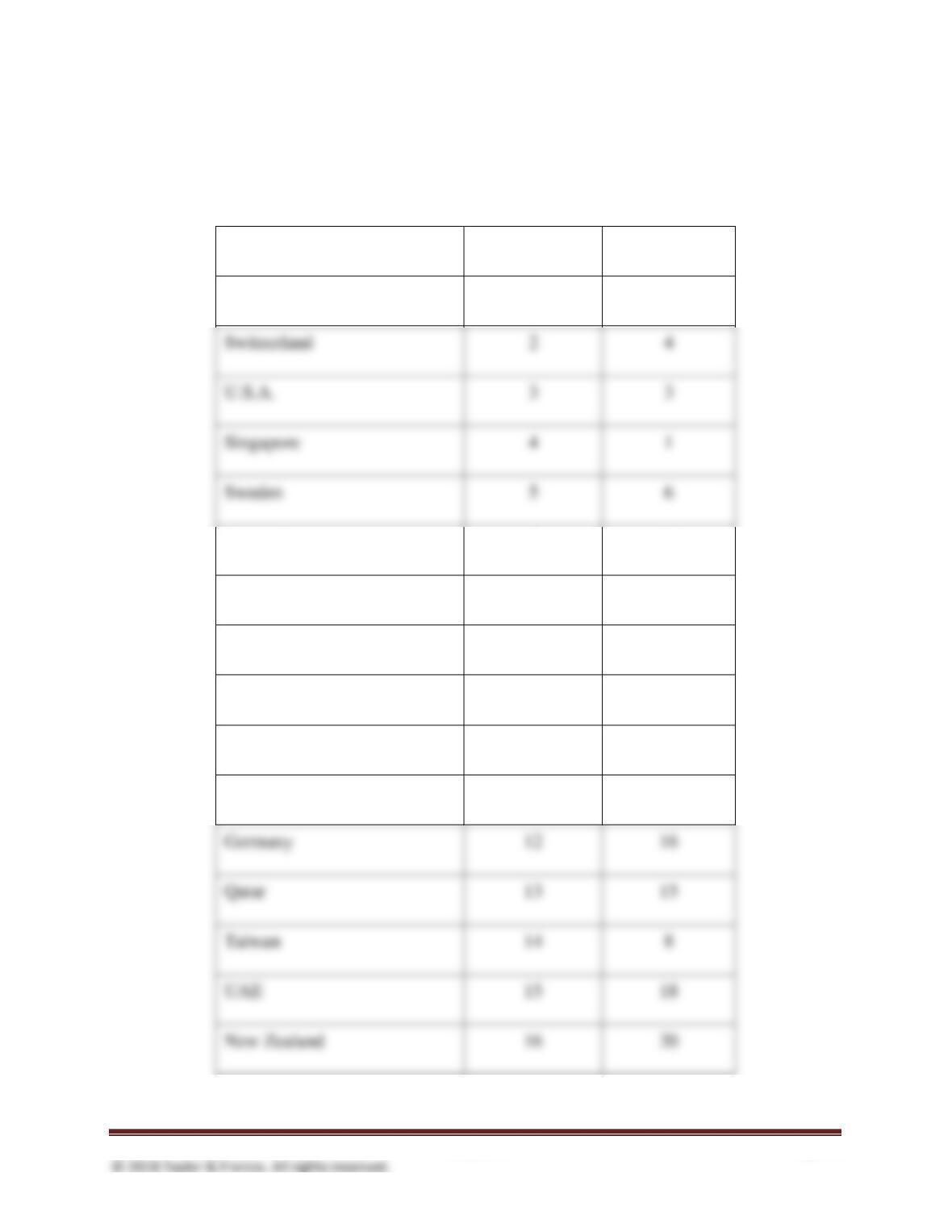
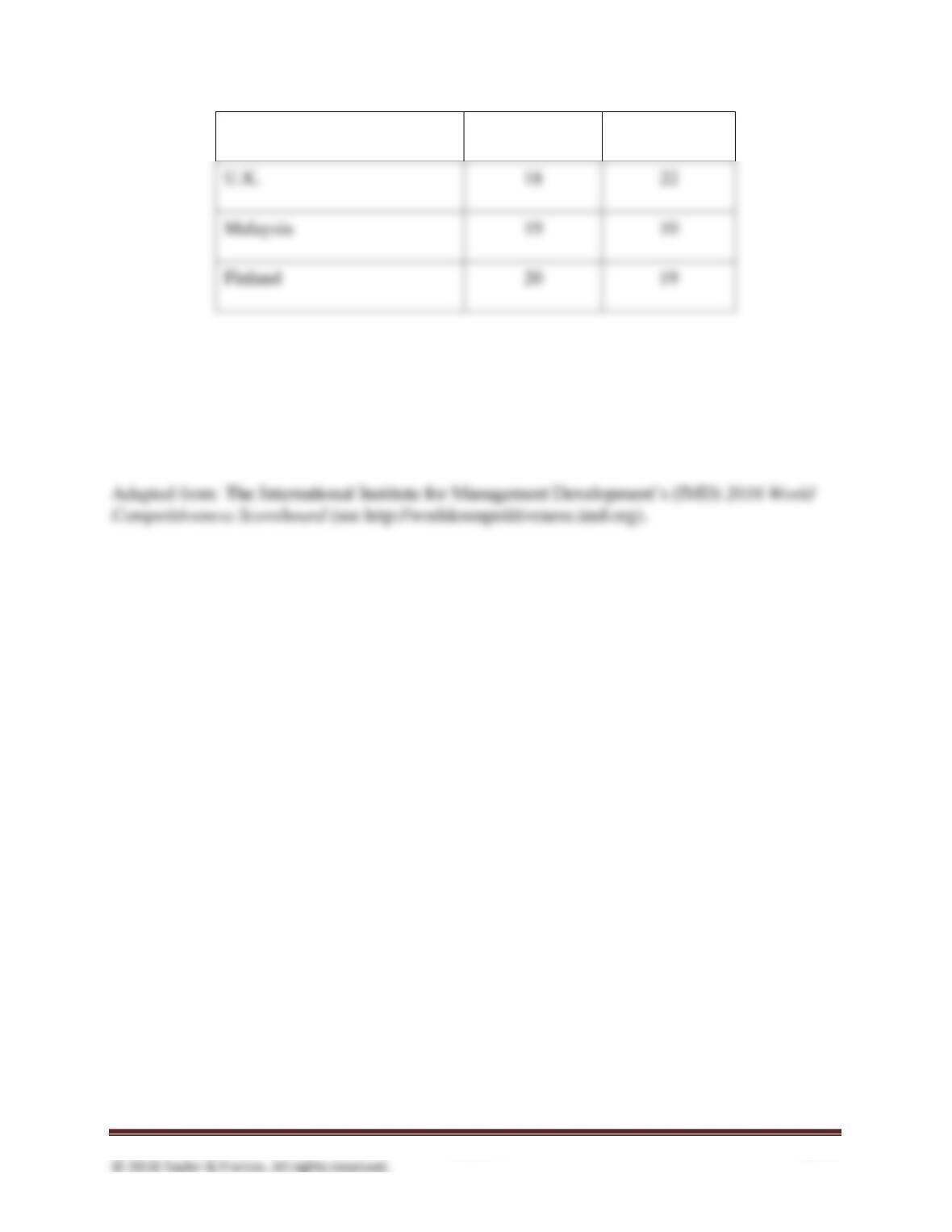
Table 1.1 The Top 20 Most Competitive Nations in 2016 & 2010
Nation
2016 Ranking
2010 Ranking
China/Hong Kong
1
2*
Switzerland
2
4
U.S.A.
3
3
Singapore
4
1
Sweden
5
6
Denmark
6
13
Ireland
7
22
Netherlands
8
12
Norway
9
9
Canada
10
7
Luxembourg
11
11
Germany
16
Taiwan
14
8
15
18
New Zealand
20
International Organizational Behavior 2e Chapter 1 Page 16
Australia
17
5
Finland
20
* In 2010, China (#18) and Hong Kong (#2) were rated separately.
Note: Competitiveness ranking is based on four main factors (economic performance,
government efficiency, business efficiency, and infrastructure), each of which has several sub-
factors. Over 300 criteria help determine IMD rankings.
International Organizational Behavior 2e Chapter 1 Page 17
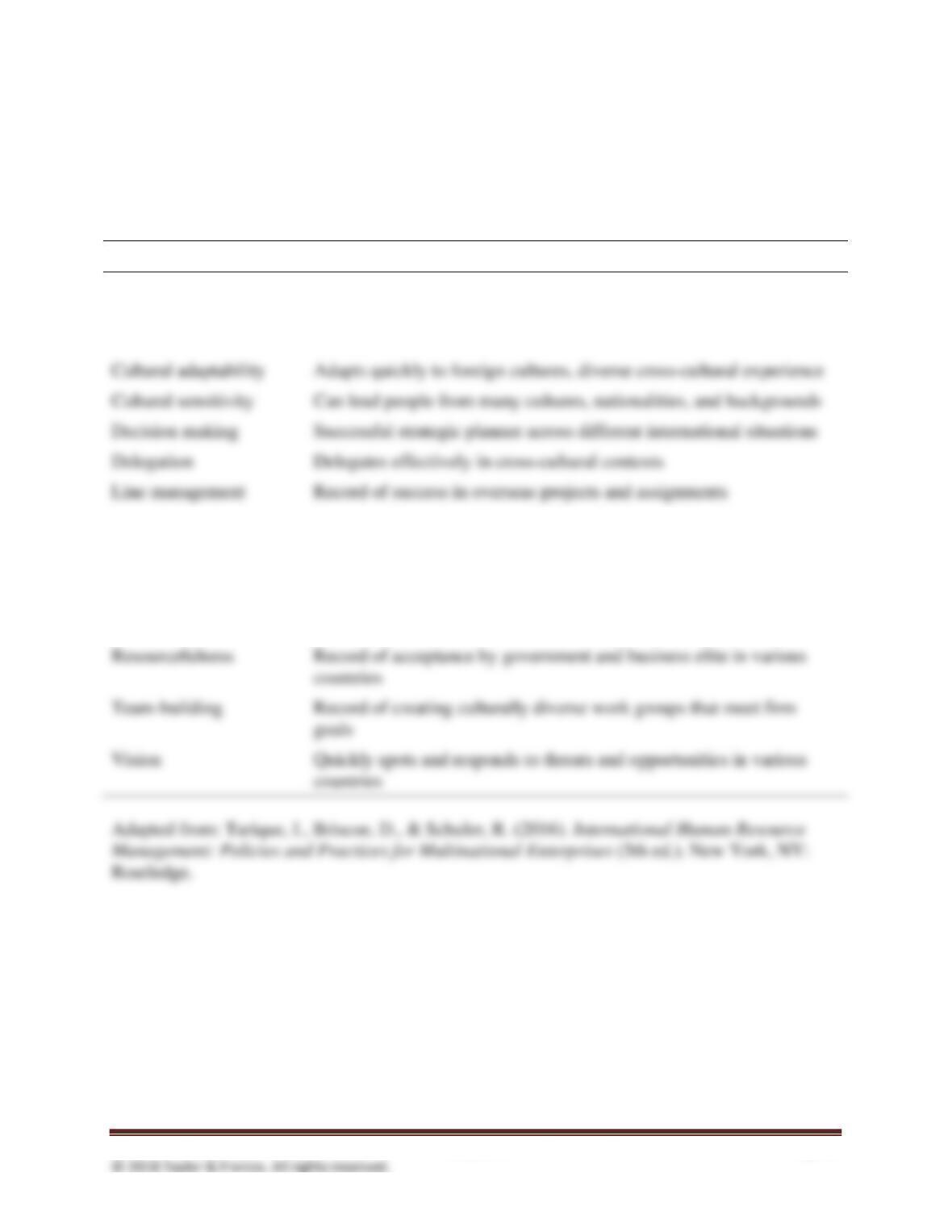
Table 1.2 International Organizational Behavior for Managers: Desired Skills and Attributes
Area
Desired Skills and Attributes
Business Practices
Understands differences in business practices across countries
Change agent
Can initiate and implement change effectively in an international
context
Cultural adaptability
Adapts quickly to foreign cultures, diverse cross-cultural experience
Cultural sensitivity
Can lead people from many cultures, nationalities, and backgrounds
Decision making
Successful strategic planner across different international situations
Delegation
Delegates effectively in cross-cultural contexts
Line management
Record of success in overseas projects and assignments
Mental maturity
Possesses the endurance required for the rigors of foreign postings
and travel
Multidimensional
perspective
Extensive multi-functional, multi-country, and multi-environment
experience
Negotiation
Record of successful business negotiations in multicultural contexts
Resourcefulness
Record of acceptance by government and business elite in various
countries
Team-building
Record of creating culturally diverse work groups that meet firm
goals
Vision
Quickly spots and responds to threats and opportunities in various
countries
International Organizational Behavior 2e Chapter 1 Page 18
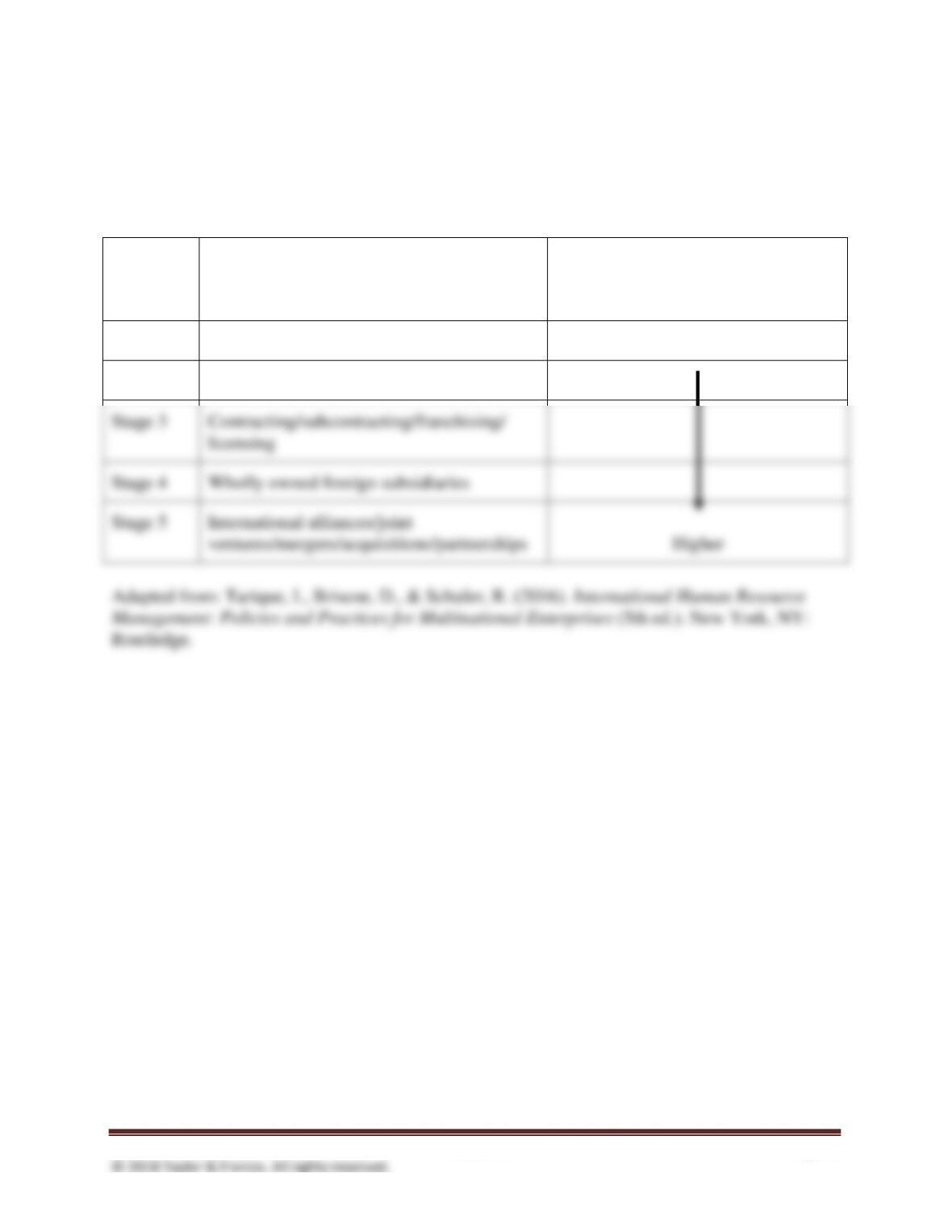
Table 1.3 Typical Developmental Stages in Company Internationalization
Stage
Title/Focus
Level of International Human
Resource Management Sophistication
Required
Stage 1
Exporting overseas
Lower
Stage 2
Foreign sales subsidiaries/sales offices
Stage 3
Contracting/subcontracting/franchising/
licensing
Stage 4
Wholly owned foreign subsidiaries
Stage 5
International alliances/joint
ventures/mergers/acquisitions/partnerships