Appendix: Theorem Proof Part 4:
the sequence converges
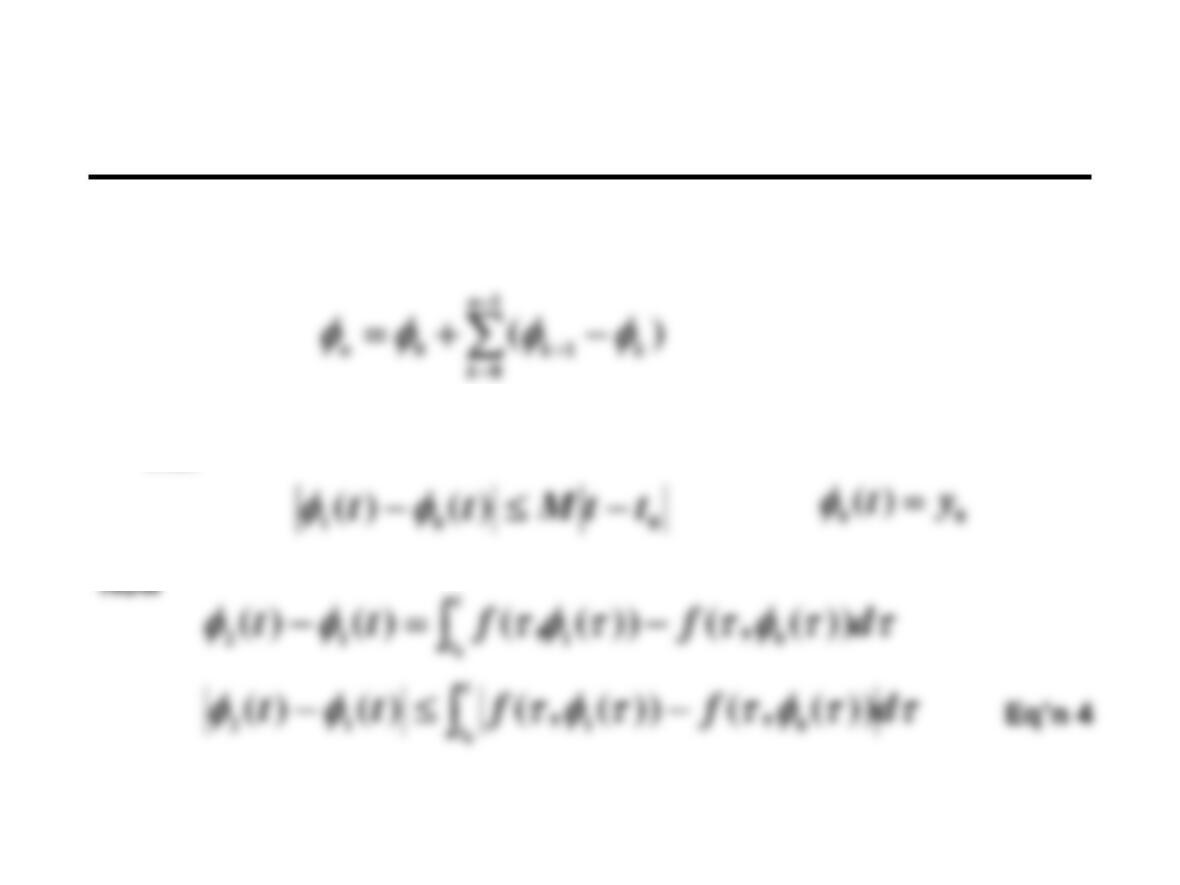
Recall we are writing
Consider each term in the series. We have already seen (Equation 3)
that
)(t
n
Appendix: Theorem Proof Part 4:
the sequence converges (2)
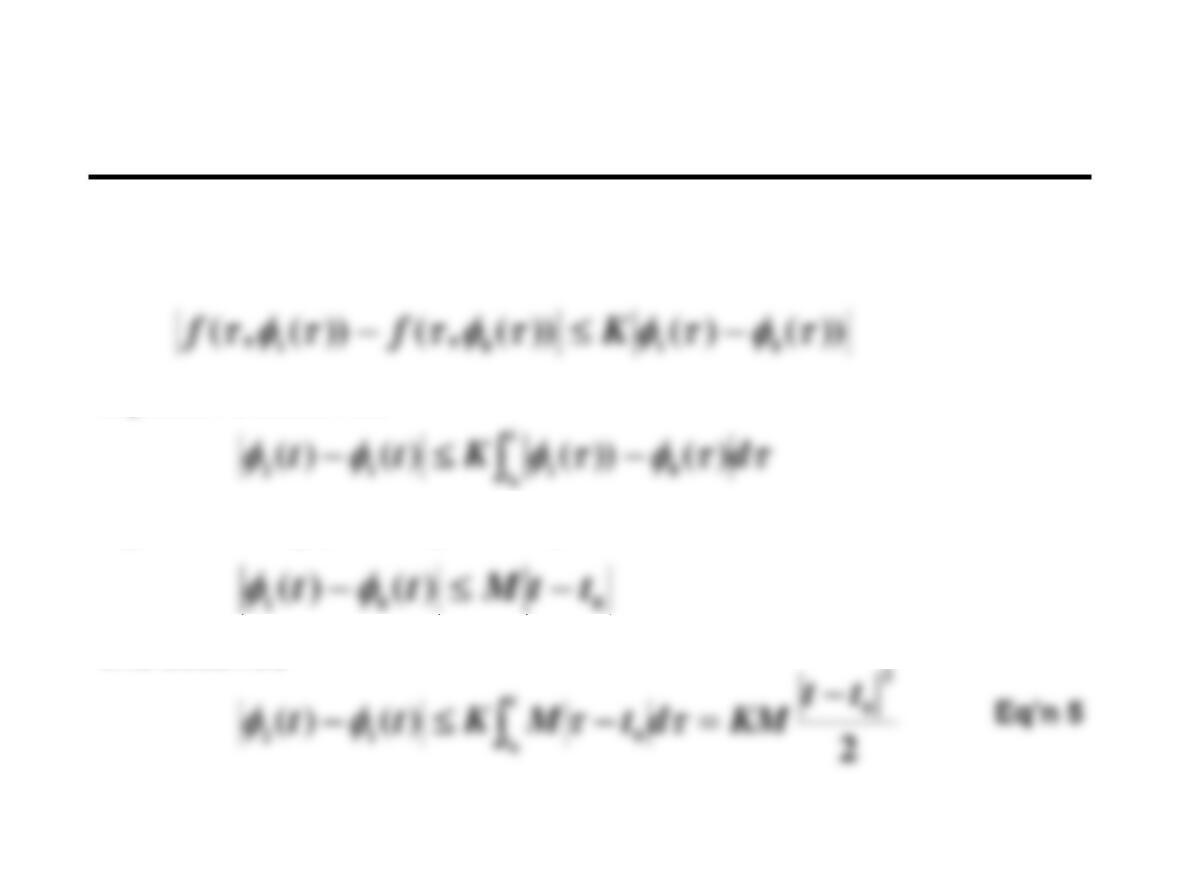
Since satisfies a Lipschitz condition,
Equation 9 becomes
Again recalling (from Equation 3) that
this becomes
)(t
n
),( yf
Appendix: Theorem Proof Part 4:
the sequence converges (3)
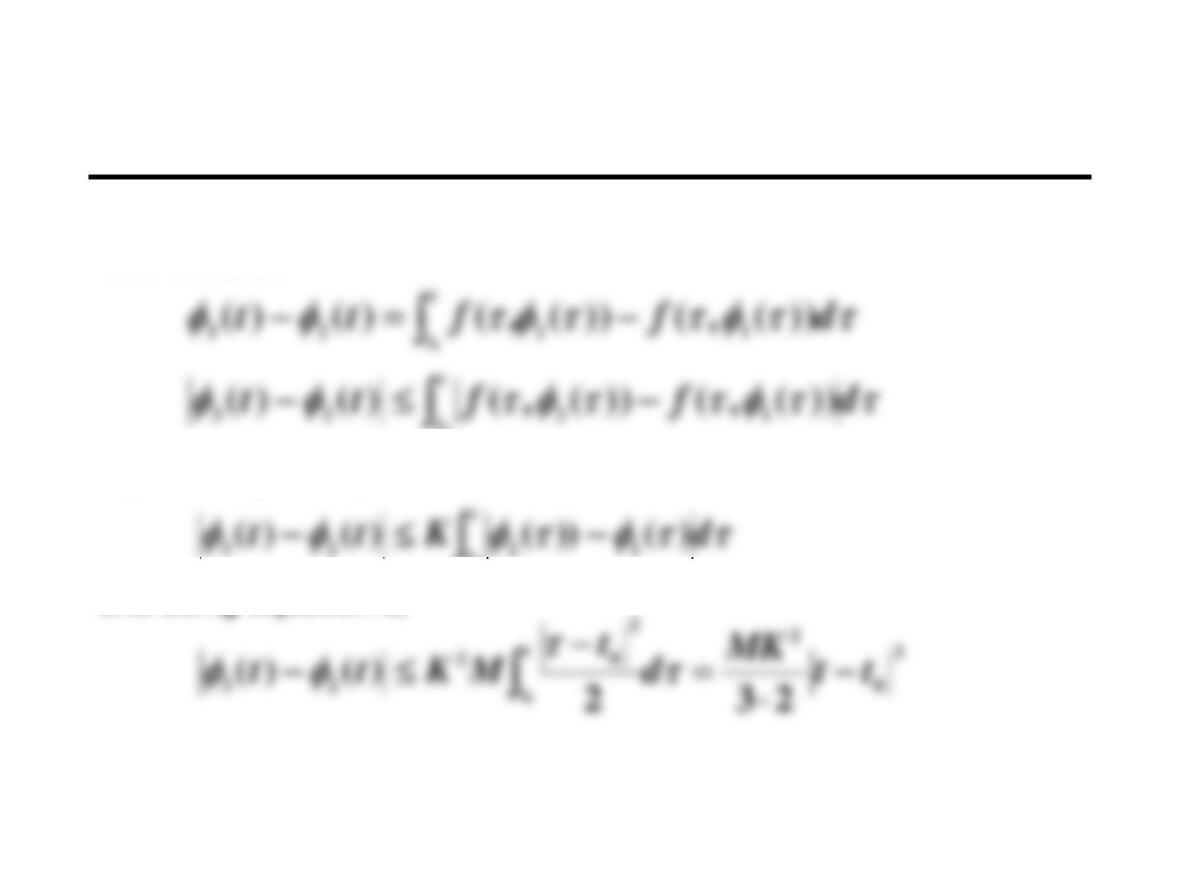
Now consider
Again using the Lipschitz condition
and using Equation 5,
)(t
n
0
t
0
Appendix: Theorem Proof Part 4:
the sequence converges (4)
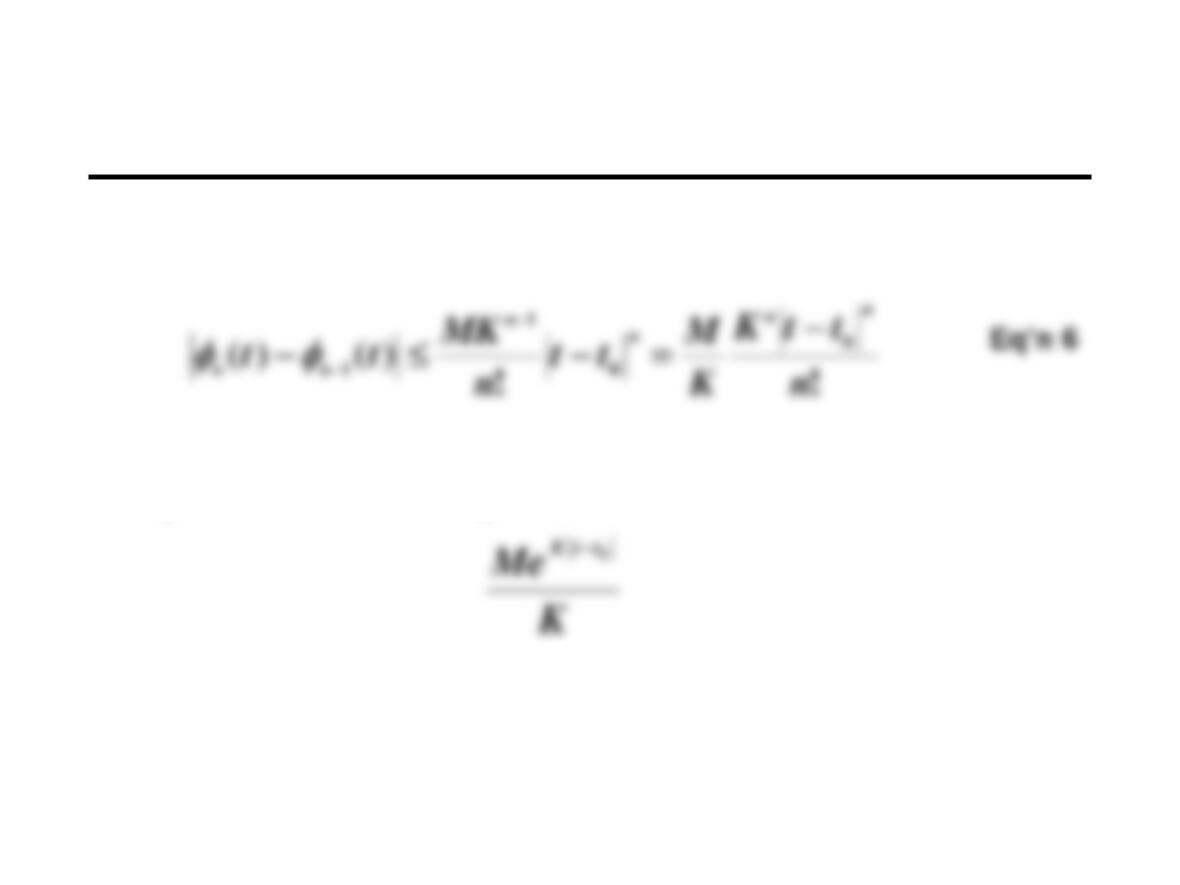
Continuing in this way we can show by induction that
Equation 6 shows that the sequence is smaller term
by term than the convergent series for
Hence the series is convergent.
)(t
n
)()( 1tt nn −
−
Appendix: Theorem Proof Part 5:
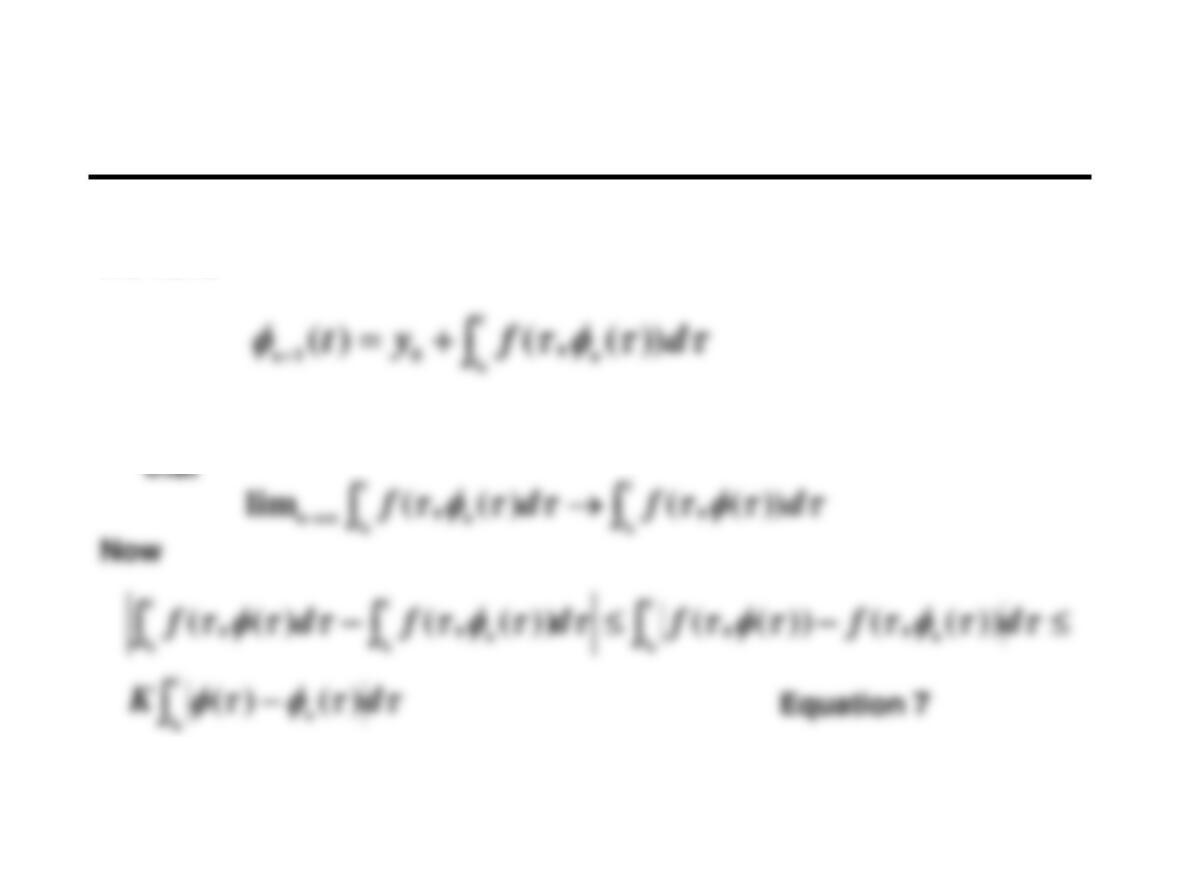
Series limit satisfies the integral equation
We have
We have just shown that so it remains to prove
using the Lipschitz condition.
)()(lim 1tt
nn
→
+→
Appendix: Theorem Proof Part 5:
Series limit satisfies the integral equation (2)
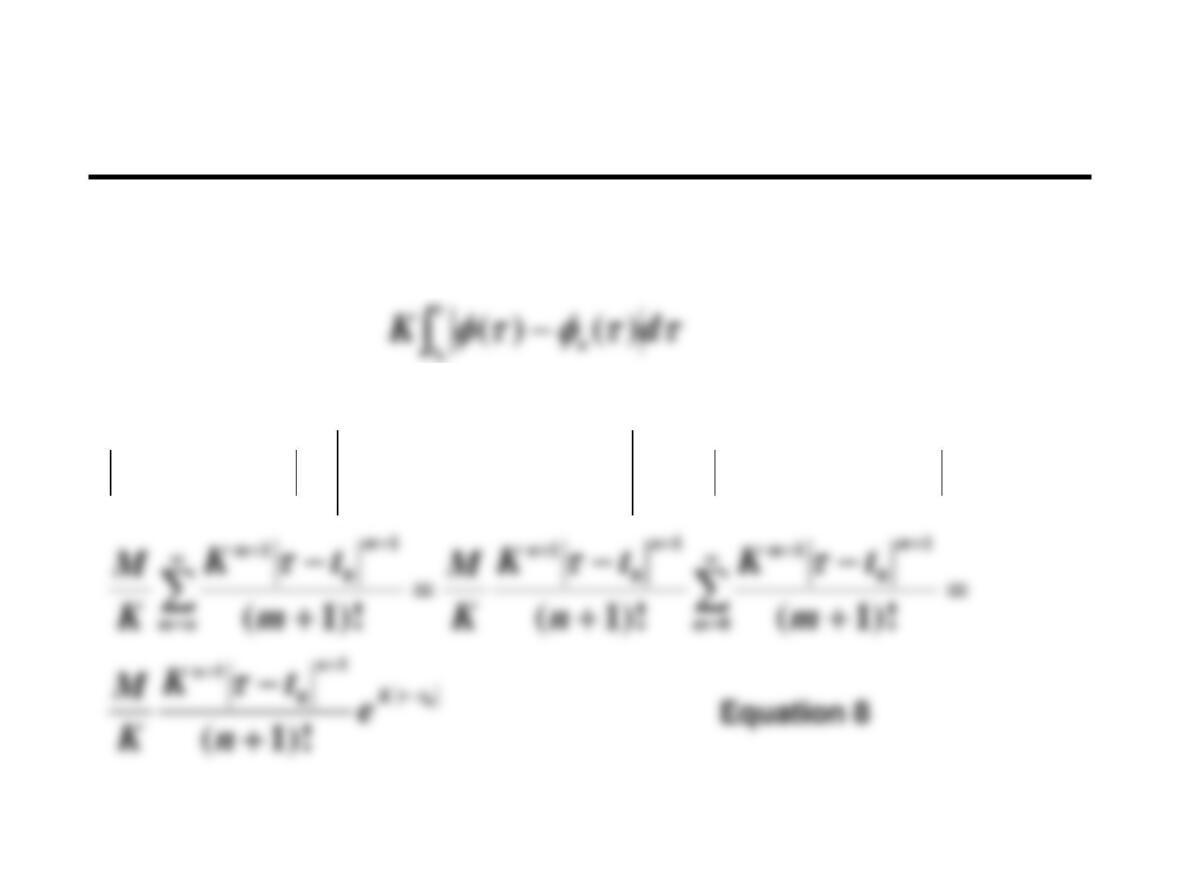
Using the results of Part 4 of the proof we can estimate
We have
)()())()(()()(
11
nm
mm
nm
mmn
=+
=+
−−=−
Appendix: Theorem Proof Part 5:
Series limit satisfies the integral equation (3)
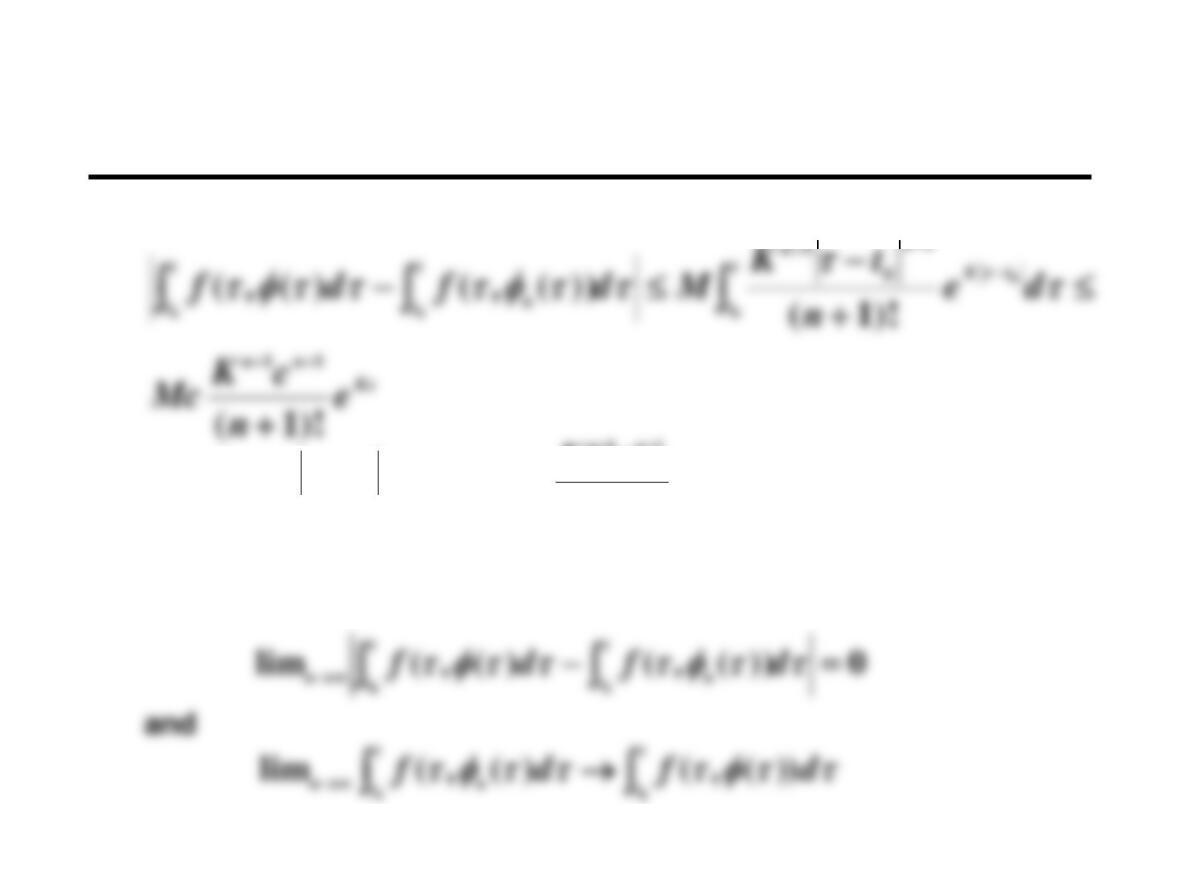
Using Equations 7 and 8 we have
recalling that . Now
is the n+1 term in the power series for and so goes to zero as n
goes to infinity, so
n
1
+
ctt − 0
)!1(
11
+
++
n
cK nn
Kc
e
as was to be shown
Appendix: Theorem Proof Part 6:
The solution is unique
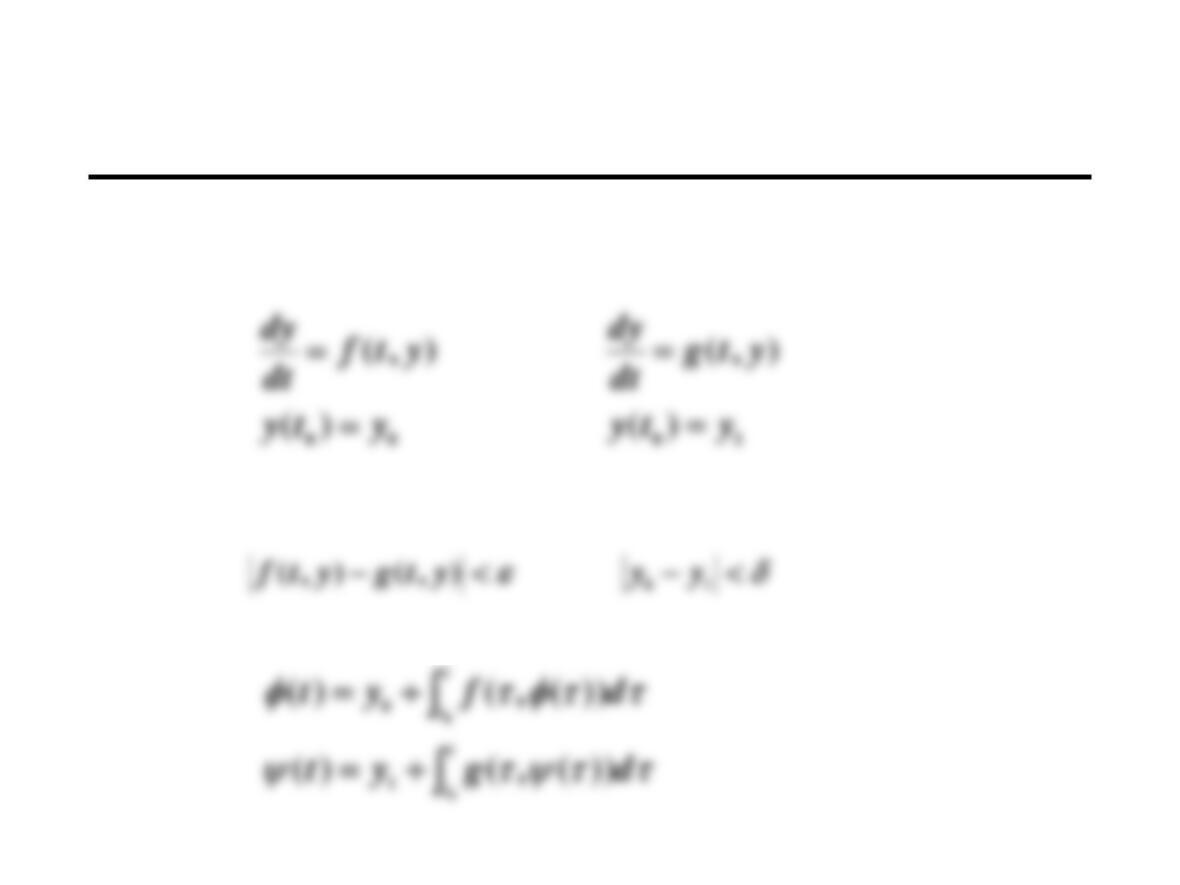
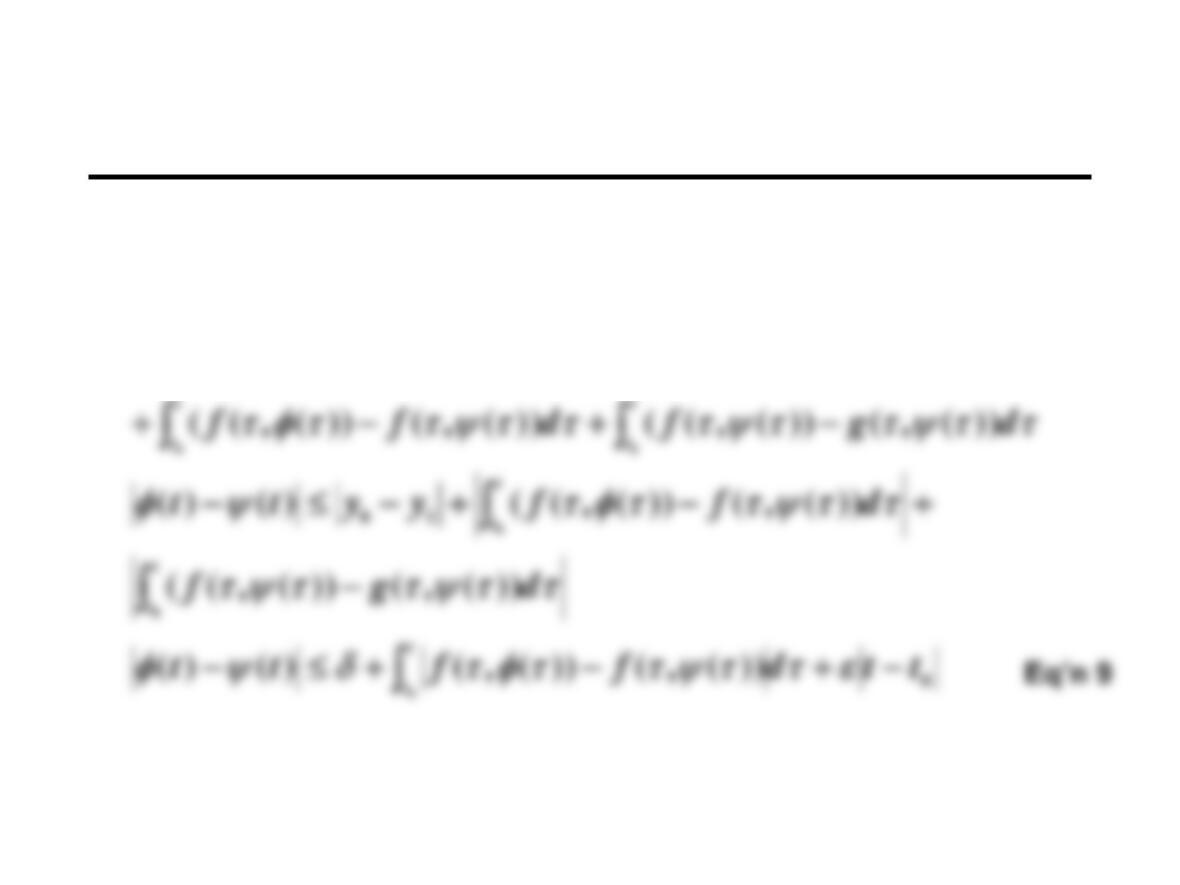
Let and be the solutions to
where is as before and is continuous on R. Let
Then
)(t
)(t
),( ytf
),( ytg
Appendix: Theorem Proof Part 6:
The solution is unique (2)
And then
1010
0
))(,())(,(()()(
yydgfyytt
t
t
−=−+−=−
The solution is unique (3)
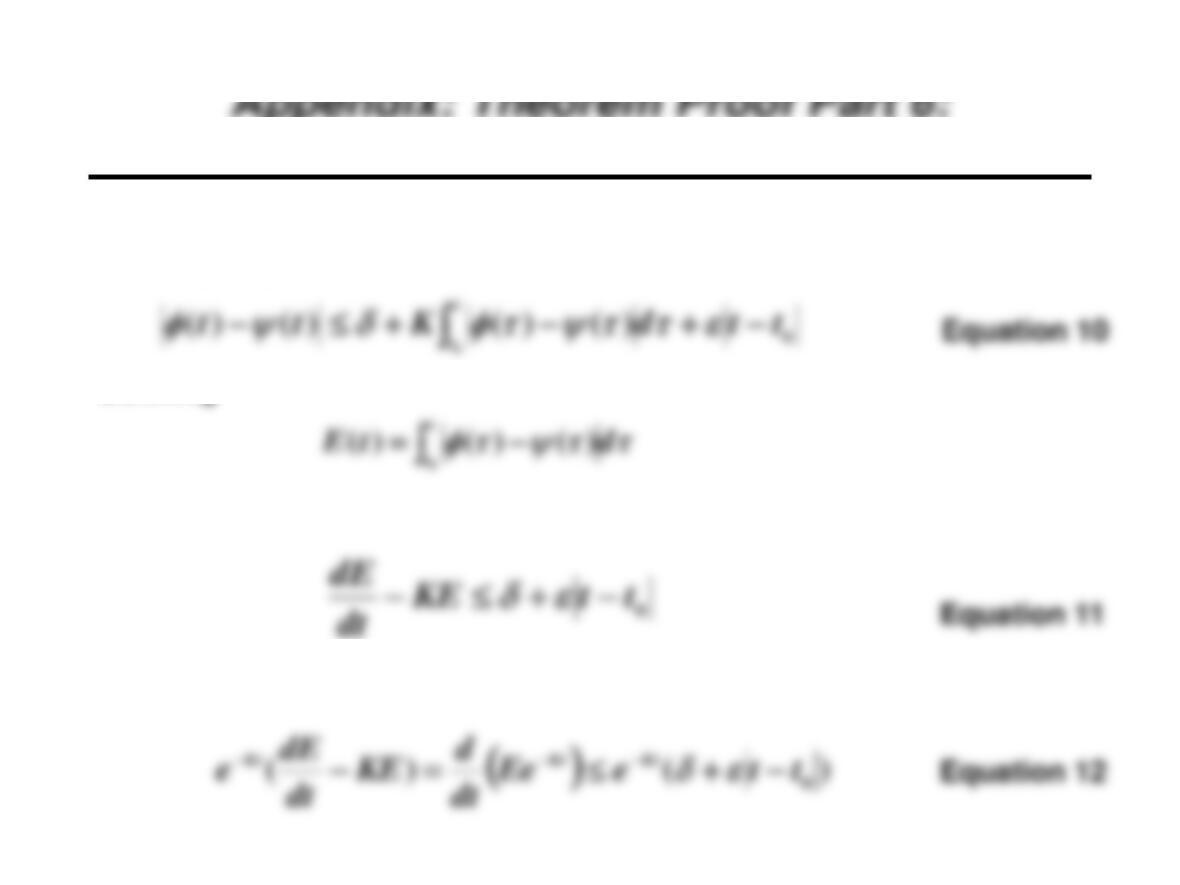
Since satisfies a Lipschitz condition Equation 9 becomes
Defining
we see that Equation 10 is a differential inequality which we can “solve”:
We multiply Equation 11 by the integration factor
),( ytf
Kt
e−
Appendix: Theorem Proof Part 6:
The solution is unique (4)
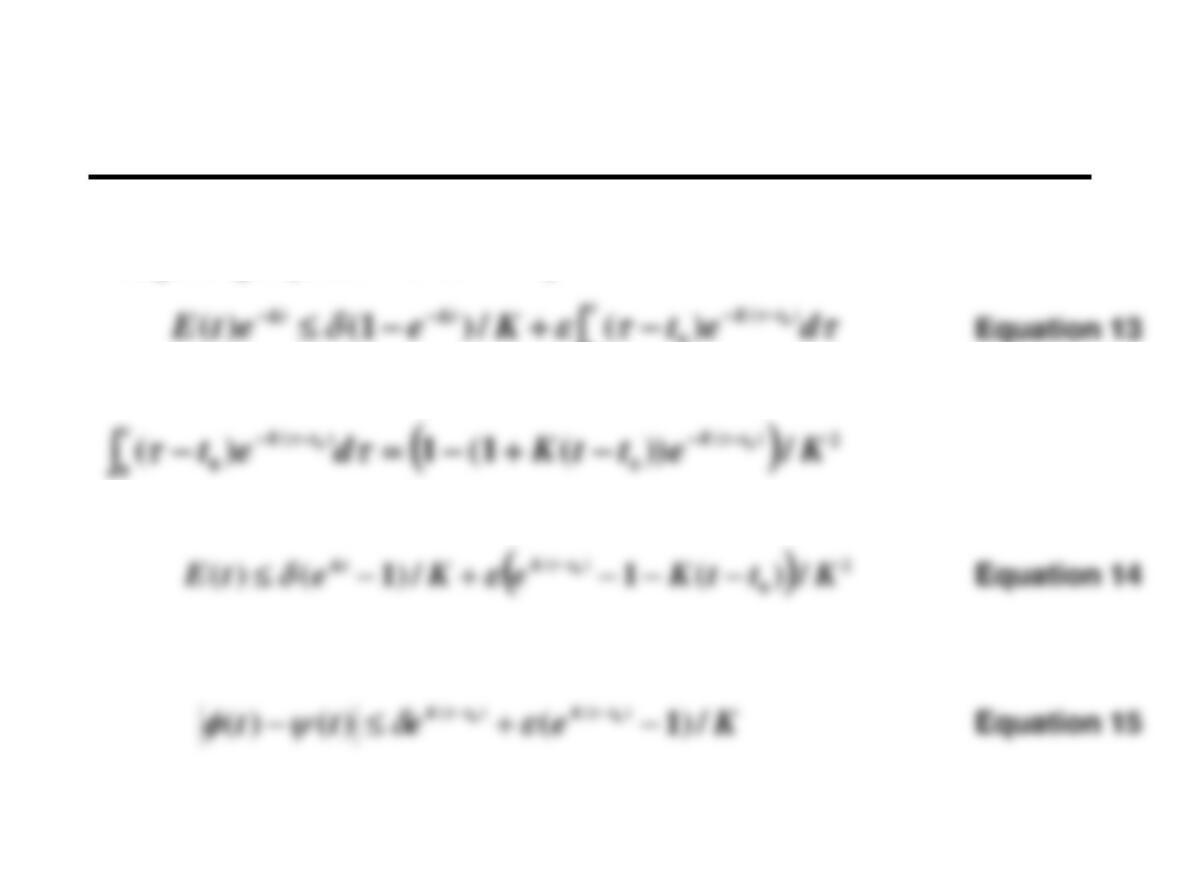
Integrating Equation 12 for :
Now
and multiplying by , Equation 13 becomes
Substituting this into Equation 10 (or differentiating Equation 14) yields
−−
t
0
0)(/)1()(
Kt
e
0
tt
Appendix: Theorem Proof Part 6:
The solution is unique (5)
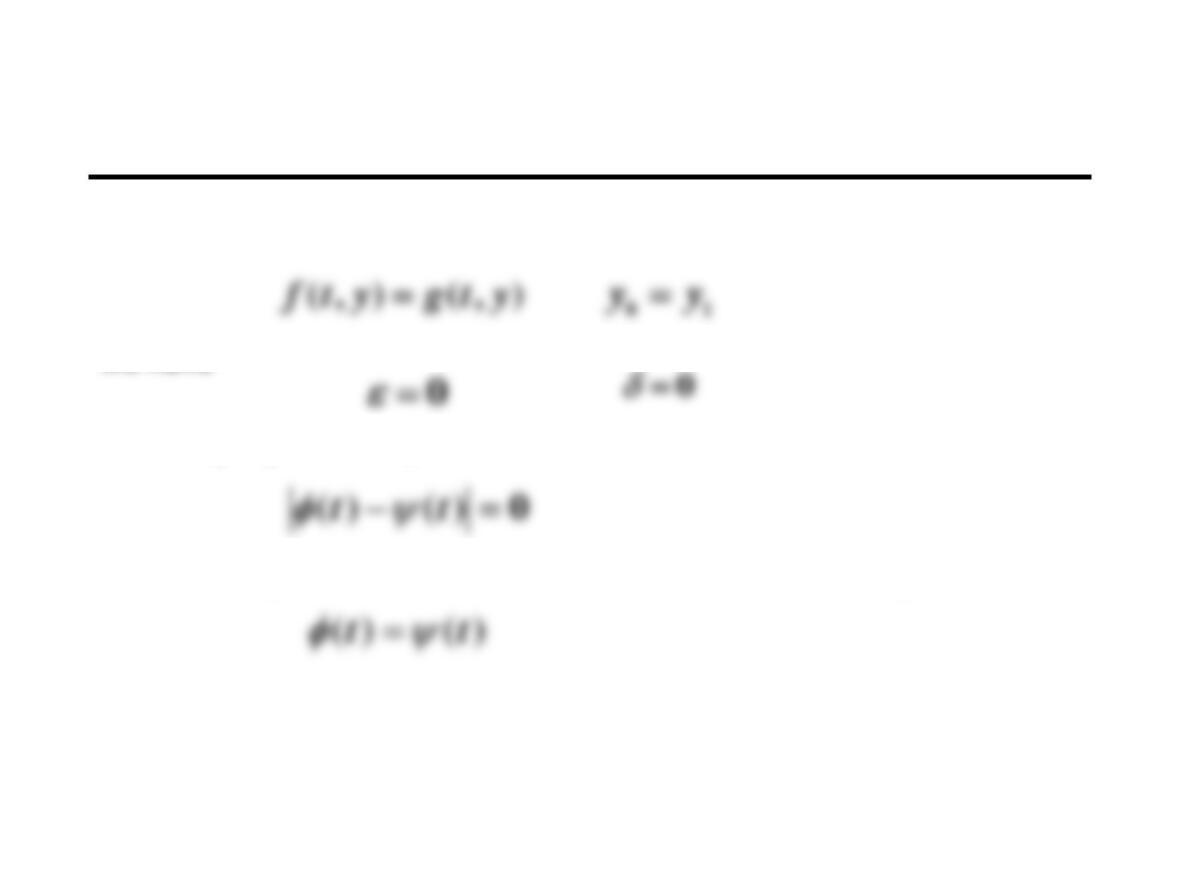
In the case where
we have
Hence by Equation 15,
for all . A similar argument can be made for and so
everywhere and the solution is unique.
0
tt
0
tt