
Differential Equations
for Engineers:
the Essentials
Supplement to Class 4 Notes

Contents of Supplement
Differences Between Linear and Nonlinear ODEs in Their Input / Output
Response
Example: Nonlinear Circuit

Differences Between Linear and Nonlinear
ODEs in Their Input / Output Response
Input / Output Characteristics
for a Linear System
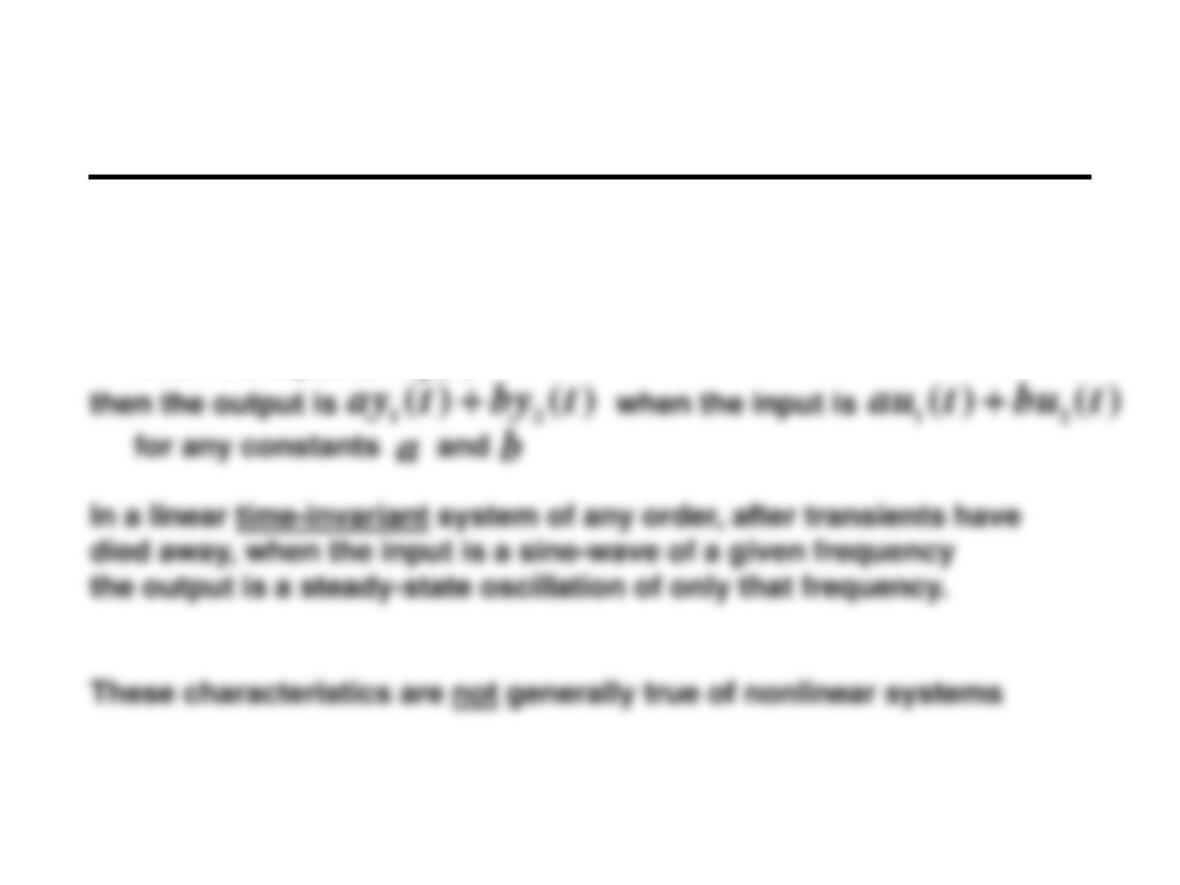
In a linear system of any order (time-varying or time-invariant):
If the output is when the input is and the output is
when the input is
)(
1ty
)(
1tu
)(
2ty
)(
Existence and Uniqueness of
Solutions to Linear ODEs
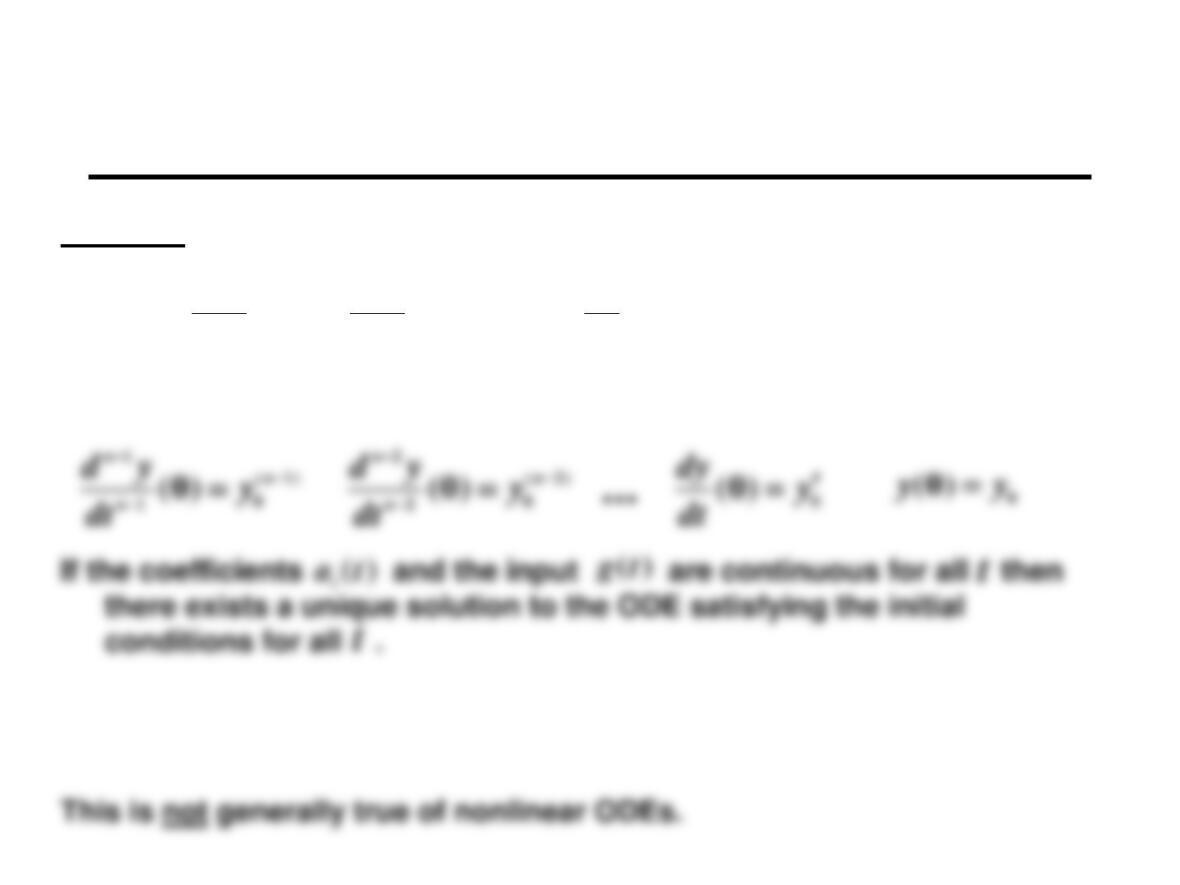
Theorem: Given a linear nth order ODE:
with initial conditions
(Stated without proof.)
)()()(…)( 11 tgyta
dt
dy
ta
dt
yd
ta
dt
yd
nn
n
n
n
n=++++ −
Key Points from the
Following Nonlinear Example
The method of successive approximations (solving a sequence of
linear equations to approximate the solution of a nonlinear
equation) is a powerful tool.
Nonlinear Example: LR Circuit
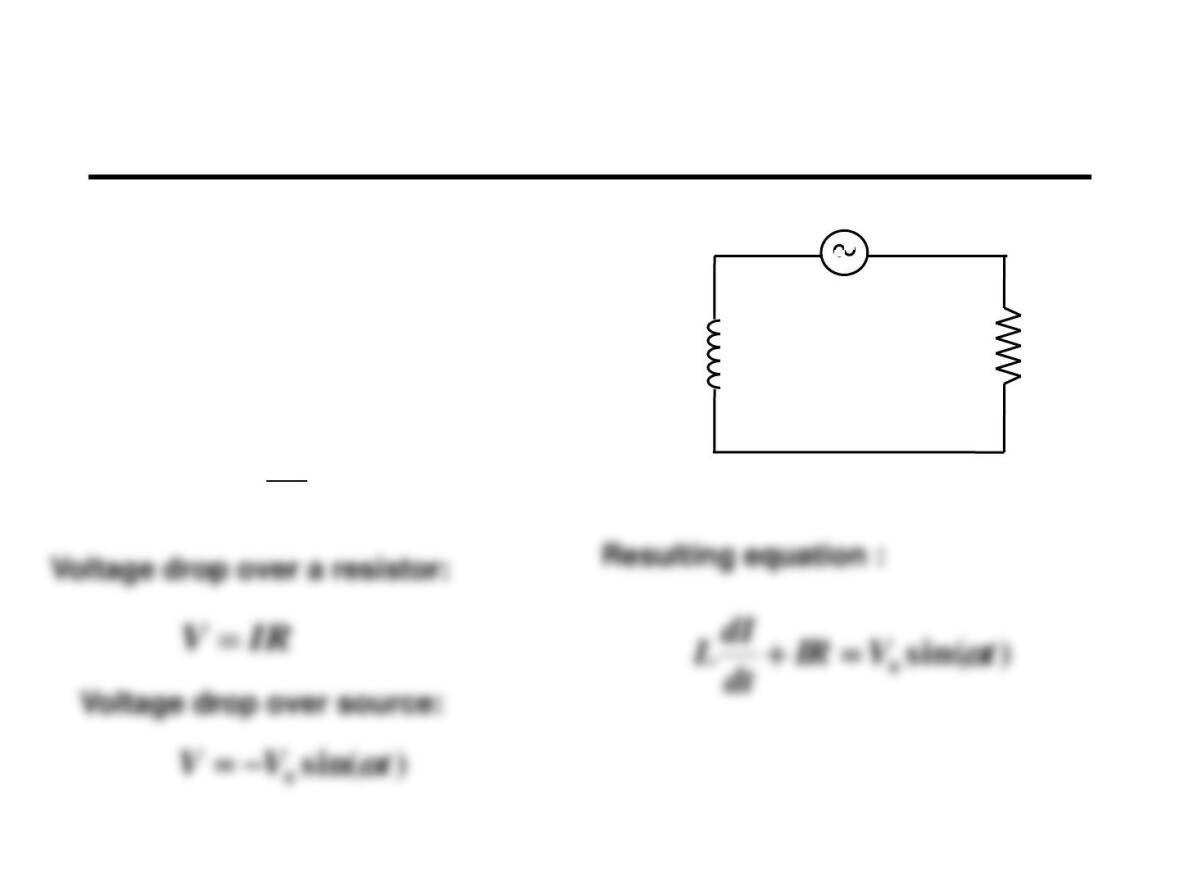
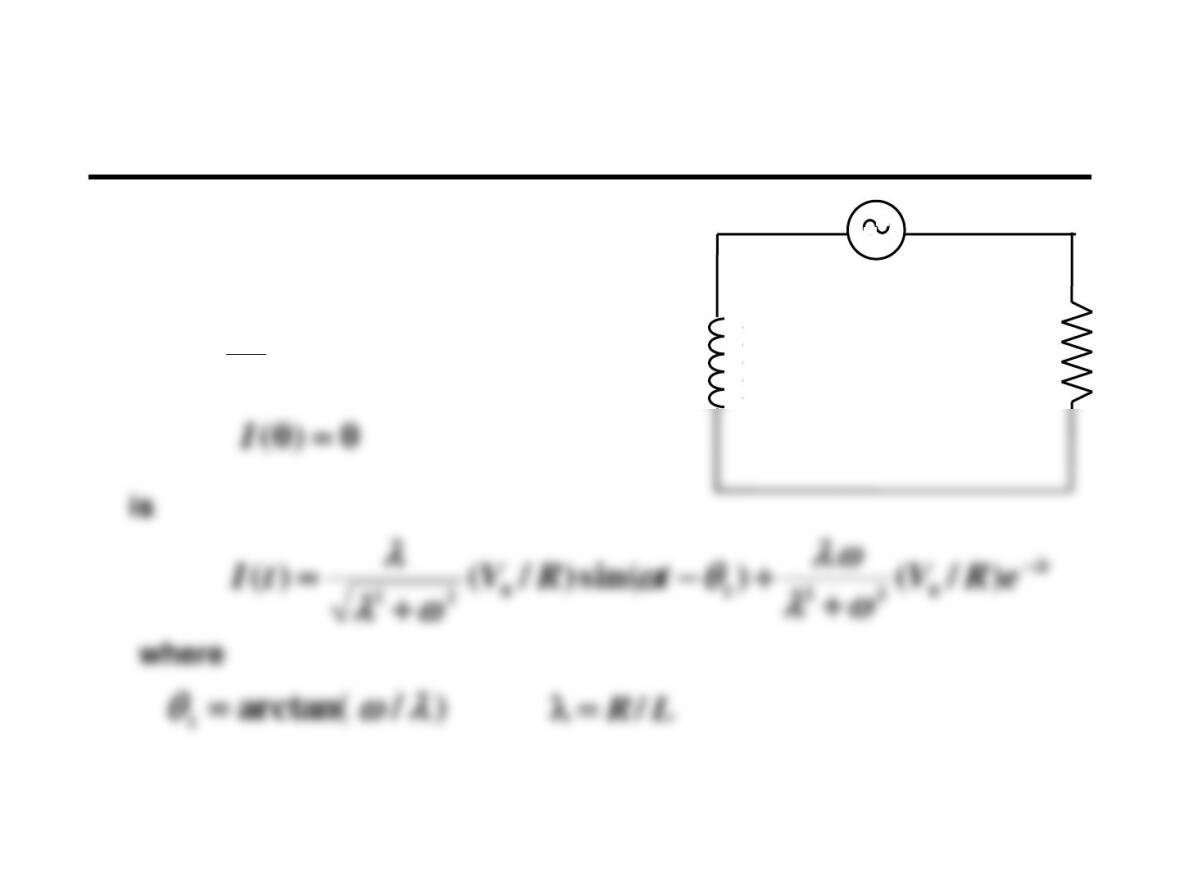
LR
Kirchhoff’s Law:
Sum of voltage drops around a
closed circuit = 0
Voltage drop over an inductor:
dt
dI
LV =
Nonlinear Example: LR Circuit (2)
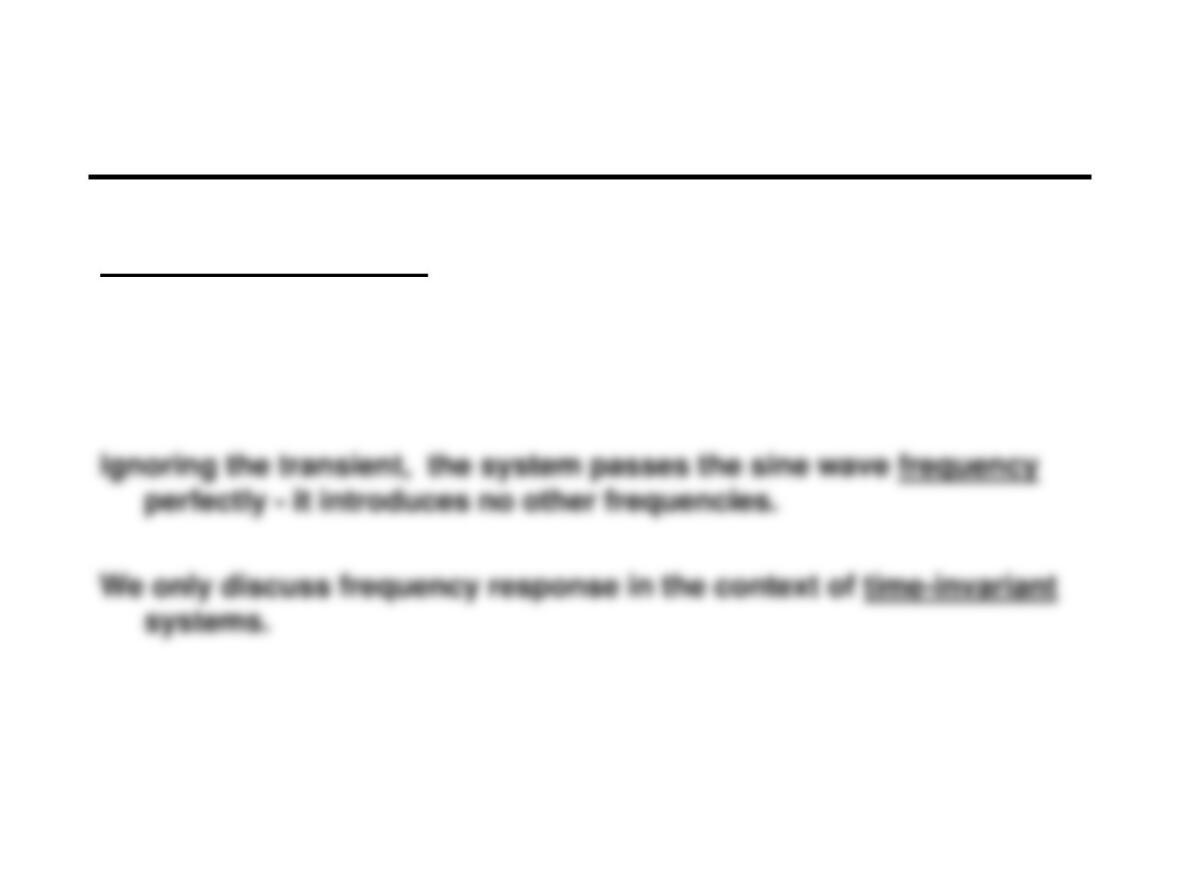
The solution to
LR
)sin(
0tVIR
dt
dI
L
=+
Nonlinear Example: Recalling the LR Circuit (3)
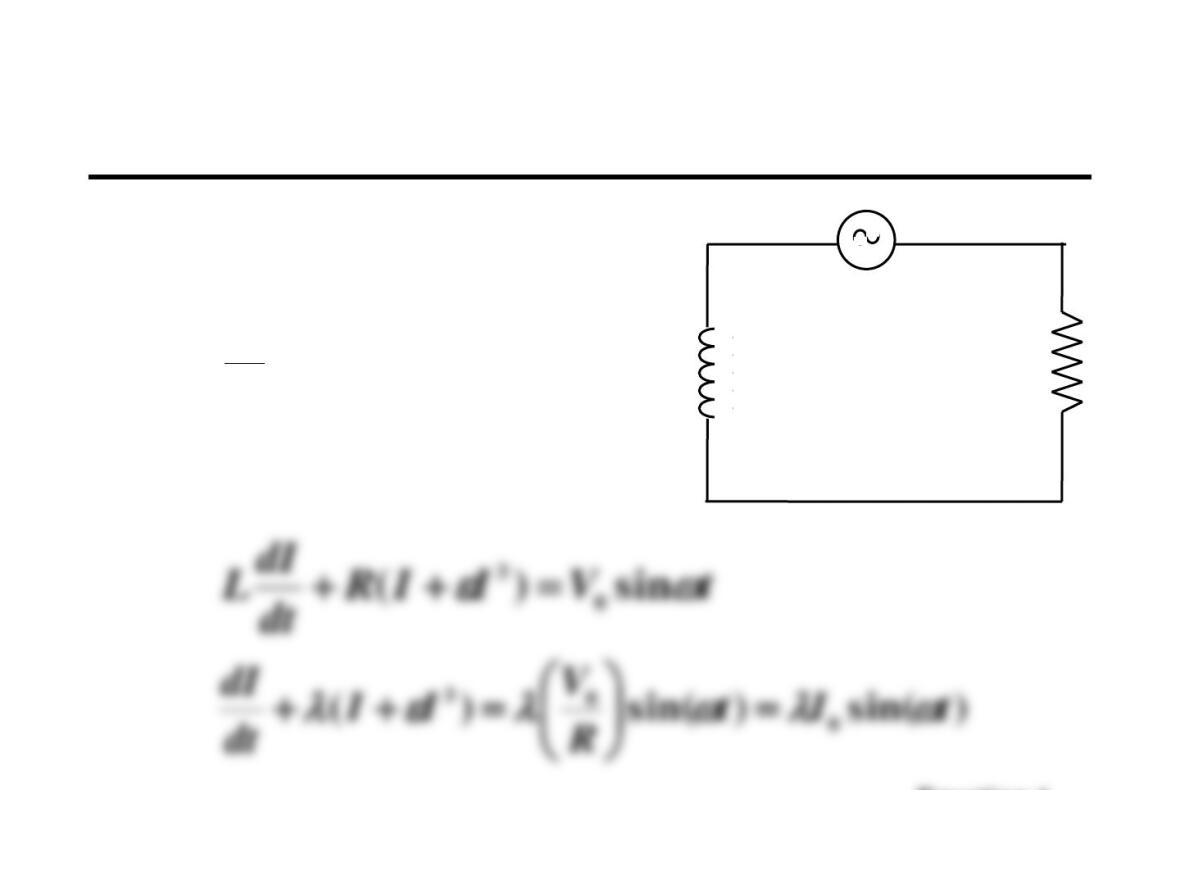
Input / output response:
The “input” to the “system” is the voltage source. The “output” is
the current (or voltage) over the resistor.
What if the Resistor is Slightly Nonlinear?
)sin(
0tVIR
dt
dI
L
=+
LR
Instead of
suppose we have
Equation 1
What if the Resistor is Slightly Nonlinear? (2)
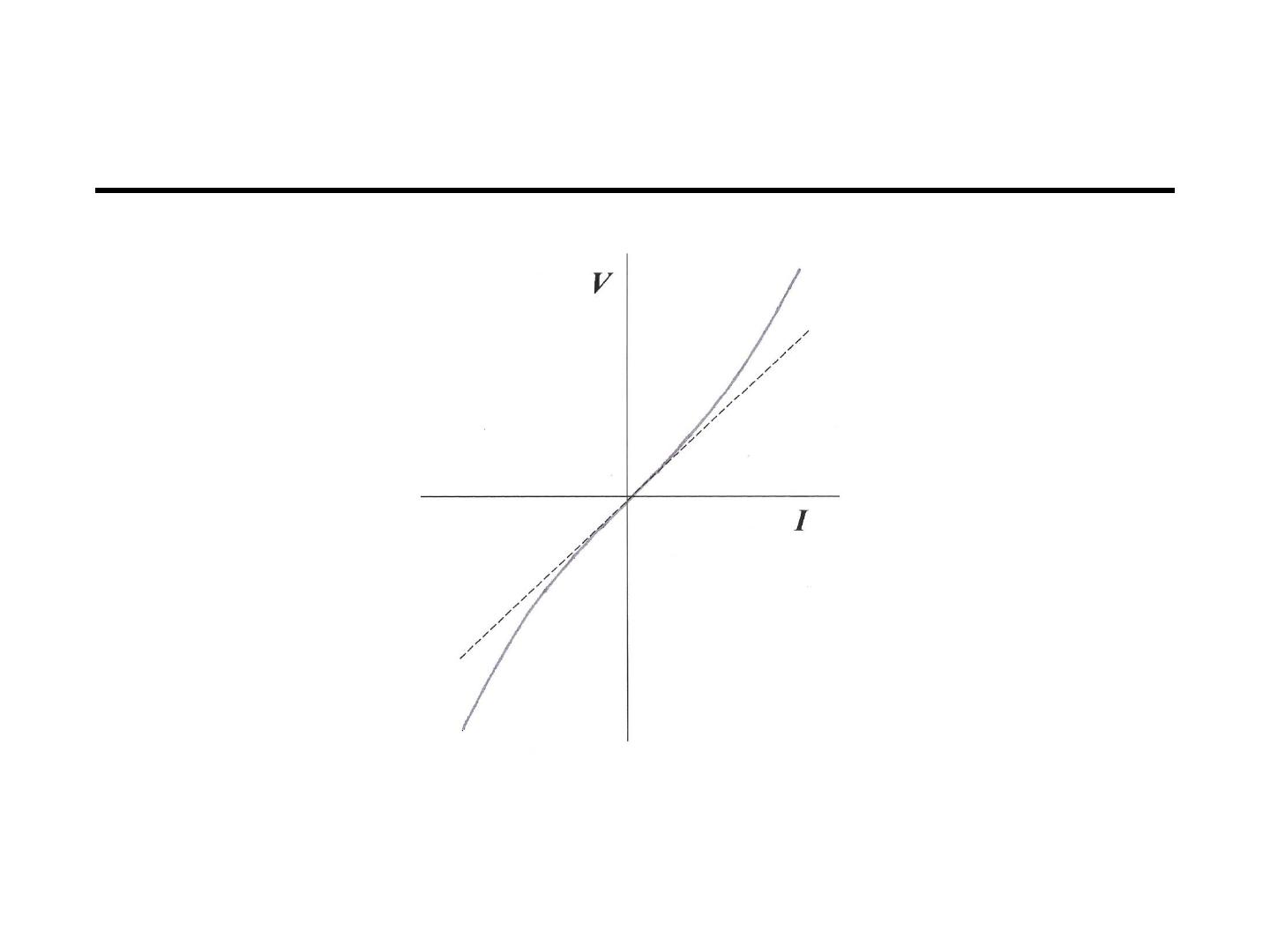
Nonlinear resistor characteristic
Approach to Solution
of Slightly Nonlinear ODE
Since is small, consider the successive approximations
0)0(
)sin(
1
01
1
=
=+
I
tII
dt
dI
Equation 2
Approach to Solution
of Slightly Nonlinear ODE (2)
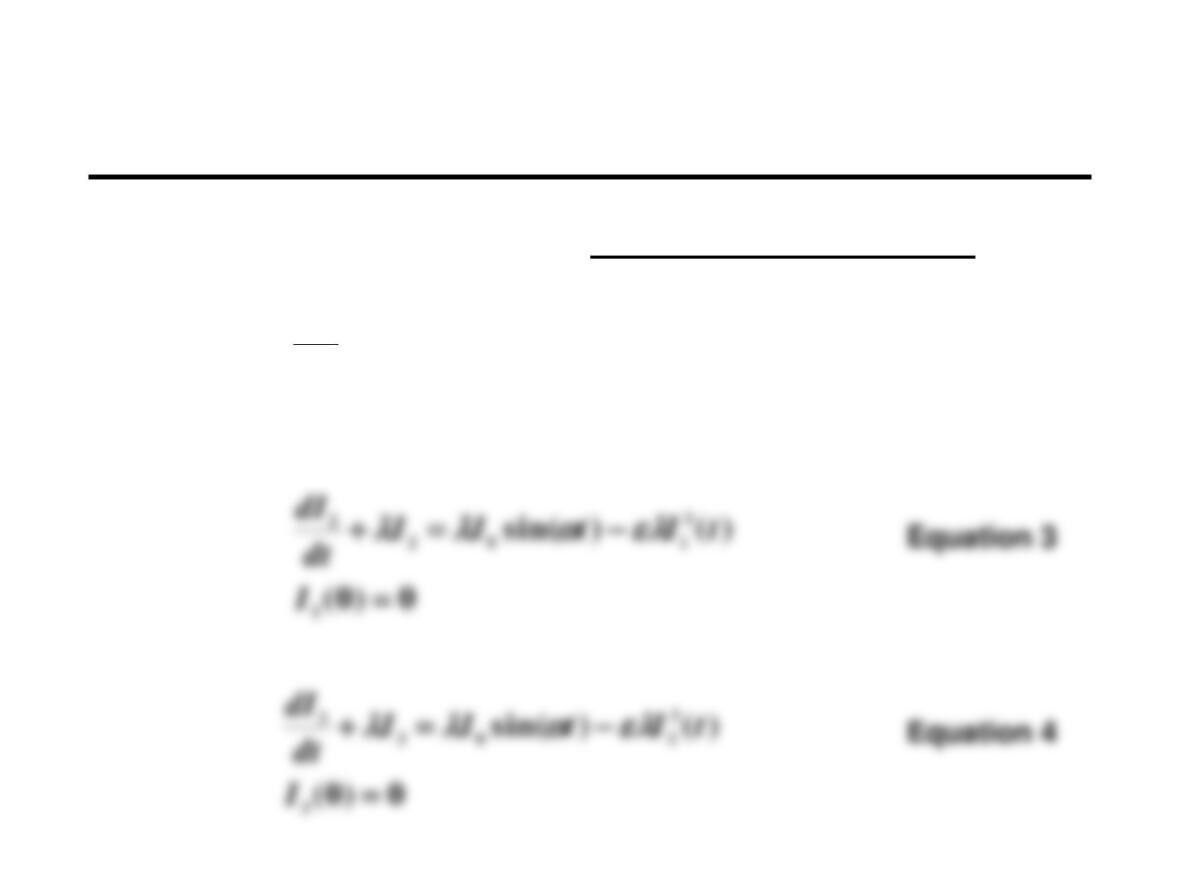
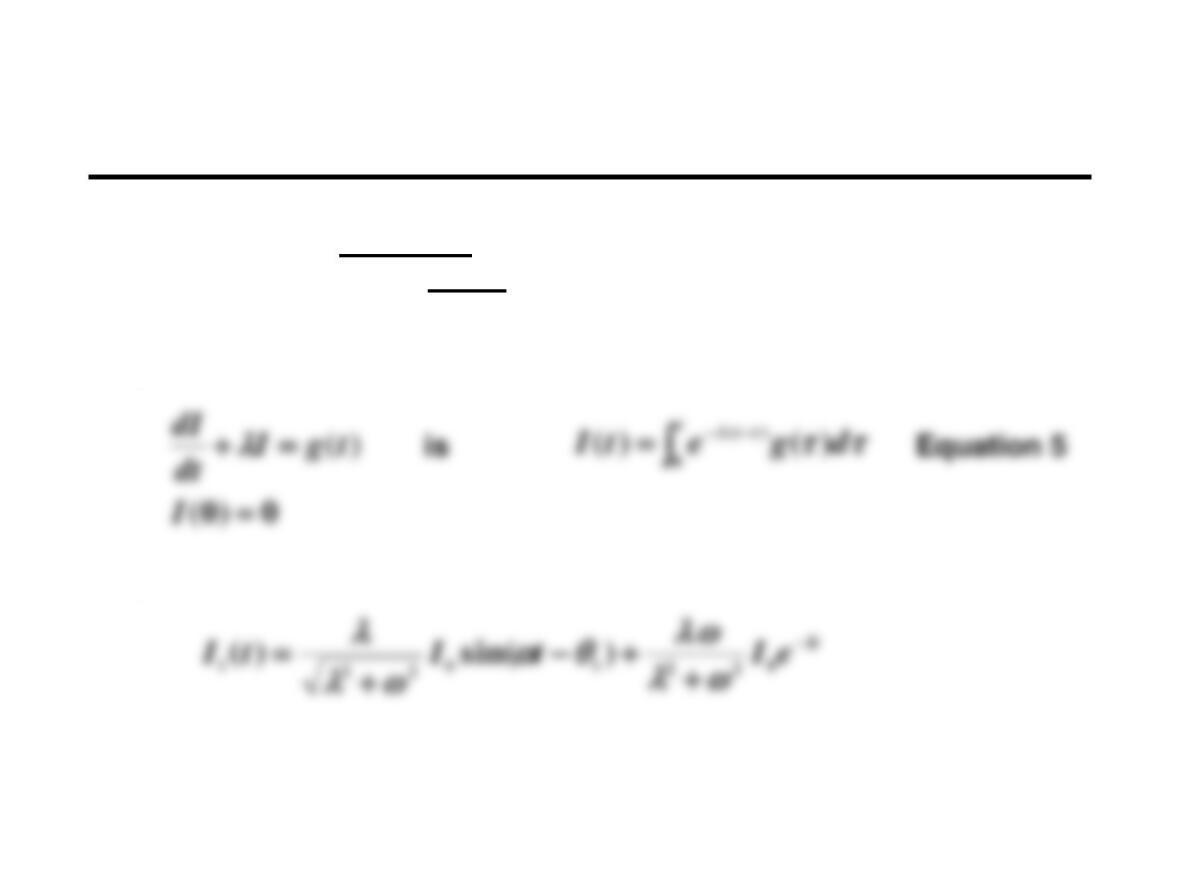
We are solving the nonlinear Equation 1 approximately by the sequential
solution of a series of linear Equations 2, 3 and 4.
The general solution of
Using Equation 5, we have already found that the solution to Equation (2) is
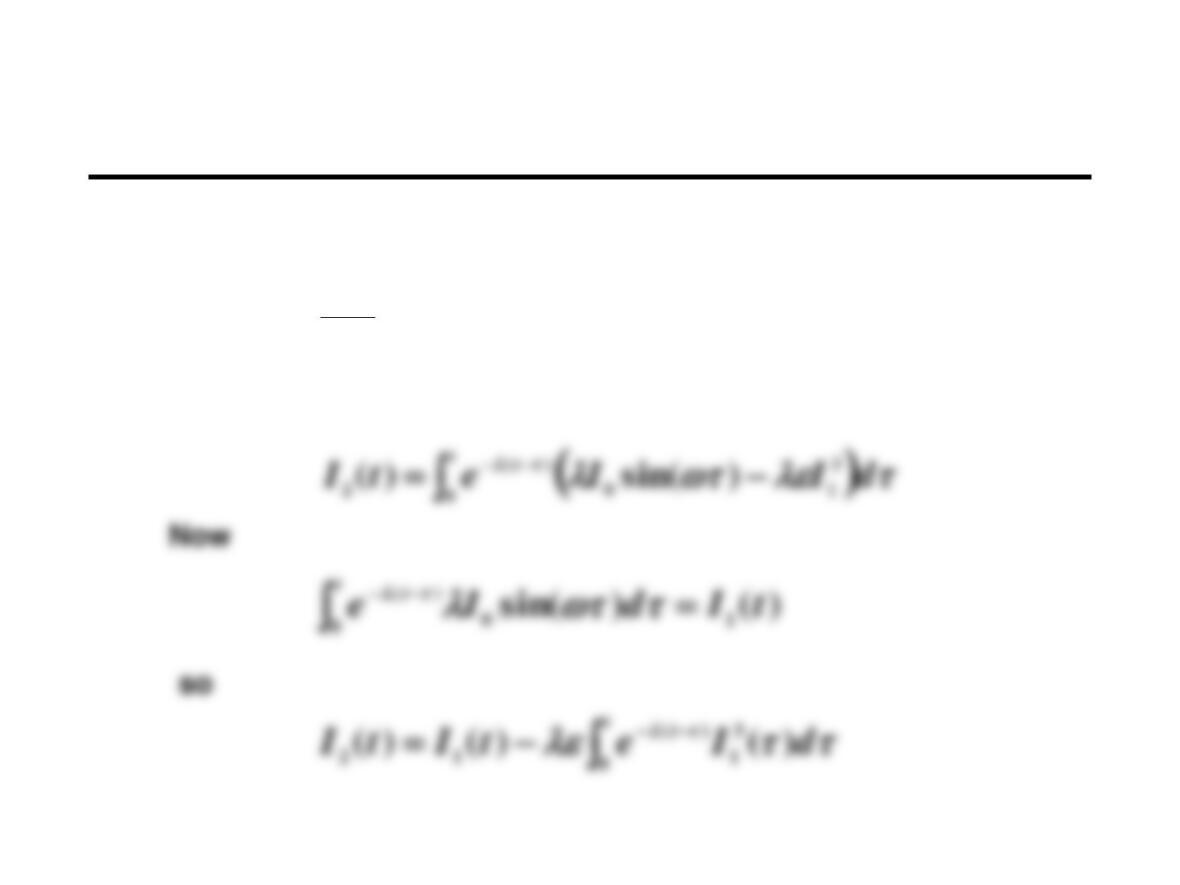
In what follows we will ignore the transient. We are examining the steady
state frequency response.
Approach to Solution
of Slightly Nonlinear ODE (3)
3
102
2sin ItII
dt
dI
−=+
Repeating Equation 3:
This has solution
Approach to Solution
of Slightly Nonlinear ODE (4)
dIetItI n
tt
n)()()( 3
0
)(
11 −−
+−=
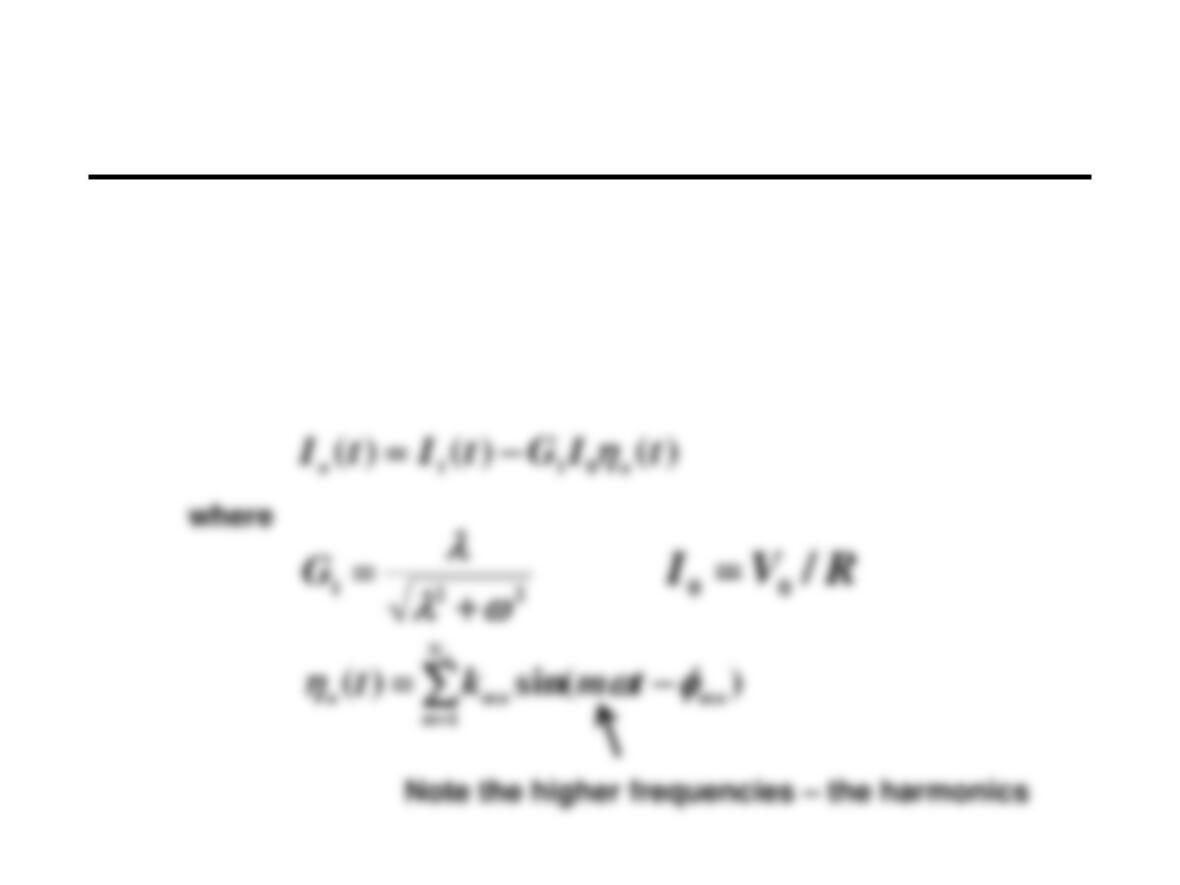
Continuing in this way, we find
which one can show can be written as
Approach to Solution
of Slightly Nonlinear ODE (4)
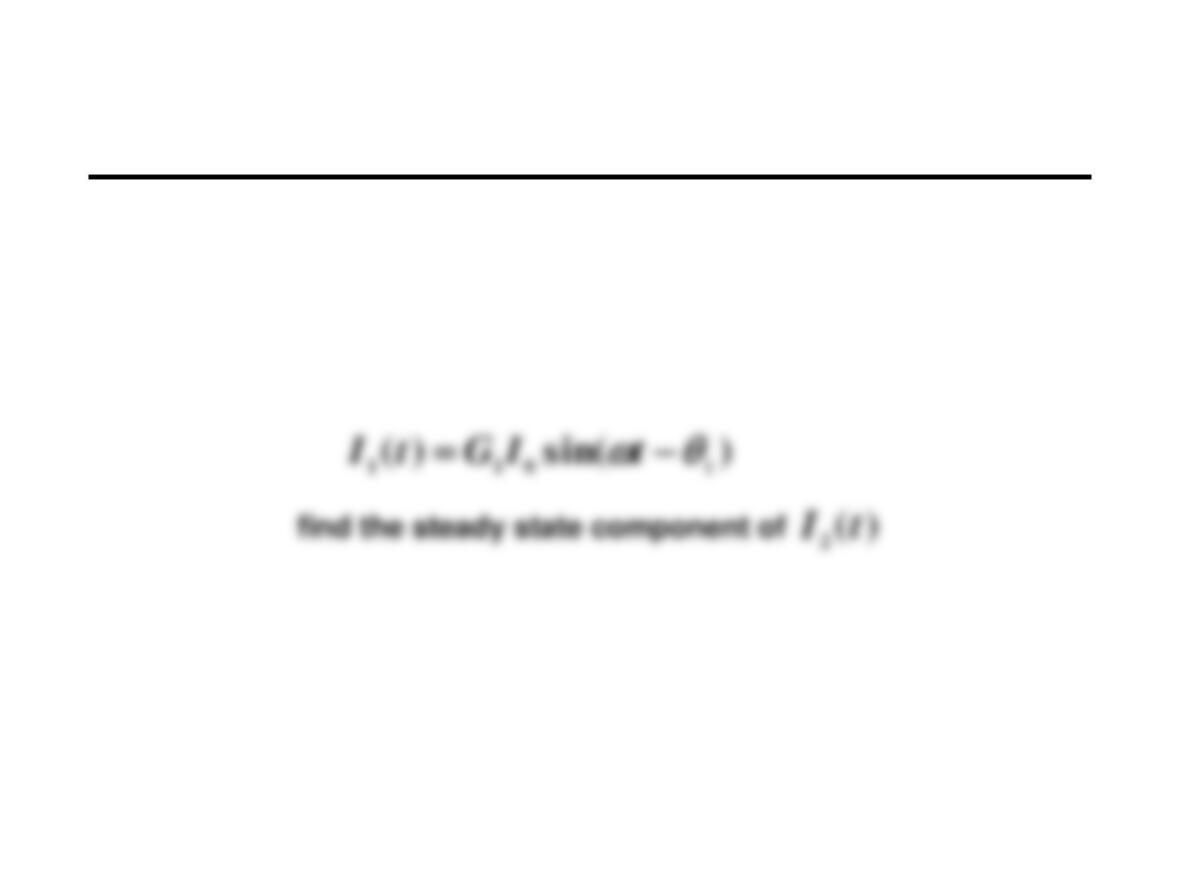
Challenge problem:
Given the steady state solution