Preliminaries: Lipschitz Condition (3)
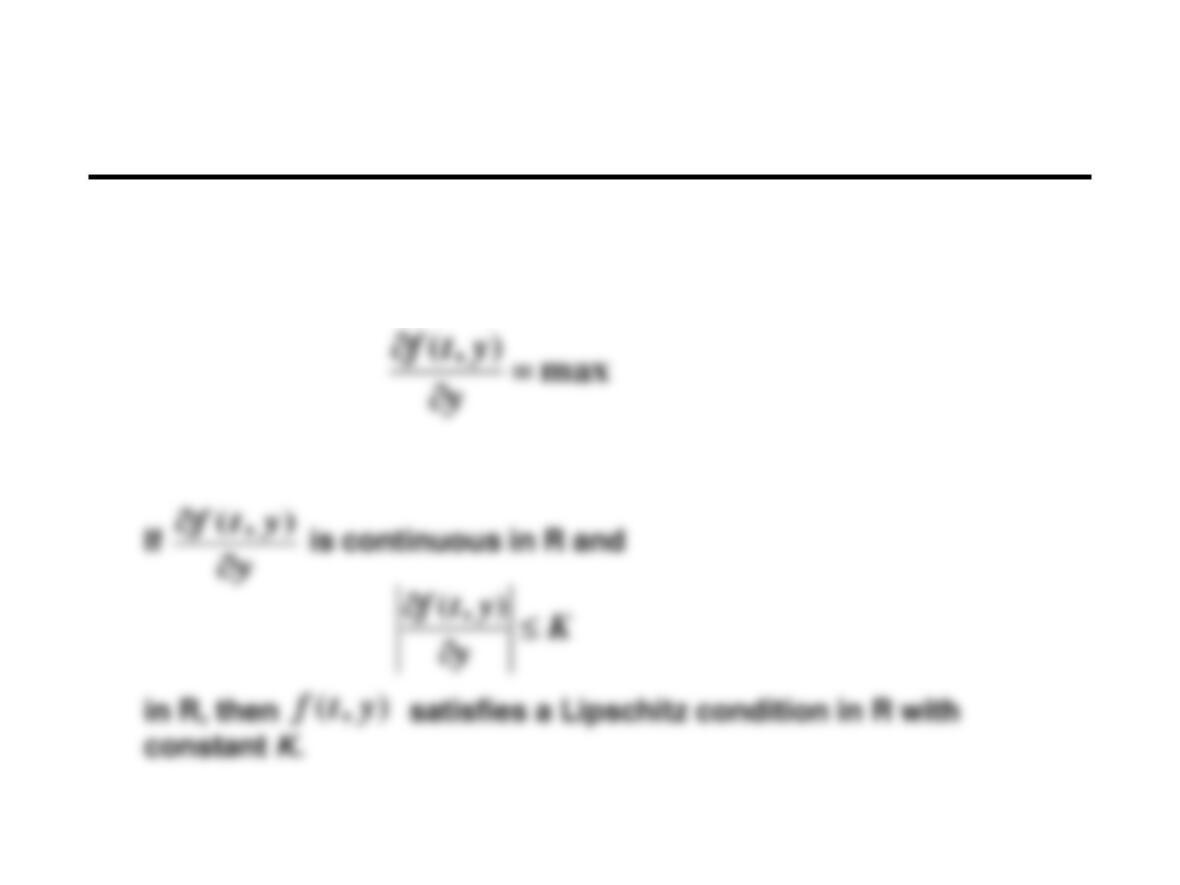
Note that, in the previous example, the Lipschitz constant K was
given by the point in R where
This is true more generally:
Existence and Uniqueness Theorem
),( ytf
t
y
0
t
a
b
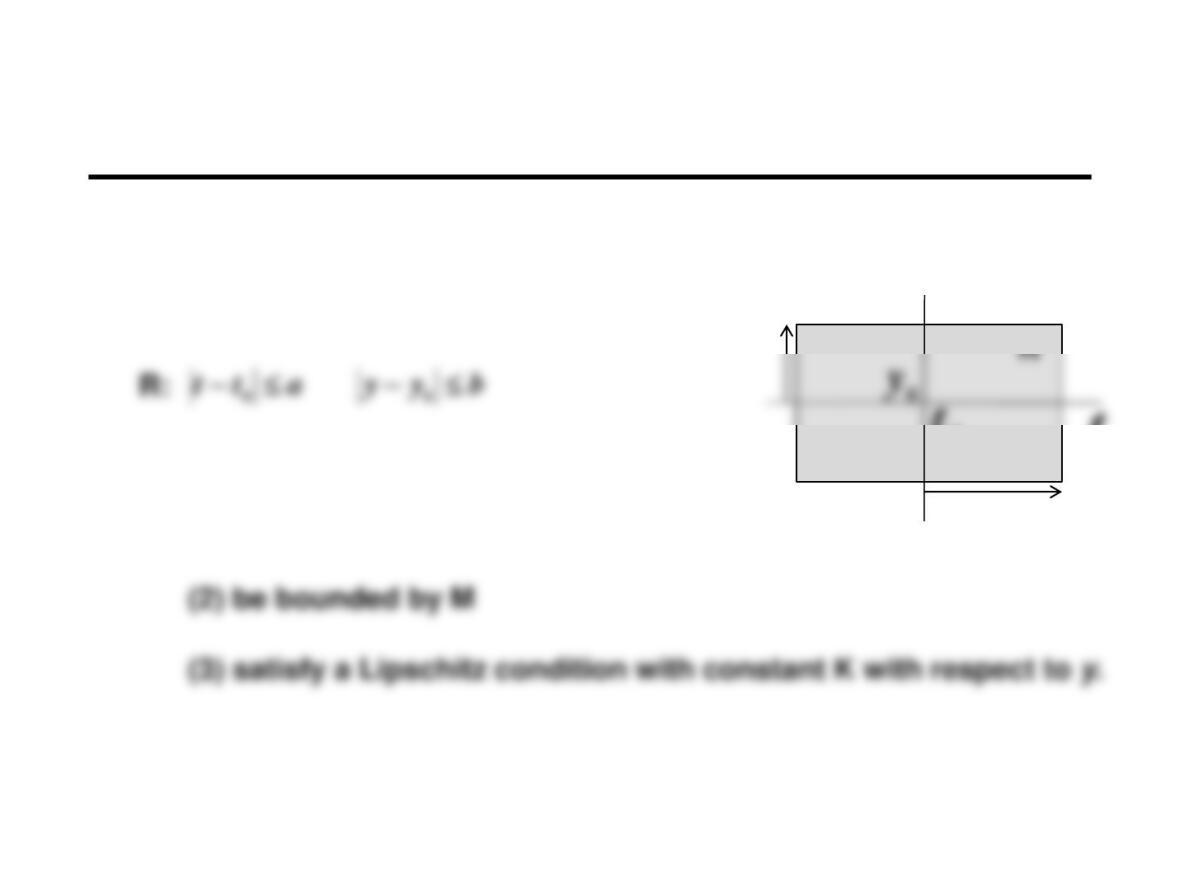
Let the function be defined on
the rectangle
and in R let :
(1) be continuous
),( ytf
Existence and Uniqueness Theorem (2)
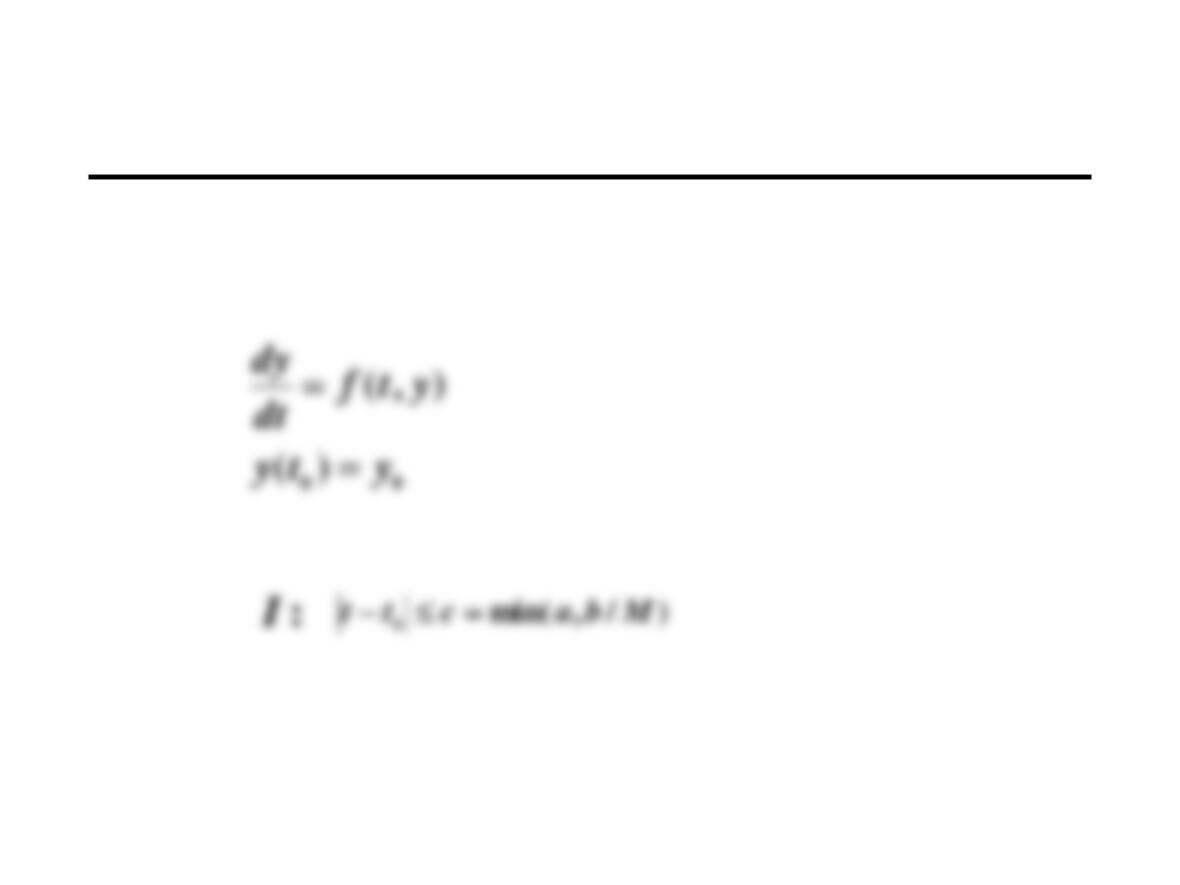
Then a unique solution to the first order ODE
exists in the interval
Successive Approximations and Convergence
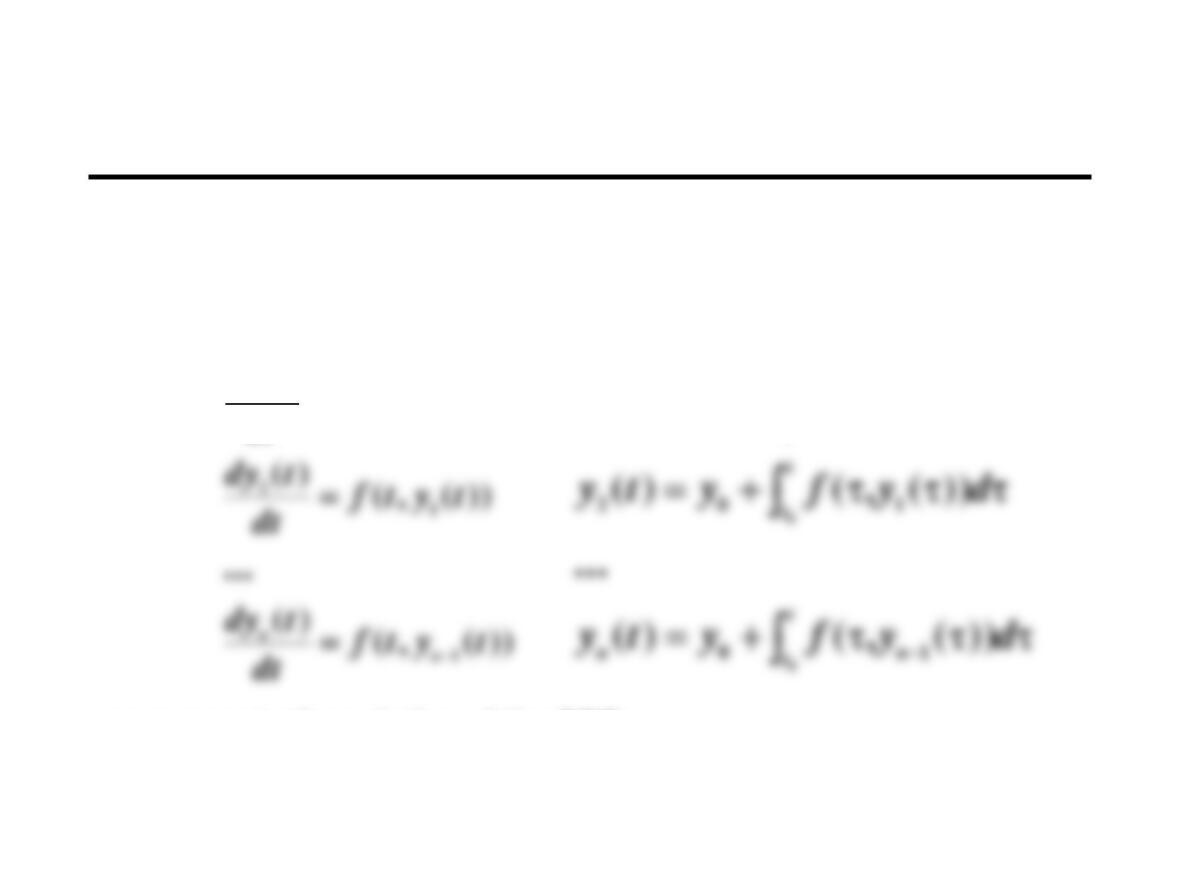
The sequence of approximations given by
converges to the solution of the ODE.
)(tyn
))(,(
)(
)(
0
0
tytf
dt
tdy
yty
=
=
+=
dttytfyty
t
t
))(,()(
001
0
Successive Approximations and
Convergence (2)
Proof:
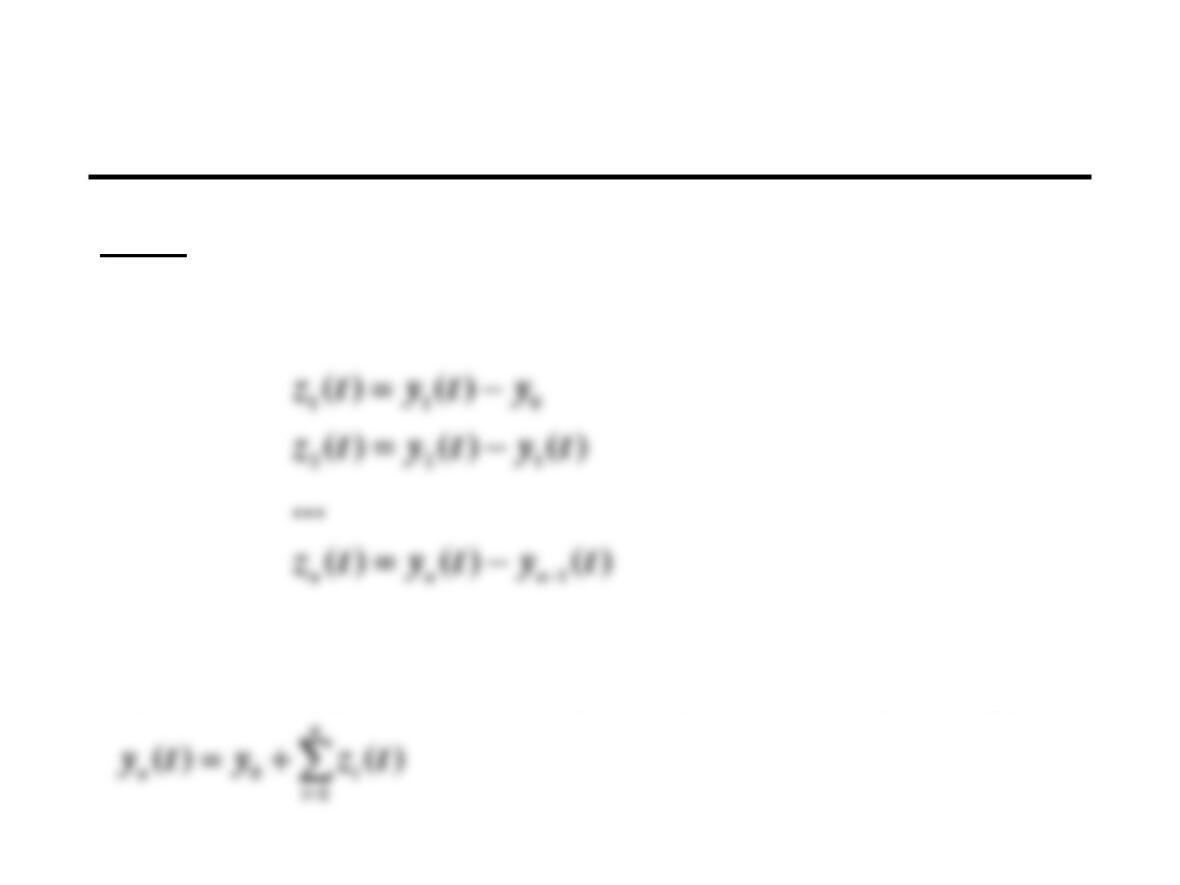
Consider the sequence of functions
Note that
−
−++−+−+=
nnn
tytytytytytyyty
112010
))()((…))()(())()(()(
Successive Approximations and
Convergence (3)
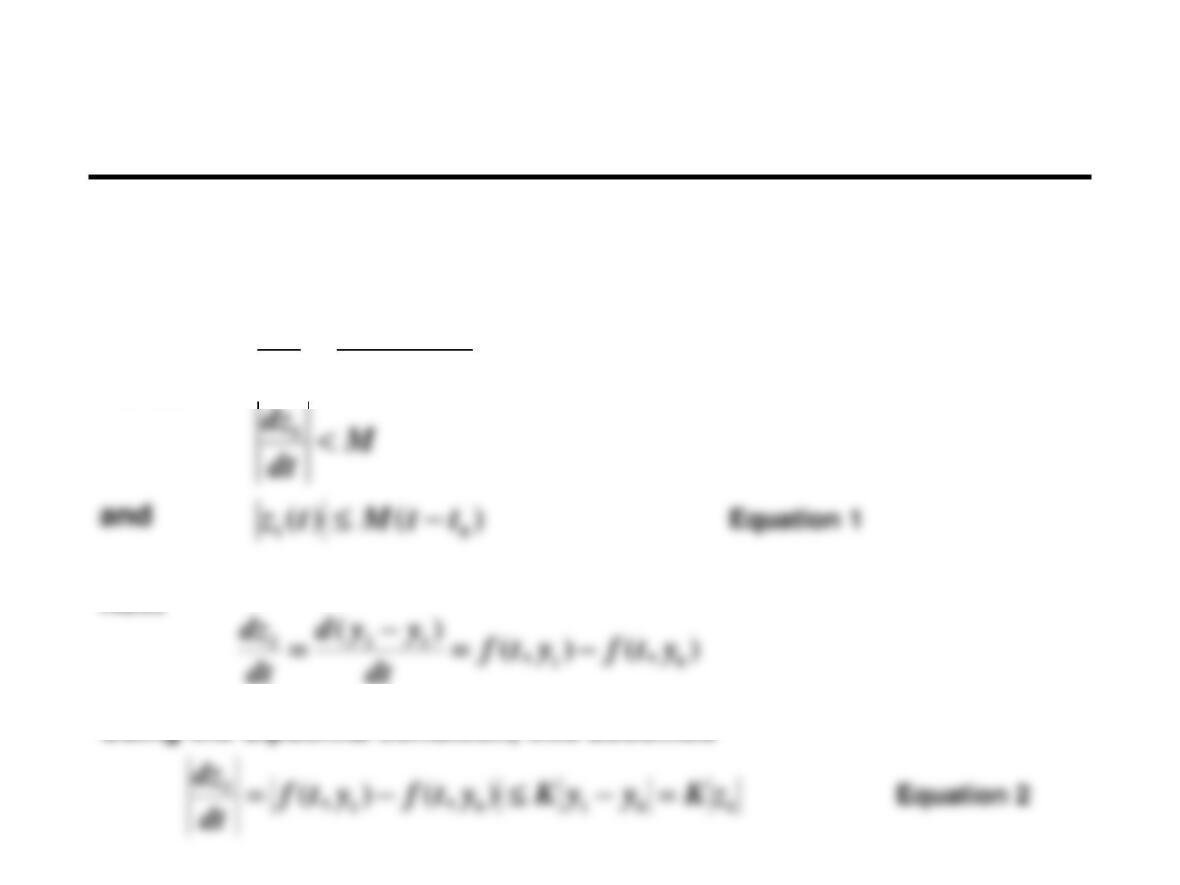
We must show that the series converges.
Now
Hence
Next
Using the Lipschitz condition, this becomes
=
n
i
itz
1
)(
),(
)(
0
011
ytf
dt
yyd
dt
dz
=
−
=
Successive Approximations and
Convergence (4)
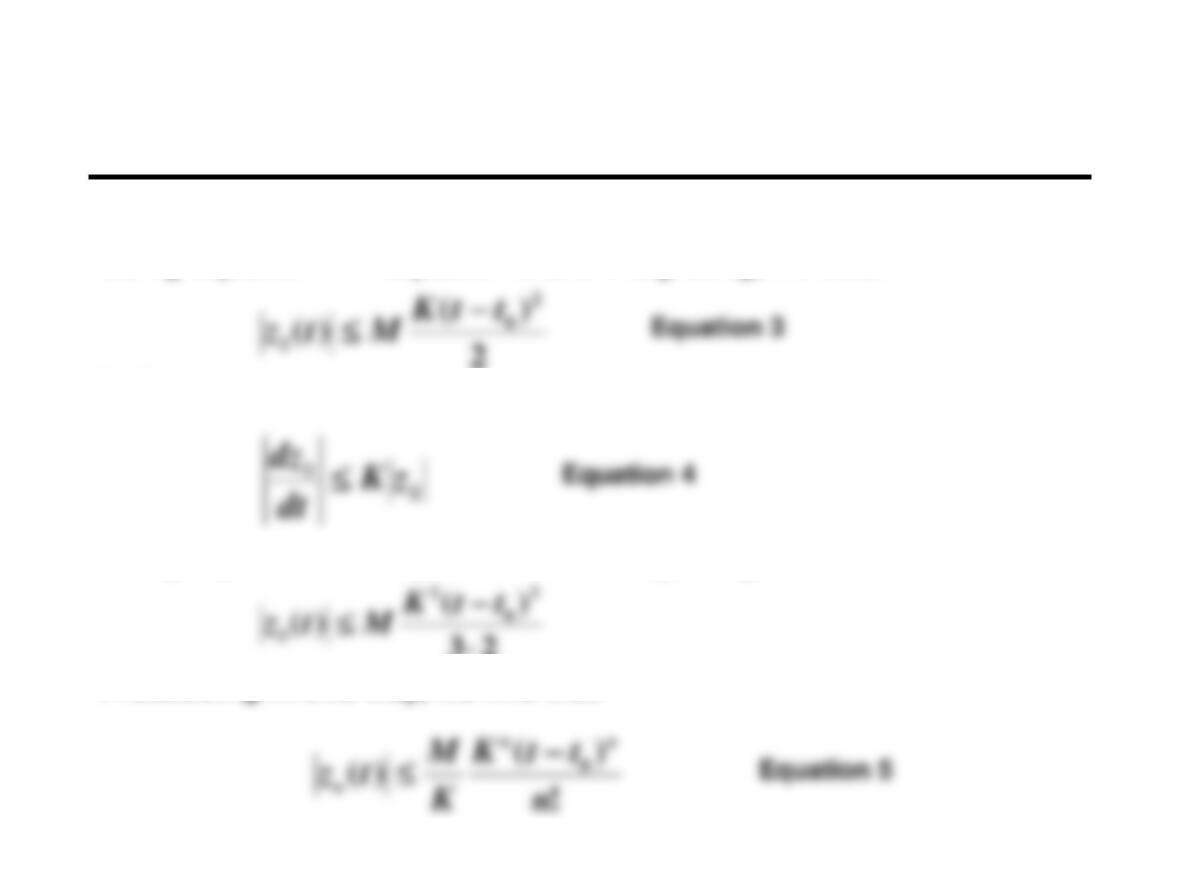
Using Equation 1 in Equation 2 and integrating, we obtain
In the same way,
Using Equation 3 in Equation 4 and integrating, we obtain
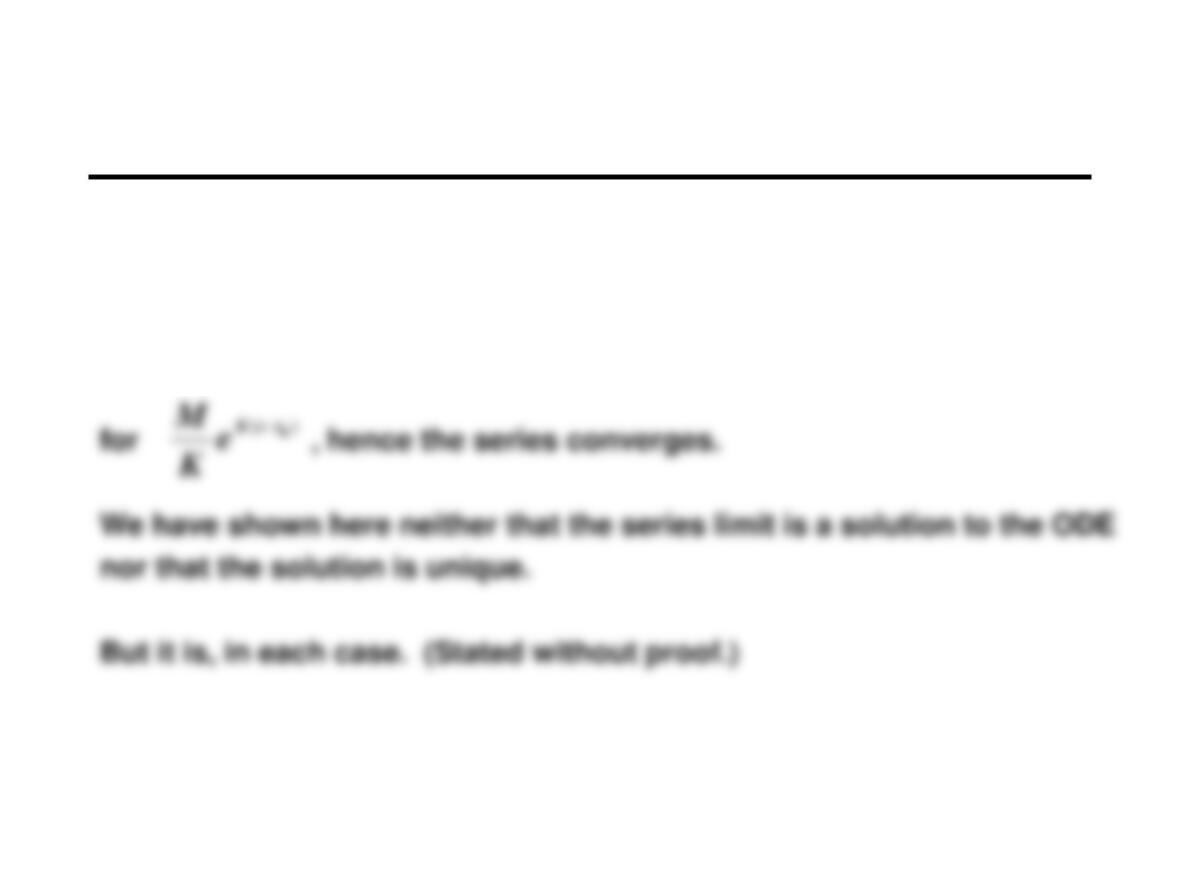
Proceeding in this way, we find that
23
Successive Approximations and
Convergence (5)
From Equation 5, each element of the series is smaller
term by term than the nth element of a convergent series, namely that
=
n
i
itz
1
)(
Some Solutions Are Local
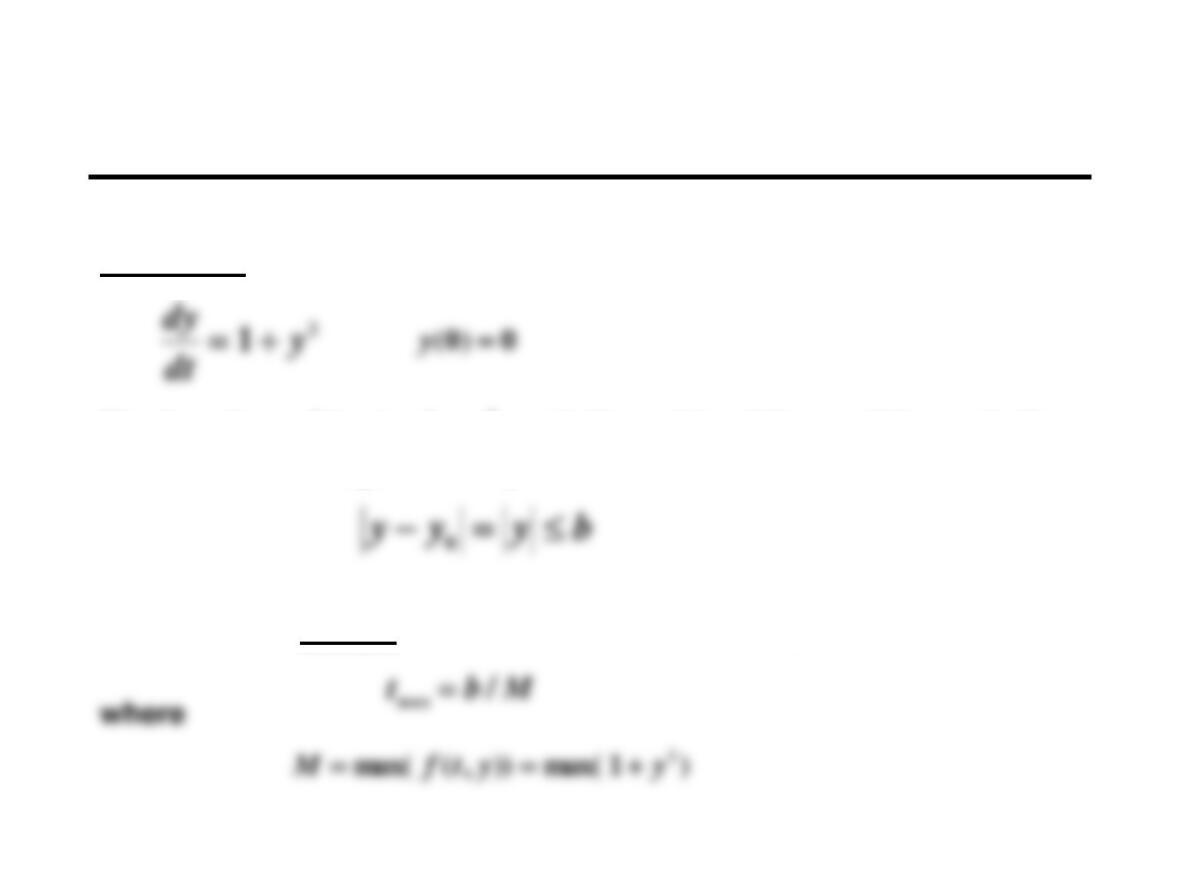
Example 1:
The function satisfies a Lipschitz condition only if
we limit the magnitude of . Let
What is the maximum time for which the existence theorem says a
solution is certain to exist? From the theorem,
2
1),( yytf +=
y
Some Solutions Are Local (2)
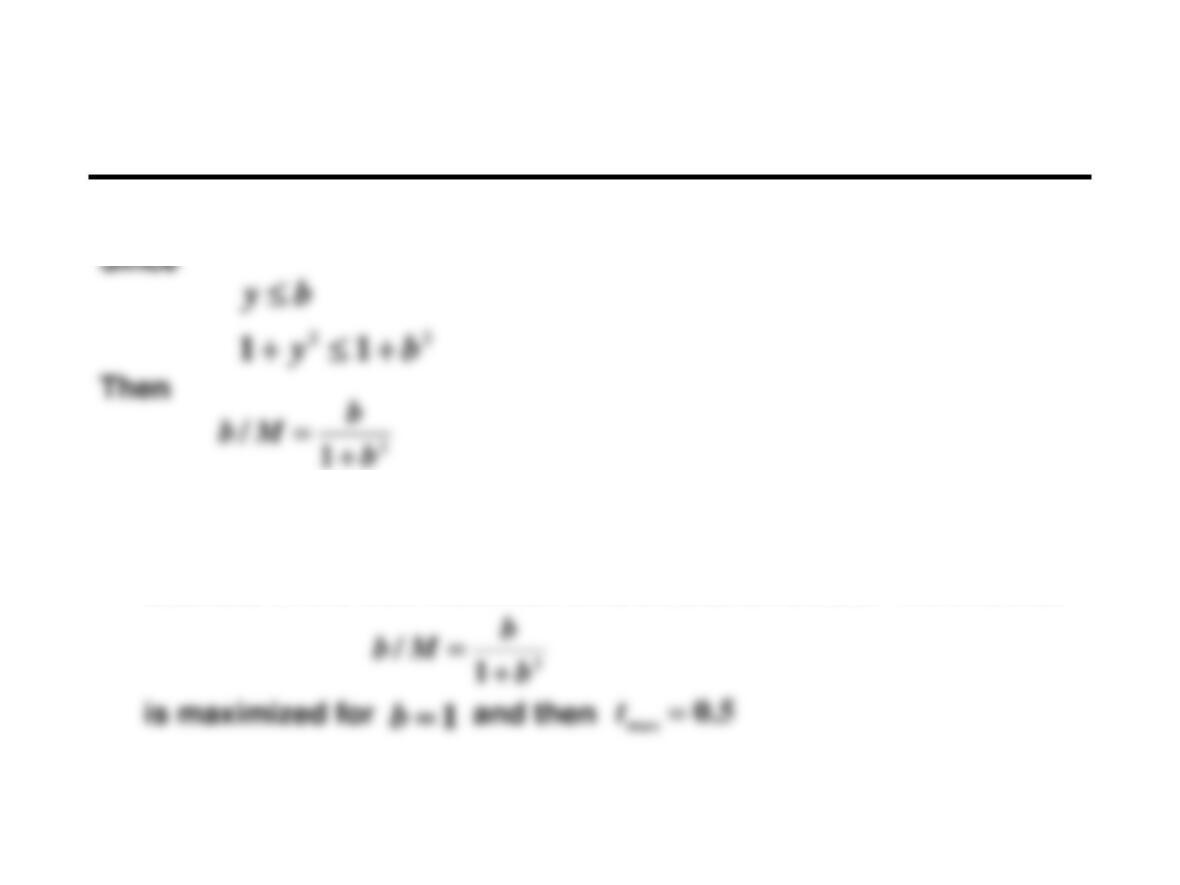
Since is of our own choosing here, we let it vary and see how
varies with it. The largest value we can find will be the best
estimate of the true maximum time a solution exists. We find that
b
Mbt /
max =
Some Solutions Are Local (3)
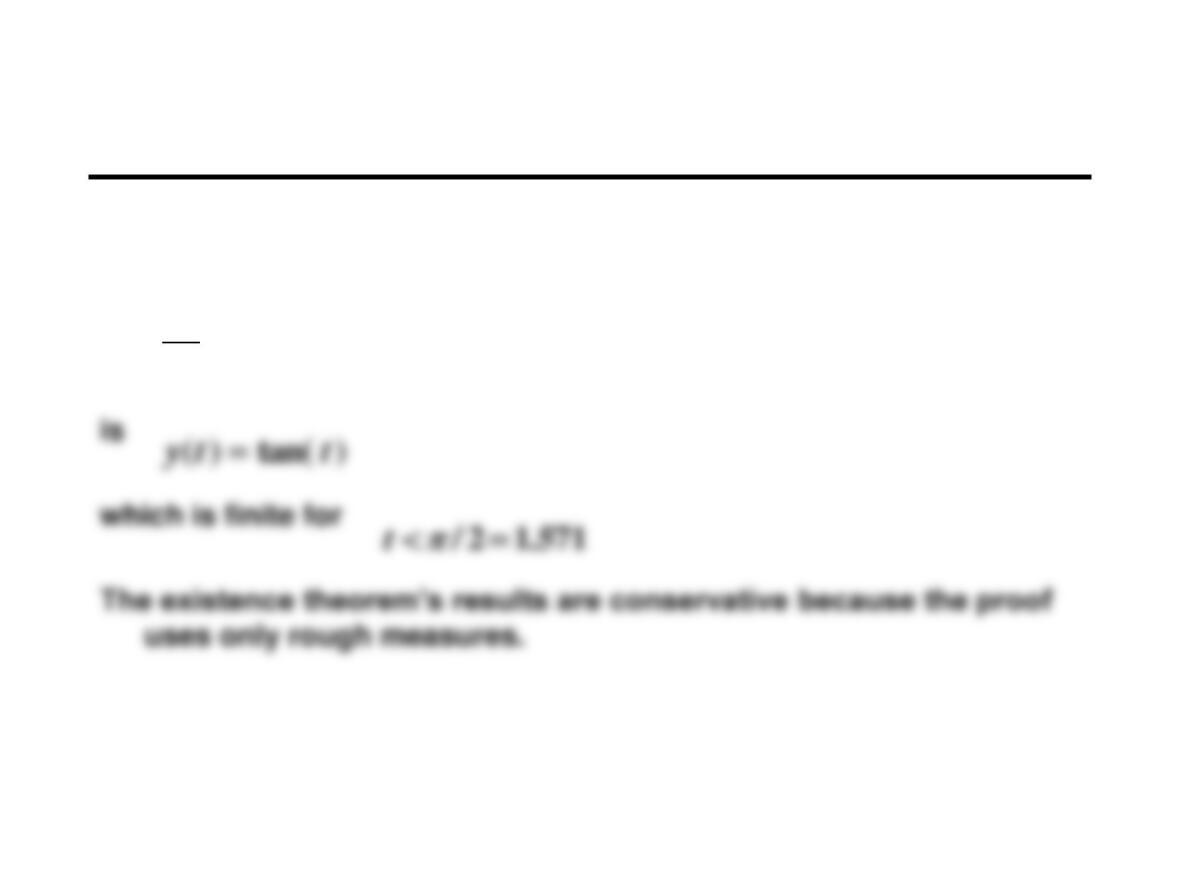
The solution of
2
1y
dt
dy +=
0)0( =y
Some Solutions Are Local (4)
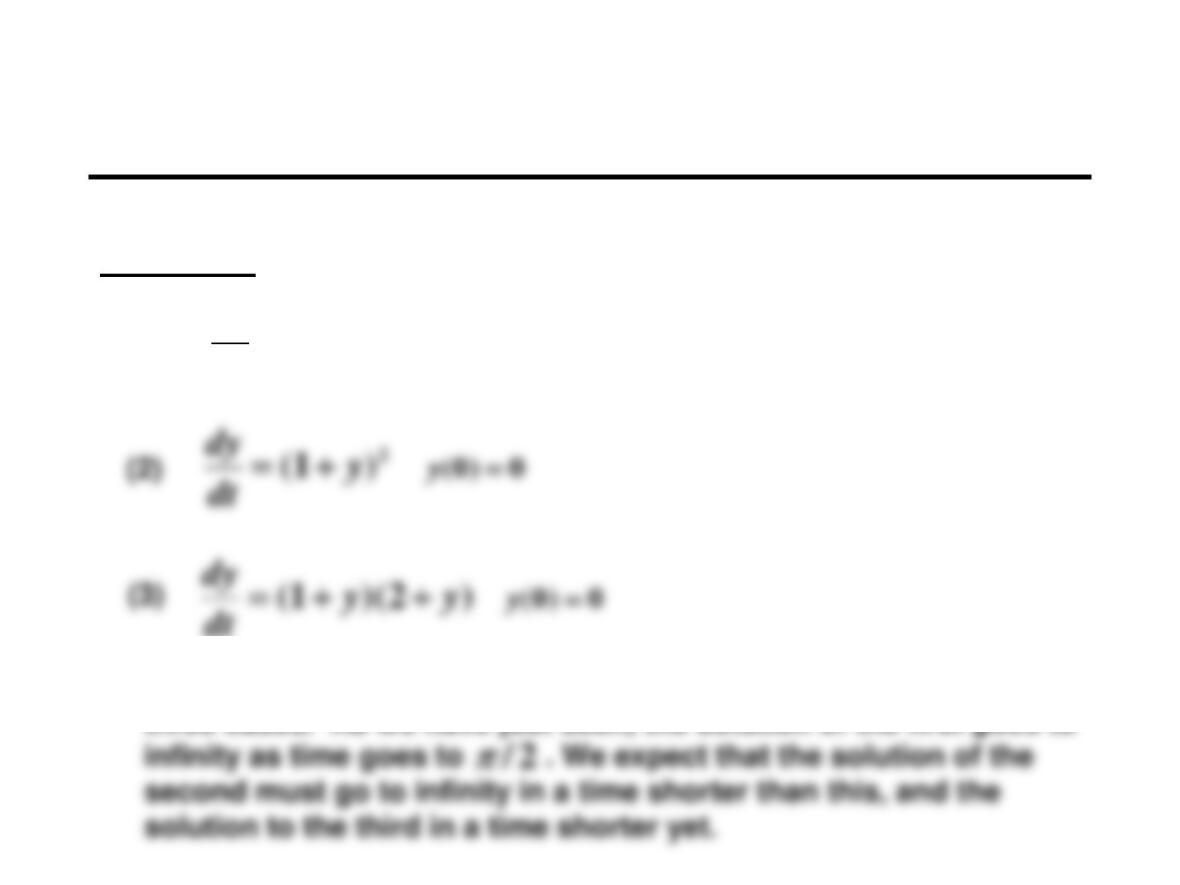
Example 2: Consider the three ODEs:
Note that the functions are progressively larger in these
three cases. As we have just seen, the solution of the first goes to
2
1y
dt
dy +=
0)0( =y
(1)
),( ytf
Some Solutions Are Local (5)
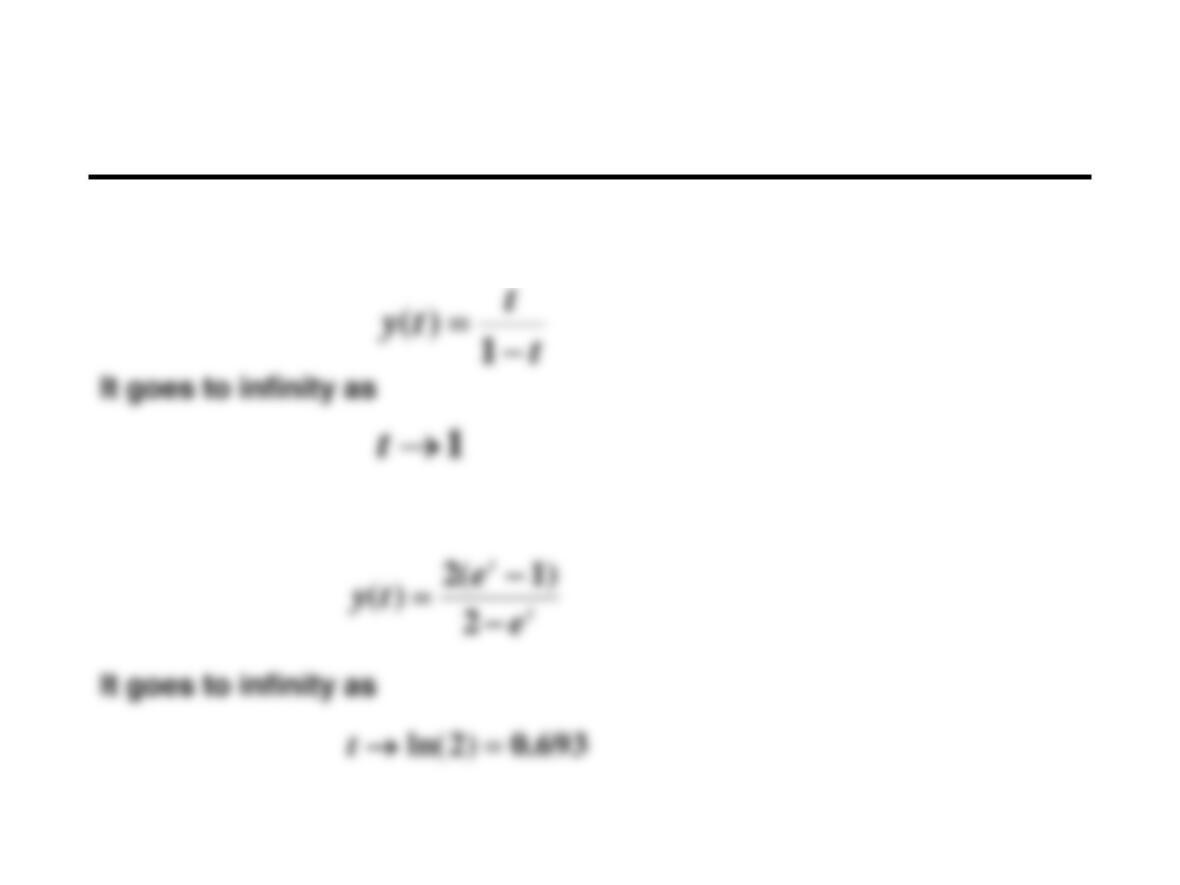
The solution of the second ODE is
The solution of the third ODE is
Hence results are as we expected.
Key Aspects of
Existence and Uniqueness Theorems
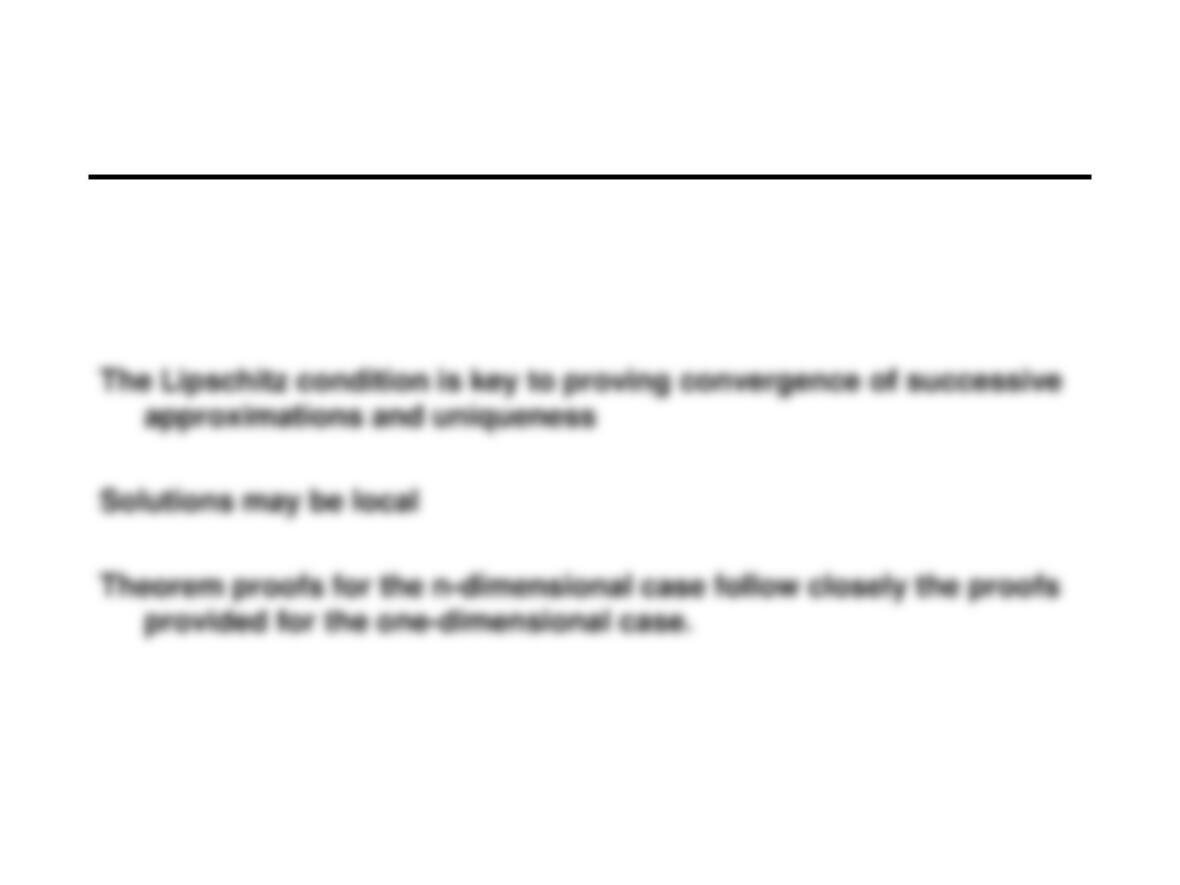
Existence of a solution is proved by demonstrating a reliable process
(successive approximations) for computing one
Homework Assignment 5
Read: Chapter 4, Sections 4.1 through 4.4