Some Fundamental Questions
About a Sounding Rocket
How high does it go?
Deriving the Equations for
Sounding Rocket Motion: Basic Approach
Break the rocket trajectory into three parts:
(1) high-thrust segment
Key simplifying assumptions:
Trajectory is purely vertical (perfect control)
Rocket thrust is so large and operates over such a short period of time that gravity
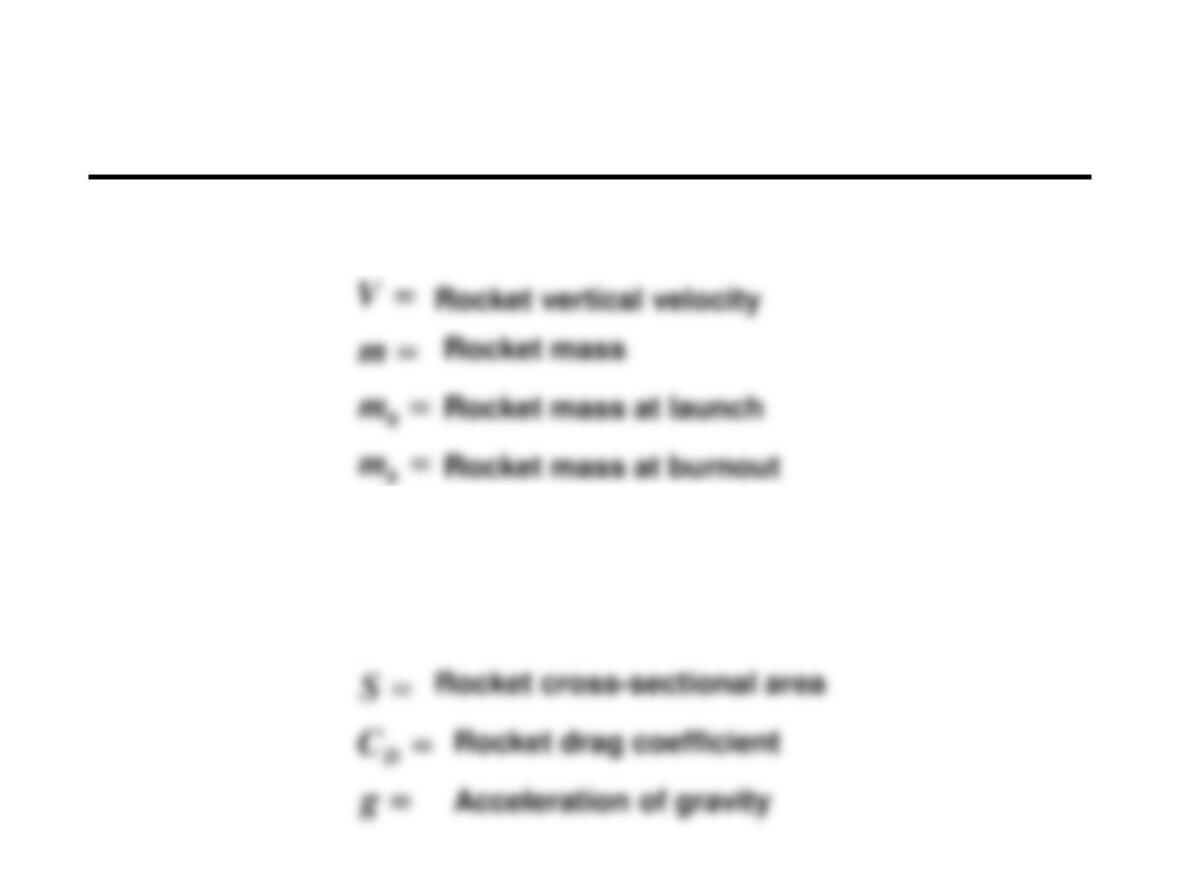
Definition of Terms
=
=
=
=
mSCk
c
h
bD
)2/(
Rocket altitude
Speed of rocket exit gases
Air density
High-thrust segment
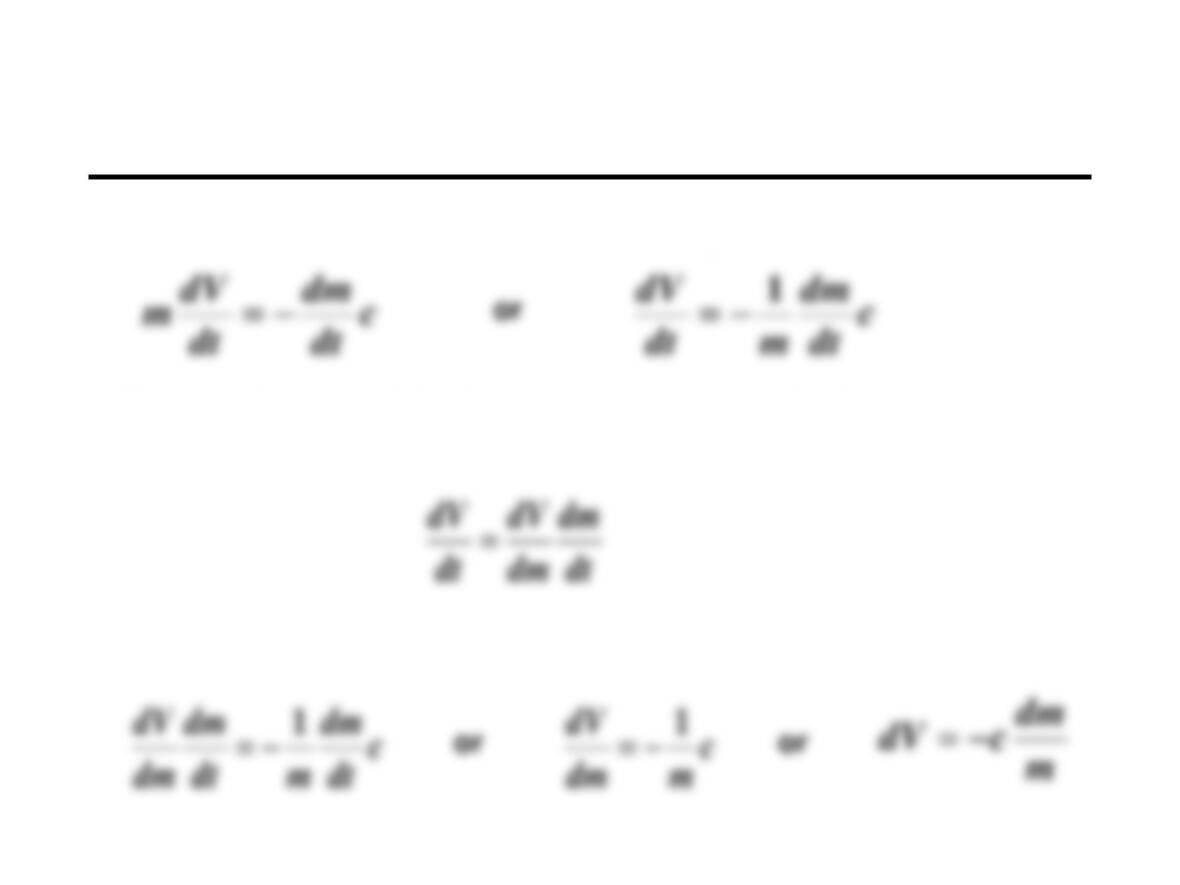
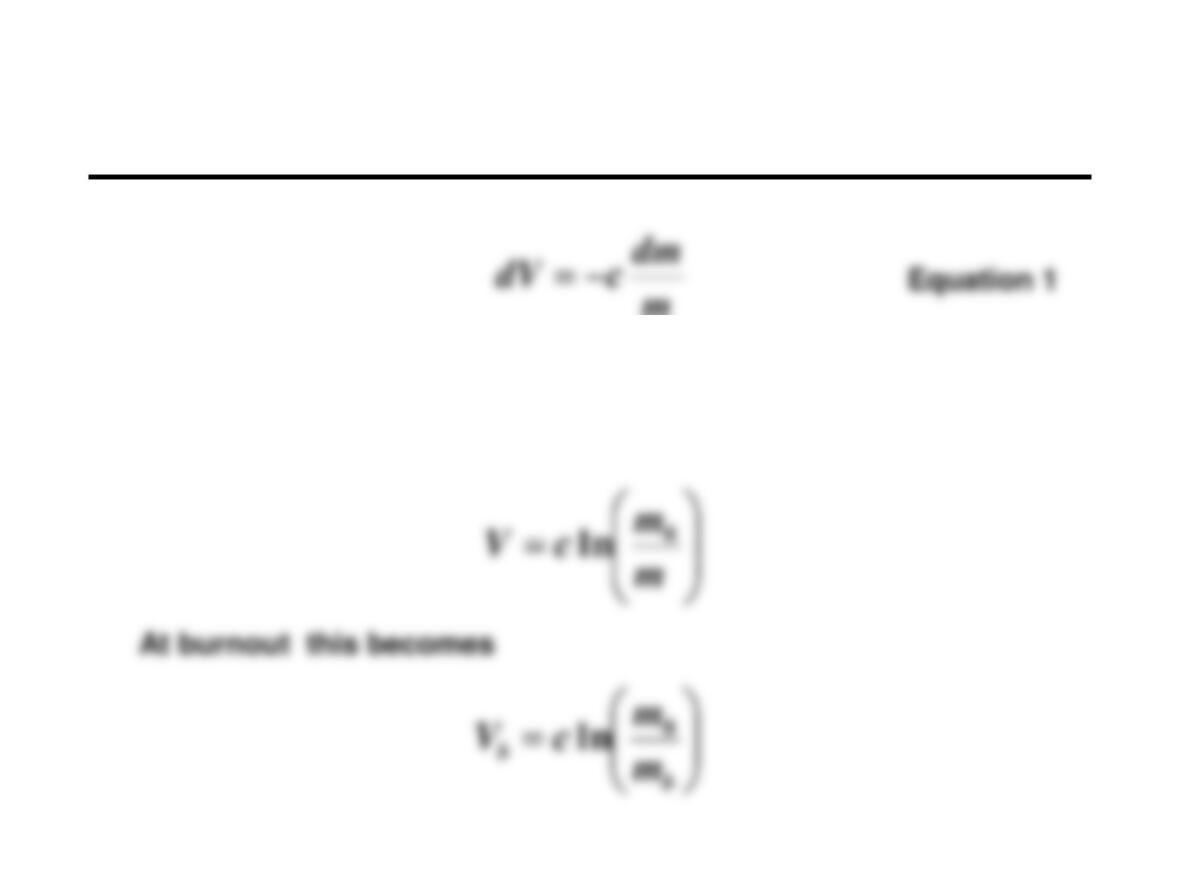
Conservation of mass and momentum implies:
We have three variables here: time, mass and velocity;
but in this case we can eliminate time from the equation using
Then
High-thrust segment (2)
m
Equation 1 is a (very simple) example of a separable first order ODE.
Its solution, recognizing the initial conditions are the launch conditions
(V = 0 and mass ), is
0
m
High-Thrust Segment
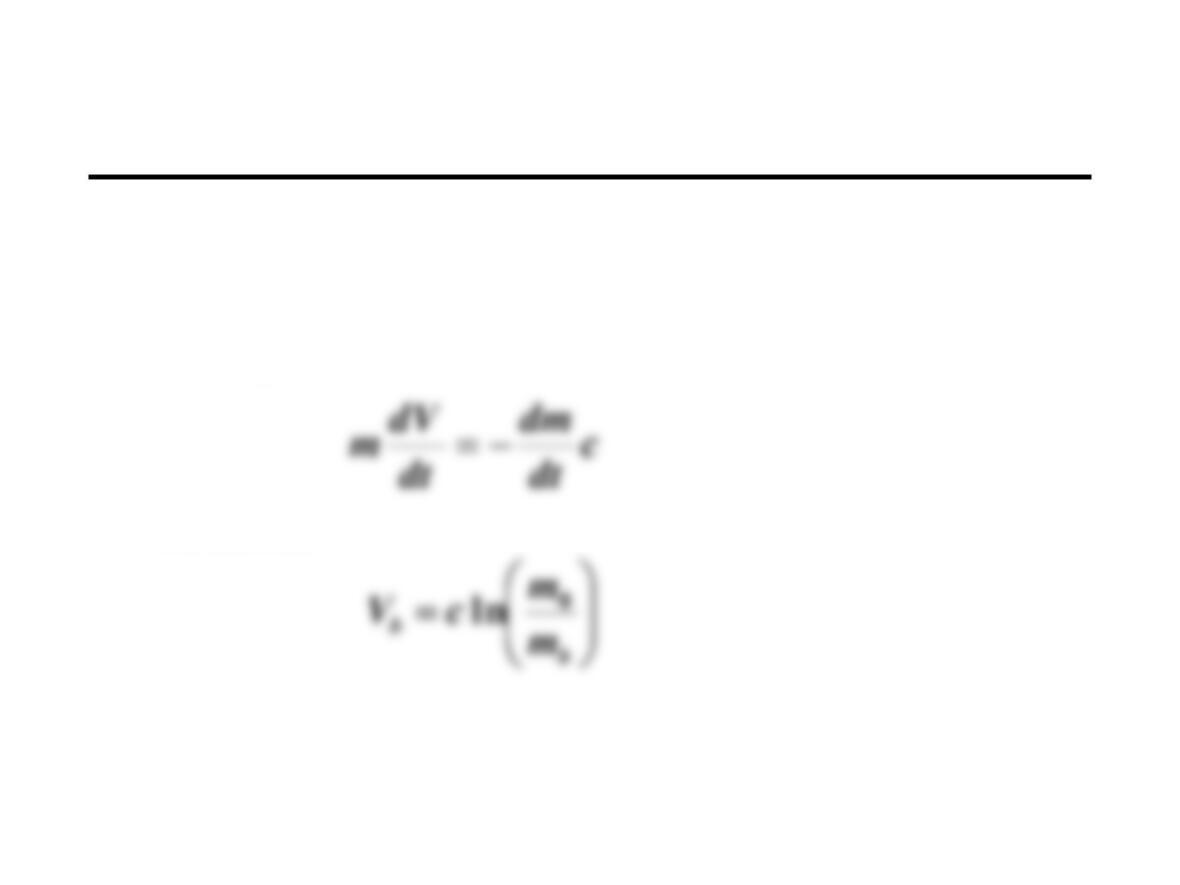
To summarize:
Starting from
we derived
the so-called “rocket equation”.
Phase 2: No-thrust segment going up
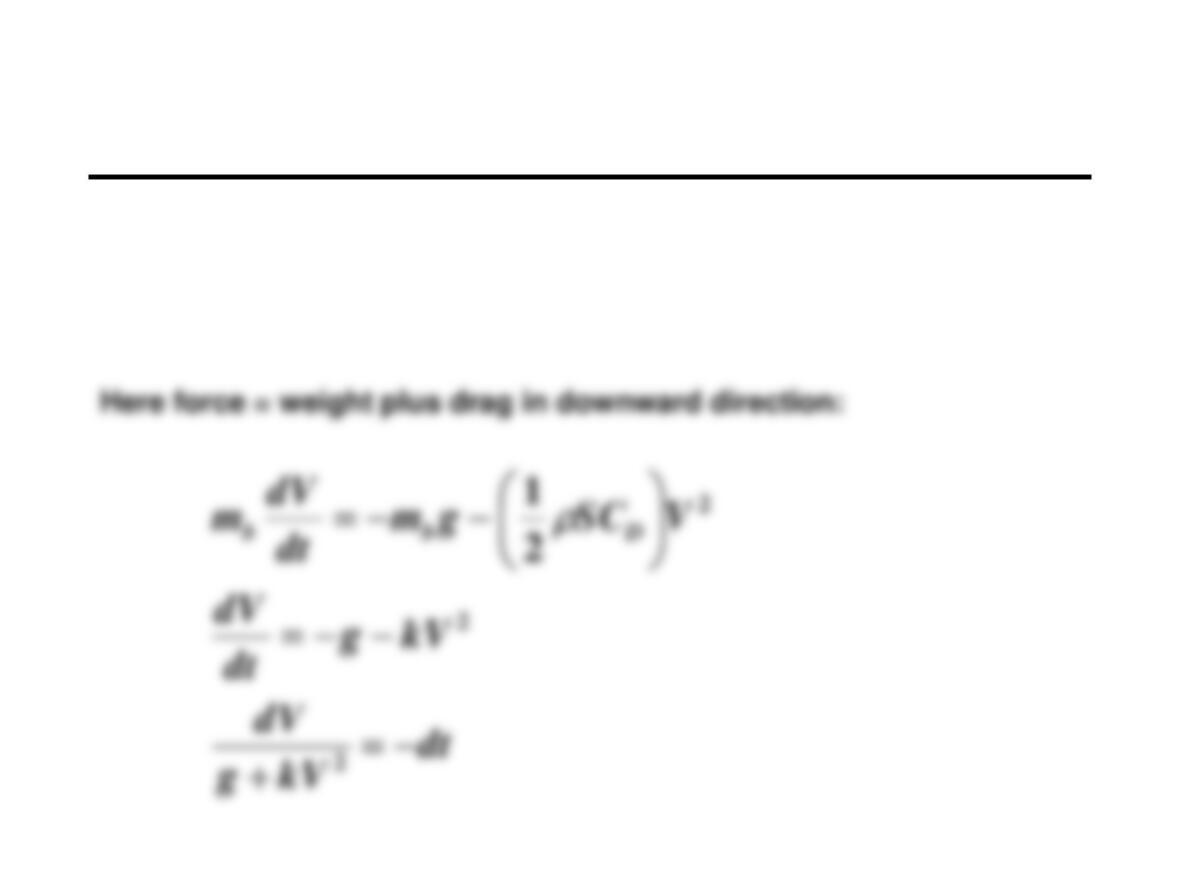
Objective of phase 2: Determine how high the sounding rocket will go.
Newton’s second law: Force = mass times acceleration
No-thrust segment going up (2)
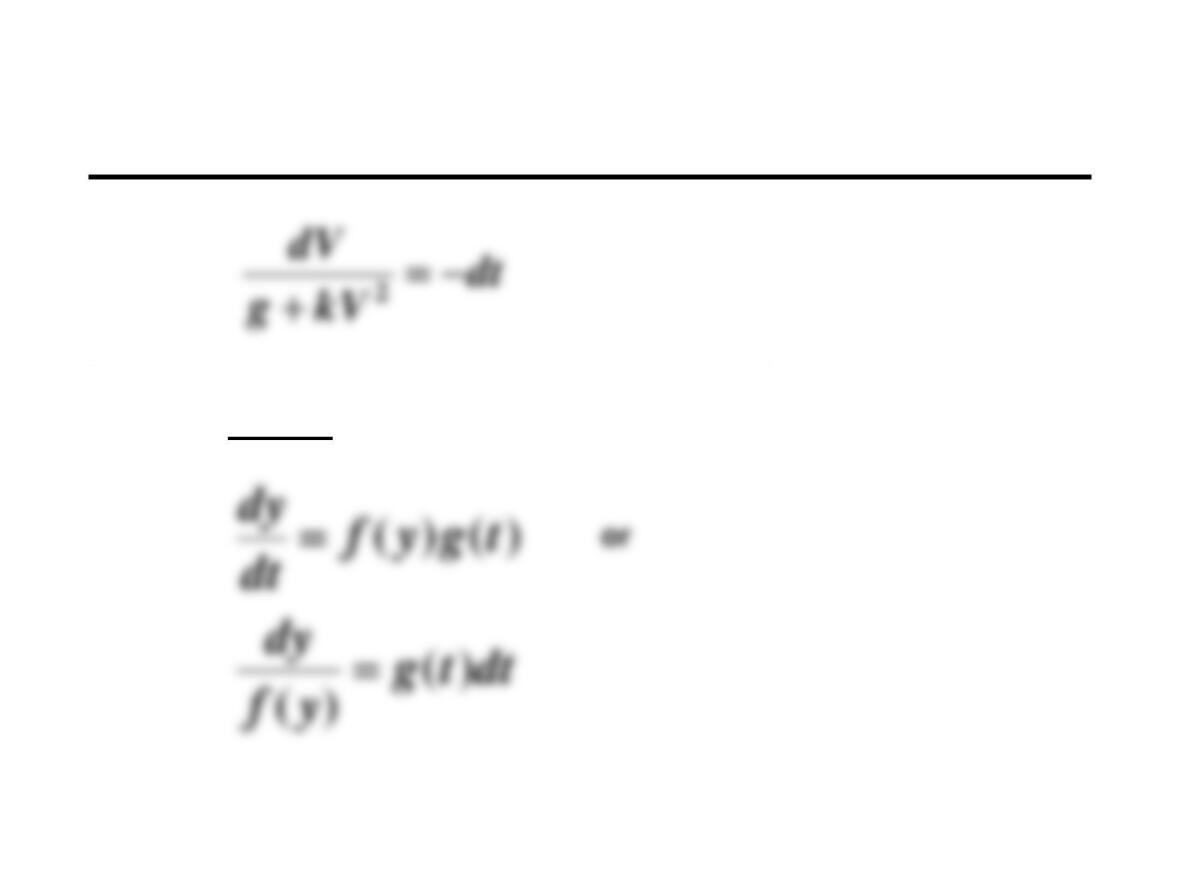
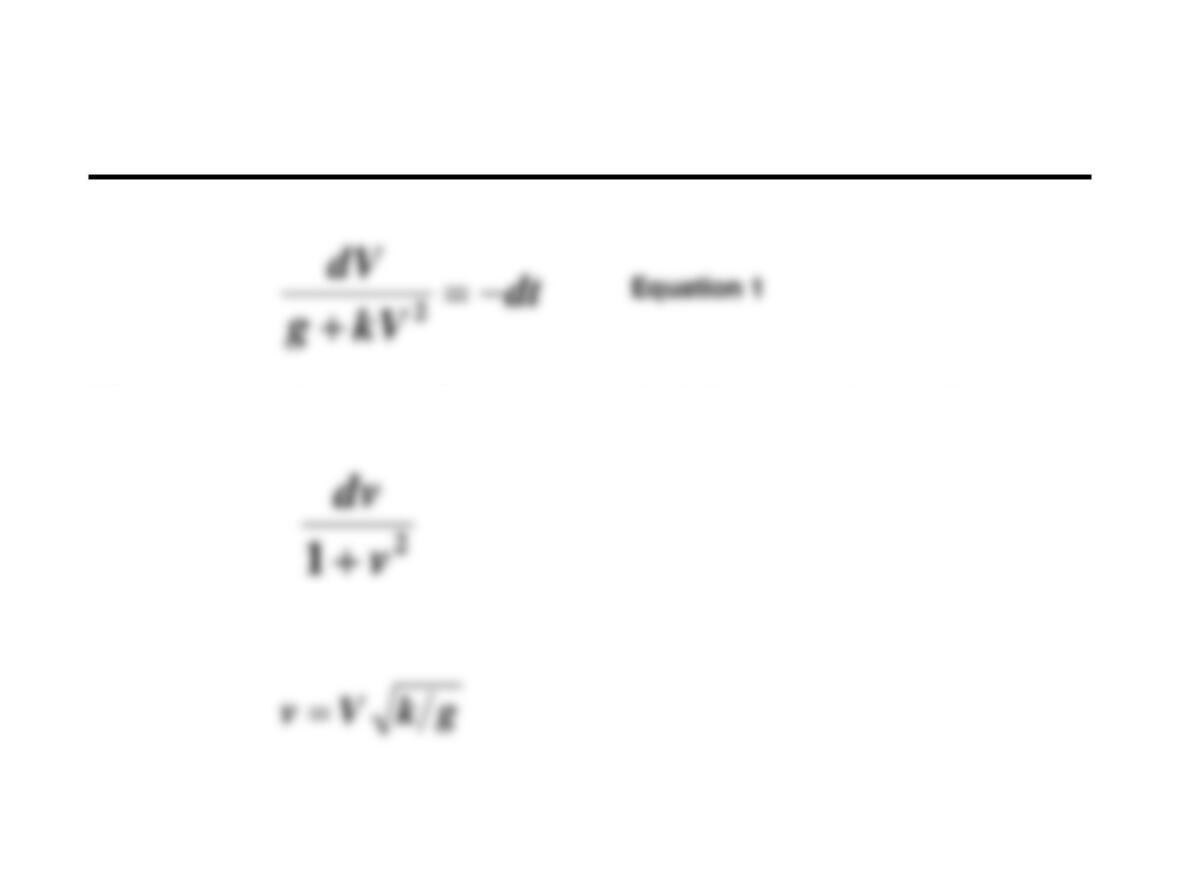
This is an example of a “separable” first order DE.
Recall the general form of a separable first order DE is:
No-thrust segment going up (3)
We want to make a substitution to get the left-hand side into the form
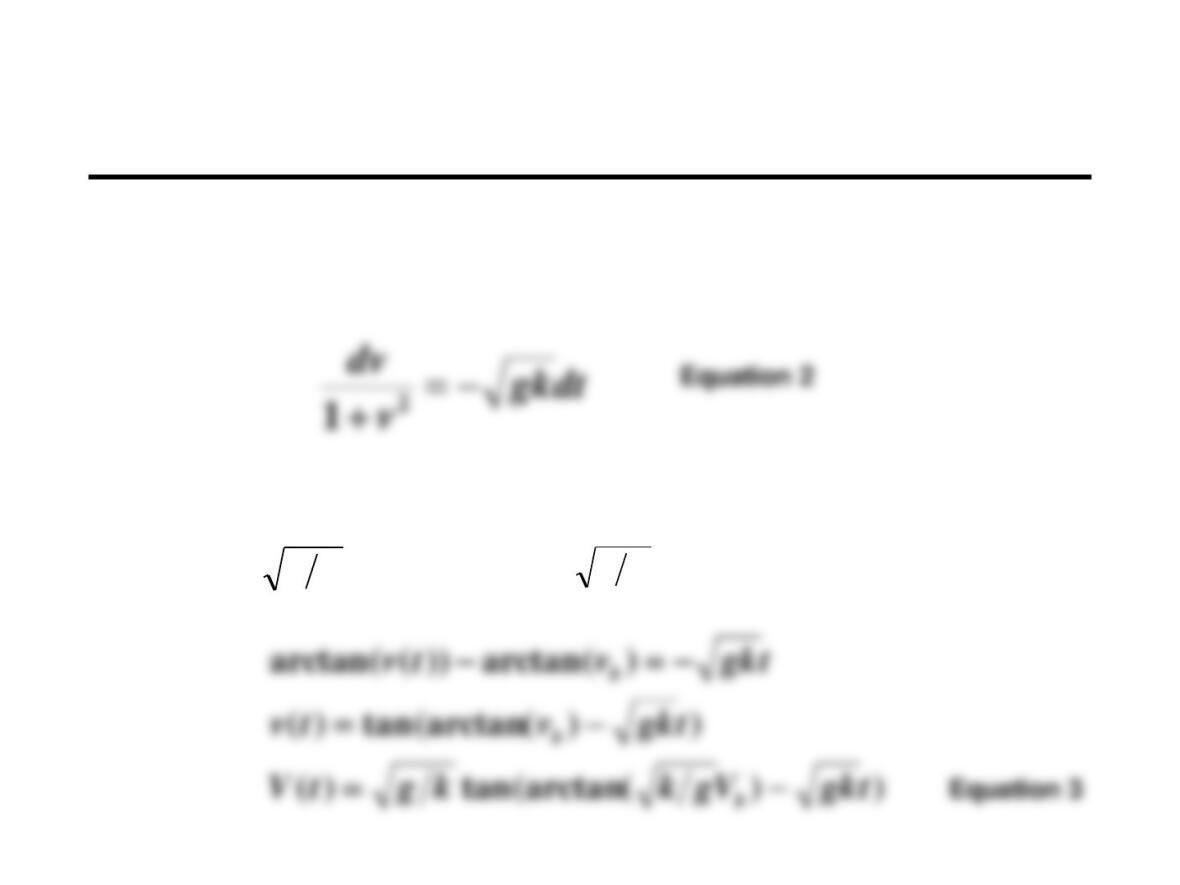
which we know how to integrate. This is accomplished by letting
No-thrust segment going up (4)
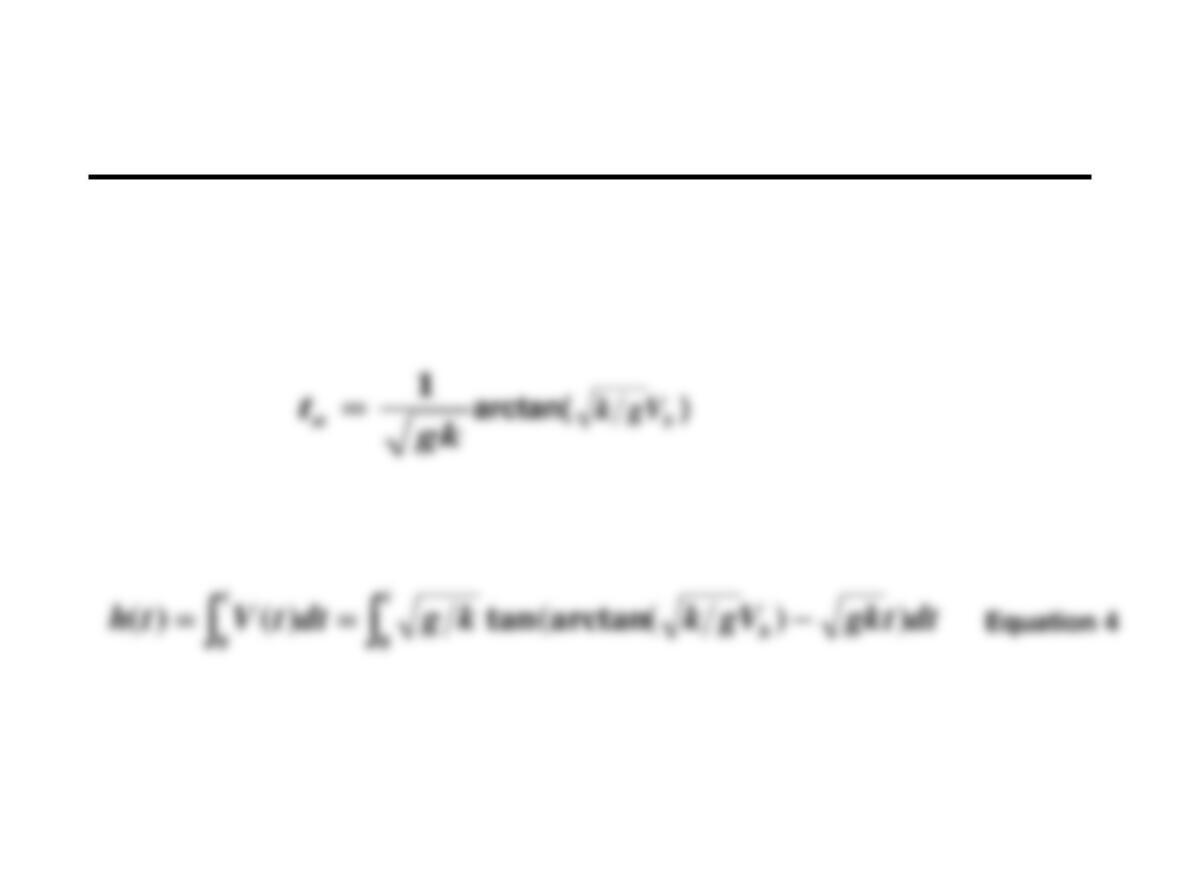
After some algebra Equation 1 becomes
Integrating Equation 2 from t = 0 to t, and, correspondingly,
gkVv bb =
v
from
to
gktVtv )()( =
we have
No-thrust segment going up (5)
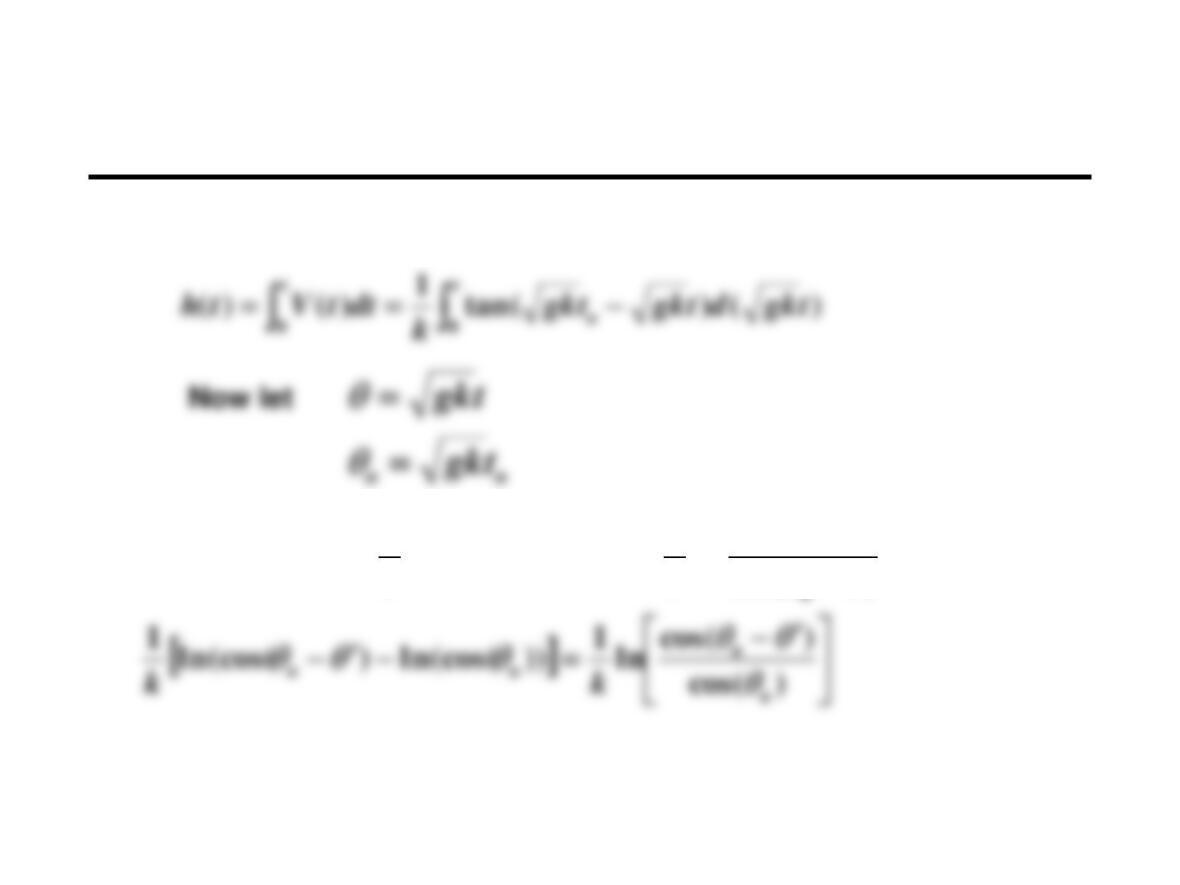
From Equation 3 we see that apogee (point of highest altitude, i.e.,
when vertical velocity has fallen to zero) occurs at time
To find rocket altitude as a function we integrate Equation 3:
Equation 4 is messy-looking but really quite simple to integrate.
No-thrust segment going up (6)
a
t
and obtainTo simplify Equation 4 we use the equation for
=
−
−
=−==
)cos(
)sin(1
)tan(
1
)()( 000
a
a
t
d
k
d
k
dttVth
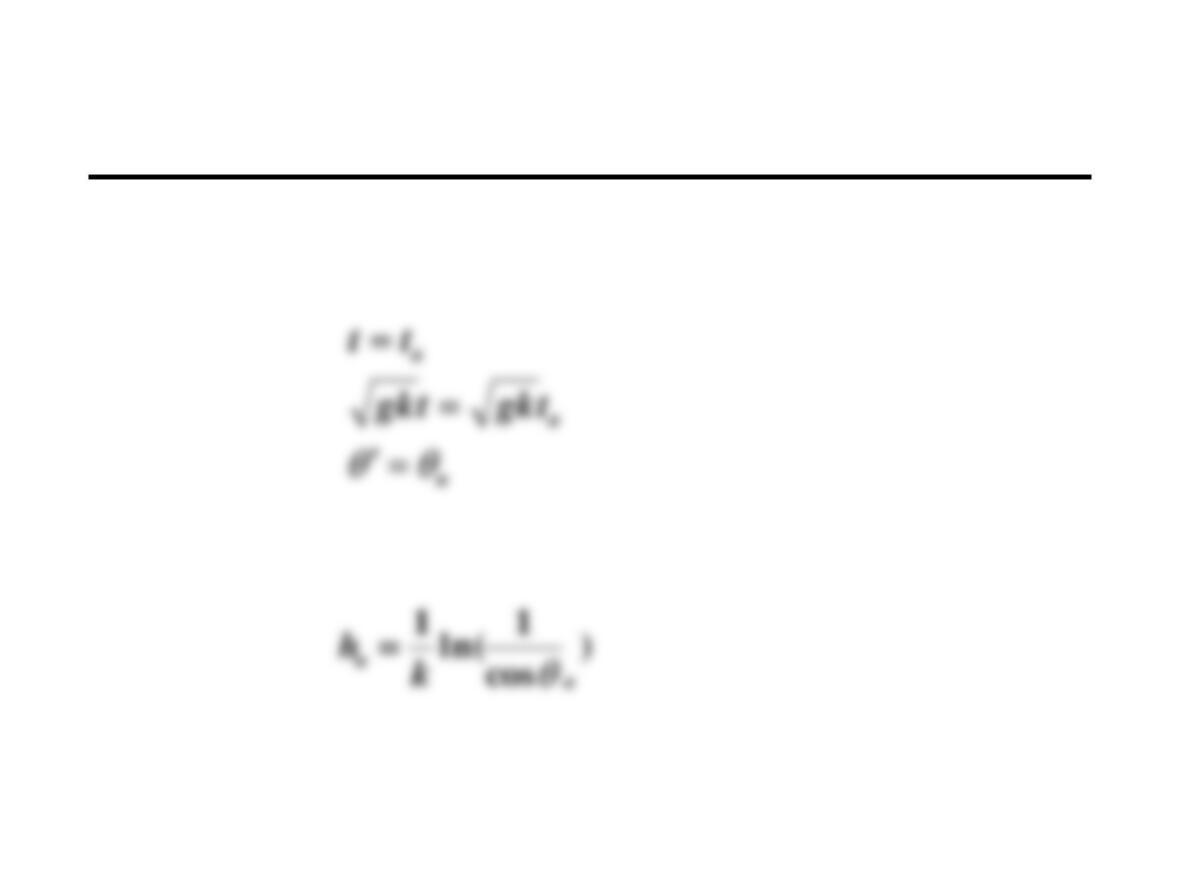
No-thrust segment going up (7)
The maximum altitude is reached when
so the rocket’s maximum altitude is
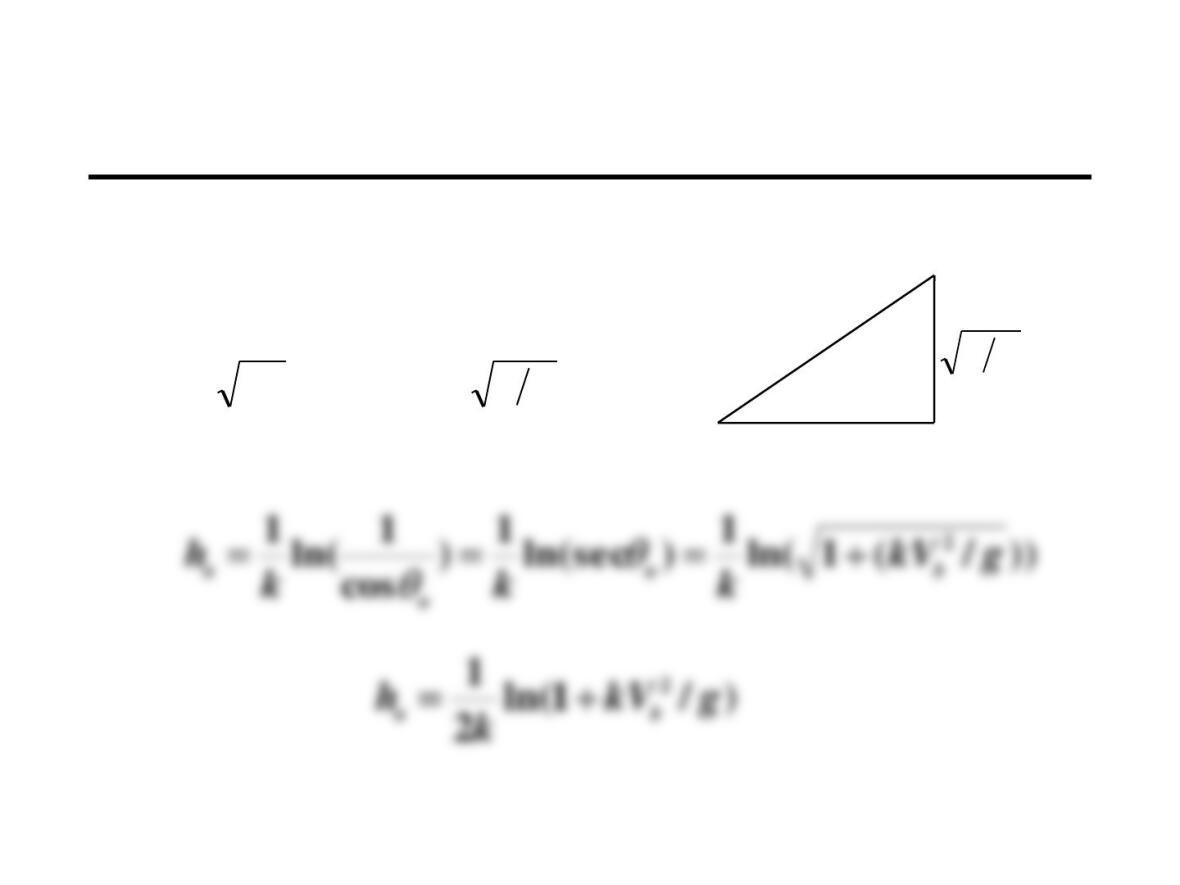
No-thrust segment going up (8)
1
a
b
Vgk
Recall
)arctan( baa Vgktgk ==
From the diagram:
How to Check
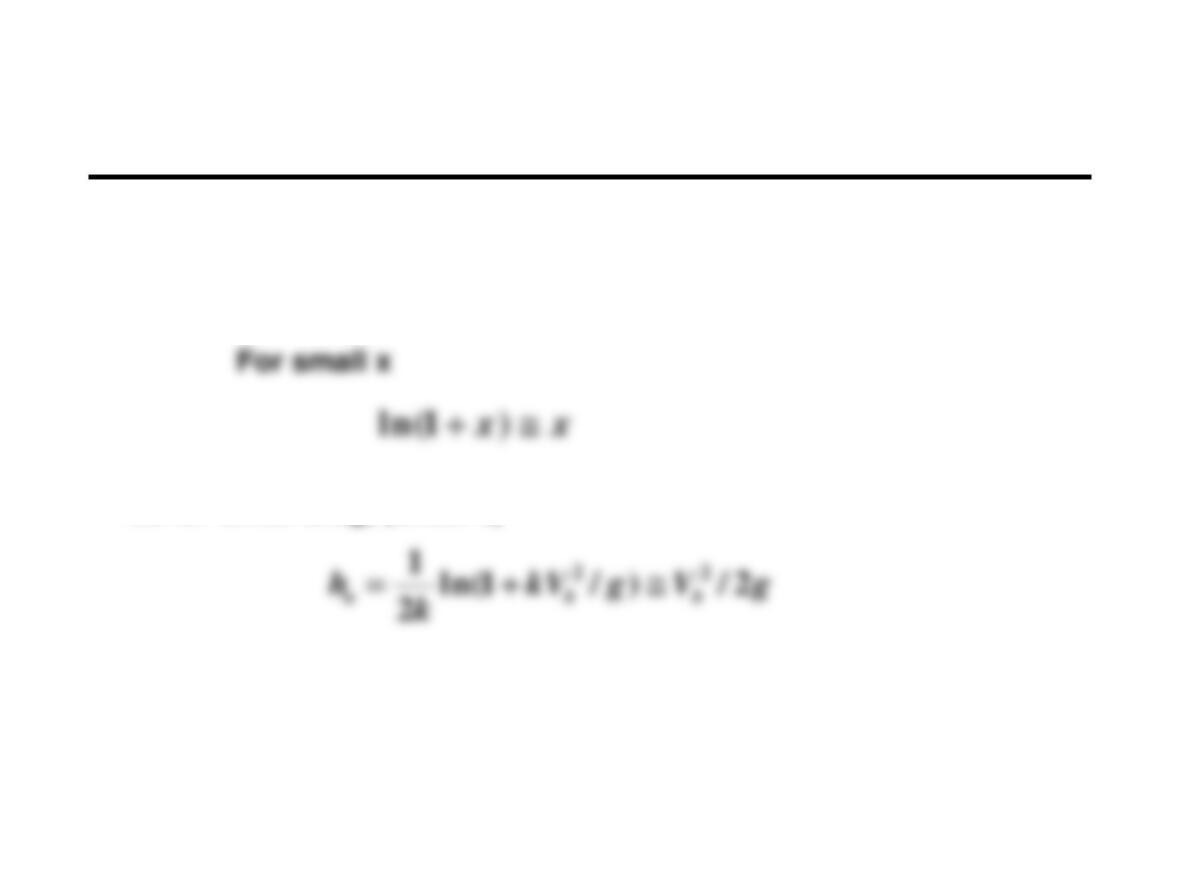
A check on this result:
so for small drag, (small k)
which is the classical drag-free result.
No-thrust segment going up (9)
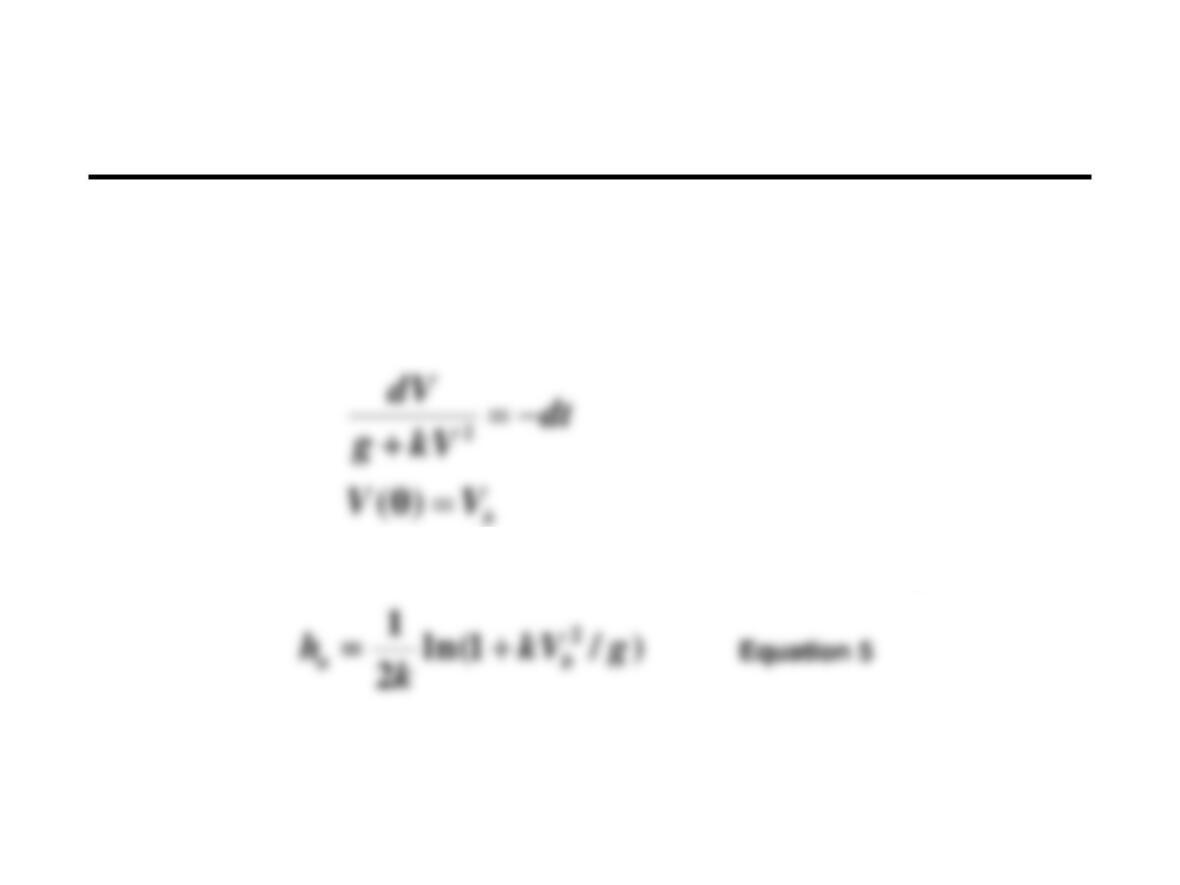
To summarize:
Starting with
we found that the maximum altitude (altitude at apogee) is
Homework Assignment 3
Prepare for short quiz in next class covering all material presented so
far, not including this class
In the text: