Differential Equations
for Engineers:
the Essentials
Class 25 notes
Agenda: Class 25
Review Homework Assignment 23
Lectures:
Partial Differential Equations:
Partial Differential Equations
Power Series Solutions
Part I
Power Series Solutions: Part I
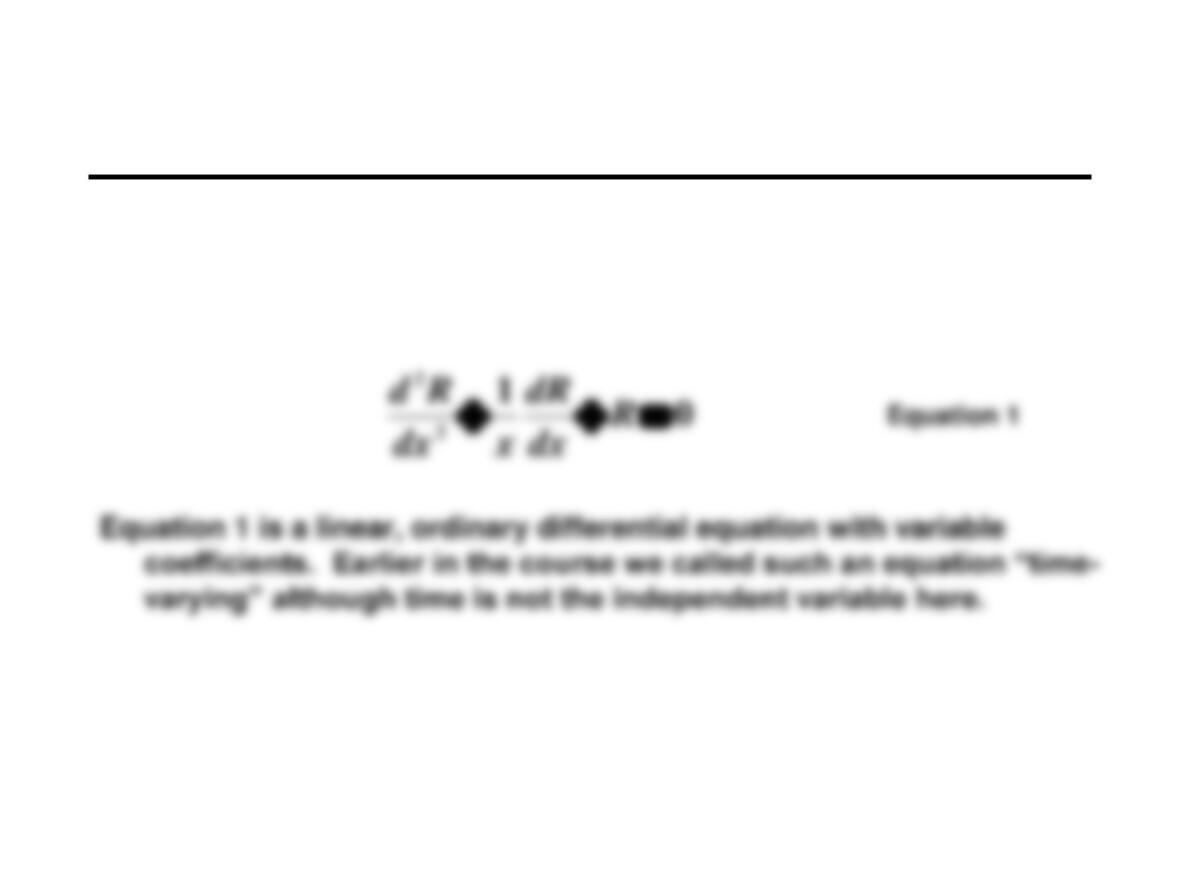
Our objective here is to show how to solve problems exemplified by
Bessel’s equation of order zero:
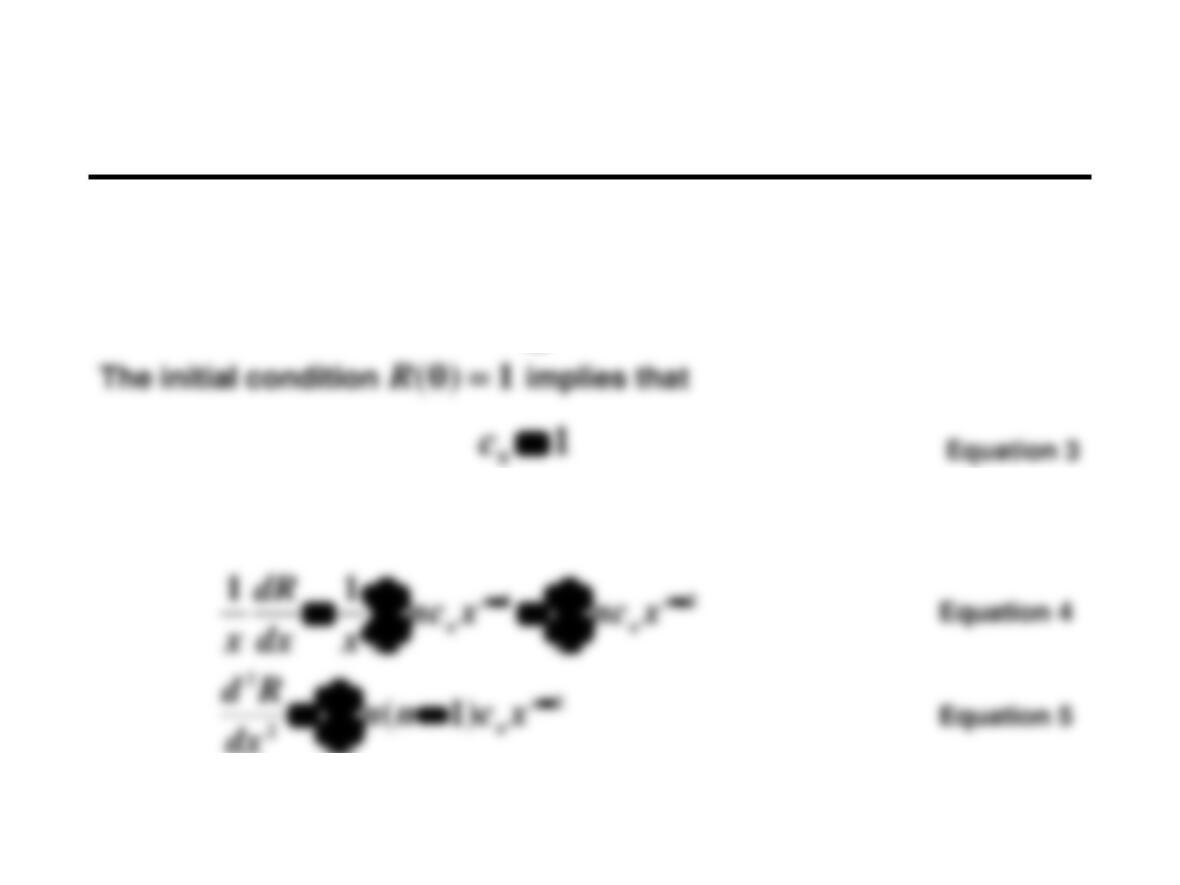
It suffices to solve Equation 1 with the initial condition . We will
have more to say about the initial value of the derivative momentarily.
1)0( =R
Power Series Solutions: Part I (2)
We solve Equation 1 in terms of an infinite series:
Using Equation 2
n
n
nxcxR
=
=
0
)(
Equation 2
=
2
n
Power Series Solutions: Part I (3)
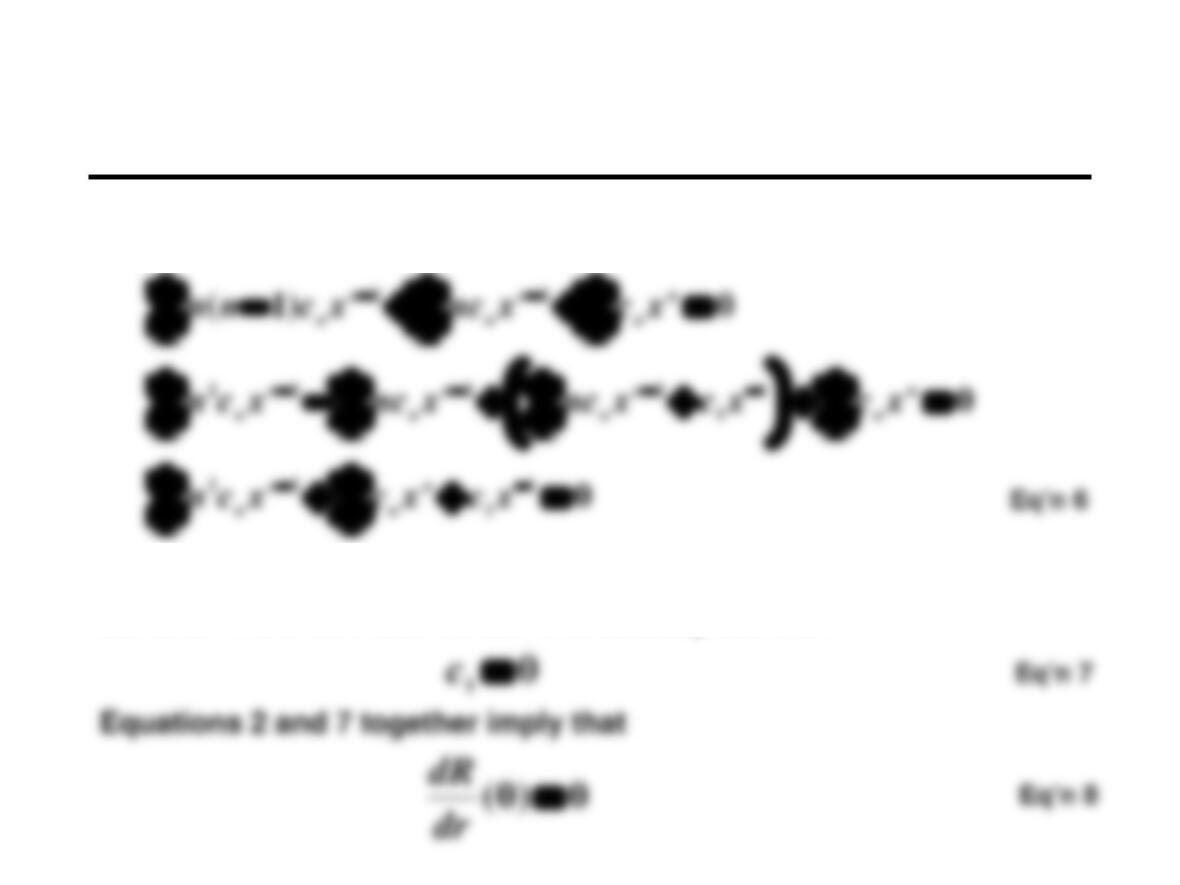
Using Equations 2, 4 and 5 in Equation 1, we have
For this equation to be true for all the coefficients of each power must
be zero. From this fact we can immediately see that
x
Power Series Solutions: Part I (4)
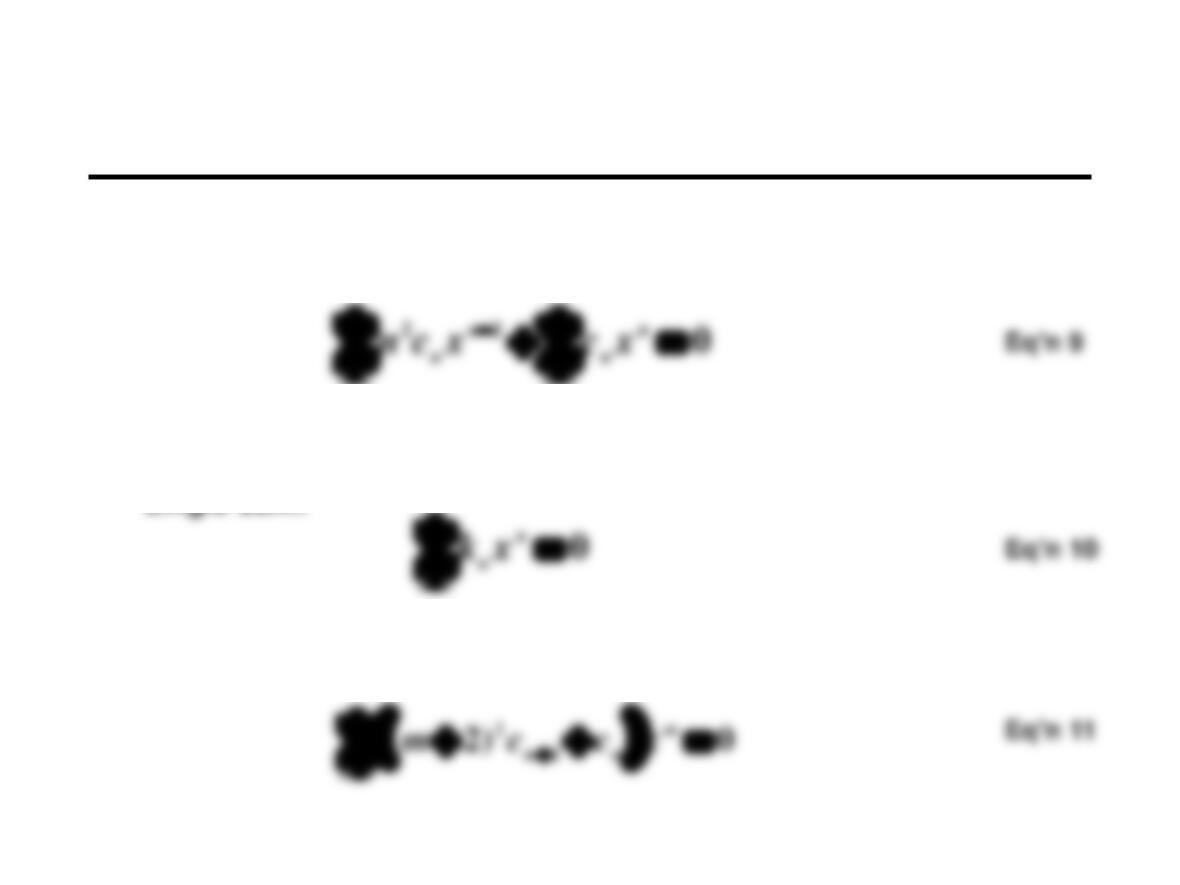
We are left with
The next step is an important one in solving this problem –we must
manipulate the indices so that the equation can be written as a
single sum:
To do this we must replace with in the first sum in Eq’n 9
and with in the second. The result is
2−n
m
n
m
Power Series Solutions: Part I (5)
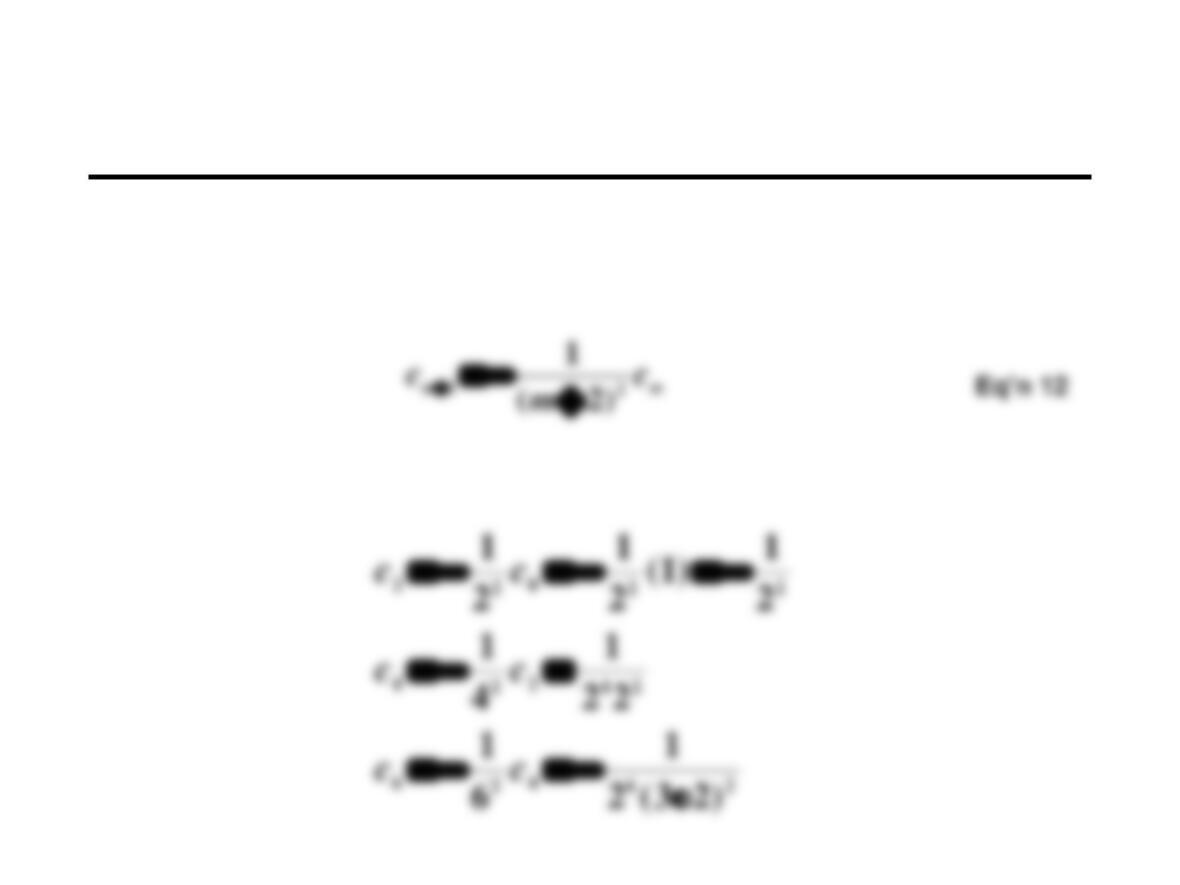
Again, for Equation 11 to be true for all the coefficients of each
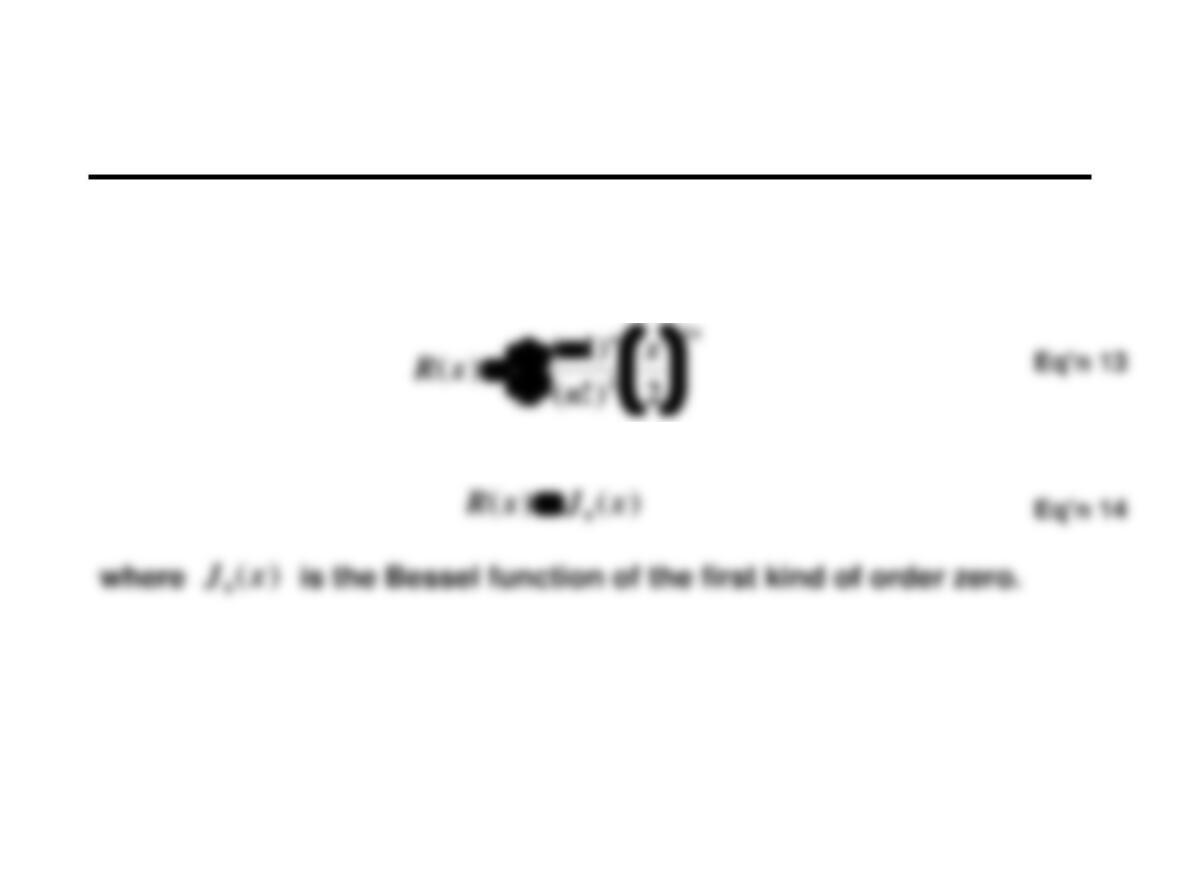
power must be zero. This implies the recursion relation
Using Equations 3, 7 and 12, we find that for odd mand
x
0=
m
c
Power Series Solutions: Part I (6)
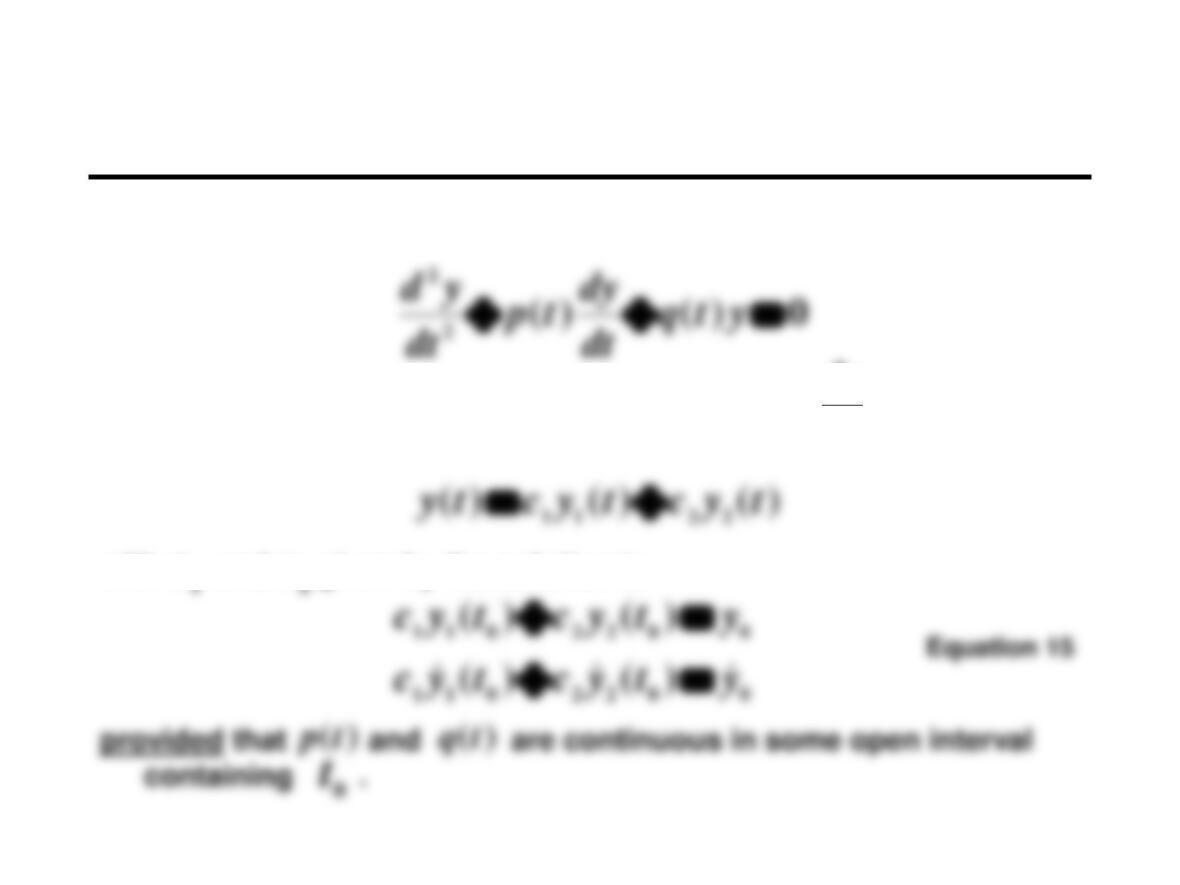
In general the solution to Equation 1 can be described as
or as
Power Series Solutions: Part I (7)
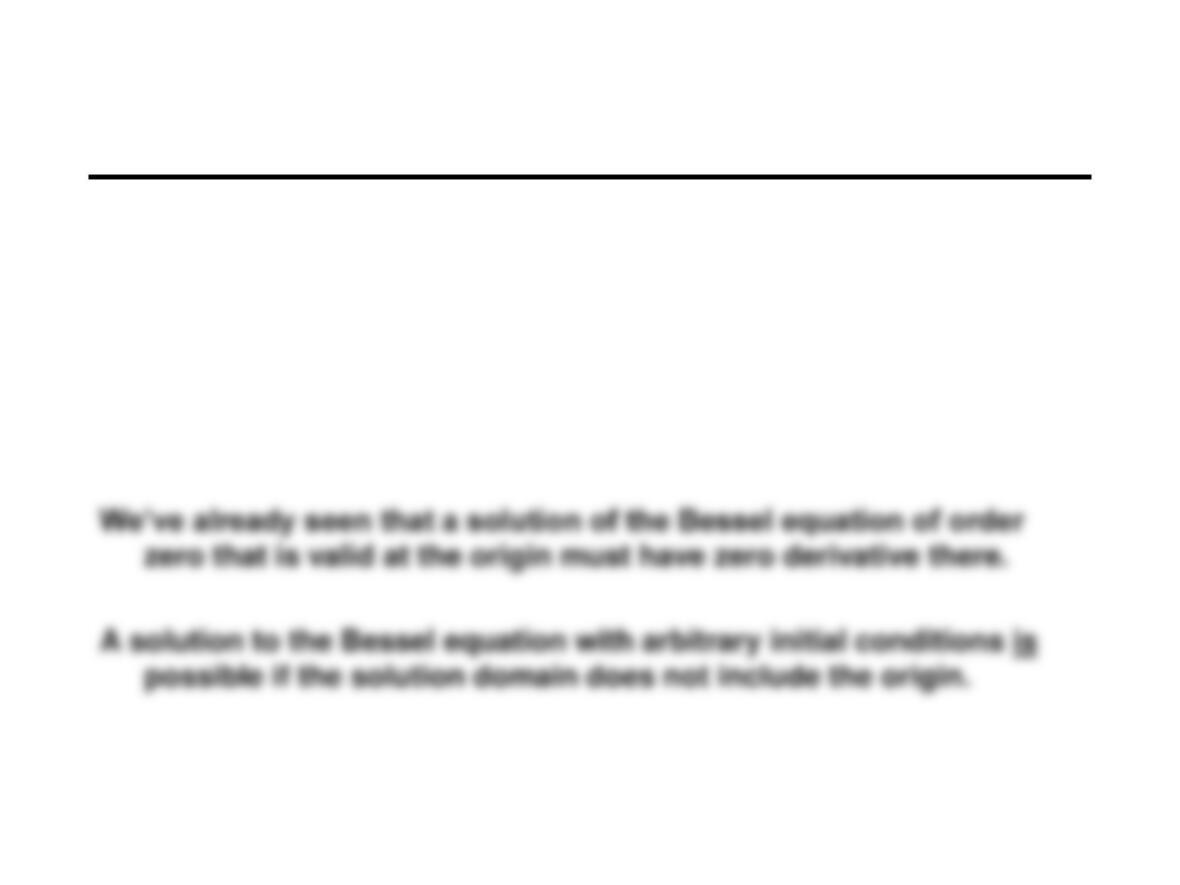
Earlier in the course we learned that the equation
with specified initial conditions and
has a solution of the form
with and given by the solution to
00 )( yty =
00 )( yt
dt
dy
=
c
c
Power Series Solutions: Part I (8)
The Bessel equation does not meet this proviso at the origin.
It is not possible to solve the Bessel equation with arbitrary initial
conditions as in Equation 15 when the solution domain includes
the origin.
Power Series Solutions: Part I (9)
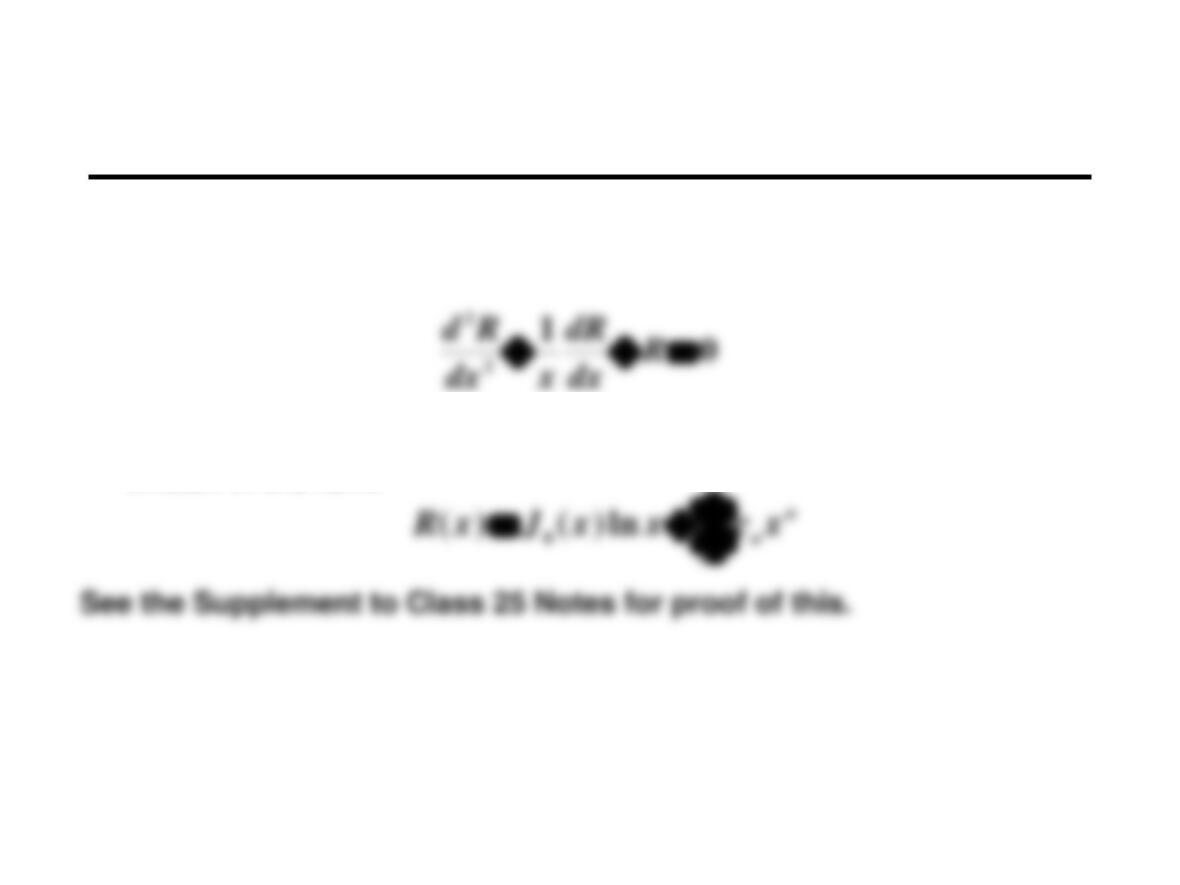
The second fundamental solution to Bessel’s equation of order zero
is called a Bessel function of the second kind of order zero. It can be
written in the form
Partial Differential Equations
Bessel Functions
Bessel Functions
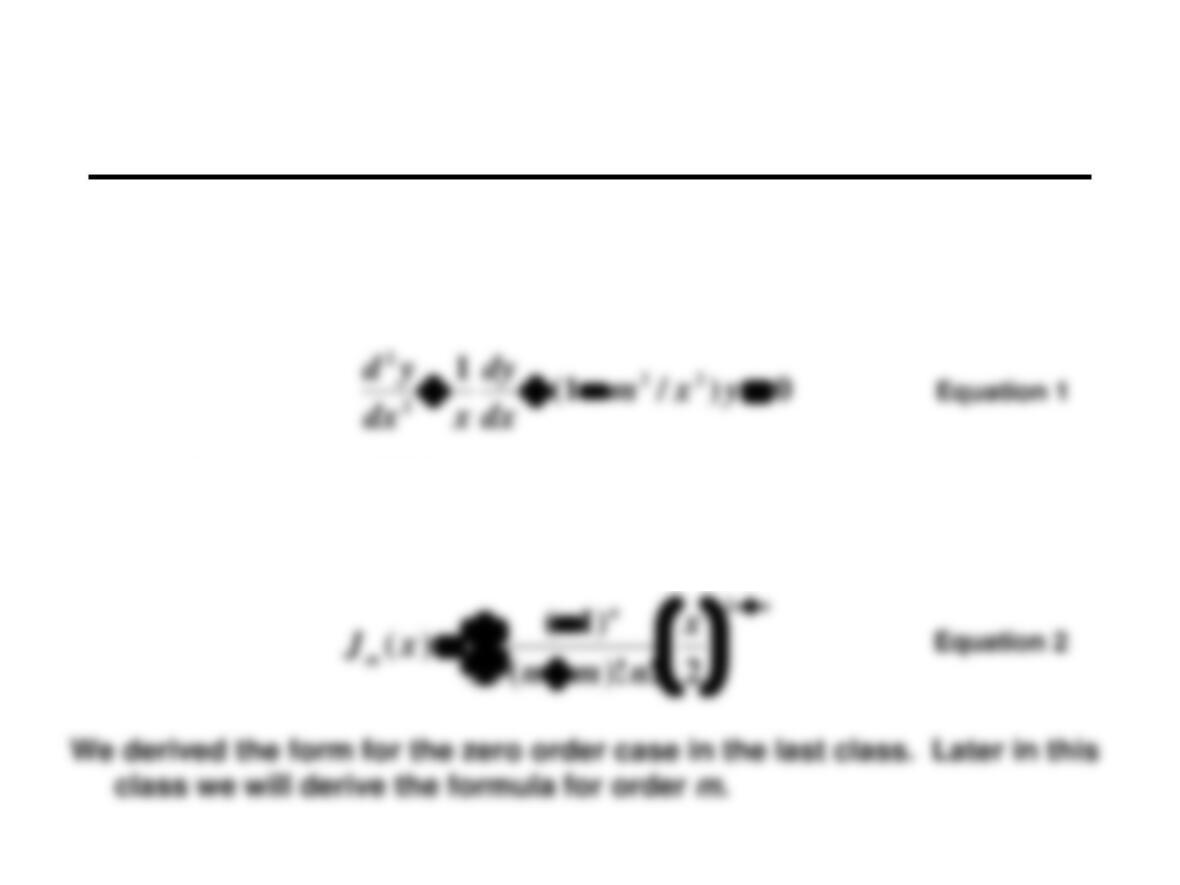
Bessel’s Equations are ordinary differential equations that derive from
solving the wave equation by separation of variables in cylindrical
coordinates. Bessel’s Equation of order mis
It is a 2nd order linear ODE and so has, of course, two fundamental
solutions. The solution having finite and at the origin is
the Bessel function of the first kind of order m, described by the series
y
dxdy /
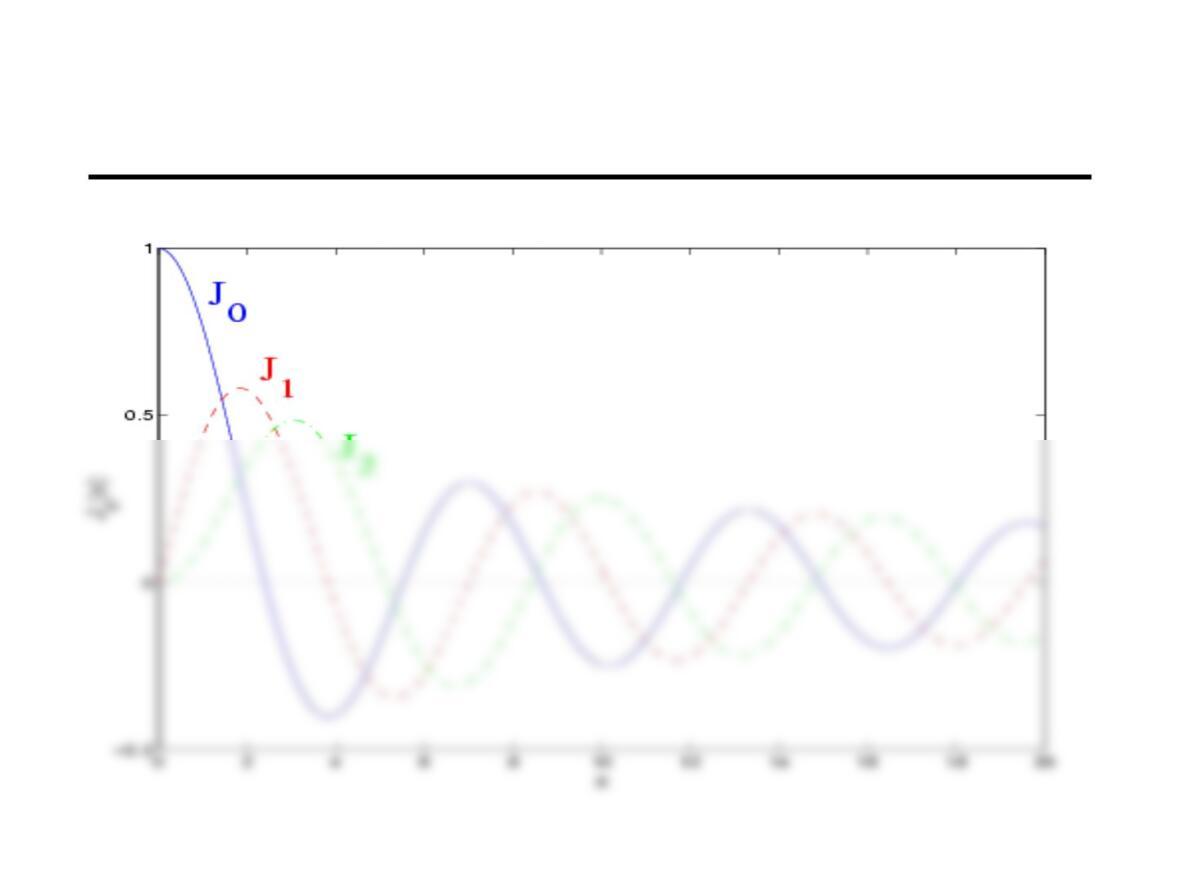
Bessel Functions of the First Kind:
Orders 0, 1 and 2
Bessel Functions: Second Solution
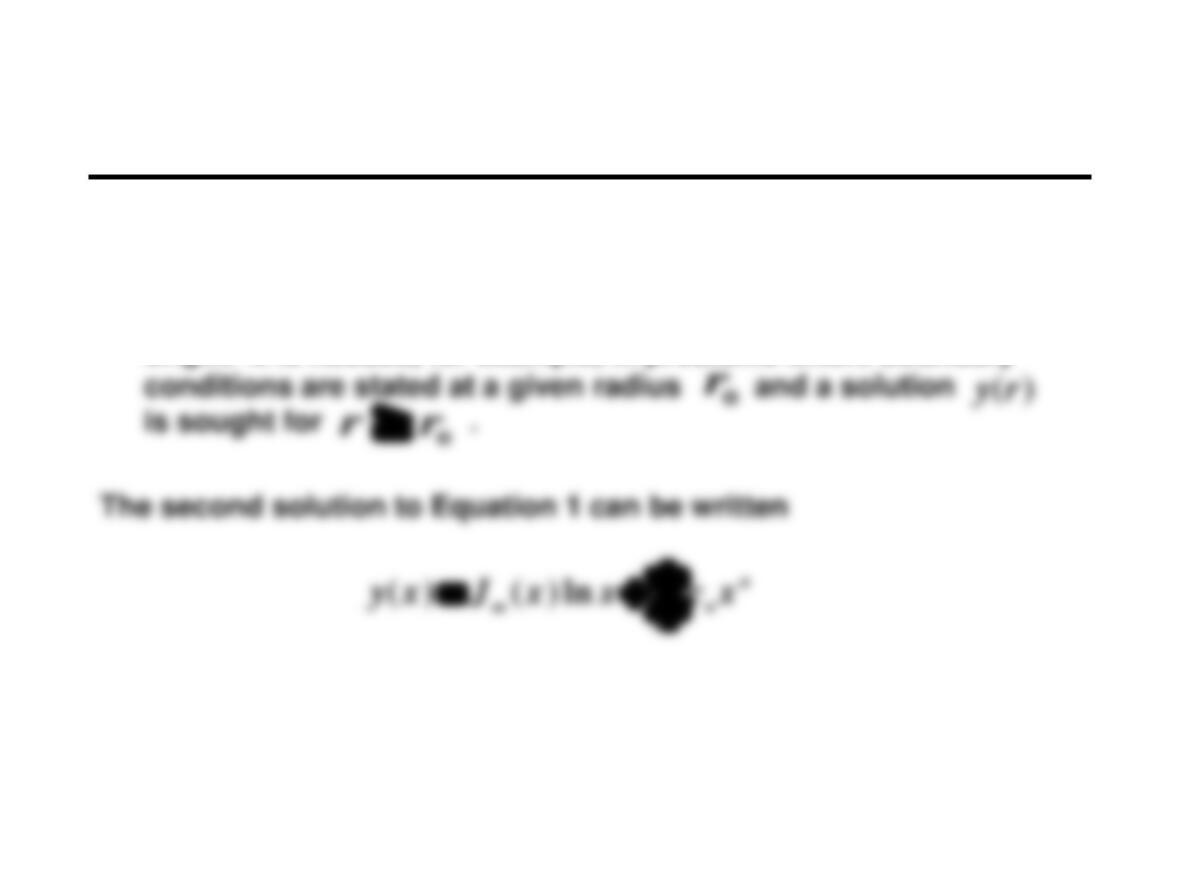
The other fundamental solution, called the Bessel function of the
second kind of order m, has infinite and at the
origin. It is needed, for example, in problems where boundary
y
dxdy /
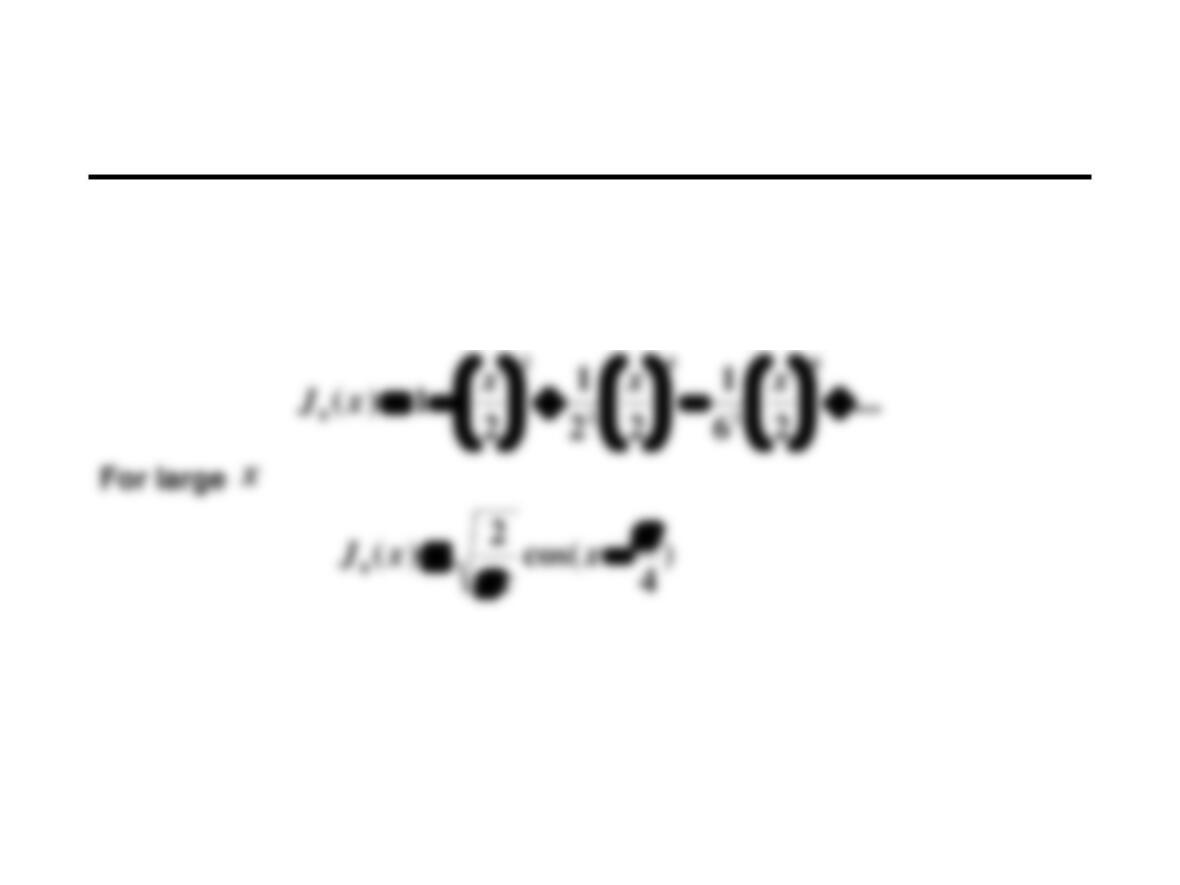
Bessel Function of First Kind of Order Zero
The Bessel functions of the first kind are easy to compute. For
example, for small , can be expressed as
x
)(
0xJ
Bessel Functions (10)
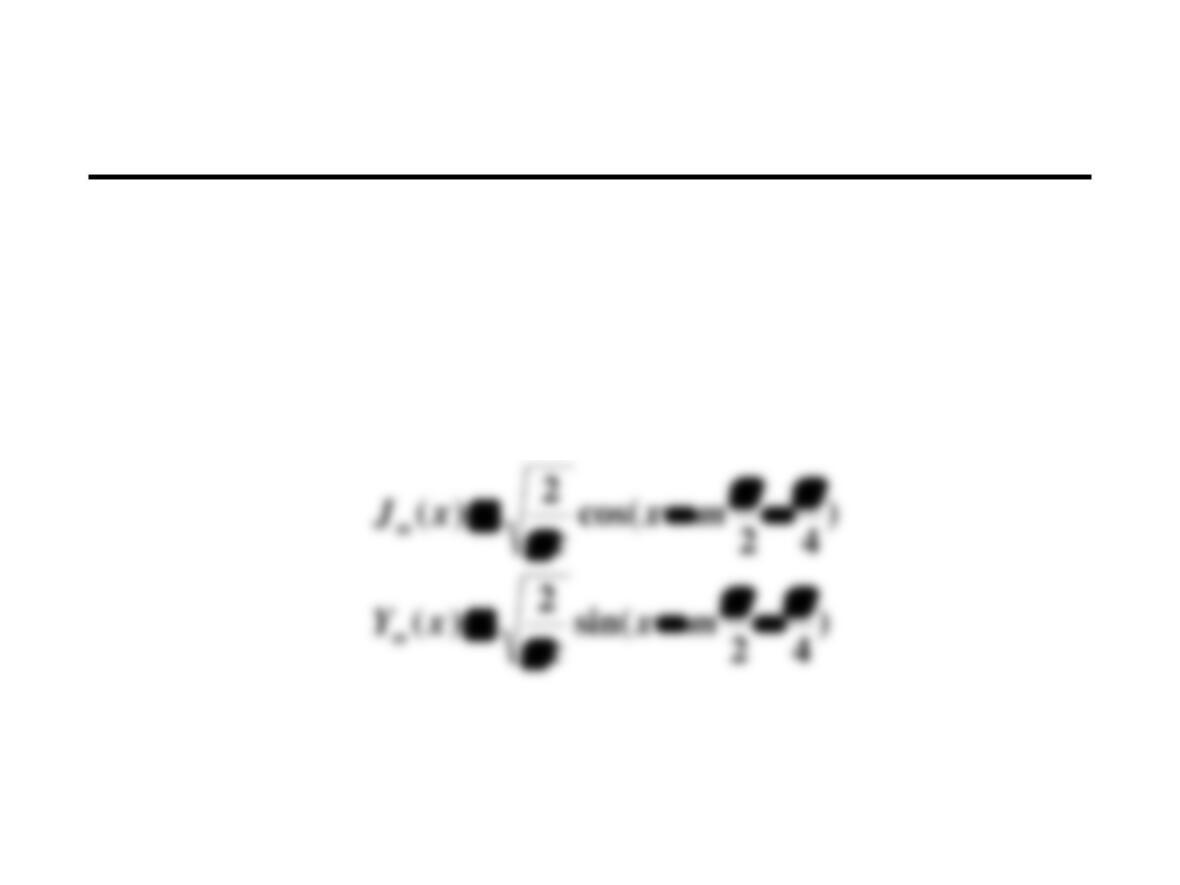
Mathematicians traditionally use a slightly different form of the second
solution that is called that has the advantage of a
complementary relationship to for large :
)( xYm
x
)( xJm