Cylindrical Vibrations (4)
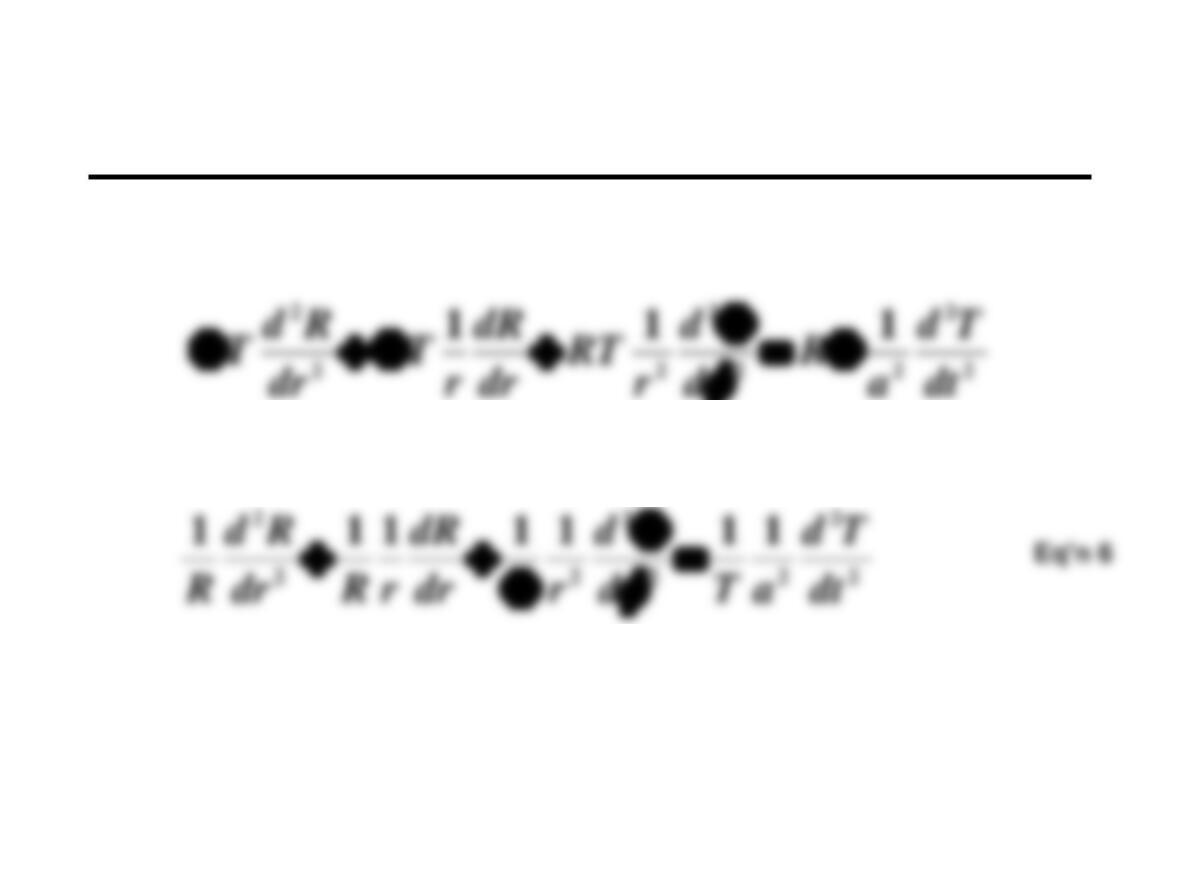
Substituting Equation 5 into Equation 2 we have
Dividing through by leaves
The right side of Equation 6 is a function of only and the left side a
function of and only, hence both sides must equal a
constant. It will turn out that this constant must be negative.
Call it .
TR
t
r
2
k−
Cylindrical Vibrations (5)
Then the right side of Equation 6 becomes
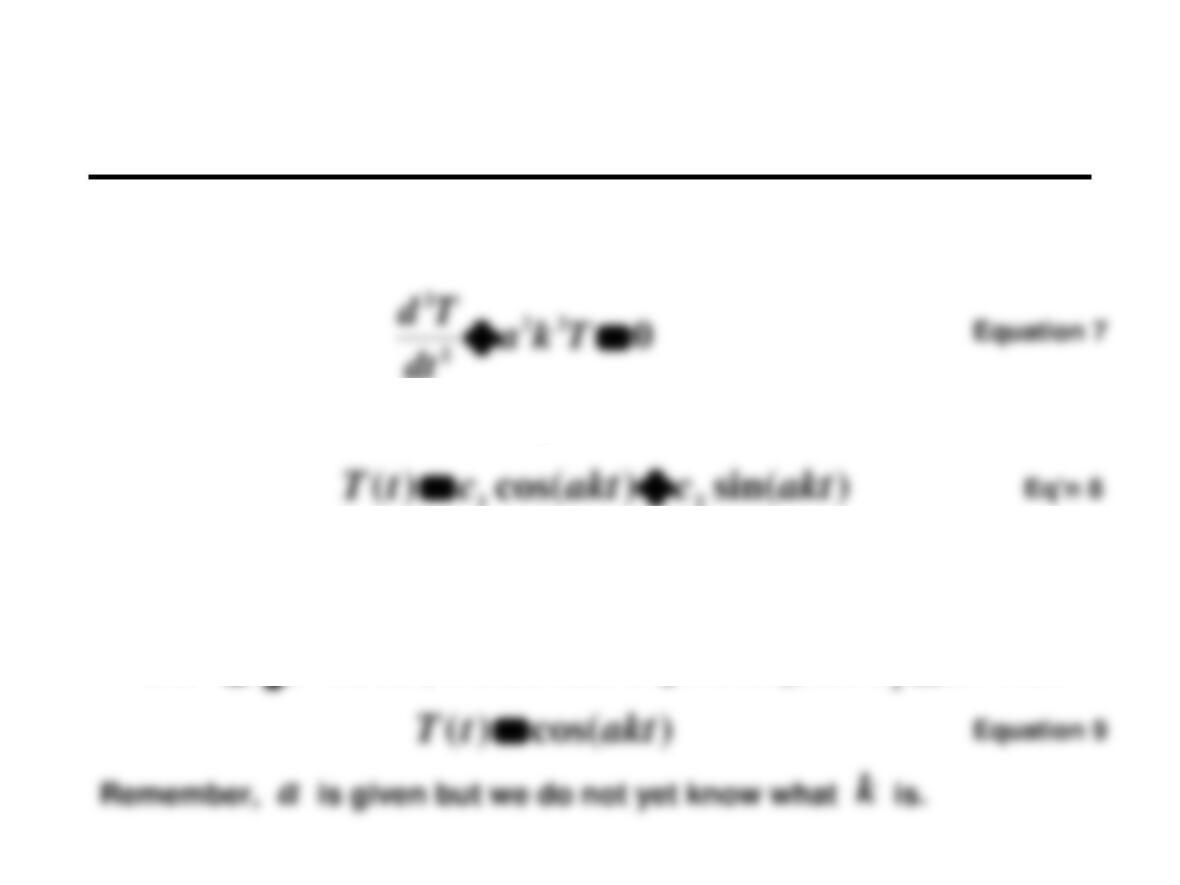
We know that the solution of Equation 7 is
Since the membrane is initially at rest there is no time derivative at
so we must have . Also, since we will be solving for
constants to meet initial conditions in the equations for
and we can, without loss of generality, set . Then
0
2=c
)(
)(rR
1
0=t
Cylindrical Vibrations (6)
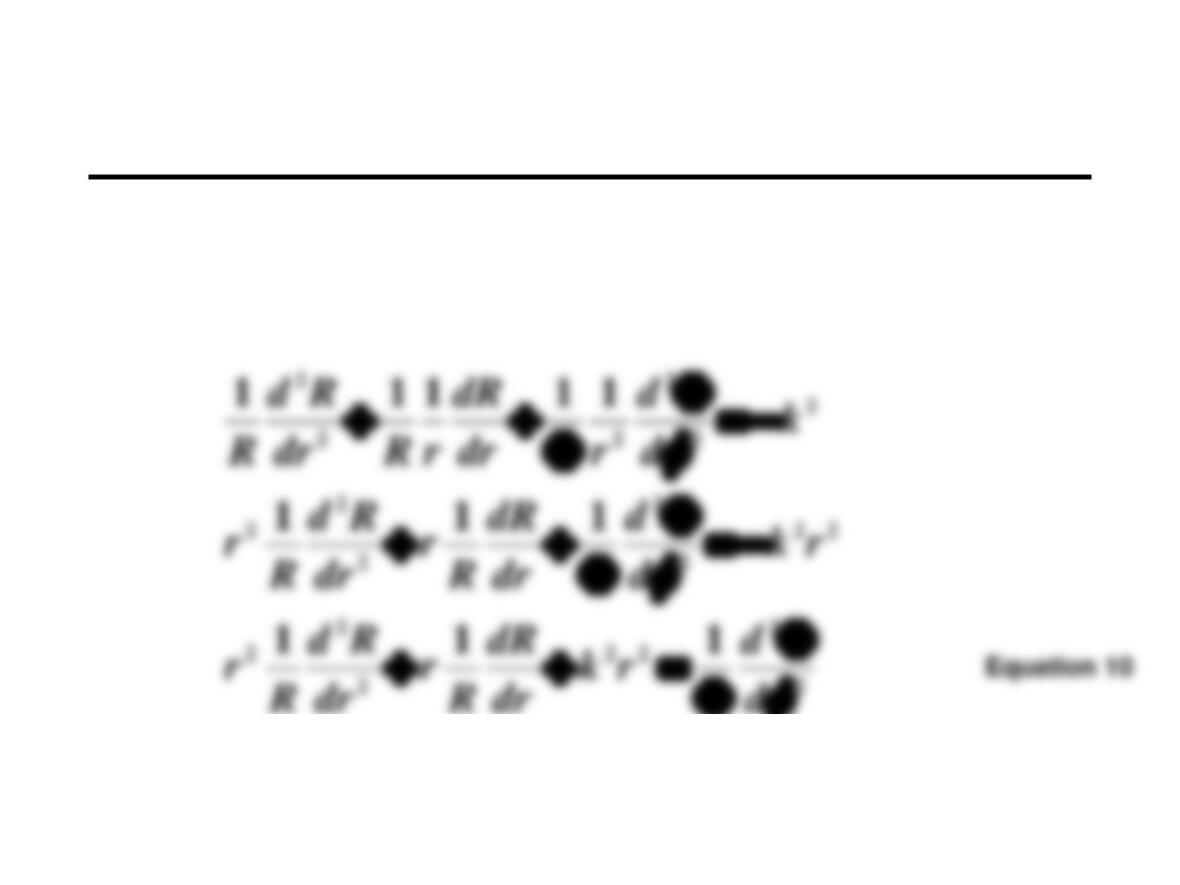
The left hand side of Equation 6 must also equal :
2
k
−
Cylindrical Vibrations (7)
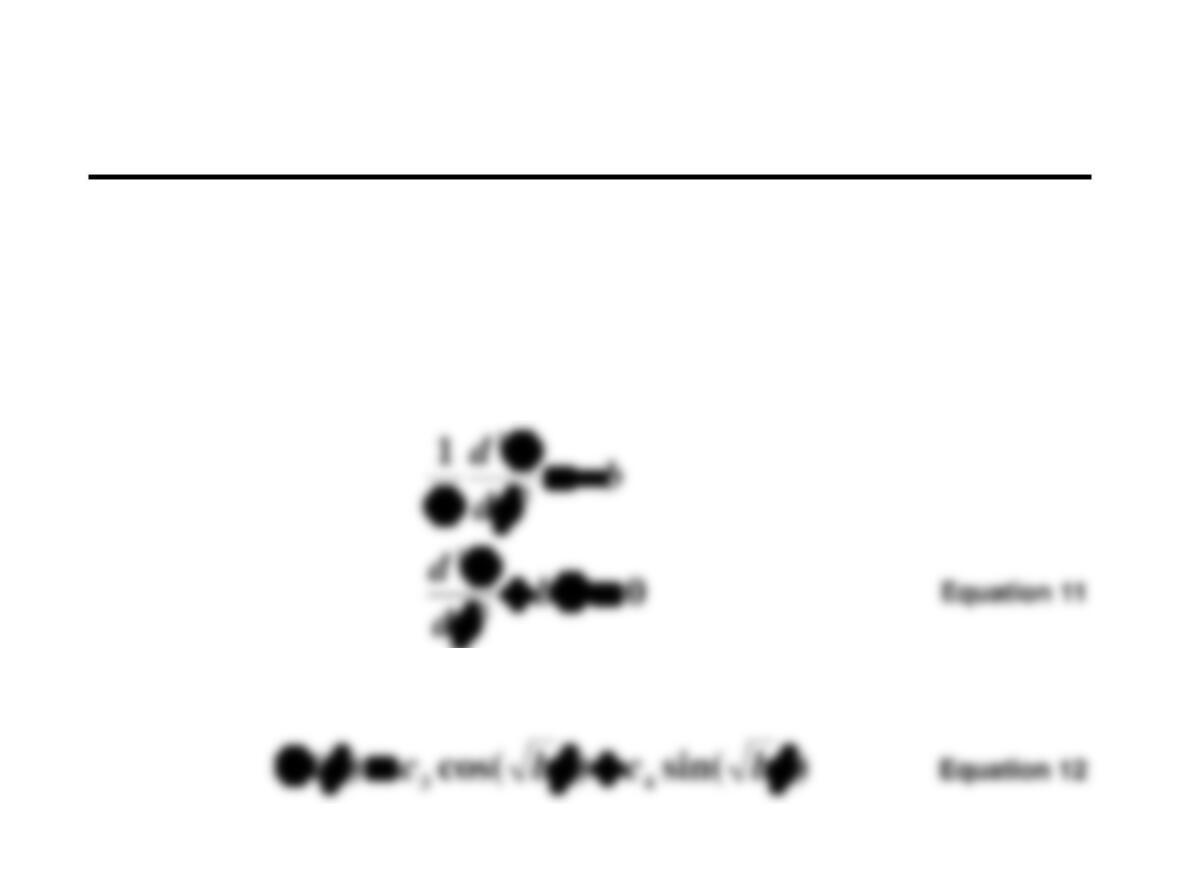
The left-hand side of Equation 10 is a function only of and the
right hand side a function only of hence both sides must equal
a constant. We would soon find that it must be negative.
Call it . This leads to
Equation 11 has solution
r
b−
Cylindrical Vibrations (8)
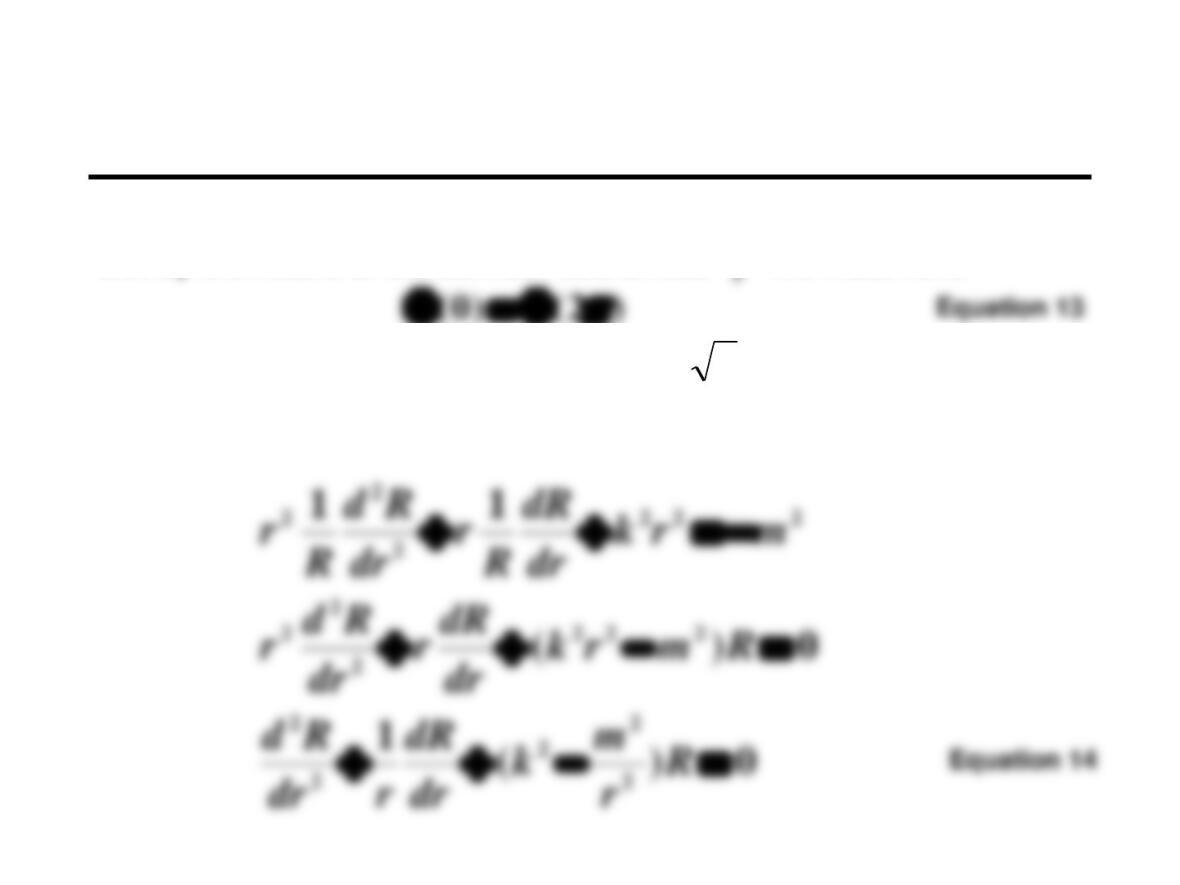
From Equations 12 and 13, we must have , an integer.
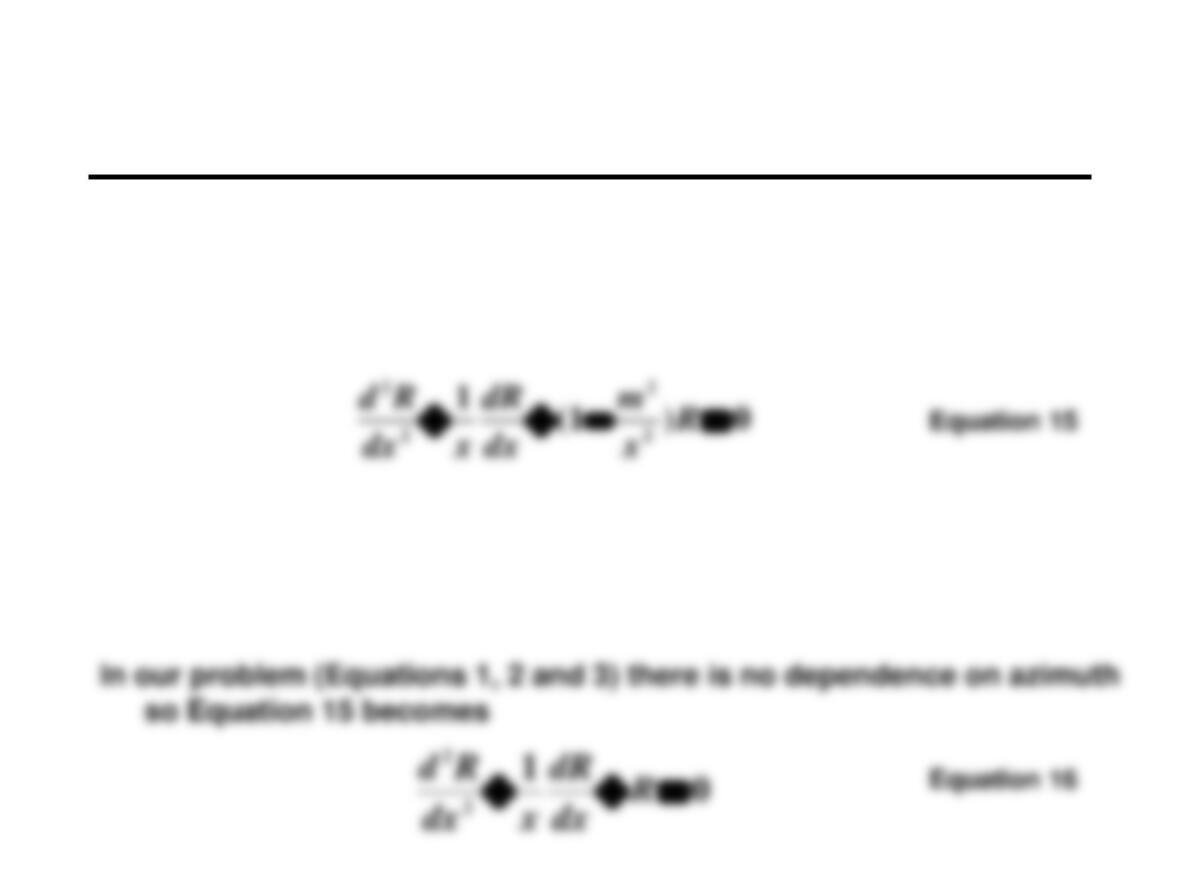
Then the left-hand side of Equation 10 becomes
mb =
But by the nature of the azimuth coordinate we must have
Cylindrical Vibrations (9)
Now we introduce a new dimensionless independent variable .
(Do not confuse with the cartesian coordinate .)
This change of variable transforms Equation 14 into
Equation 15 is Bessel’s equation of order . We see that higher order
( ) Bessel equations arise when we have cylindrical geometry but
not azimuthal symmetry.
krx=
krx=
x
m
0m
Cylindrical Vibrations (10)
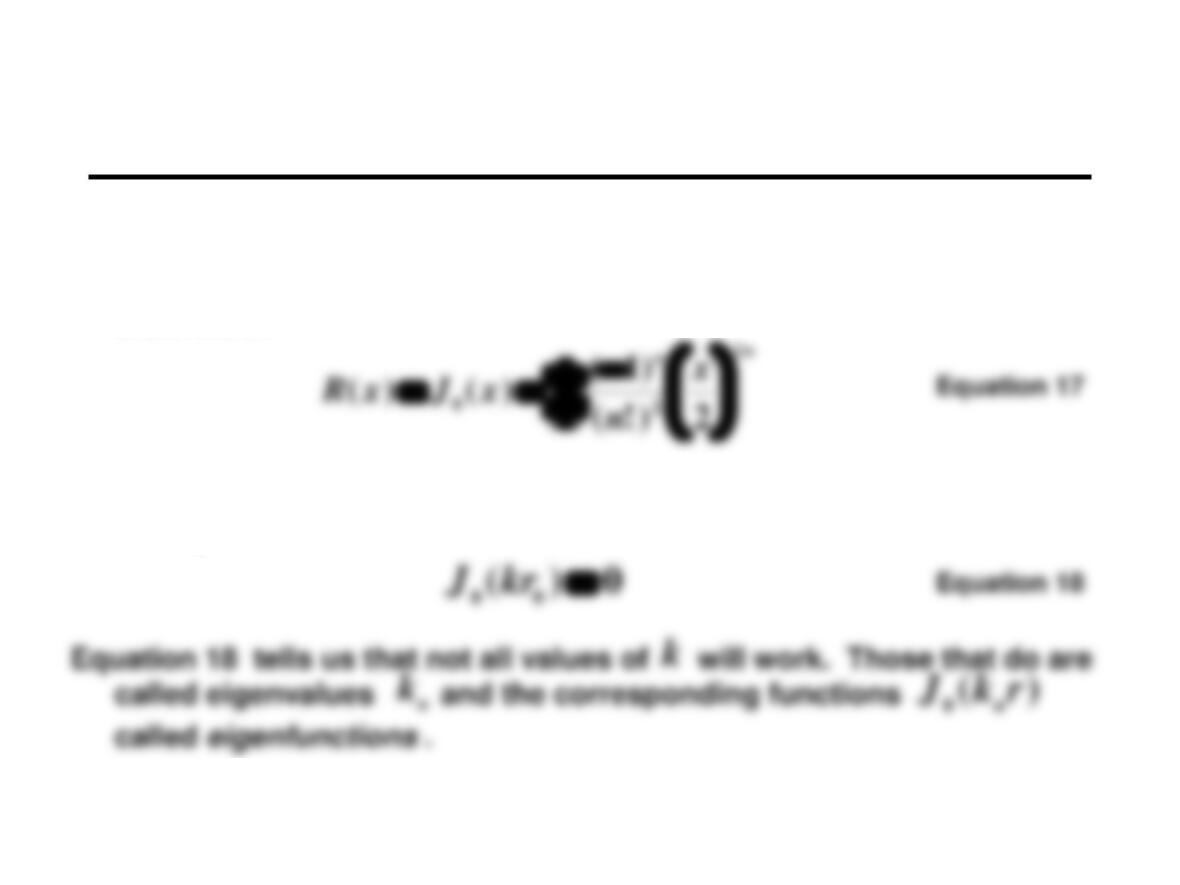
As we will show momentarily, the solution to Equation 16 with finite value
and derivative at the origin is the Bessel function of the first kind of
order zero:
But there is also a boundary condition. We must have
which implies
0)( 0=krR
Cylindrical Vibrations (11)
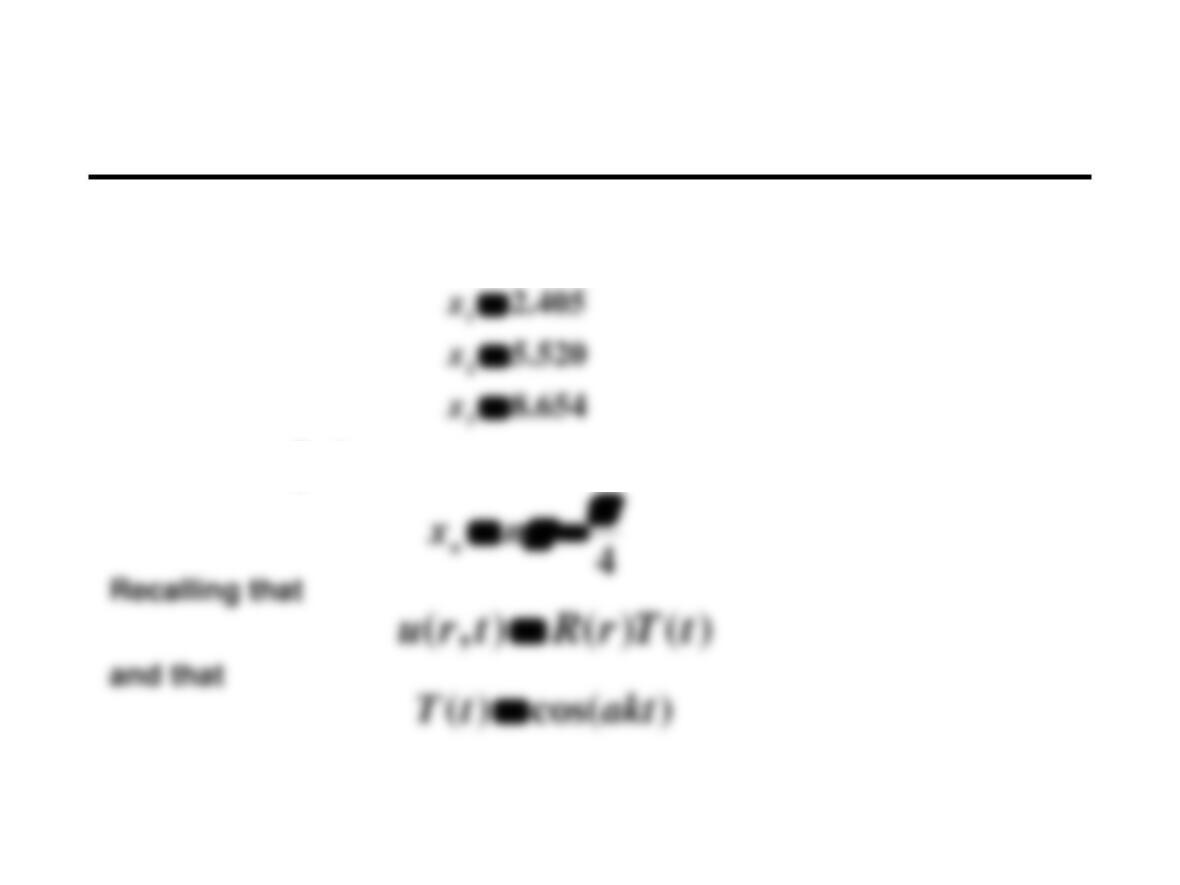
The first three zeros of are approximately
and for given (approximately but accurately) by
)(
0xJ
3n
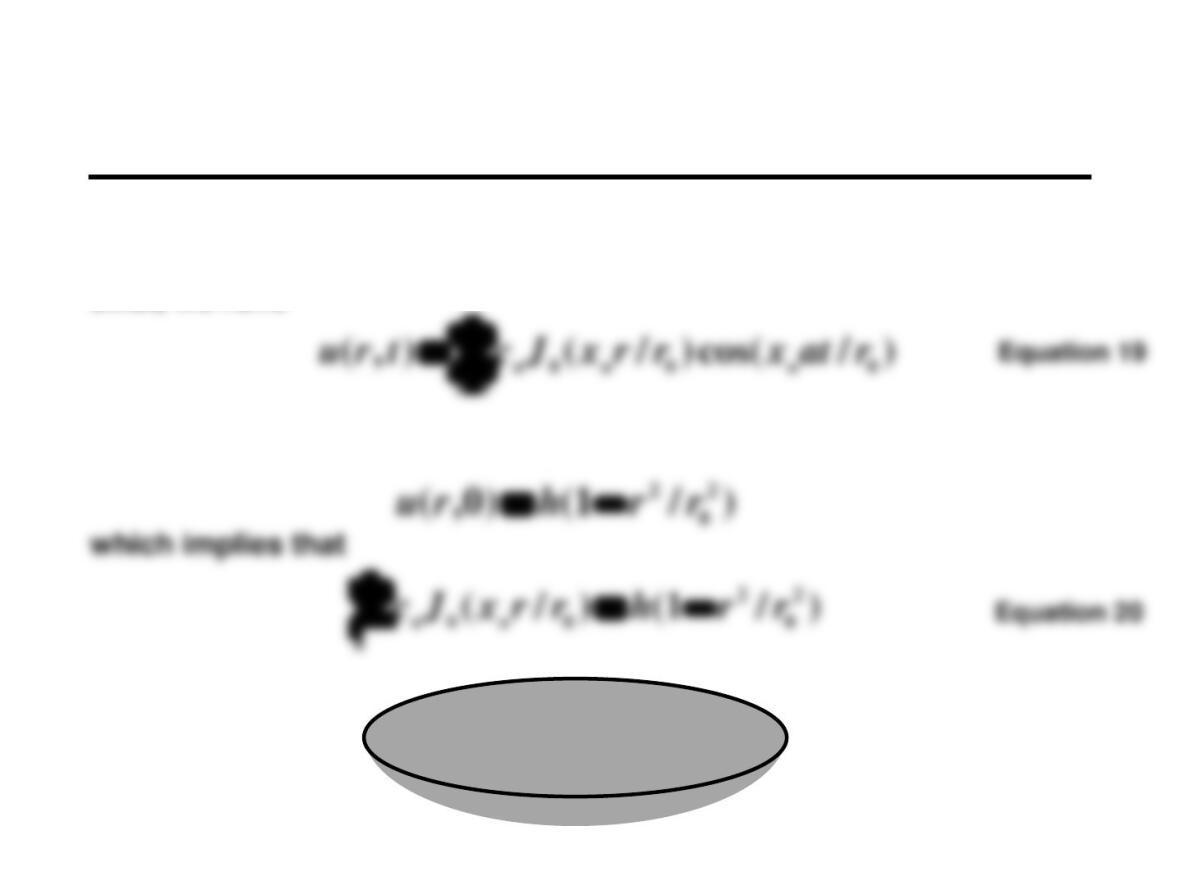
Cylindrical Vibrations (12)
and also recognizing that an infinite number of eigenvalues
exist, we have
We determine the coefficients from the initial condition
0
/rxk nn =
n
c
Cylindrical Vibrations (13)
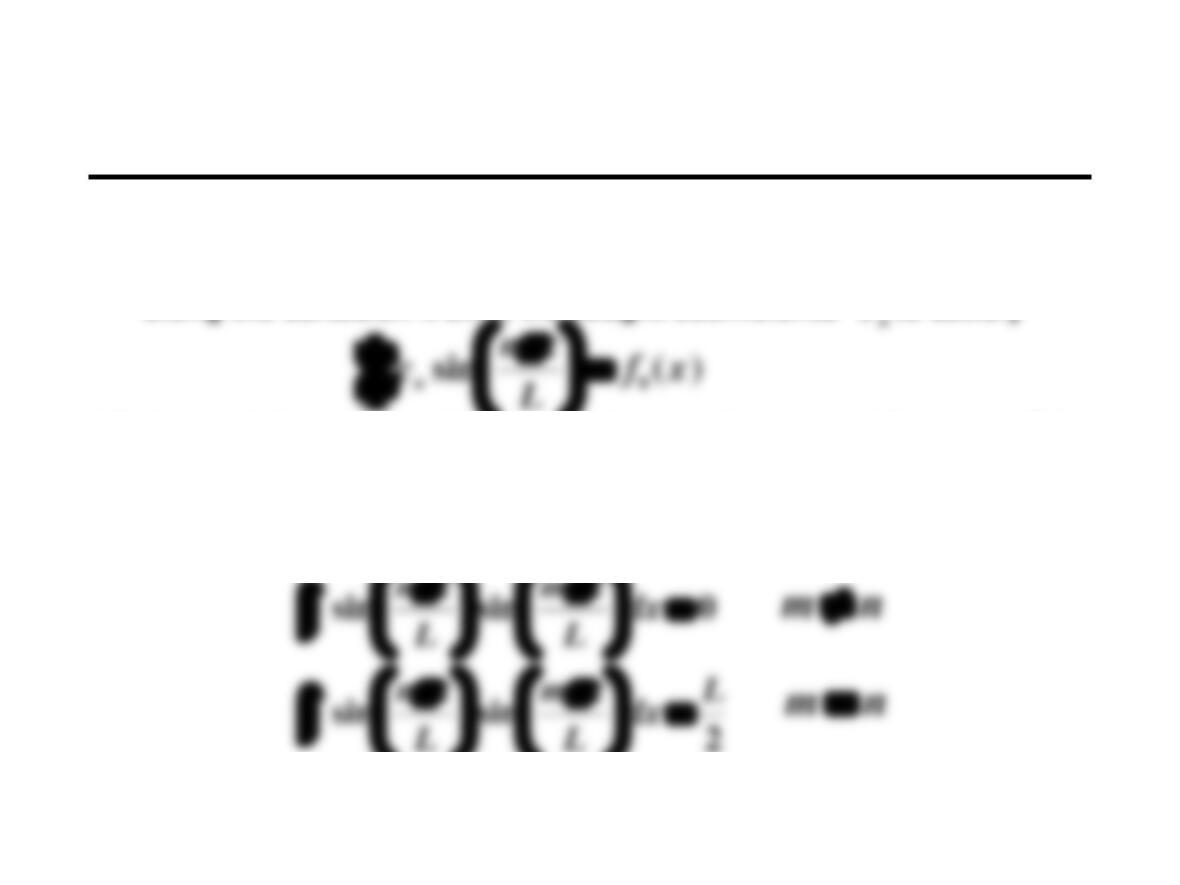
Recall from the last class, in a heat transfer boundary value problem
along the cartesian xaxis, we sought coefficients to satisfy
We learned that under relatively weak smoothness conditions on
we could indeed accomplish this, because the sine functions are
orthogonal under a certain integral; i.e.,
c
)(
0xf
Cylindrical Vibrations (14)
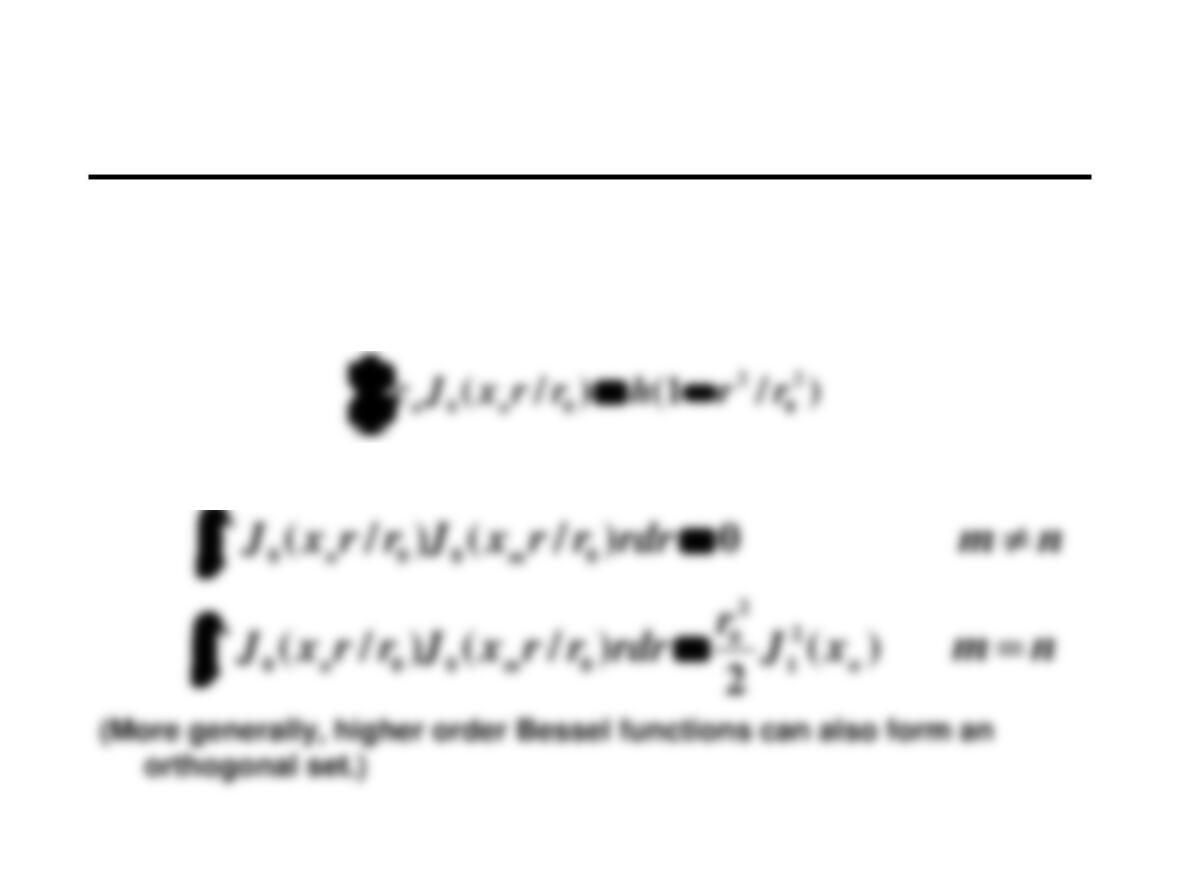
That is also the case in this boundary value problem with cylindrical
geometry. We can find to satisfy
because Bessel functions can also form an orthogonal set:
n
c
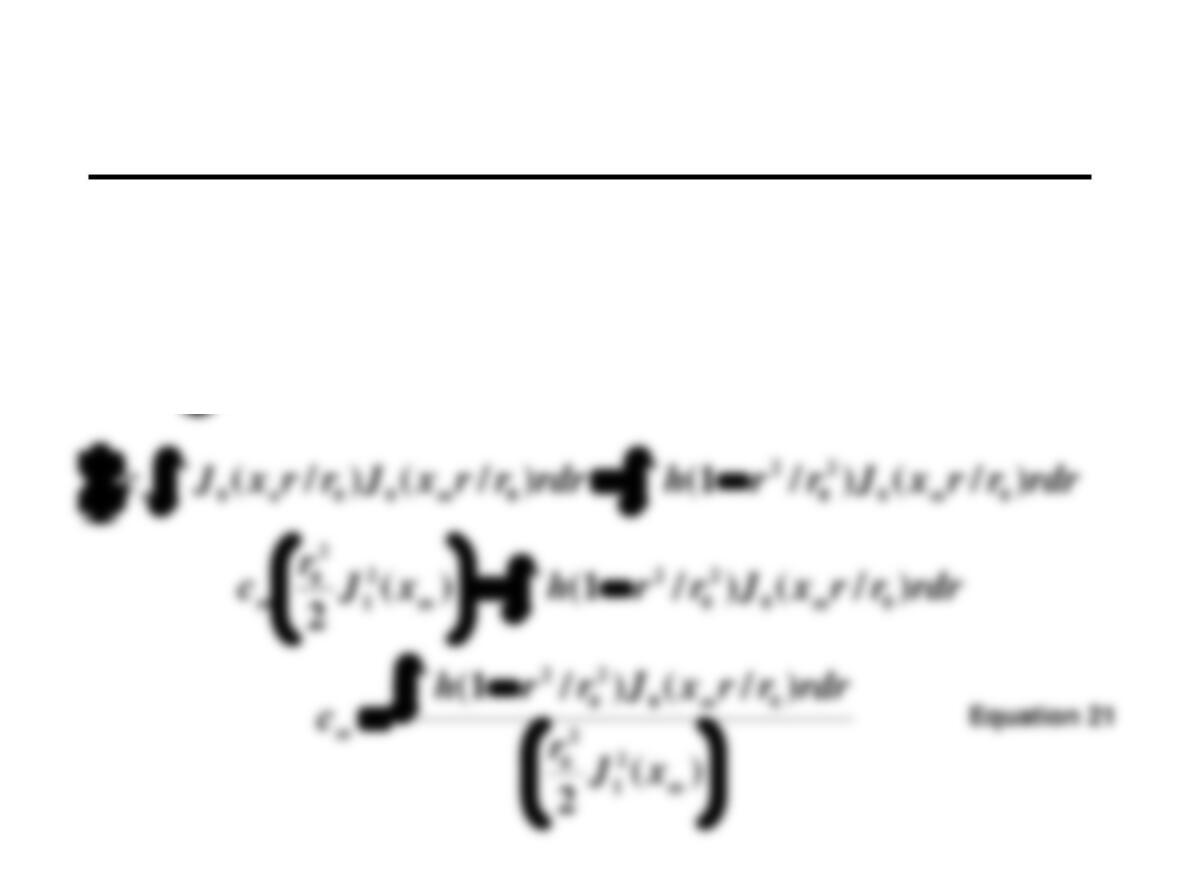
Cylindrical Vibrations (15)
To find we multiply Equation 20 by and integrate:
n
c
)/( 00 rrxJ m
)/()/1()/()/( 00
2
0
2
0000
rrxJrrhrrxJrrxJc mmn
n−=
Cylindrical Vibrations (16)
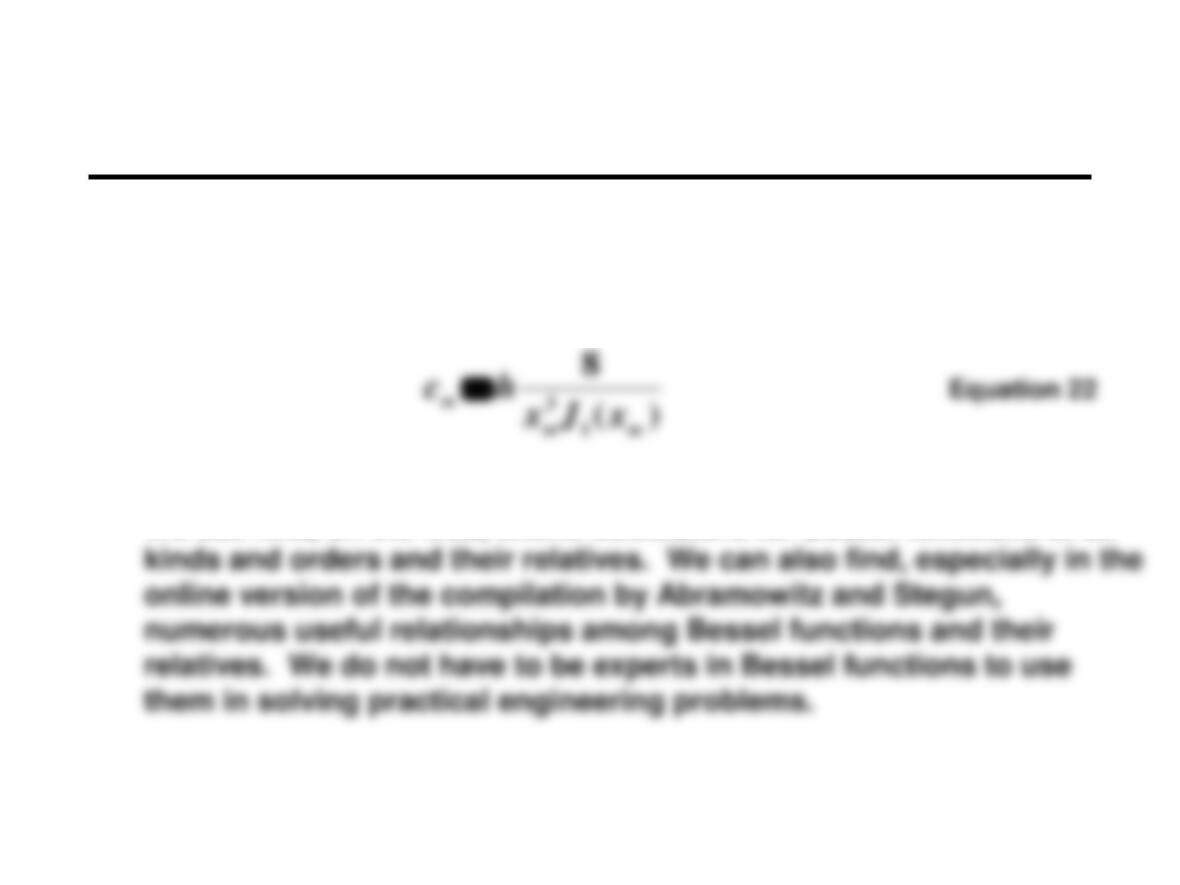
Challenge Problem CP9.1 guides us in calculating using Equation 21
and shows that
The internet has excellent resources for working problems of this sort.
We can find, on the web, online calculators for Bessel functions of all
m
c
Cylindrical Vibrations (17)
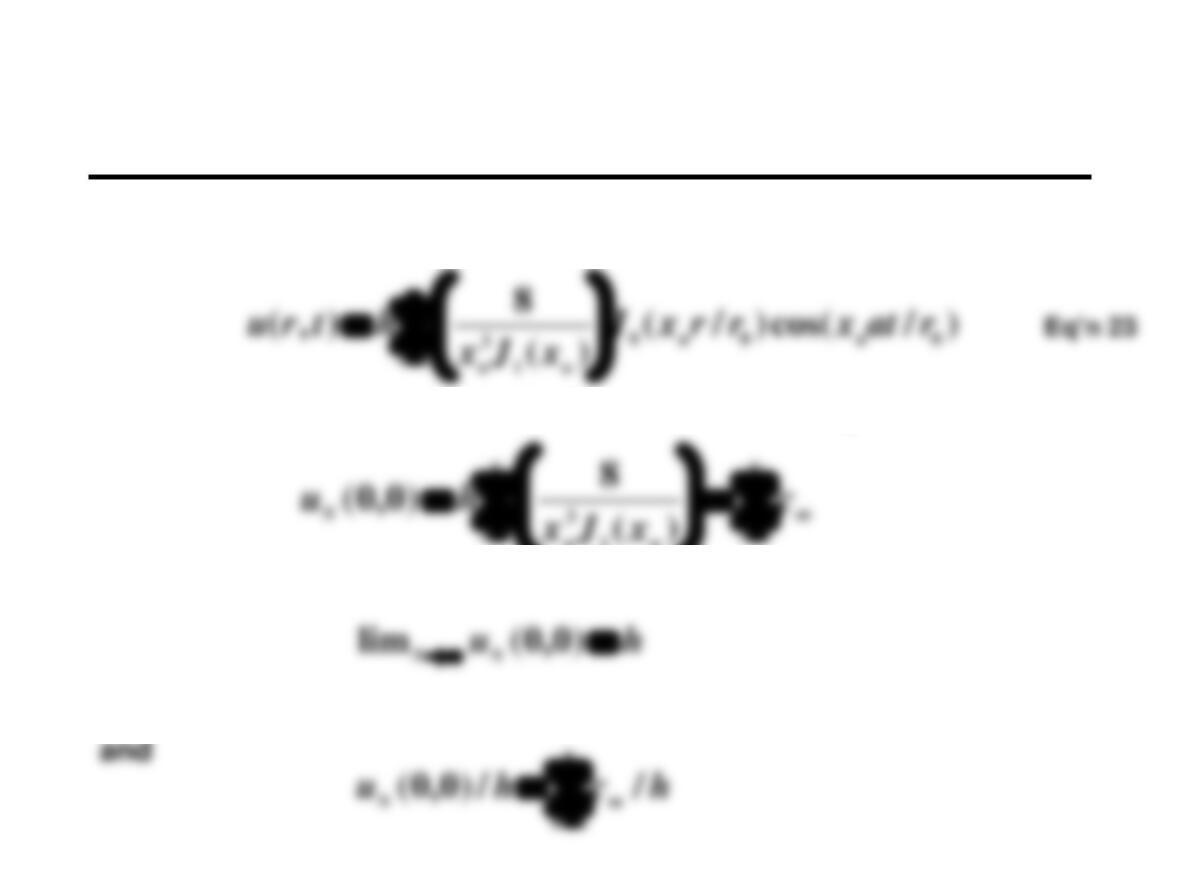
In summary, membrane displacement is given by
How can we check our results? We can examine the partial sums
and see if we obtain
The next chart tabulates the first ten zeros of , , ,
n
x
)(
0xJ
)(
1n
xJ
n
c

Cylindrical Vibrations (18)
1 2.405 0.5191 1.1079 1.1079
2 5.520 -0.3403 -0.1398 0.9681
3 8.654 0.2714 0.0455 1.0136
n
n
x
)(
1n
xJ
hcn/
=
N
m
mhc
1
/
It appears the series is indeed converging to the correct result.
Take-aways From Today’s Class
What’s important here?
You should know:
How to separate variables as a method of solving PDEs with
boundary conditions
And also that:
Bessel functions are useful engineering tools
Homework Assignment 24
Read:
Work:
(Problems in text)