
Differential Equations
for Engineers:
the Essentials
Class 22 notes
Agenda: Class 22
Lectures:
Systems of first order ODEs: nonhomogeneous equations –
Homework Assignment 22

Systems of First Order ODEs
Matrix Laplace Transforms
Matrix Laplace Transforms:
General Equations
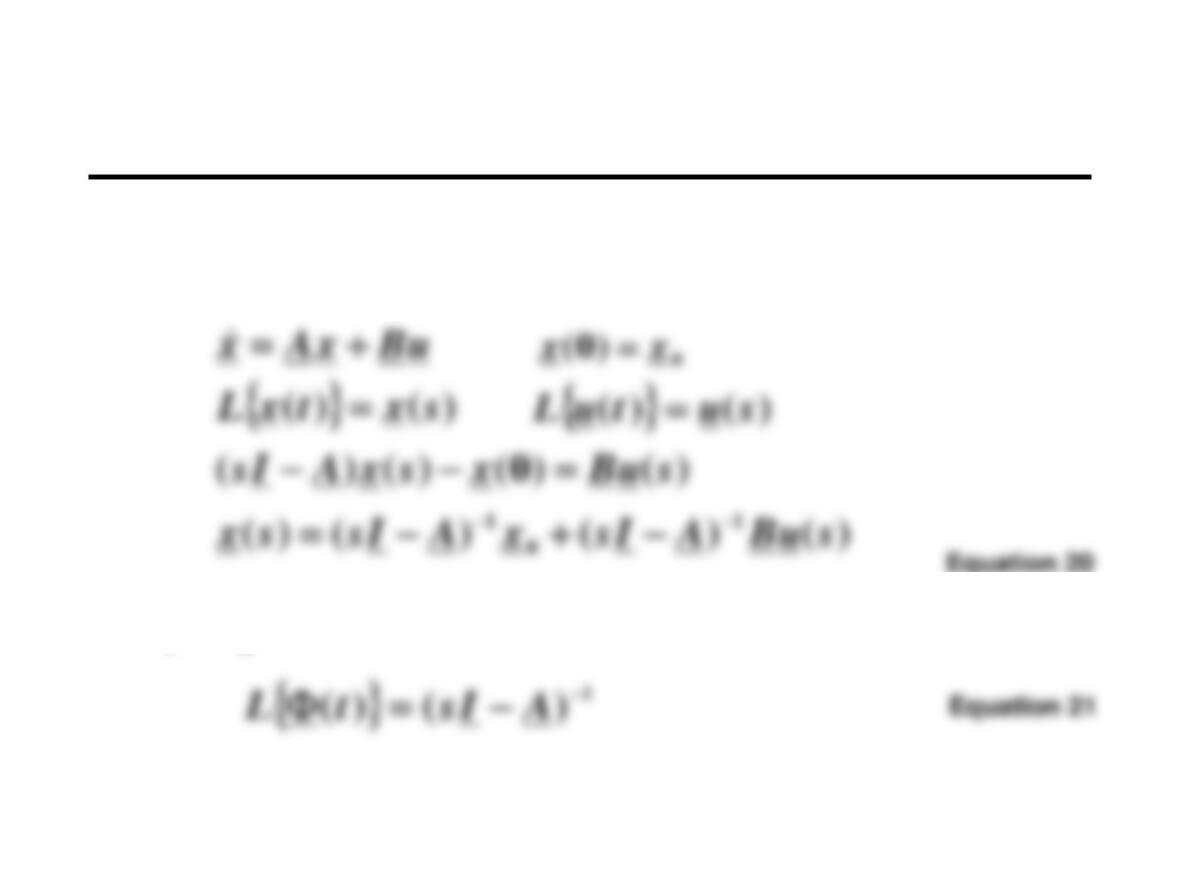
Solving by Laplace Transforms, the general equations are:
Comparing with results from the last class we see that
Matrix Laplace Transforms:
Initial and Final Value Theorems
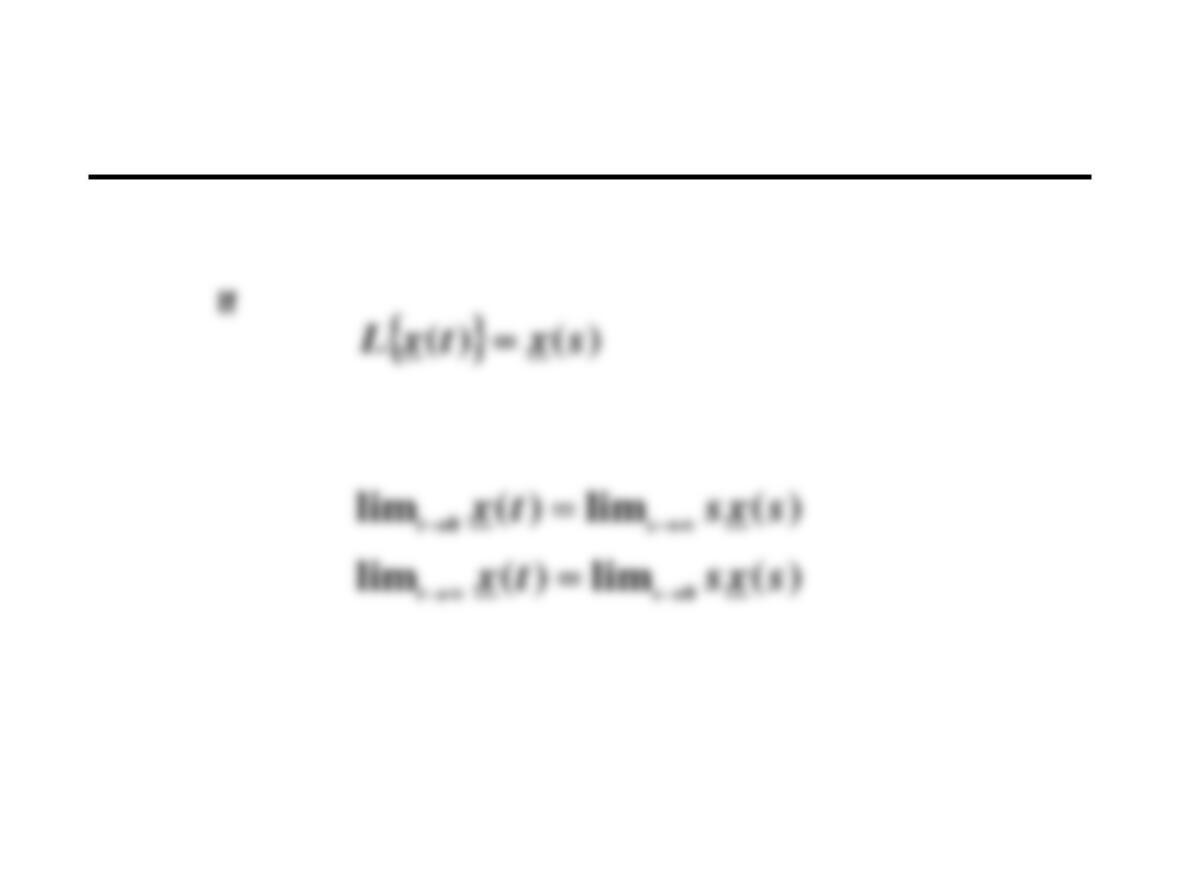
then, provided the limits exist,
(Stated without proof.)
Matrix Laplace Transform Example
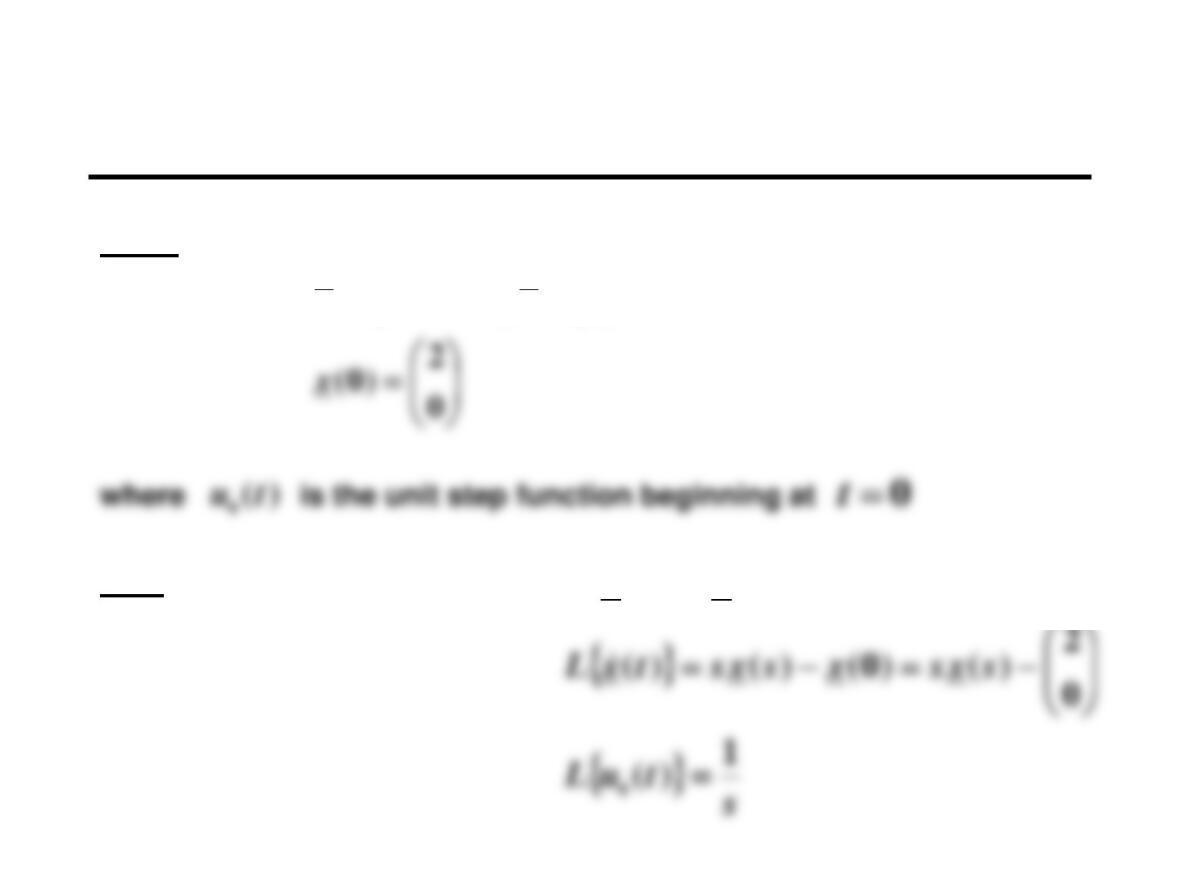
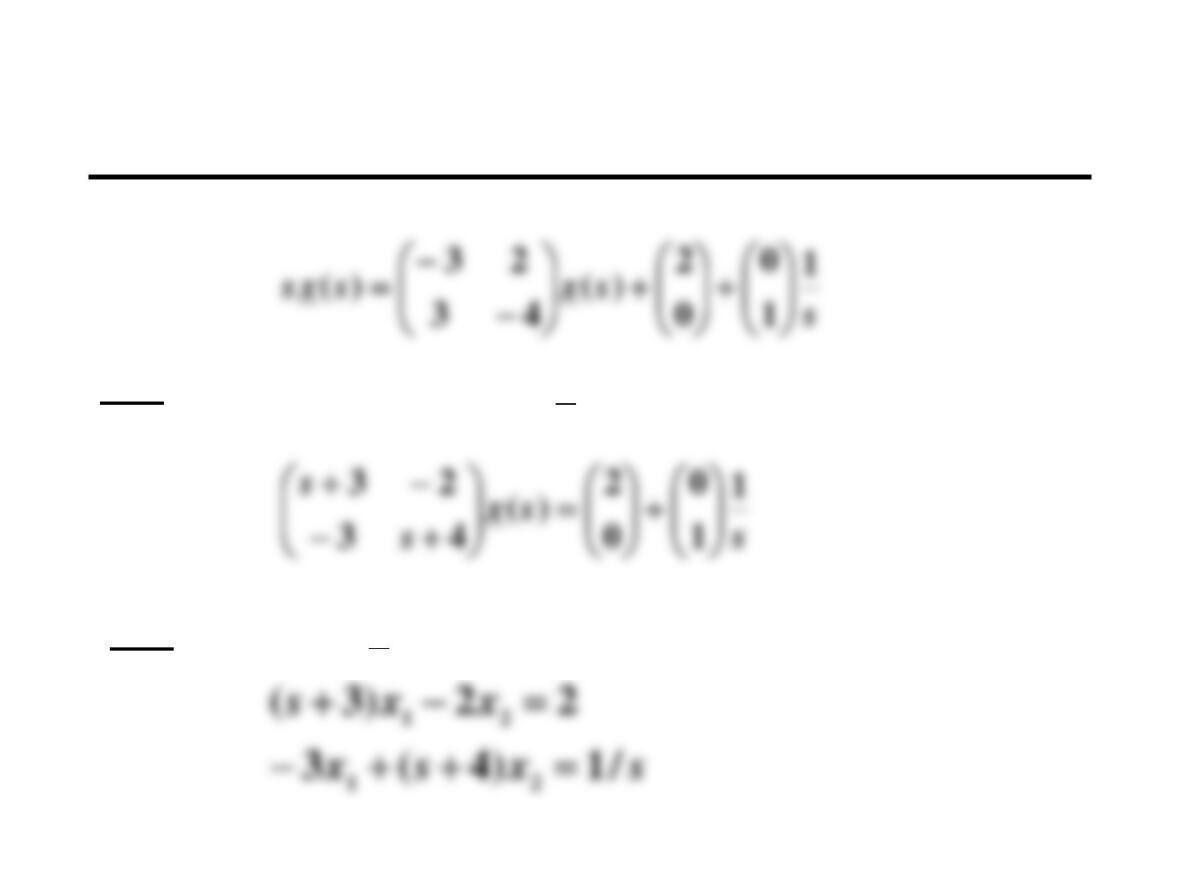
Solve:
Step 1 : Transform the equation:
+
−
−
=
)(
1
0
43
23
0
tuxx
sxtxL
)()(
=
Matrix Laplace Transform Example (2)
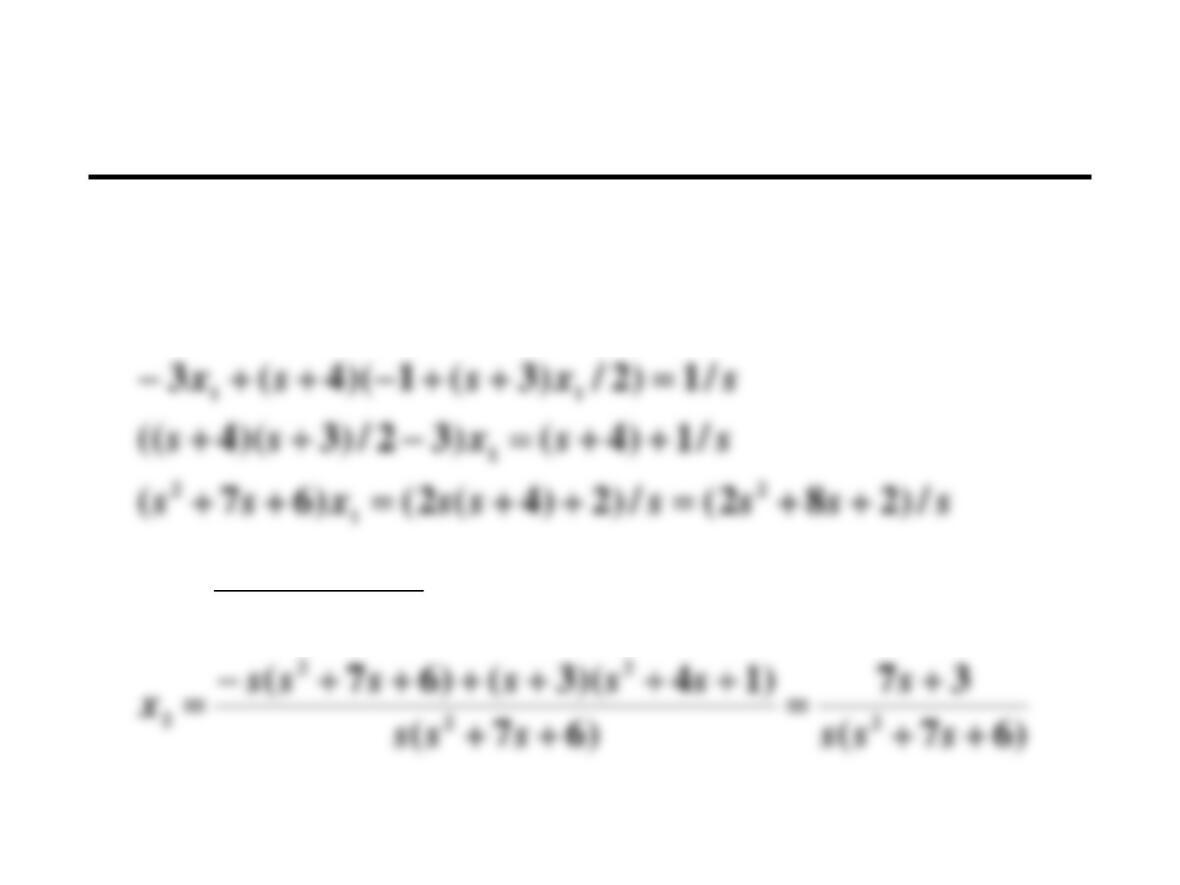
Step 2: Collect terms involving on left side, everything else on right:
)(sx
Step 3: Solve for :
)(sx
Matrix Laplace Transform Example (3)
)67(
282
2/)3(1
2
2
1
12
++
++
=
++−=
sss
ss
x
xsx
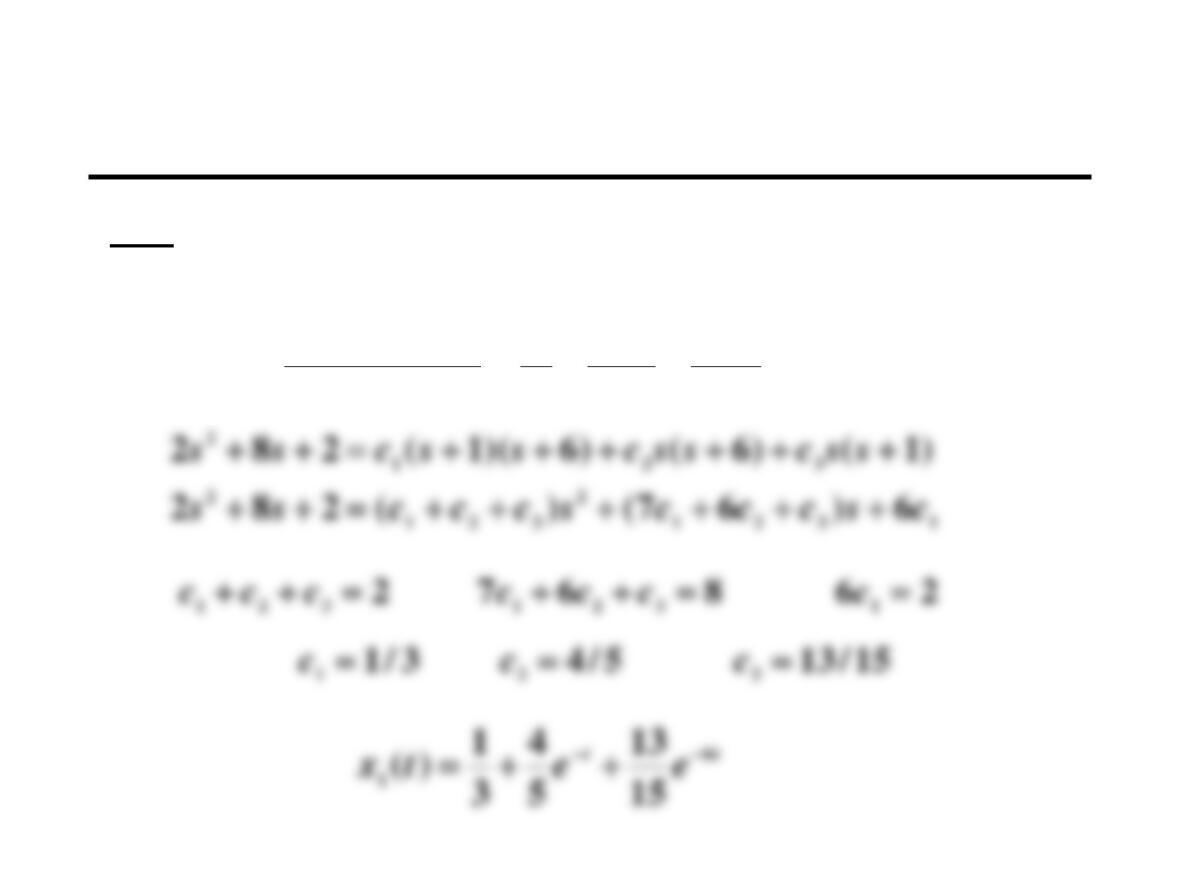
Matrix Laplace Transform Example (4)
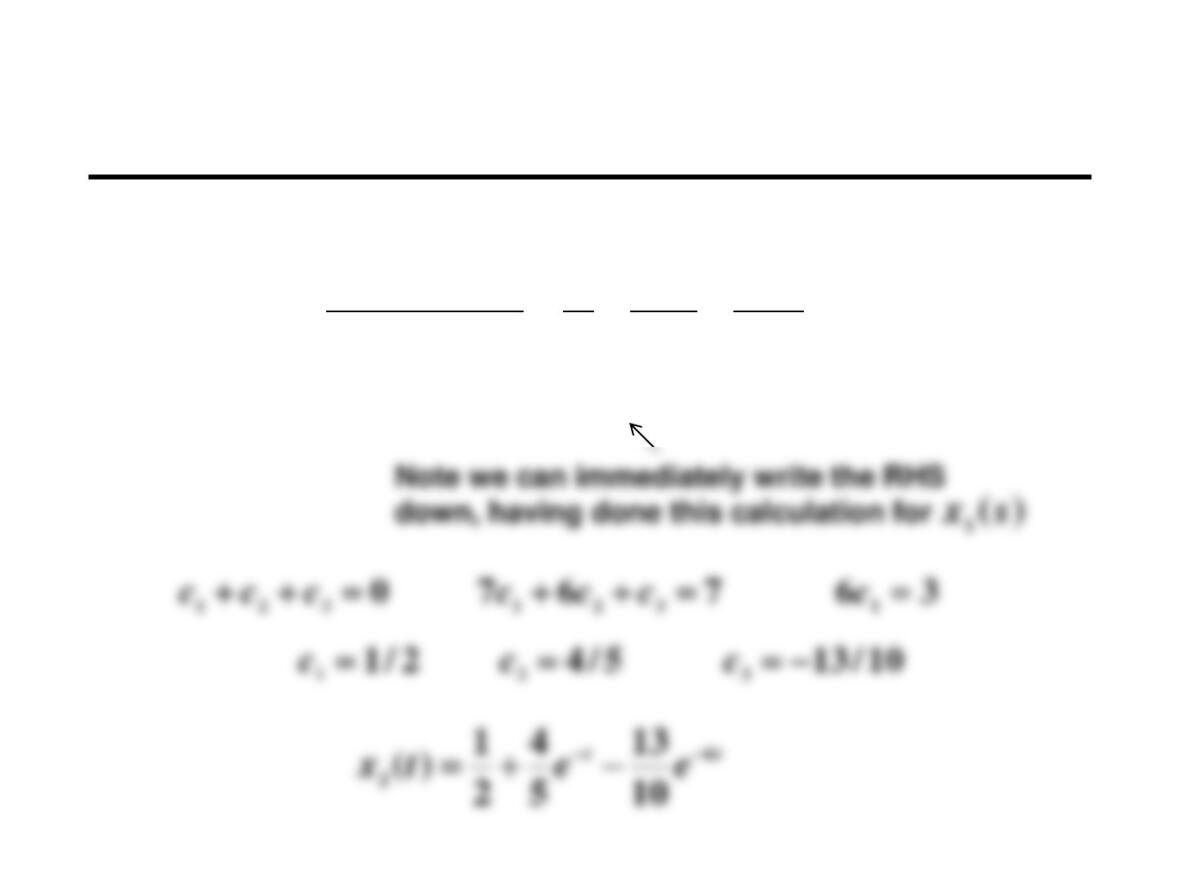
Step 4: Manipulate each component to match our short table of
Laplace transforms, as we did previously for scalar ODEs.
321
2
2
1
61)67(
282
)(
s
c
s
c
s
c
sss
ss
sx
+
+
+
+=
++
++
=
Matrix Laplace Transform Example (5)
1321
2
321
321
2
2
6)67()(37
61)67(
37
)(
cscccscccs
s
c
s
c
s
c
sss
s
sx
++++++=+
+
+
+
+=
++
+
=

Systems of First Order ODEs
Nonhomogeneous Equations –
Matrix Method of Undetermined Coefficients
(Matrix “Trial & Error” Method)
Matrix Method of Undetermined Coefficients
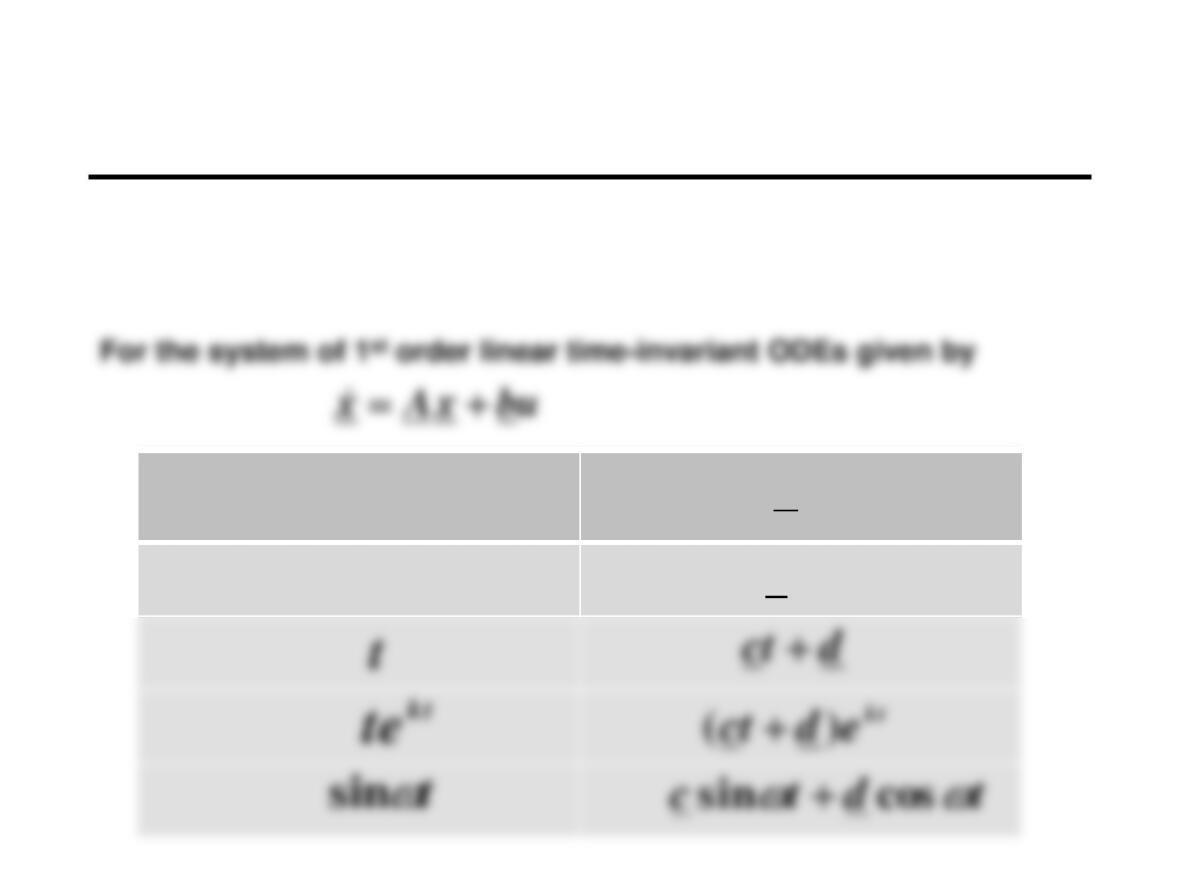
By direct analogy with the method we applied to 2nd order linear time-
invariant ODEs:
=)(tu
=)(tx
kt
e
kt
ec
If Then try
Matrix “Trial & Error” Example
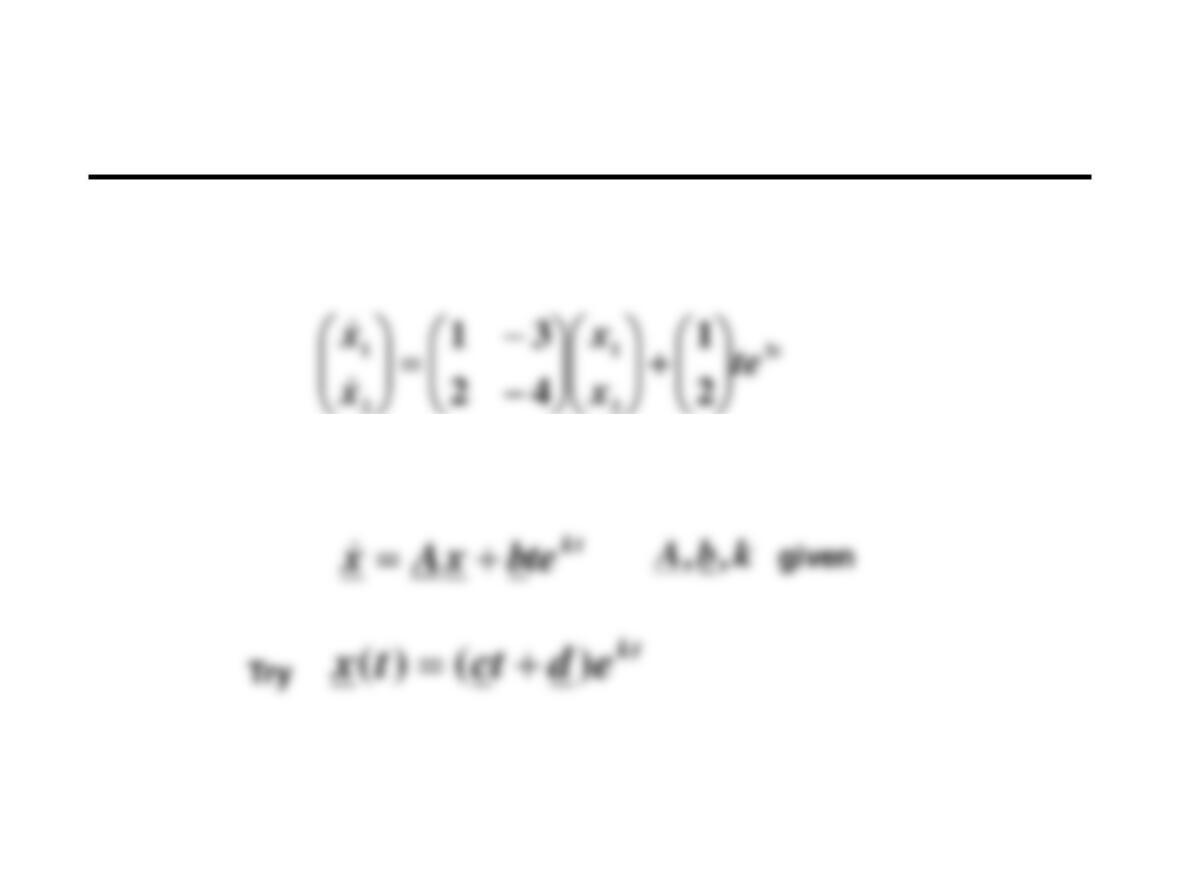
Find the steady state solution, after transients have died away, to
First develop a strategy for solution. Consider the general form
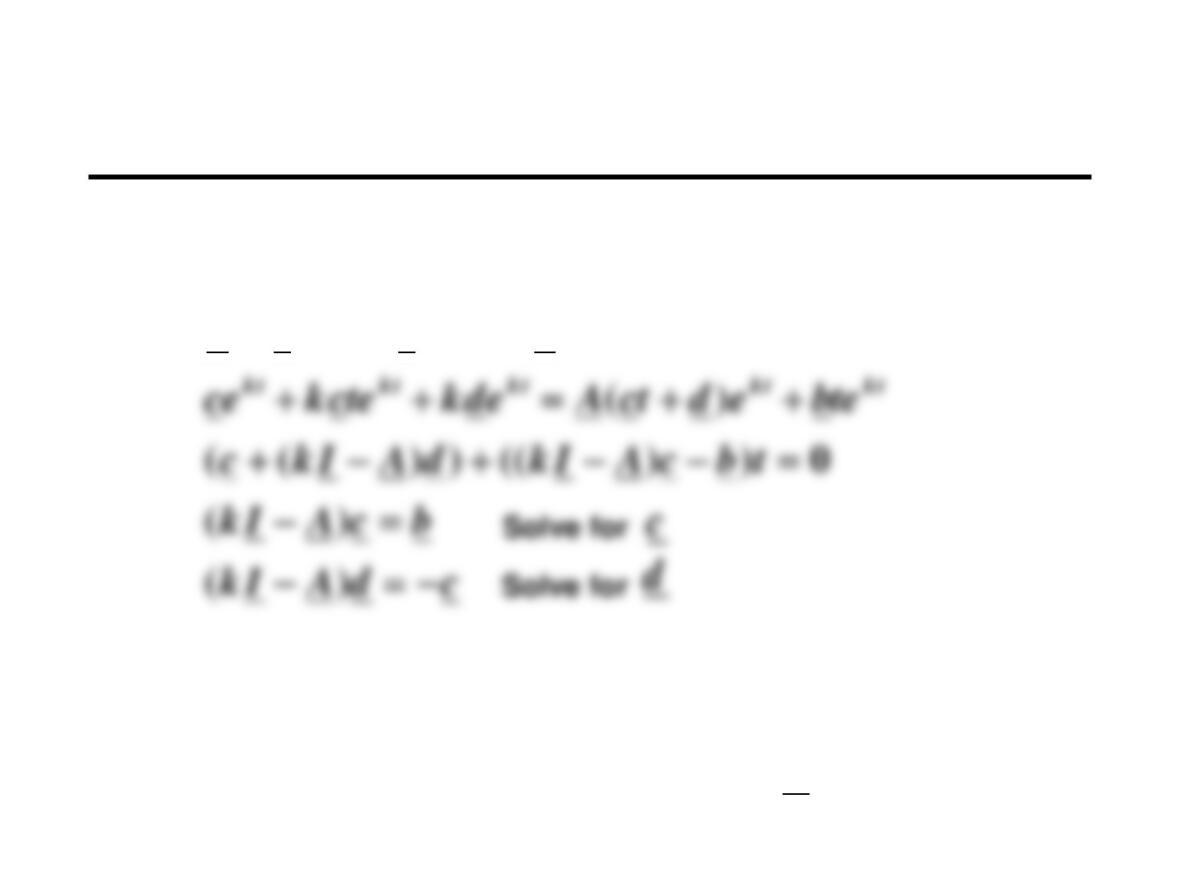
edkteckecx
ktktkt
++=
Note: This method
works only if is
not an eigenvalue
of
k
A
Matrix “Trial & Error” Example (2)
Matrix “Trial & Error” Example (3)
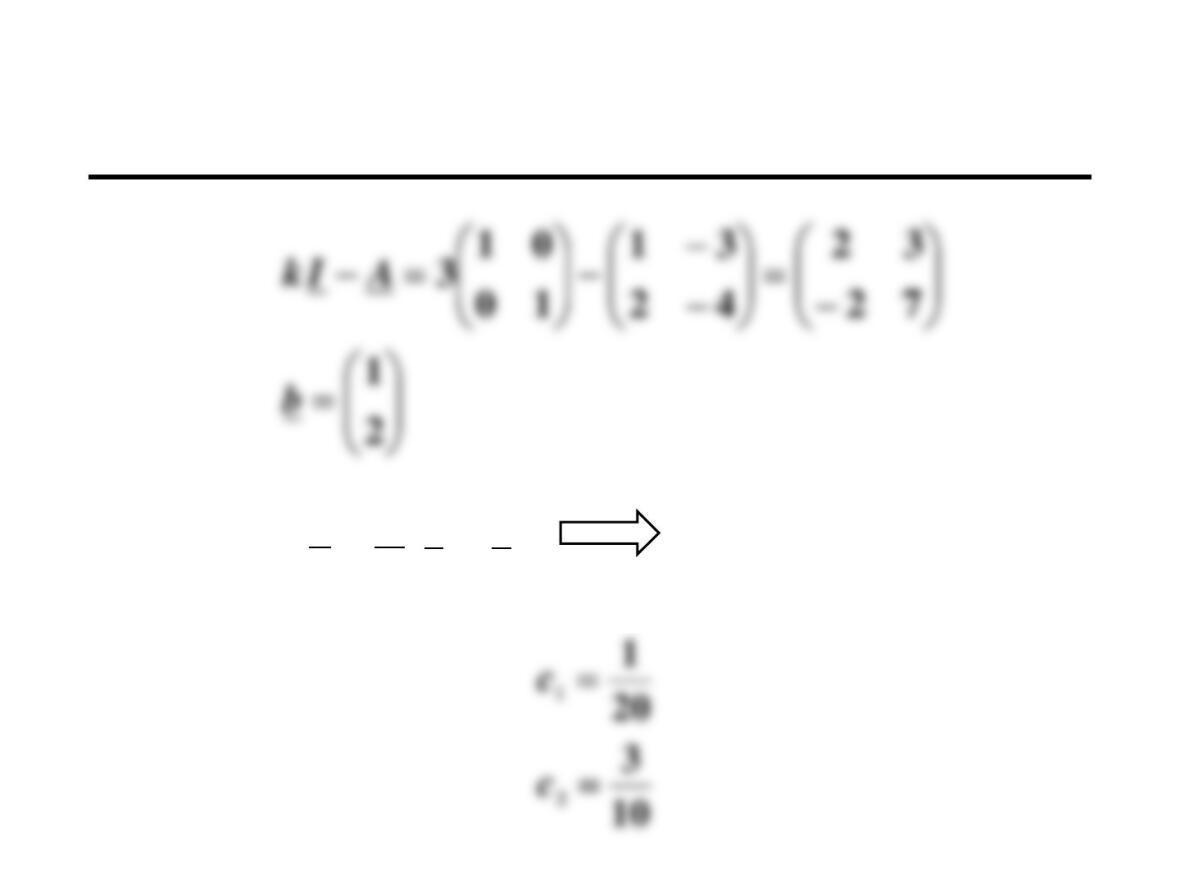
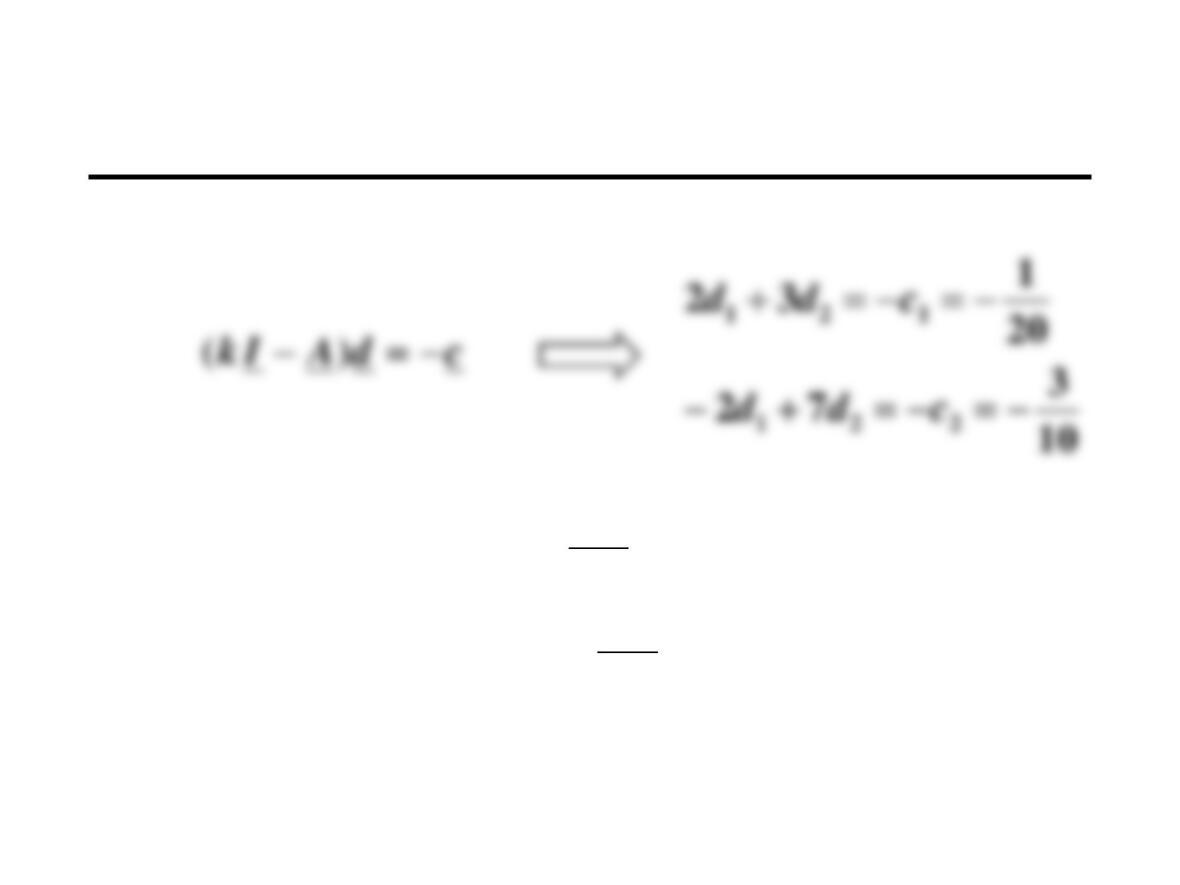
272
132
21
21
=+−
=+
cc
cc
bcAIk =− )(
Matrix “Trial & Error” Example (4)
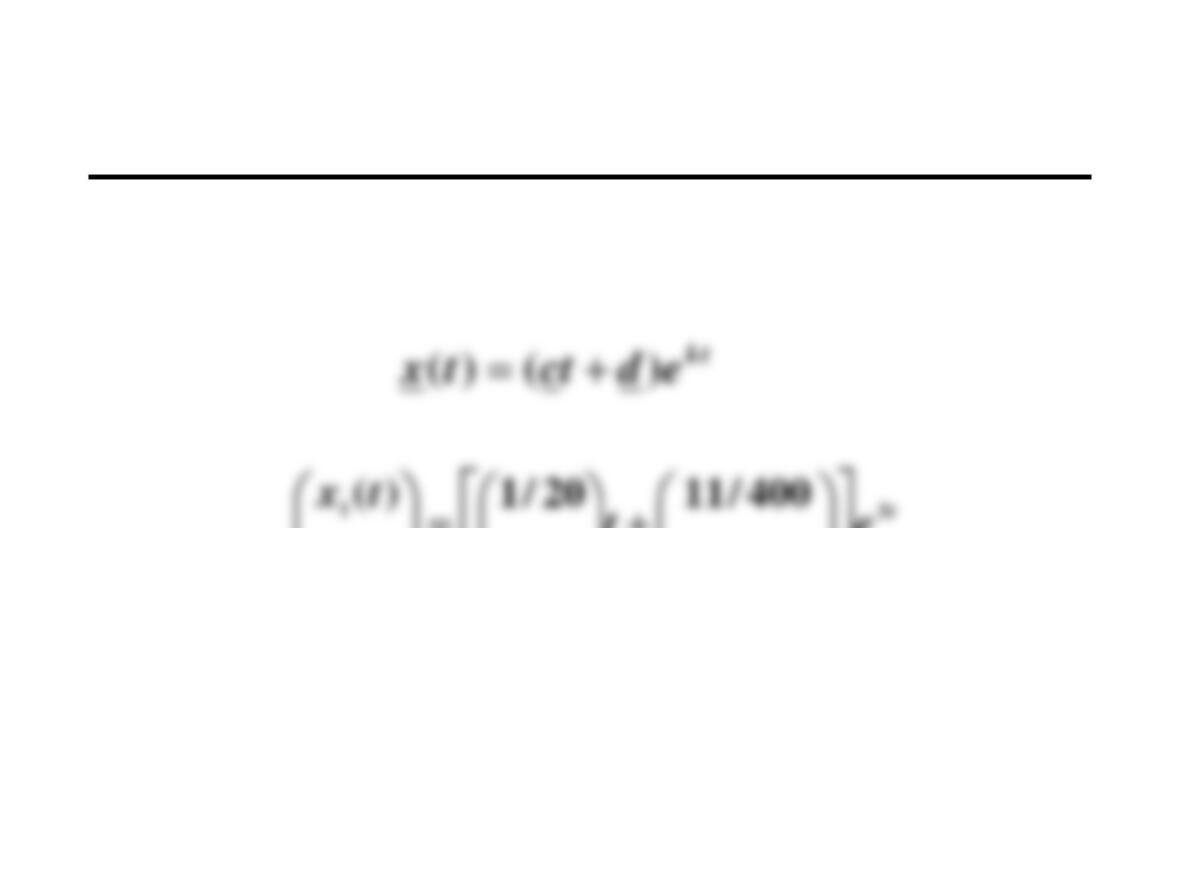
200
7
400
11
2
1
−=
=
d
d
Matrix “Trial & Error” Example (5)
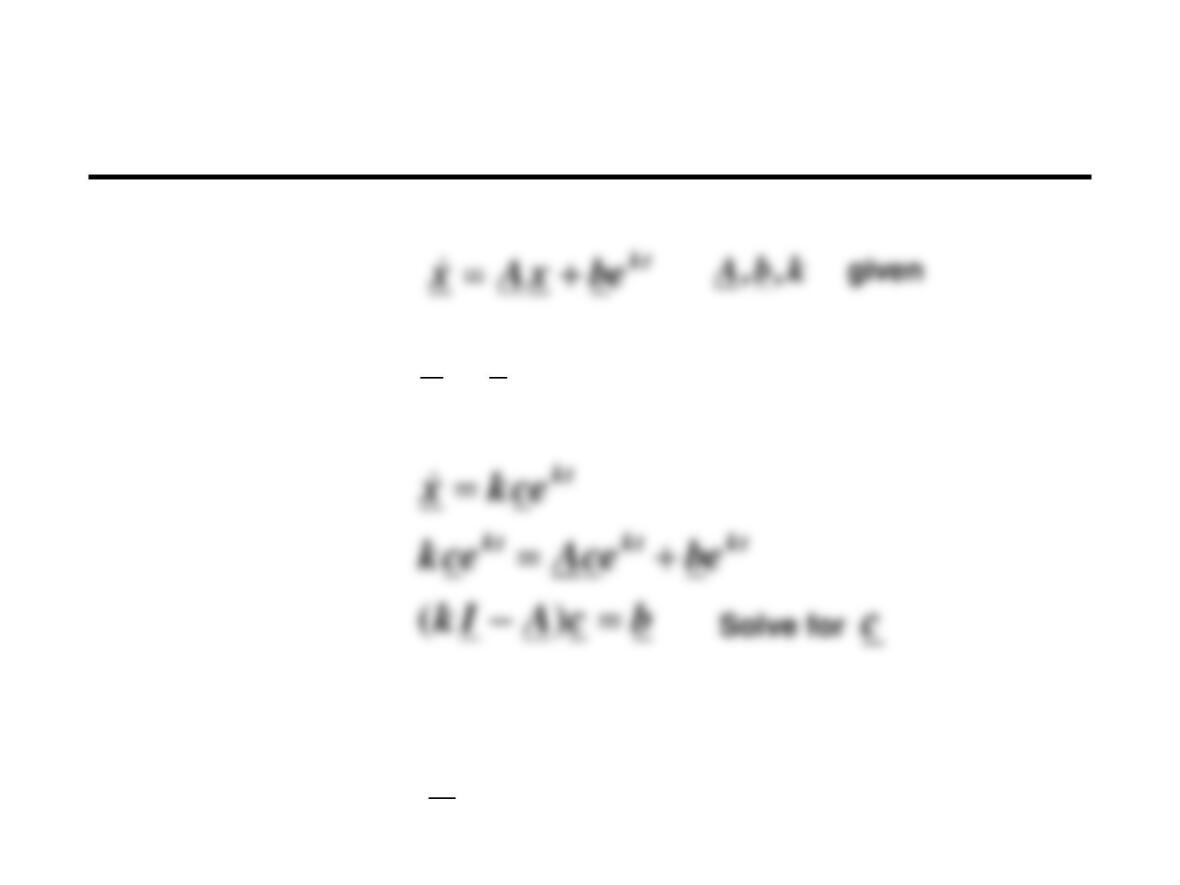
Hence the solution to the ODE is
et
tx
2
200/7
10/3
)(
−
+
=
If
kt
etu =)(
ecx
kt
=
Then try
Note: This method works only if is not
an eigenvalue of
k
A