Linear Nonhomogeneous Systems of
First Order ODEs (5)
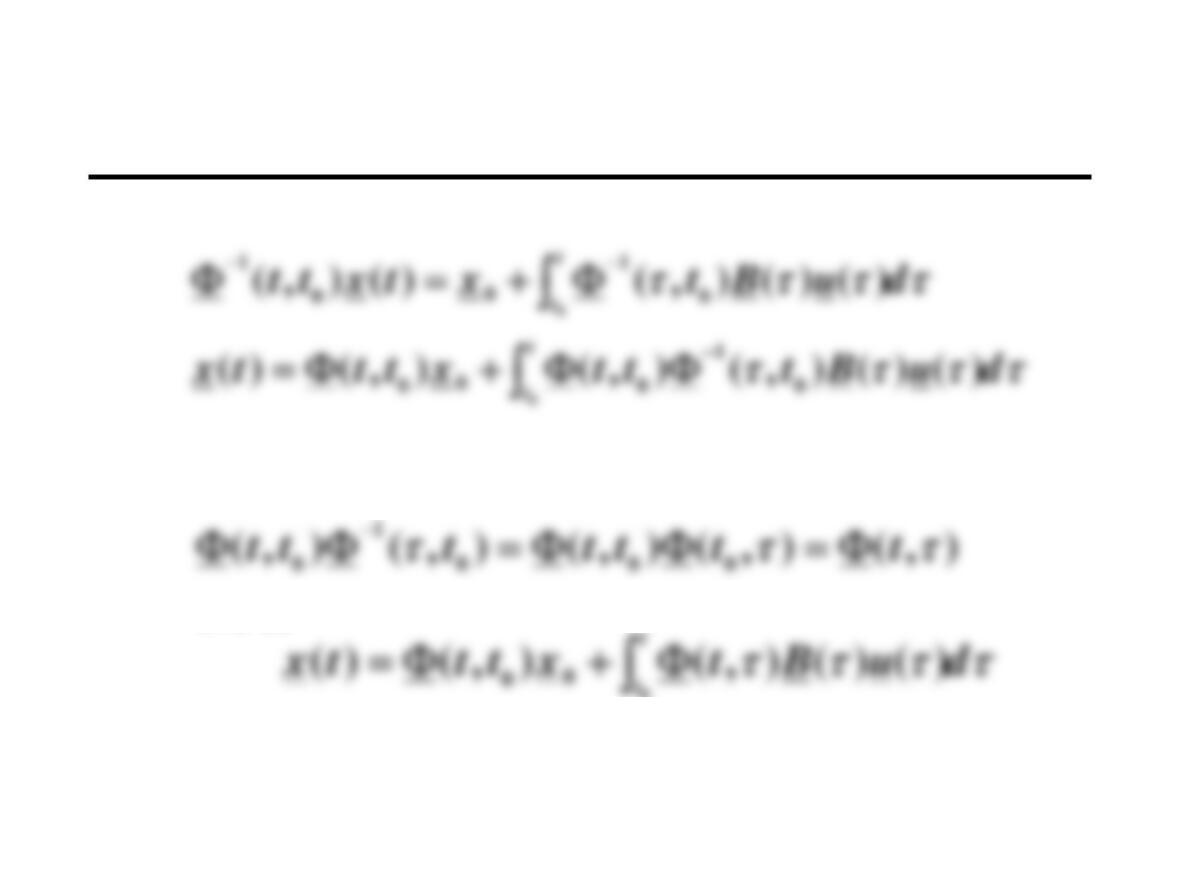
Now, from the properties of the state transition matrix,
Equations 7 and 8
0
and so
as was to be shown.
Linear Time-Invariant ODEs
Theorem:
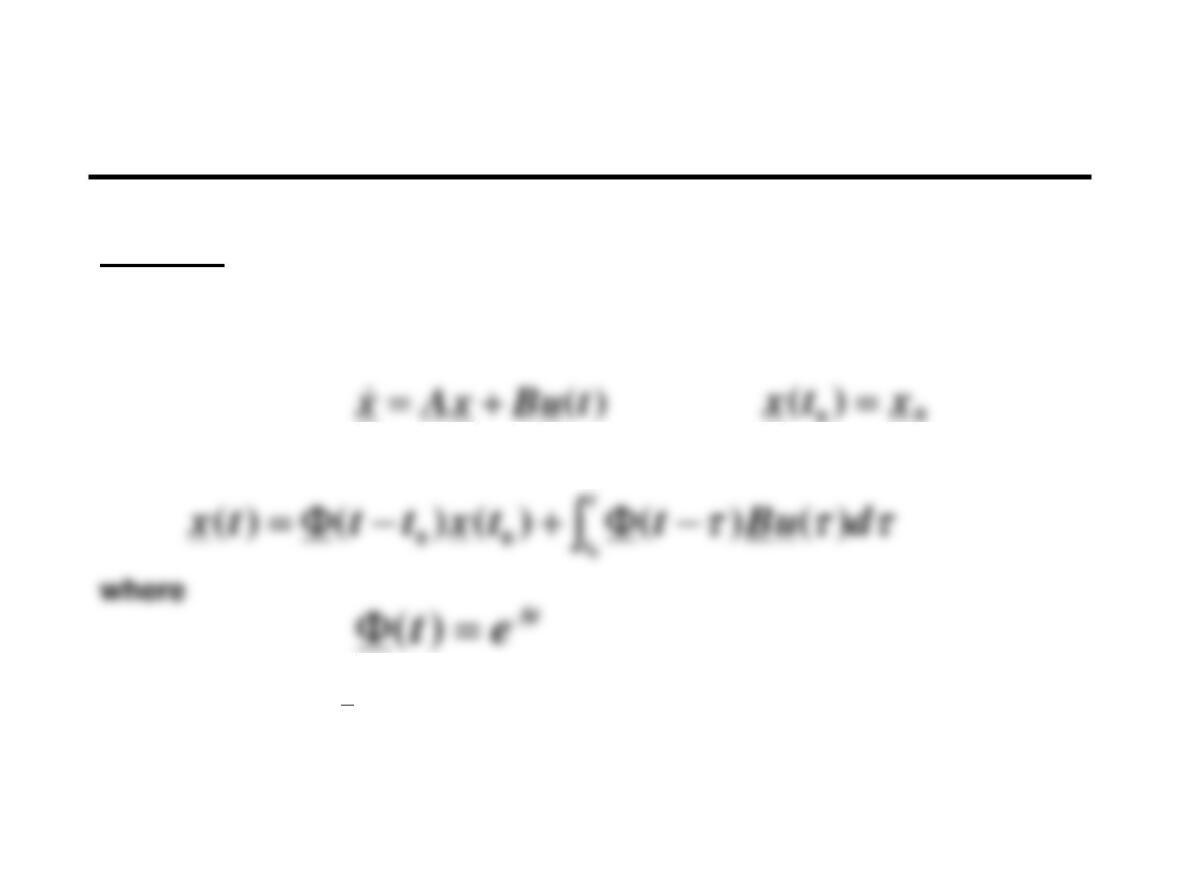
The linear time-invariant nonhomogeneous matrix equation
has solution
and the matrix satisfies all the usual properties of the
exponential function.
0)( xtx =
tA
e
(Stated without proof)
Methods of Solving Linear Time-Invariant
Nonhomogeneous Systems of First Order ODEs
Matrix Variation of Parameters (Kernel) Method
Procedure for the Matrix Kernel Method
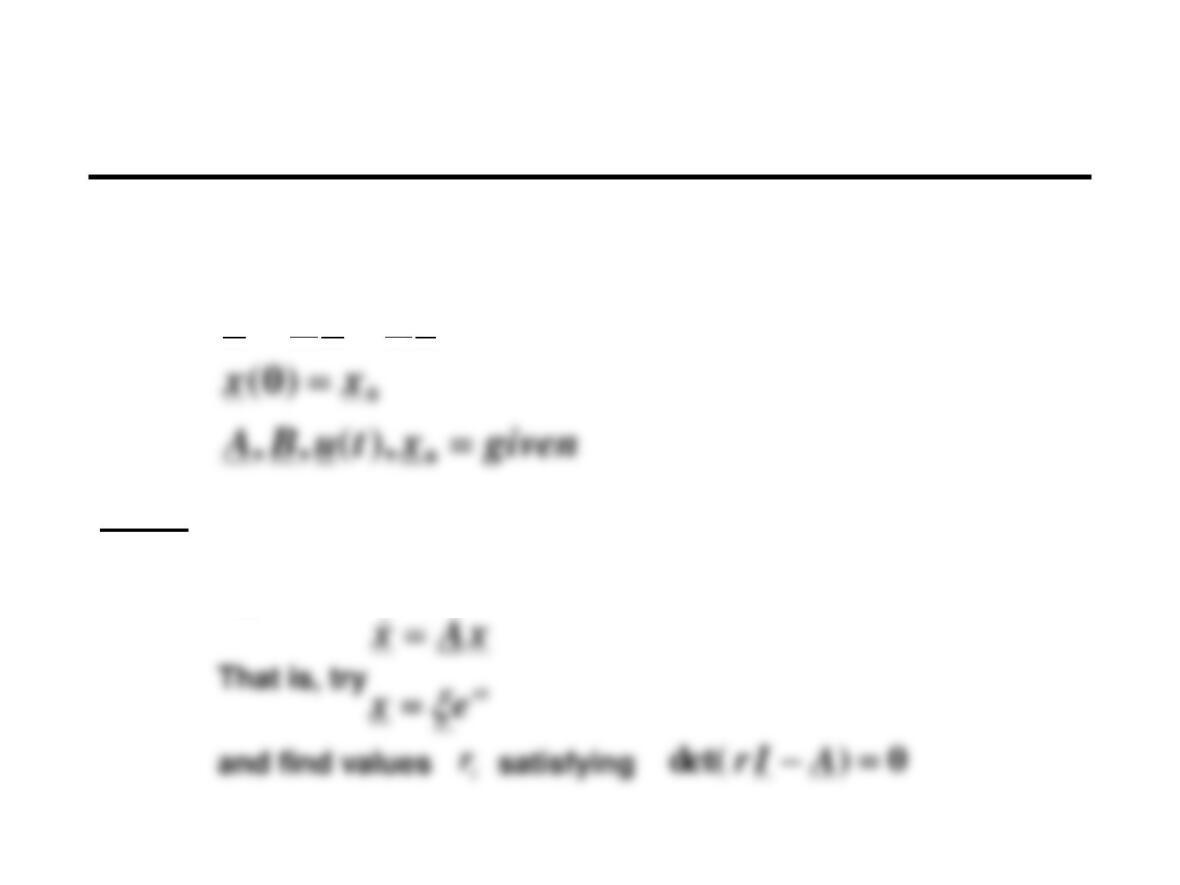
To solve:
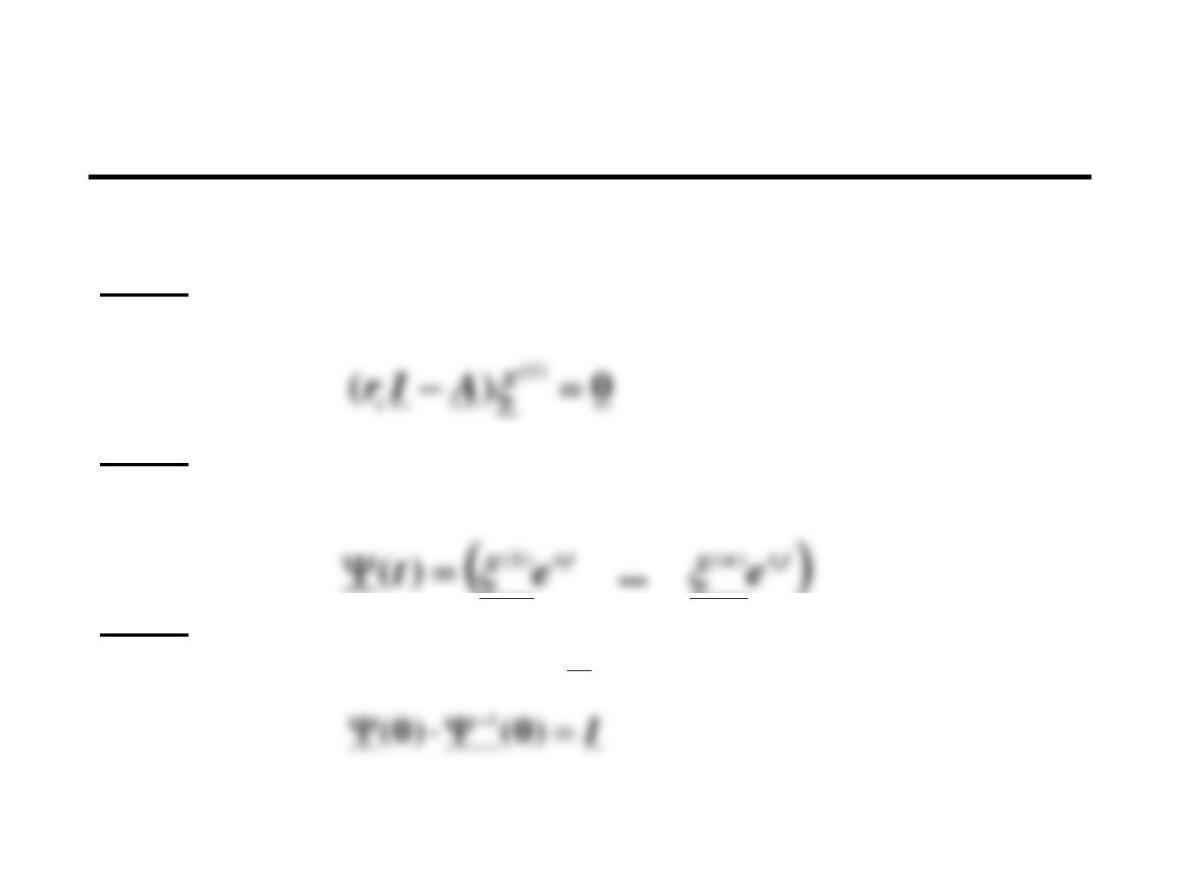
Step 1:
Find the eigenvalues of the solutions to the homogeneous
equation
tuBxAx
+=
)(
Procedure for the Matrix Kernel Method (2)
Step 2:
Find the eigenvectors associated with the eigenvalues:
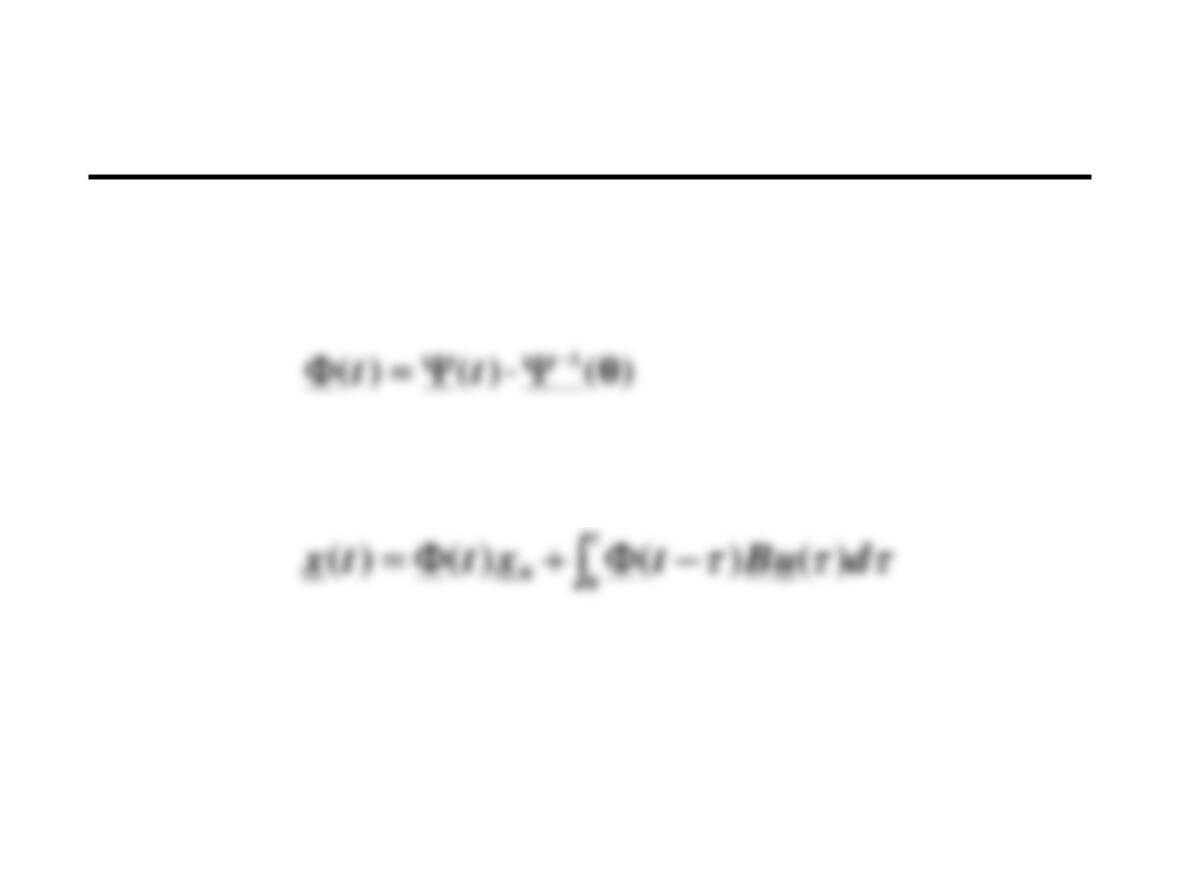
Step 3:
Form the fundamental matrix:
Step 4:
Calculate the inverse of from the equation
)0(
Procedure for the Matrix Kernel Method (3)
Step 5:
Calculate the state transition matrix:
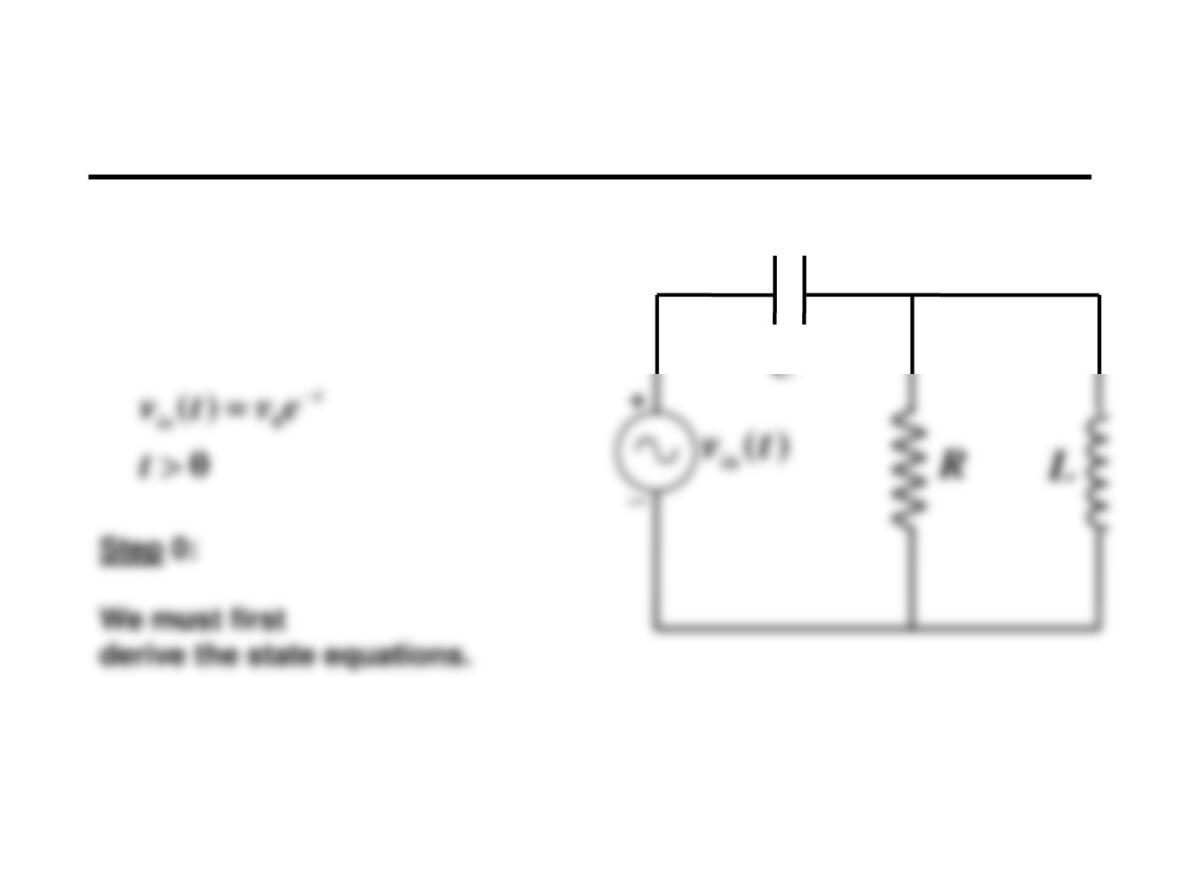
Step 6:
Calculate the solution:
In-class Example
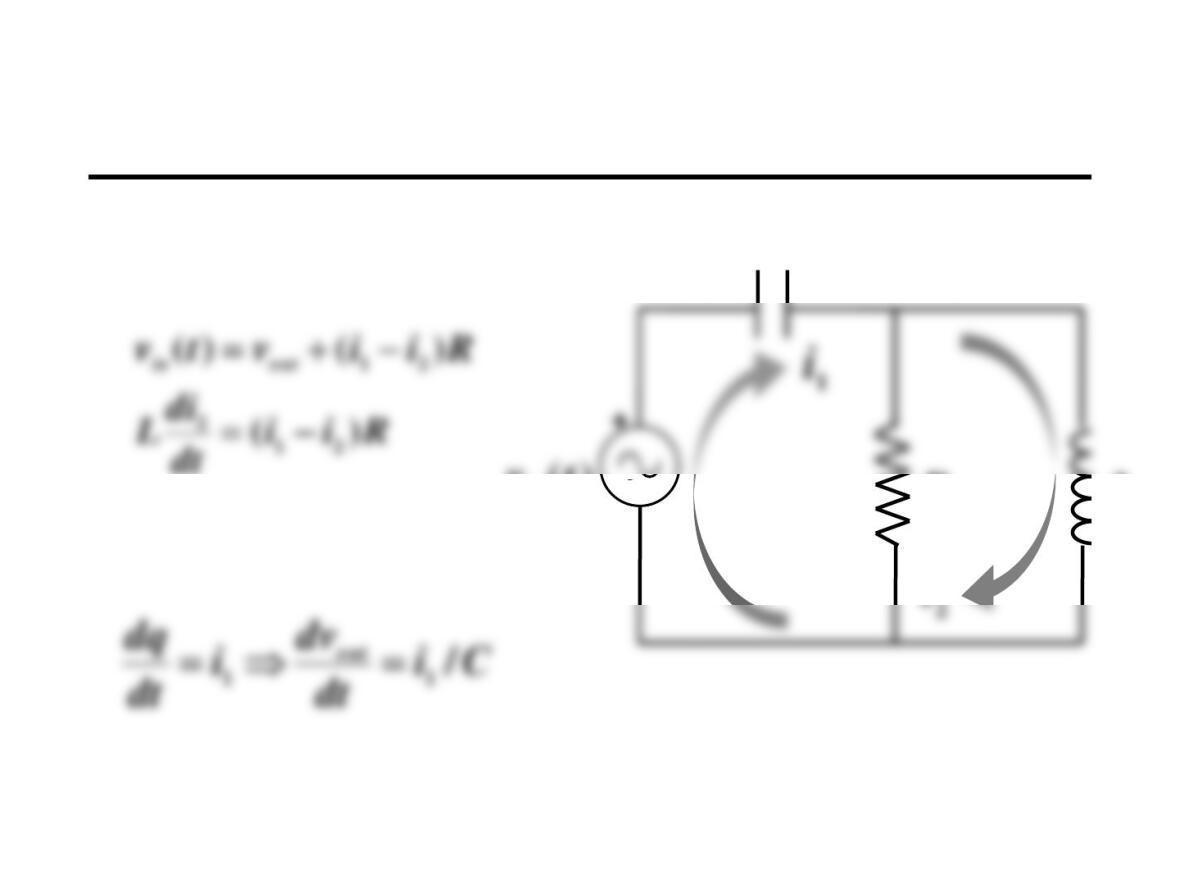
Find the charge on the
capacitor as a function of time
if all initial conditions are zero and
In-class Example (2)
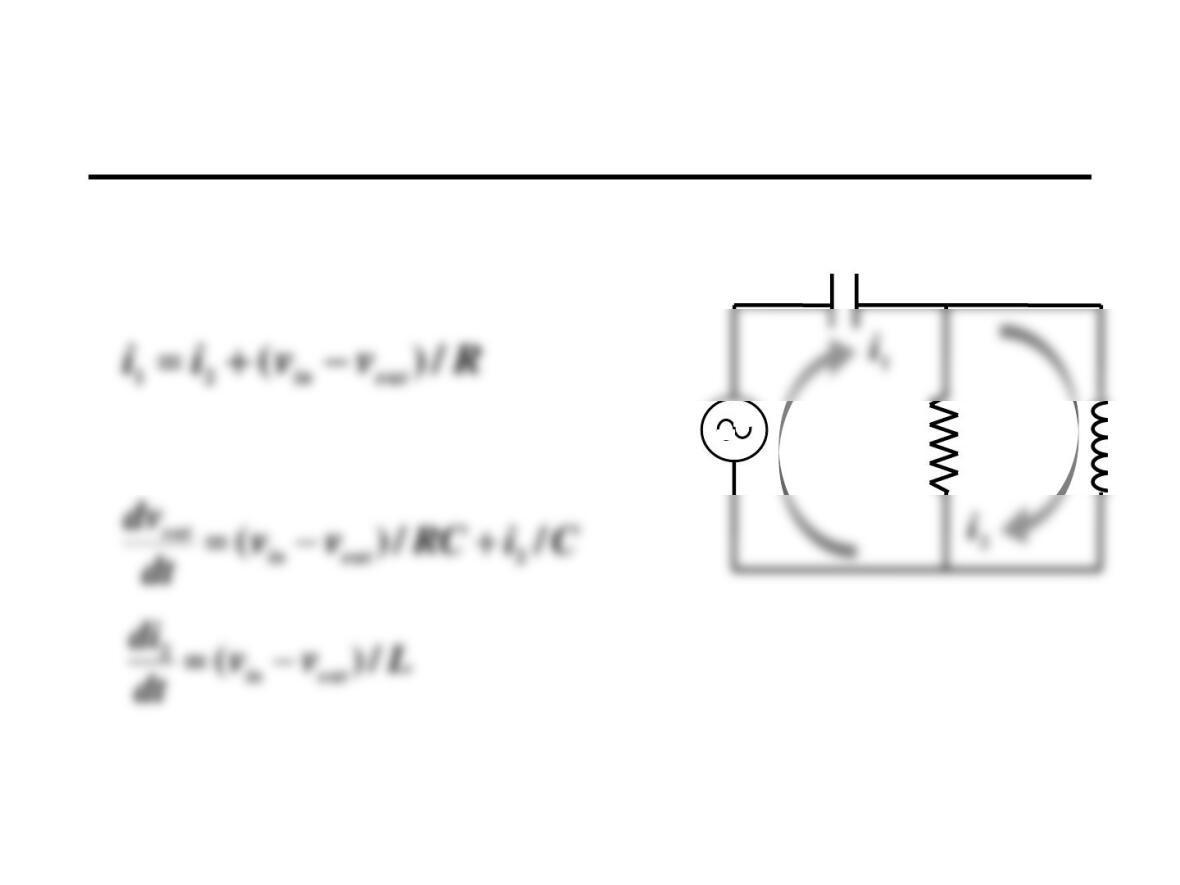
Conservation of charge:
Kirchhoff’s equations:
)(tvin
out
v
C
R
L
_
In-class Example (3)
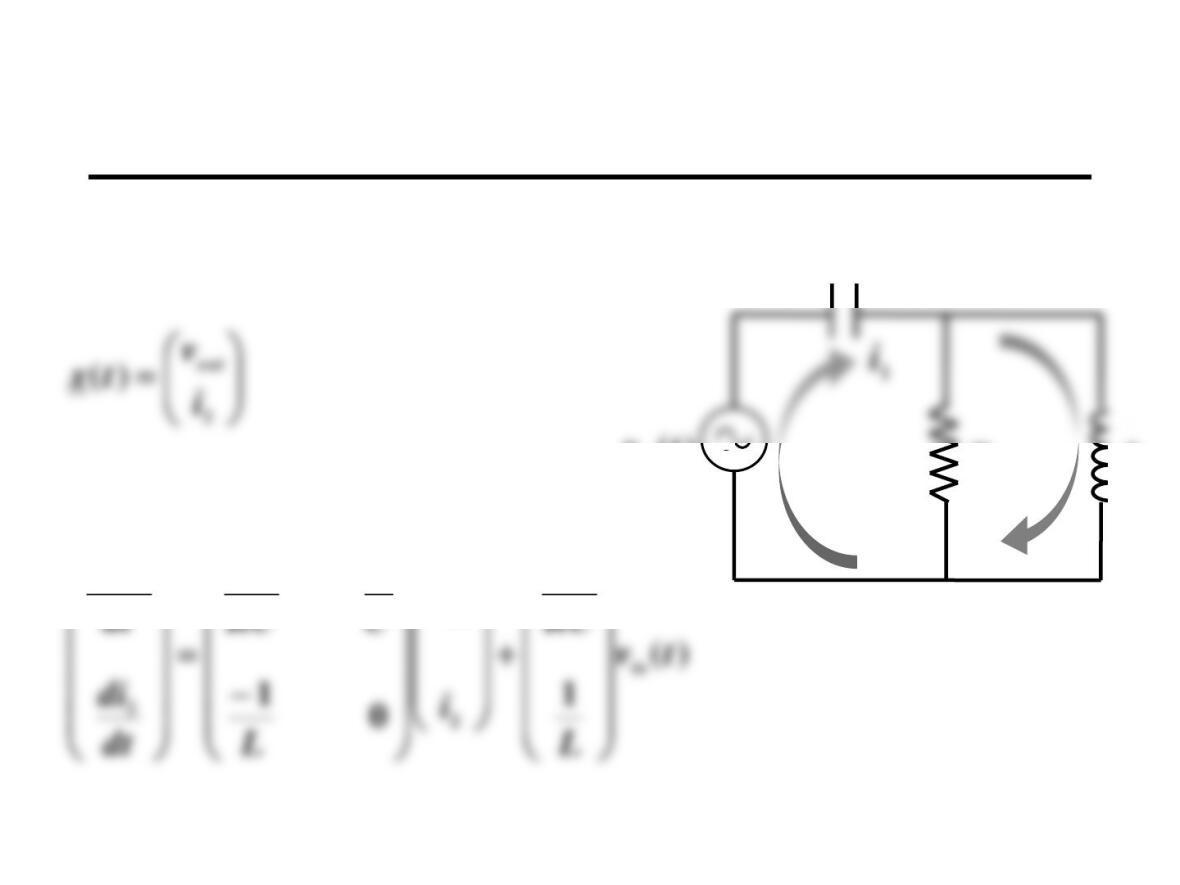
Reducing the number of variables:
Then
)(tvin
out
v
C
R
L
In-class Example (4)
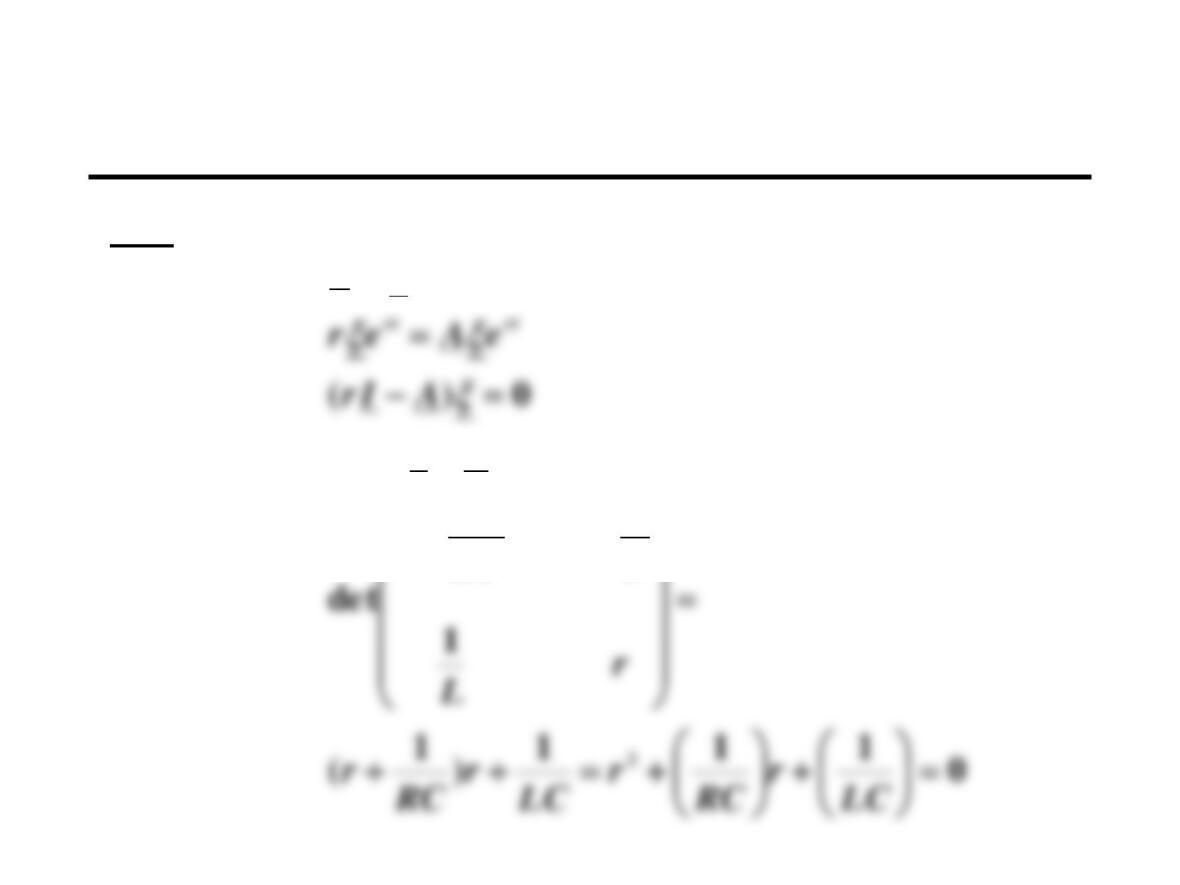
Let
Then
1
11
v
dv
out
out
−
)(tvin
out
v
C
R
L
2
i
In-class Example (5)
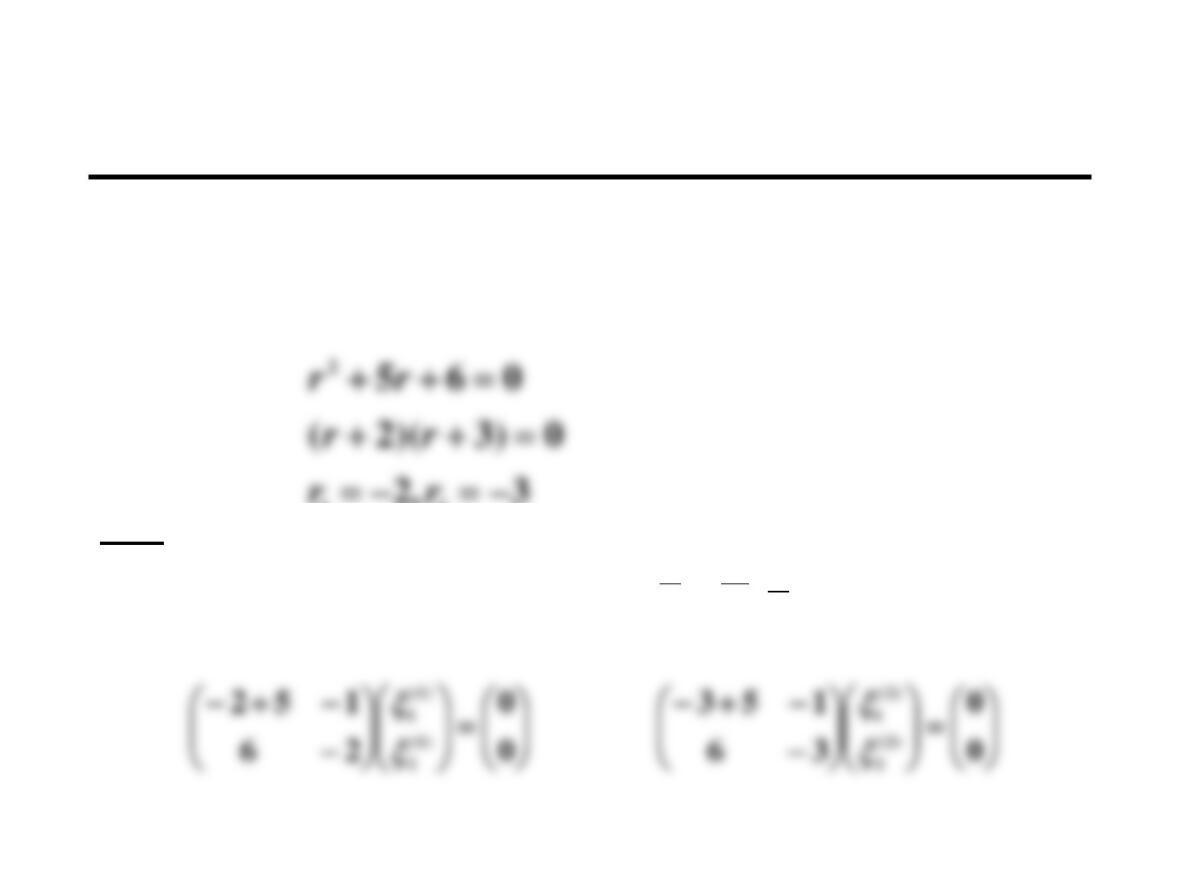
Step 1: Try
11
0)det(
−+
=−
=
CRC
r
AIr
ex
rt
In-class Example (6)
Suppose
Then the characteristic equation is
Step 2:
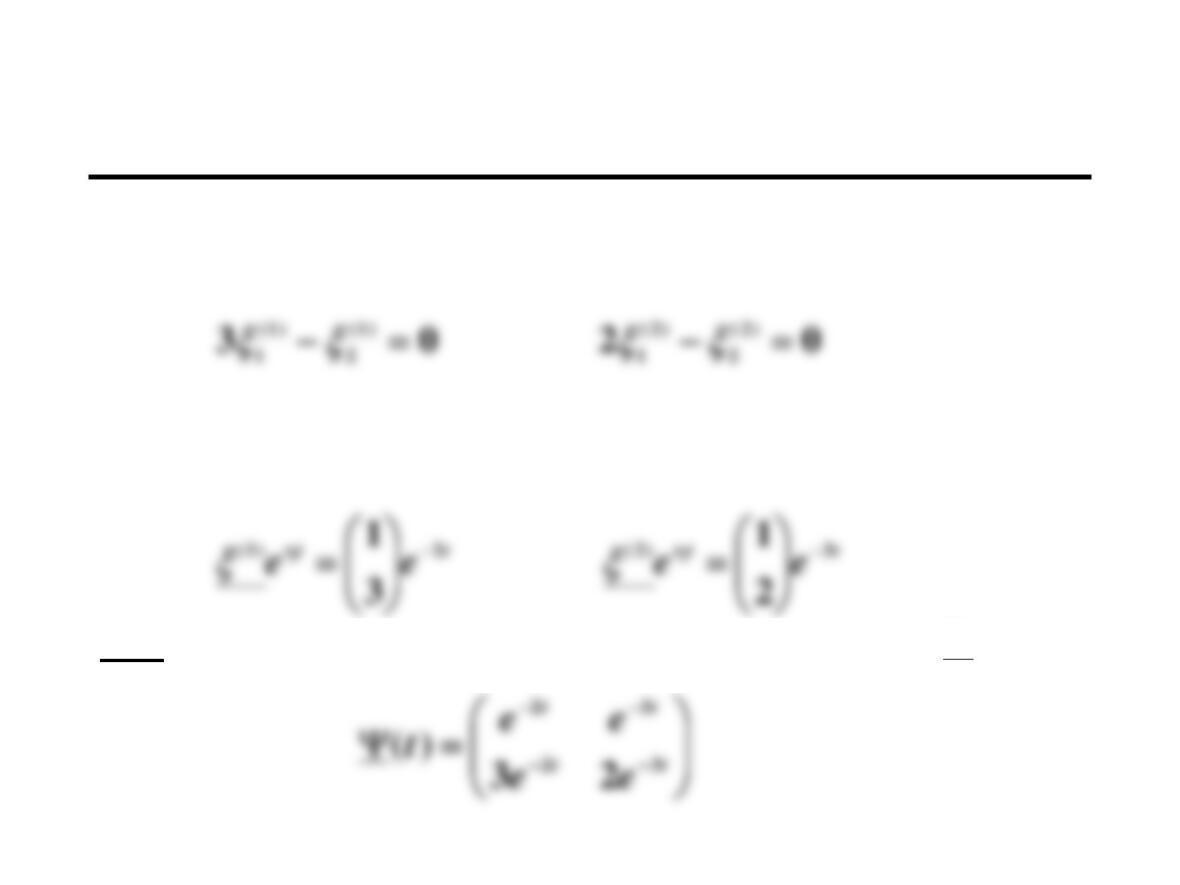
Substituting these eigenvalues into
we arrive at
6/1,5/1,1 === LRC
3,2
21
−=−=
rr
0)( =−
AIr
In-class Example (7)
Hence:
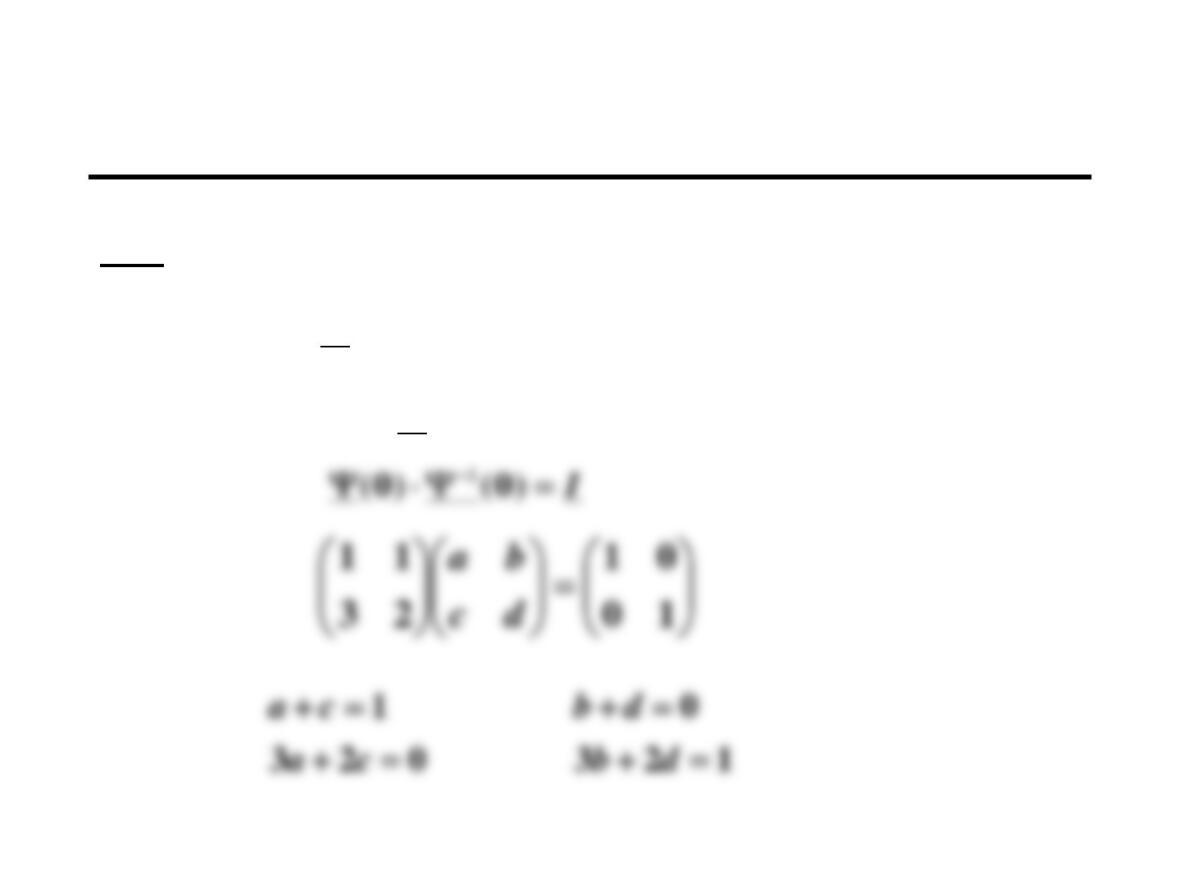
In each case we let the first component equal 1 and then the
eigenvectors are
Step 3: These form the columns of the fundamental matrix :
)(t
In-class Example (8)
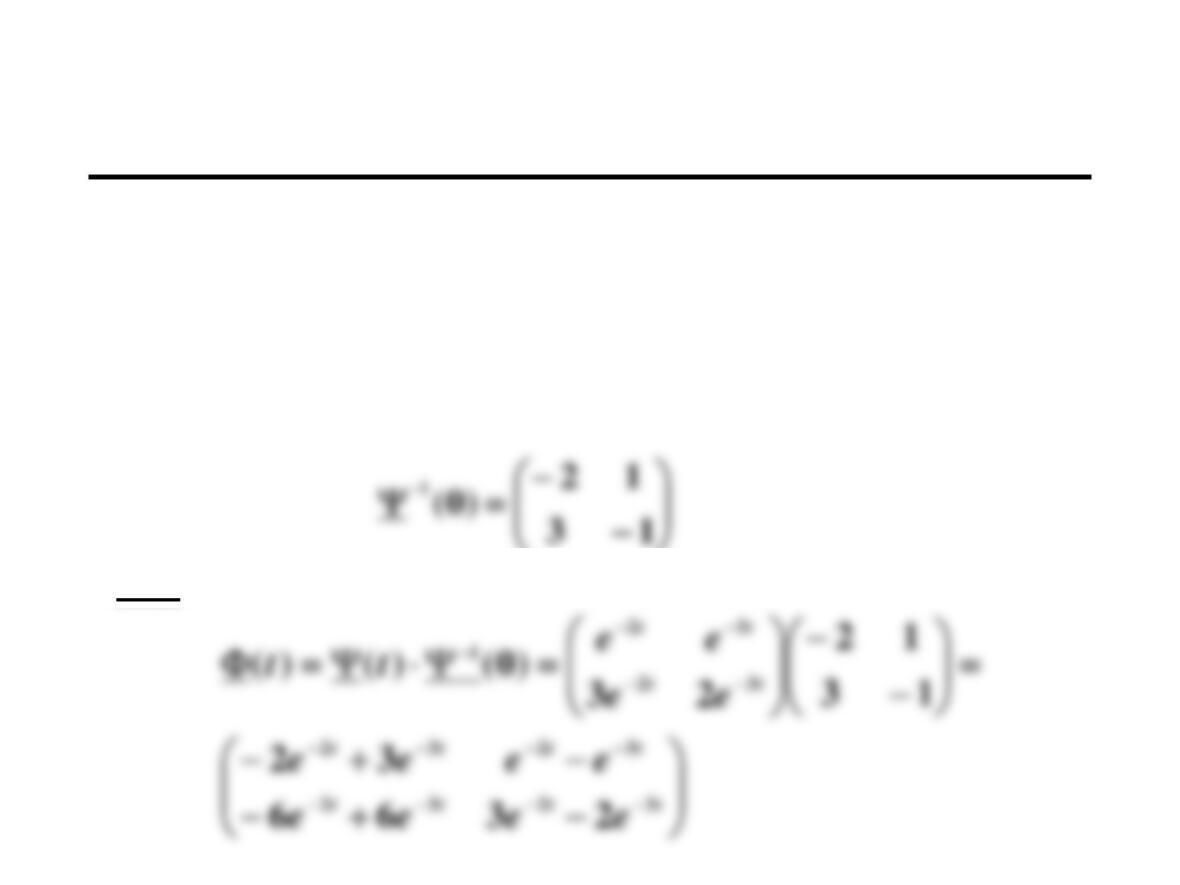
Step 4:
Now
and we calculate from
= 23
11
)0(
)0(
1
−
In-class Example (9)
3
2
0)1(23
1
=
−=
=−+
−=
c
a
aa
ac
1
1
1)(23
−=
=
=−+
−=
d
b
bb
db
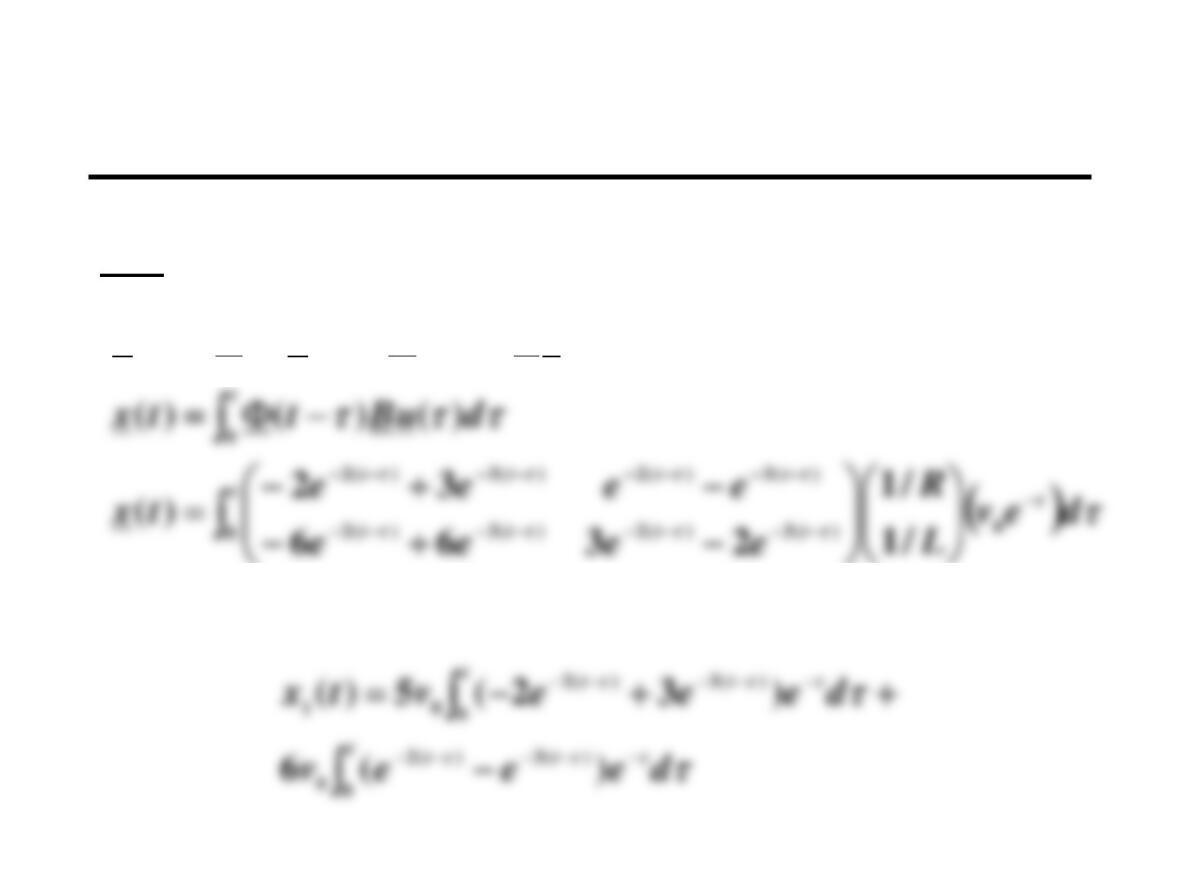
Step 5: Calculate the state transition matrix:
In-class Example (10)
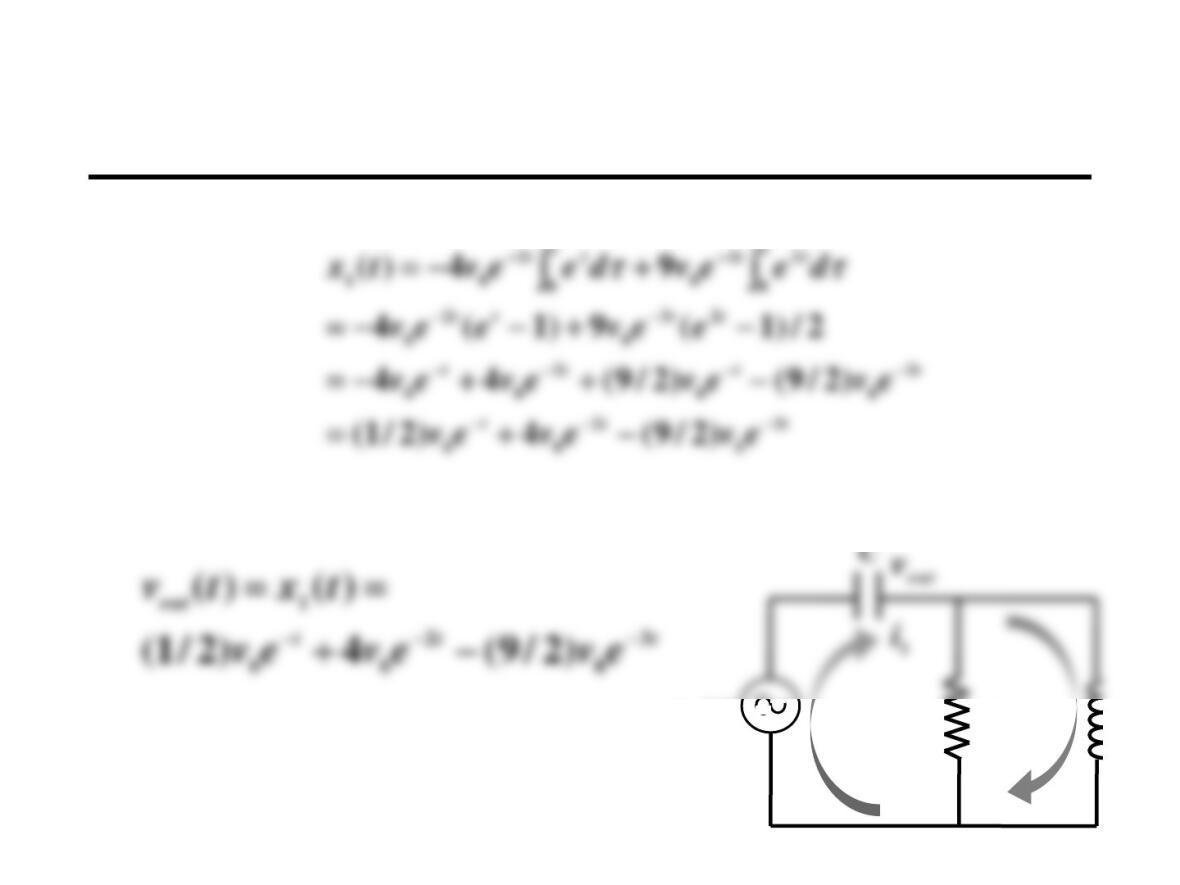
Step 6: Calculate the solution
Recall R = 1/5, L = 1/6
duBtxttx
t
−+=
0
0
)()()()(
In-class Example (11)
Hence the voltage on the capacitor as a function of time is
)(tvin
R
L
2
i
Homework Assignment 21
Read:
(Problems in text)