Differential Equations
for Engineers:
the Essentials
Class 21 notes
Agenda: Class 21
Review Test #2
Review Homework Assignment 19
Lectures:
Systems of First Order ODEs
Coordinate Systems
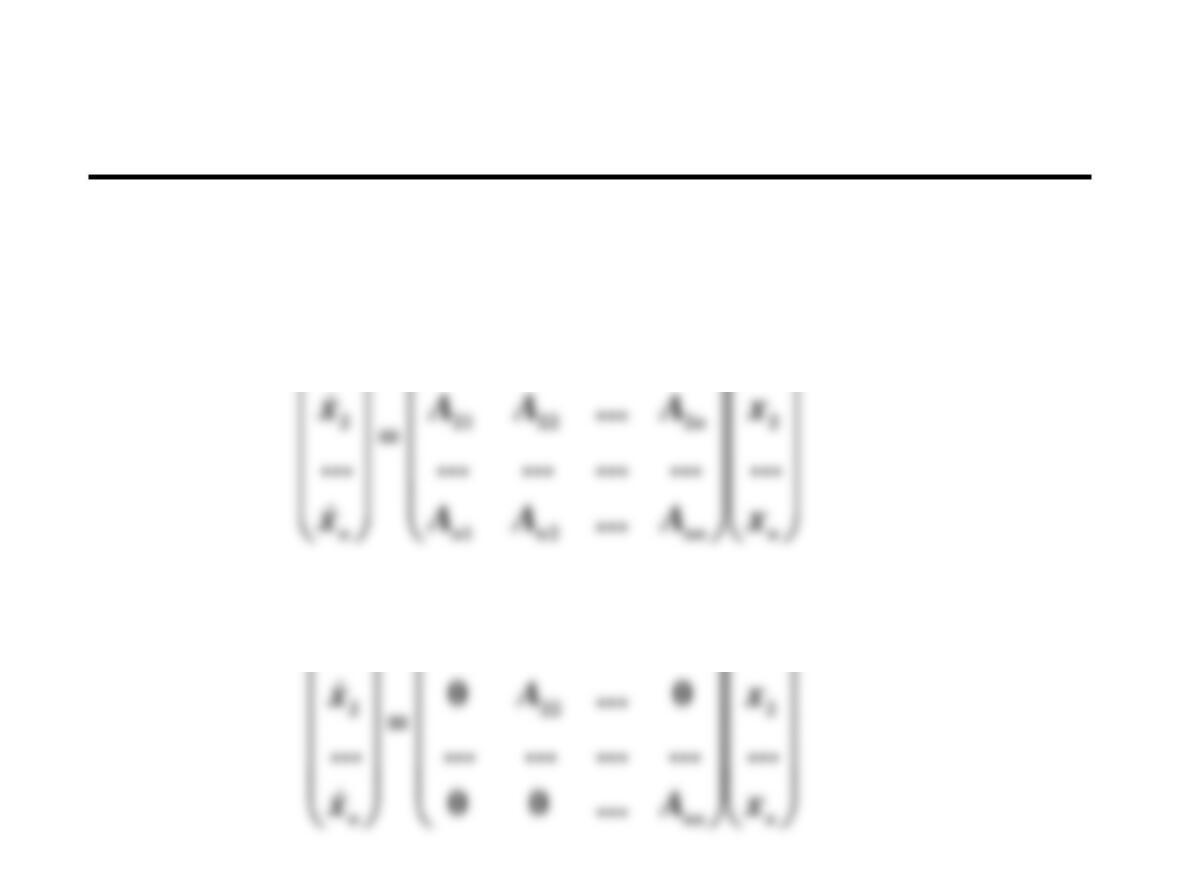
Coupled and Uncoupled ODEs
“Coupled” ODEs (especially of higher order) are relatively
complicated to solve:
n
x
AAA
x
…
1
11211
1
x
A
x
0…0
1
11
1
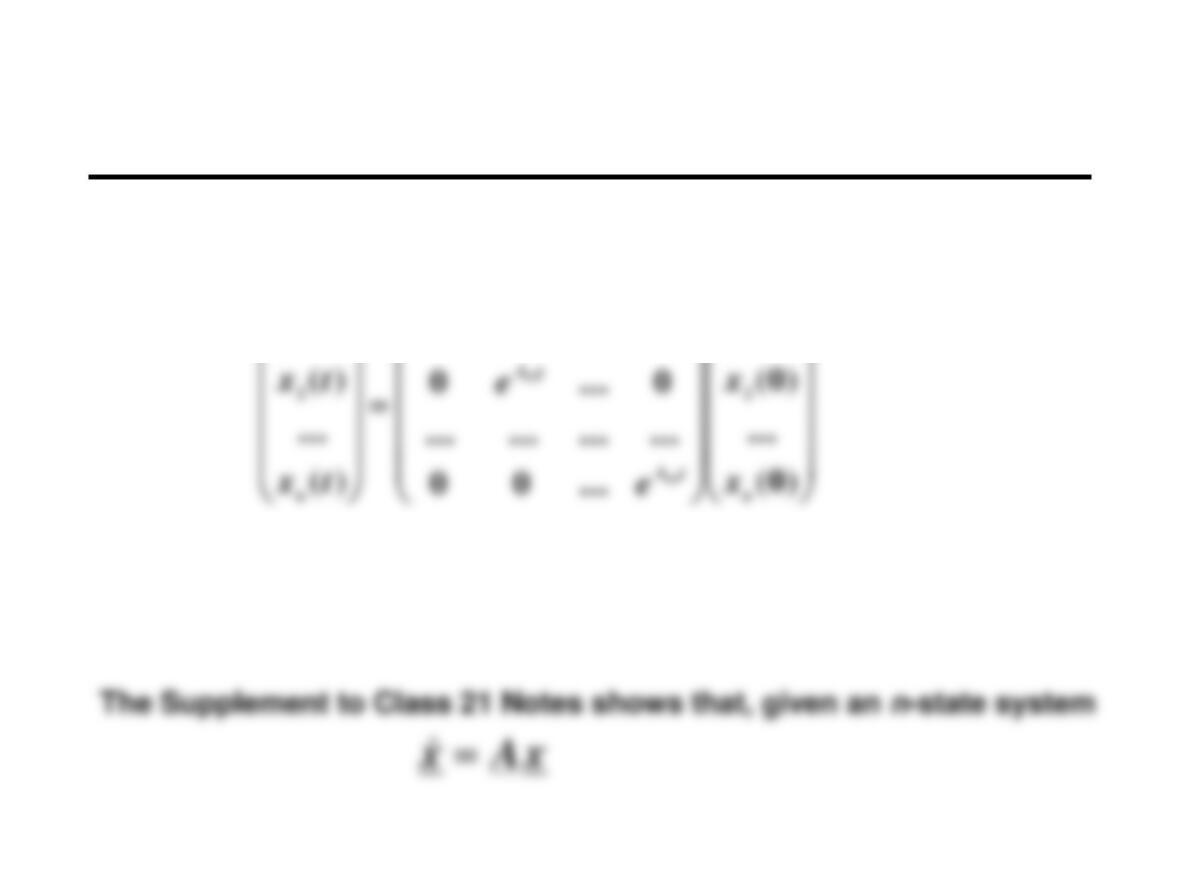
while “uncoupled” ODEs are easy to solve
Coupled and Uncoupled ODEs (2)
The solution to the uncoupled ODEs is
Often (but not always) we can find a new coordinate system such that a
given coupled ODE is transformed into an uncoupled one. (We must
permit complex eigenvectors.)
)0(
0…0
)(
1
1
11
tA
x
e
tx
Coupled and Uncoupled ODEs (3)
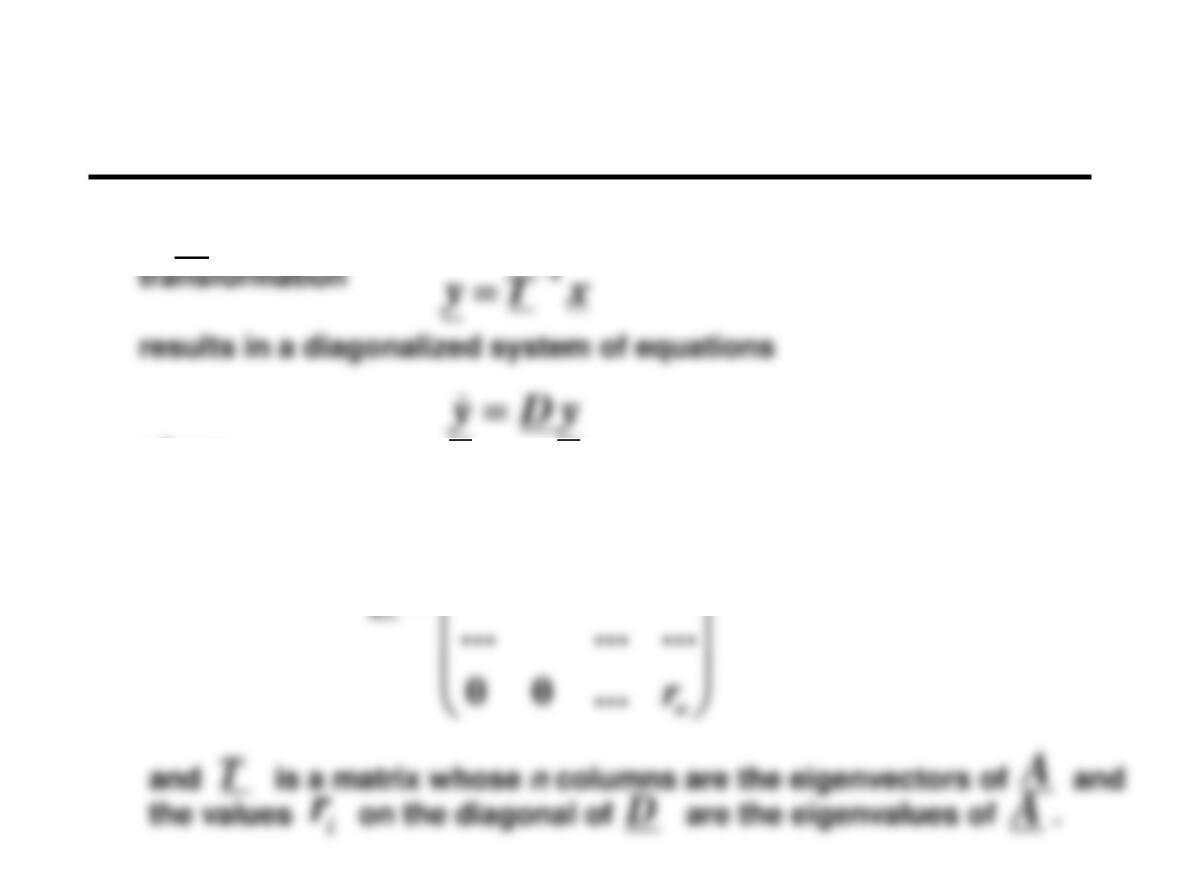
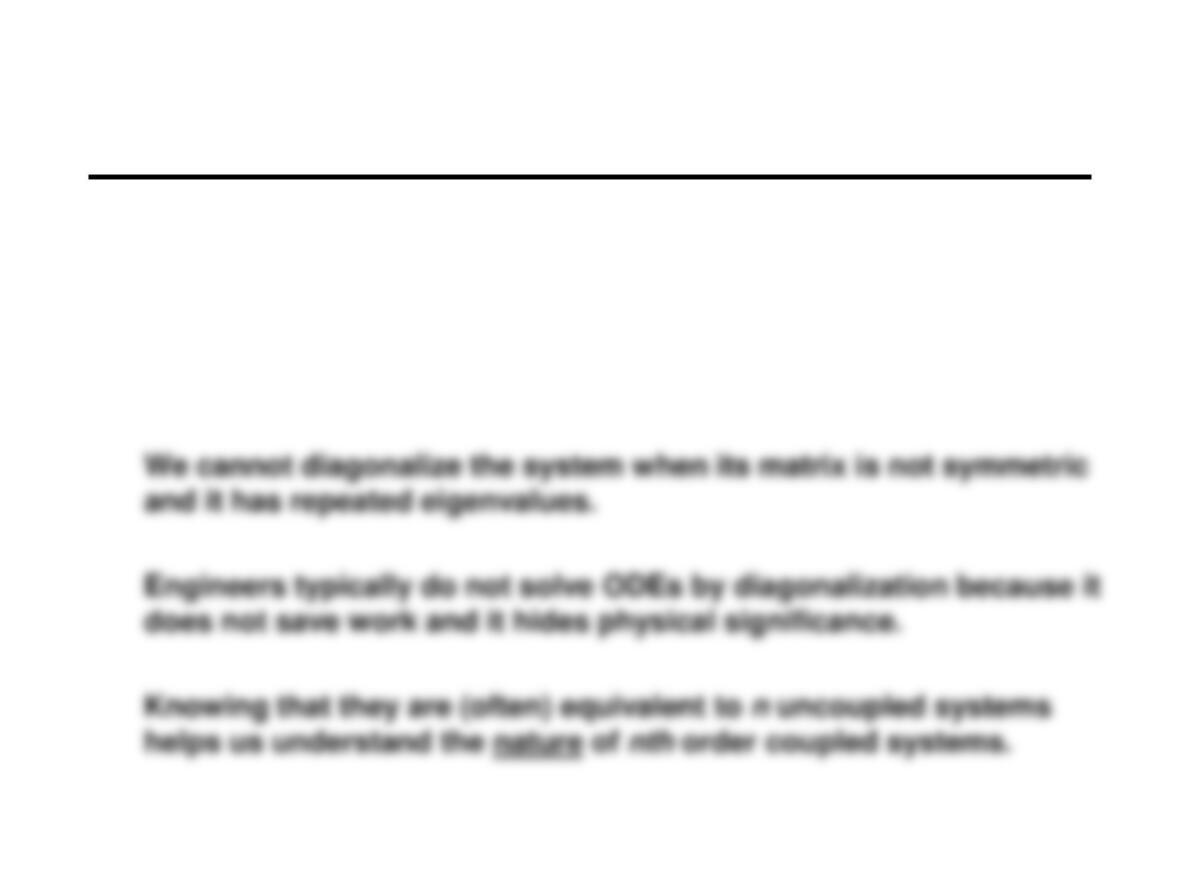
if has nindependent eigenvectors then the coordinate
where
A
=
r
r
D
0...0
0...0
2
1
Matrix Diagonalization (14)
In summary:
We can diagonalize an nby nsystem matrix when the system has n
independent eigenvectors, which systems often do.
Systems of First Order ODEs
State Transition Matrix
Fundamental Matrix
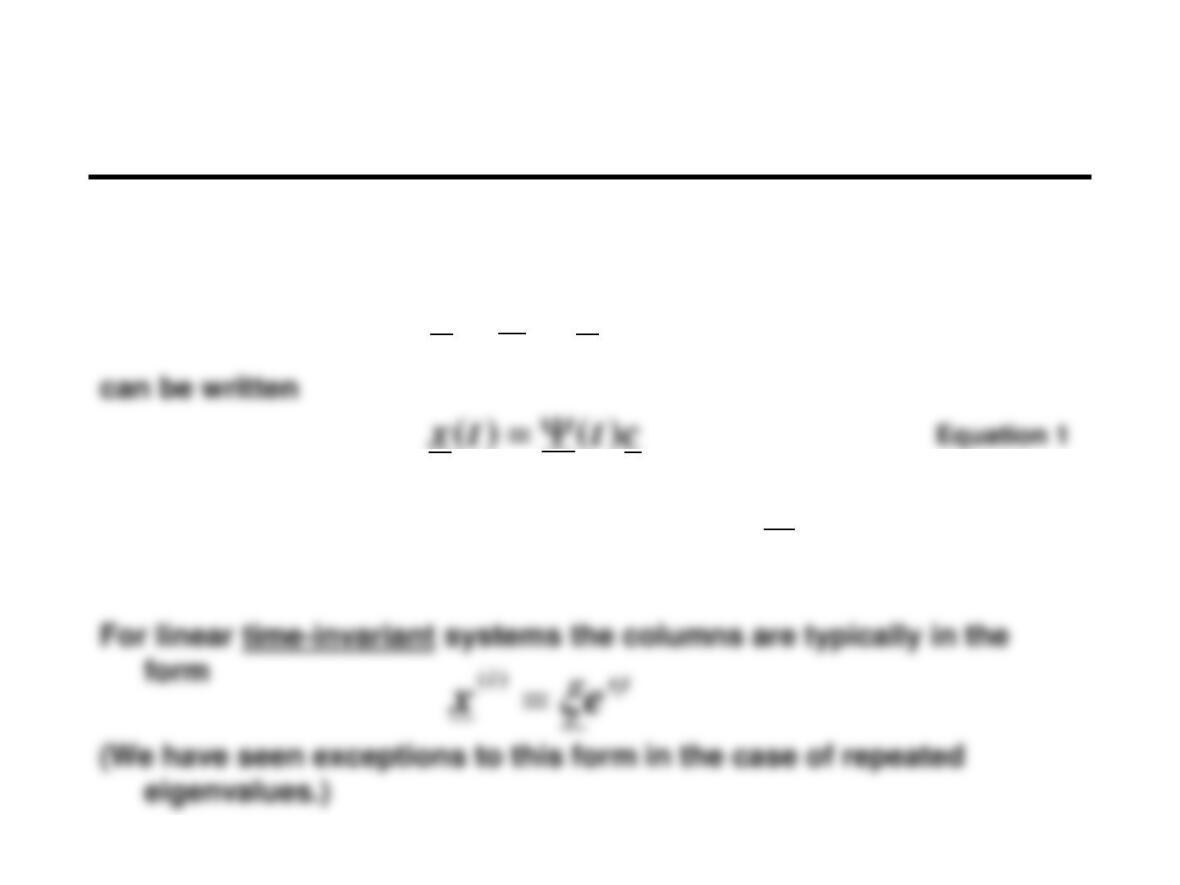
The general solution to
where the columns of the fundamental matrix consist of
fundamental solutions.
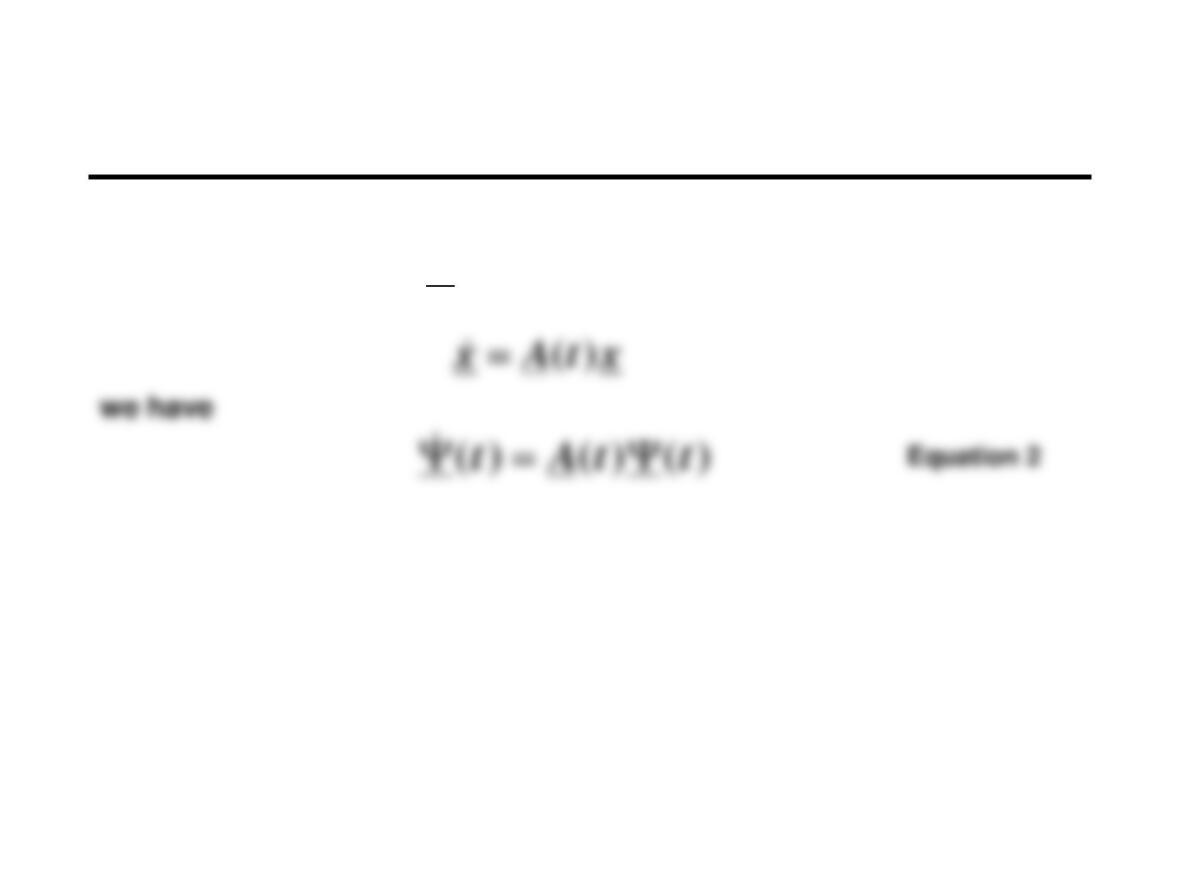
)(t
xtAx )(=
Fundamental Matrix (2)
Since each column of is a solution to
)(t
State Transition Matrix
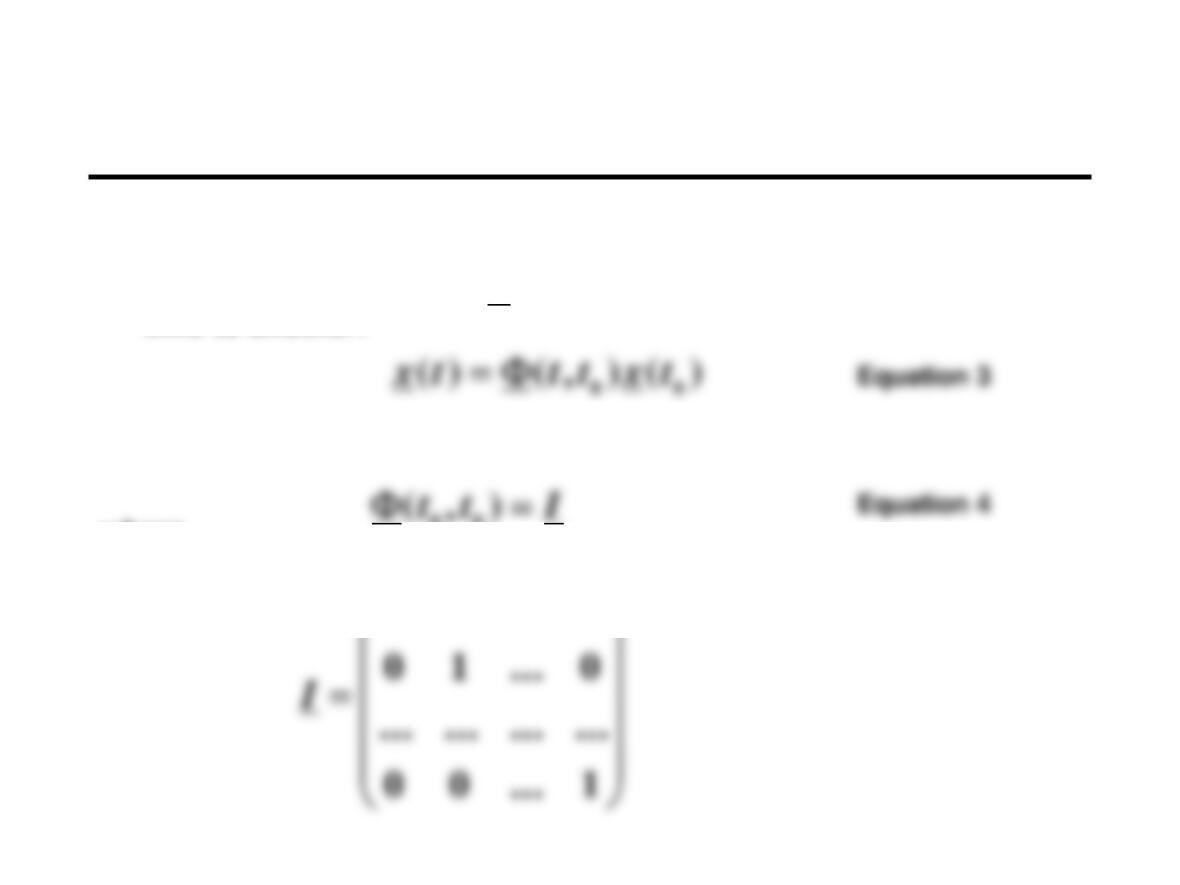
Another useful matrix is the state transition matrix, which describes
the system state vector , as it transitions from one point in
time to another:
By definition we must have
where
0...01
)(tx
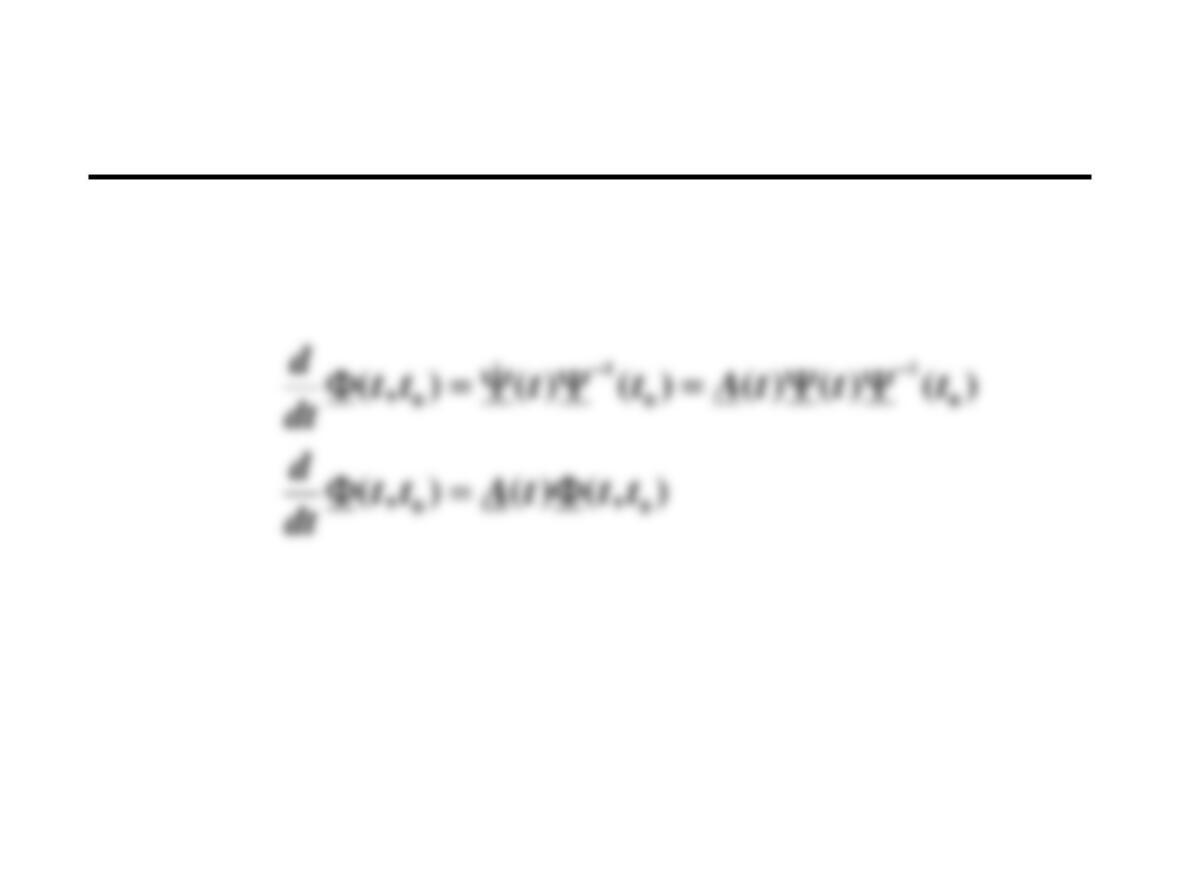
State Transition Matrix (2)
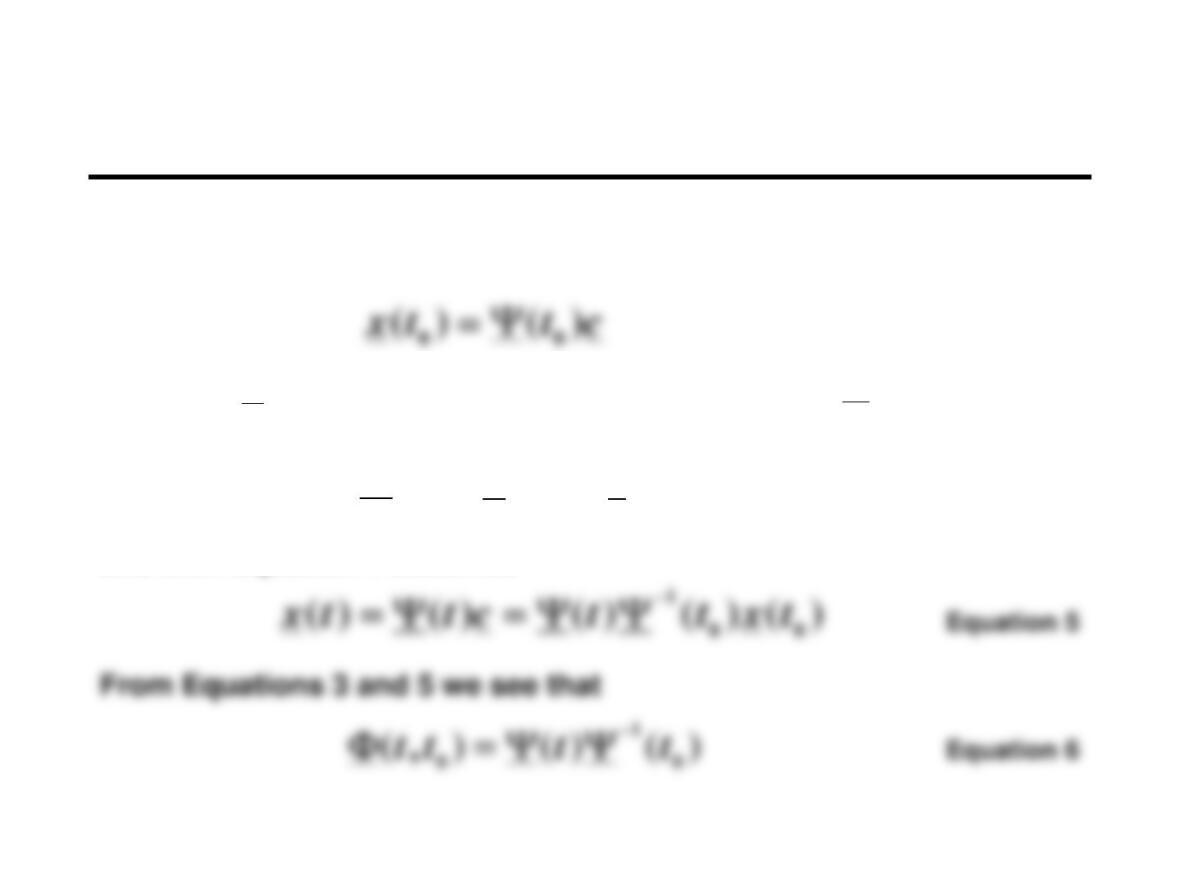
From Equation 1, at the point
Because to are linearly independent , is
invertible, so
and then Equation 1 becomes
0
t
1,
)( =ix i
)( 0
t
ctxt =−)()( 00
1
n
State Transition Matrix (3)
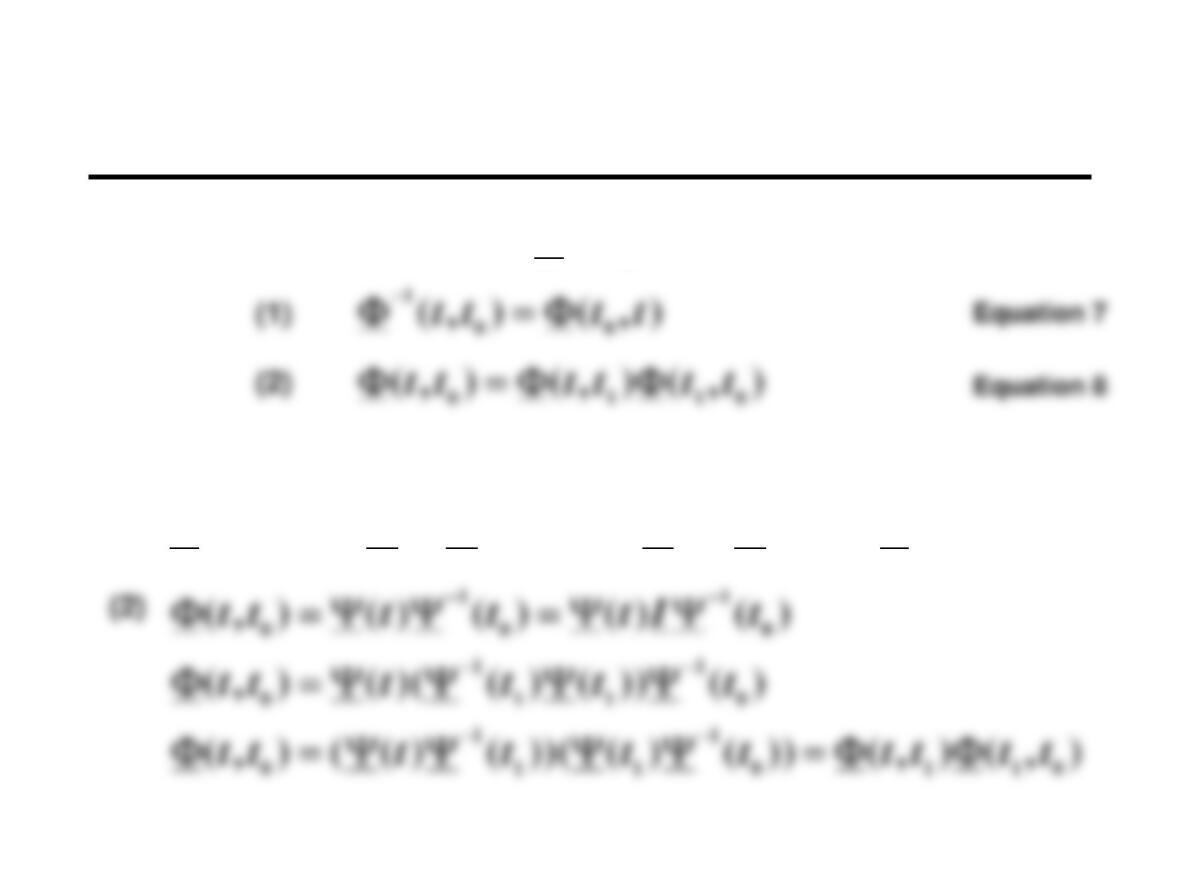
From Equations 2 and 6
State Transition Matrix (4)
Other important properties of
),( 0
tt
Proof:
(1)
( )
),()()()()(),( 0
1
0
1
0
1
0
1tttttttt === −
−
−−
Systems of First Order ODEs
Nonhomogeneous Equations
Linear Nonhomogeneous Systems of
First Order ODEs
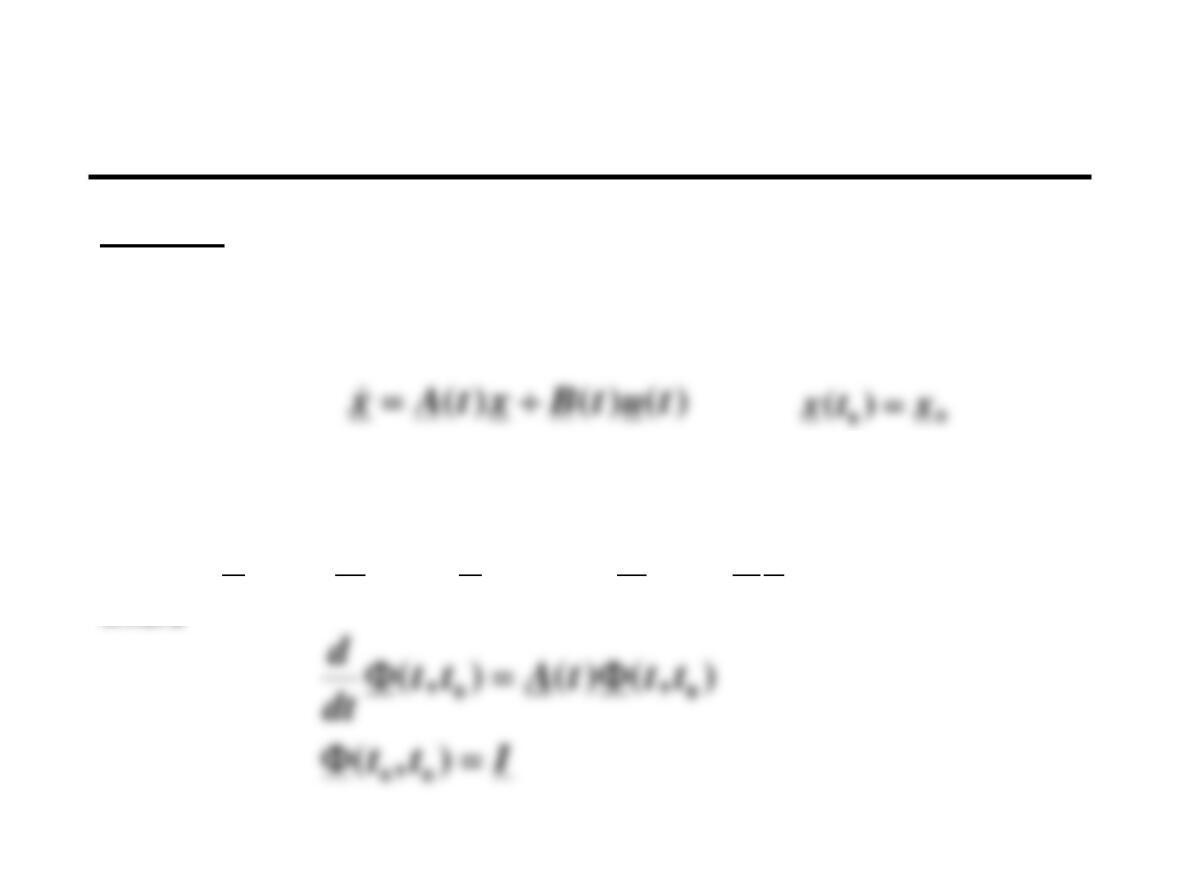
Theorem:
The linear nonhomogeneous matrix equation
has solution
where
duBttxtttx t
t)(),()(),()(
0
00 +=
Linear Nonhomogeneous Systems of
First Order ODEs (2)
Proof:
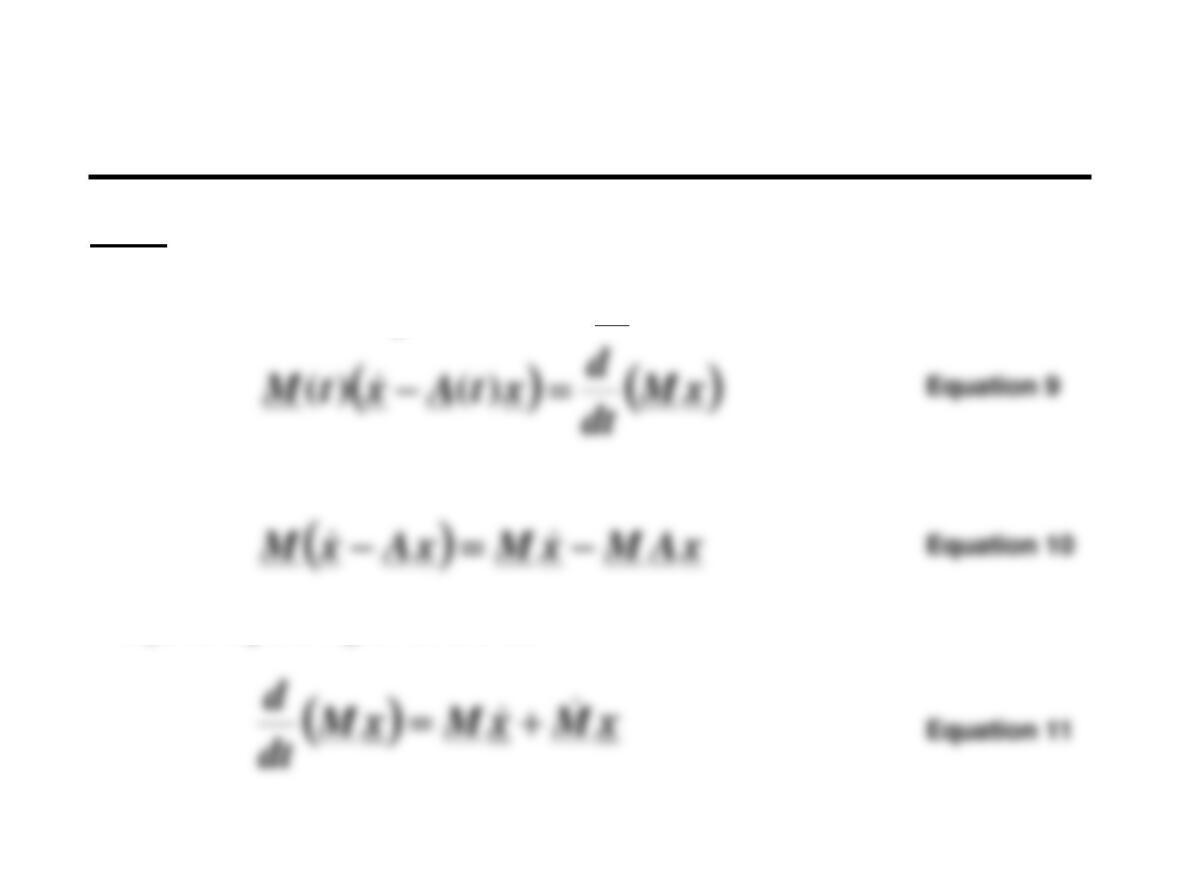
We seek a matrix integration factor such that
)(tM
Expanding the left-hand side of Equation X
Expanding the right-hand side
Linear Nonhomogeneous Systems of
First Order ODEs (3)
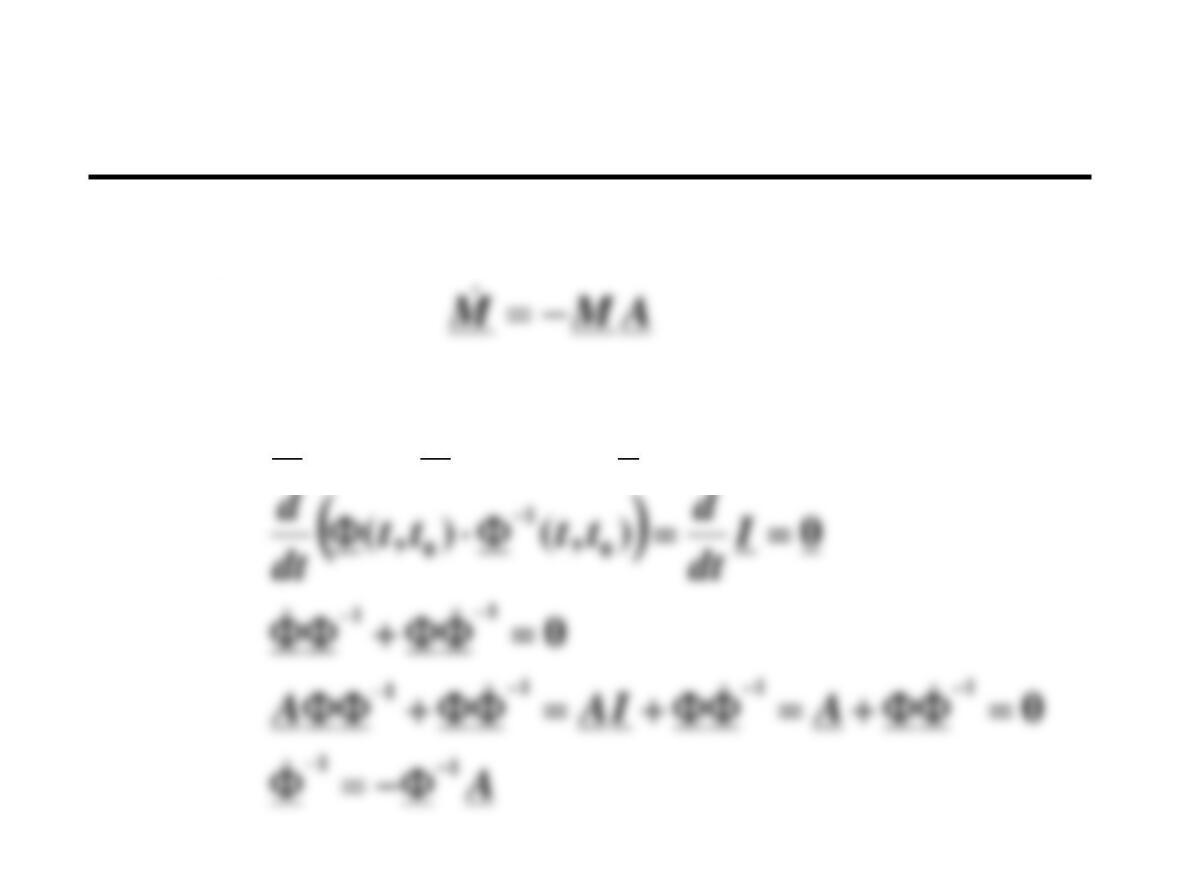
Equating Equations 10 and 11, we must have
Now consider
Itttt
0
1
0
),(),(
−
=
Linear Nonhomogeneous Systems of
First Order ODEs (4)
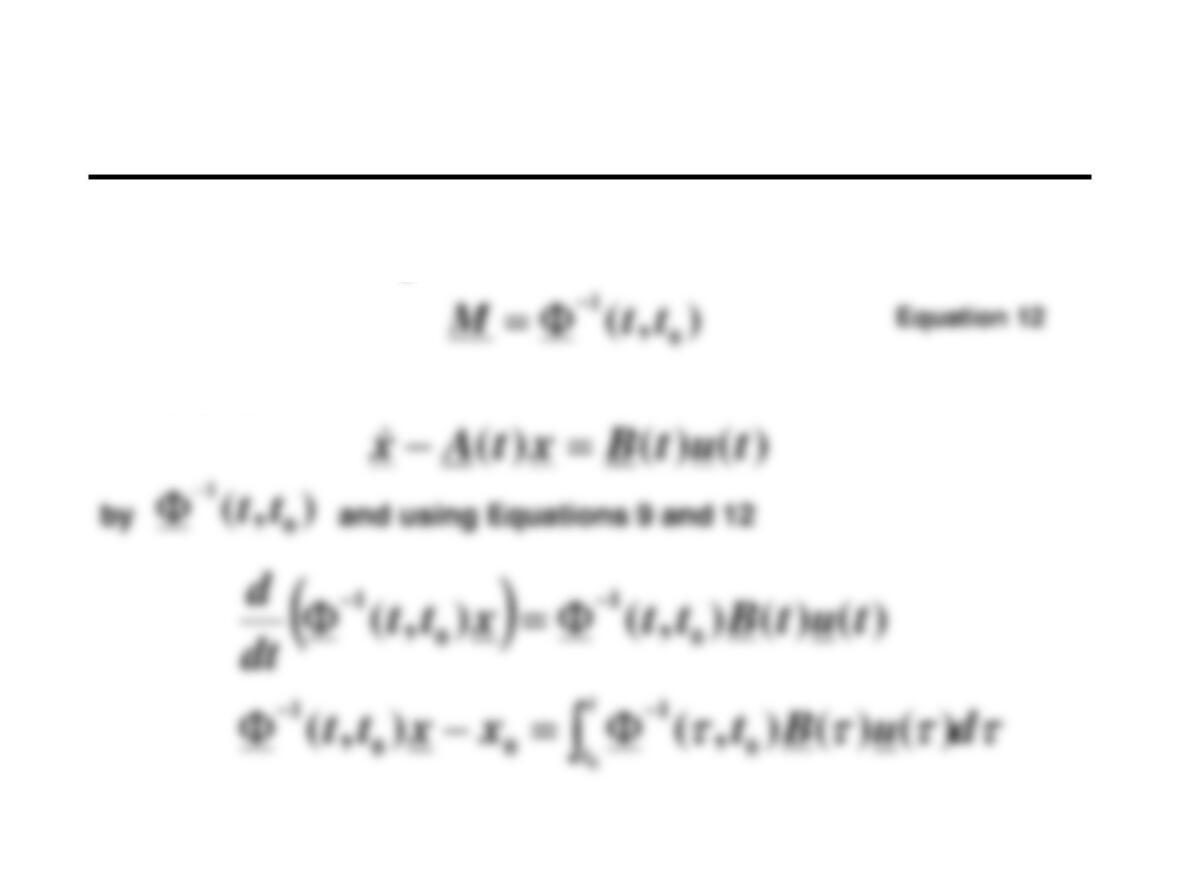
Hence the matrix integration factor we seek is
Multiplying both sides of the equation