
Differential Equations
for Engineers:
the Essentials
Class 19 notes

Class 19 Agenda
Review of Homework Assignments 17 and 18
Lectures:
Systems of first order ODEs:
Eigenvalues and eigenvectors:
Systems of First Order ODEs
Eigenvalues and eigenvectors:
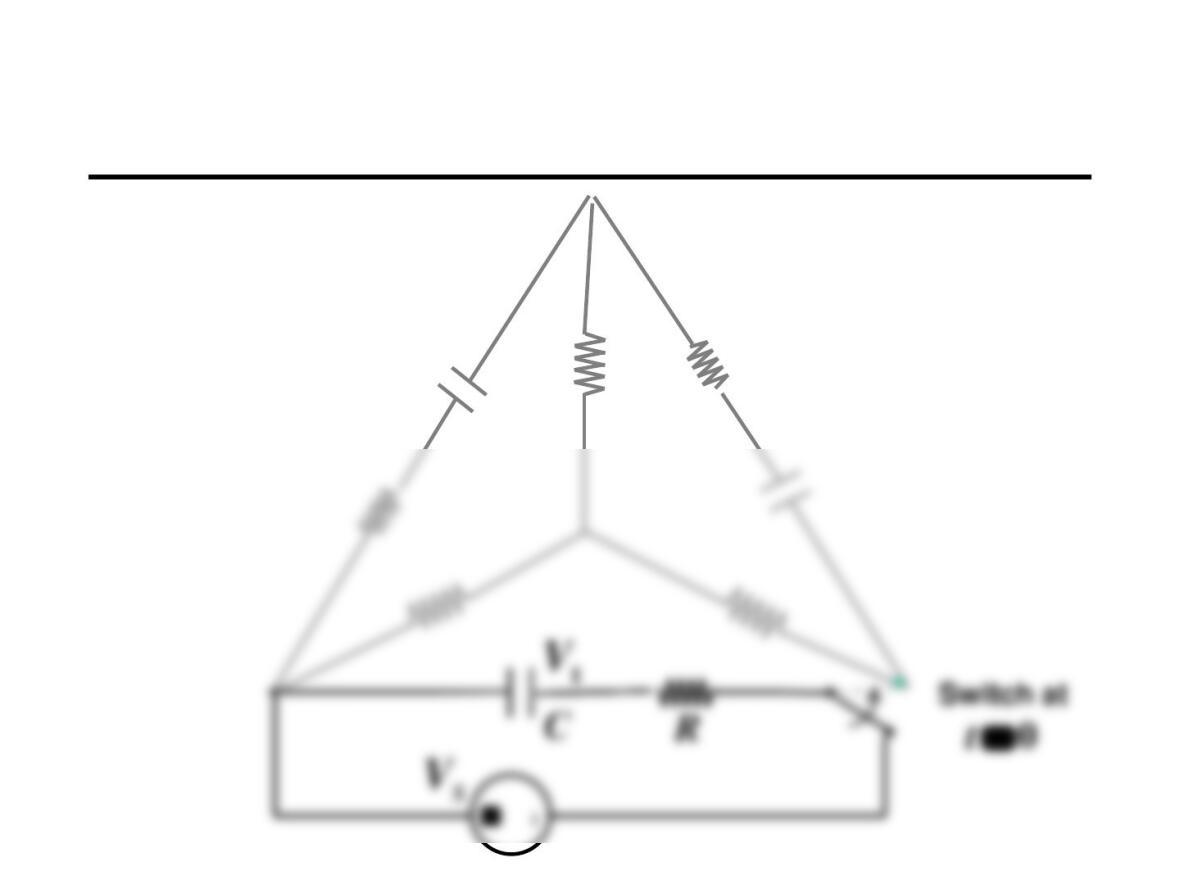
Electrical Circuit Prior to Switch
2
V
3
I
R
C
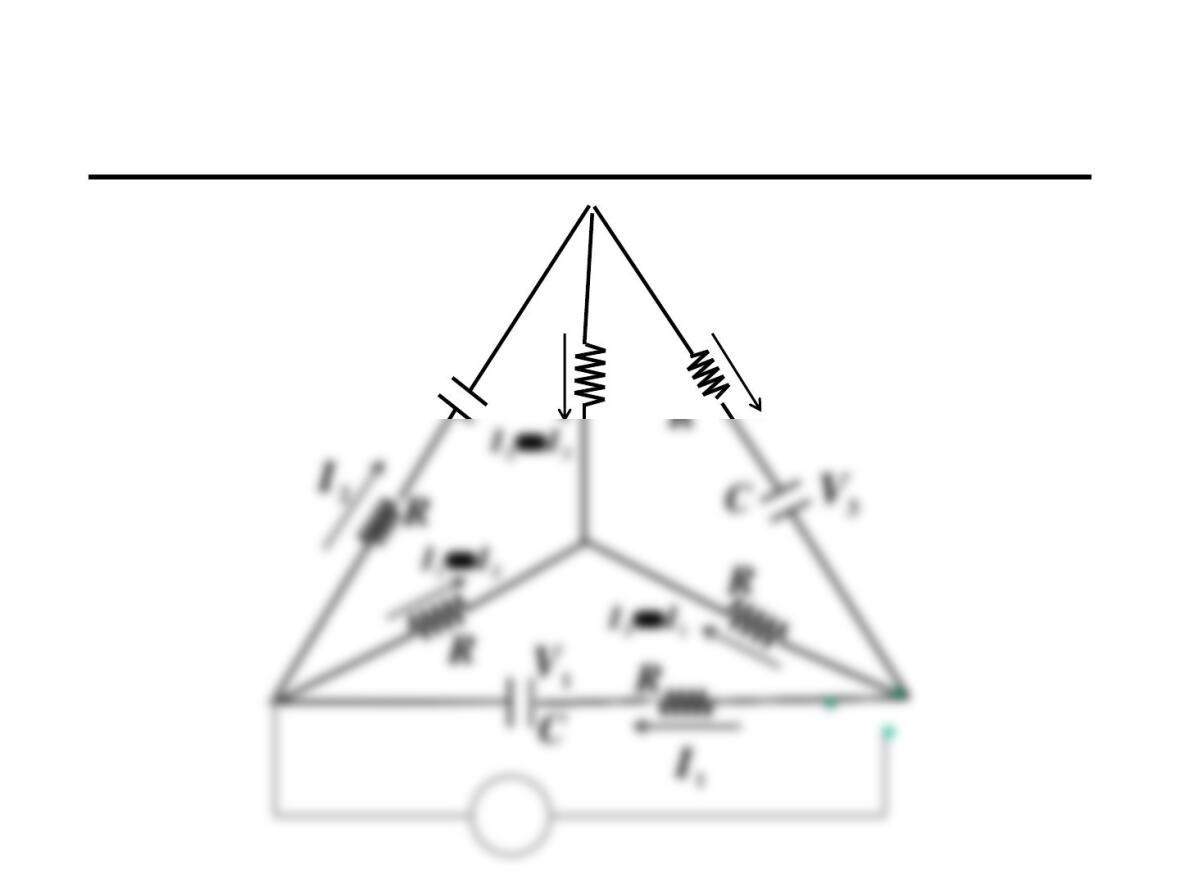
Electrical Circuit After Switch
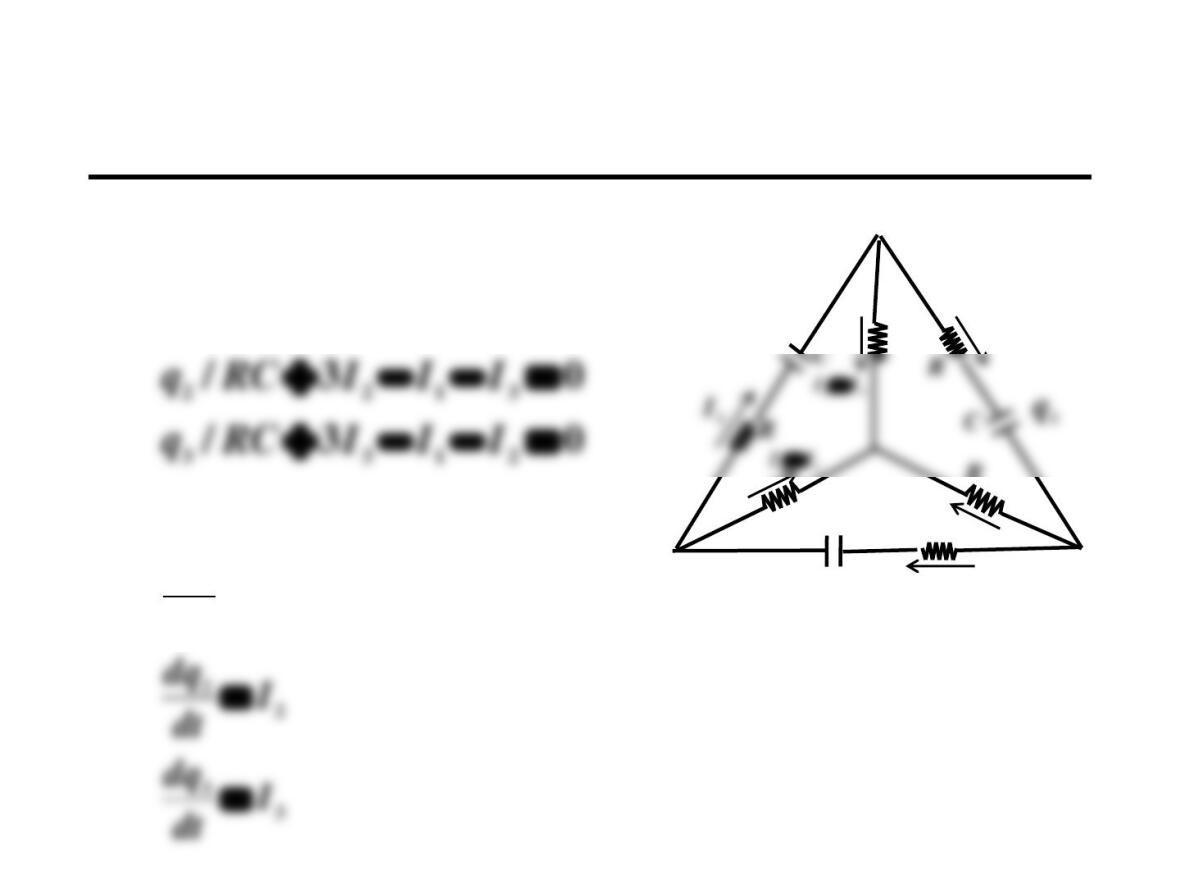
Circuit Equations
R
R
1
q
2
q
1
I
3
I
13 II −
R
R
C
03/
3211
=−−+
IIIRCq
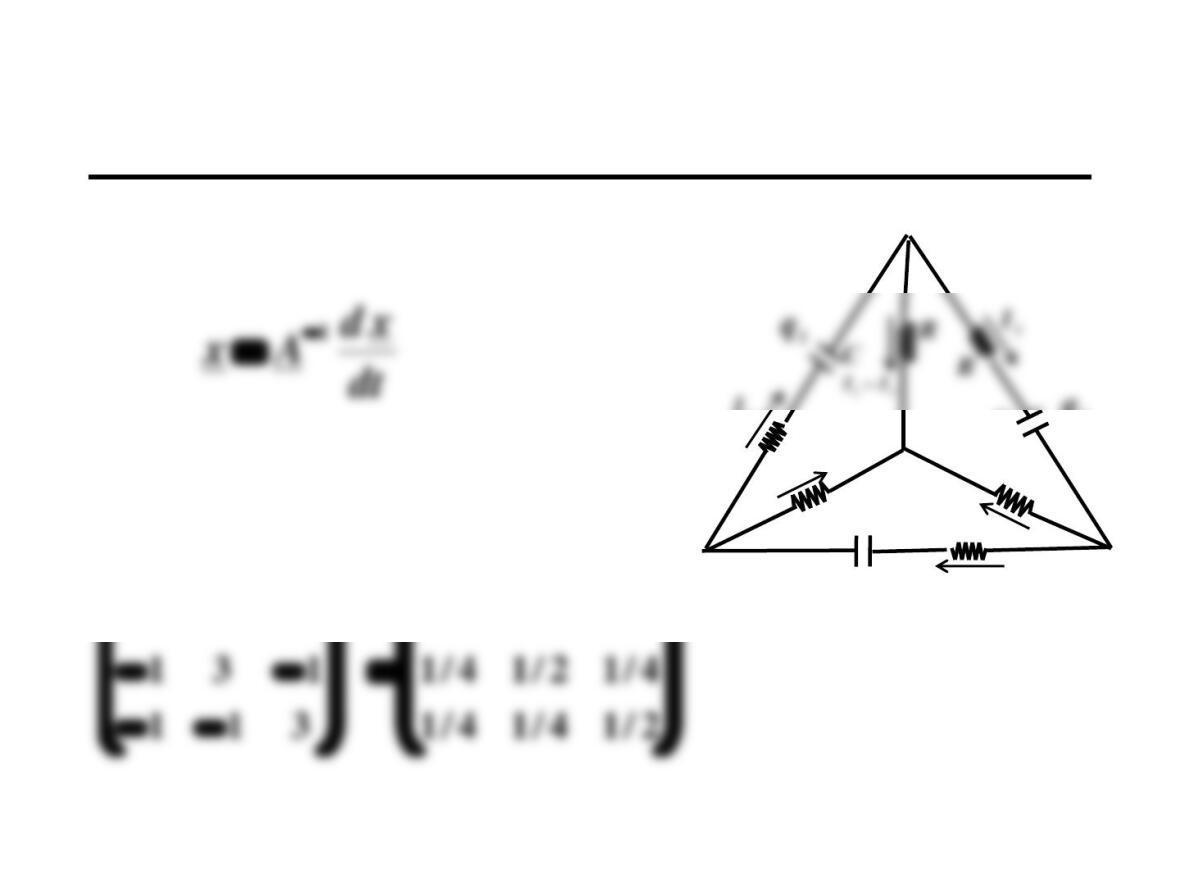
From Kirchhoff’s Equation:
From conservation of charge:
1
1
I
dt
dq
=
R
Circuit Equations (2)
These equations are in the form:
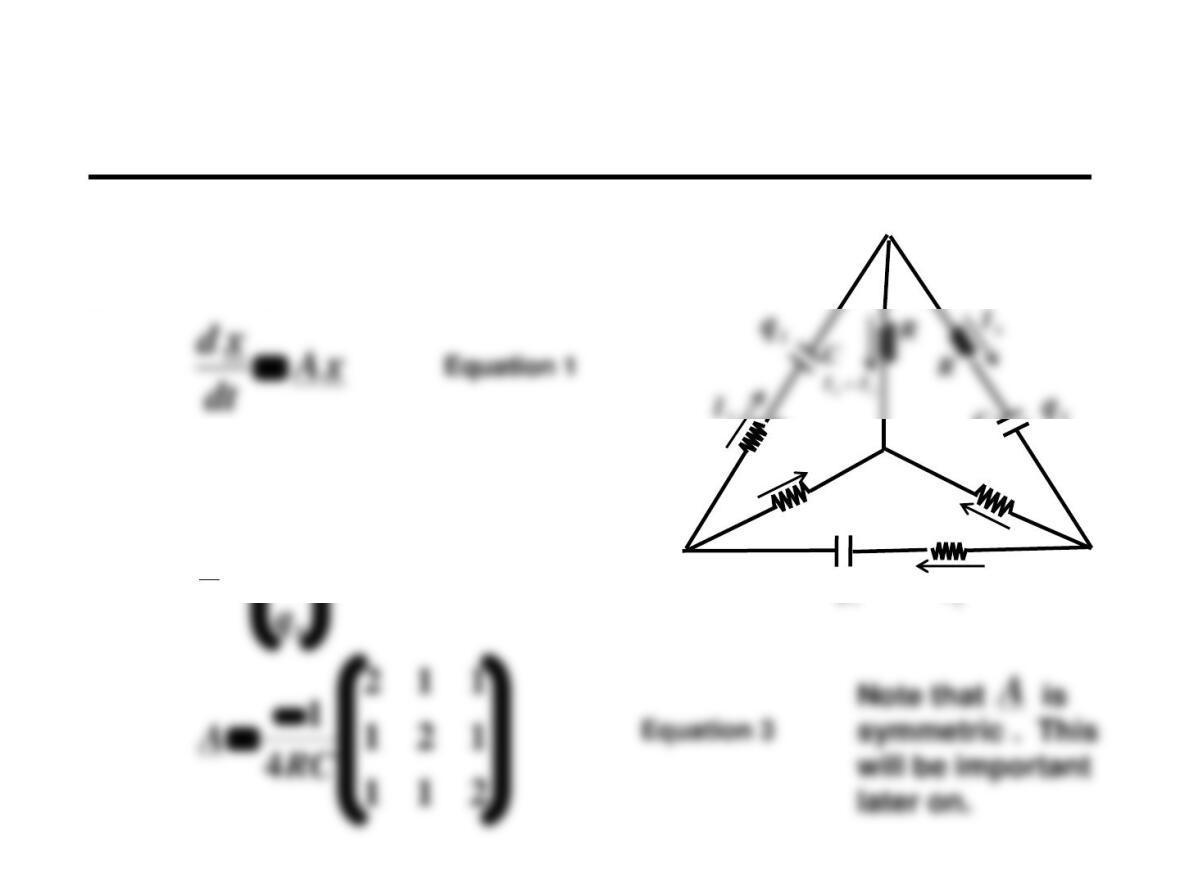
Using the online matrix calculator at
bluebit.gr we determine that
R
R
1
q
3
q
1
I
2
I
13 II −
21 II −
R
R
C
C
−−
−
4/14/12/1
113
1
I
R
R
Circuit Equations (3)
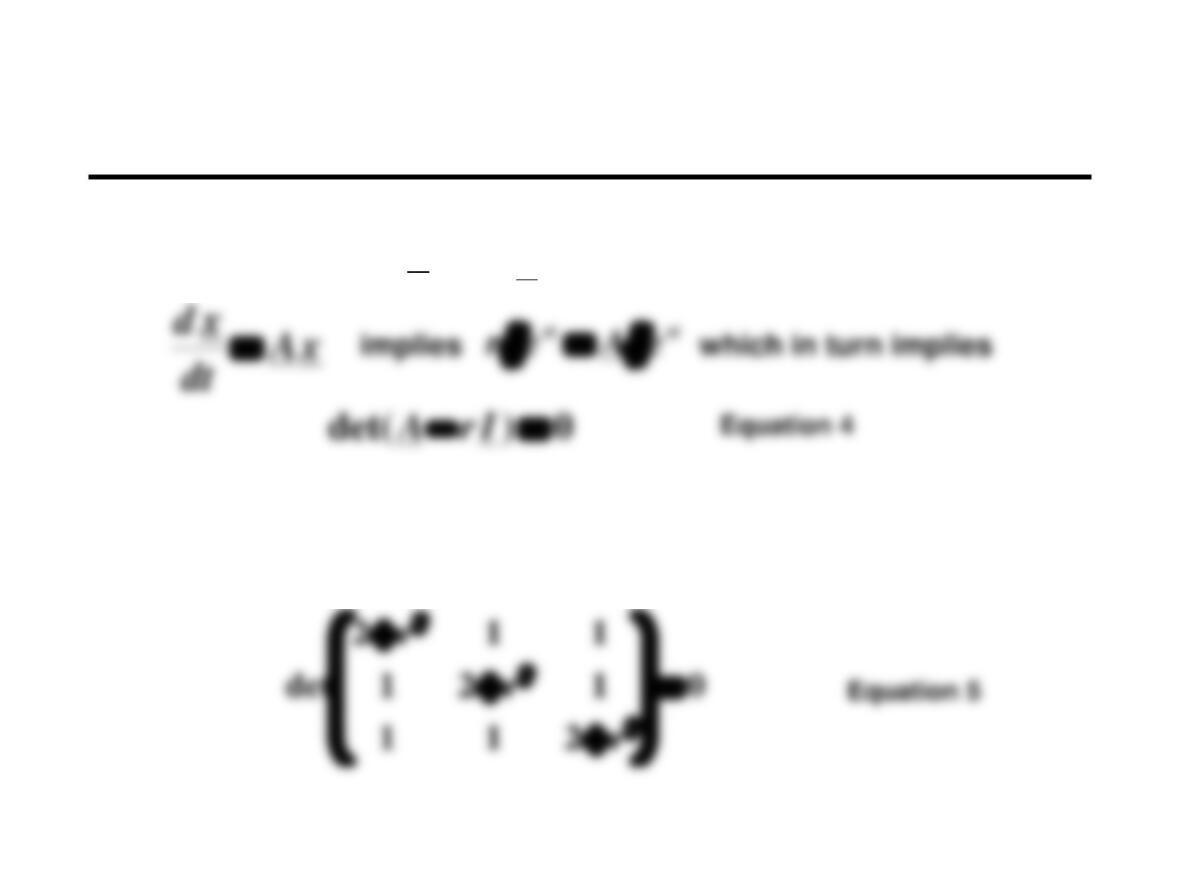
Hence the system of first order ODEs
(the “state space” formulation) is
where
R
R
1
q
3
I
2
13 II −
21 II −
R
R
C
C
=
2
1
q
q
x
Equation 2
R
R
Circuit Example: Eigenvalues
Trying the solution we find as before that
For simplicity define
Then substituting Equation 3 into Equation 4 leads to
rt
etx
=)(
rRCr)4(=

Circuit Example: Eigenvalues (2)
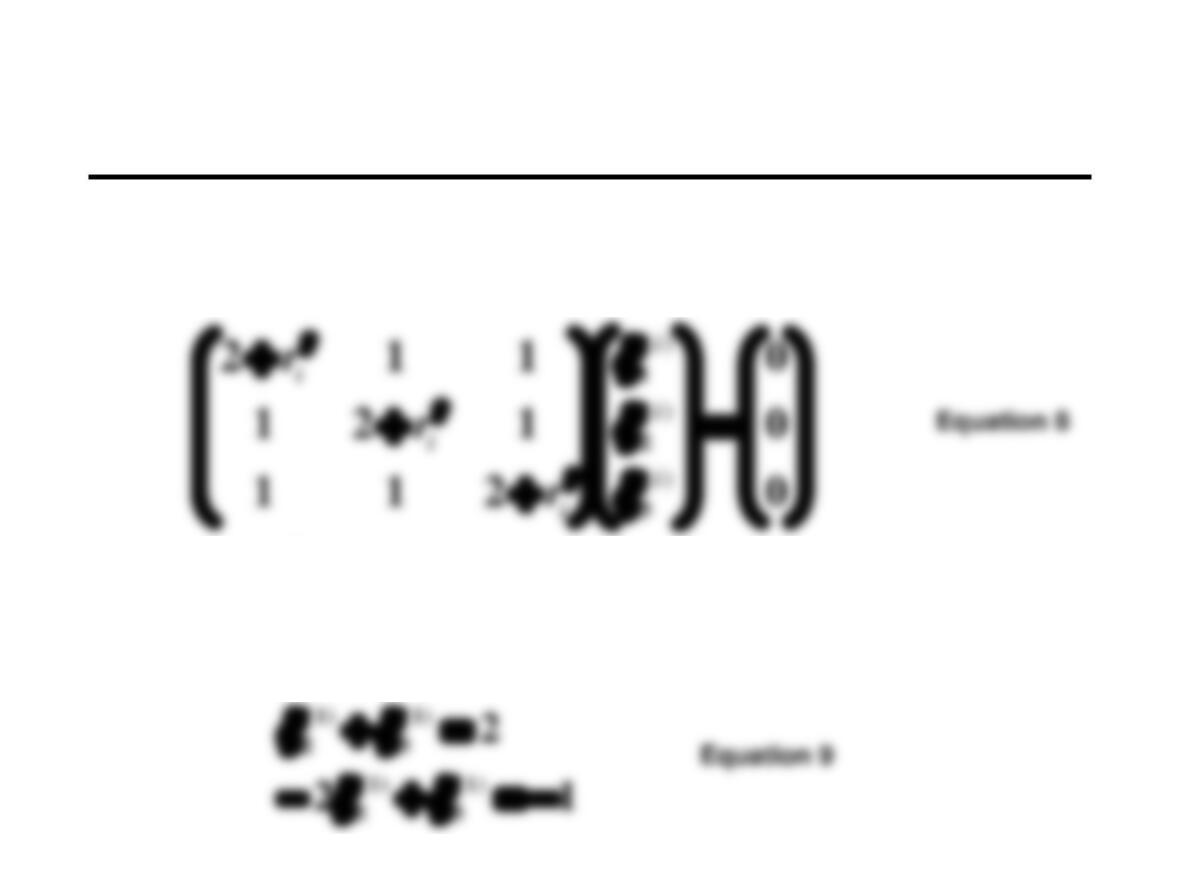
Equation 5 becomes
This factors into
Hence the eigenvalues for the system represented by Equations 1 to 3 are:
0)1)(4( 2=+
+
rr
Circuit Example: Eigenvectors
The eigenvectors for this system are given (for i= 1,2,3) by
We choose as the undetermined component and set
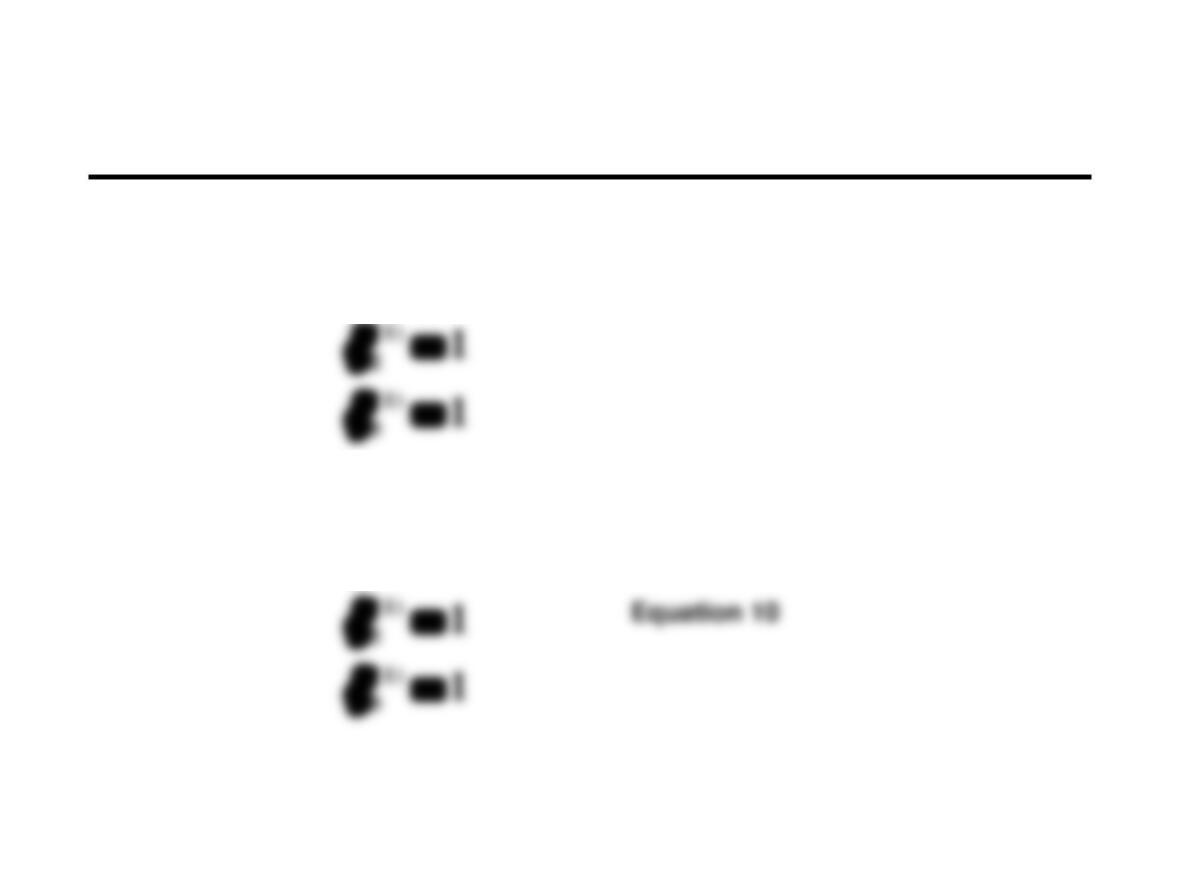
For the first eigenvalue the first and second rows of
Equation 8 become
1
)(
1=
i
)(
1
i
)4( 1−=
r
Circuit Example: Eigenvectors (2)
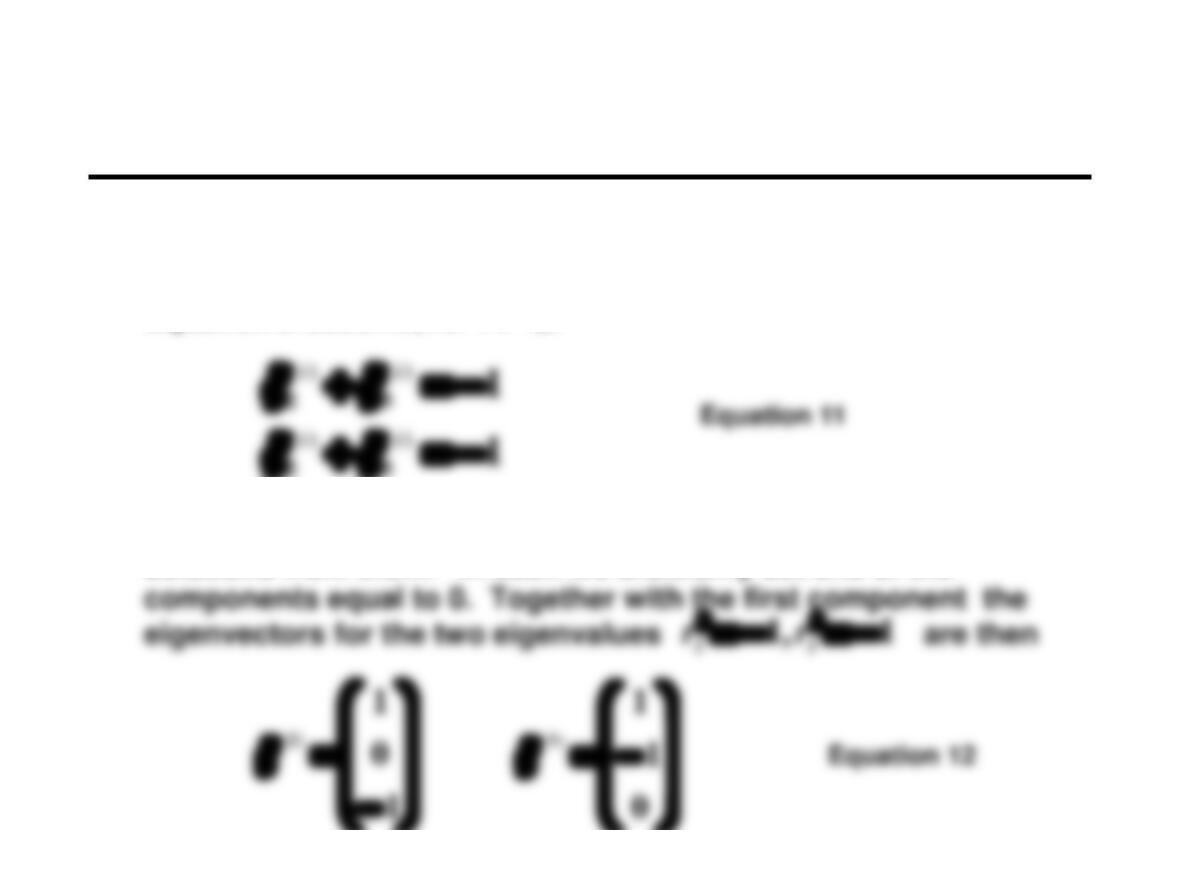
The solutions to Equation 9 are
Hence the eigenvector associated with the eigenvalue is
4
1−=
r
1
)1(
1
=
Circuit Example: Eigenvectors (3)
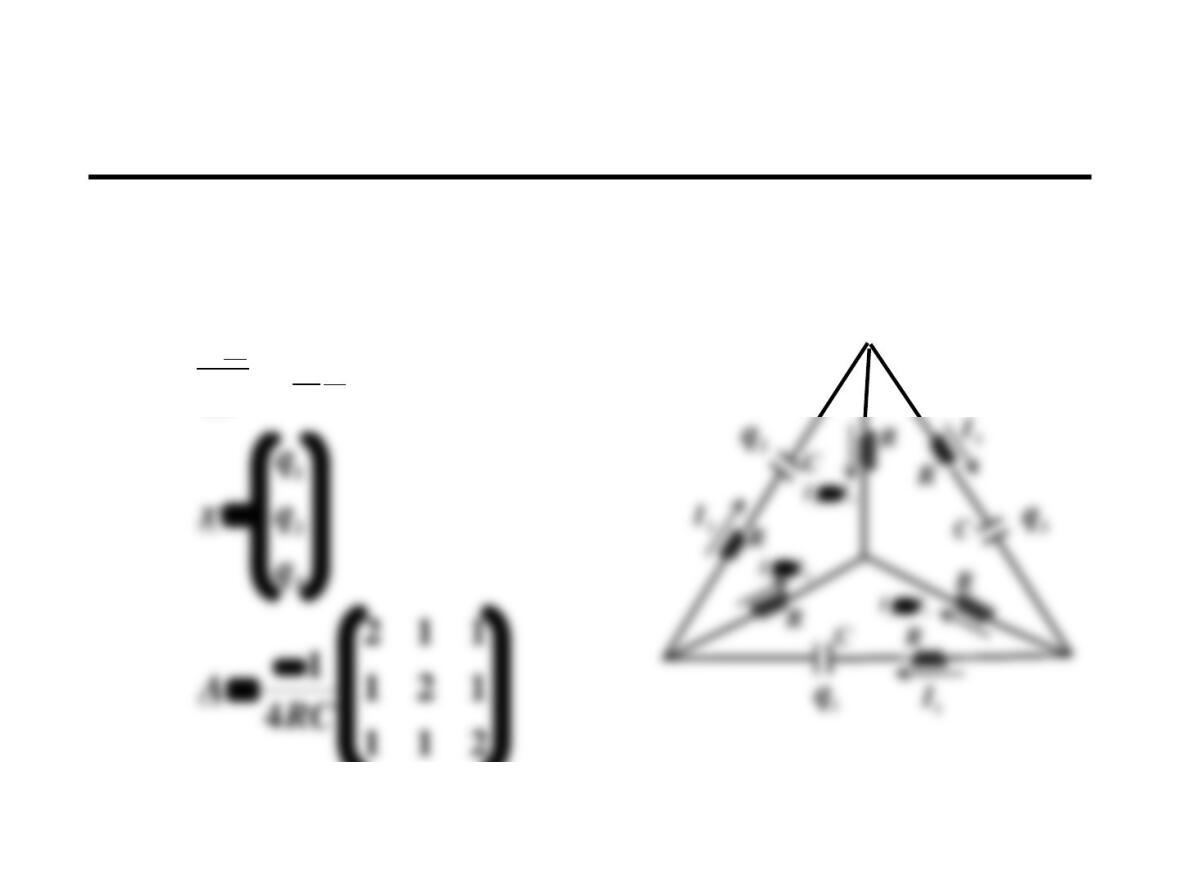
For the eigenvalues the first and second rows of
Equation 8 become, for i = 1,2
The equations are identical. We can form two linearly independent
solutions from them. In each we arbitrarily set one of the
1,1 32 −=
−=
rr
Circuit Example: Summary
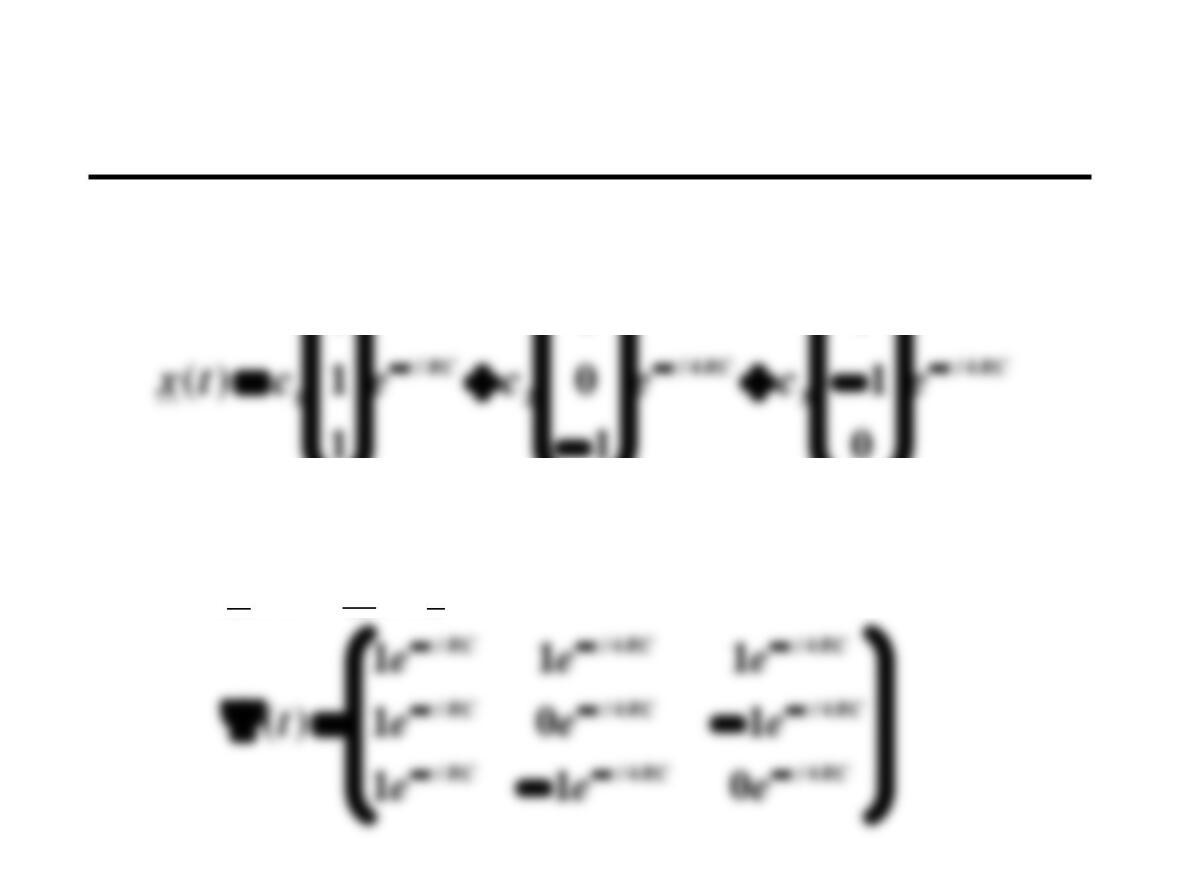
Therefore the general solution to
xA
dt
xd =
Circuit Example: Summary (2)
is
This can be written
0
1
1
1
1
1
−
=
cttx
)()(

Circuit Example: Observation
A major difference between an nth-order ODE in the form
and a system of n first-order ODEs in the form
is that the latter can sometimes (as in this example) have two
exponential-only solutions associated with the root . That
dt
dt
xA
dt
xd =
=r
Equation 14
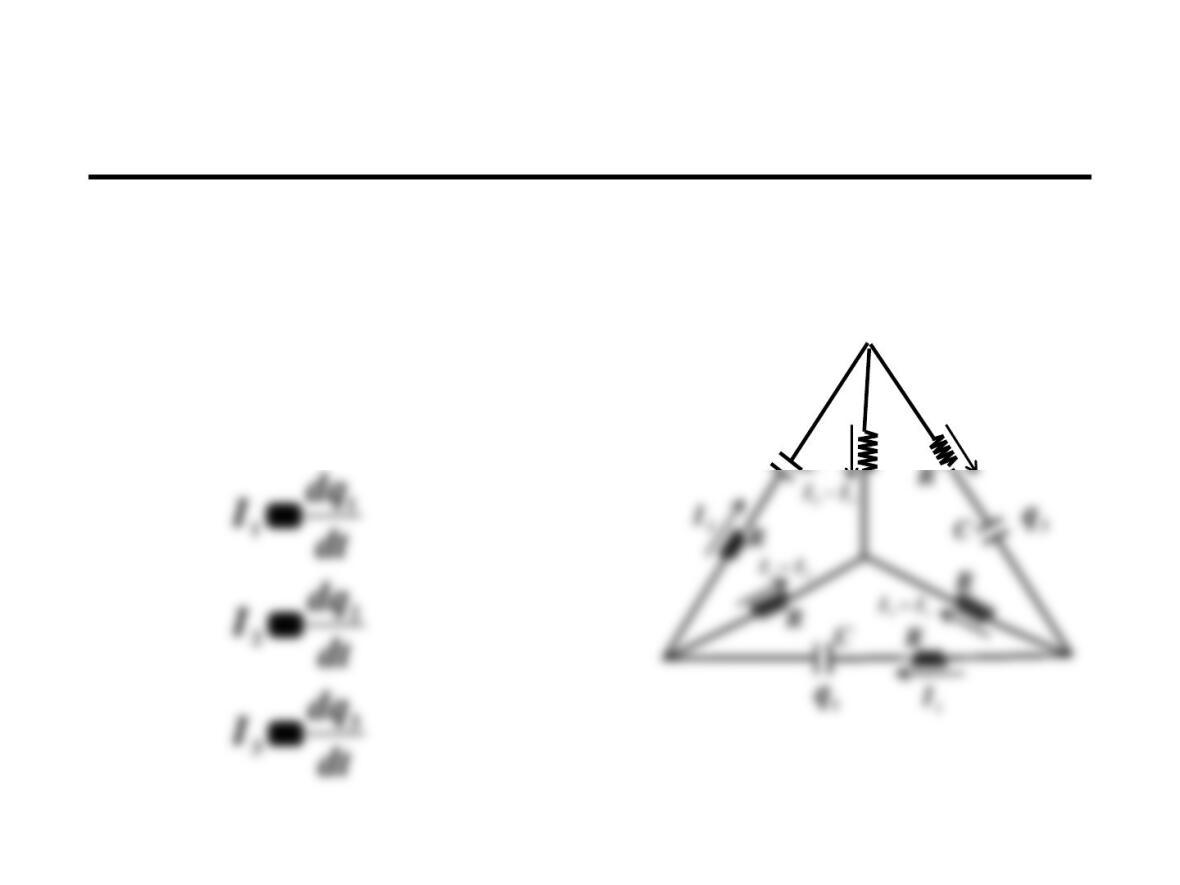
Circuit Example: Dynamic Modes
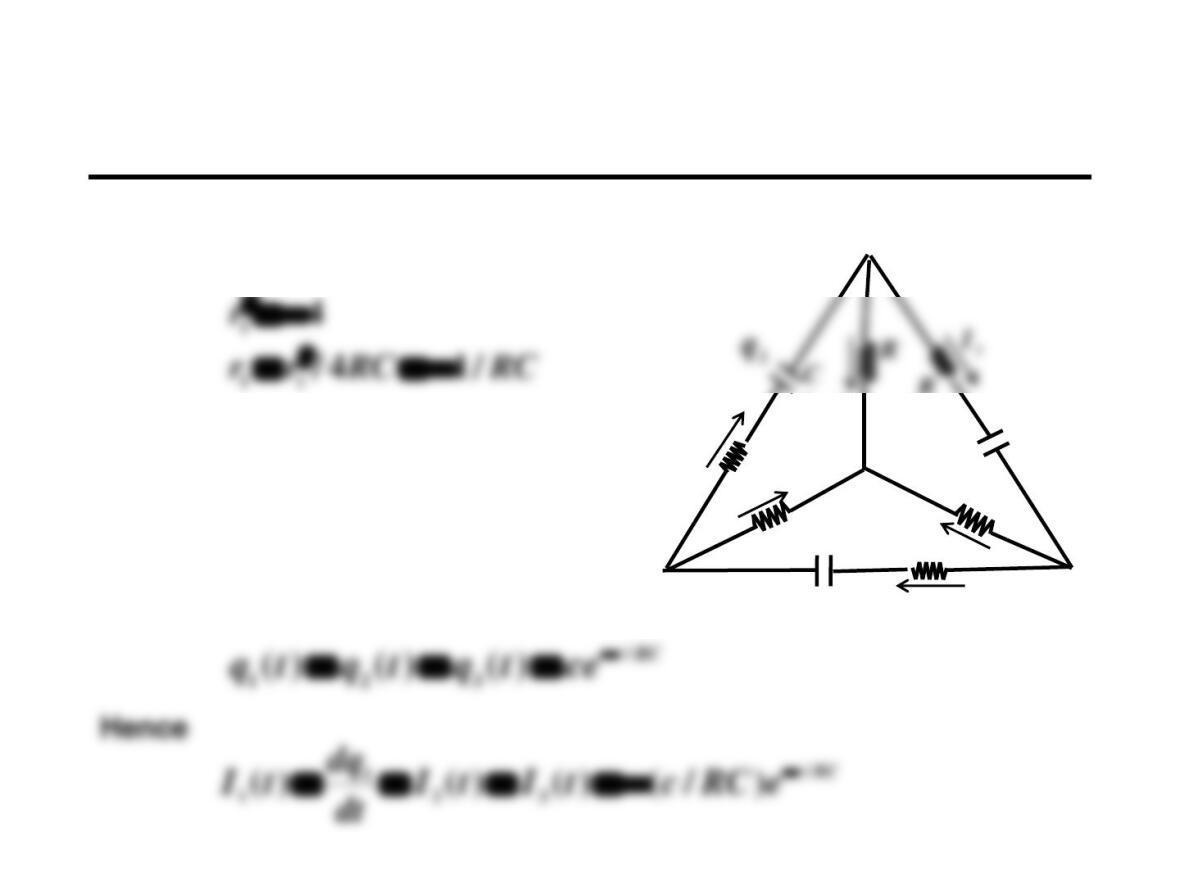
What physical behavior do the three eigenvalues and their associated
eigenvectors represent?
The dynamics are easier to visualize if
we examine the currents
2
q
3
I
R
R
R
I
R
R
Circuit Example: Dynamic Modes (2)
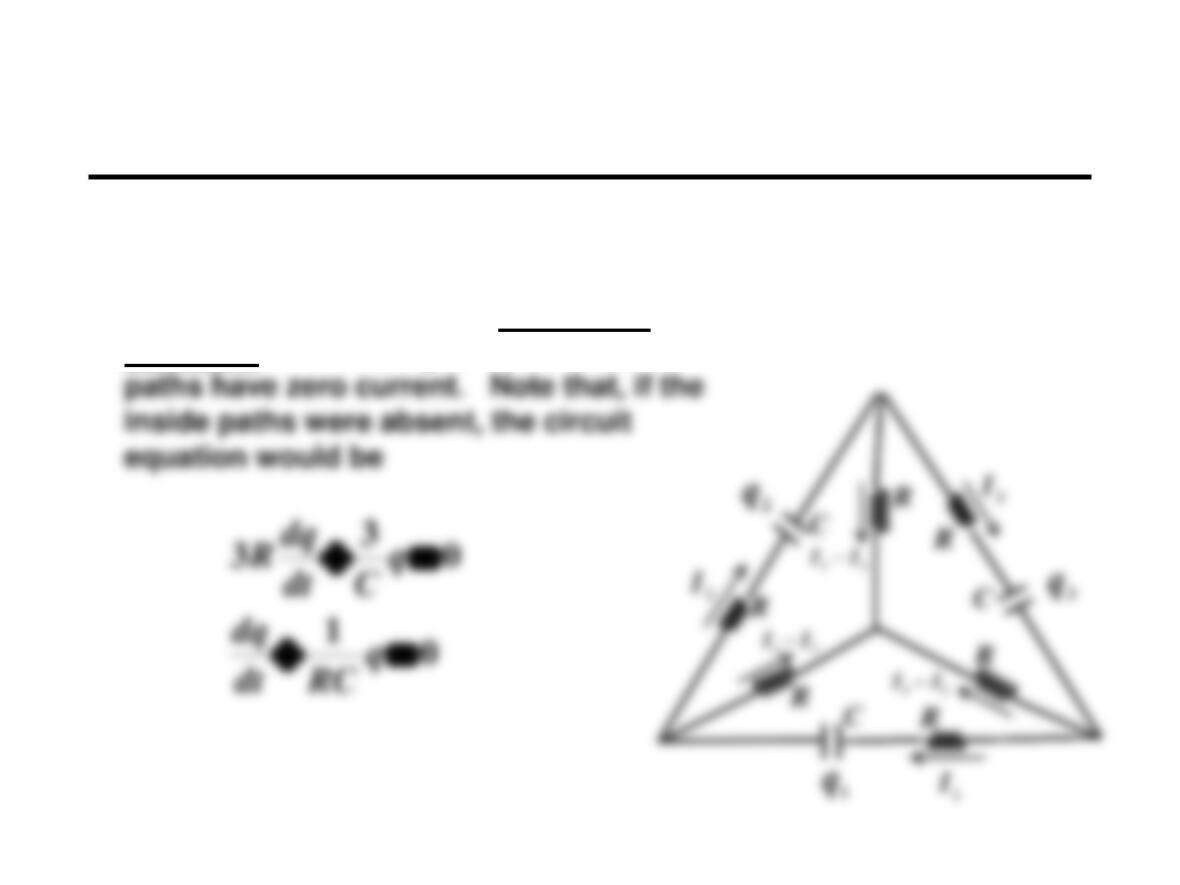
The eigenvalue
and associated eigenvector
imply
I
R
1
1
1
R
R
1
q
3
q
1
I
2
I
32 II −
13 II −
21 II −
R
R
R
C
C
Circuit Example: Dynamic Modes (3)
Looking at the circuit, we see that in this
mode all the current flows around the
perimeter of the triangle. The inside
Circuit Example: Dynamic Modes (4)
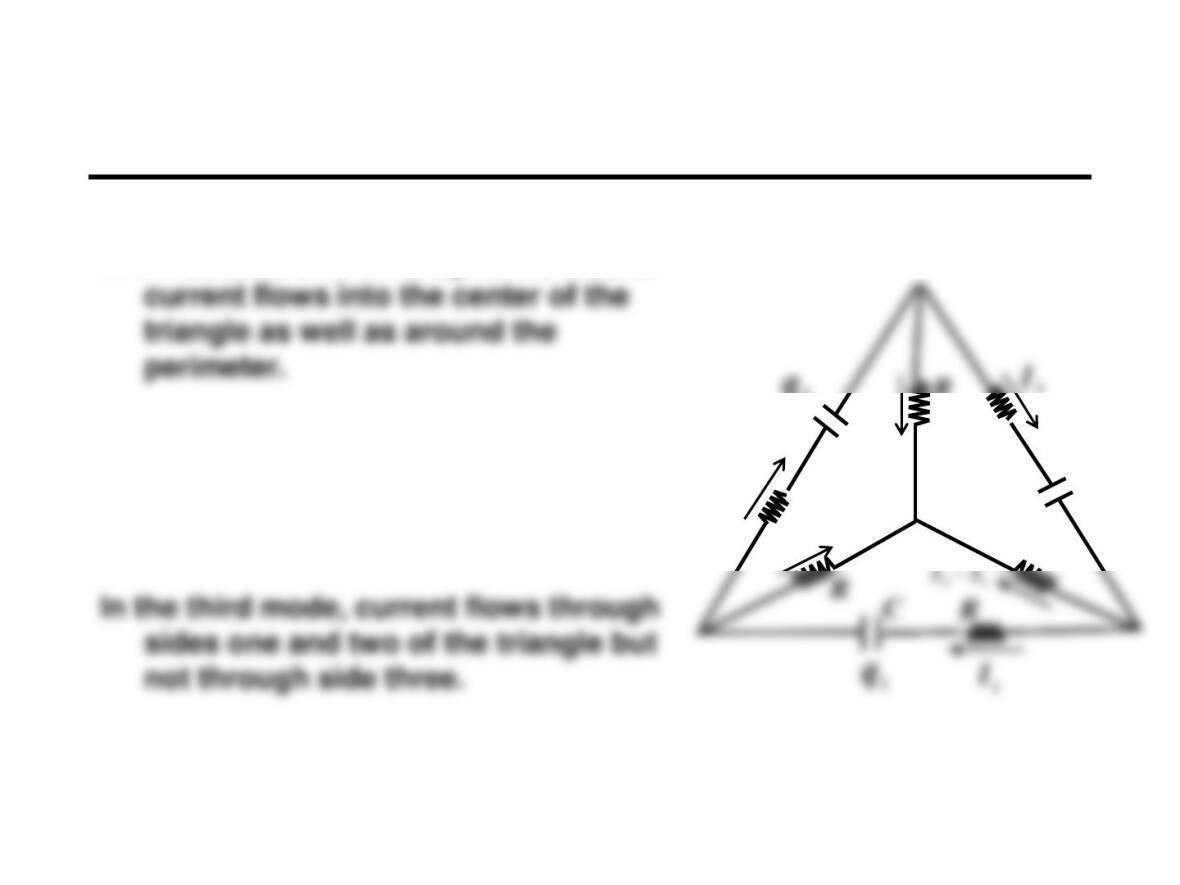
In the second and third dynamic modes
In the second mode, current flows
through sides one and three of the
triangle but not through side two.
R
R
1
3
q
2
q
2
I
3
32 II −
21 II −
R
R
R
R
C
C