
Differential Equations
for Engineers:
the Essentials
Class 18 notes
Agenda: Class 18
Review of Short Quiz #2
Review of Homework Assignments 14 and 16
Lectures:

Objective
In the previous class we examined an example system that
resulted in real-valued eigenvalues and eigenvectors.

Systems of First Order ODEs
Linear Time Invariant Example:
Electrical Circuit
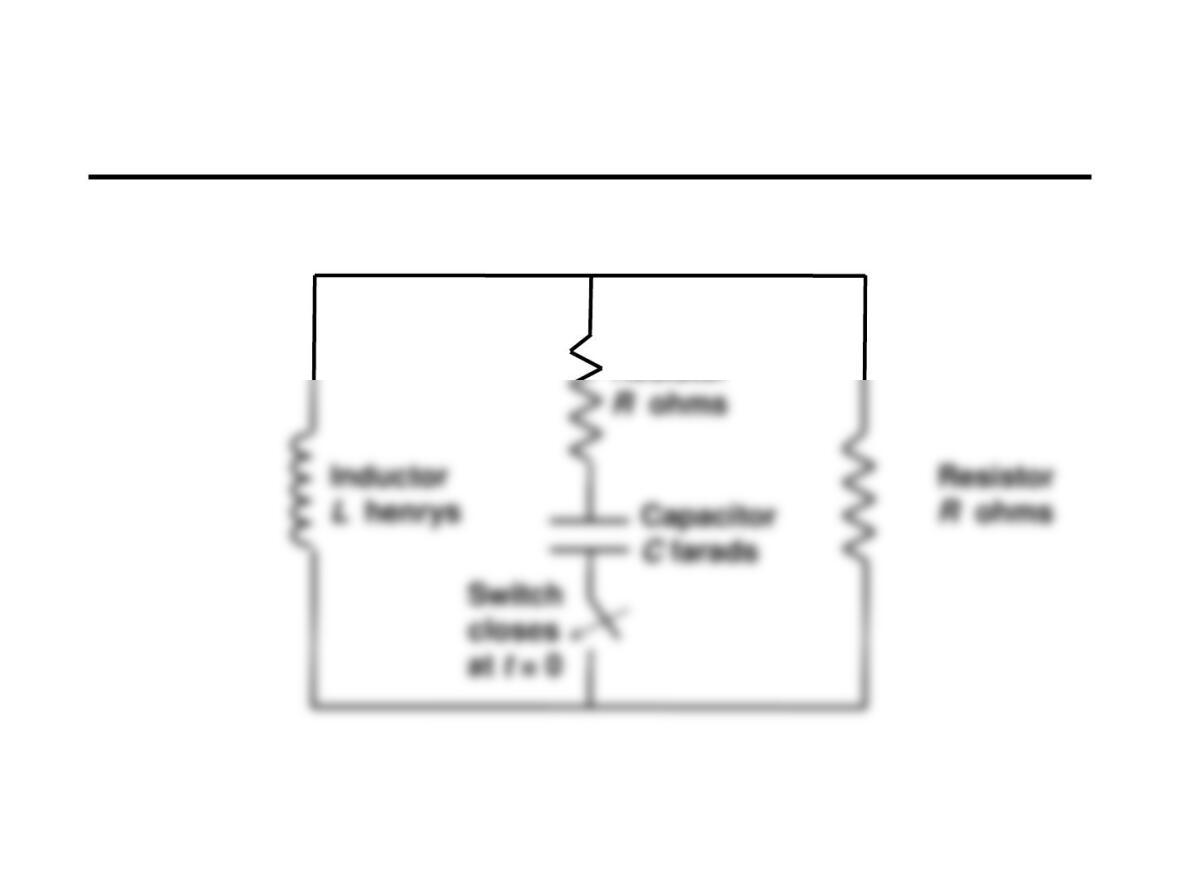
Electrical Circuit Example
Resistor
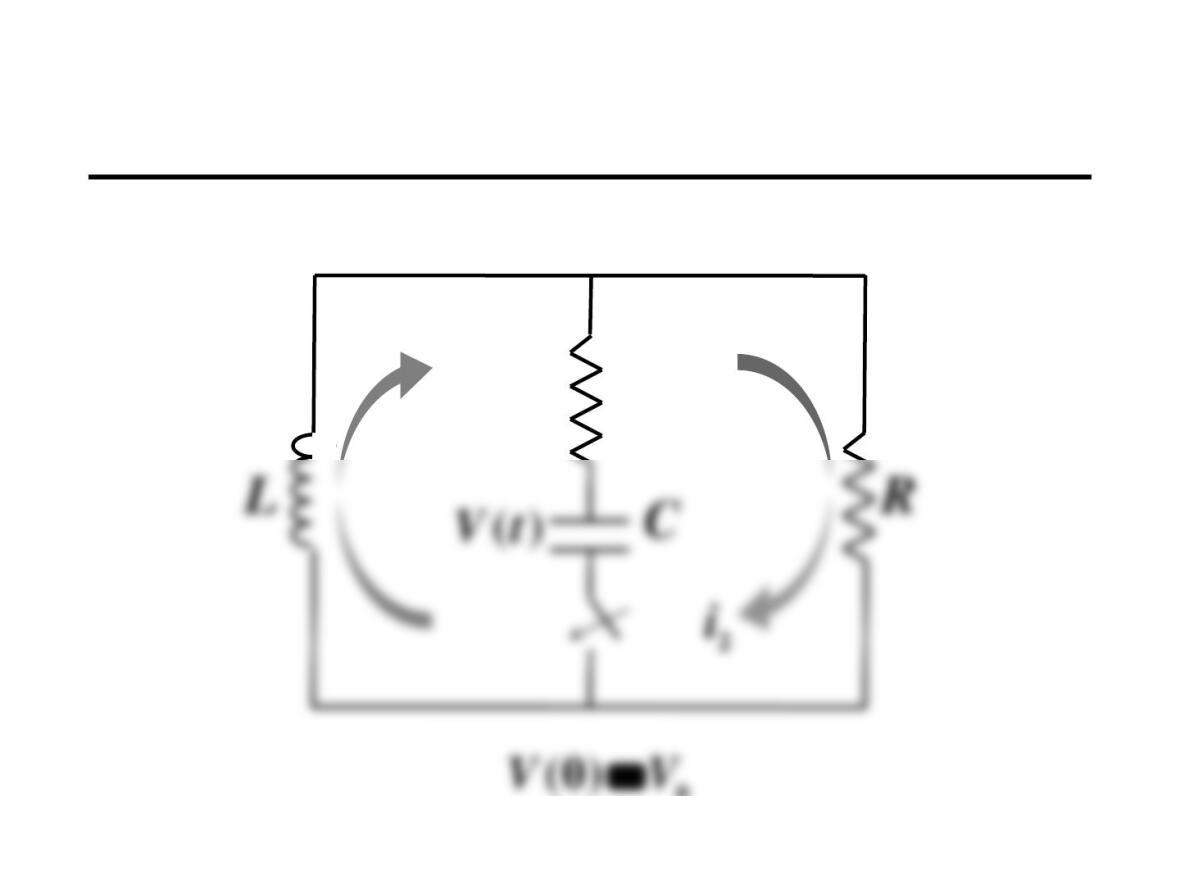
Electrical Circuit Example (2)
R
1
i
0
R
1
i
2
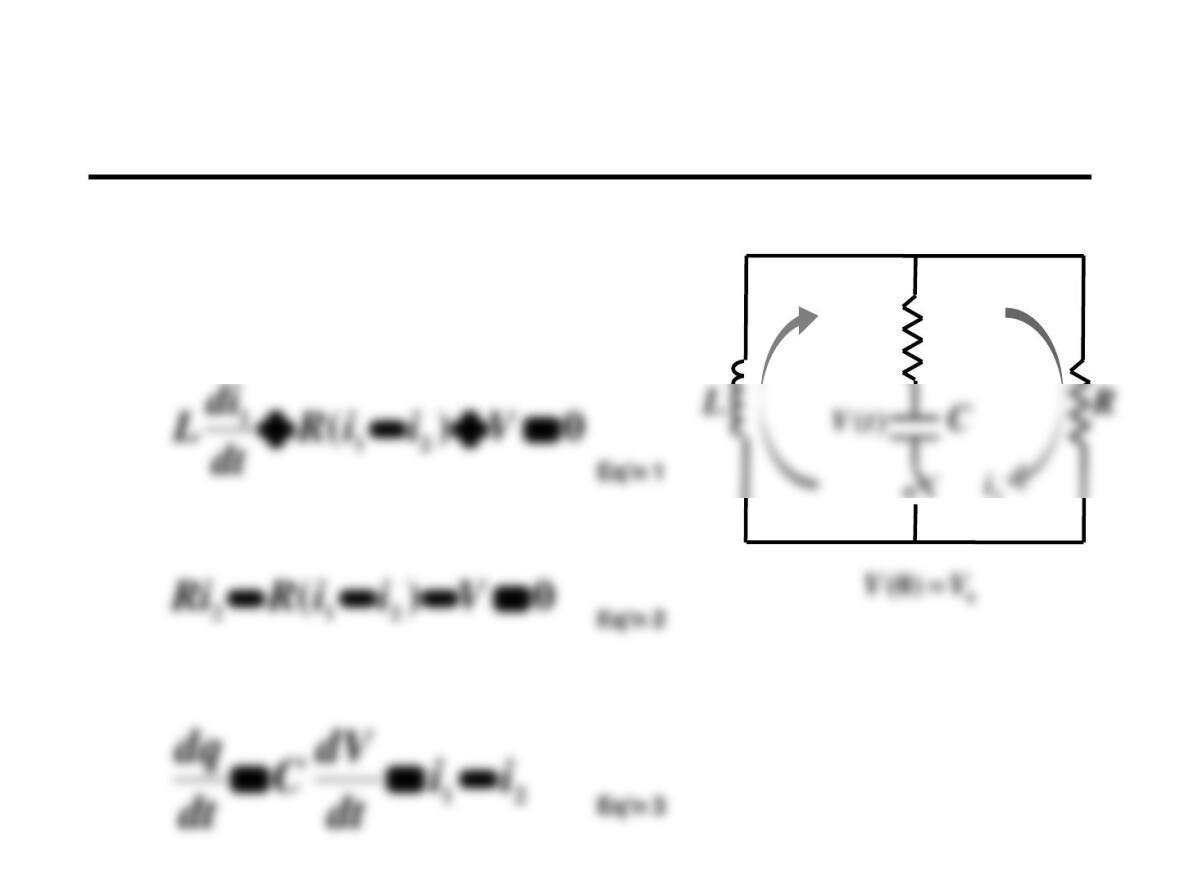
Electrical Circuit Equations
From Kirchhoff’s laws:
Sum of voltage drops around loop 1 = 0
Sum of voltage drops around loop 2 = 0
Time rate of change of charge on capacitor = current
L
R
R
C
1
i
2
i
)(tV
Electrical Circuit Equations (2)
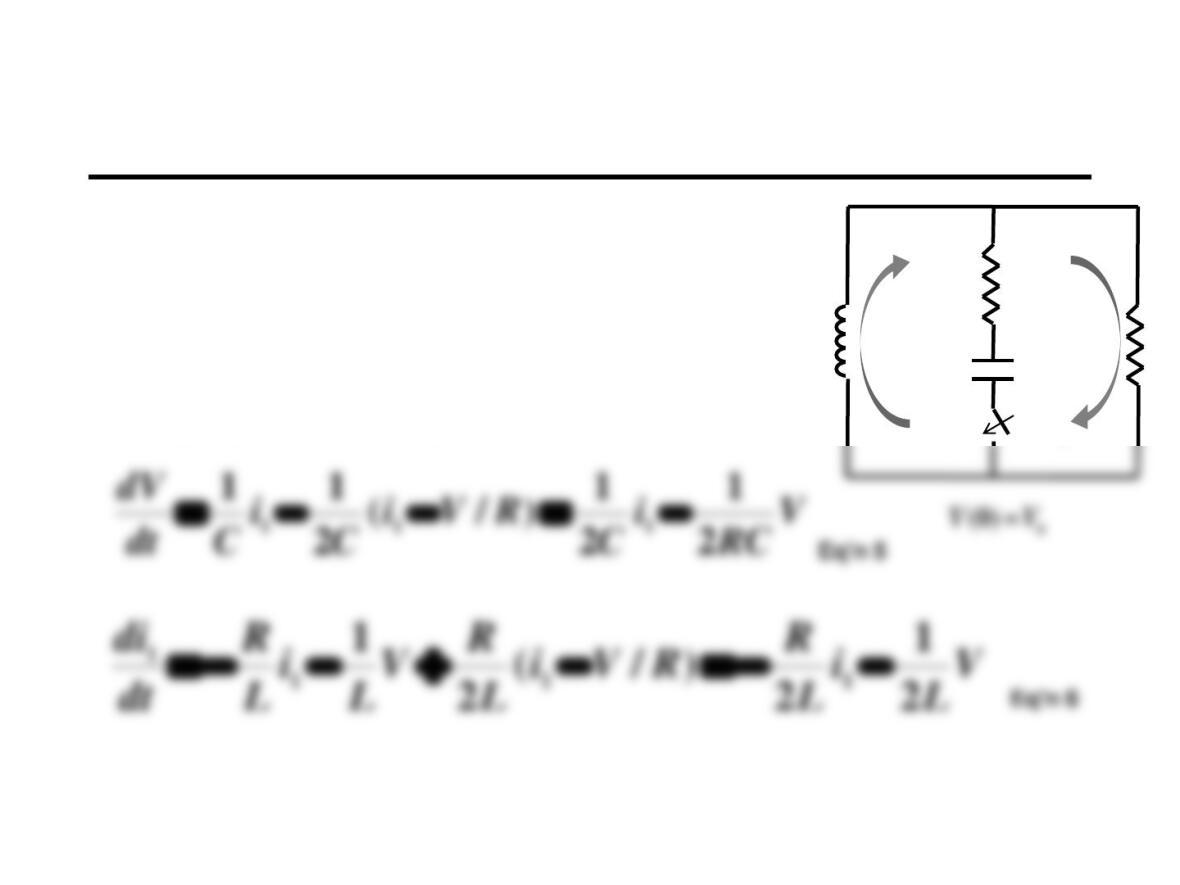
0)/)(2/1( 12 =−= RVii
Eq’n 4
From Equation 2
Using Equation 4 in Equations 1 and 3
Electrical Circuit Equations (3)
L
R
C
)(tV
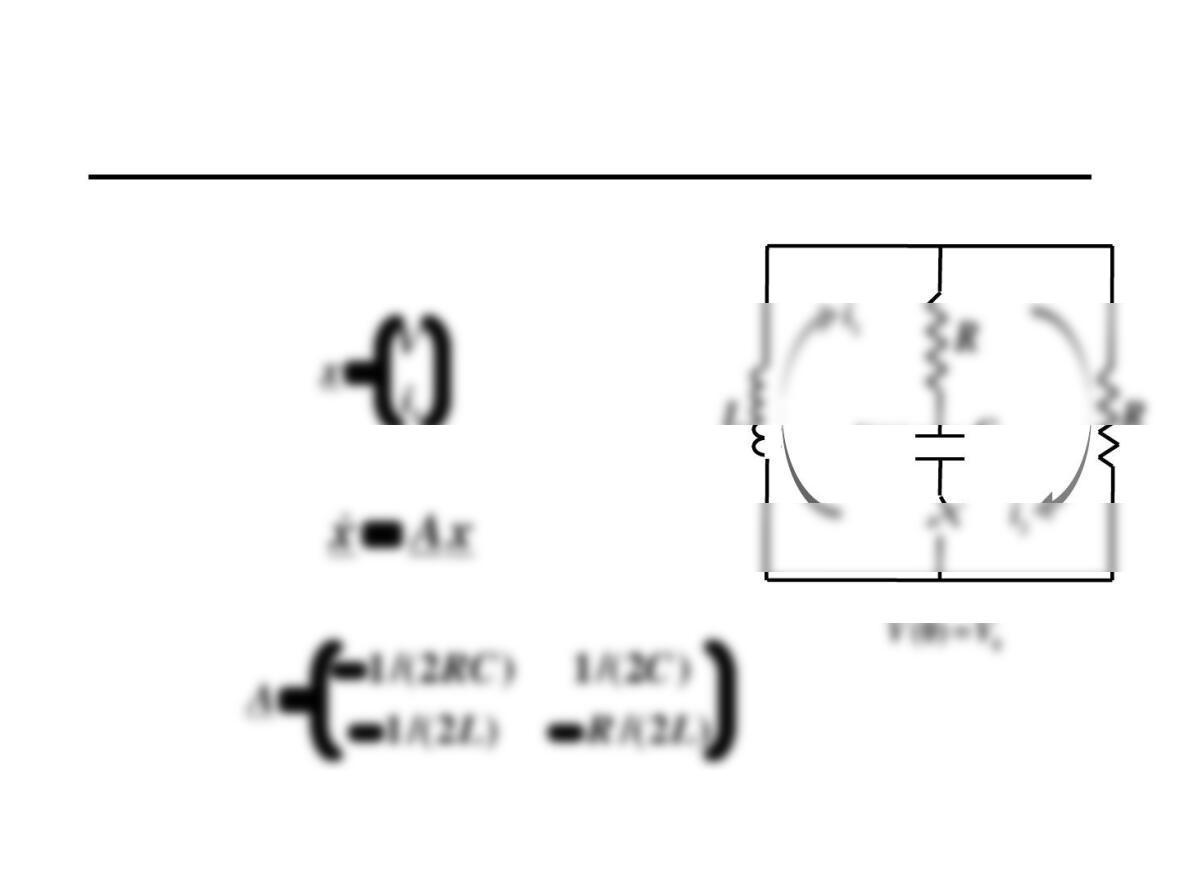
To put this into state space format, let
Then Equations 5 and 6 become
where
Electrical Circuit Equations (4)
R
1
i
2
i
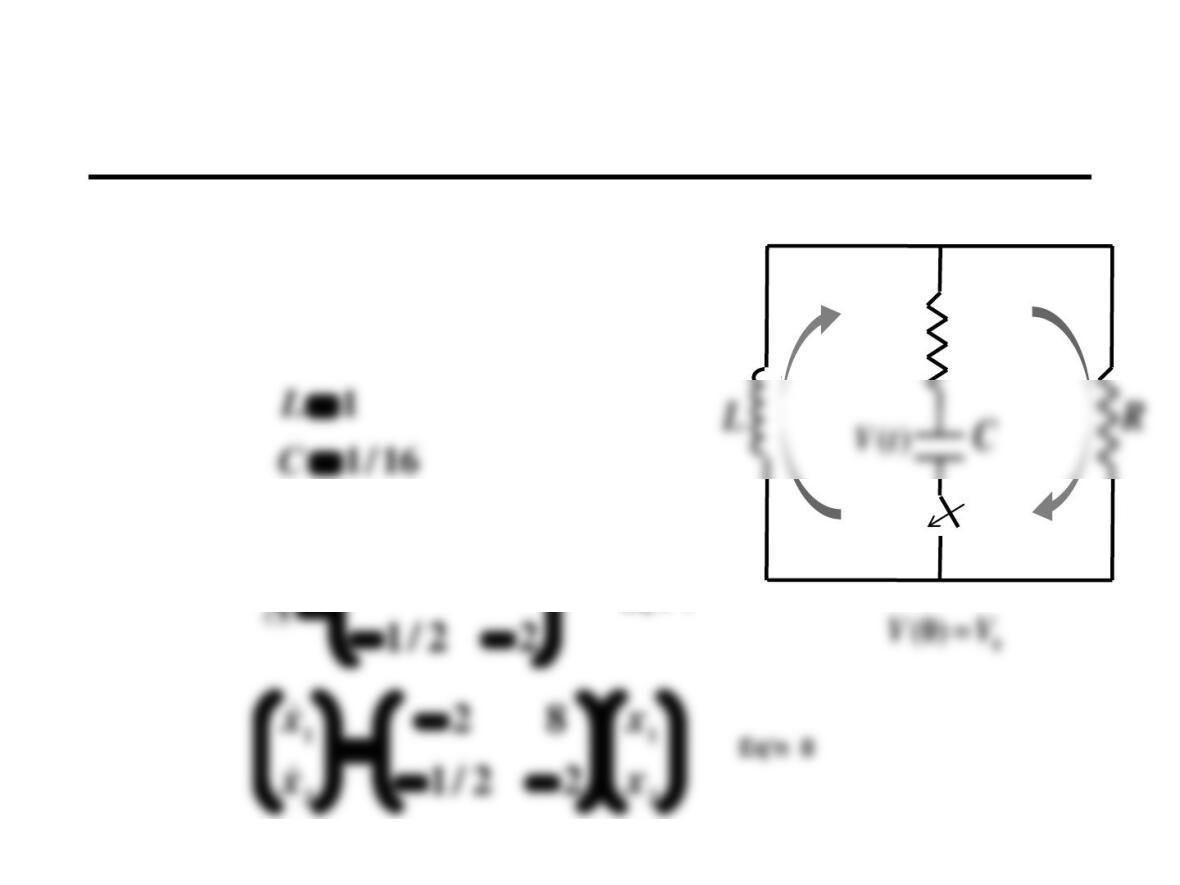
Let’s assume that
4
=
R
Then
−
82
Eq’n 7
Electrical Circuit Equations (5)
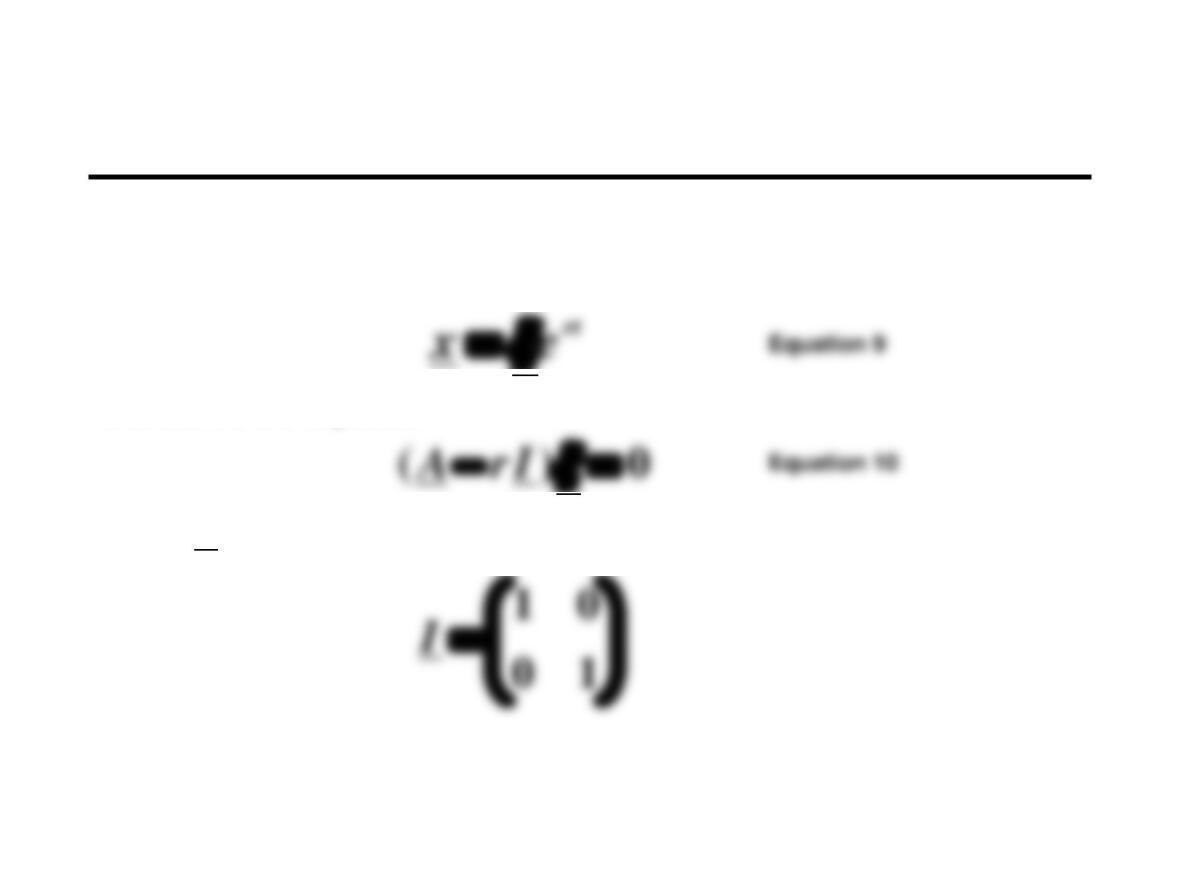
To solve Equation 8 we try (as before)
and derive the equation
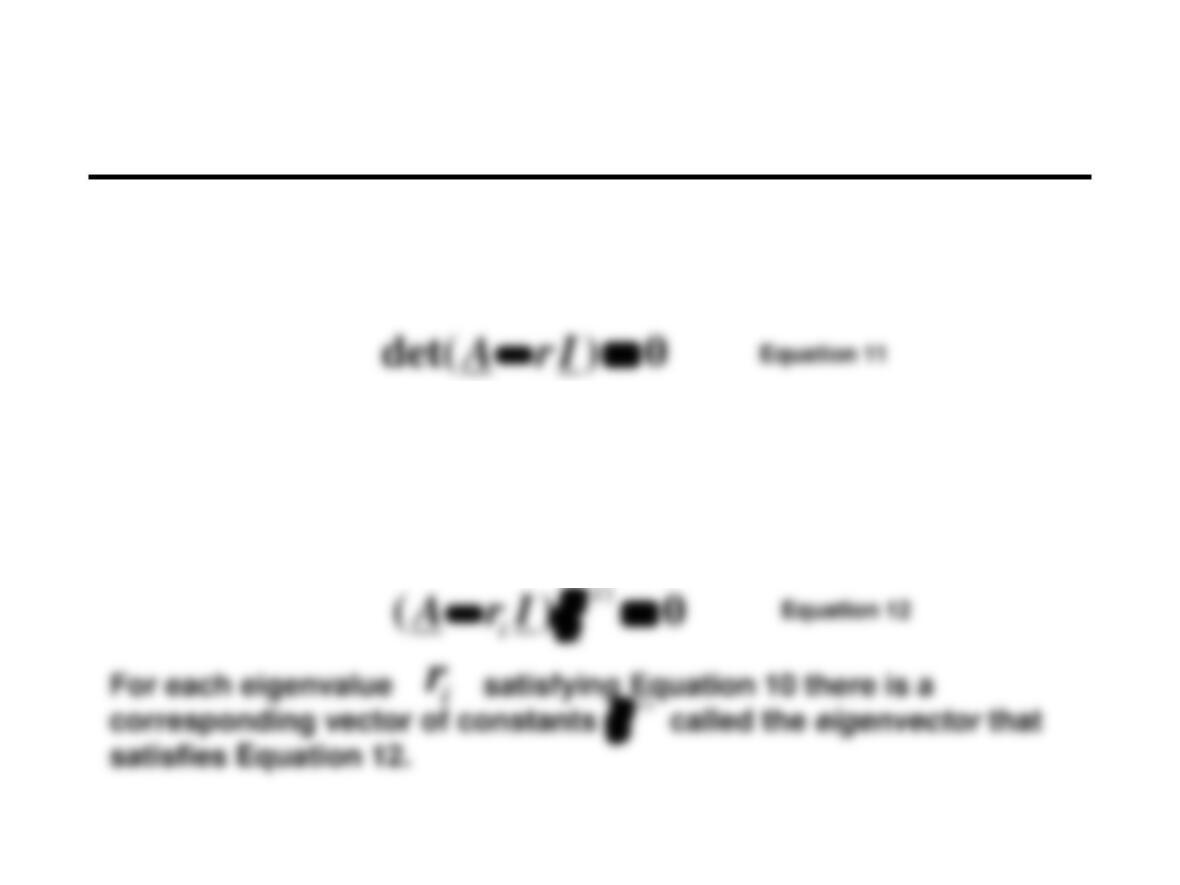
where is the identity matrix; in this 2-by-2 case,
I
Electrical Circuit Equations (6)
As always, Equation 10 results in two conditions. The first is
Only certain values of in our trial solution (Equation 9) will work.
Those values satisfy Equation 11. They are called eigenvalues.
The second condition is
r

Electrical Circuit Equations (7)
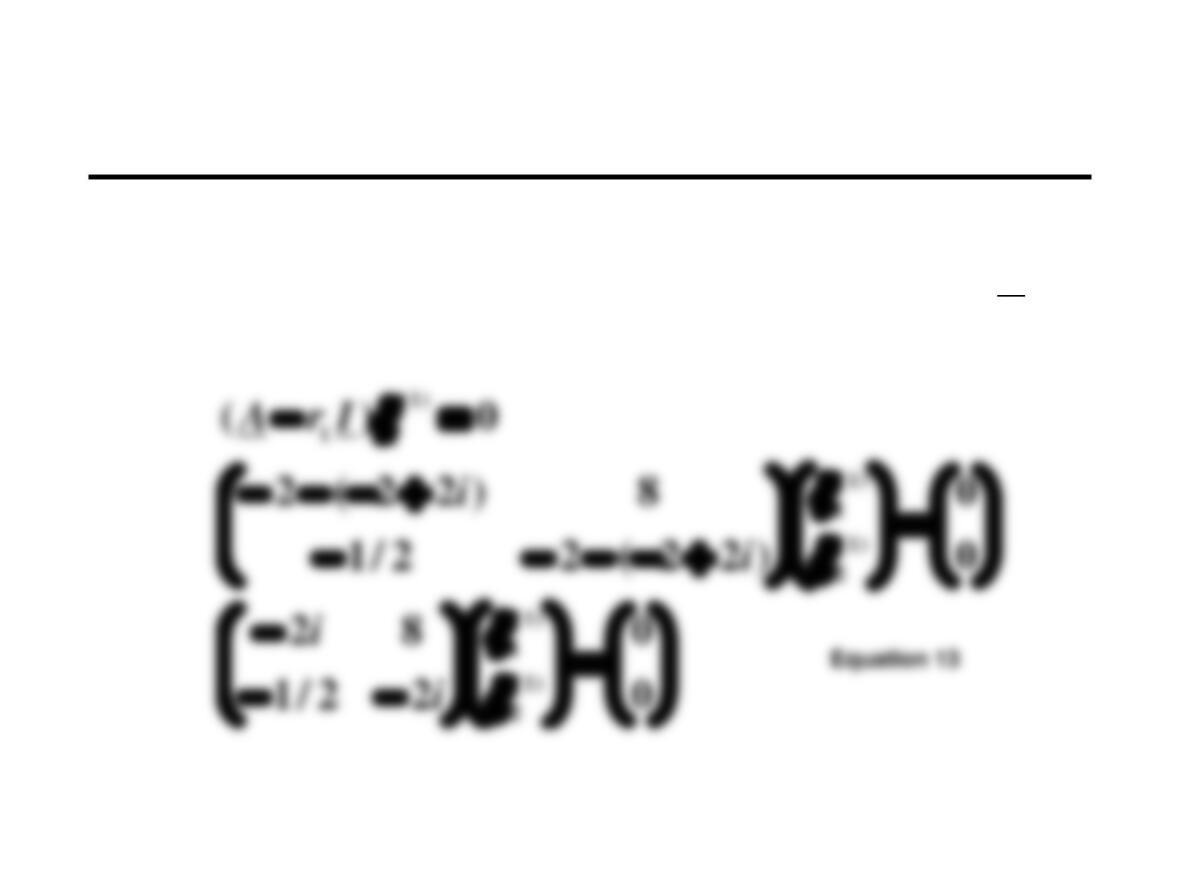
Substituting Equation 7 into Equation 11:
Hence the eigenvalues for this problem are
Electrical Circuit Equations (8)
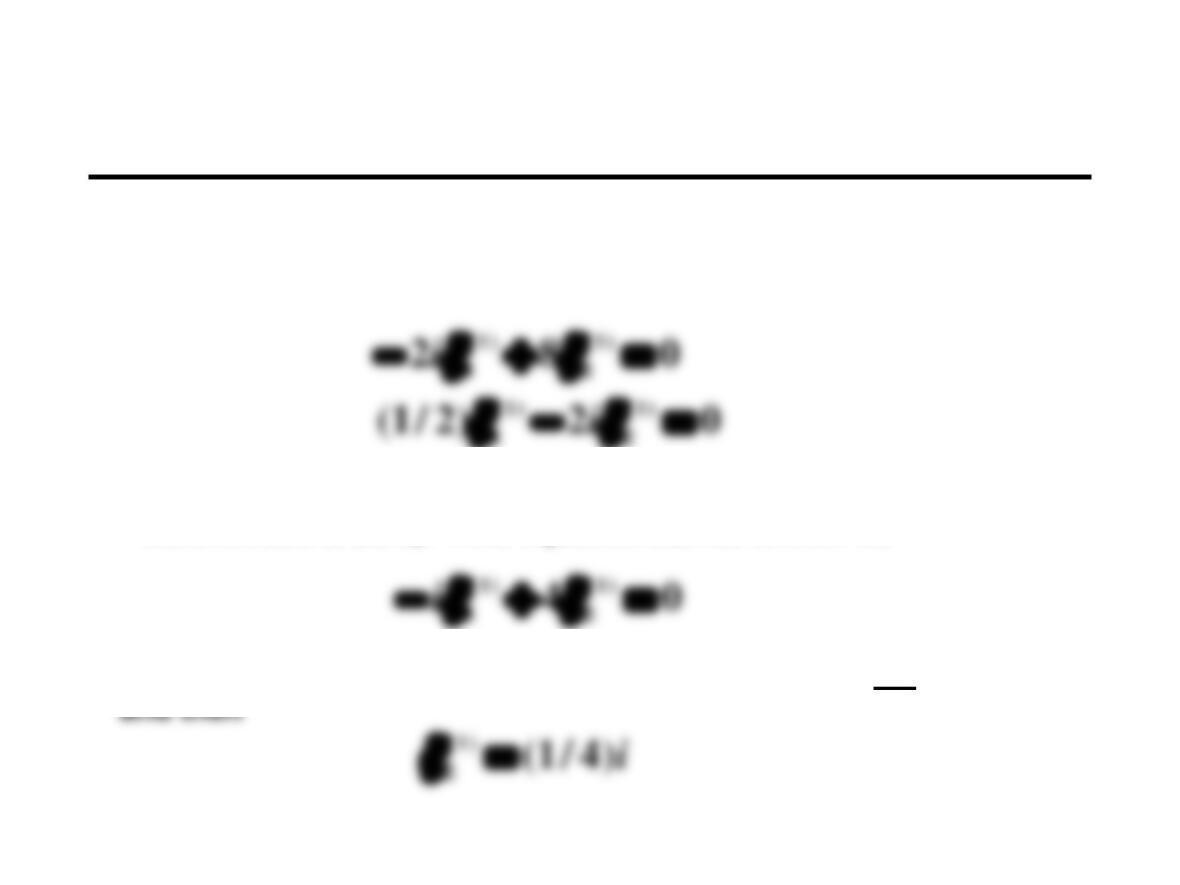
The next step is to substitute and Equation 7 (for )
into Equation 12. The result is
ir 22
1+−=
A
Electrical Circuit Equations (9)
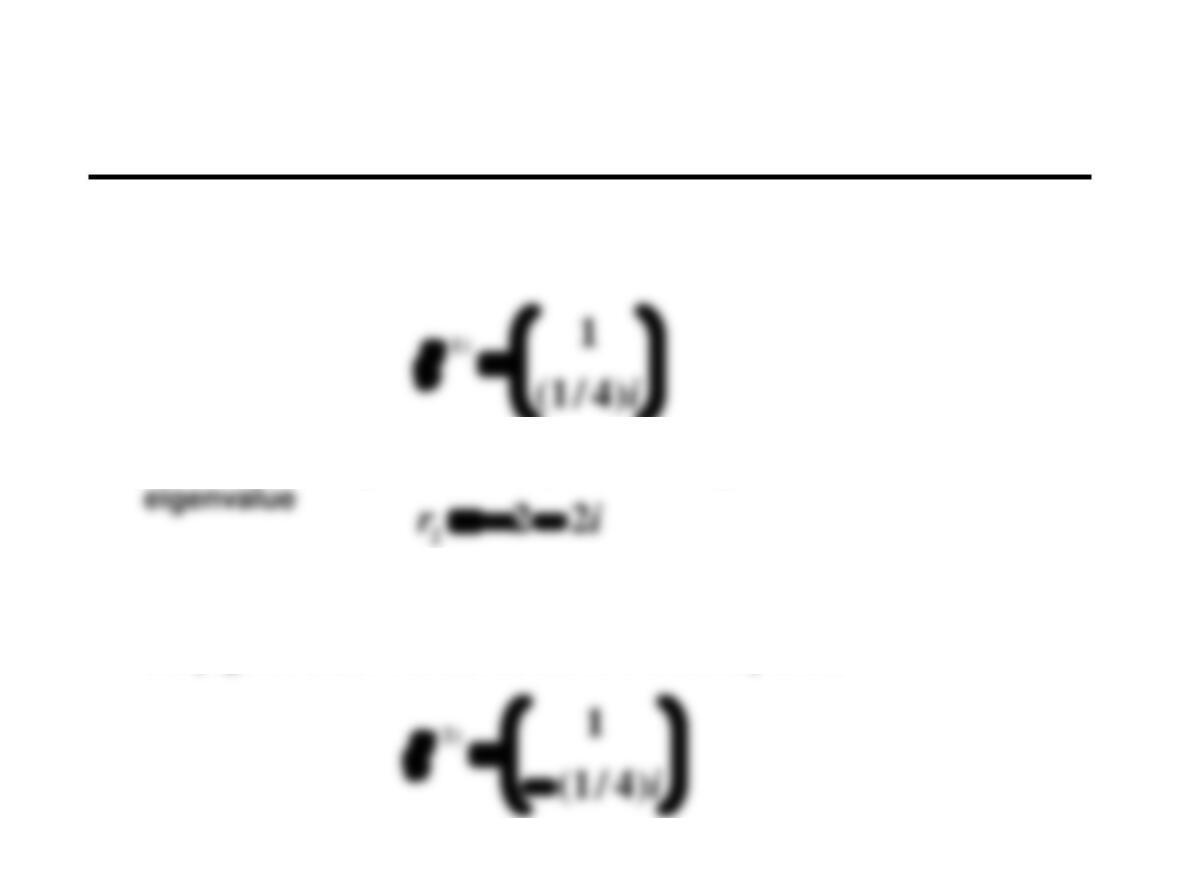
Writing out Equation 13 component by component we have
These represent just one equation (as they must, since the
determinant is zero). That equation can be written as
As always, there is an undetermined component. We set
1
)1(
1=
Electrical Circuit Equations (10)
Hence the first eigenvector is given by
We could go through the whole procedure again for the second
but we need not. We will always find that when two eigenvalues
are complex conjugates then the eigenvectors will be complex
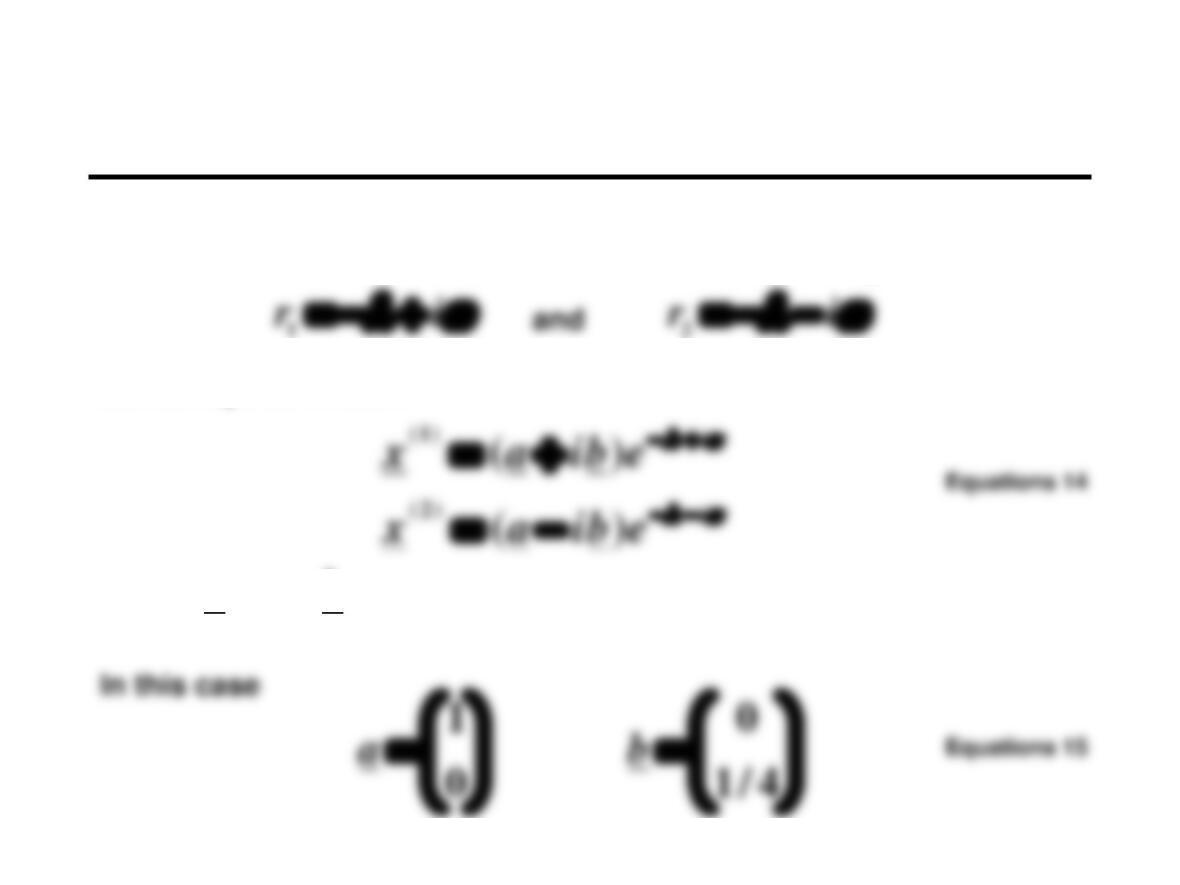
conjugates also. Hence we can immediately write
Electrical Circuit Equations (11)
The fundamental solutions associated with complex eigenvalues
can always be written
where and are vectors of real-valued constants.
a
b
Electrical Circuit Equations (12)
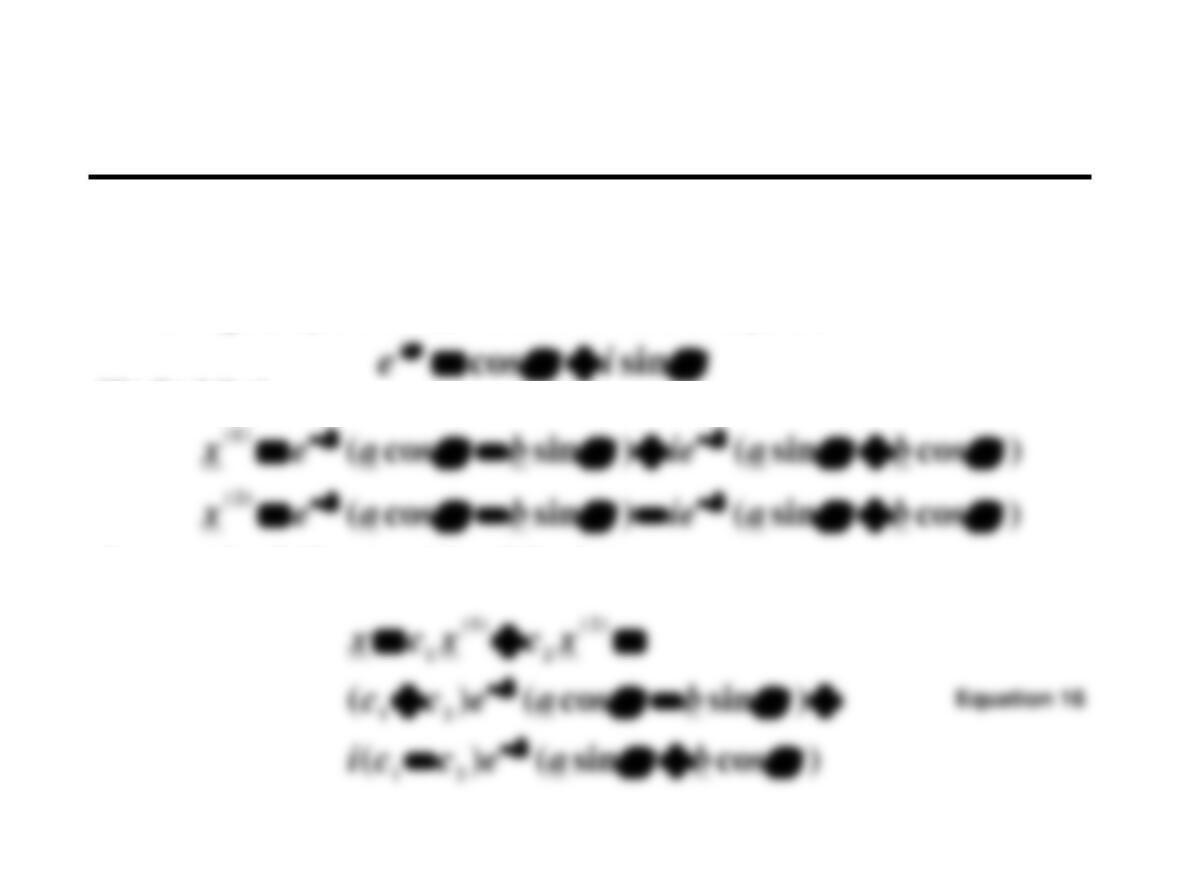
What do Equations 14 mean in real terms? As we did for second order
linear time-invariant equations with characteristic polynomial
having complex roots, we invoke Euler’s equation
We find that
A general solution must be of the form