Differential Equations
for Engineers:
the Essentials
Class 14 notes
Agenda: Class 14
Working on a qualitative aspect of ODEs: system stability
Lectures:
Questions on Determining System Stability
What do the following tell you with respect to system stability?
(a) negative coefficients in any linear time-invariant ODE
Introduction to Laplace Transforms
Value of Laplace Transforms
For linear time-invariant ODEs of any order,
Laplace transforms:
convert differential equations into algebraic ones
Preliminaries
→
=
a
A
a
Adttfdttf )(lim)(
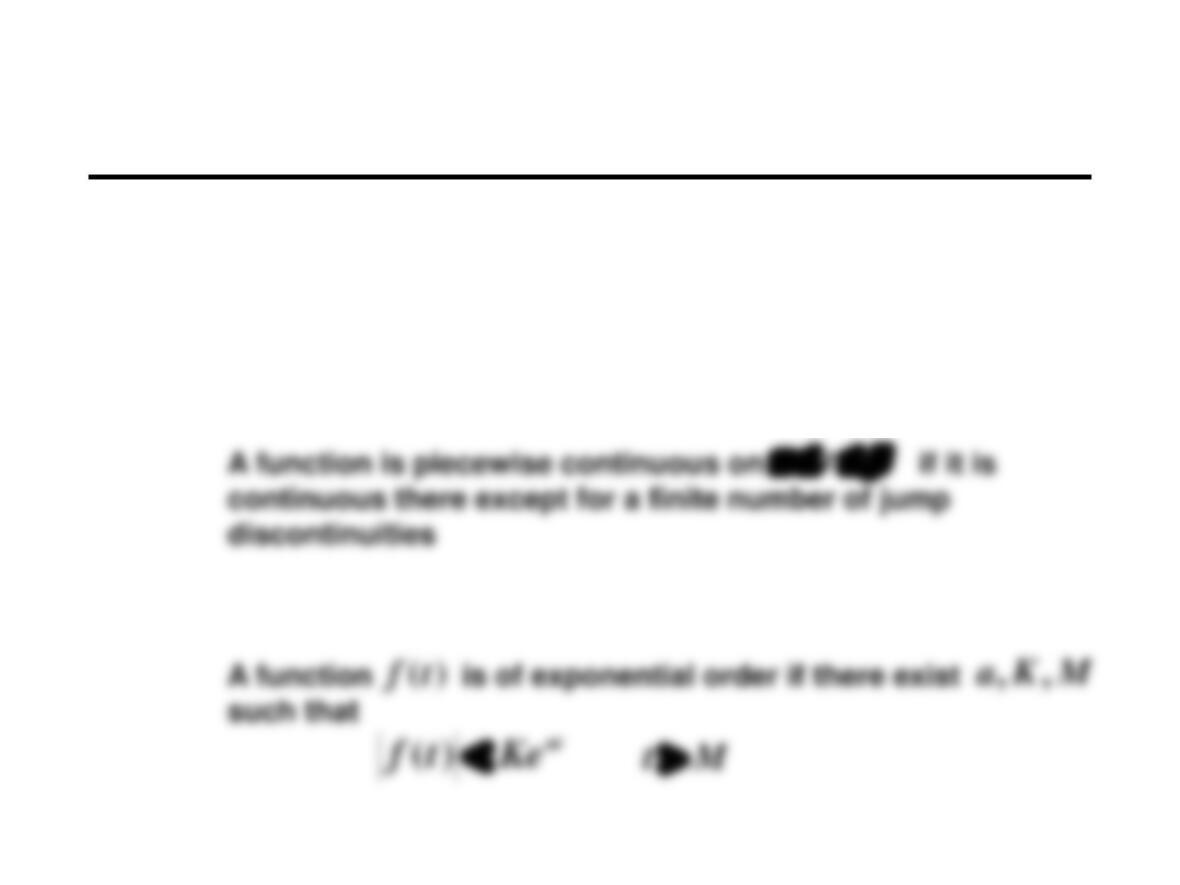
Improper integral:
Piecewise continuous:
Exponential order:
Laplace Transform
Definition:
The Laplace transform of the function is
Existence:
Uniqueness:
−
== 0)()()( dttfetfLsF st
)(sF
)(tf
Laplace Transforms of
Some Common Functions
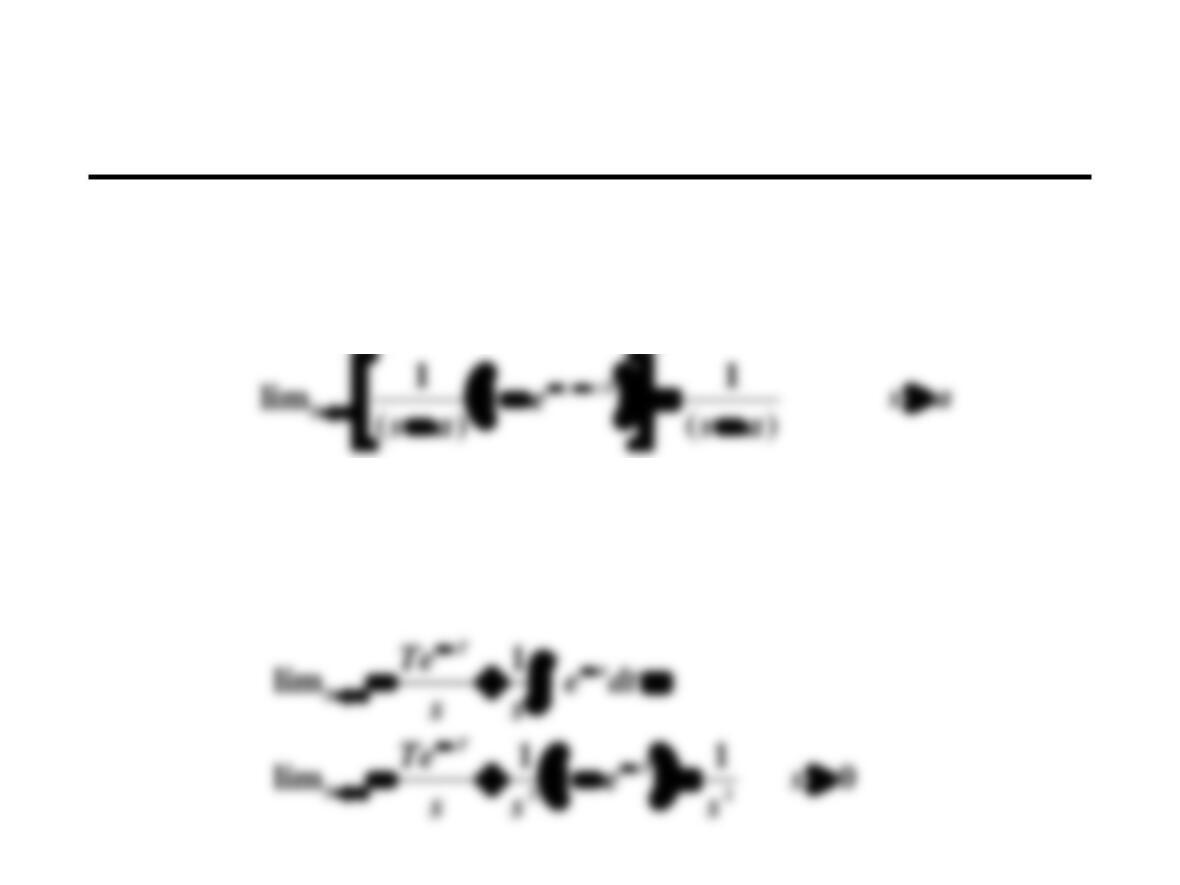
lim
0 0
)(
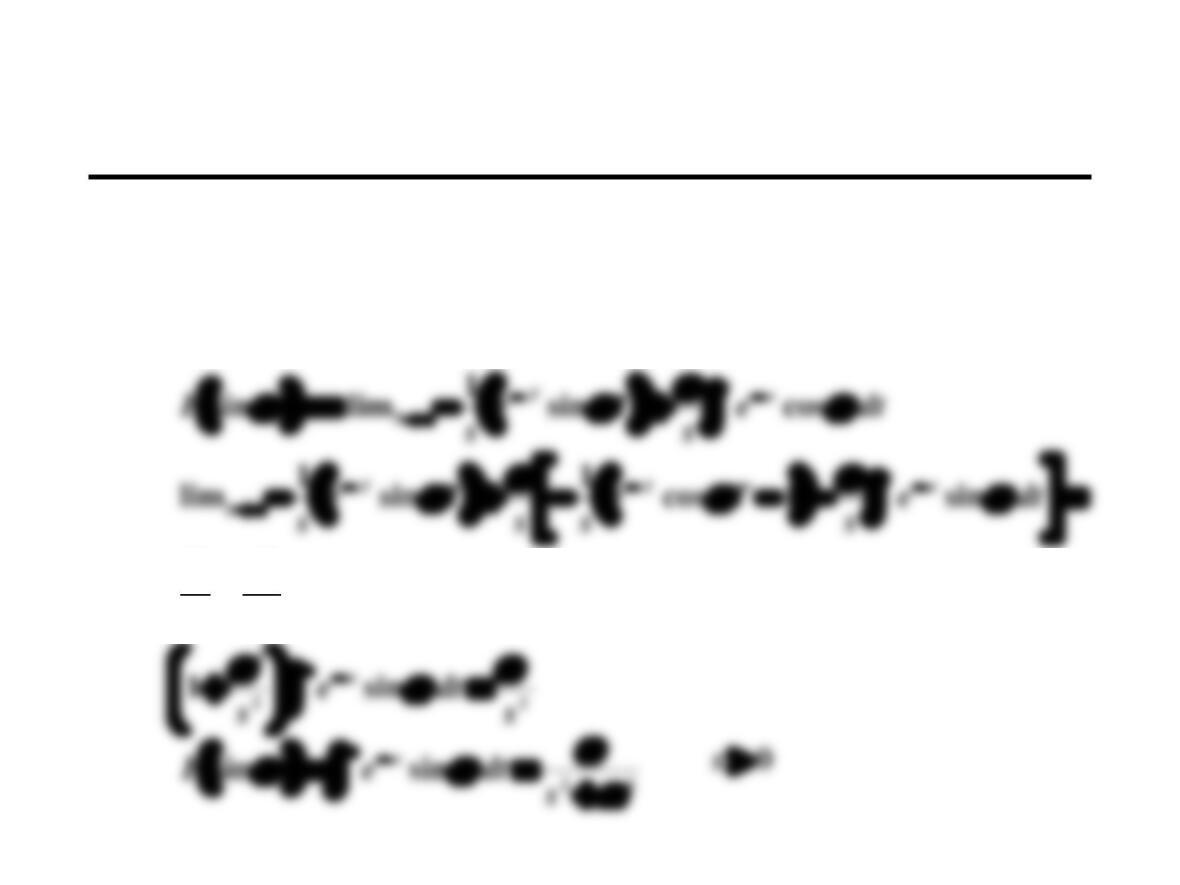
dtedteeeL
Ttas
T
atstat
===
−−
→
−
0 0
lim
tdtetdtetL
Tst
T
st
==
−
→
−
at
e
t
Integrating by parts,
Laplace Transforms of
Some Common Functions (2)
t
sin
−
−
→
−
−
==
0
2
2
2
0 0
sin
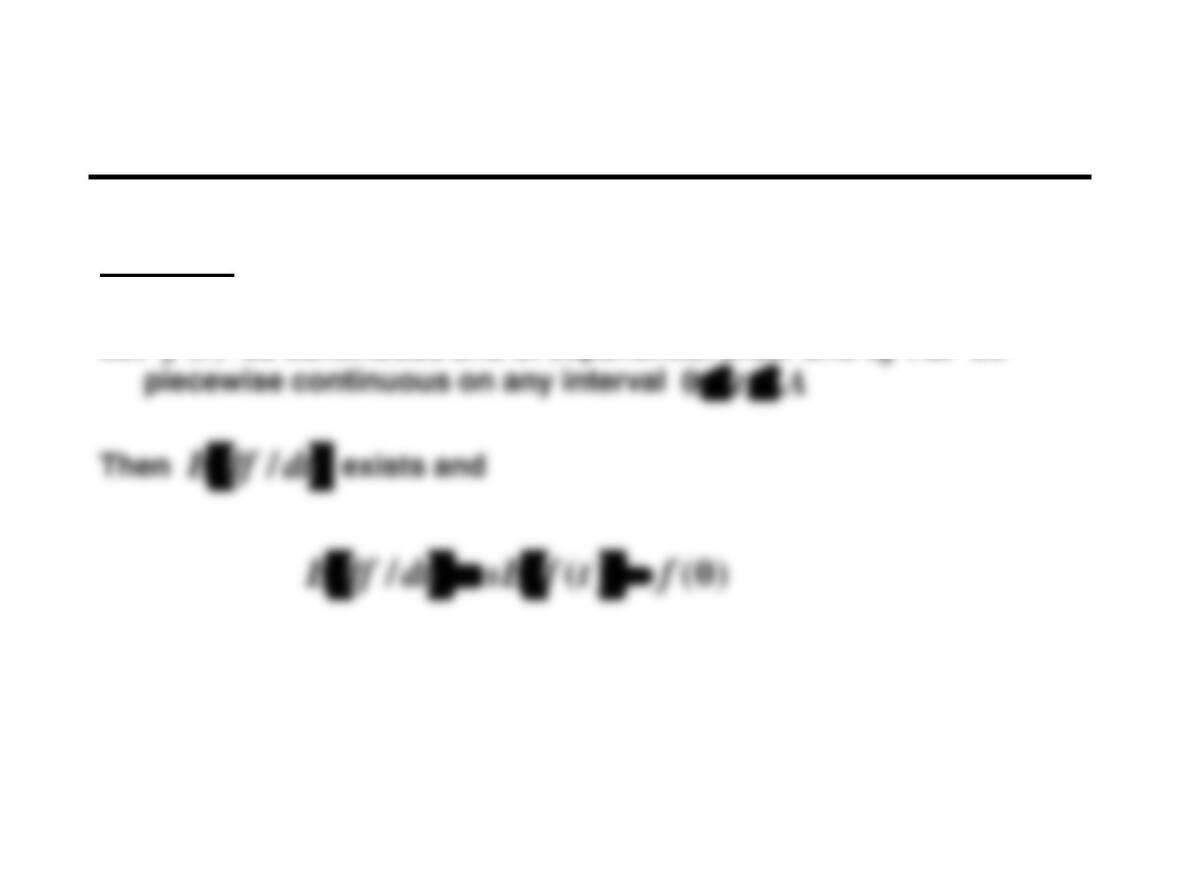
sinlimsinsin
tdte
ss
tdtetdtetL
st
Tst
T
st
Combining the integral terms,
Integrating by parts twice,
Key Laplace Transform Attribute
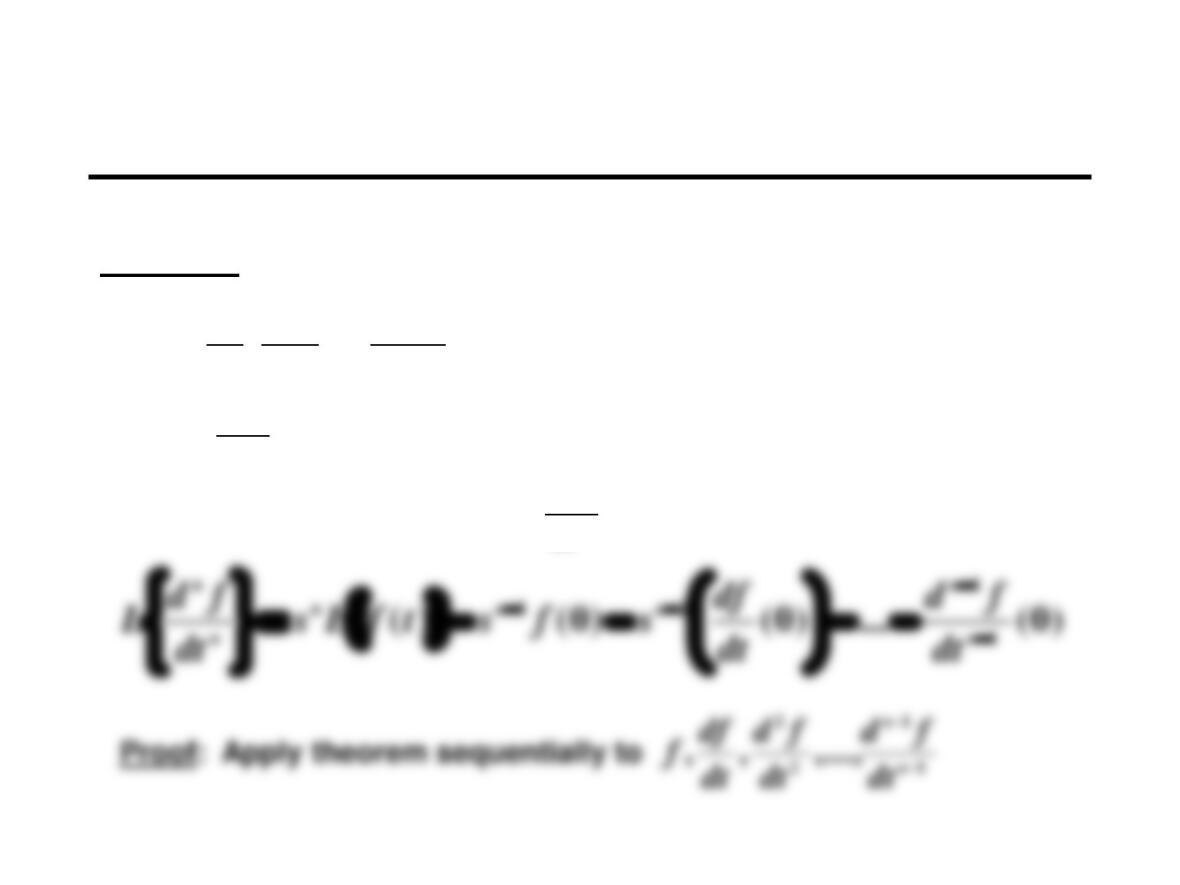
Theorem:
Let be continuous and of exponential order and be
)(tf
dtdf /
Key Laplace transform attribute (2)
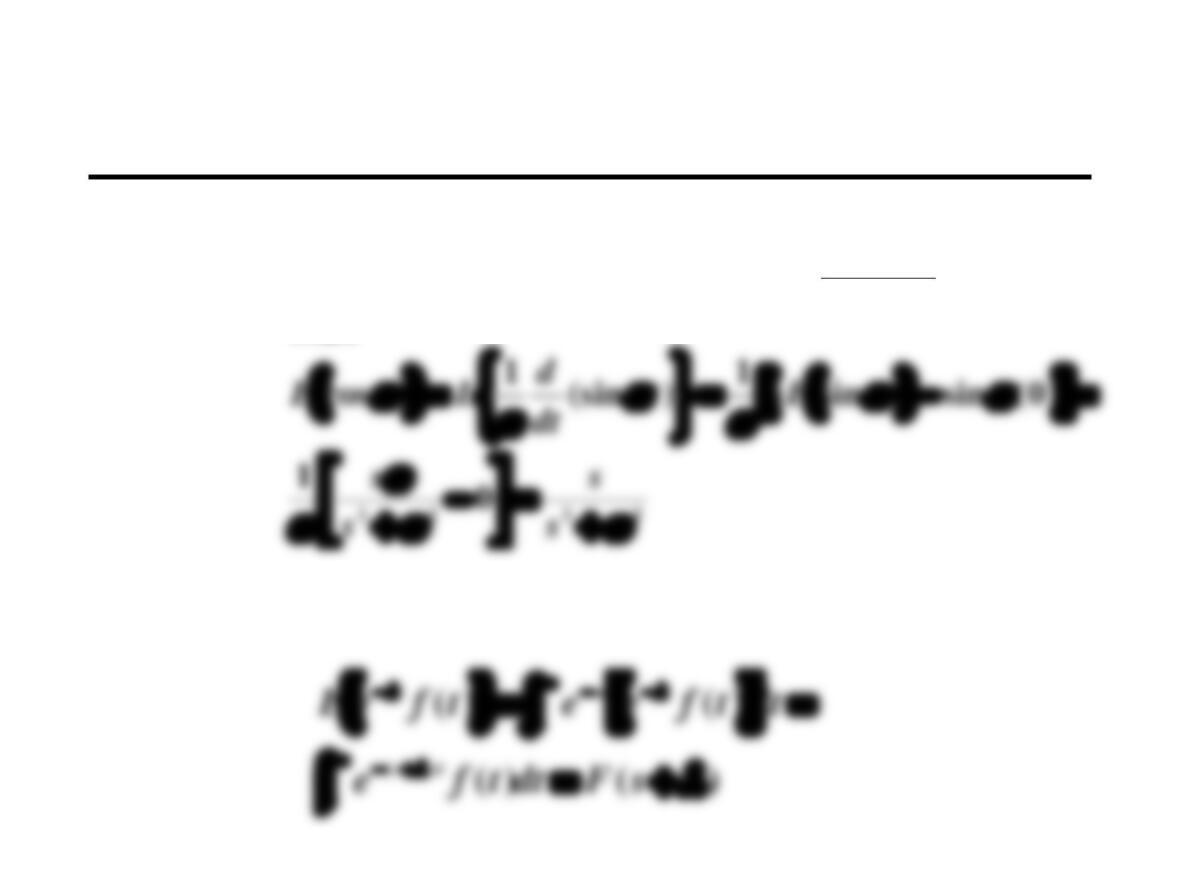
Corollary:
Let be continuous and of exponential order
and let be piecewise continuous on any interval .
Then the Laplace transform of exists and
1
1
2
2
,…,,, −
−
n
n
dt
fd
dt
fd
dt
df
f
n
n
dt
fd
At 0
n
n
dt
fd
More Laplace Transforms of
Common Functions
t
cos
)(tfe t
−
Let . Then
Recall from before that
22
sin
+
=s
tL
Then
)()( sFtfL =
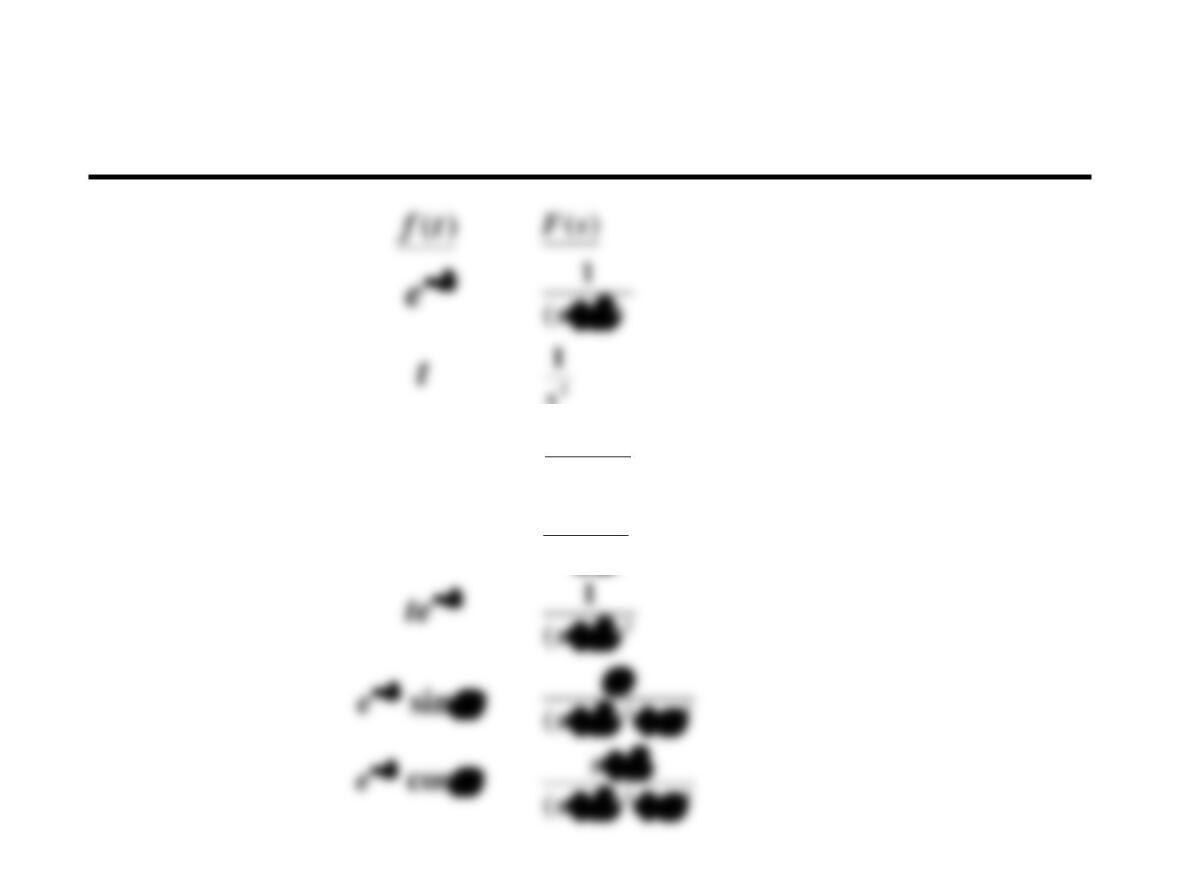
Short Table of Laplace Transforms
22
22
+
+
s
s
s
s
t
sin
t
cos
Laplace transforms for solving
initial value problems
Using Laplace Transforms to Solve
Ordinary Differential Equations
Steps to solving linear time-invariant ordinary differential equations
(homogeneous or nonhomogeneous):
(1) Transform each element of the given ODE from a function of time into
an algebraic function of s.
Laplace Transform Example #1
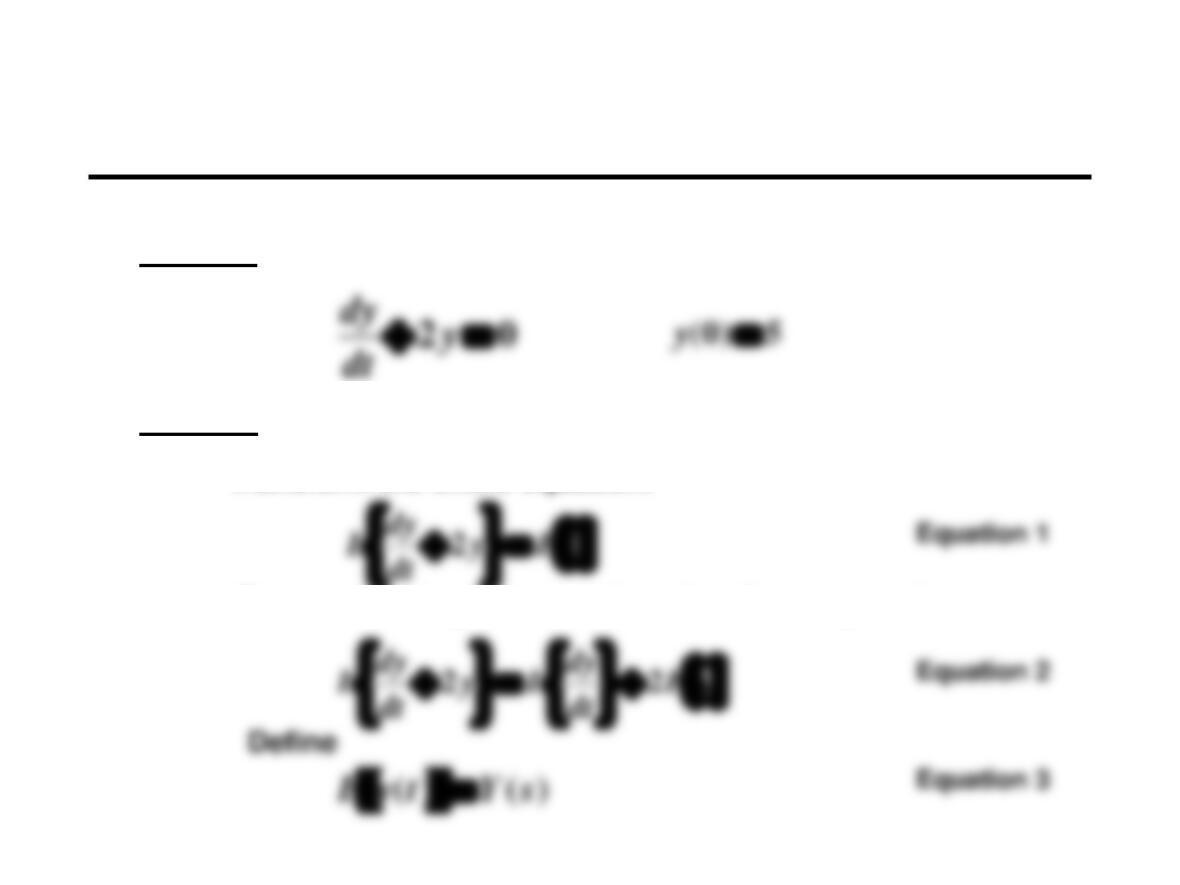
Problem: Solve the ODE
Solution:
Transform the entire equation:
Because the Laplace transform is a linear operation
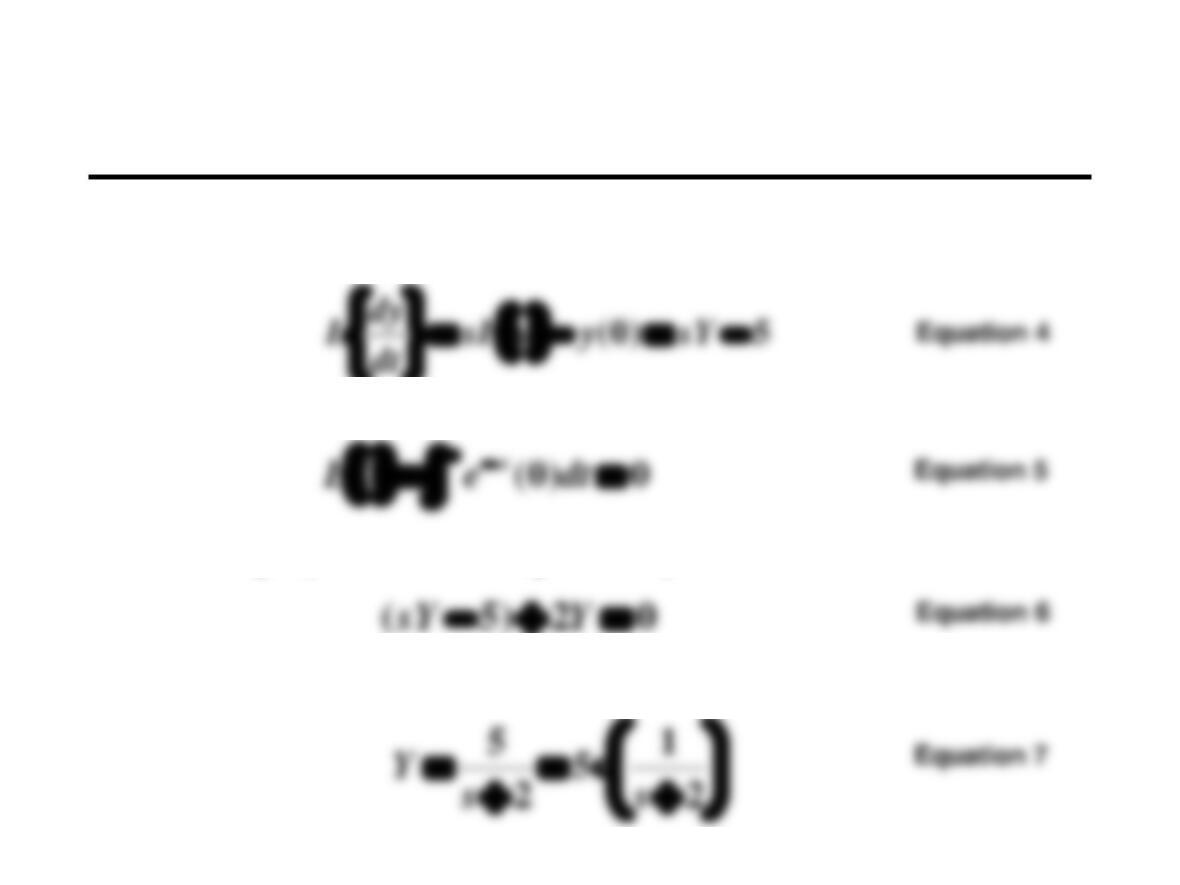
Laplace Transform Example #1 (2)
Laplace transform of a derivative:
From the definition of a Laplace transform:
Using Equations 2 through 5 in Equation 1:
Solving Equation 6:
Laplace Transform Example #1 (3)
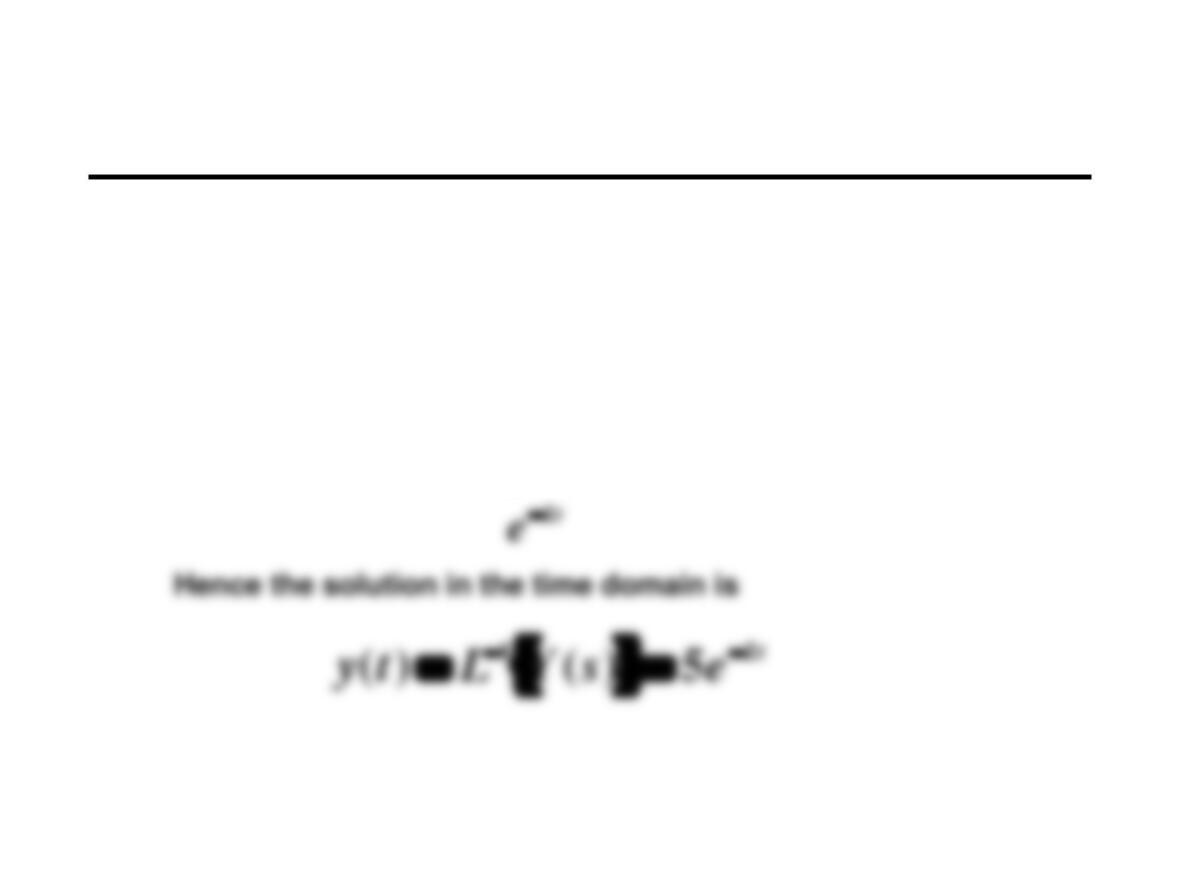
Equation 7 is called the solution in the Laplace Transform
domain.
To find the solution in the time domain we use the short table
of Laplace transforms and find that the function of time
corresponding to is
)2/(1+s
Laplace Transform Example #2
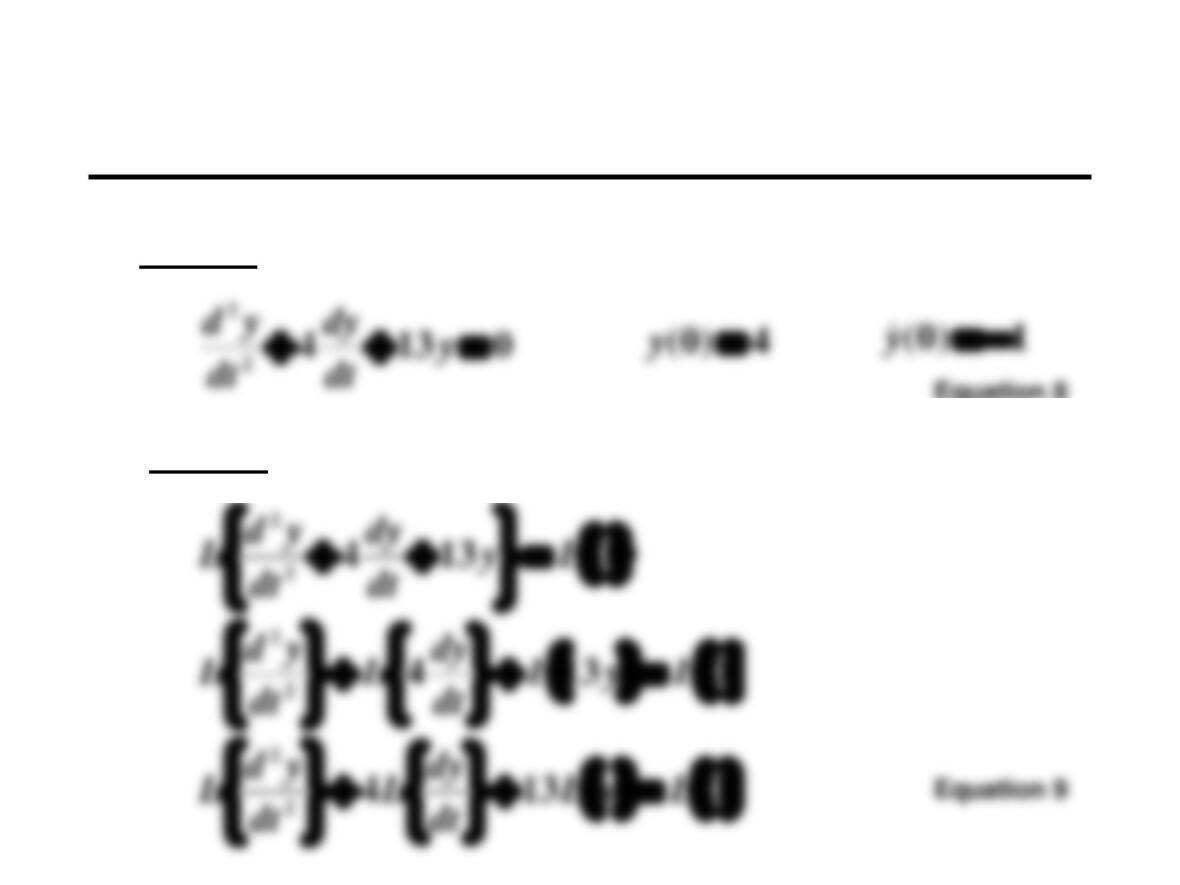
Problem: Solve
Solution:
Equation 8
Laplace Transform Example #2 (2)
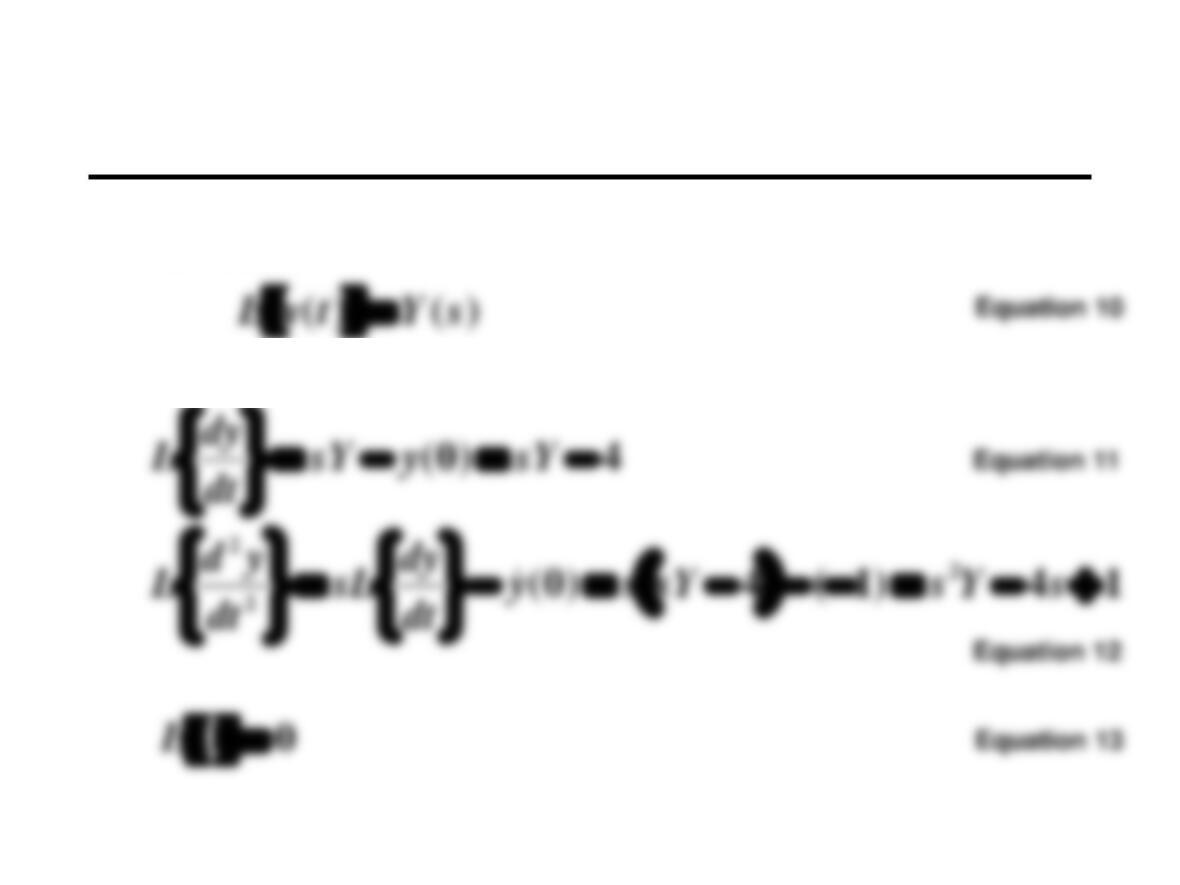
Now define
Then