Laplace Transform Example #2 (3)
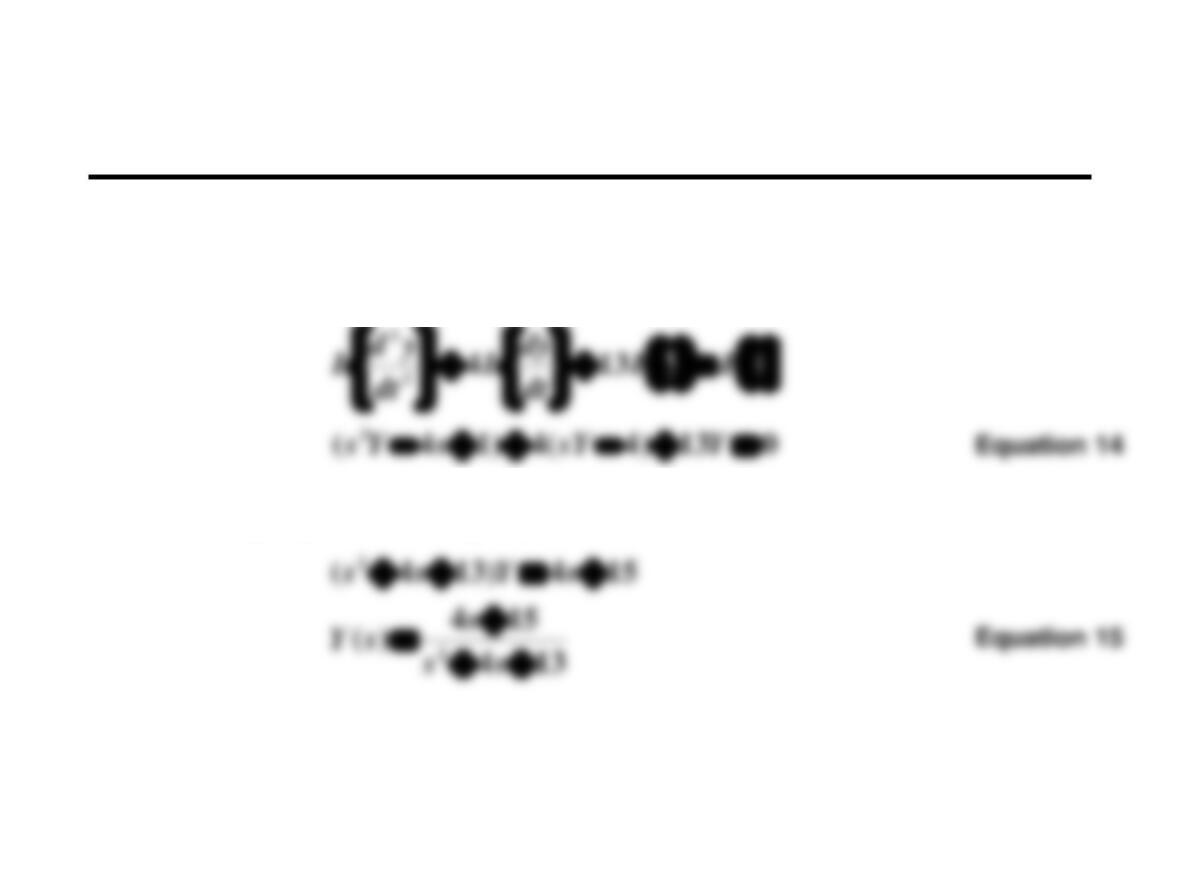
Substituting Equations 10 through 13 into Equation 9 we have
Rearranging and solving Equation 14:
Equation 15 is the solution in the Laplace Transform domain.
To find the function of time corresponding to it, we must first
rewrite the denominator.
Laplace Transform Example #2 (4)
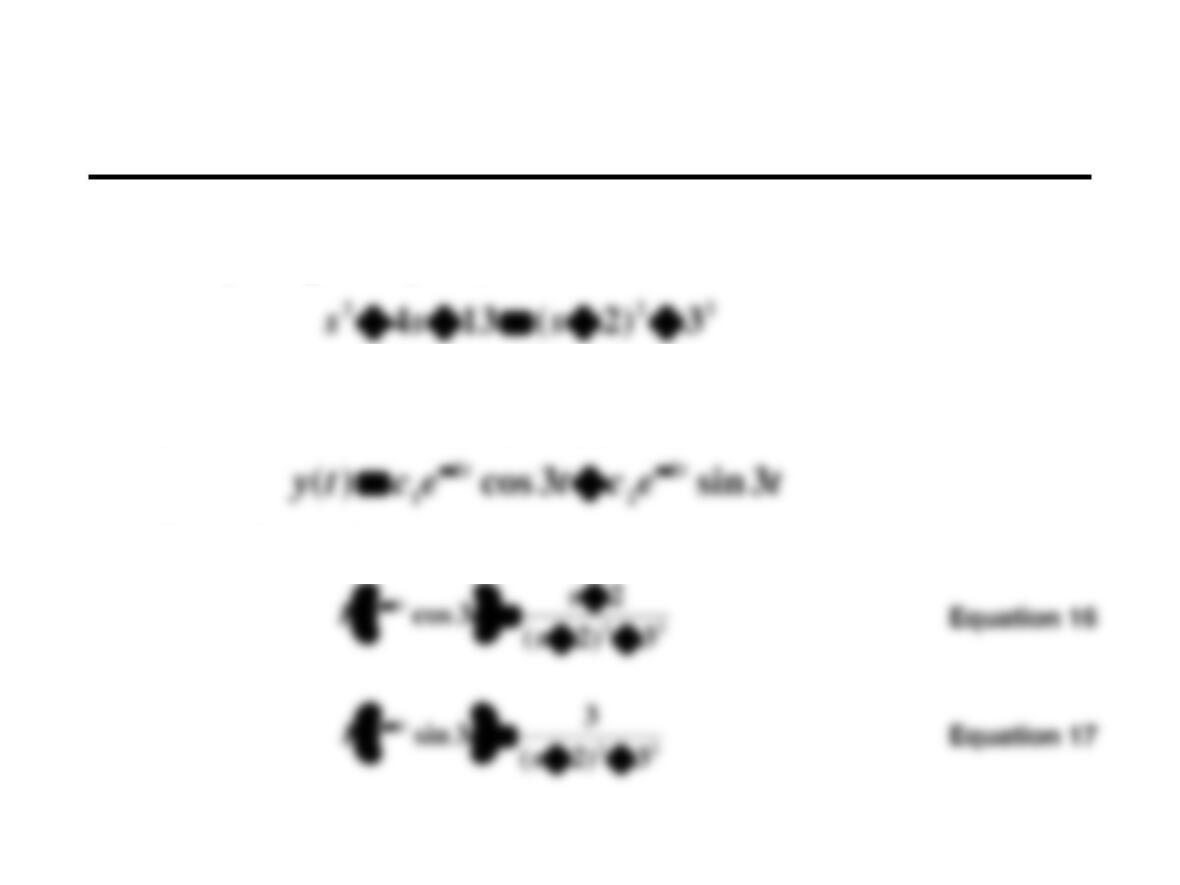
Completing the square, we see that
From our short table of Laplace Transforms we see that the
solution in the time domain must be of the form
From that table
Laplace Transform Example #2 (5)
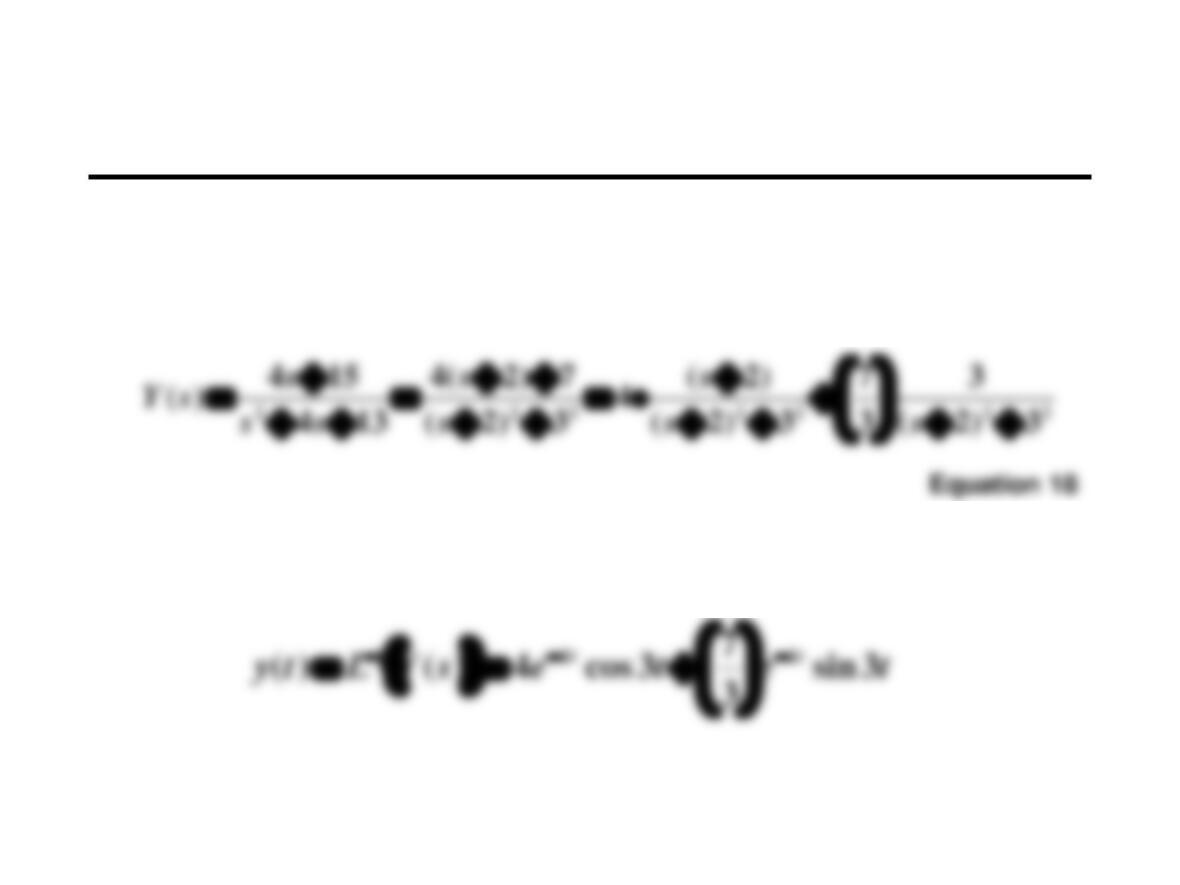
We must manipulate Equation 15 into a combination of terms
matching Equations 16 and 17:
Hence the inverse Laplace transform of , and the solution
to Equation 8, is
)(sY
Laplace Transform Example #3
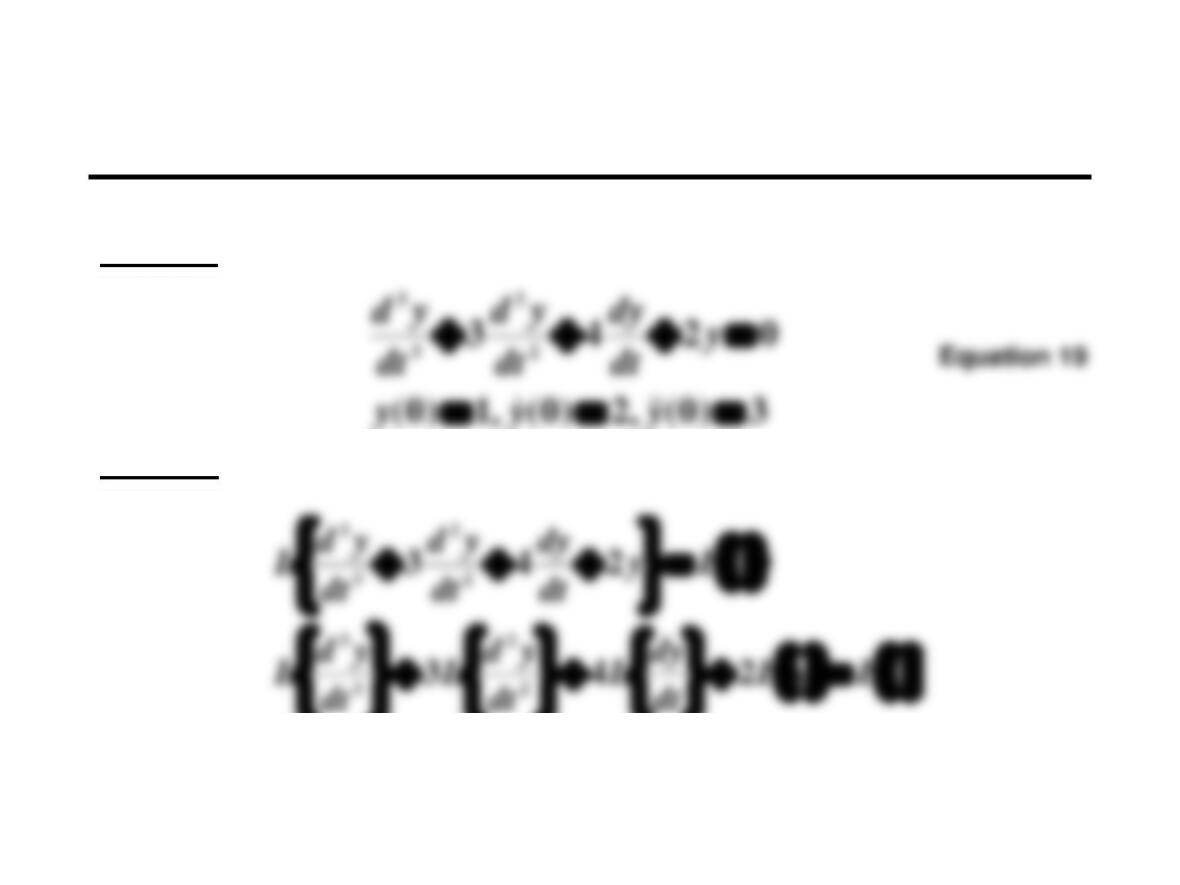
Problem: Solve the ODE:
Solution:
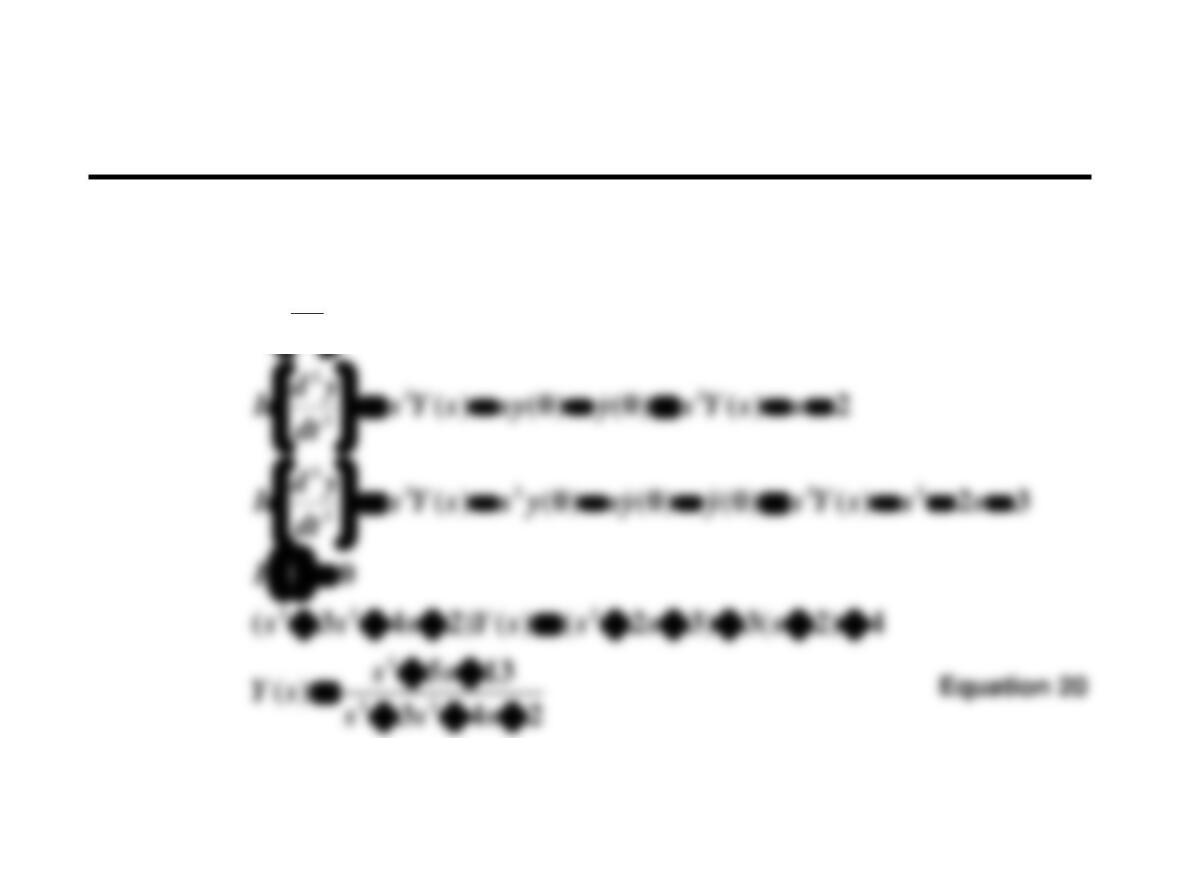
Laplace Transform Example #3 (2)
1)()0()(
)(
−=−=
=
ssYyssY
dt
dy
L
sYyL
Equation 20 is the solution in the Laplace Transform domain to
Equation 19. What is the corresponding time-domain solution?
Laplace Transform Example #3 (3)
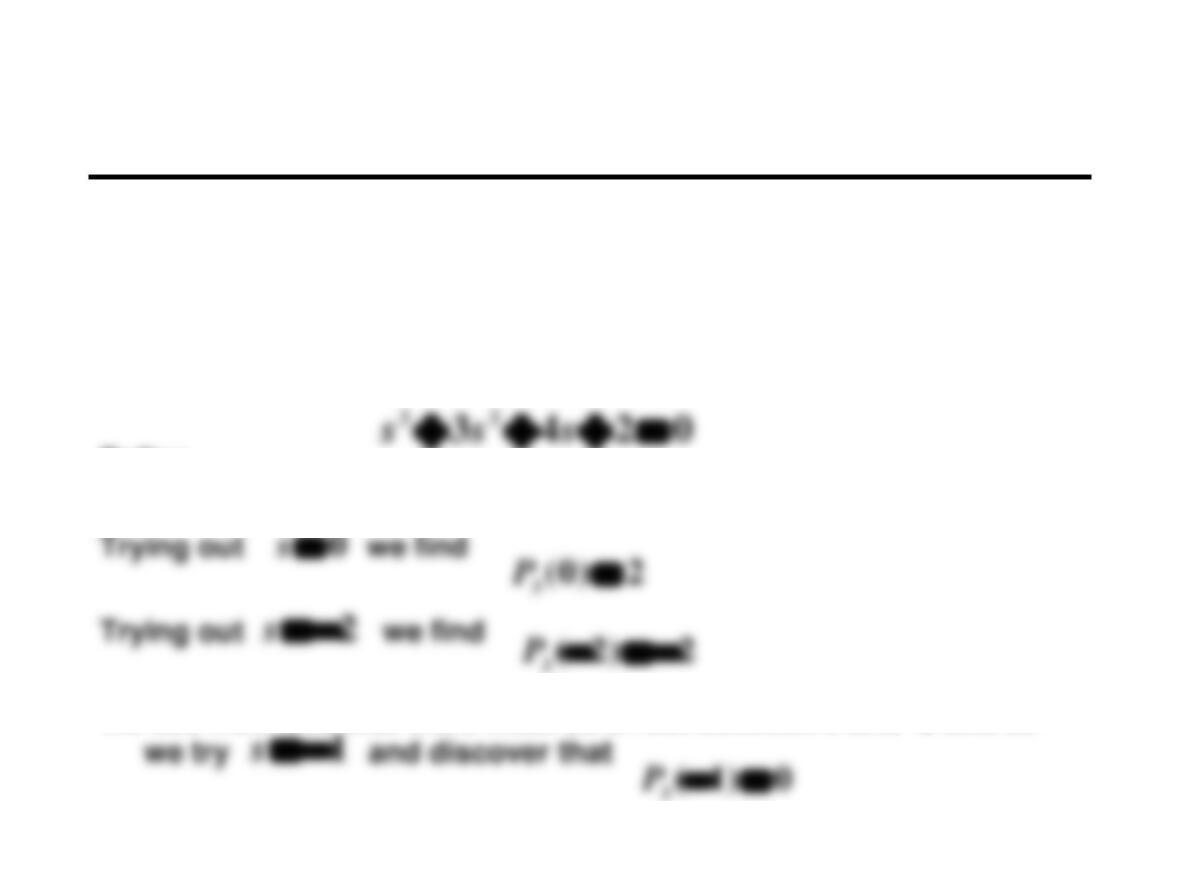
We have to factor
We know there must be at least one real root. (How do we know
this?) We look for it by trying numbers out. That is, we search for
a real number that satisfies
Define
We see from this that there must be a root between 0 and -2 and so
243 23 +++ sss
243)( 23
3+++= ssssP
Laplace Transform Example #3 (4)
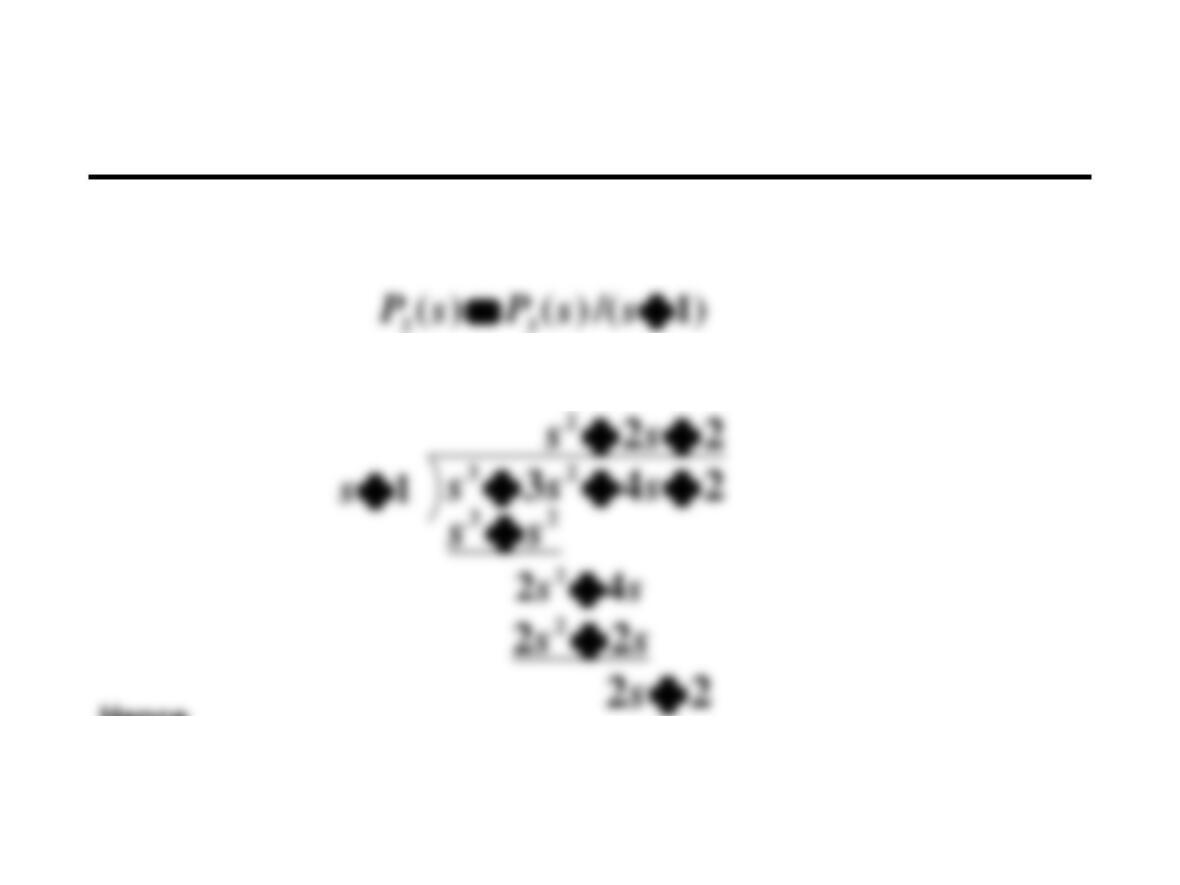
We then divide out the factor we have found:
We do this by long division:
Hence
22)( 2
2++= sssP
Laplace Transform Example #3 (5)
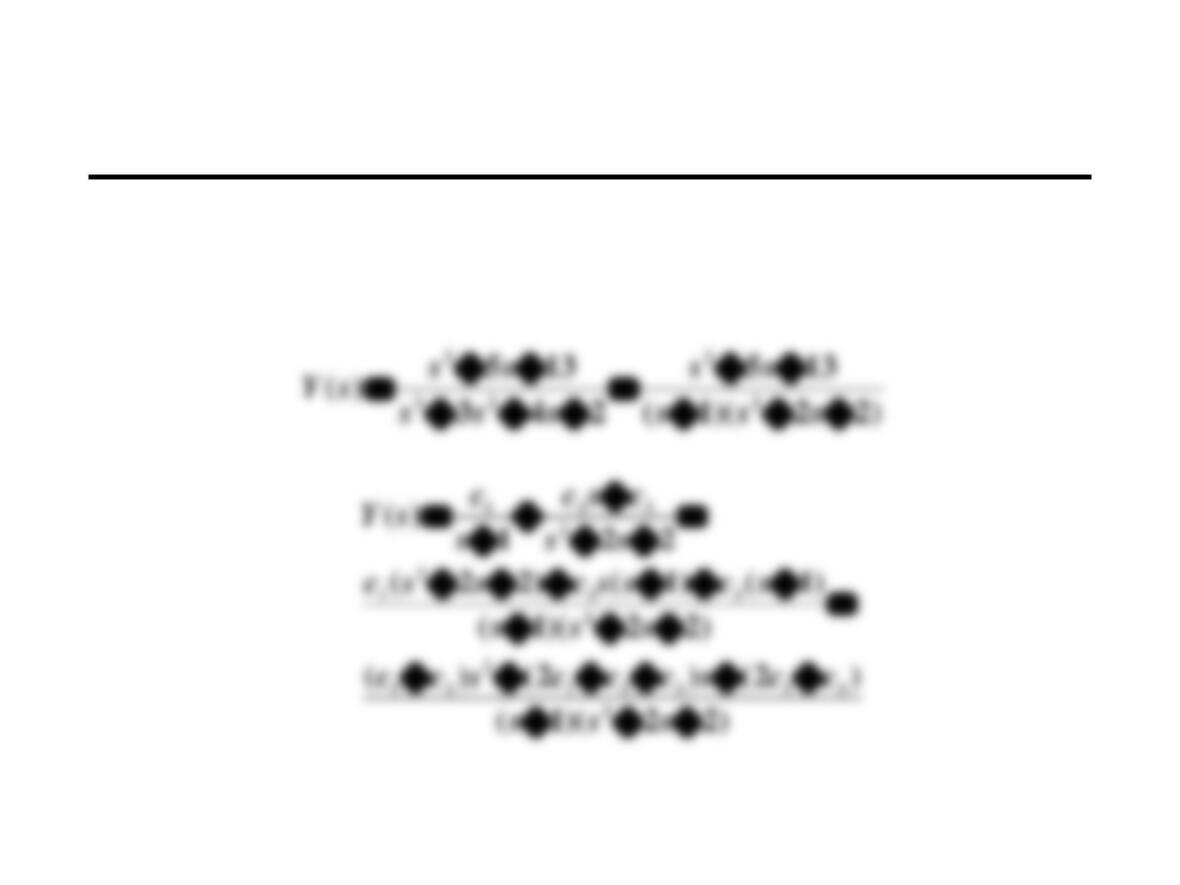
Returning to Equation 20 we have
Laplace Transform Example #3 (6)
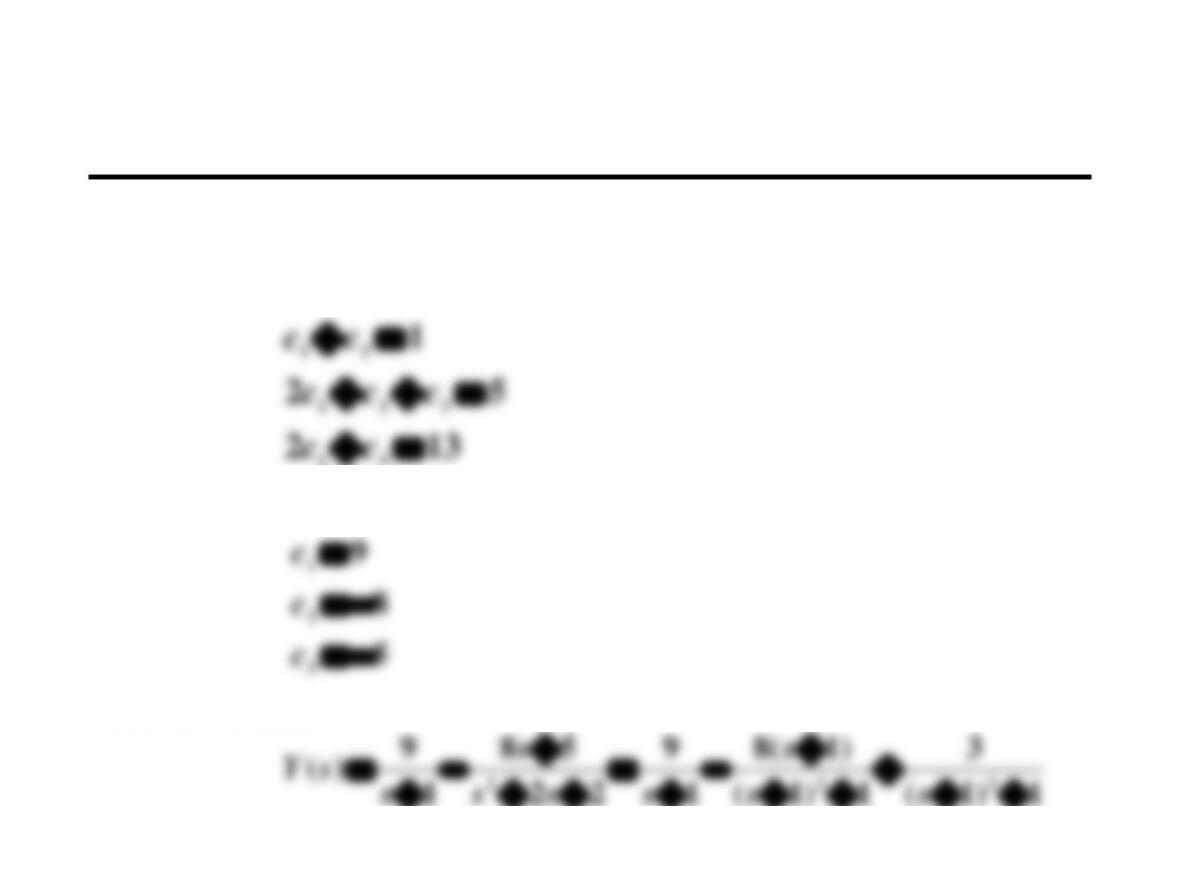
Matching coefficients of in the numerator of we find we
must have
The solutions are
and so we have
s
)(sY
31
Laplace Transform Example #3 (7)
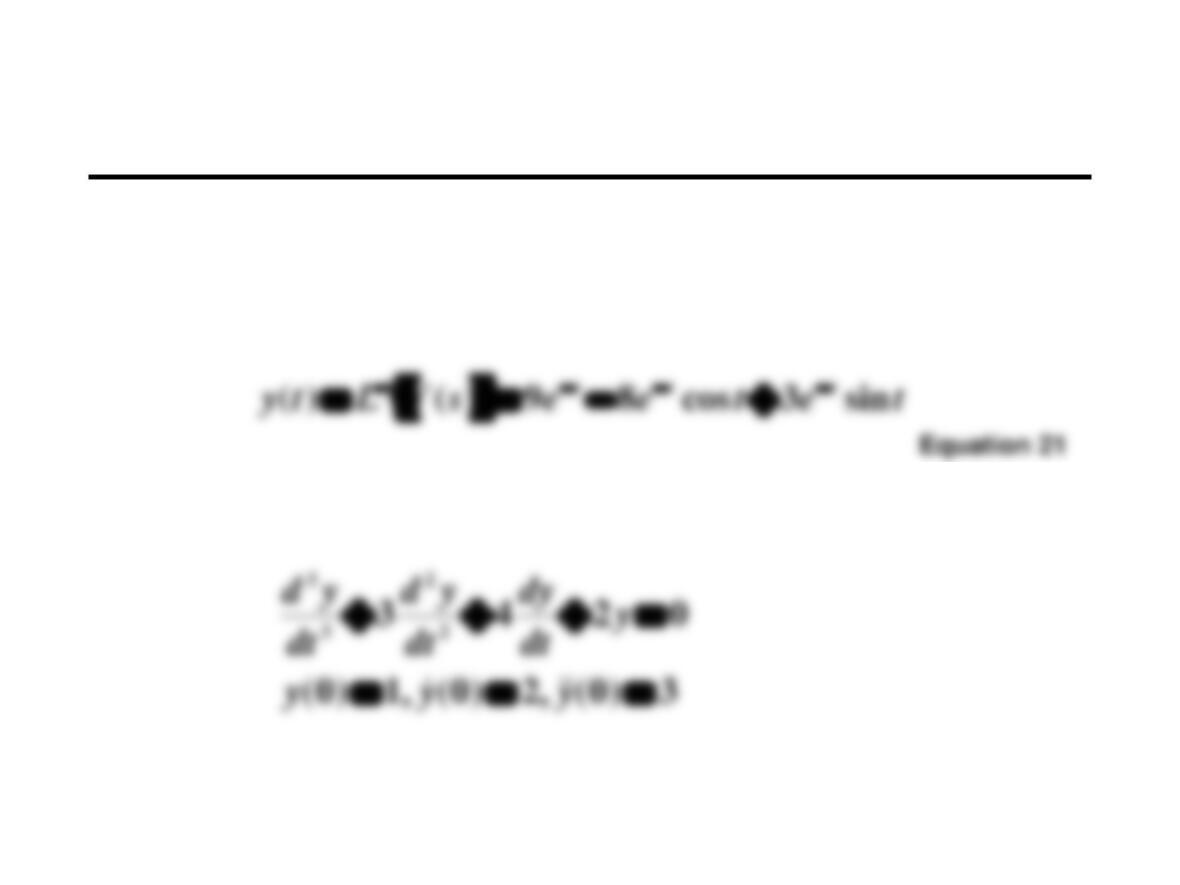
Referring to our short table of Laplace transforms we see that
In summary, Equation 21 is the time-domain solution to
Reading Assignment
Read:
In the text, Chapter 7, from the beginning of the Chapter through
Section 7.5