
Differential Equations
for Engineers:
the Essentials
Class 9 notes
Agenda: Class 9
Review of Test #1
Review Homework Assignment 7
Lecture: Second order linear time-invariant homogeneous ODEs:
In-class problems
Homework Assignment 9

Second Order Linear Time-Invariant
Homogeneous ODEs
Example: LRC Circuit – Part 2
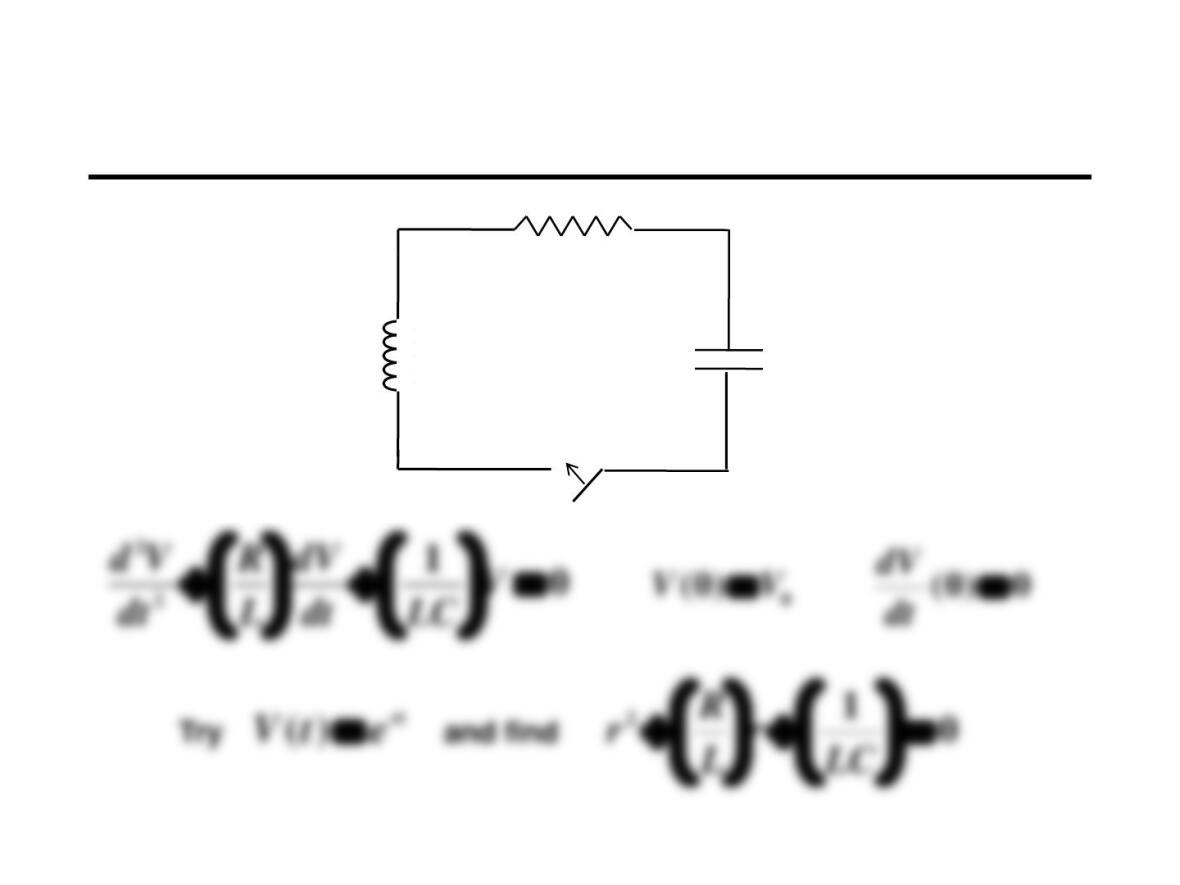
LRC Circuit Review
Inductor
L henrys
Resistor
R ohms
Capacitor
C farads
Closes at t= 0
= charge on
capacitor
V
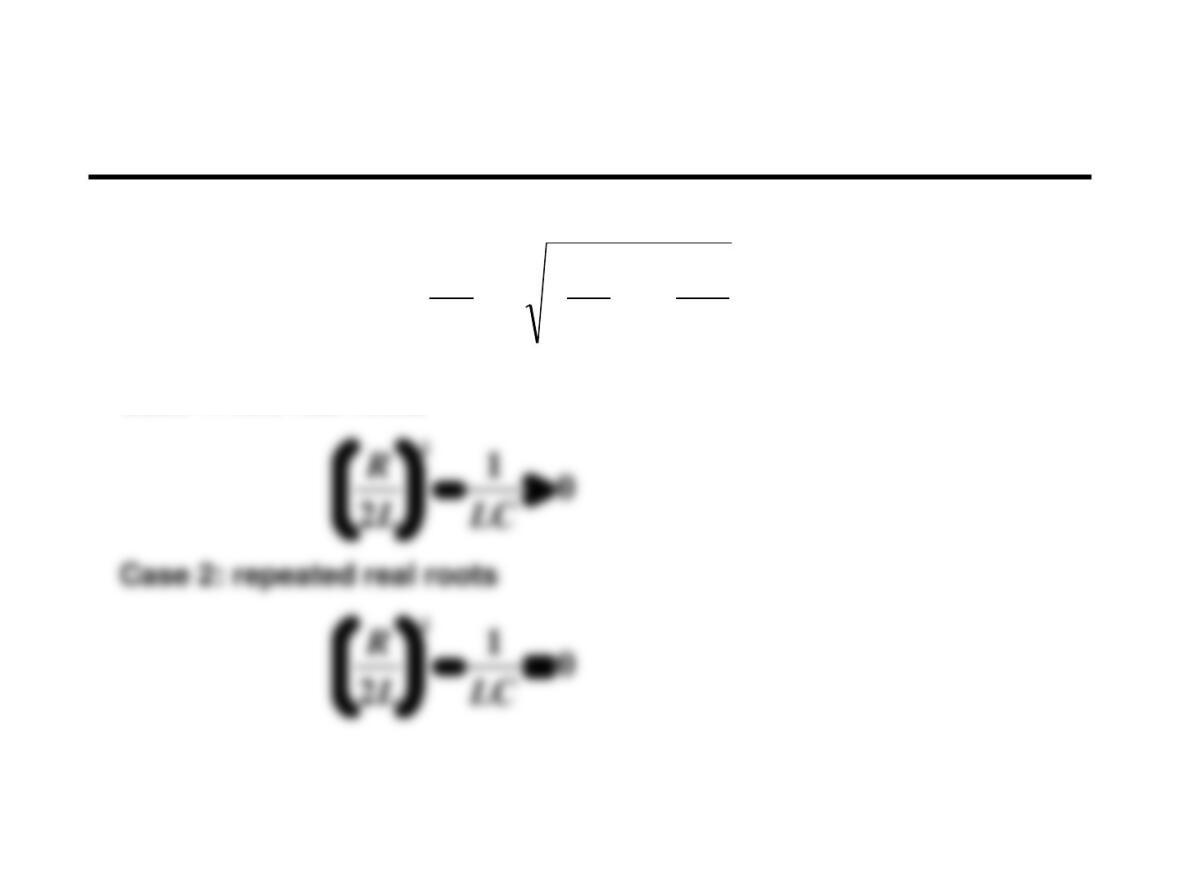
LRC Circuit: Roots of
Characteristic Equation
LCL
R
L
R
r1
22
2
−
−=
Case 1: two real roots
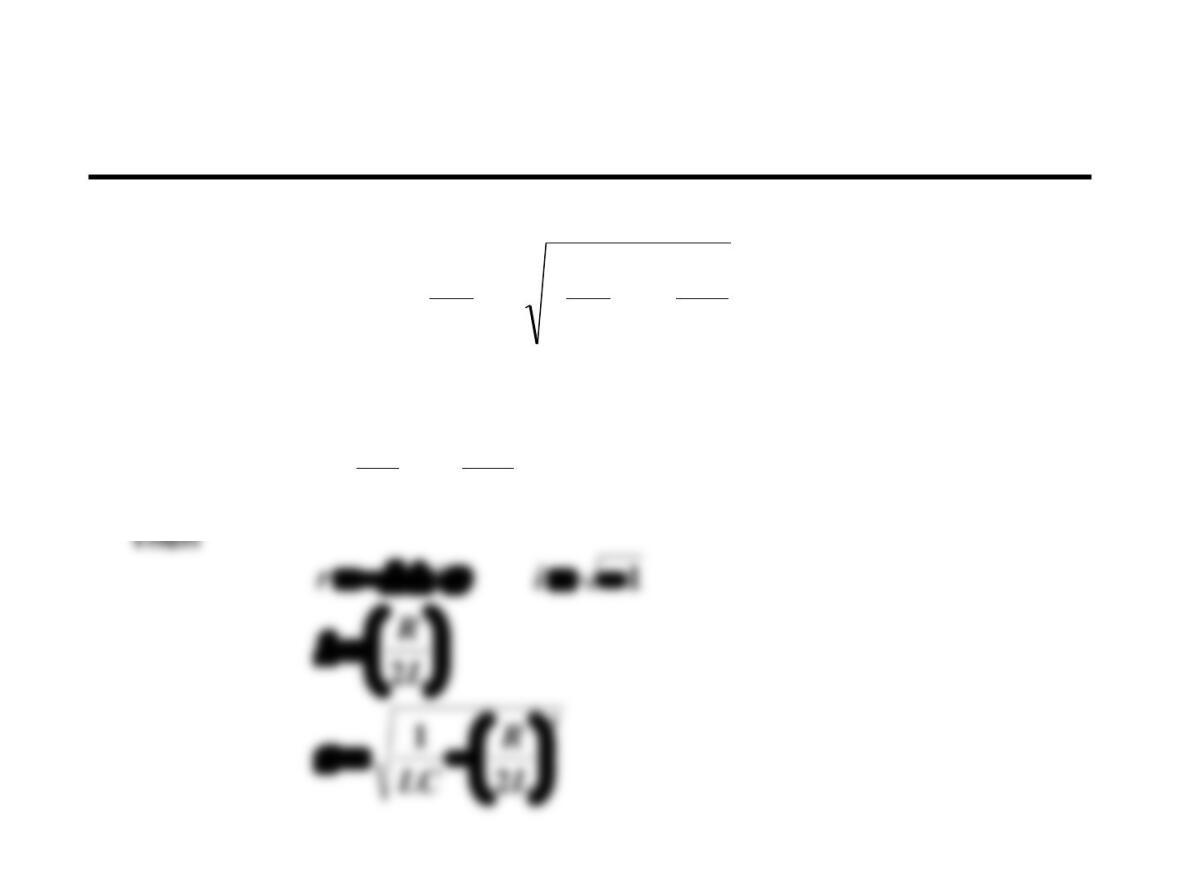
LRC Circuit: Characteristic Roots
LCL
R
L
R
r1
22
2
−
−=
Case 3: complex roots (having an imaginary part):
0
1
2
2
−
LCL
R
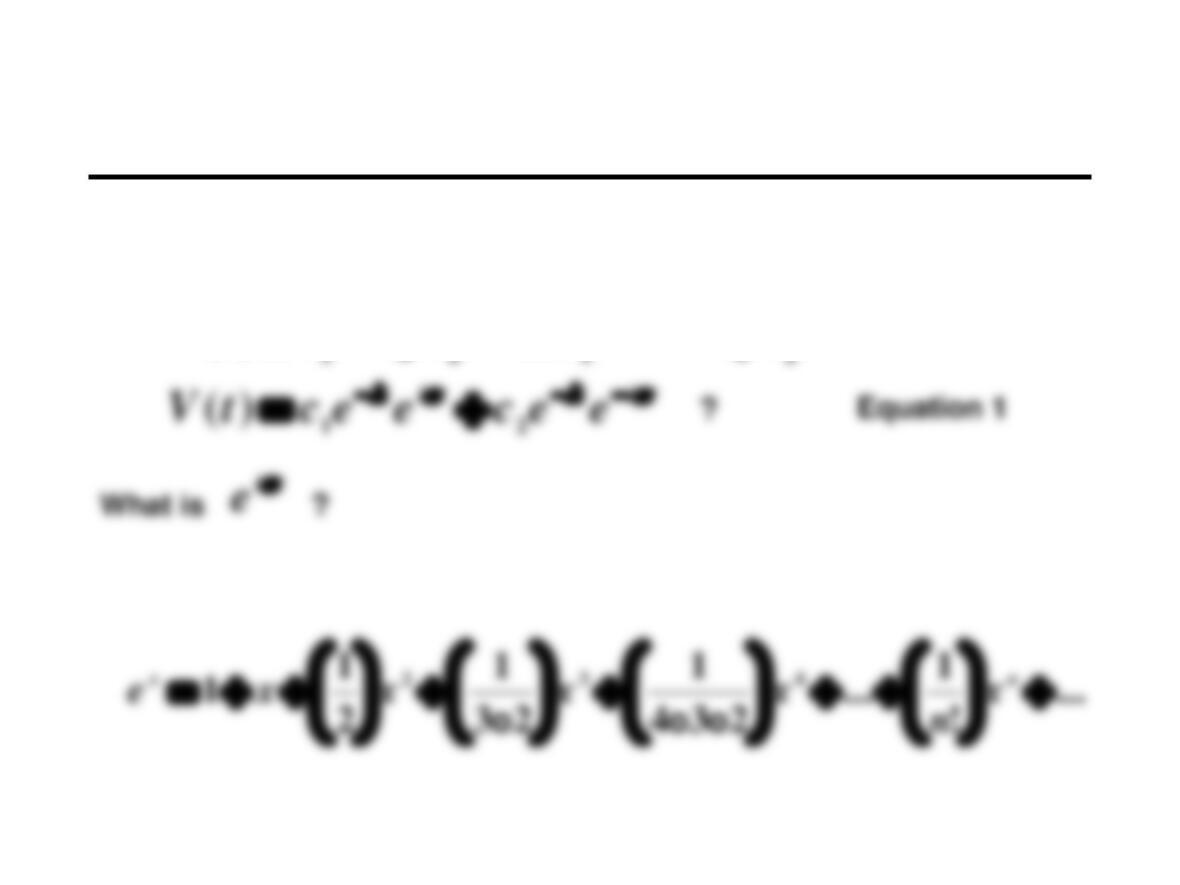
LRC Circuit: Complex Roots
What does it mean?
Consider the series expansion:
titi
trtr
ecececectV
−−+−
+=+=
)(
)(
)( 21
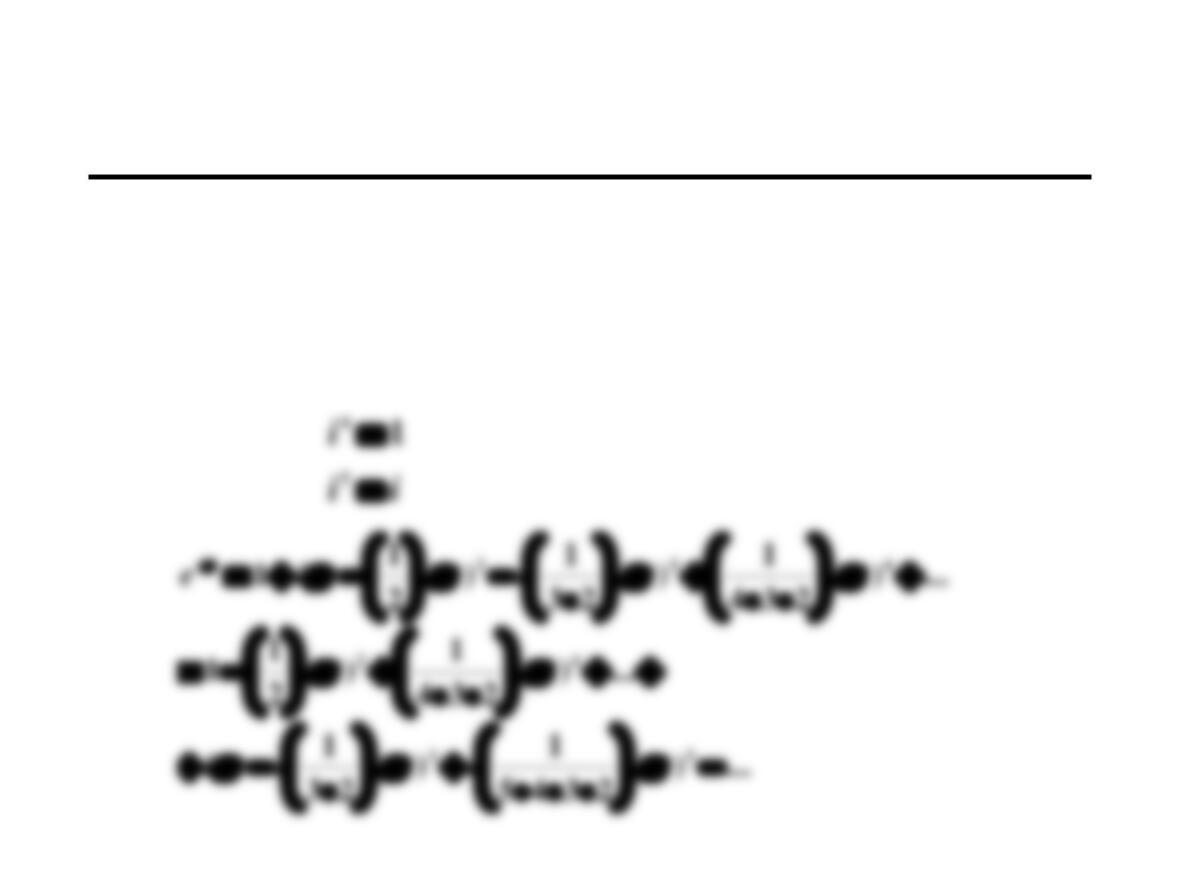
LRC Circuit: Complex Roots (2)
Try in the expansion, remembering that
tix
=
ii
i
−=
−=
3
2
1
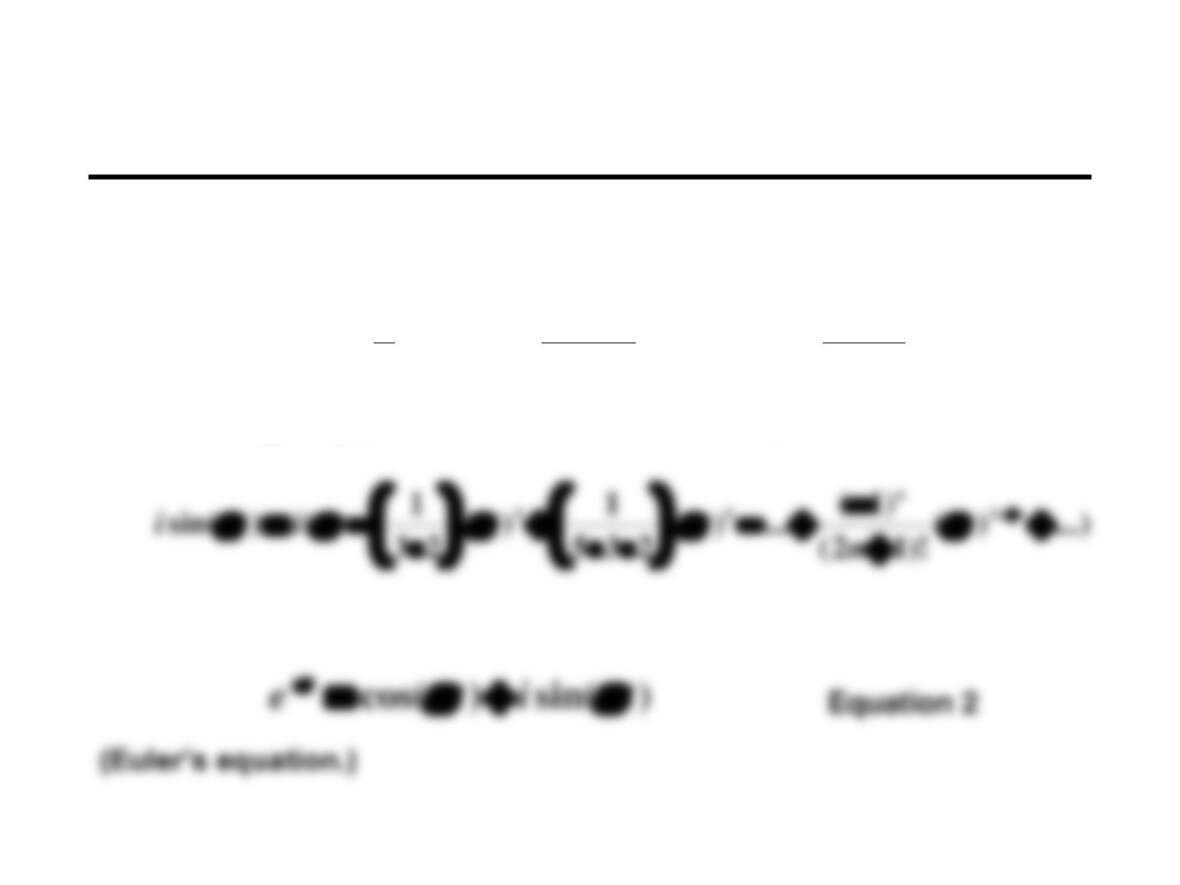
LRC Circuit: Complex Roots (3)
We recognize the real part of the series as the expansion for the cosine:
and the imaginary part as times the series expansion for the sine:
Hence we can write:
…)(
)!2(
)1(
…)(
234
1
)(
2
1
1)cos( 242 +
−
++
+
−= n
n
t
n
ttt
i
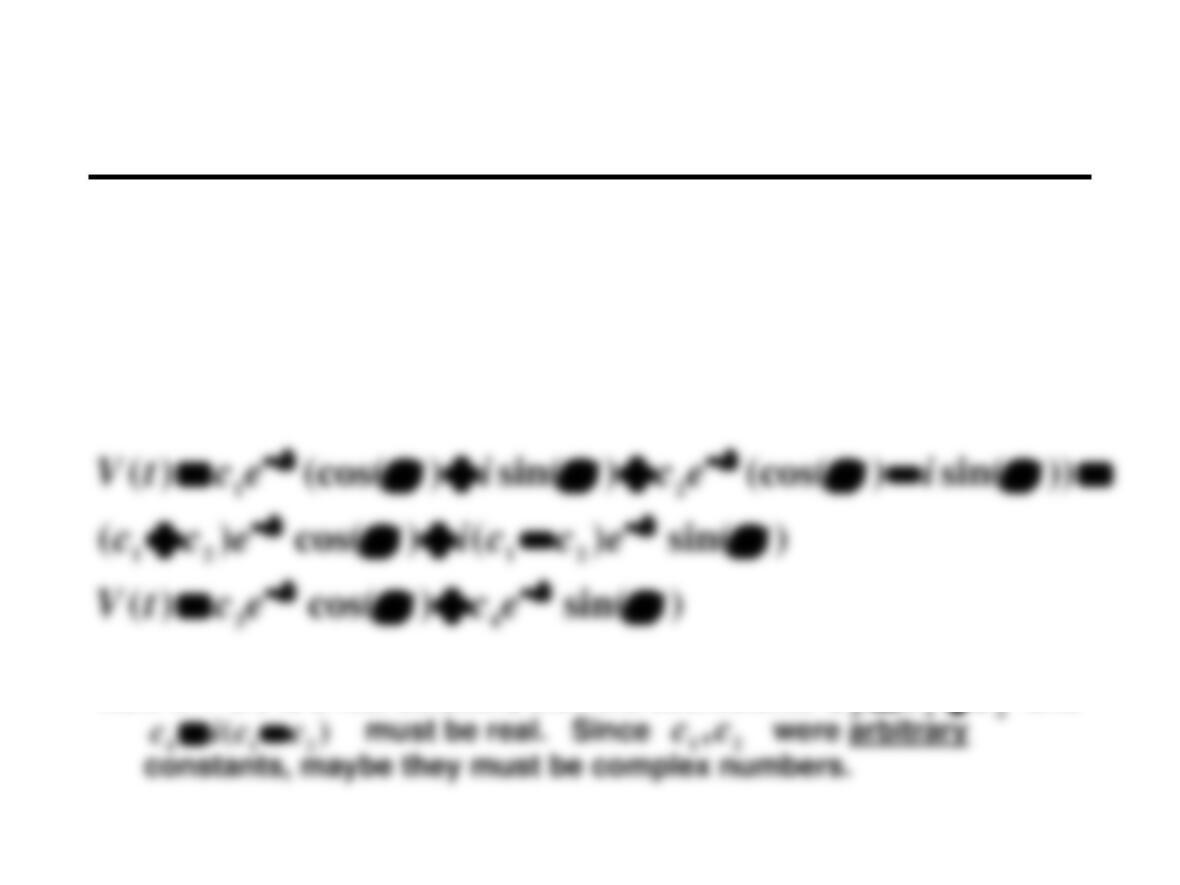
LRC Circuit: Complex Roots (4)
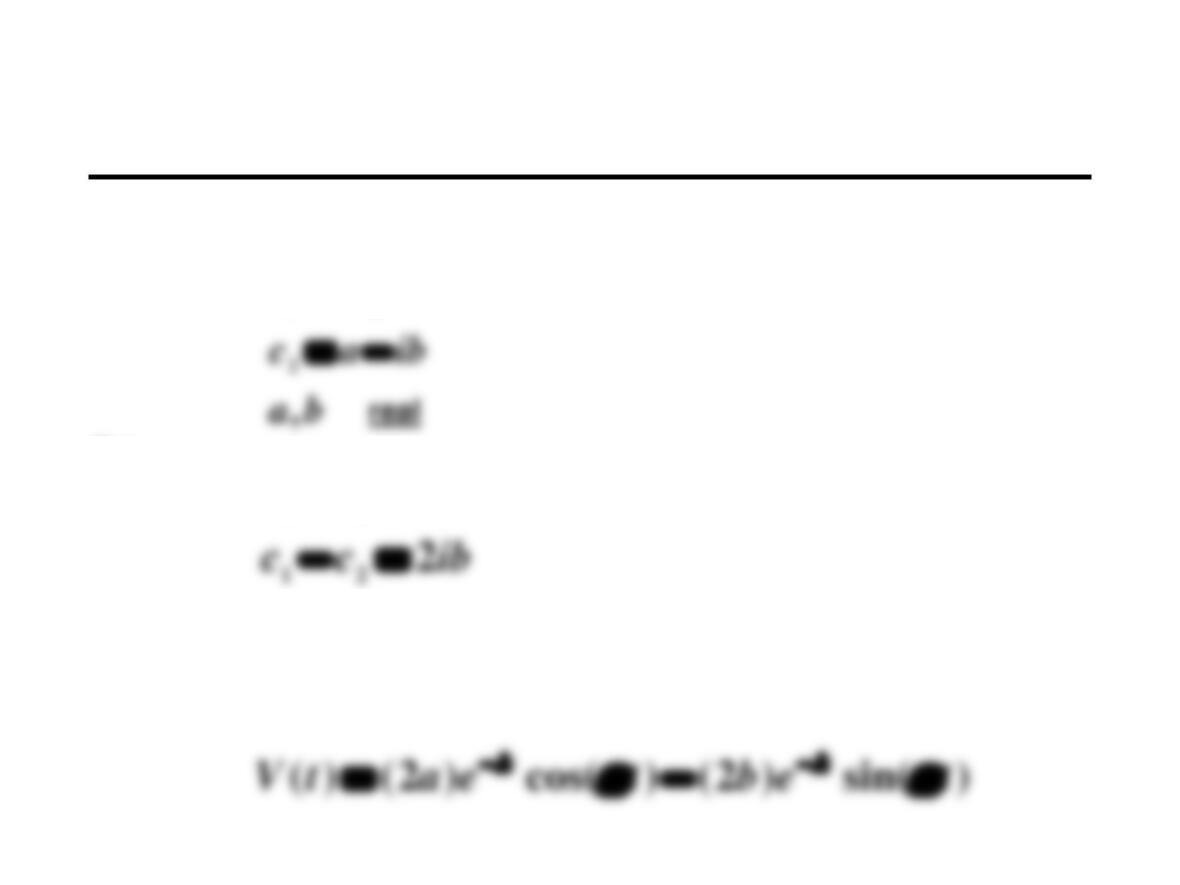
We have, from Equation 1,
and now, using Equation 2,
Now if is a real solution, then the coefficients and
tittit eeceectV
−−− += 21
)(
)(tV
LRC Circuit: Complex Roots (5)
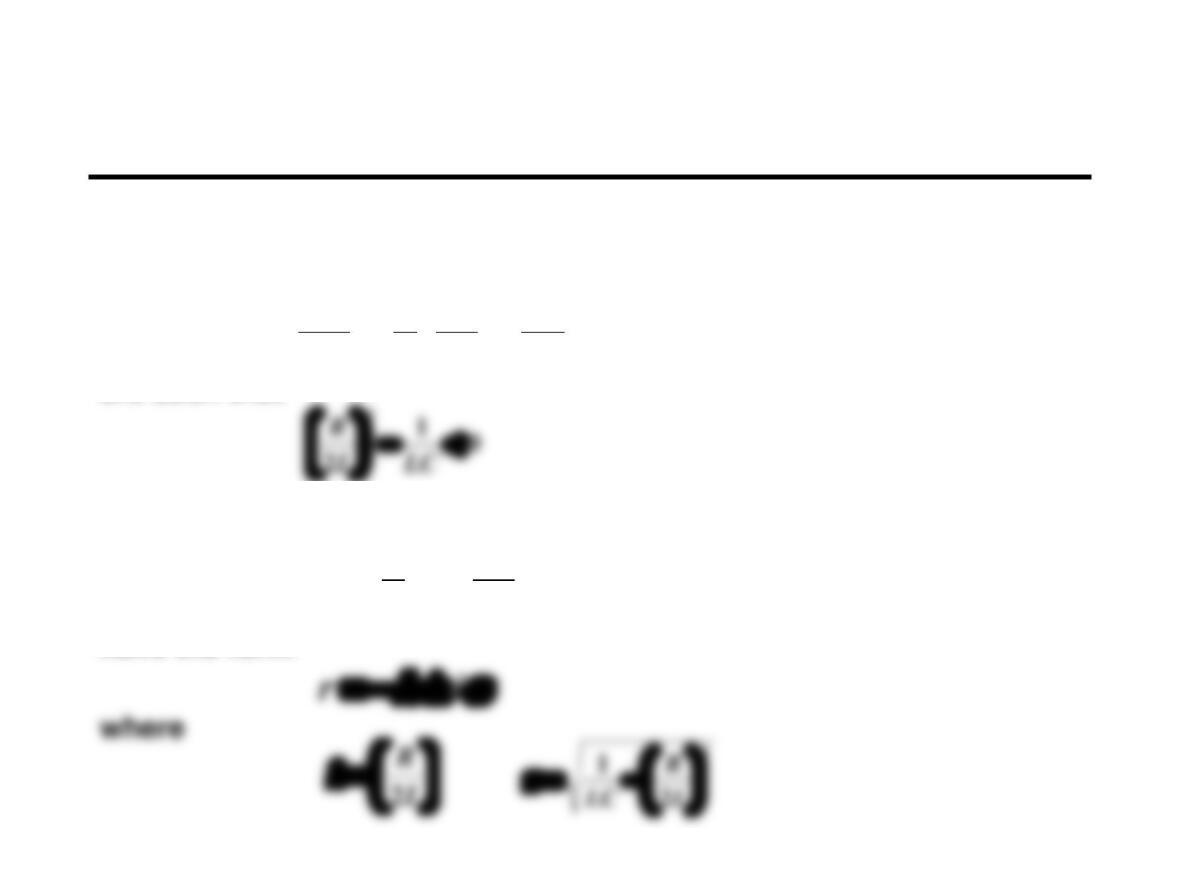
If we let
then
and then
is equivalent to
ibac
1
+=
acc
2
21
=+
tittit eibaeibatV
−−+− −++= )()()(
LRC Circuit: Complex Roots Summary
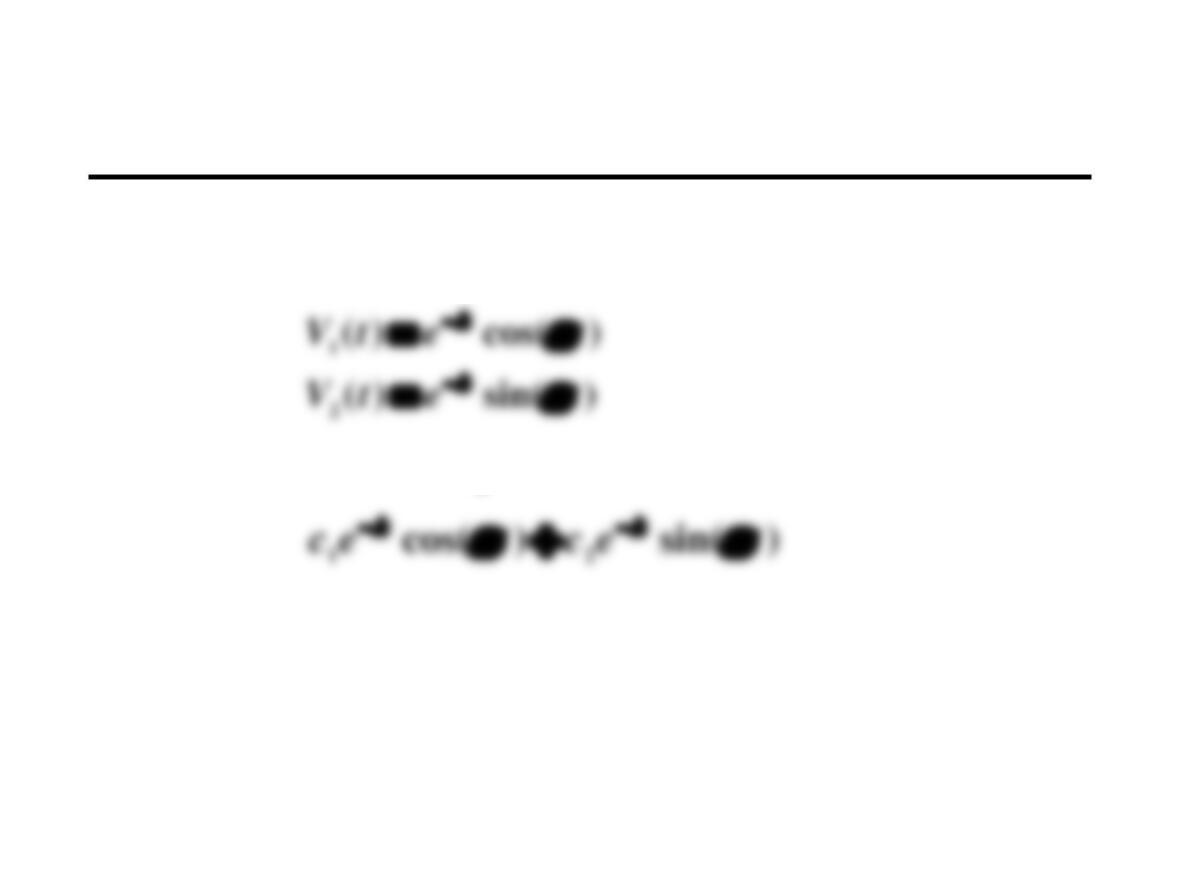
When the coefficients of the ODE
are such that
then the roots of the characteristic equation
have the form
0
1
2=
+
+LC
r
L
R
r
0
1
2
2
=
+
+V
LCdt
dV
L
R
dt
Vd
LRC Circuit: Complex Roots Summary(2)
The solutions of the ODE are then
and the coefficients of the general solution
determined by the initial conditions.