Chapter 6: Computerized Layout
Procedures
4
5
6
7
Grid Background
Manufacturing
Department Activities
01234567
6
7
Manufacturing
Activities on Grid
01234567
6
7
M
Network Representation
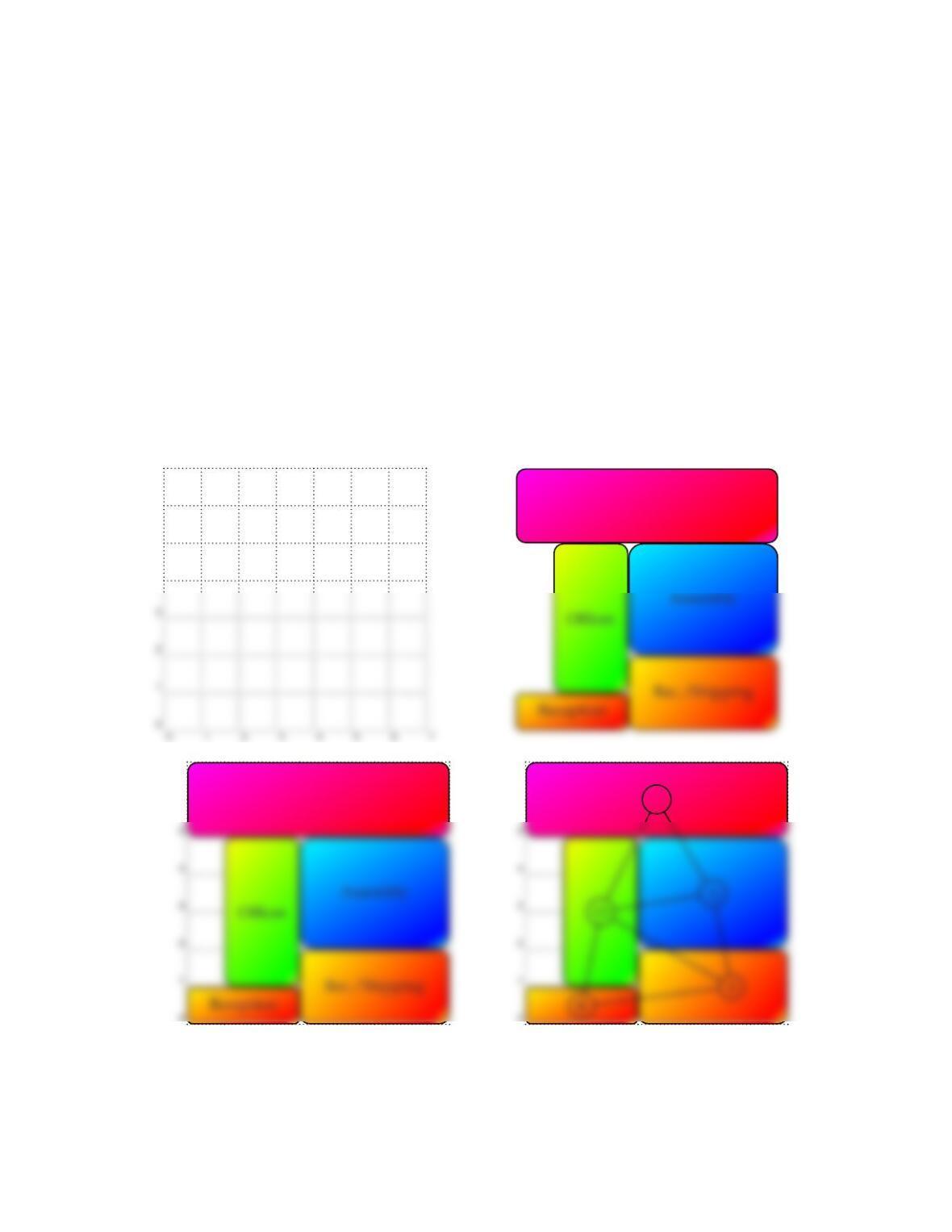
Figure 1 Evolution of Floor Plan and Network G(V, A)
1

2
CHAPTER 6: COMPUTERIZED LAYOUT PROCEDURES
9. Exercises
1. What are the primary benefits of using computerized layout procedures versus SLP procedures
done by hand (see Chapter 4)?
•Computerized procedures afford the user an ability to revise the layout more easily and include
additional information to re-run and revise the generated solution.
2. What are the primary differences between construction and improvement procedures in com-
puterized layout planning procedures?
•Construction procedures generate initial solutions for a layout which can be quite valuable if an ob-
3. What is the difference between an optimal layout algorithm and a heuristic layout algorithm?
When do you think it is wise to recommend a heuristic solution versus an optimal one?
4. If you were to layout a facility with N= 50 activities, what approach or approaches would you
recommend to generate the layout solution? What type of data gathering would you recom-
mend and do you think there might be a way to decompose the problem into smaller units or
sets of activities?
•For N= 50, a heuristic solution probably is the only possible course of action. However, there may
be ways to decompose the solution in a hierarchical fashion so that larger departments are optimally
9. EXERCISES
3
5. Let’s say that we have a 5cell layout on a serial line with the following grid cells. All five
activities can be allocated to any of the cells and the placement value of any activity to the cells
is a constant value of 1.00. Each activity has the size of 1cell. The matrix of flow values is given
below.
•a) Use the SLP approach from Chapter 4 and see what solution you can achieve by hand.
•b) Run GMAFLAD and print out the four best solution values.
•c) Compare and contrast your solution by hand with GMAFLAD. Did you achieve the
optimal solution by hand?
1
12 3 45
activities A1A2A3A4A5
A1−1.26 0.0 4.93 3.75
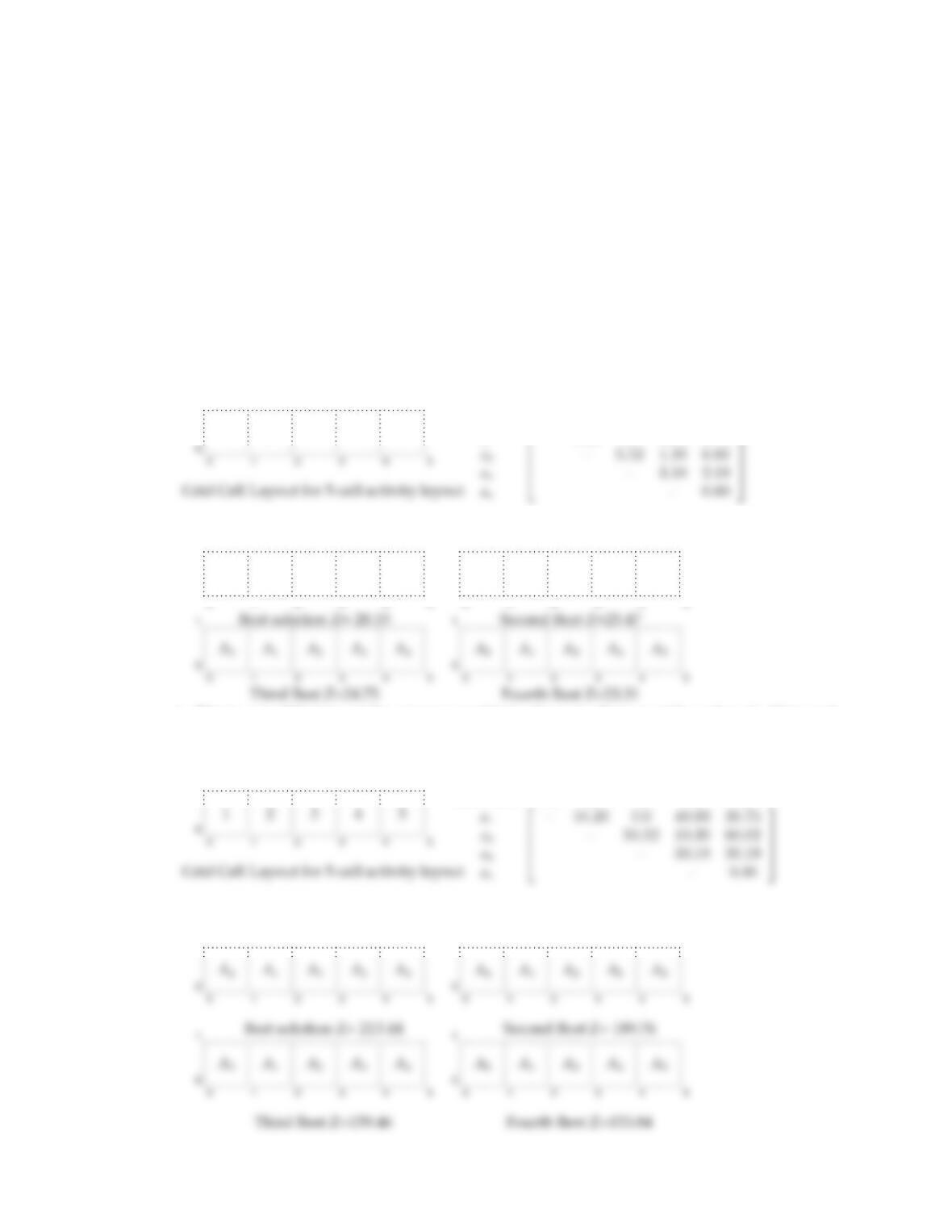
•The SLP solution is not shown. The GMAFLAD solution is shown below.
0 1 2 3 4 5
0
1
A4A1A5A2A3
0 1 2 3 4 5
0
1
A4A1A2A5A3
6. This is a modification of the previous problem where say that we add a value of +10 to each
flow value. We are interested in seeing the tradeoff of flow vs. placement values on the solution
generation process. What, if any, are the differences in the 4 solutions generated by GMAFLAD.
1
activities A1A2A3A4A5
•The GMAFLAD solution is shown below. The solutions are the same as the previous problem but
with different objective function values.
1
1
7. This is a 9-activity problem on a 3×3 grid. The placement value is a constant of 1 for all cells
and the flow matrix is as given below. Run GMAFLAD and print out the 4 best solution values.
3
7 8 9
activities A1A2A3A4A5A6A7A8A9
A1−0.0 1.61 0.0 5.00 2.30 3.73 0.0 0.0
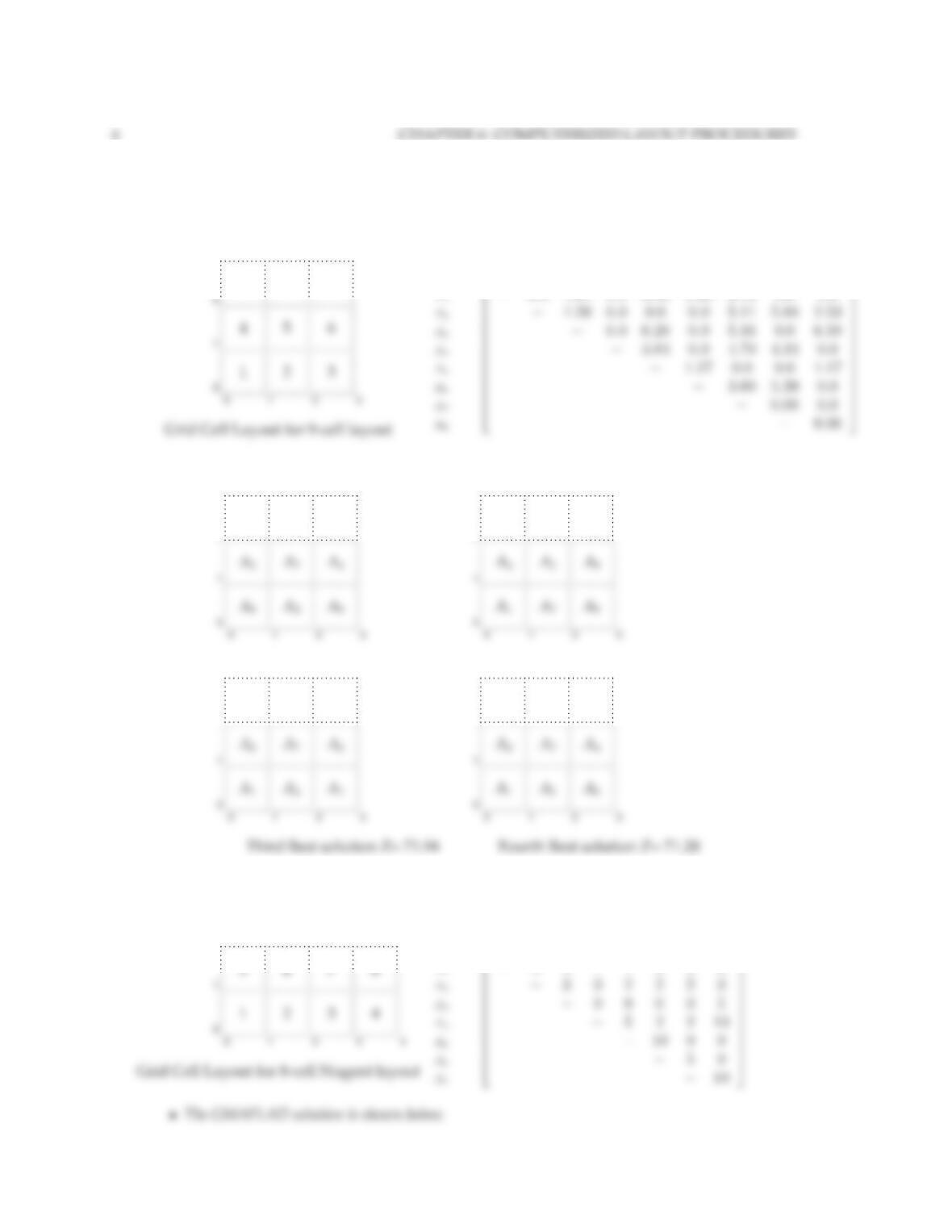
•The GMAFLAD solution is shown below.
2
3
A5A1A6
Best solution Z= 73.48
2
3
A9A5A4
Second Best solution Z= 72.30
2
3
A9A2A8
2
3
A9A2A8
8. This is the famous Nugent (n=8) problem. GMAFLAD will generate slightly different solutions
than the original Nugent solutions because it is maximizing rather than minimizing.
2
activities A1A2A3A4A5A6A7A8
A1−5 2 4 1 0 0 6
9. EXERCISES
5
1
2
A2A1A4A5
1
2
A2A1A4A8
9. Given the previous Nugent (n=8) problem, use the STEP algorithm to solve for the solution.
STEP should reproduce the same solution as the original Nugent solution since it is minimizing
the objective function.
0 1 2 3 1 2 3 4
0 5 2 4 1 0 0 6
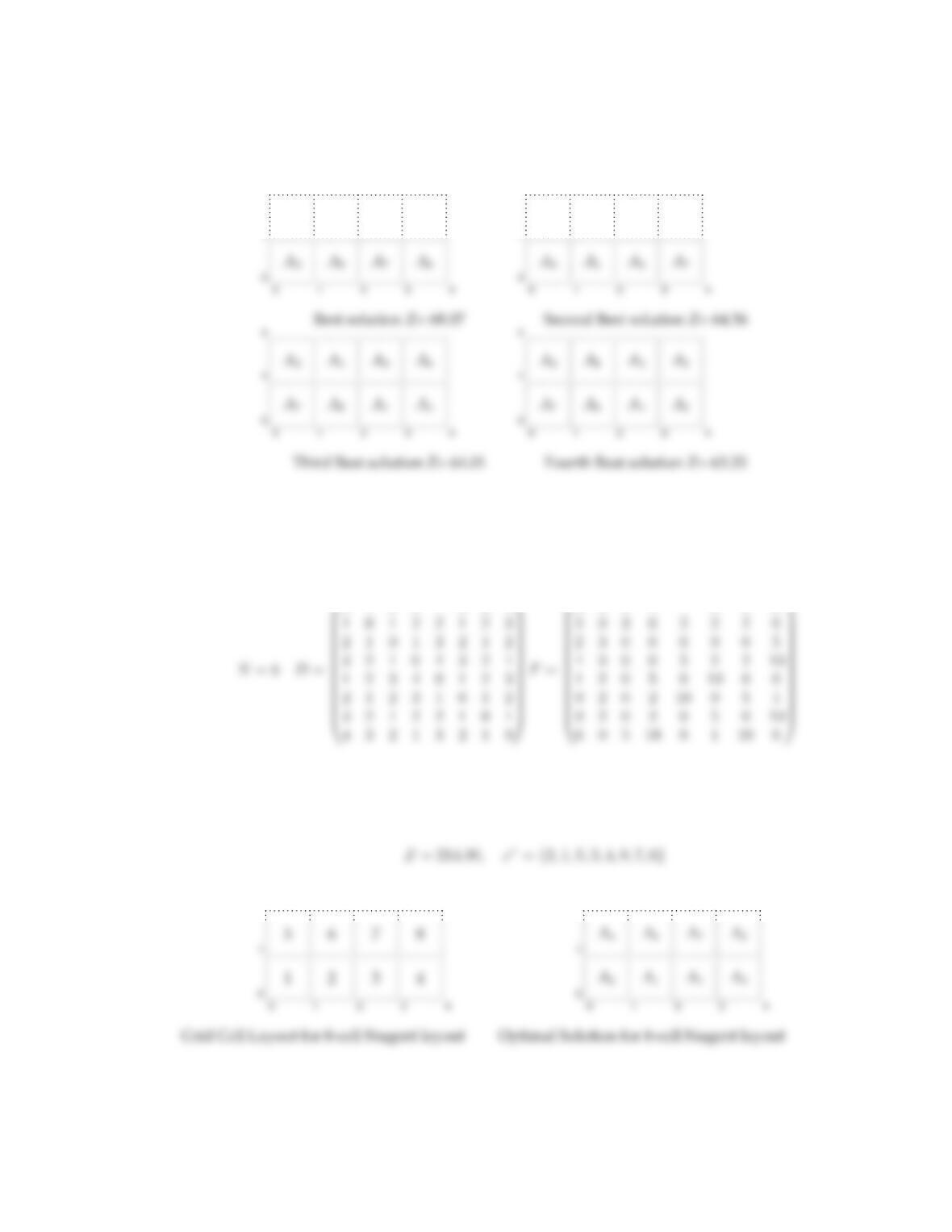
•The STEP solution is shown below.
2
2
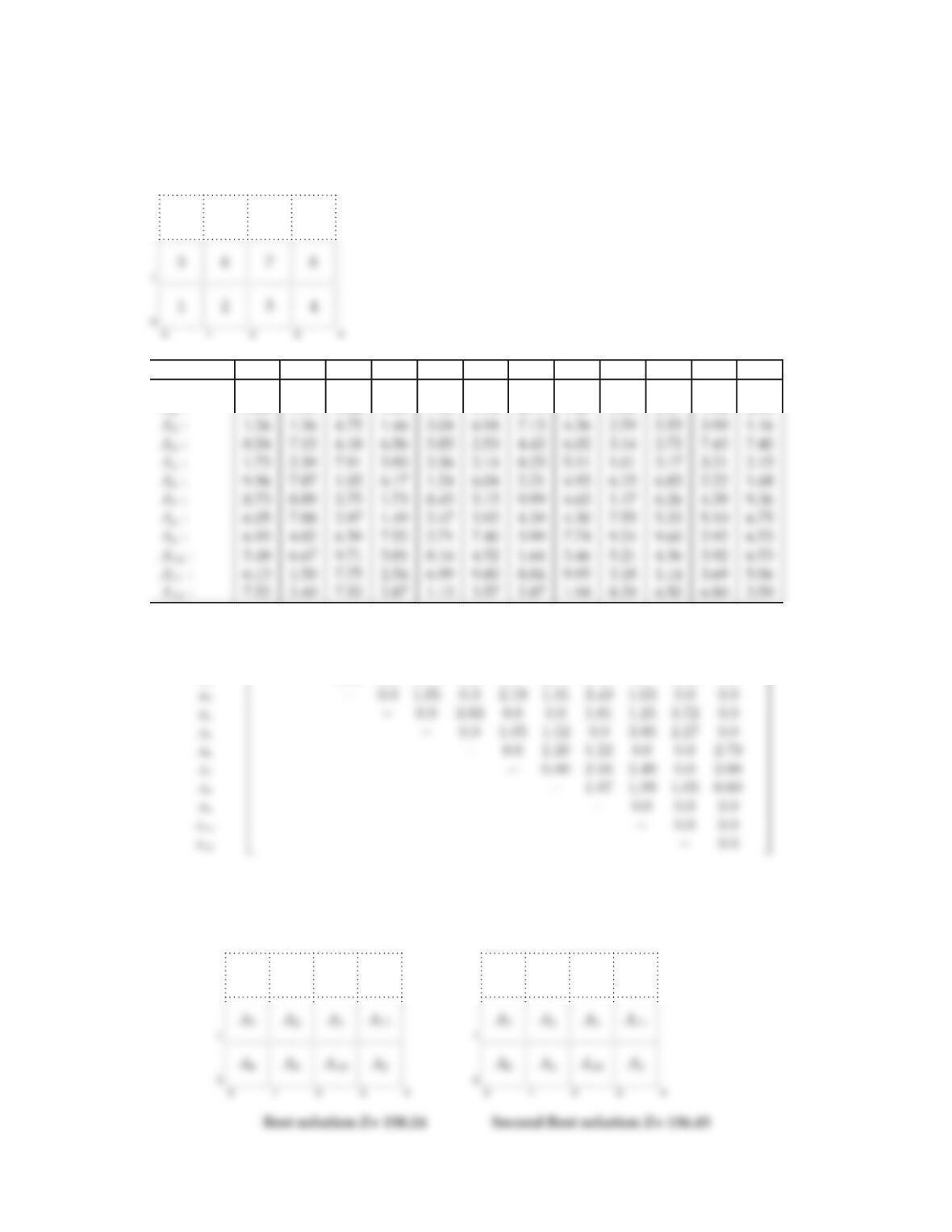
10. Given a 4x3grid where each of the activities can be in any of the 12 locations, however, the
place values for the different alternatives are given in the following matrix along with the flow
matrix below. Use GMAFLAD to find the best arrangements.
6
CHAPTER 6: COMPUTERIZED LAYOUT PROCEDURES
2
3
9 10 11 12
Activities 1 2 3 4 5 6 7 8 9 10 11 12
A1:4.28 2.90 4.80 2.14 1.58 4.67 7.63 9.80 7.56 8.44 9.17 1.83
A2:6.64 3.36 2.44 9.68 7.52 5.54 4.76 5.48 6.86 2.67 1.84 4.06
activities A1A2A3A4A5A6A7A8A9A10 A11 A12
A1−2.63 0.0 0.0 3.04 0.0 0.0 3.65 1.60 1.10 2.95 0.0
A2−1.19 0.0 1.15 0.0 0.0 2.57 3.58 0.0 3.92 0.0
Flow Values Matrix for N=12
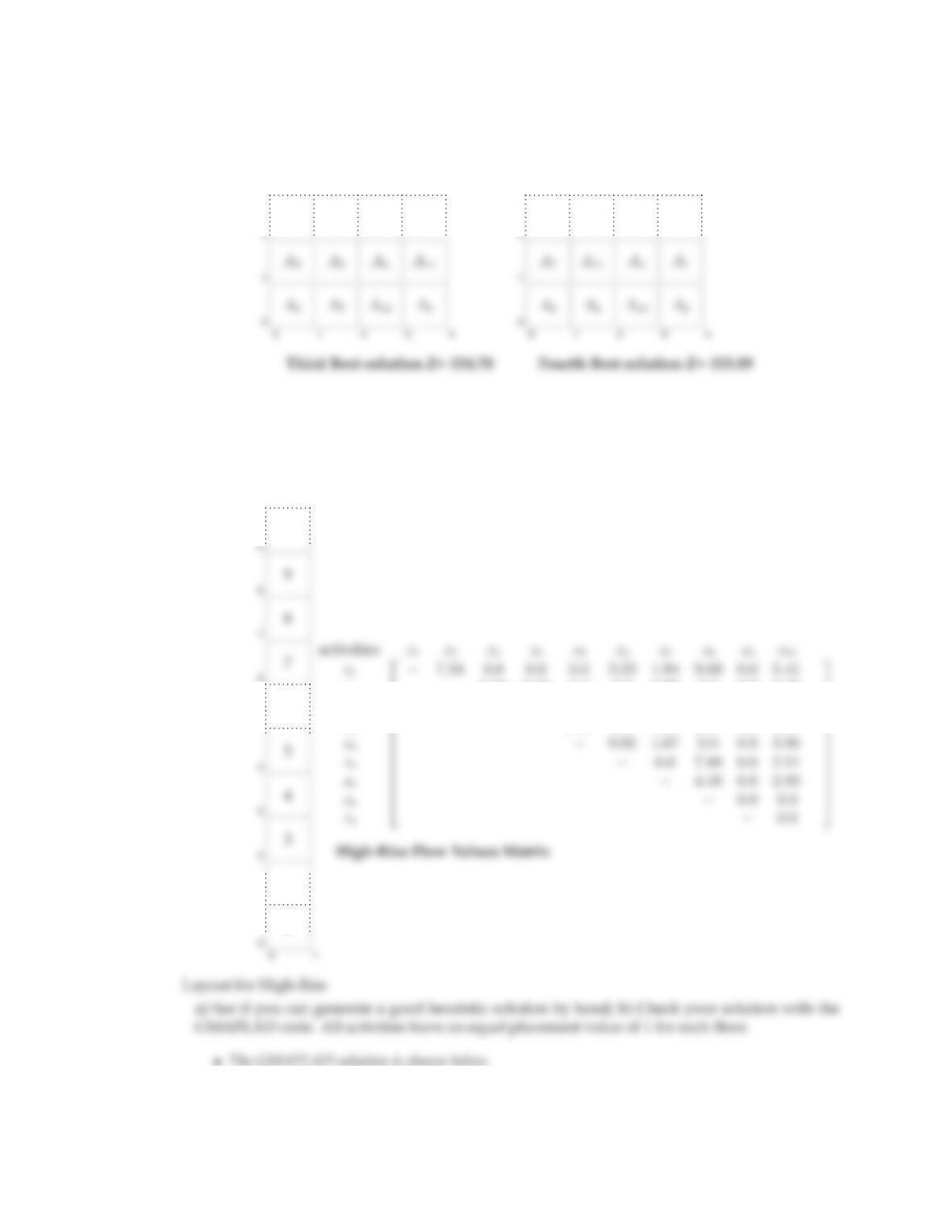
•The GMAFLAD solution is shown below.
2
3
A12 A9A1A4
2
3
A12 A9A1A8
9. EXERCISES
7
3
A12 A9A1A8
3
A12 A9A3A8
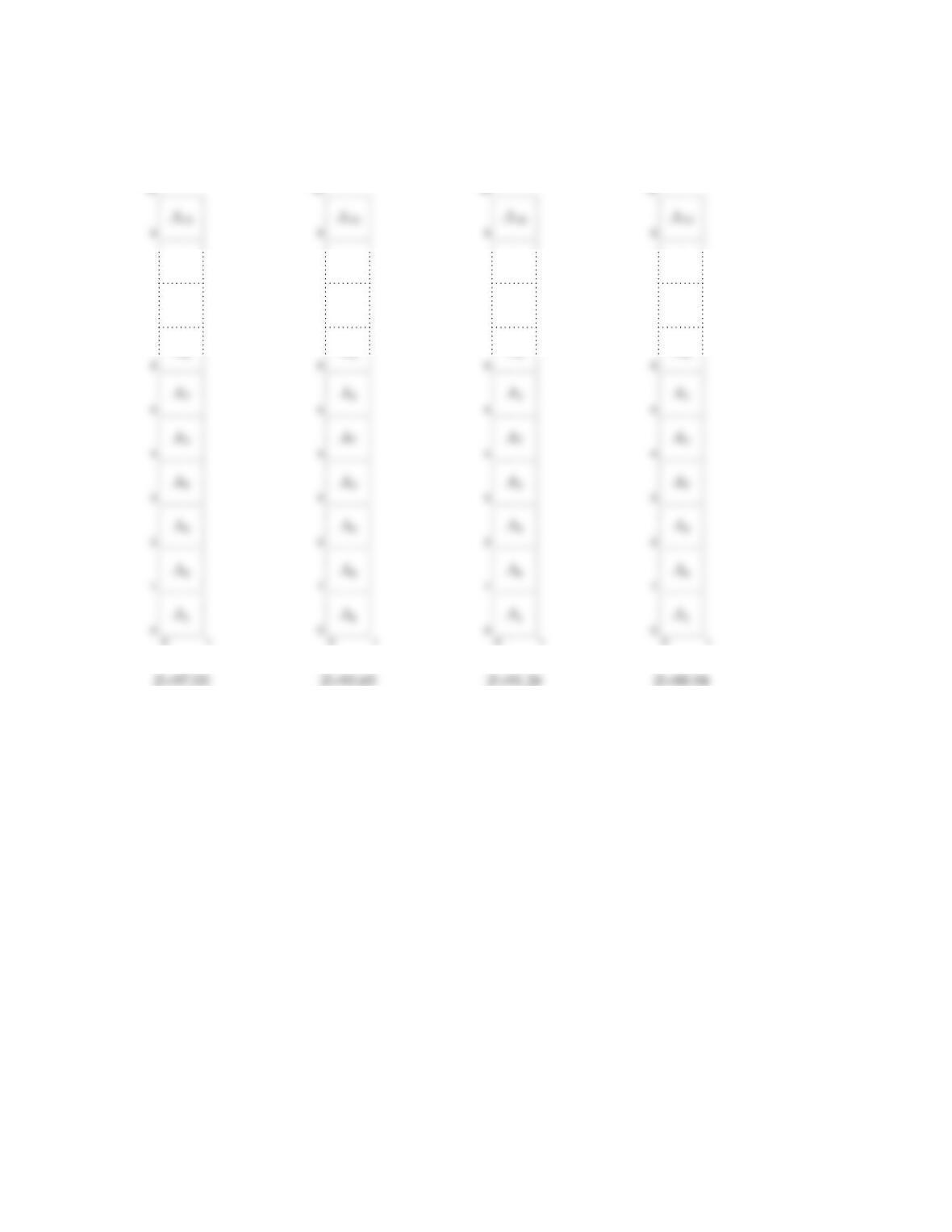
11. High-rise Building floor assignment problem. Given a 10-story high rise building where you
are interested in assigning retail shops activity A1fixed to the bottom floor and the mechanical
room space activity A10 fixed to the top floor and the other activities to the various floors
according to the flow matrix provided below. We assume that there is an elevator-stairwell
core in the center of the building to connect the traffic flow between floors.
1
5
10
1
2
6
10
A2−7.00 9.00 0.0 0.0 7.90 0.0 0.0 5.70
A3−0.0 9.32 7.20 9.90 9.03 0.0 0.0
A4−7.81 0.0 0.0 3.01 0.0 3.61
8
CHAPTER 6: COMPUTERIZED LAYOUT PROCEDURES
7
8
A2
A4
A9
7
8
A4
A5
A9
7
8
A4
A5
A9
7
8
A4
A2
A9