
Differential Equations
for Engineers:
the Essentials
Class 5 notes
Agenda: Class 5
Review homework assignment 3
Lecture: First order ODEs:
Successive approximations (general case)
Homework Assignment 5

First Order Differential Equations
Successive approximations
in the general case
Successive Approximations
In general, successive approximations is a method of solving a hard
ODE approximately by solving an iterative sequence of simpler
problems.
Successive Approximations
in the General Case
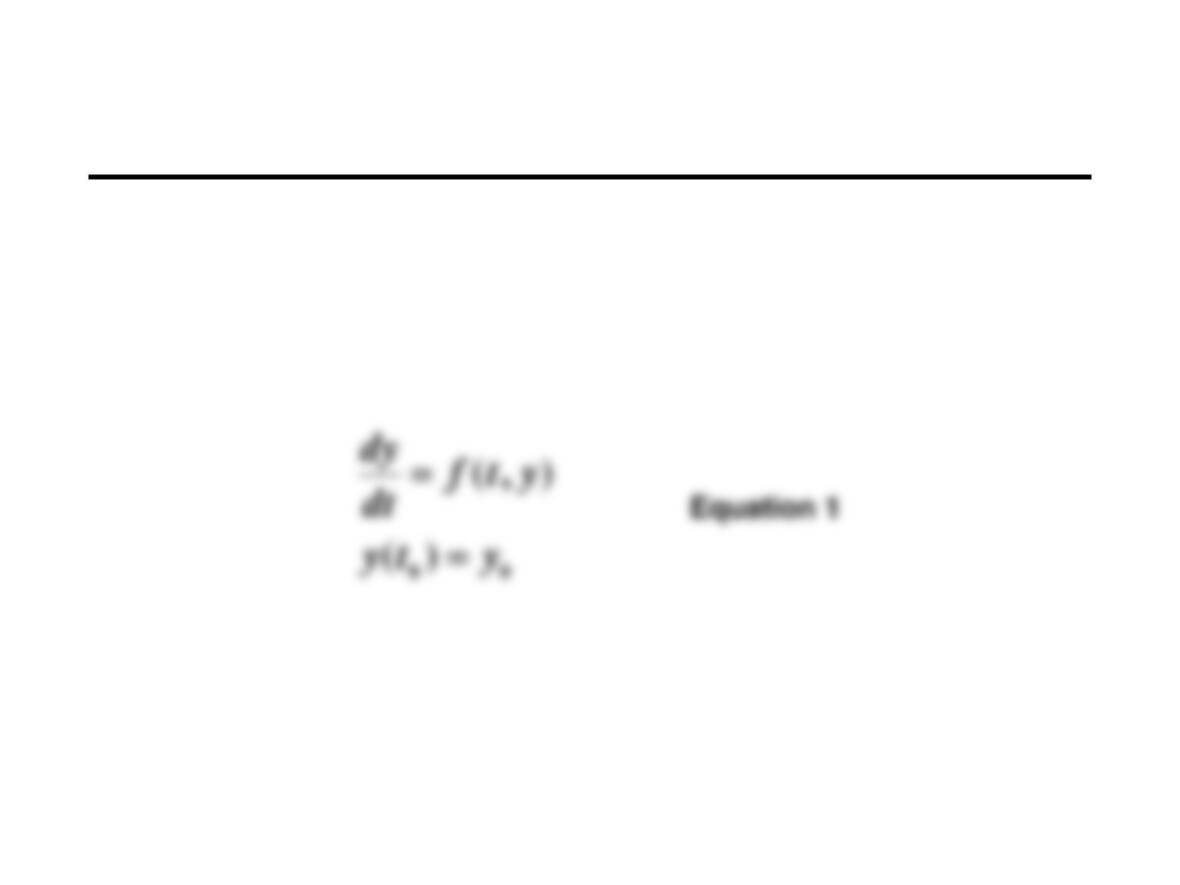
We now consider use of the method in the case of a general first
order ODE that is not necessarily almost linear in the sense of the
LR circuit problem just reviewed. We consider an equation of the
form
Successive Approximations
in the General Case (2)
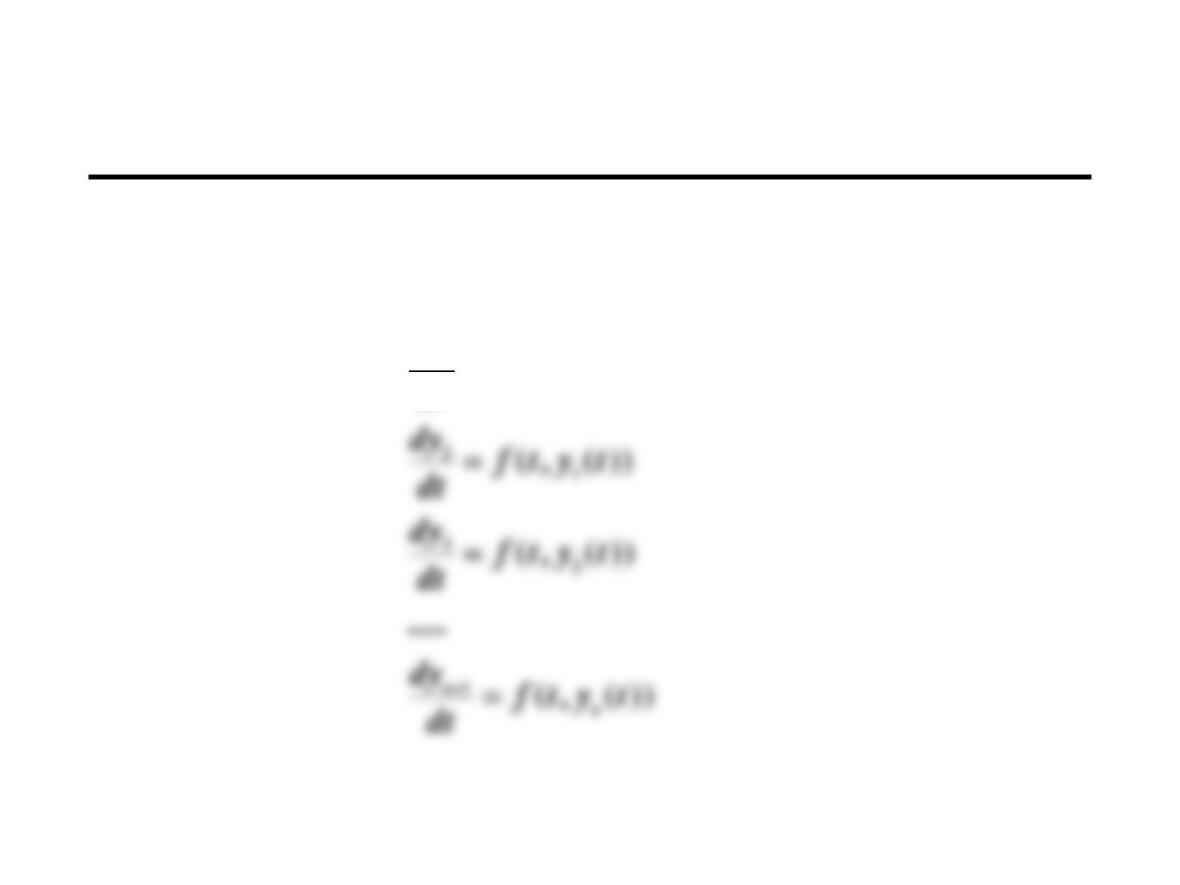
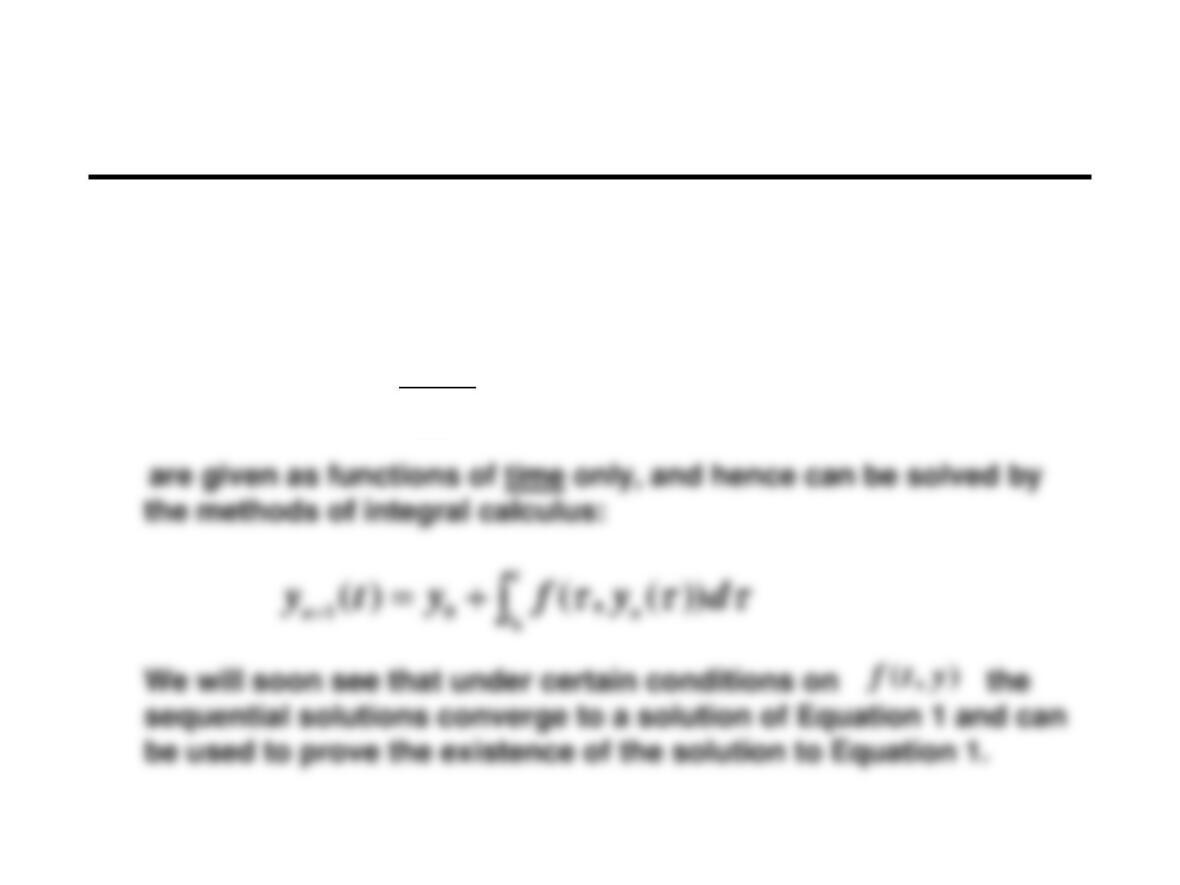
The successive approximations are
),(
0
1
ytf
dt
dy
=
Successive Approximations
in the General Case (3)
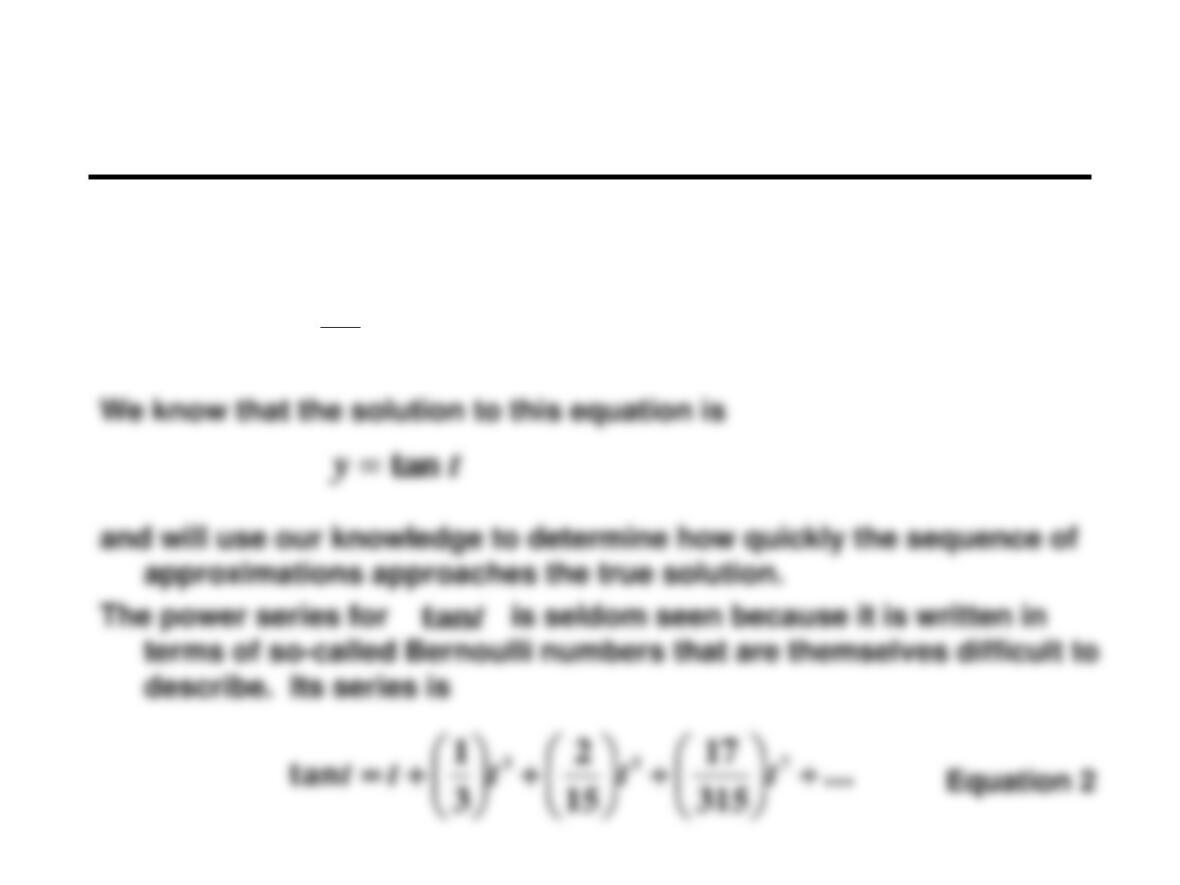
We are solving the difficult nonlinear ODE by a sequence of
equations in which the derivatives
dt
dyn1+
Successive Approximations Example
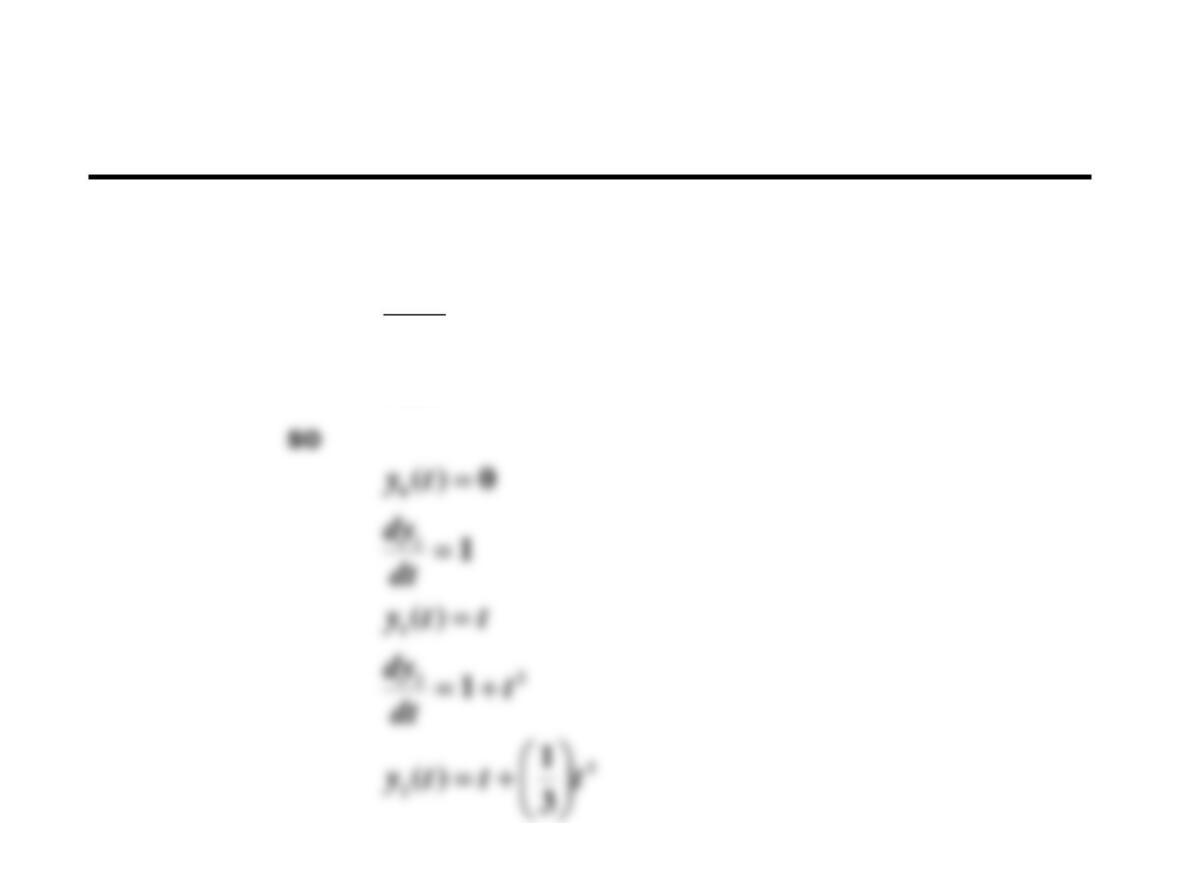
We consider as an example the ODE
2
1y
dt
dy +=
0)0( =y
Successive Approximations Example (2)
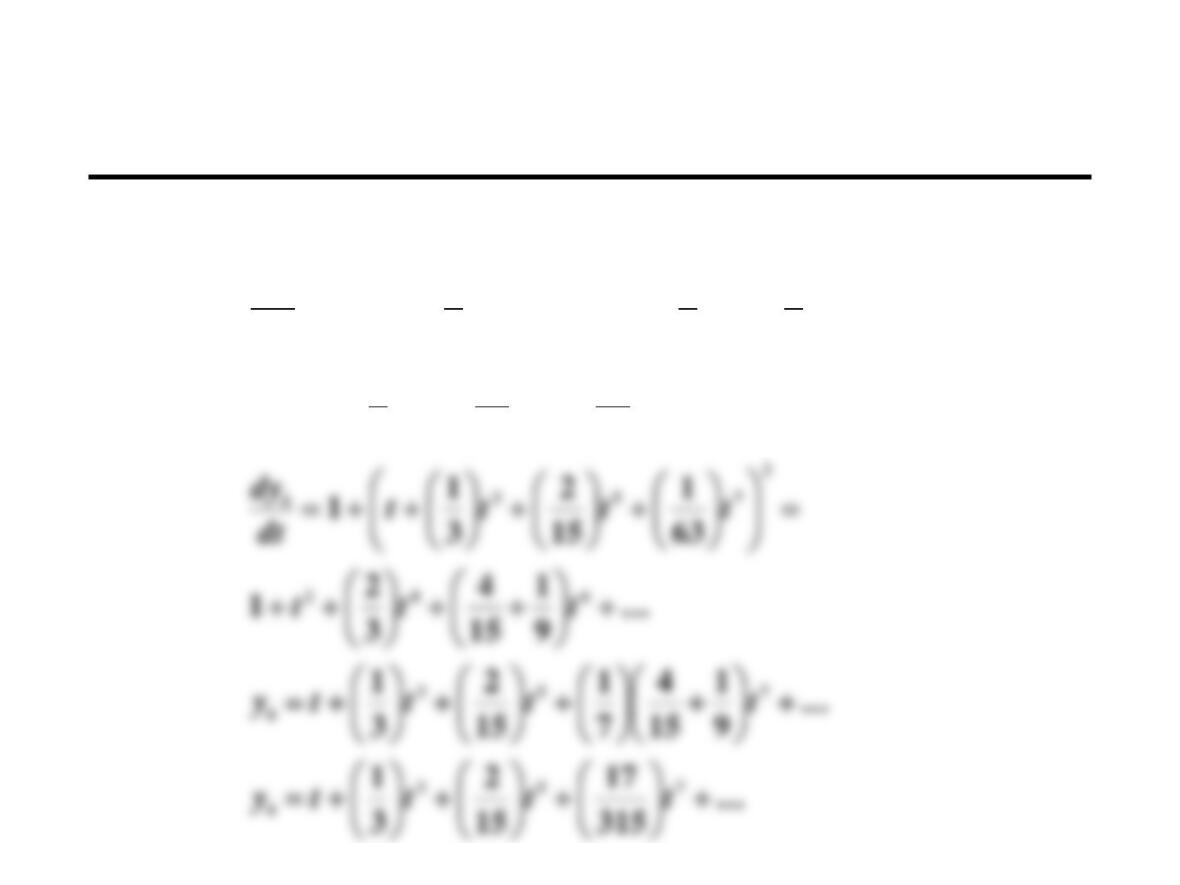
The successive approximations are
1
2
1
0)0(
)(1
y
ty
dt
dy
n
n
n
=
+
=
+
+
Successive Approximations Example (3)
Continuing with the sequence:
63
1
15
2
3
1
9
1
3
2
1
3
1
1
753
3
642
2
3
3
+
+
+=
+
++=
++=
tttty
ttttt
dt
dy

Successive Approximations Example (4)
Comparing the iterations with the expansion of given in
Equation 2, we can see that is correct to first order in t , is
correct to third order, to fifth order and to seventh order.
n
y
ttan
1
y
2
y
3
y
4
y

Successive Approximations Summary
The method of successive approximations:
solves a nonlinear first order ODE by a sequence of time integrations,
In-class Problems
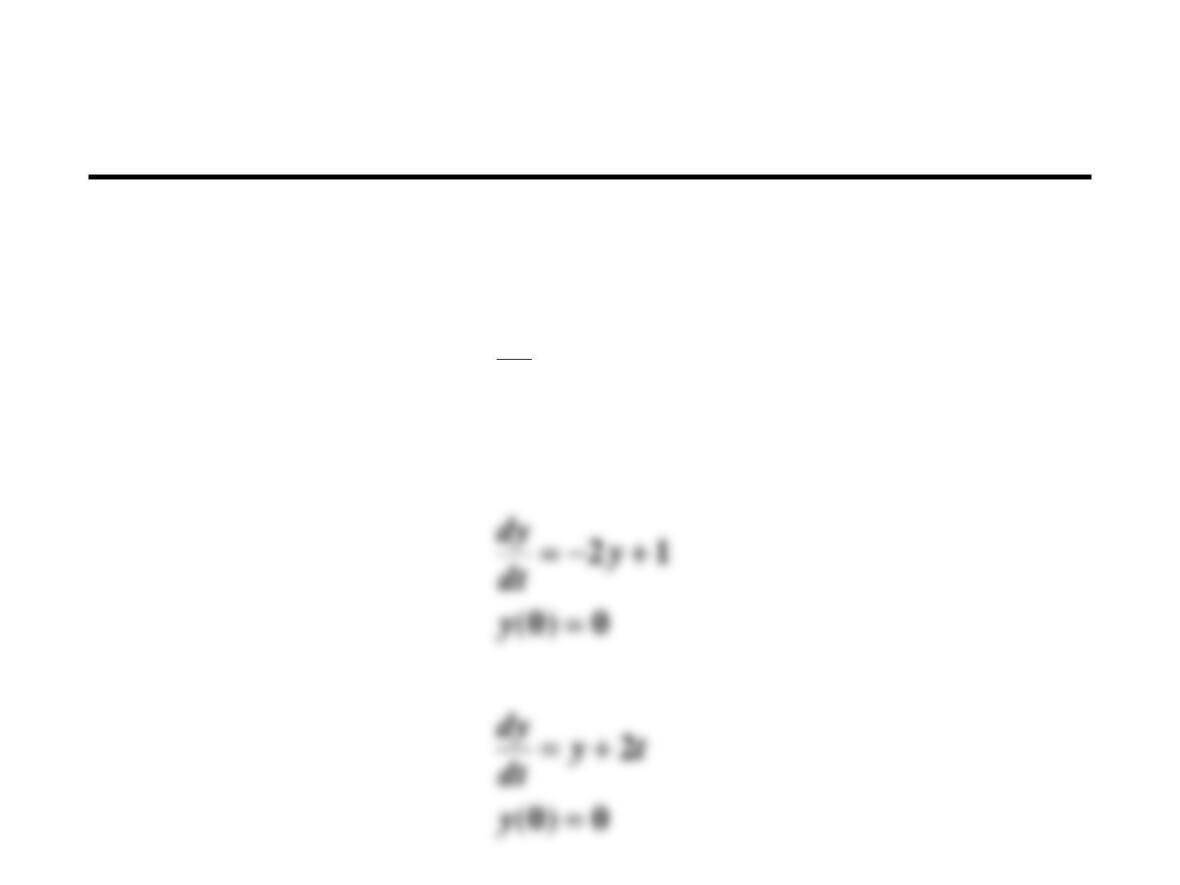
1)0(
=
−=
y
y
dt
dy
Compute the first four iterations in the method of
successive approximations for the solution of
)(),(),(),(3210 tytytyty

First Order Differential Equations
Existence and Uniqueness of Solutions to
First Order ODEs
Preliminaries: Lipschitz Condition
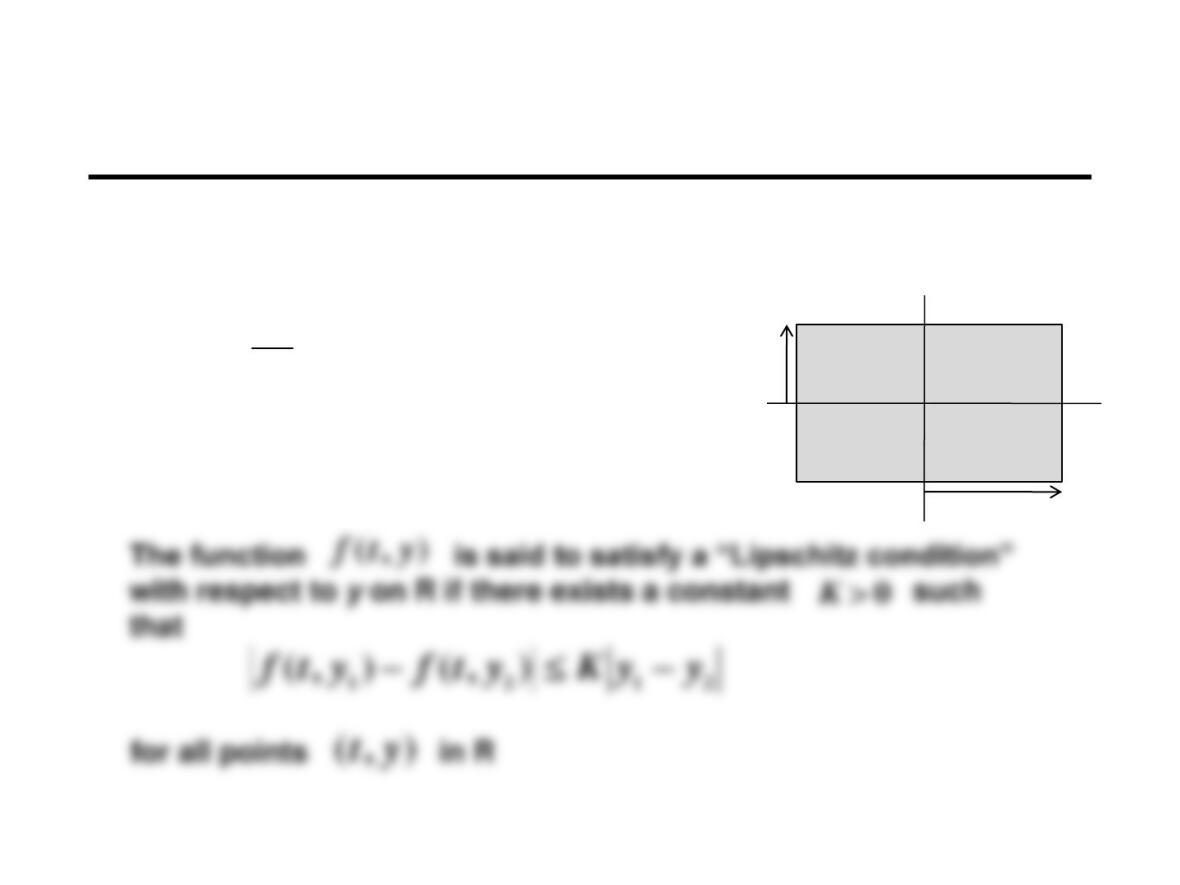
Consider the general first order ordinary differential equation:
00 )(
),(
yty
ytf
dt
dy
=
=
where is defined on a rectangle R.
),( ytf
t
y
0
y
0
t
a
b
R
Preliminaries: Lipschitz Condition (2)
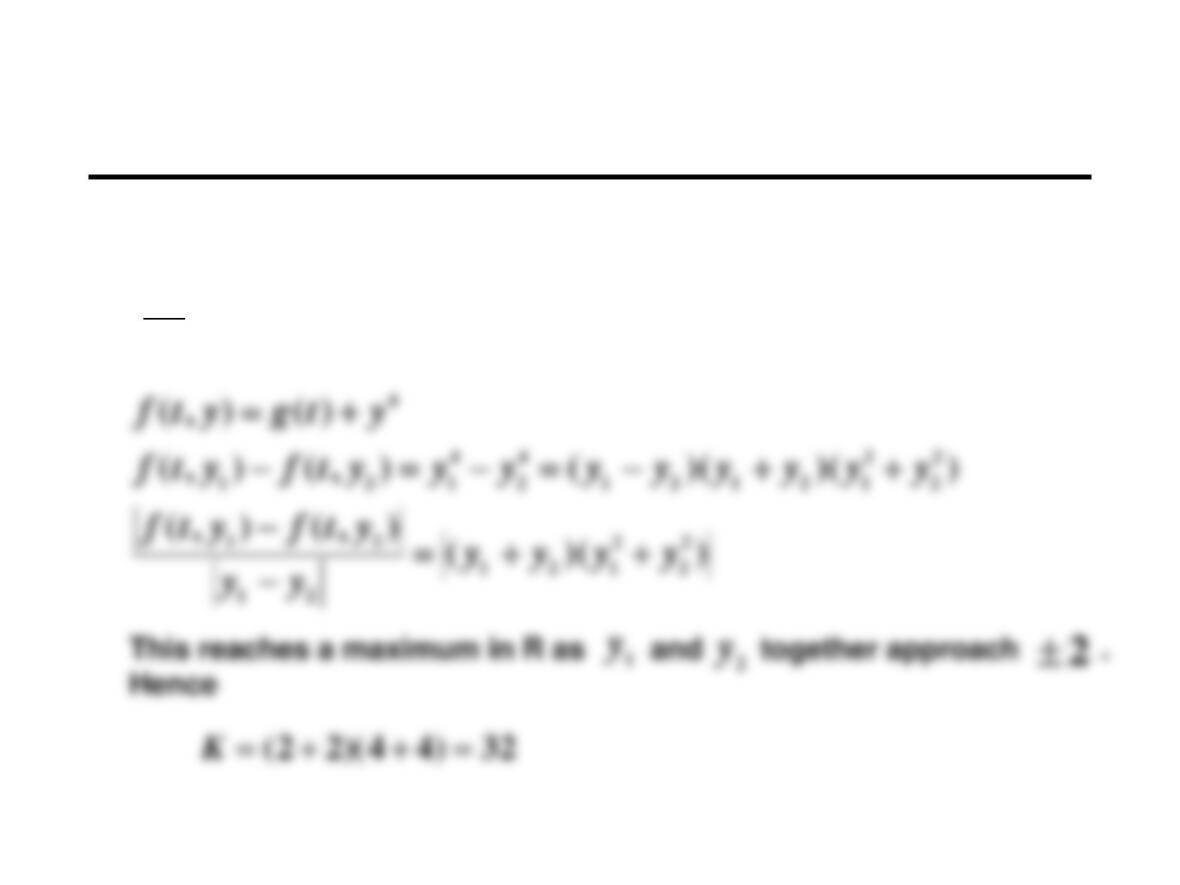
Example:
22
100
−
y
t
R:
4
)( ytg
dt
dy +=