
Differential Equations
for Engineers:
the Essentials
Class 4 notes
Agenda: Class 4
Review homework assignment 2
Lectures:
Separable first order ODEs: Example: Sounding rocket –phase 3
Possibility of Transforming Nonlinear to Linear
First Order Differential Equations
Separable nonlinear equations
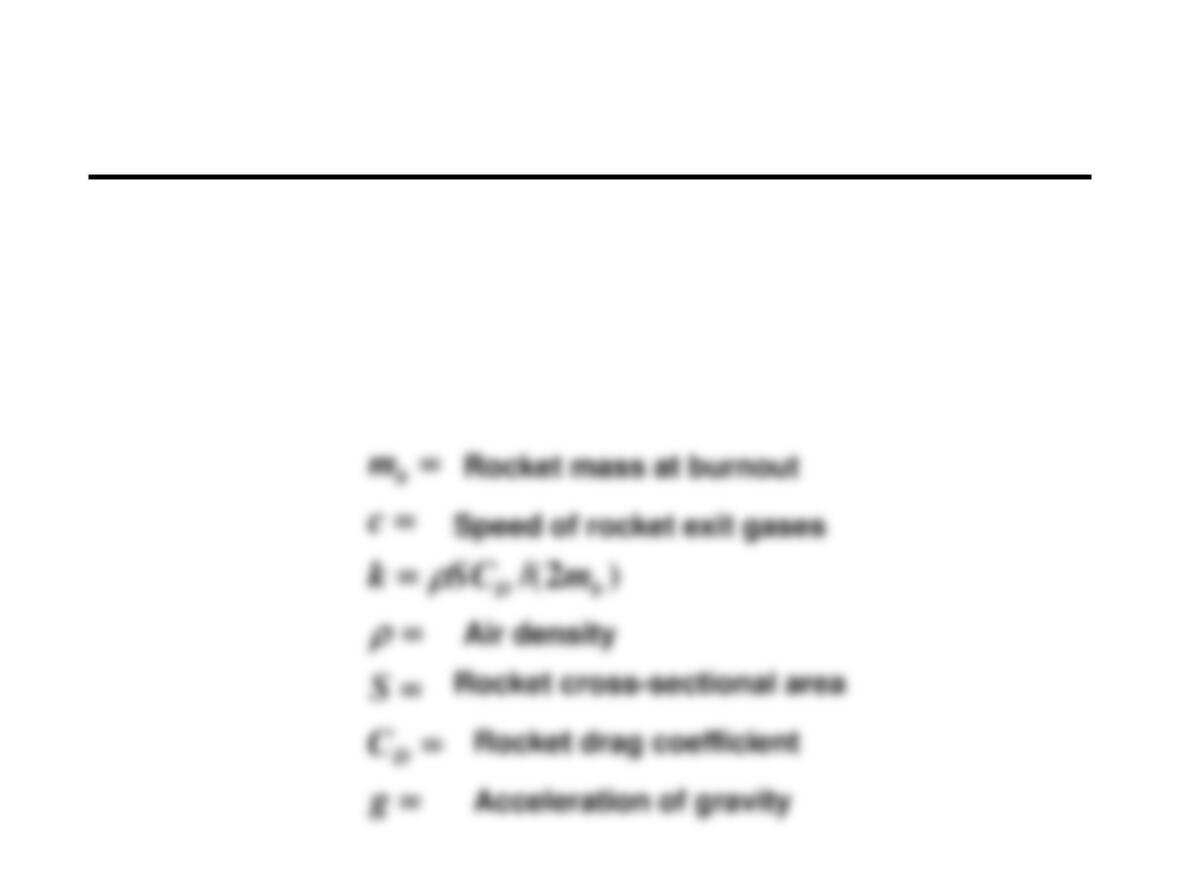
Definition of Terms
=
=
=
=
m
m
V
h
0
Rocket altitude
Rocket vertical velocity
Rocket mass
Rocket mass at launch
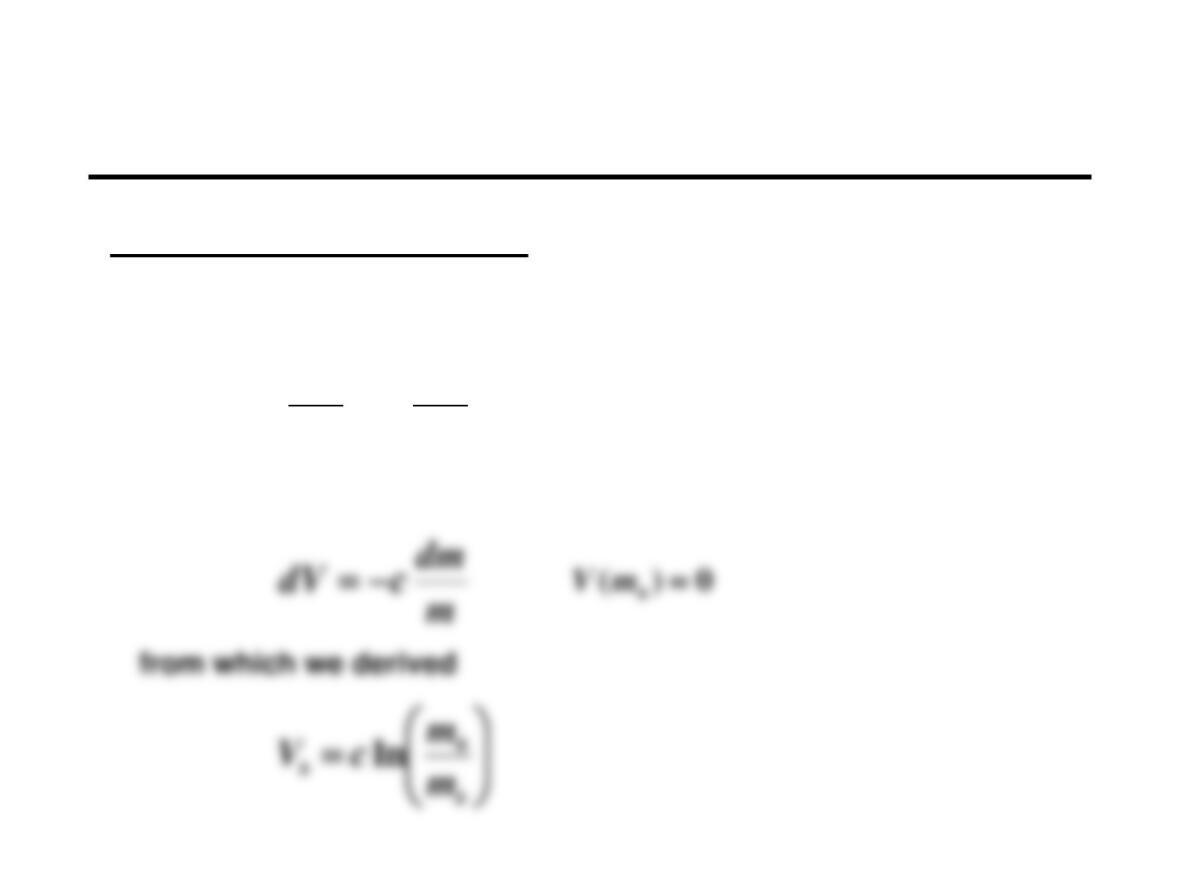
Sounding rocket: Summarizing analysis of
phase one
c
dt
dm
dt
dV
m−=
Phase 1: High-thrust segment
Starting with
we eliminated time from the equation and found
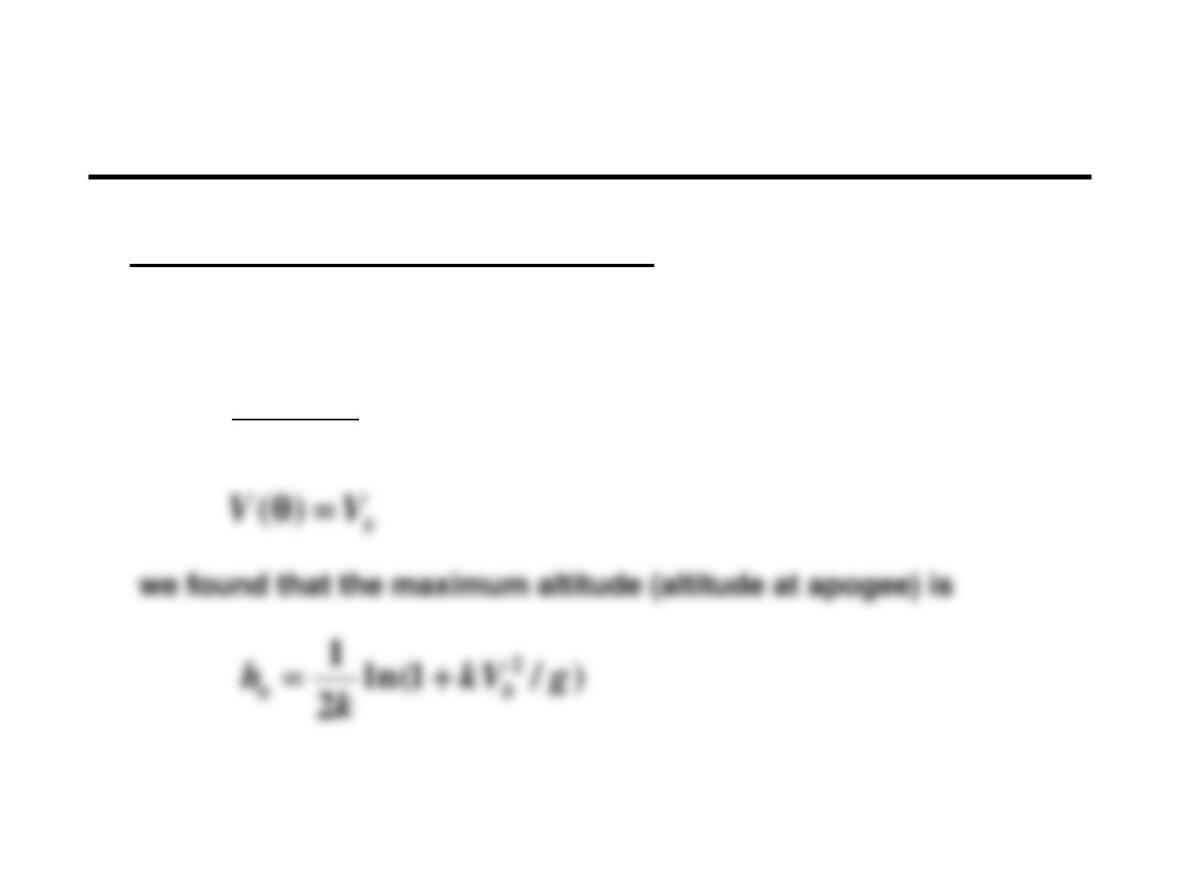
Sounding rocket: Summarizing analysis of
phase two
dt
kVg
dV
−=
+
2
Phase 2: No-thrust segment going up
Starting with
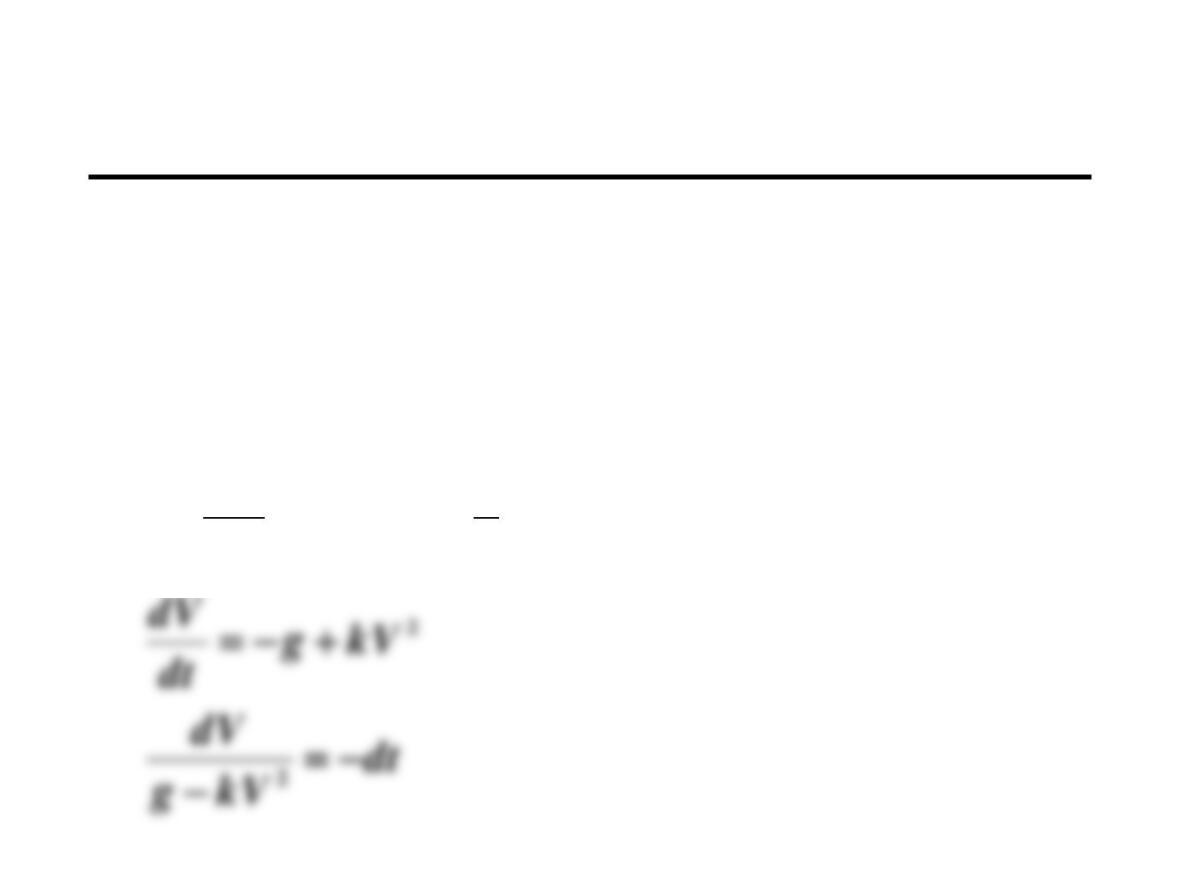
No-thrust segment coming down
Objective of Phase 3 analysis: determine the maximum speed the
sounding rocket achieves on its way down
Again, Newton’s second law: Force = mass times acceleration.
Now force = weight downward and drag upward:
VSCgm
dt
dV
mDbb
+−=
2
2
1
0)( =
a
tV
No-thrust segment coming down (2)
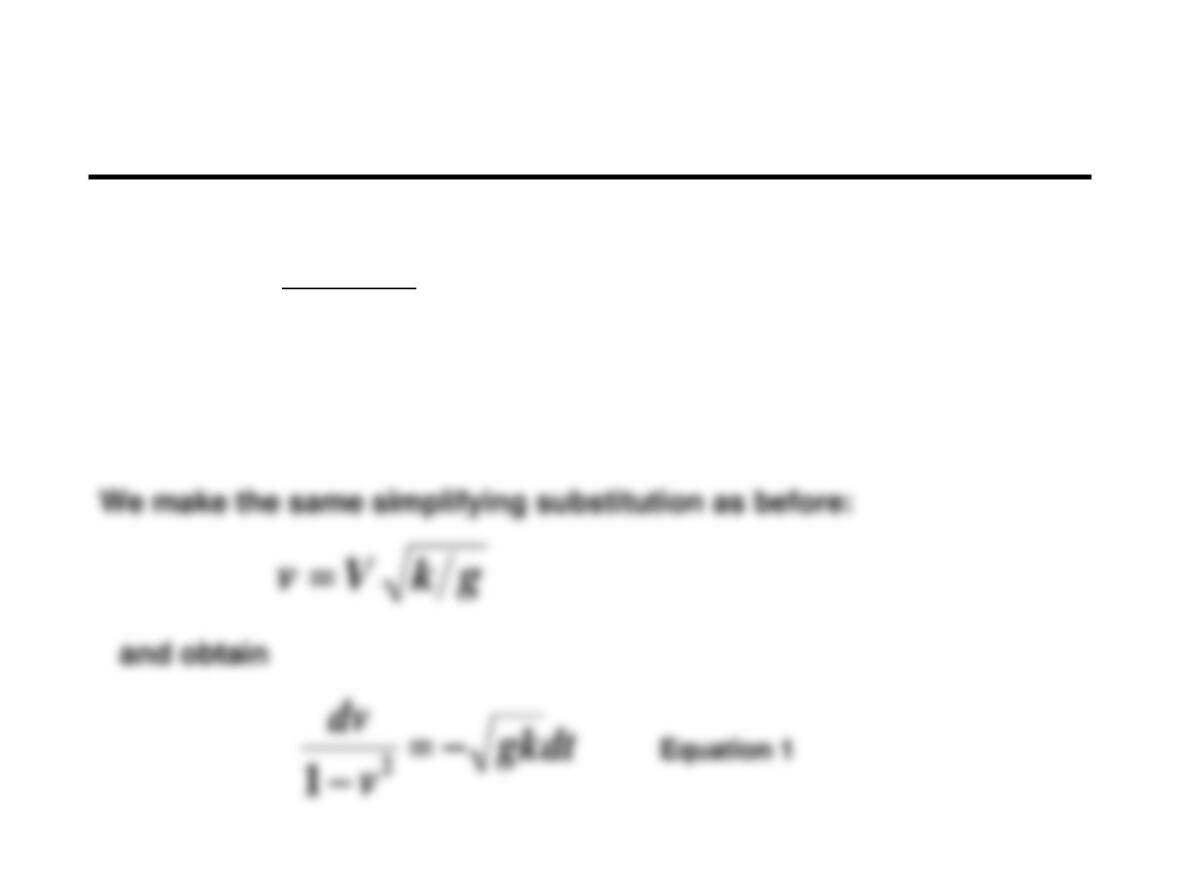
This is another example of a “separable” first order DE.
dt
kVg
dV −=
−2
0)( =
a
tV
No-thrust segment coming down (3)
dtgk
v
dvc
v
dvc
v
dv −=
+
+
−
=
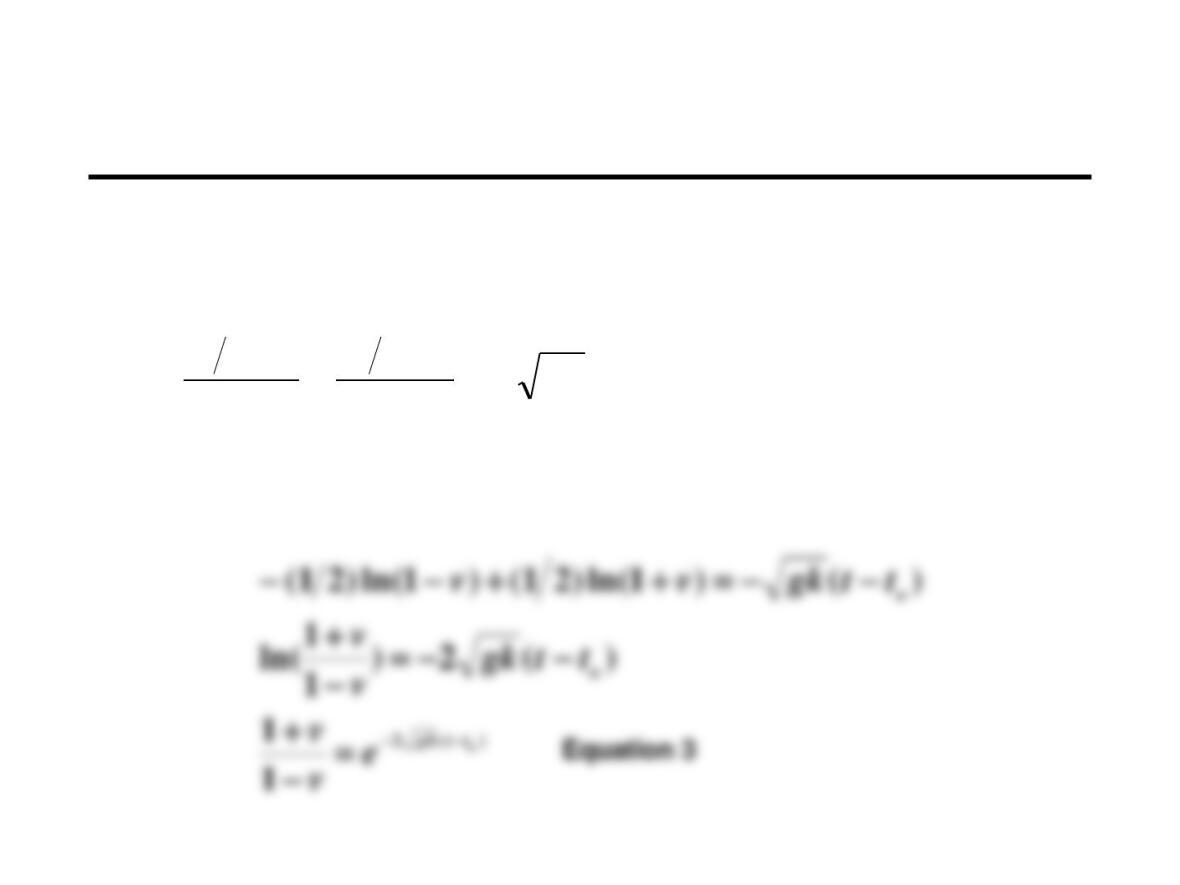
−111 21
2
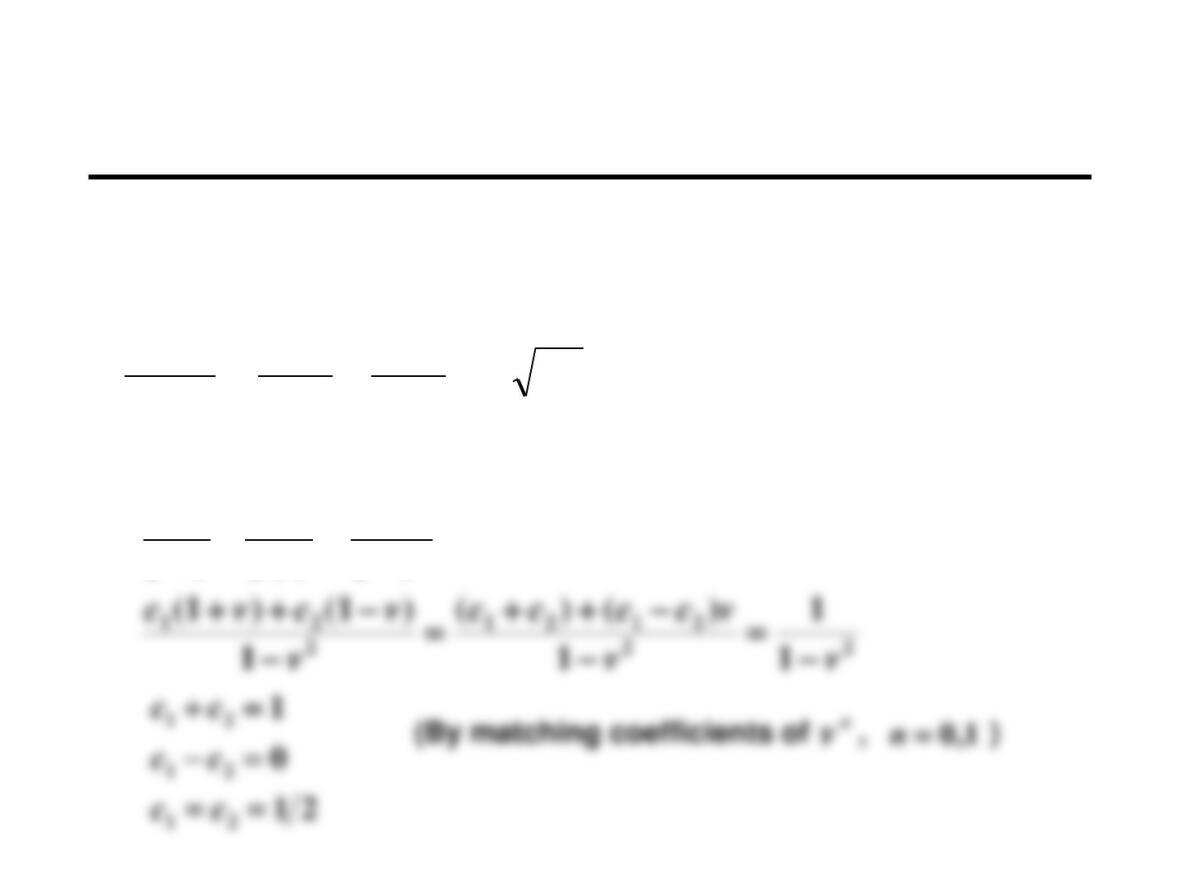
We solve this with partial fraction expansion.
Using equation 1 and factoring the denominator we can write:
We find the values of the constants by recombining:
2
21
1
11
vv
c
v
c
−
=
+
+
−
Equation 2
No-thrust segment coming down (4)
dtgk
v
dv
v
dv −=
+
+
−1
)21(
1
)21(
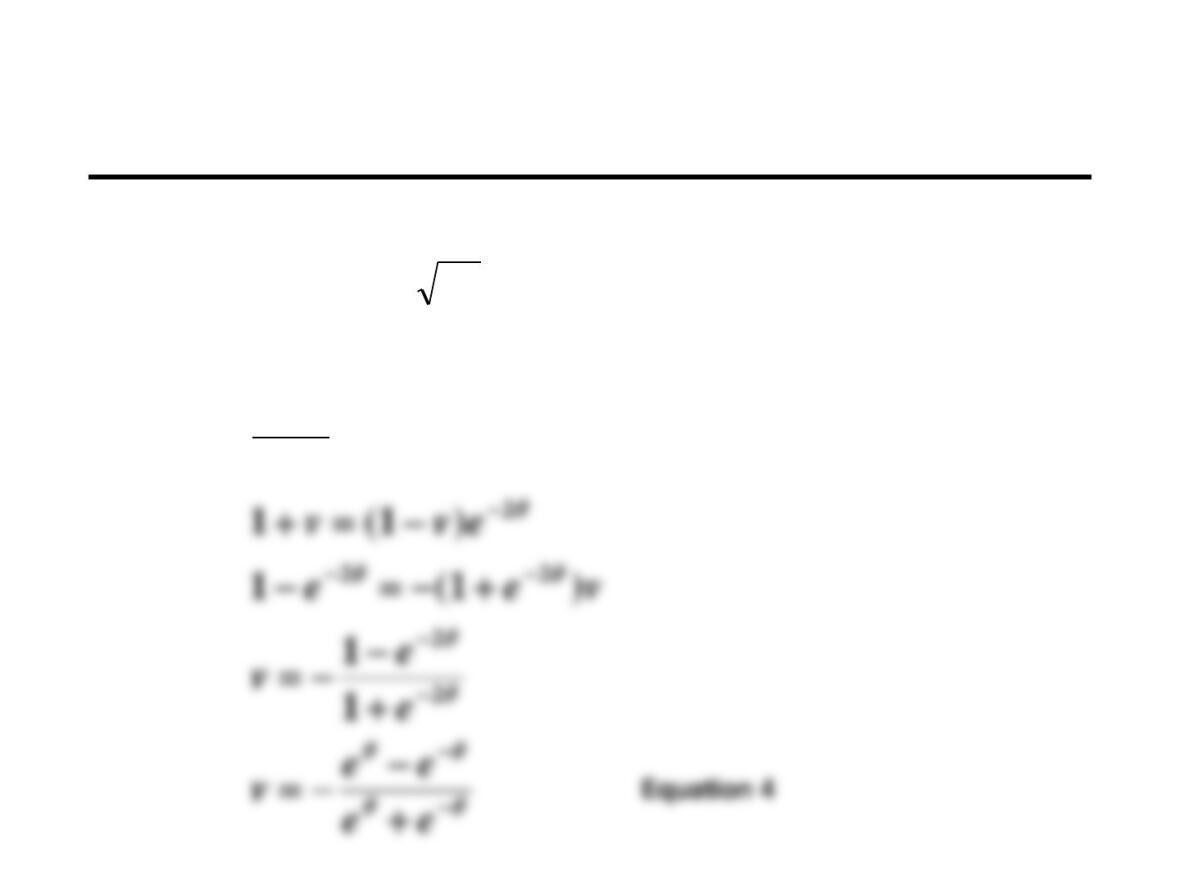
Then Equation 2 becomes
Integrating both sides, as time goes from to
and the (scaled) velocity goes from zero to
a
t
v
t
No-thrust segment coming down (5)
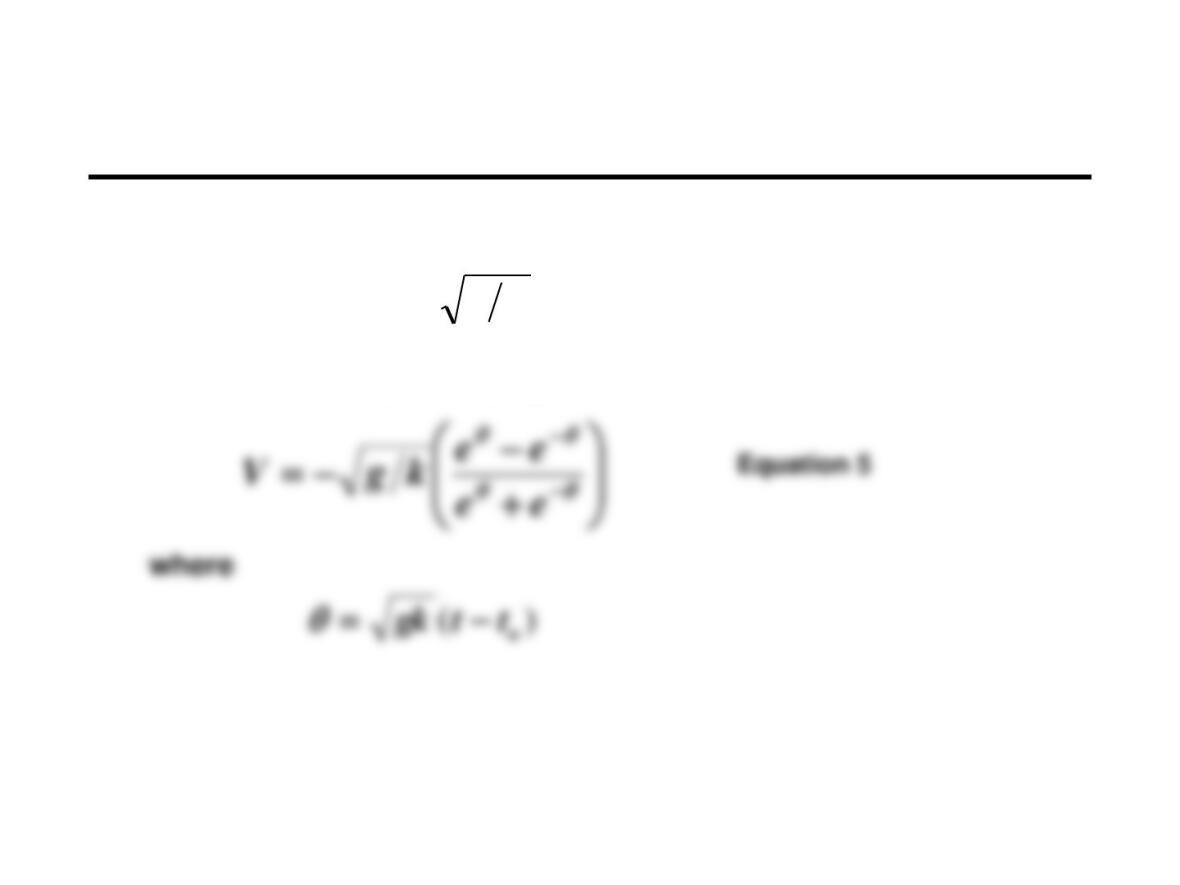
For simplicity let
)( a
ttgk −=
Then equation 3 becomes
−
=
−
+
e
v
v
2
1
1
No-thrust segment coming down (6)
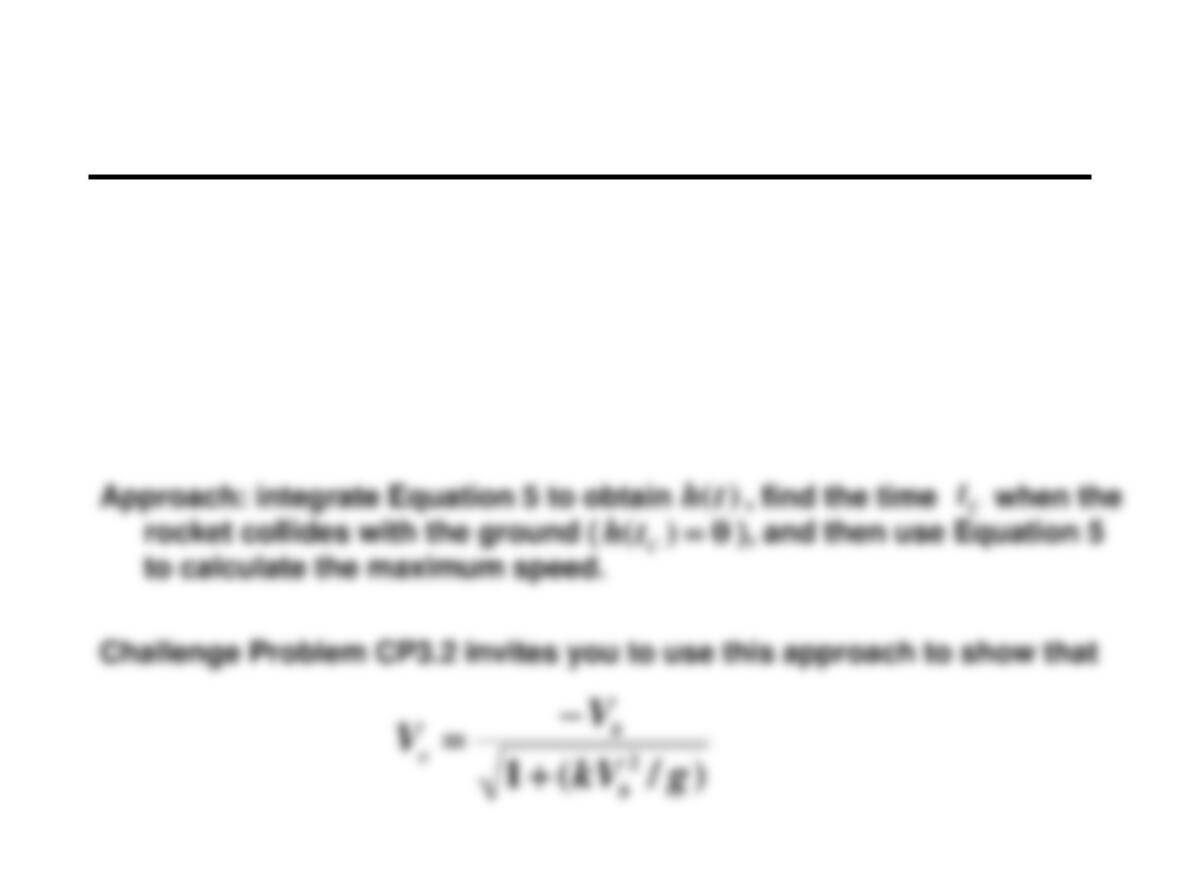
gkVv =
Recalling
the vertical velocity after apogee is
No-thrust segment coming down (7)
Remember that, in this third phase, we are interested in finding the
maximum speed of the rocket on the way down. One can easily verify
from Equation 5 that the rocket speed is monotonically increasing.
Hence the rocket reaches its maximum speed just before it hits the
ground.

First Order Differential Equations
Possibility of transforming nonlinear into
linear
Transforming nonlinear into linear
There is a shortcut to solving the problems we have been considering.
From the point of view of a student just learning elementary
methods of solving ordinary differential equations it is essentially a
trick.
With the shortcut one cannot find how speed and altitude vary with time,
but one can determine the maximum speeds and altitudes.
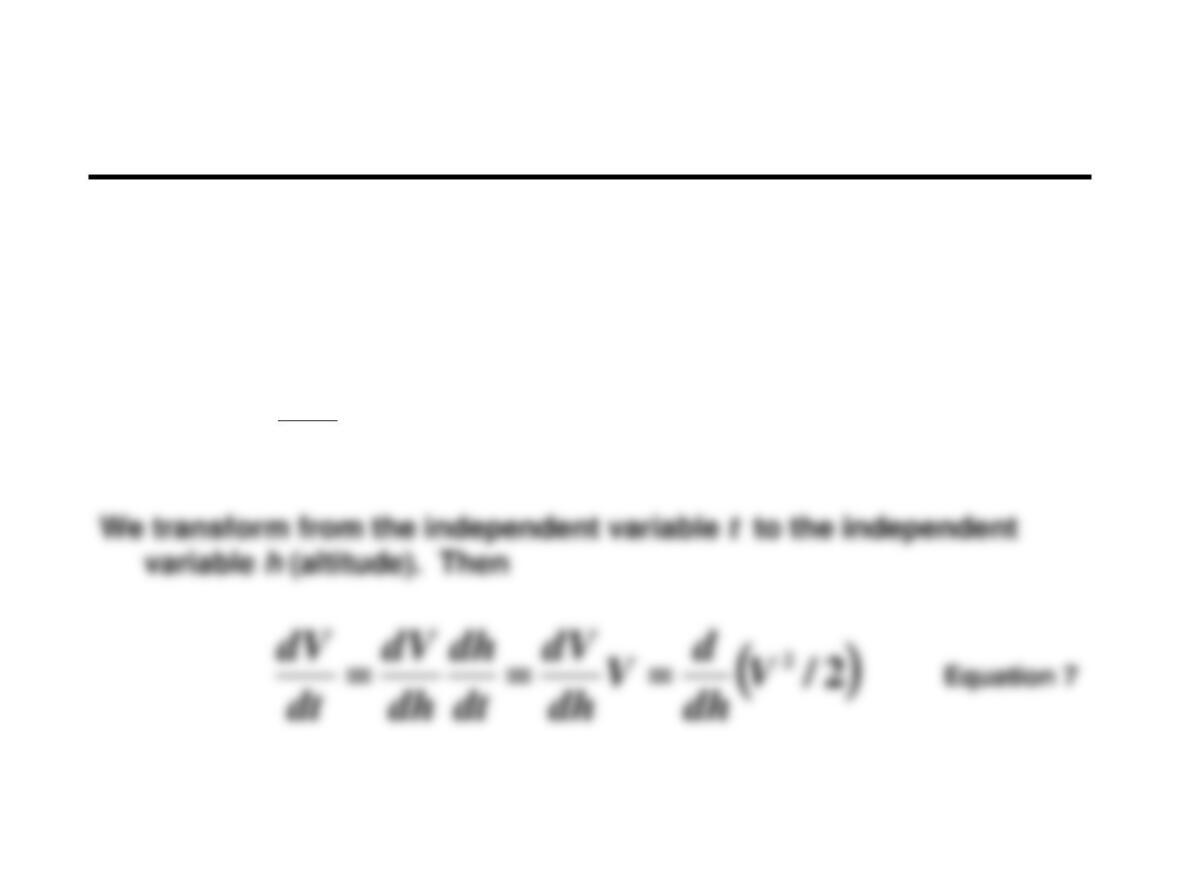
Transforming nonlinear into linear (2)
Let us reconsider Phase 2 of our analysis, the no-thrust region on the
way up. In Phase 2 the equation of motion was
2
kVg
dt
dV −−=
b
VV =)0(
Equation 6
Transforming nonlinear into linear (3)
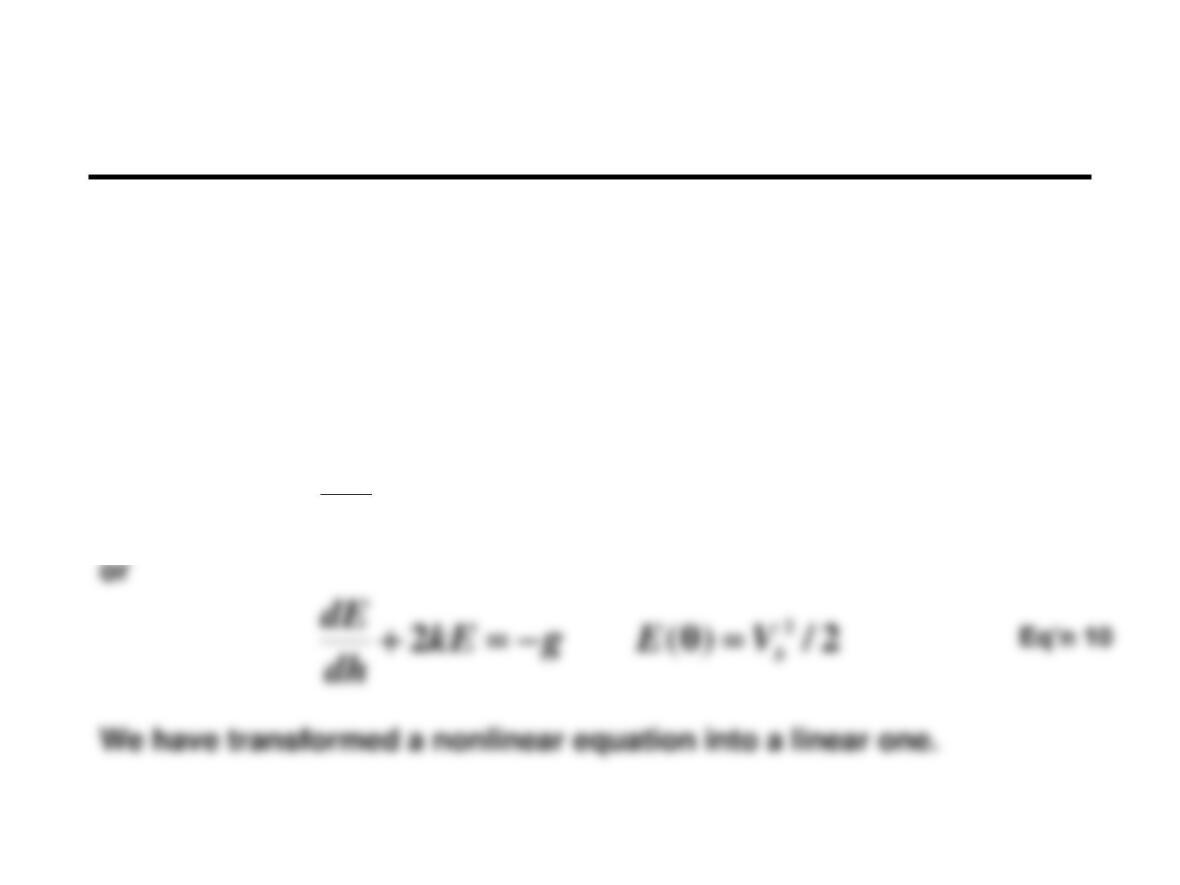
Now we transform from the dependent variable Vto the dependent
variable
Then using Equations 6, 7 and 8 we arrive at
EV =2/
2
Equation 8
kEg
dh
dE 2−−=
2/)0( 2
b
VE =
Eq’n 9
dh
2/)0( 2
b
VE =
Transforming nonlinear into linear (4)
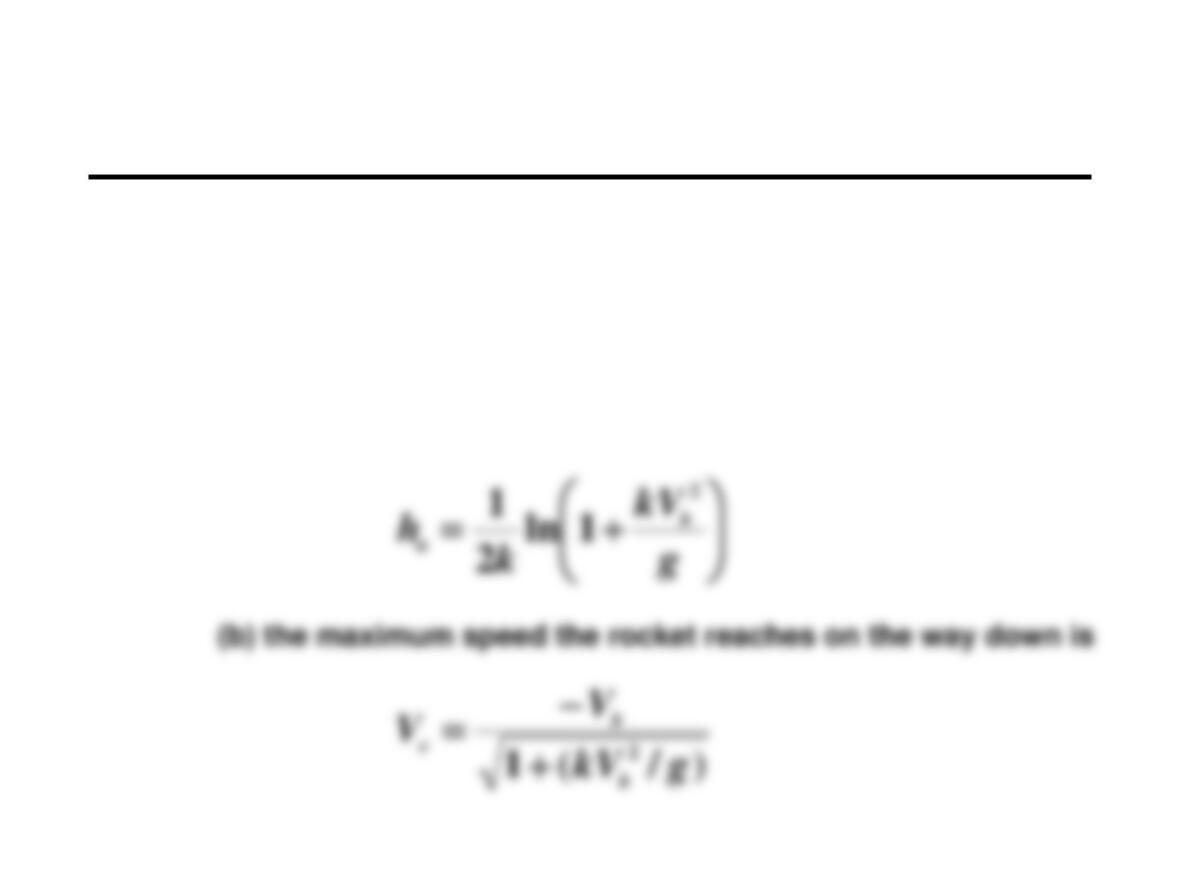
Word Problem WP3.1 asks you to use the shortcut method just
outlined to show that
(a) the rocket’s highest altitude is
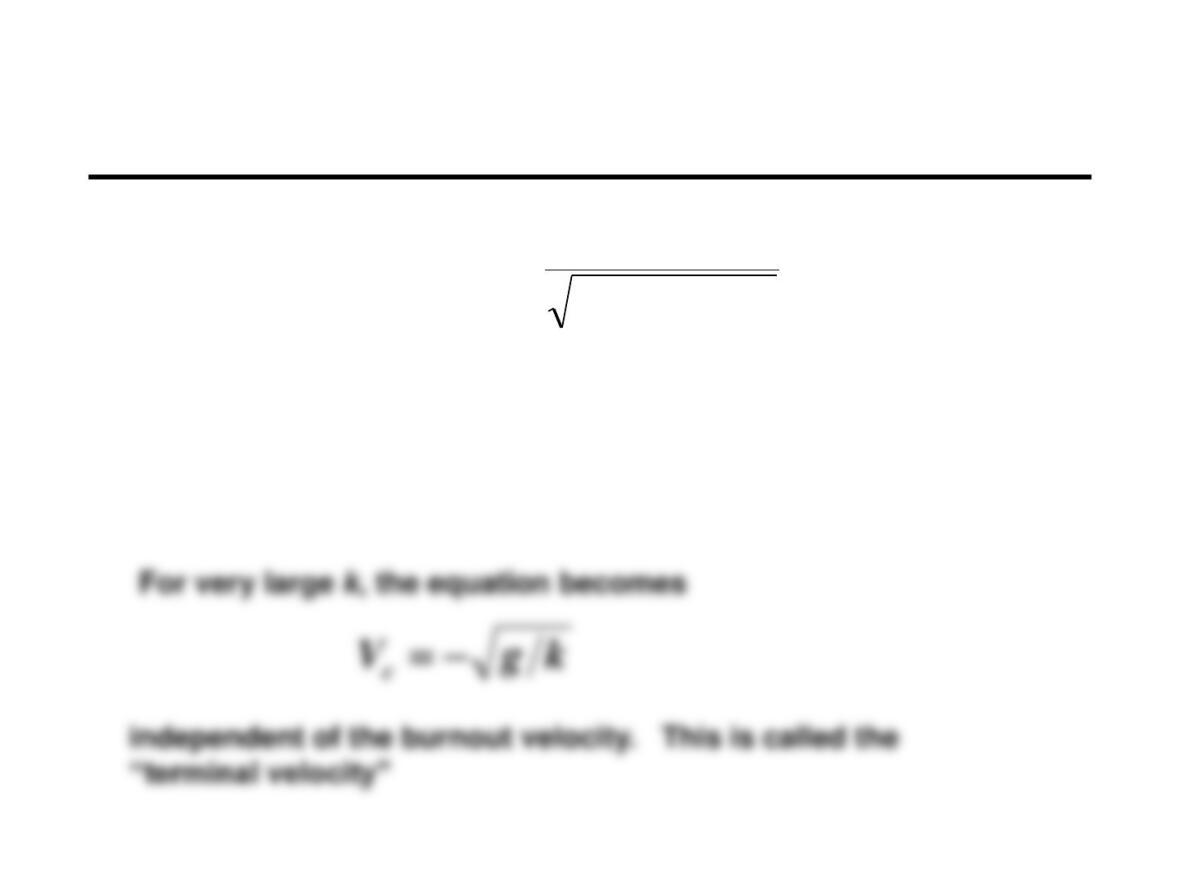
How to Check
Checking the equation:
For small kthis becomes
bc VV −=
as we expect. (From conservation of energy, in absence of drag, the
velocity at a given altitude is the same coming down as going up.)
)/(1 2gkV
V
V
b
b
c+
−
=

Homework Assignment 4
Read:
Chapter 3, Sections 3.2 and 3.3
Supplement to Class 4 posted on course website