Modified Bessel Functions
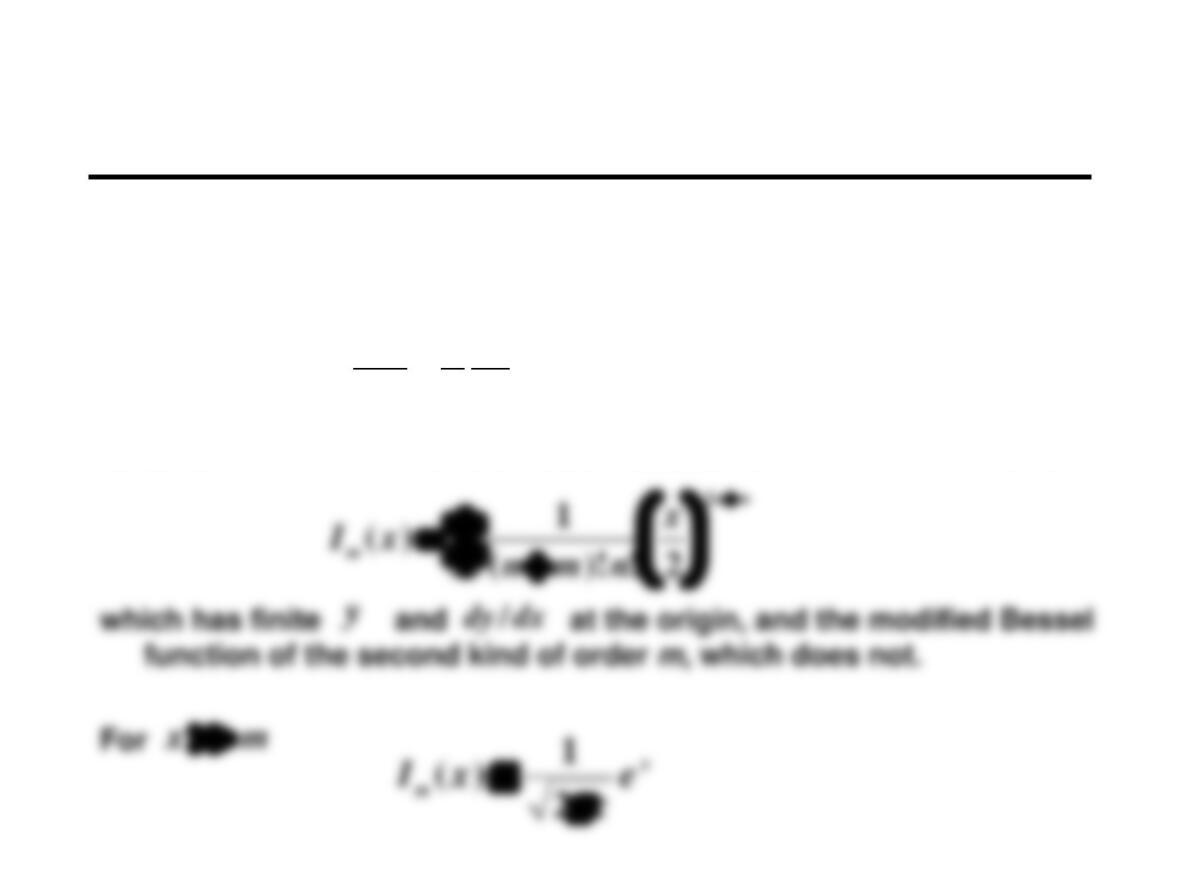
The modified Bessel’s Equation of order mis
Its solutions are the modified Bessel function of the first kind of order m
0)/1(
122
2
2
=+−+ yxm
dx
dy
xdx
yd
Partial Differential Equations
Power Series Solutions:
Bessel Function of First Kind of Order m
Power Series Solutions:
Another Example
0)1(
1
2
2
2
2
=−++ y
x
m
dx
dy
xdx
yd
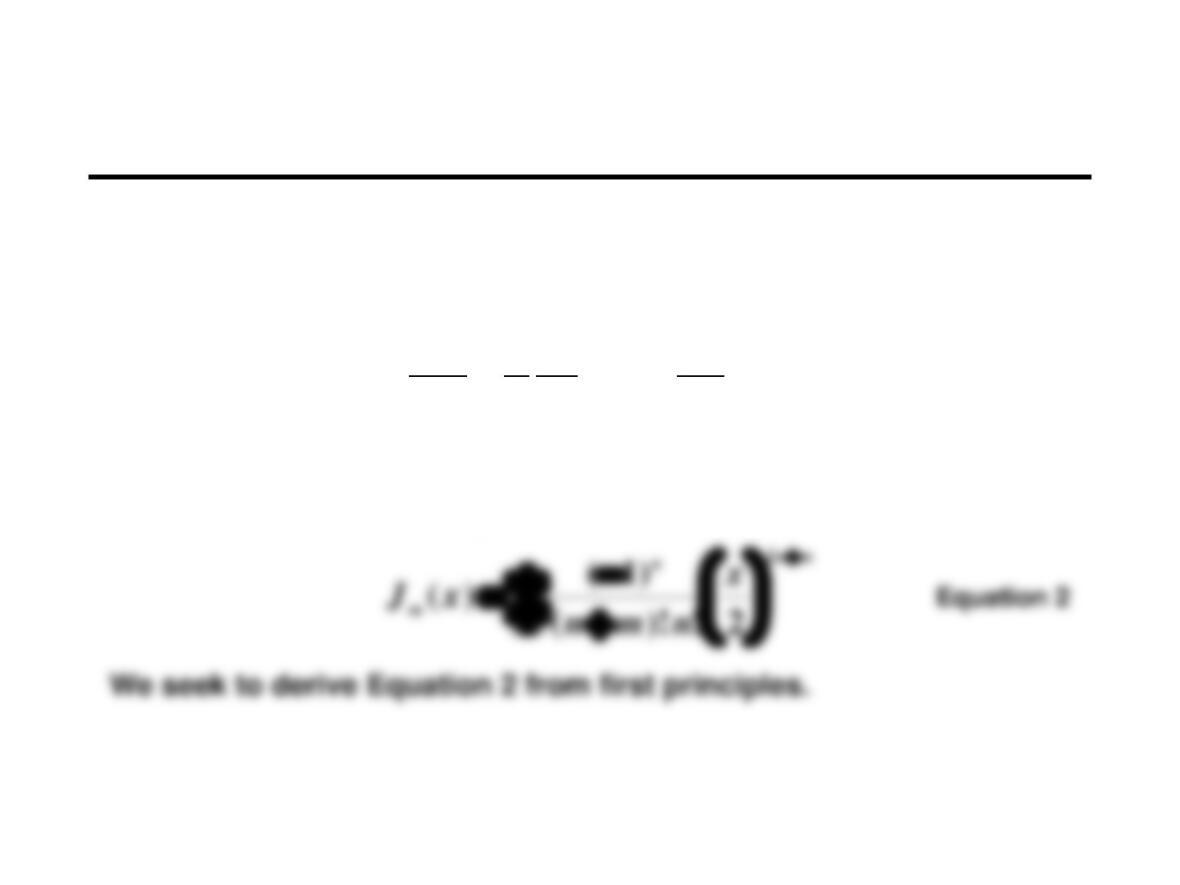
Here we consider another example, Bessel’s equation of order m,
where mis an integer:
We have seen a power series solution already. The solution with finite
value and derivative at is
Equation 1
0=x
Power Series Solutions:
Another Example (2)
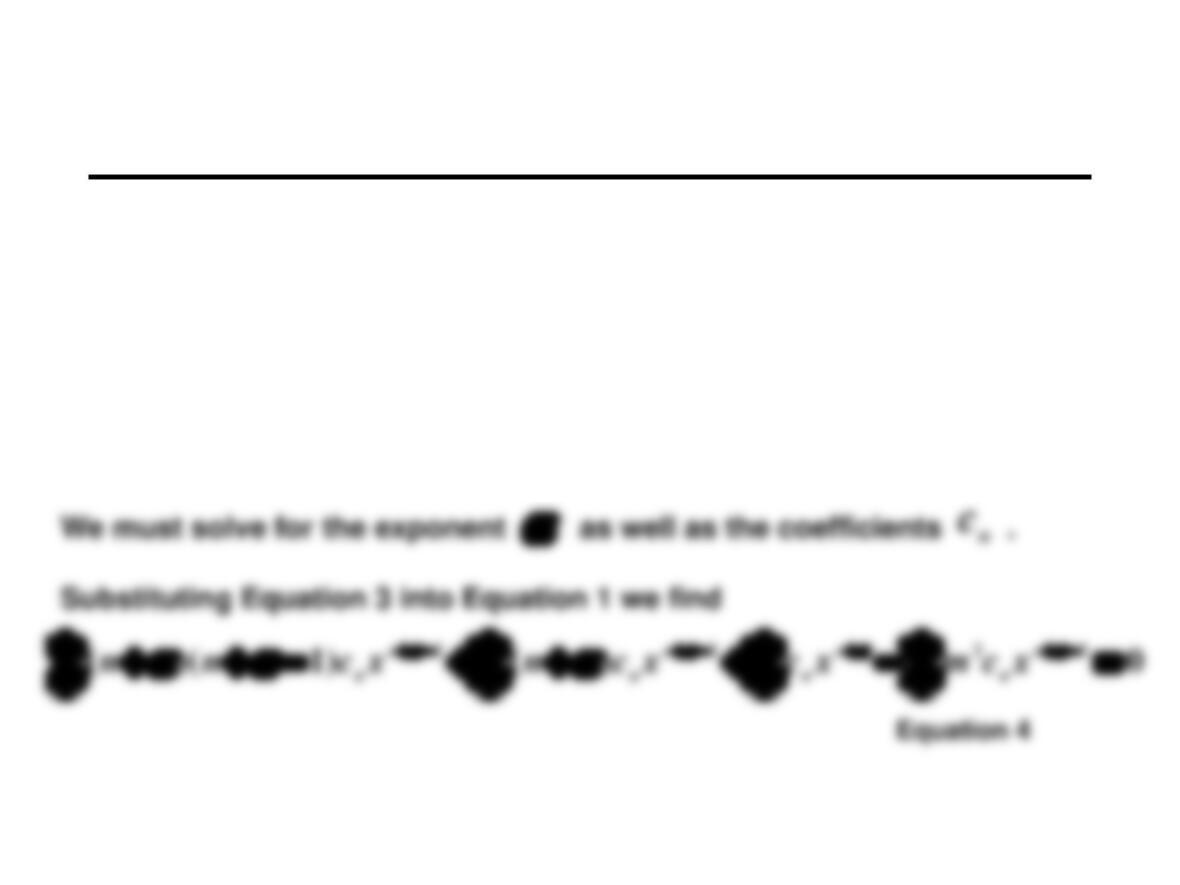
If we were to try the form that worked for order zero we
would find that it fails for order m.
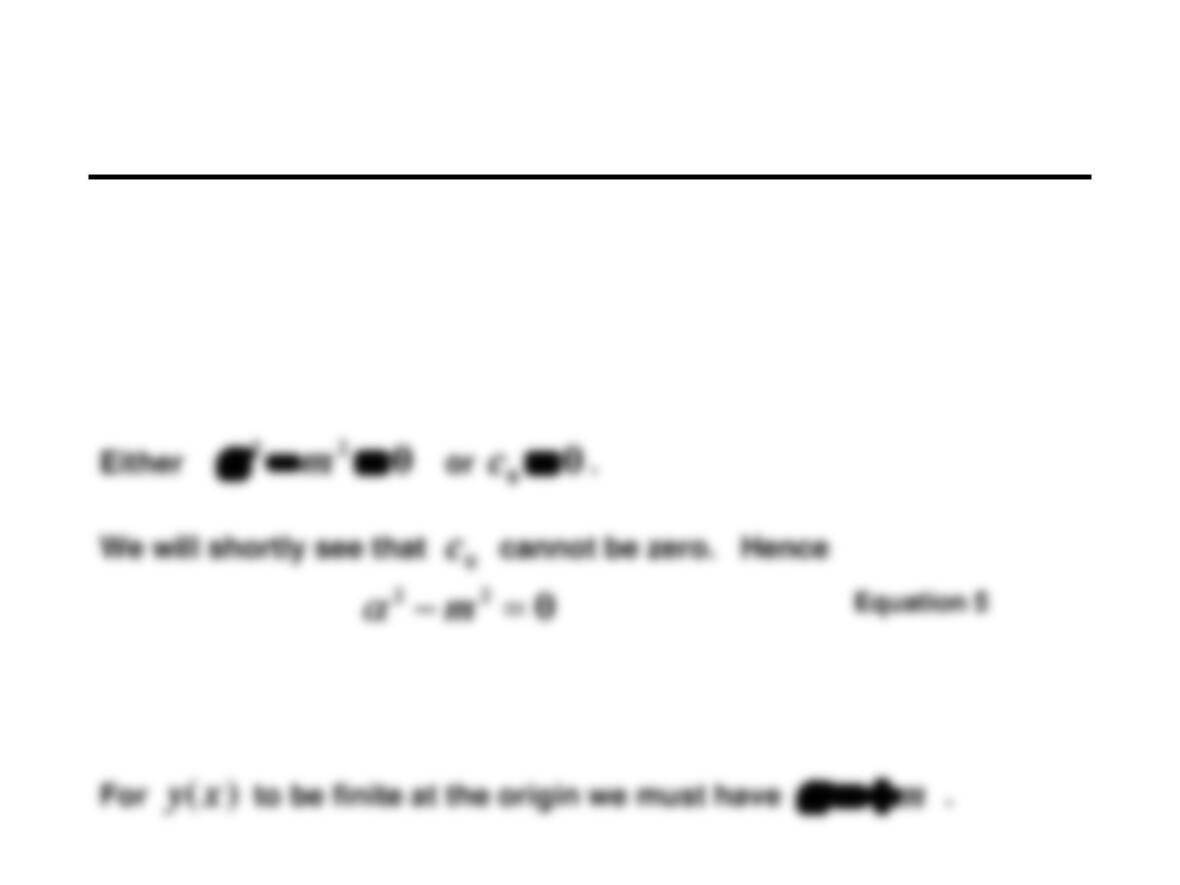
We try, instead,
Equation 3
=
=
0
)(
n
n
nxcxxy
=
=
0
)(
n
n
nxcxy
Power Series Solutions:
Another Example (3)
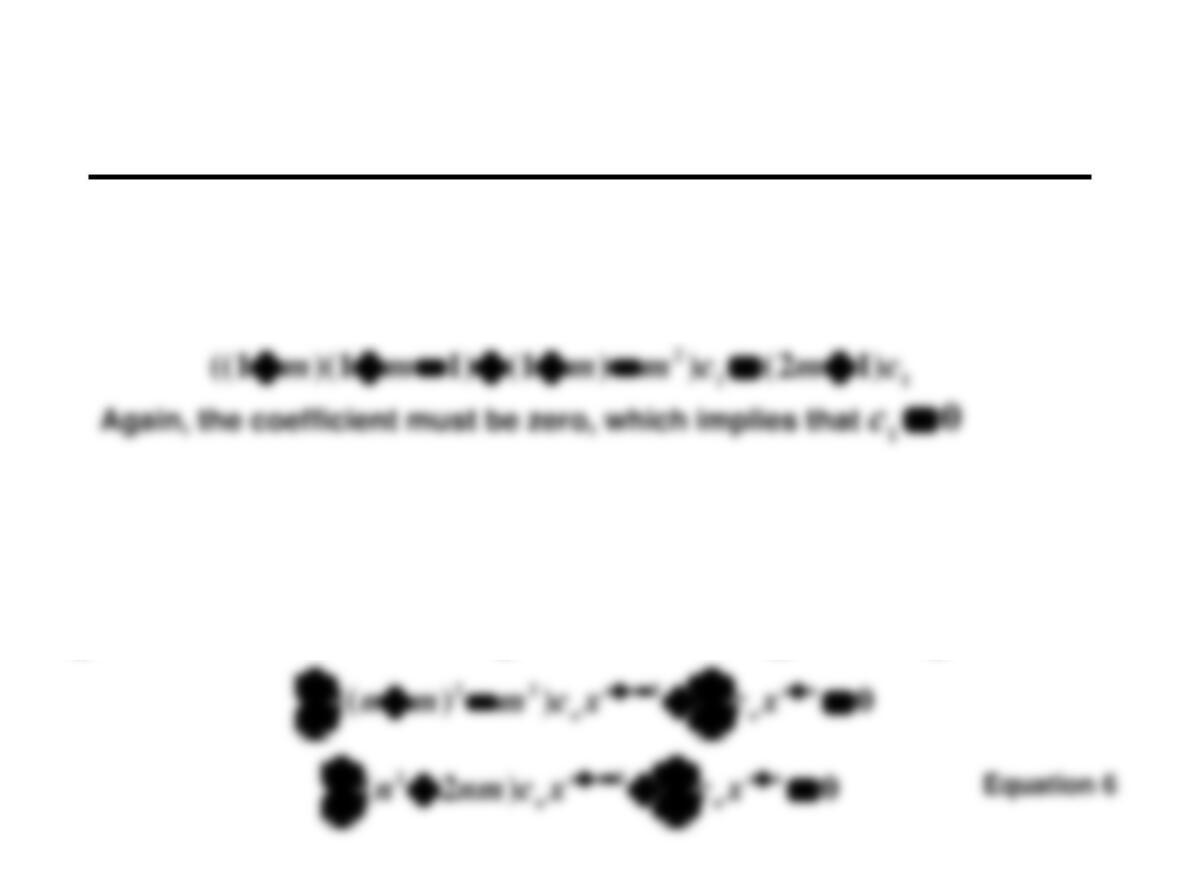
The coefficient of in Equation 4 is
which must equal zero, as must all coefficients.
Equation 5 is the indicial equation for the ODE Equation 1. We will
discuss the indicial equation in more generality shortly.
2−
x
0
22
0
2)())1(( cmcm −=−+−
Power Series Solutions:
Another Example (4)
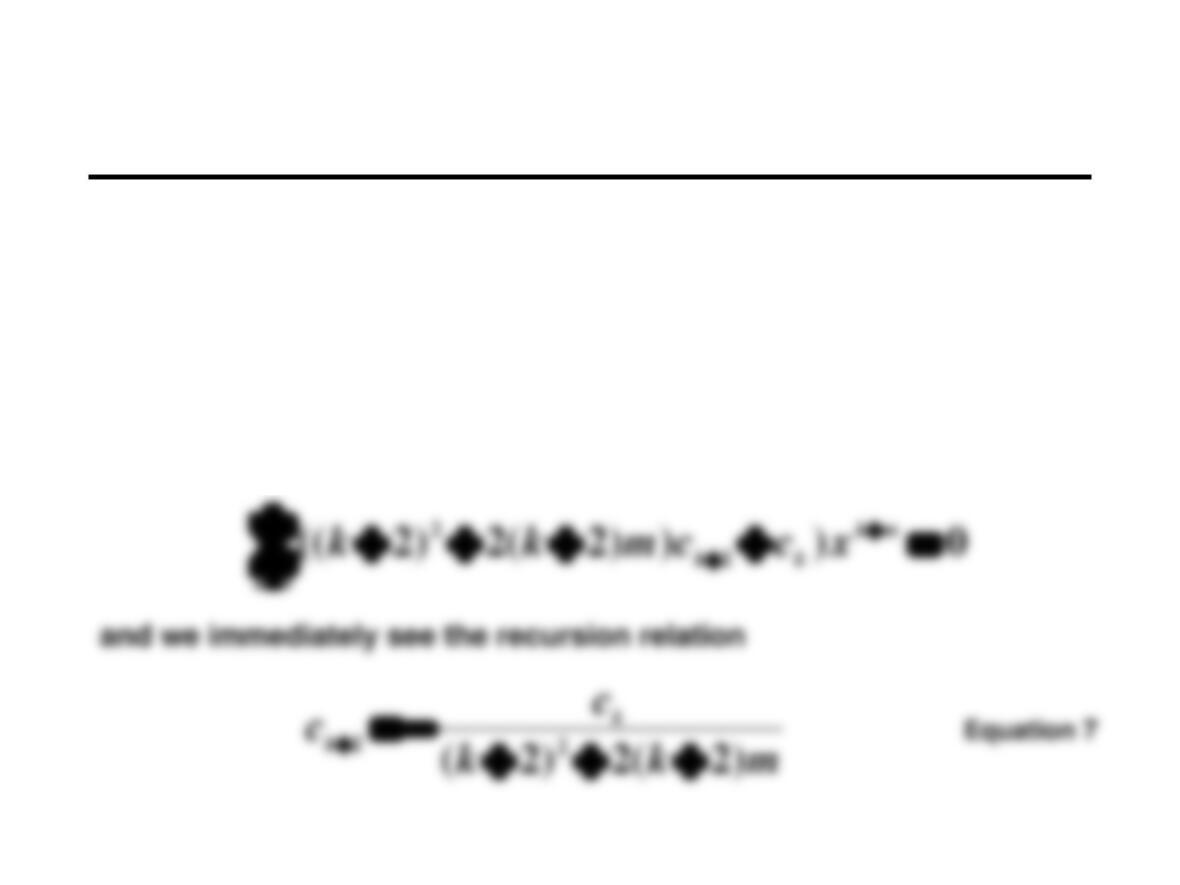
The coefficient of in Equation 4 is
To evaluate the higher order coefficients we rearrange the remaining
terms of Equation 4 into a more convenient form :
1−
x
1
2
))1()11)(1((
cm
=−++−++
=
=
−++
=
−+
=
−+ =−+++−++
0 2
22
2
2
2
2)()1)((
n n
n
n
n
n
n
n
n
n
n
nxcmxcxcnxcnn
Power Series Solutions:
Another Example (5)
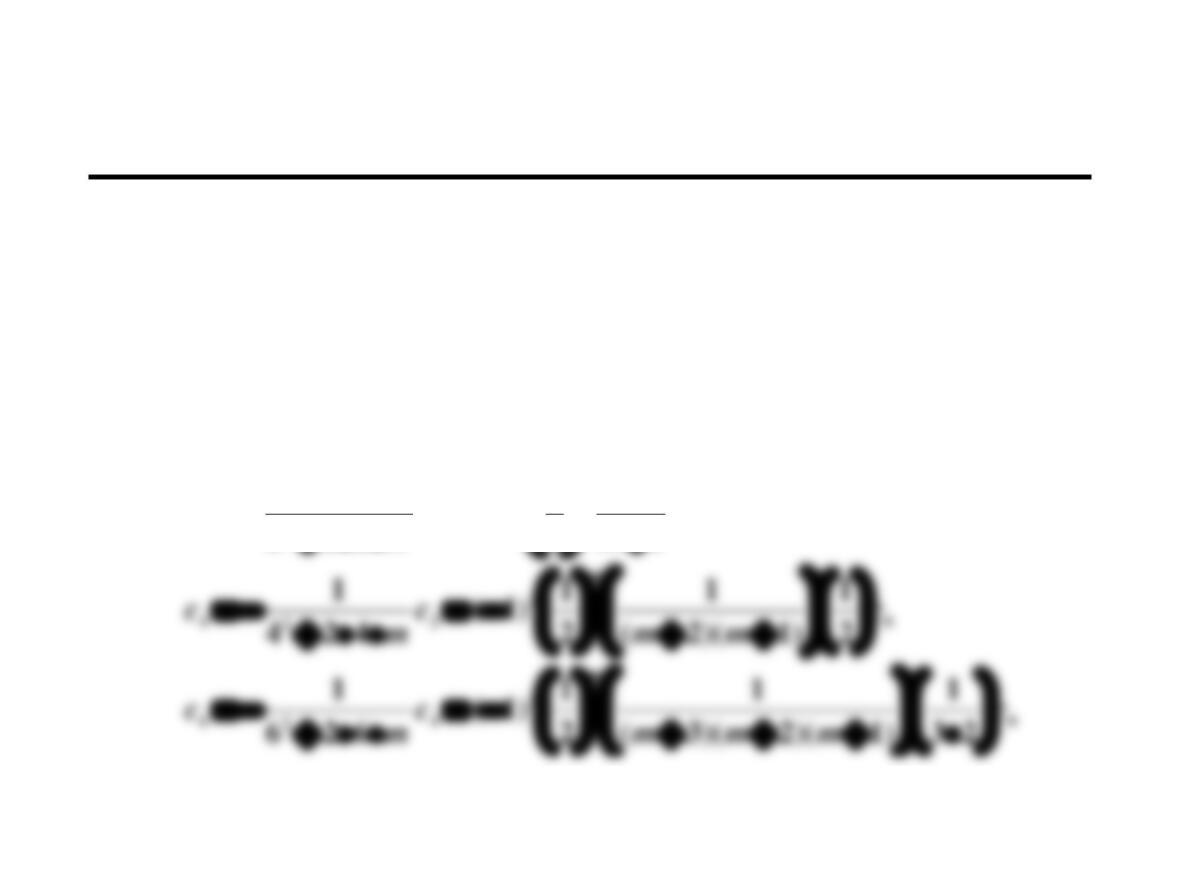
We need to represent Equation 6 in the form
To do this we replace nin the first sum with k+2 and replace nin the
second sum with k. This yields
=
+
0k
mk
kxa
Power Series Solutions:
Another Example (6)
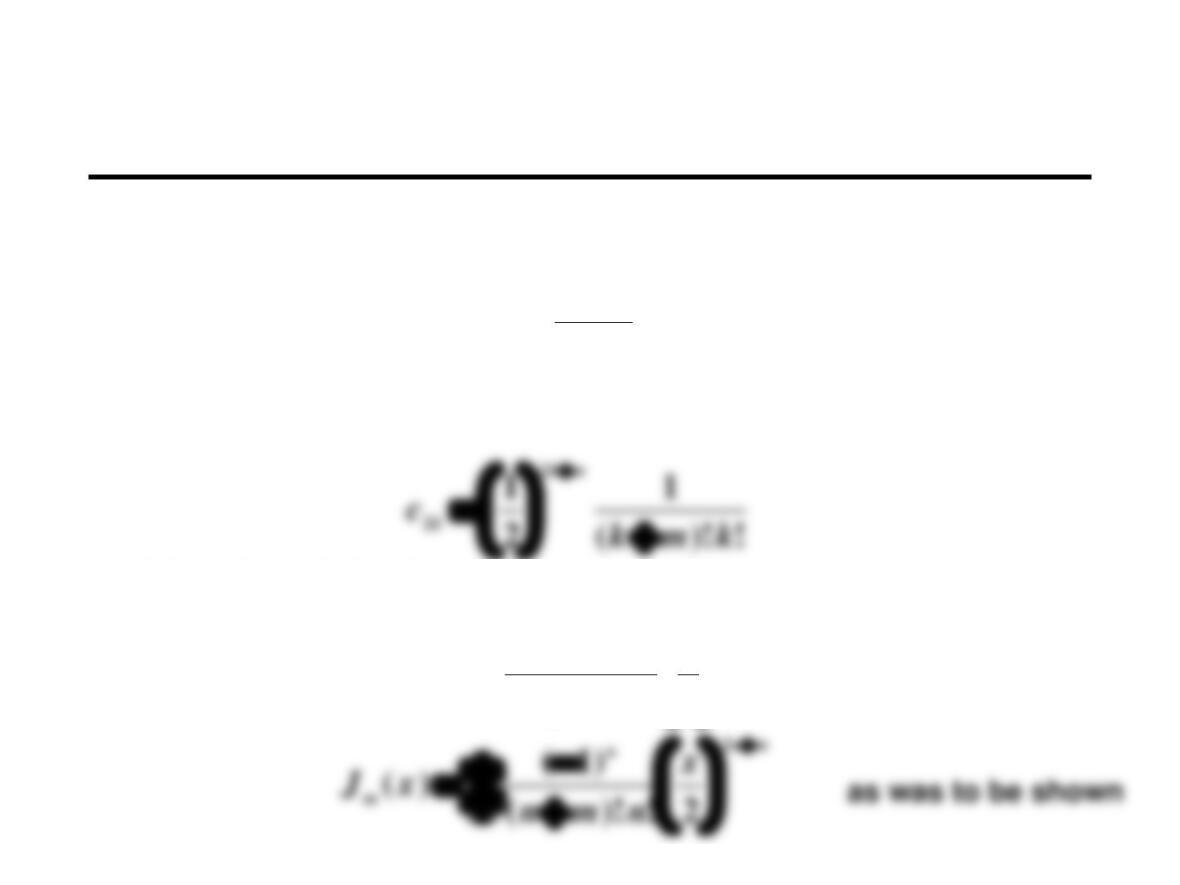
Letting k = 1 in Equation 7 and recalling that shows us that
for odd k.
Letting k = 0 in Equation 7 shows us that to have non-zero solution
to the ODE we must have . We have
0
1=c
0=
k
c
0
0c
0
2
0
2
2
1
1
2
1
)1(
222
1
c
m
c
m
c
+
−=
+
−=
Power Series Solutions:
Another Example (7)
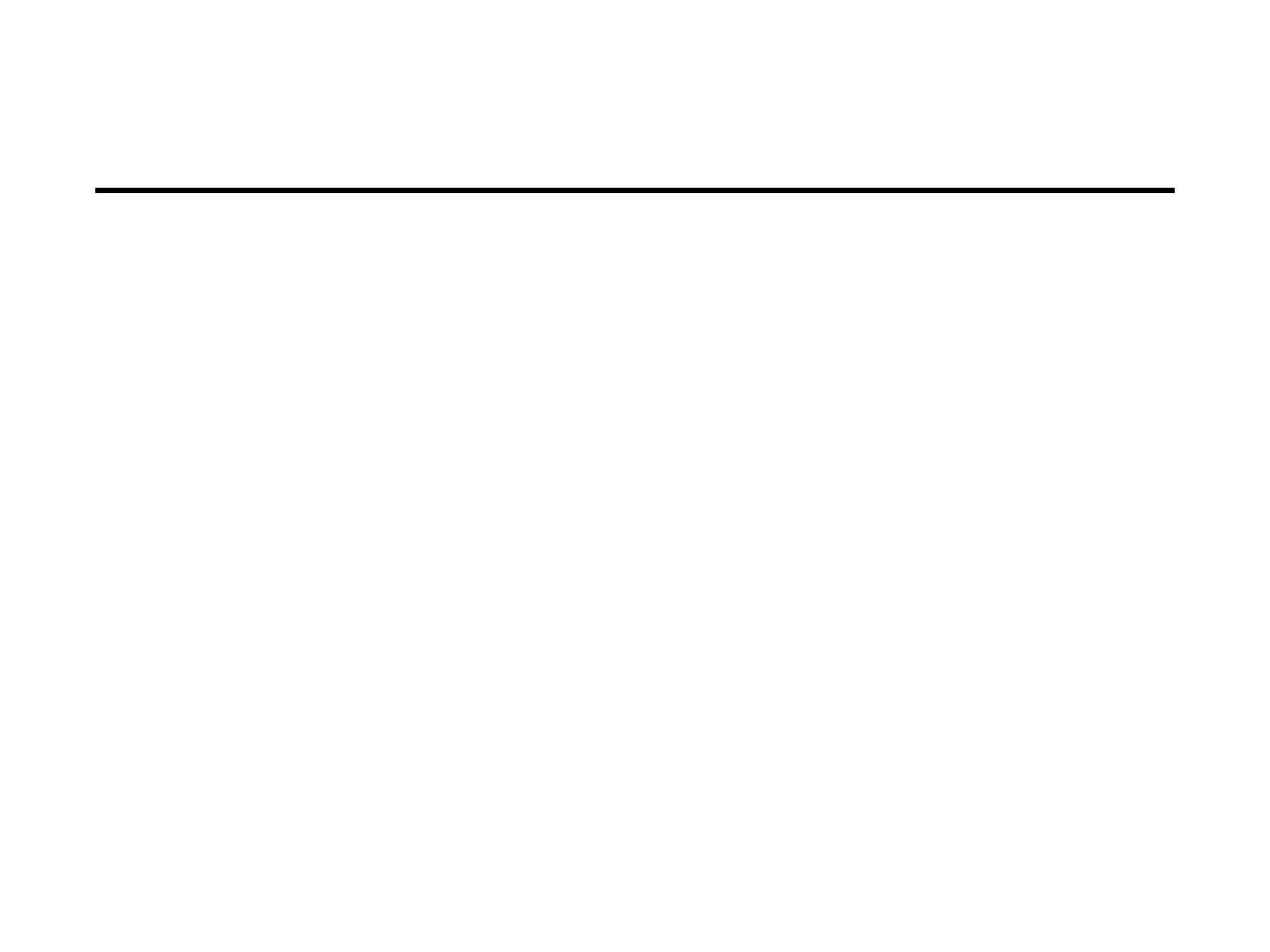
It is convenient and useful to let
Then the general coefficient can be written
and then the solution is
!2
1
0m
cm
=
mn
mn
n
n
m
x
nmn
xJ
+
+
=
+
−
=
2
2
0
2
1
!)!(
)1(
)(
Partial Differential Equations
Power Series Solutions:
Some General Rules
Power Series:
Some General Rules
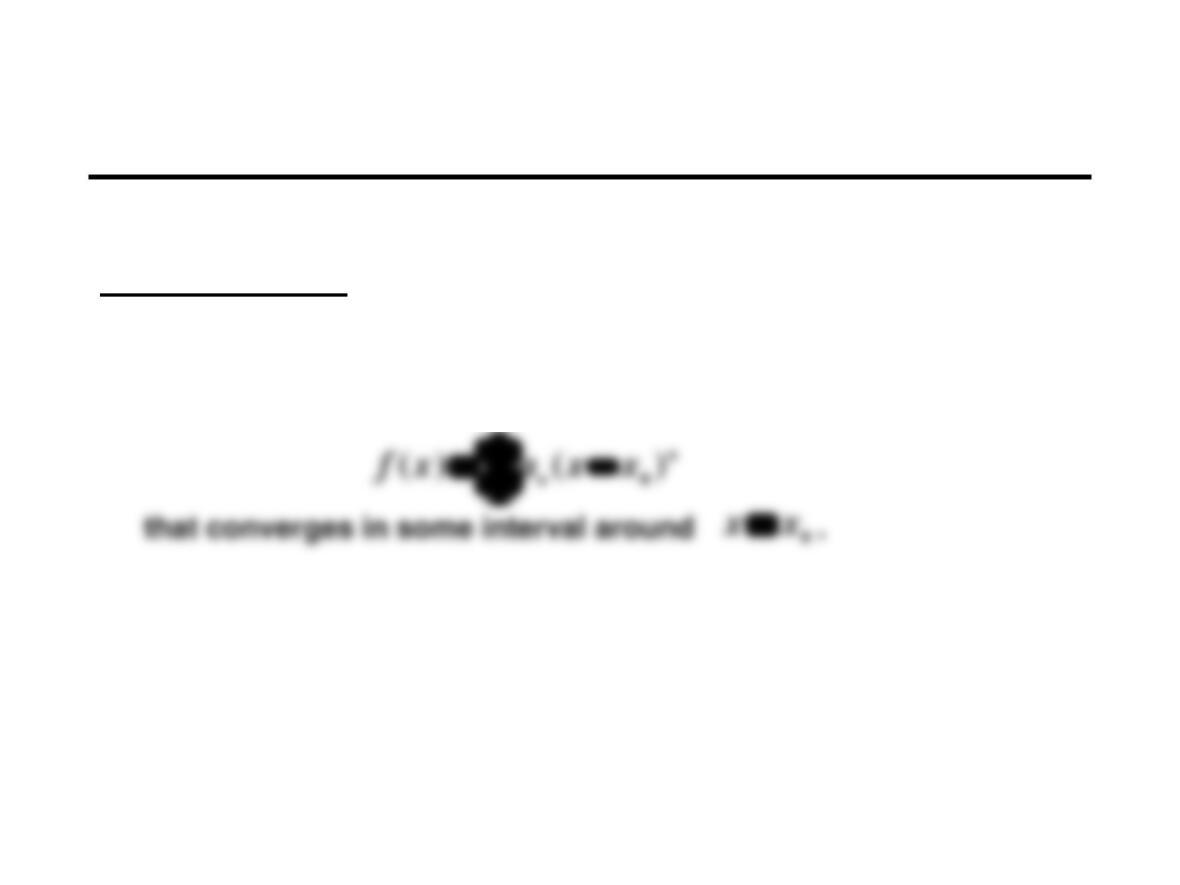
We have now seen three different forms of power series that satisfy
different ODEs:
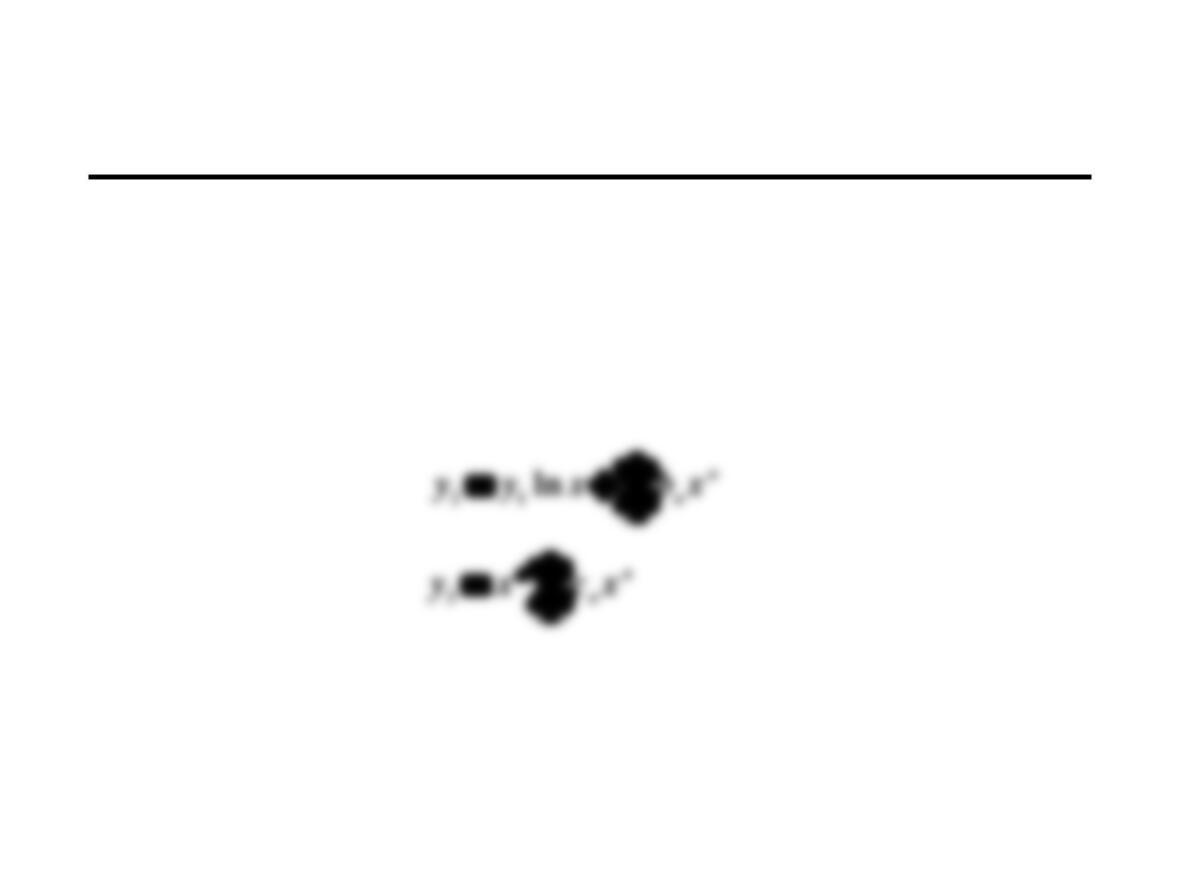
It is now time to state some general rules: Given a specific form of
ODE, what form of solution should we try?
n
n
nxay
=
=
0
1
Power Series:
Some General Rules (2)
A Few Definitions:
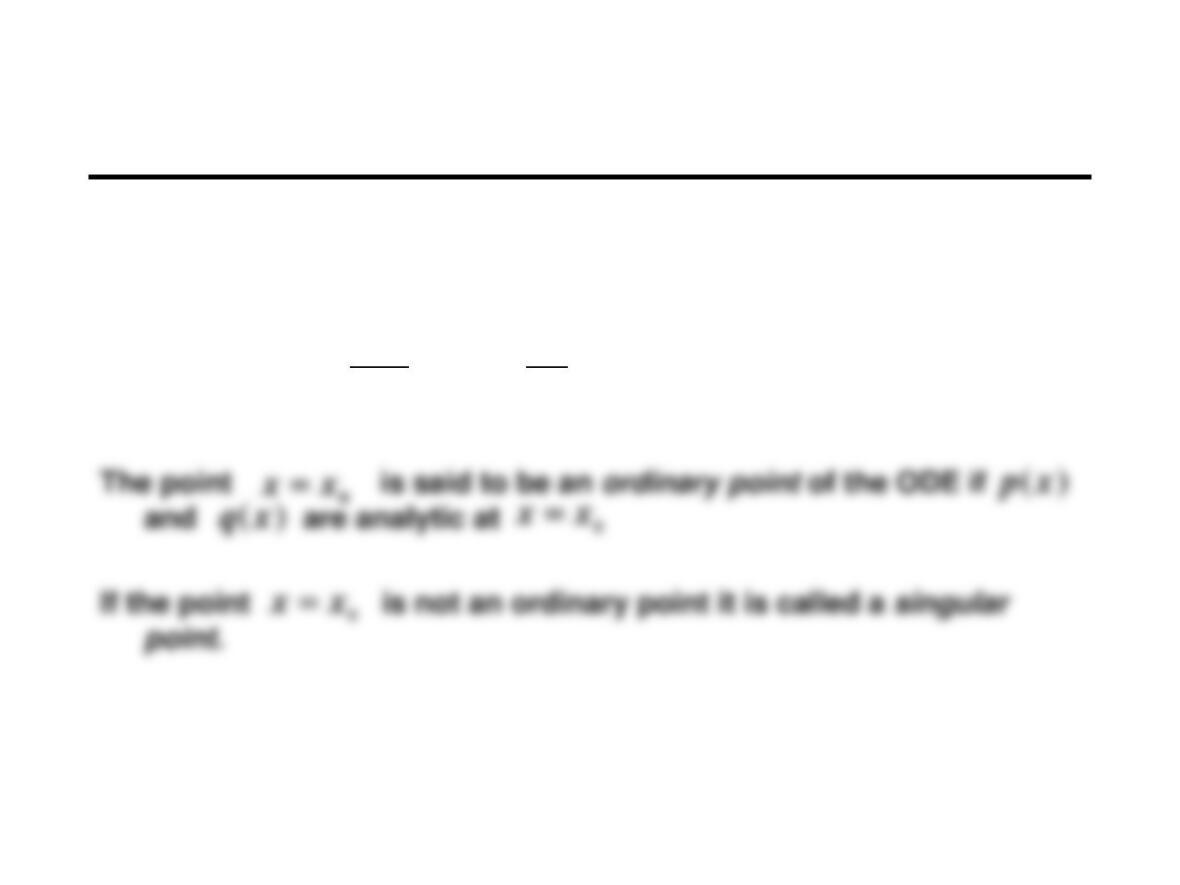
A function is said to be analytic at if it can be
expanded in a power series
)( xf
0
xx =
0
xx =
Power Series:
Some General Rules (3)
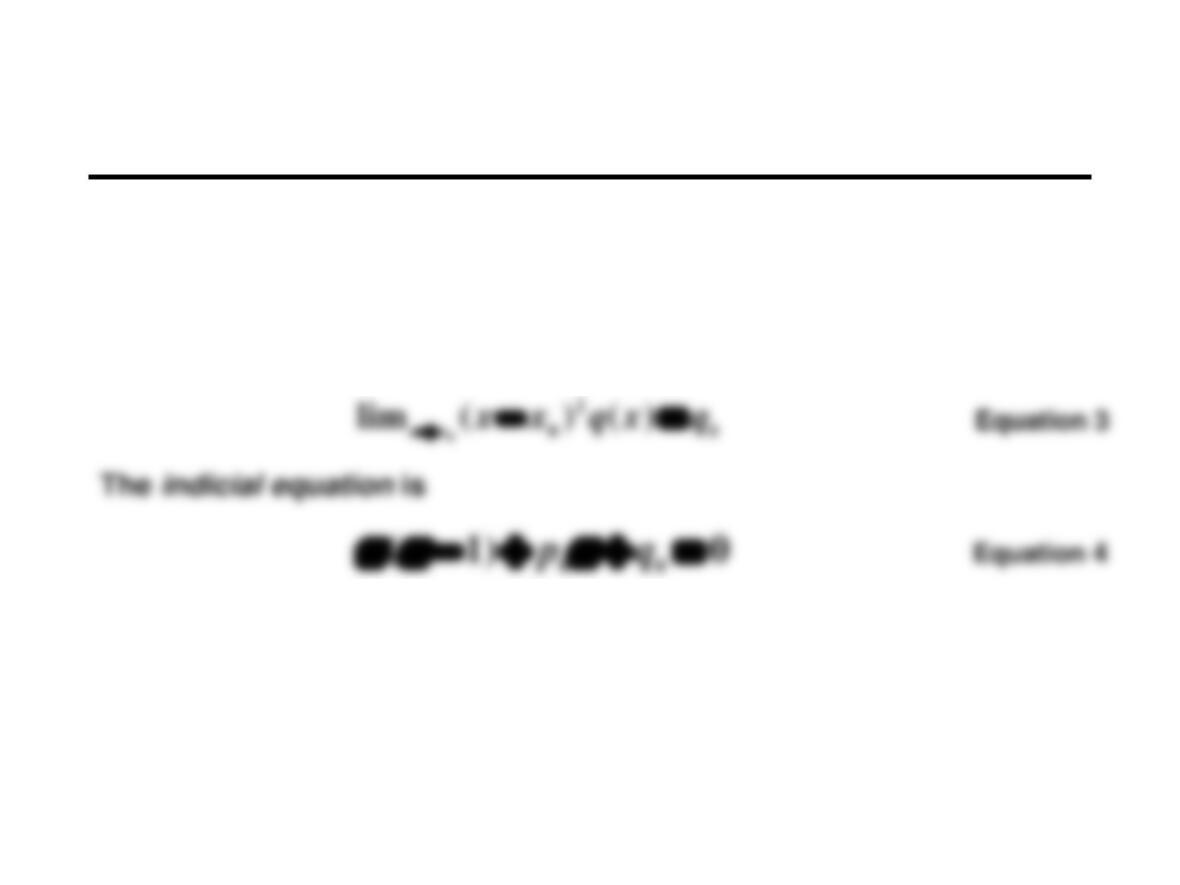
Consider the ODE
0)()(
2
2
=++ yxq
dx
dy
xp
dx
yd
Equation 1
Power Series:
Some General Rules (4)
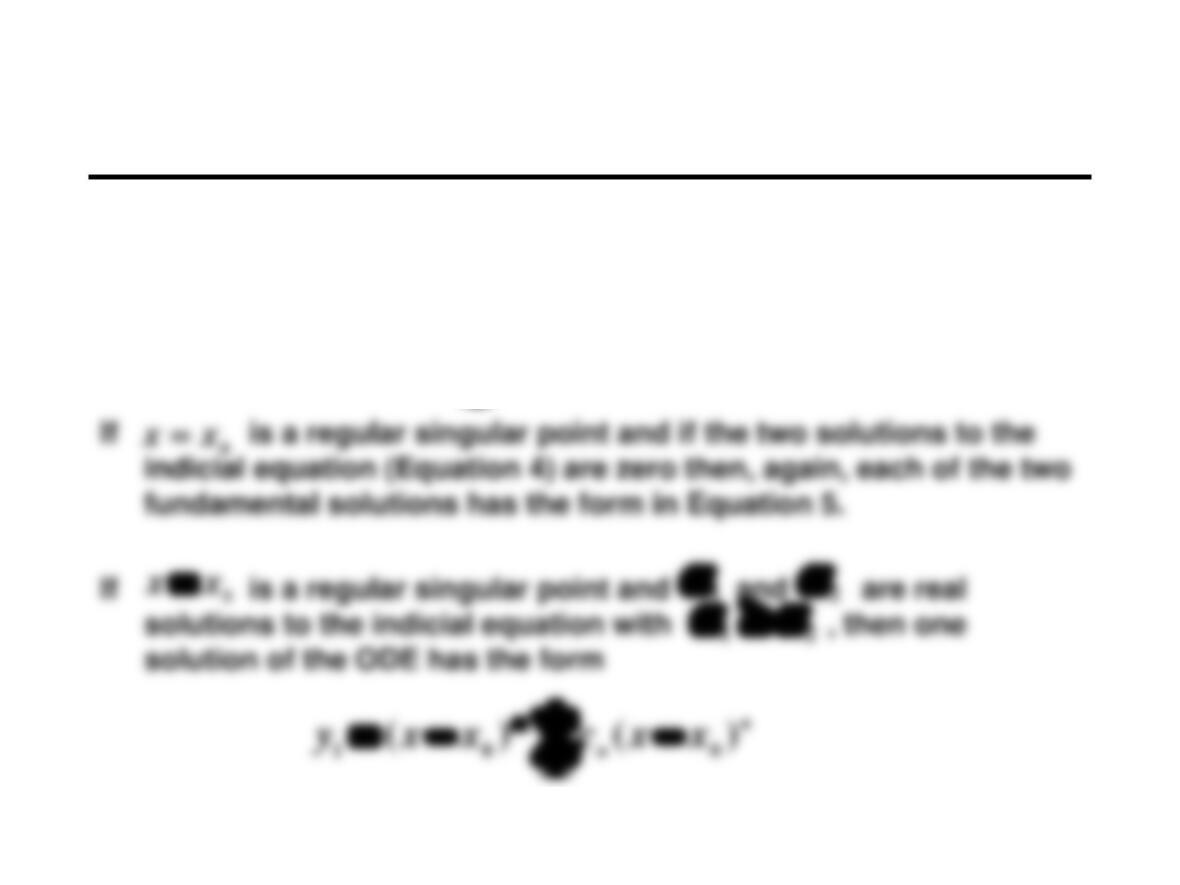
A singular point is called a regular singular point of the ODE
(Equation 1) if
With these definitions, some general rules follow.
00
)()(lim
0
pxpxx
xx
=−
→
Equation 2
Power Series:
Some General Rules (5)
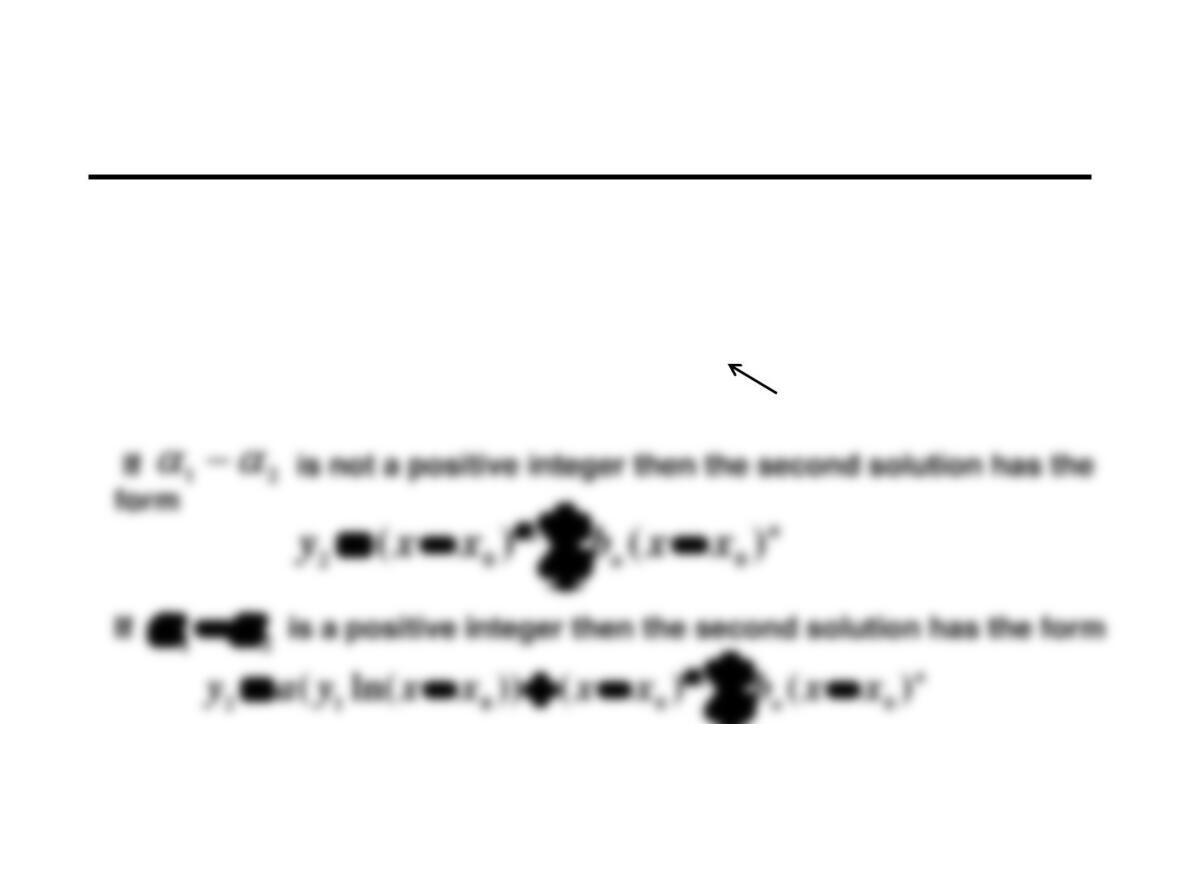
If is an ordinary point of the ODE (Equation 1) then each of
the two fundamental solutions has the form
0
xx =
n
n
ni xxcy )( 0
0
−=
=
Equation 5
Power Series:
Some General Rules (6)
If then the second fundamental solution of the ODE has the form
If then
where the coefficient may or may not be zero. The easiest way to
determine whether it must be nonzero is to try for a solution without it.
n
0
=
a
21
n
n
nxxbxxxxyy )()()ln( 0
1
0012
1−−+−=
=
21
=
Note starting point
Homework Assignment 25
Read:
Chapter 9, Sections 9.2.3, 9.2.4 and 9.2.5
Work: