
Differential Equations
for Engineers:
the Essentials
Class 23 notes
Agenda: Class 23
Review Homework Assignment 21
Lectures:
Partial Differential Equations:
Heat Equation:

Partial Differential Equations
Heat Equation: Boundary Value Example in Cartesian
Coordinates
Solving the Heat Equation:
Separation of Variables
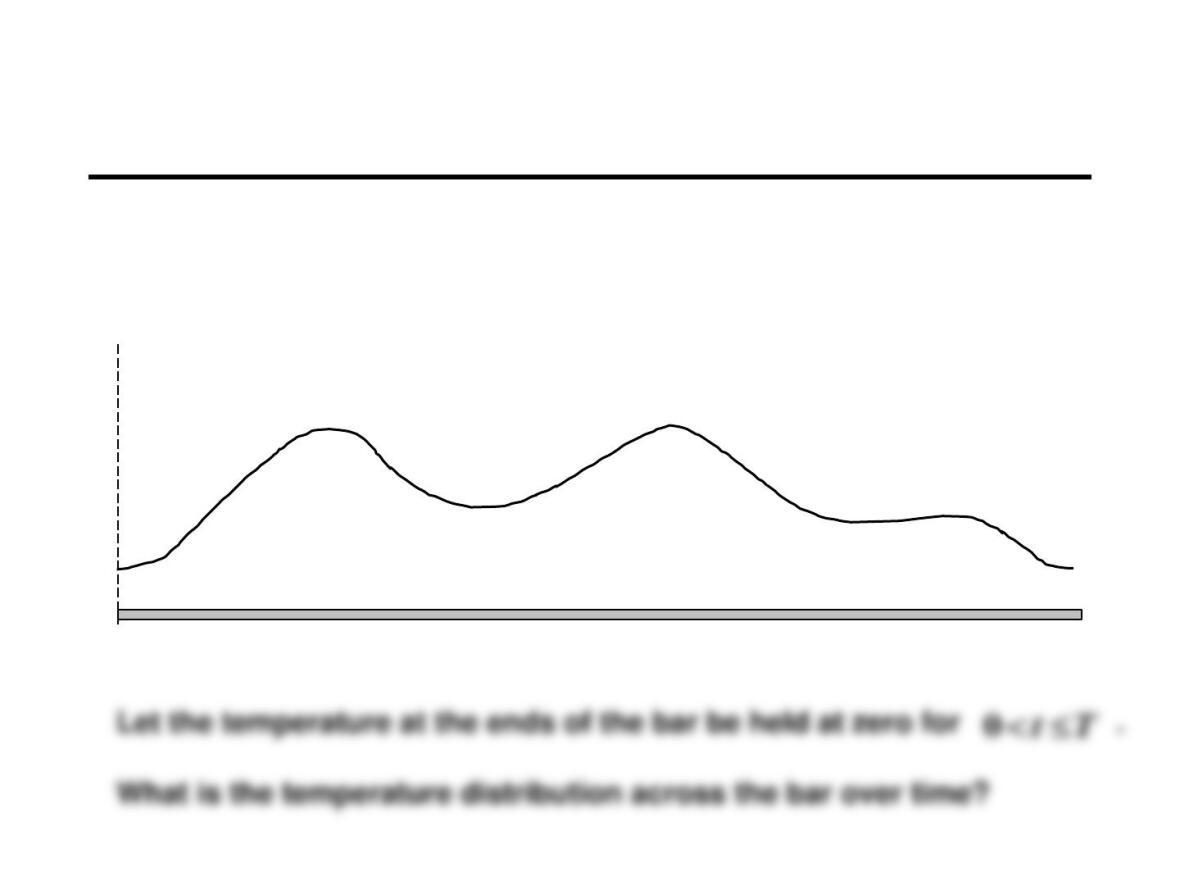
Consider a long rod with an arbitrary initial temperature distribution
)(
0xT
Temperature at
0=x
Lx =
0=t
Solving the Heat Equation:
Separation of Variables (2)
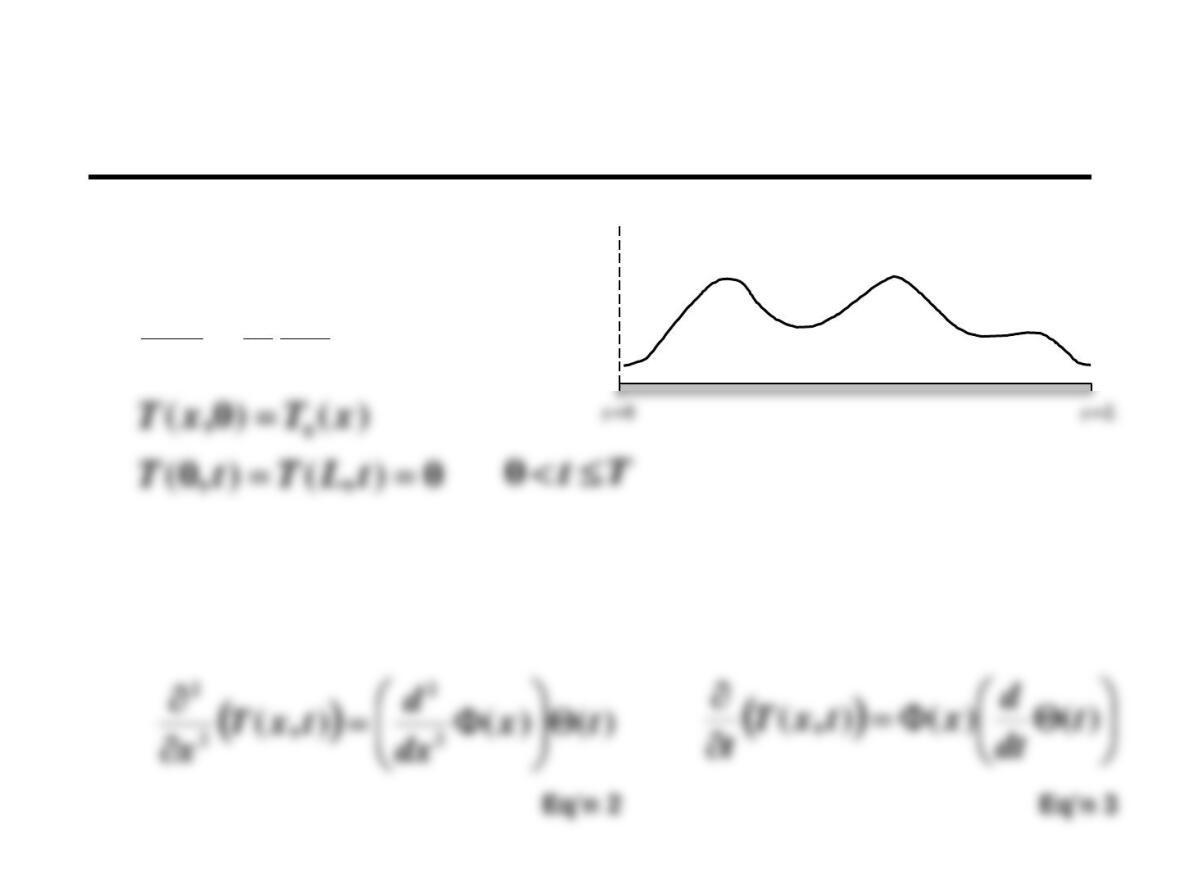
The equations are
Separation of variables:
Try the solution which leads to
)()0,( 0xTxT =
1
2
2
=
t
T
x
T
)()(),( txtxT =
Eq’n 1
Solving the Heat Equation:
Separation of Variables (3)
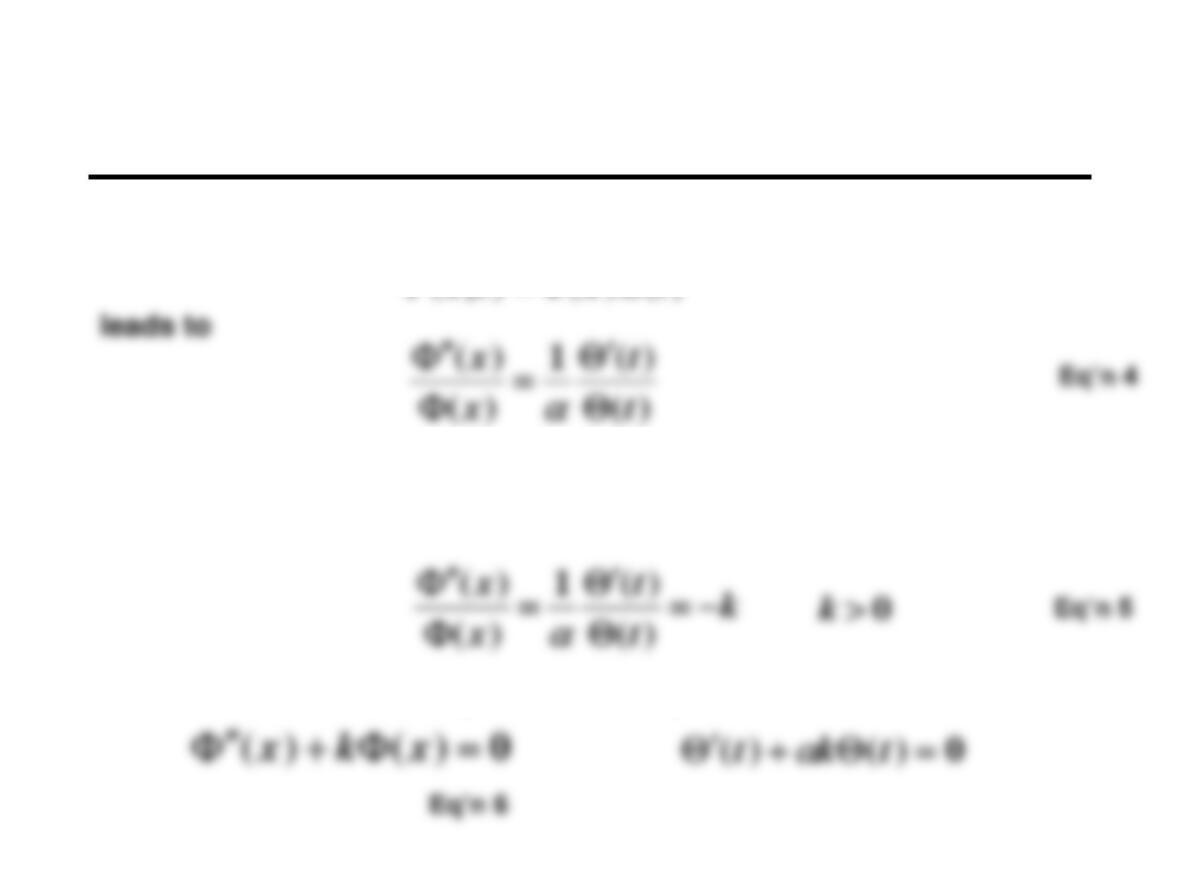
Substituting Equations 2 and 3 into Equation 1 and dividing by
Since the left side of Equation 4 is a function only of xand the right
side a function only of t , the two sides must equal a constant. We
will later determine that this constant must be a negative number:
Then we have two ordinary differential equations:
)()(),( txtxT =
Solving the Heat Equation:
Separation of Variables (4)
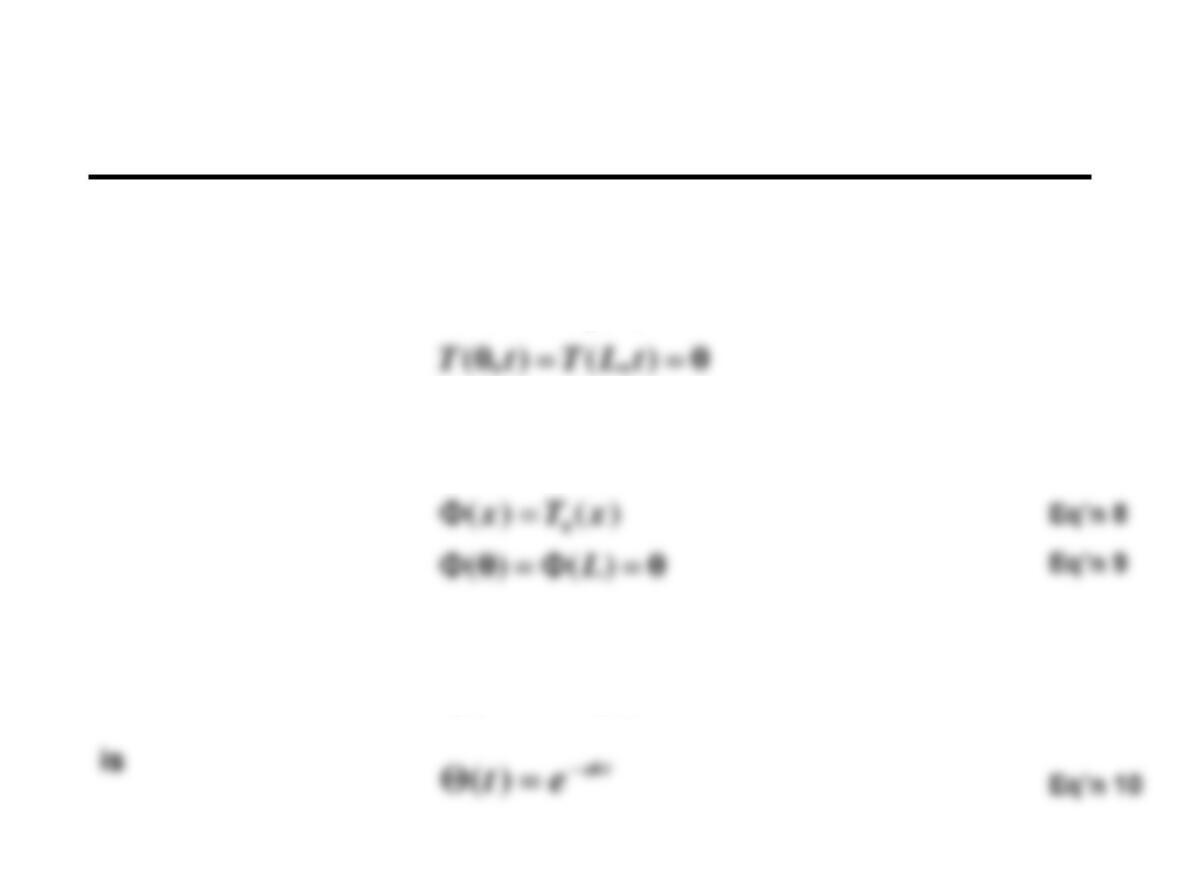
To achieve the boundary conditions
we can let
With Equation 7 as its initial condition, the solution to
)()0,( 0
=
xTxT
1)0(
=
Eq’n 7
0)()( =+tkt
Solving the Heat Equation:
Separation of Variables (5)
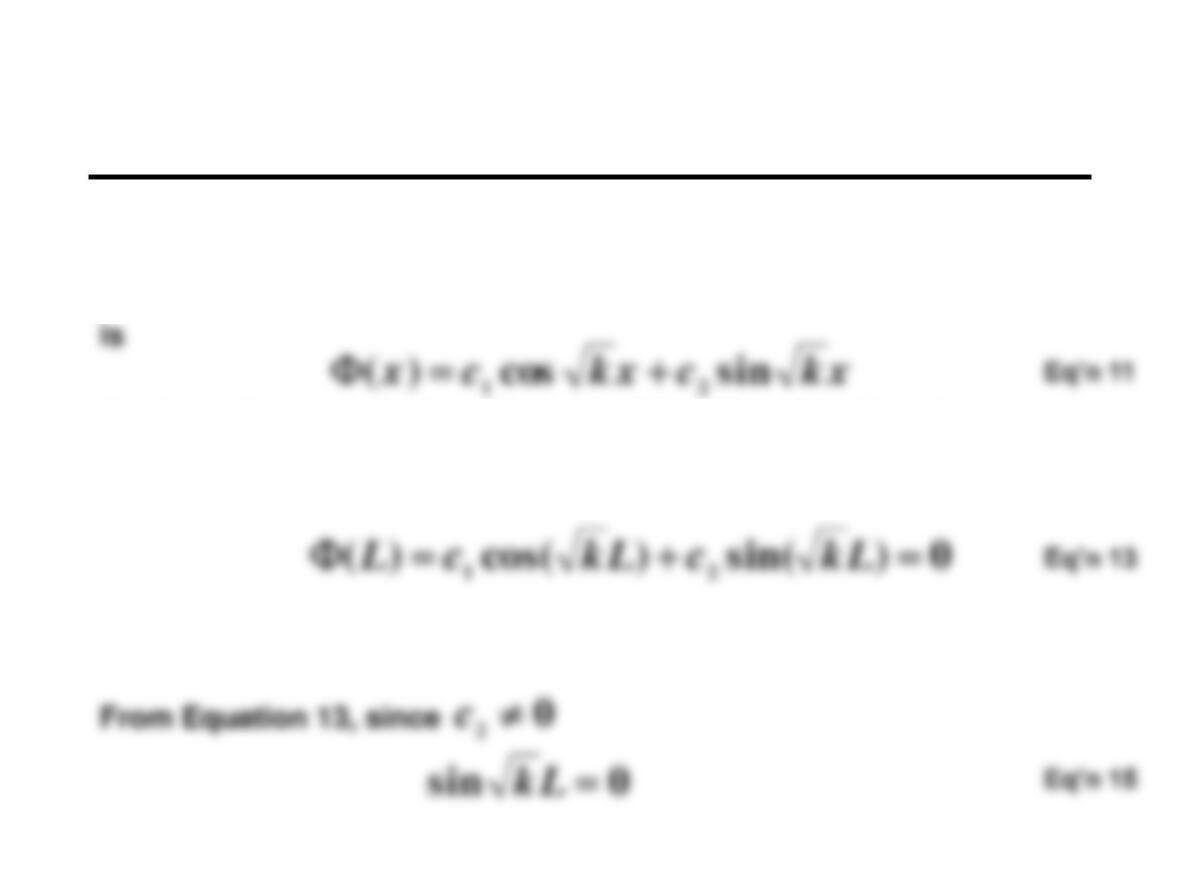
The general solution to
Applying the two-point boundary condition (Equation 9) we have
From Equation 12
0)()( =+ xkx
0)0sin()0cos()0(
21
=+=
cc
Eq’n 12
0
1=c
Eq’n 14
Solving the Heat Equation:
Separation of Variables (6)
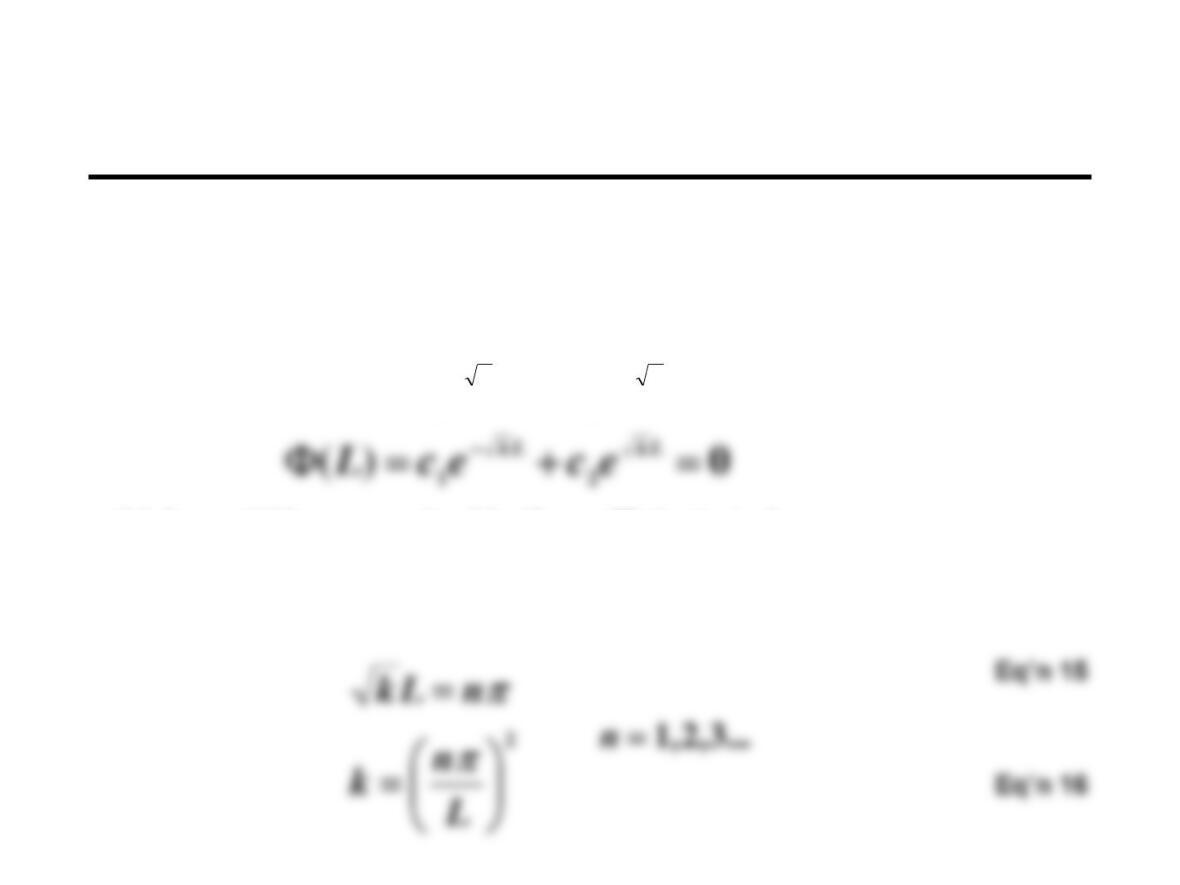
Note that if we had chosen kto be negative in Equation 5, then
positive then Equations 12 and 13 would have become
which would have required both coefficients to be zero.
Returning to Equation 15, we must have
0)0(
)0(
2
)0(
1
=+=
−
kk
ecec
Solving the Heat Equation:
Separation of Variables (7)
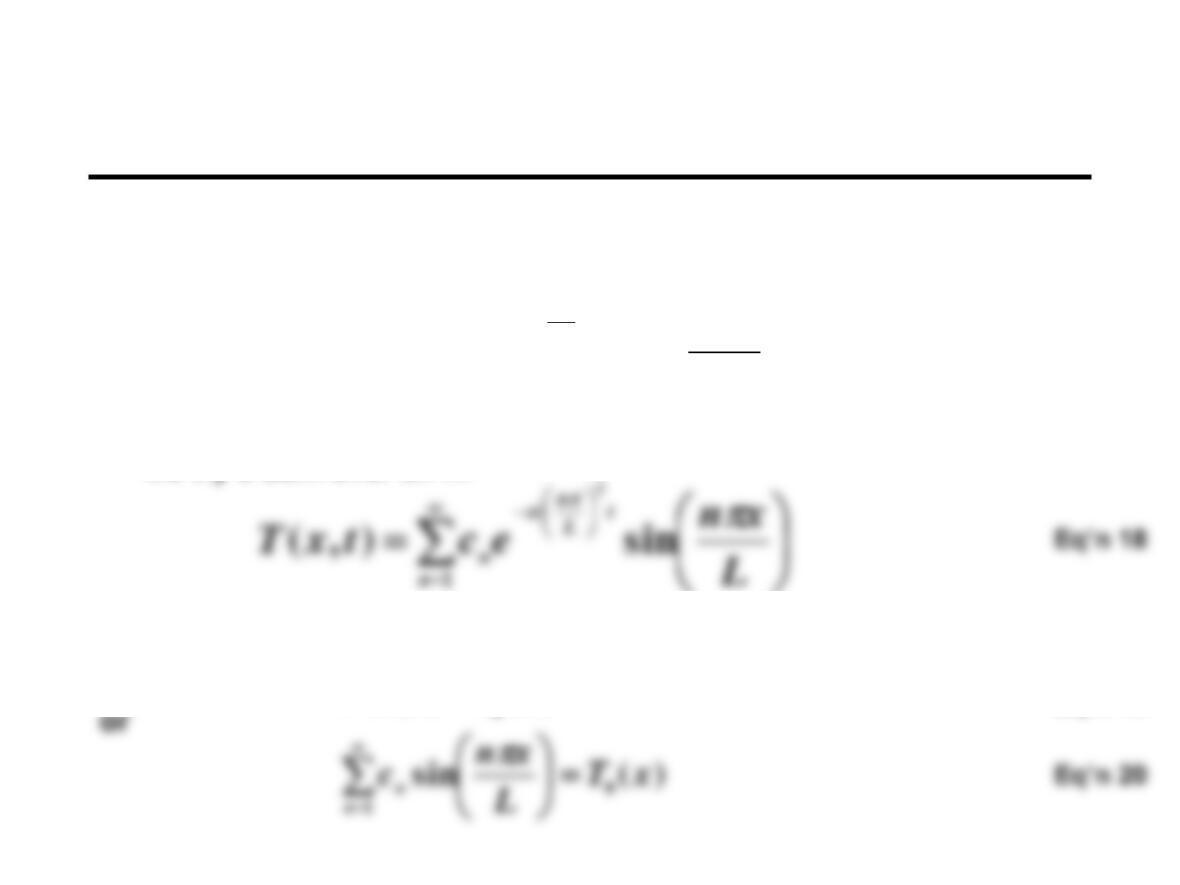
Using Equations 10, 11, 14 and 16 in
we arrive at
We have no reason to choose one value of nover another. Therefore
we try a sum over all n:
The final condition we must meet is
)()(),( txtxT =
=
−
L
xn
ectxT
t
L
n
sin),(
2
2
…3,2,1=n
Eq’n 17
)()0,(
0
xTxT
=
Eq’n 19
Solving the Heat Equation:
Separation of Variables (8)
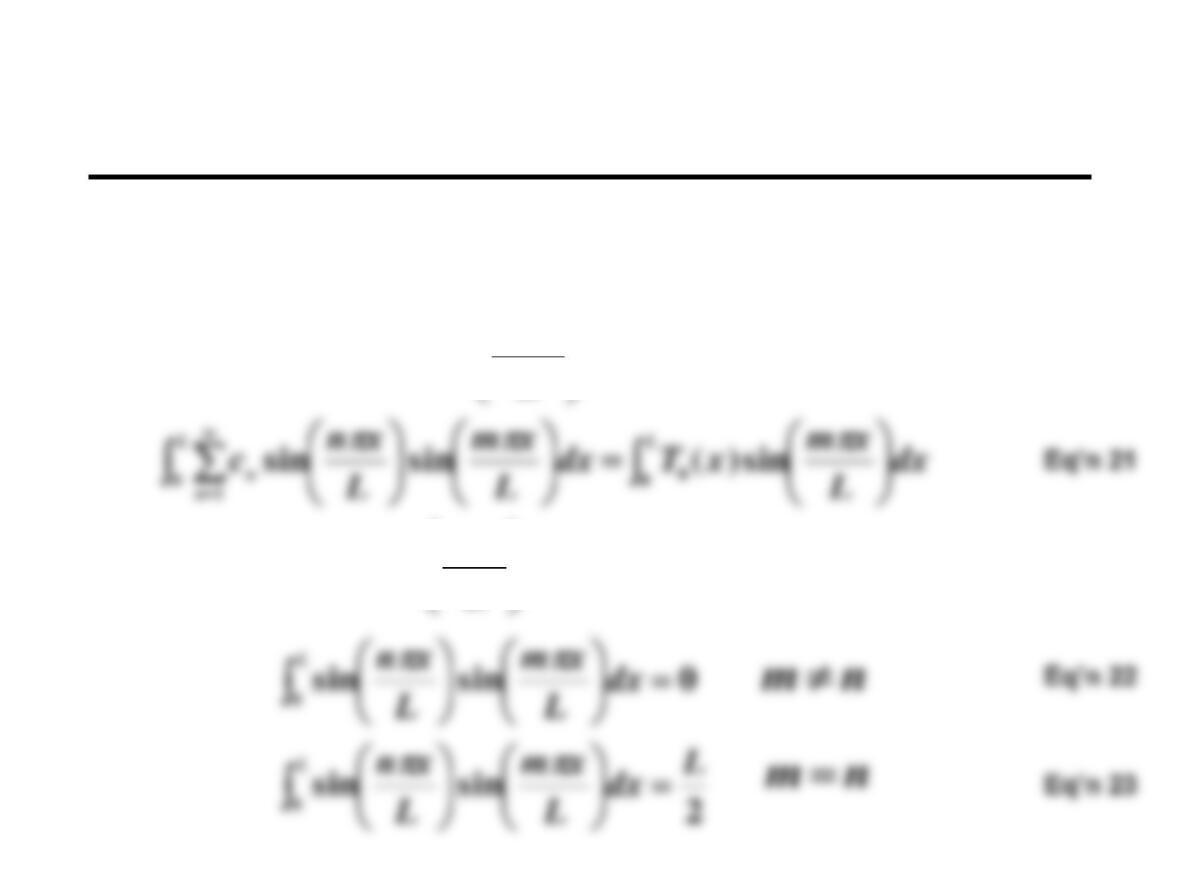
Can the coefficients be chosen to satisfy Equation 20? Generally yes.
Multiply Equation 20 by and integrate from 0to L:
The set of functions is orthogonal, meaning that
n
c
L
xm
sin
L
xn
sin
Solving the Heat Equation:
Separation of Variables (9)
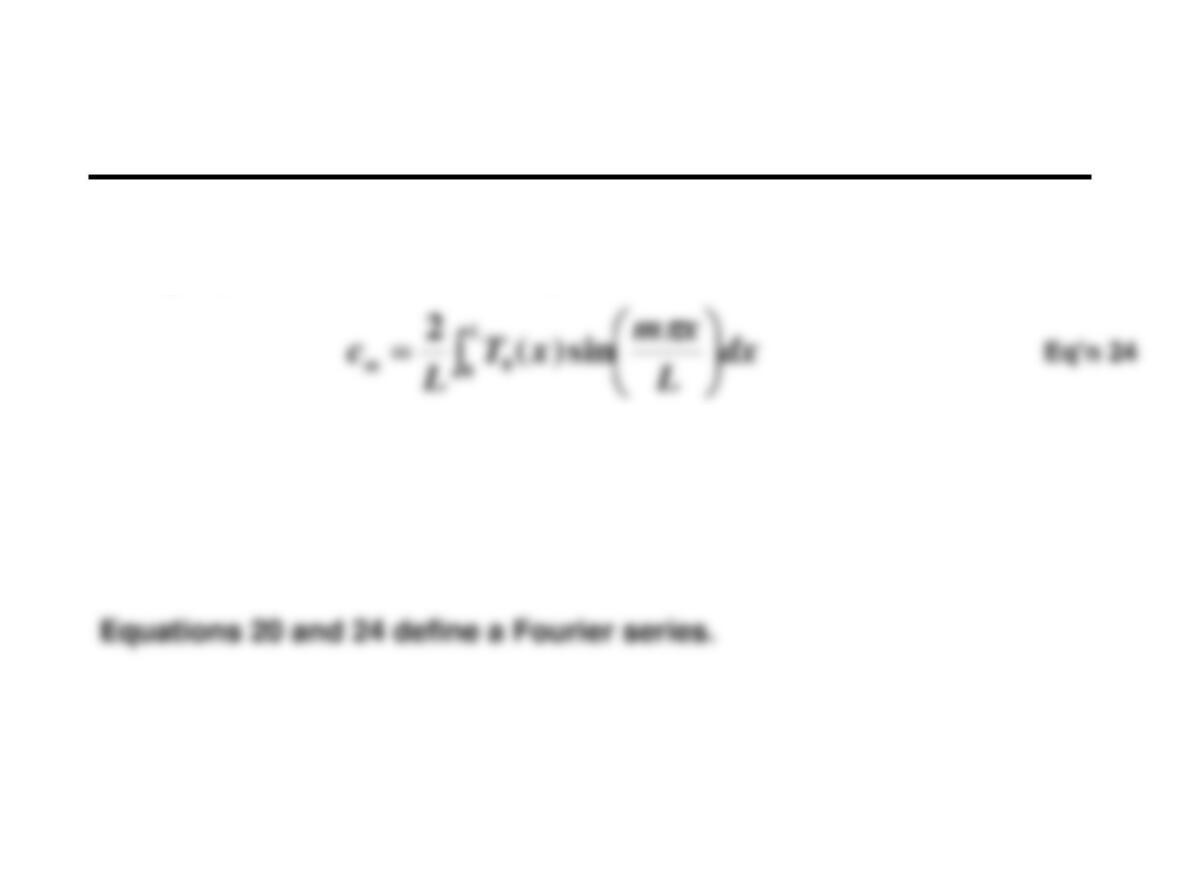
Using Equations 21 and 22 in Equation 20, we have
Under relatively weak conditions on the initial distribution the
infinite series in Equation 20 indeed converges to and
Equations 18 and 24 converge to a solution of Equation 1 and its
conditions.
)(
0xT
)(
0xT