
First Order Linear Differential Equations
Example: Exposed water pipe in cyclical
ambient temperature
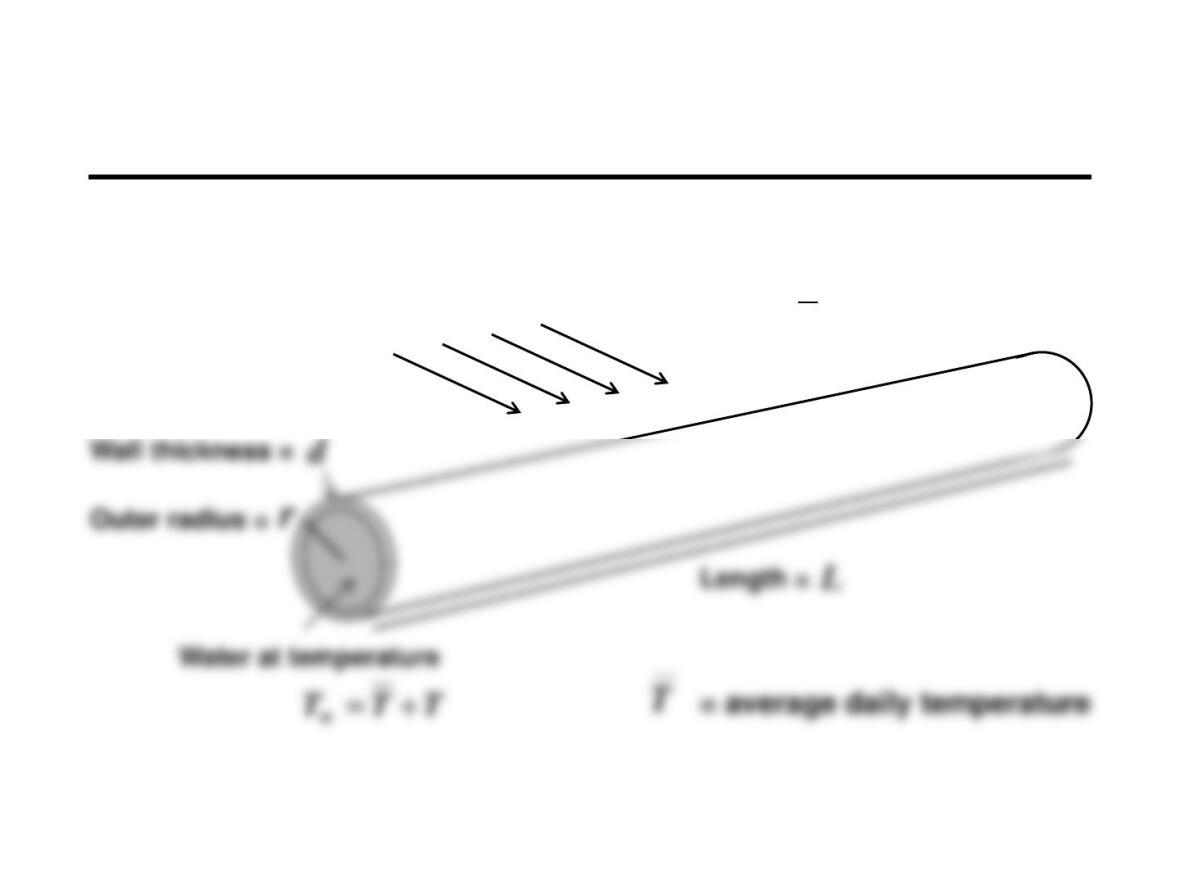
Air at temperature
tTTT
sin
0
+=
Exposed Water Pipe in Cyclical
Ambient Temperature
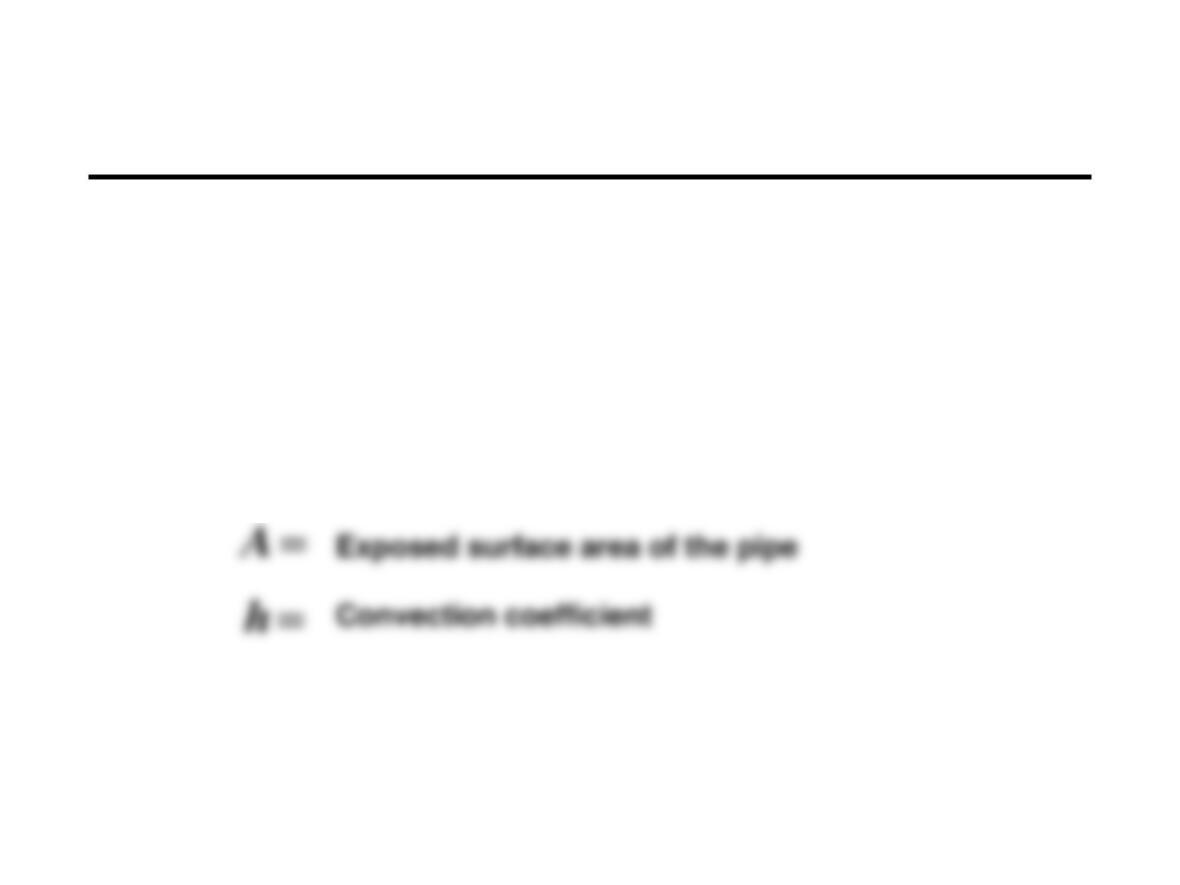
Exposed Water Pipe in Cyclical
Ambient Temperature (2)
Assuming pipe wall is thin and made of material that is a good heat
conductor, by Newton’s law of cooling, the heat transferred from
air to water is
where
)( W
TThAq−=
Exposed Water Pipe in Cyclical
Ambient Temperature (3)
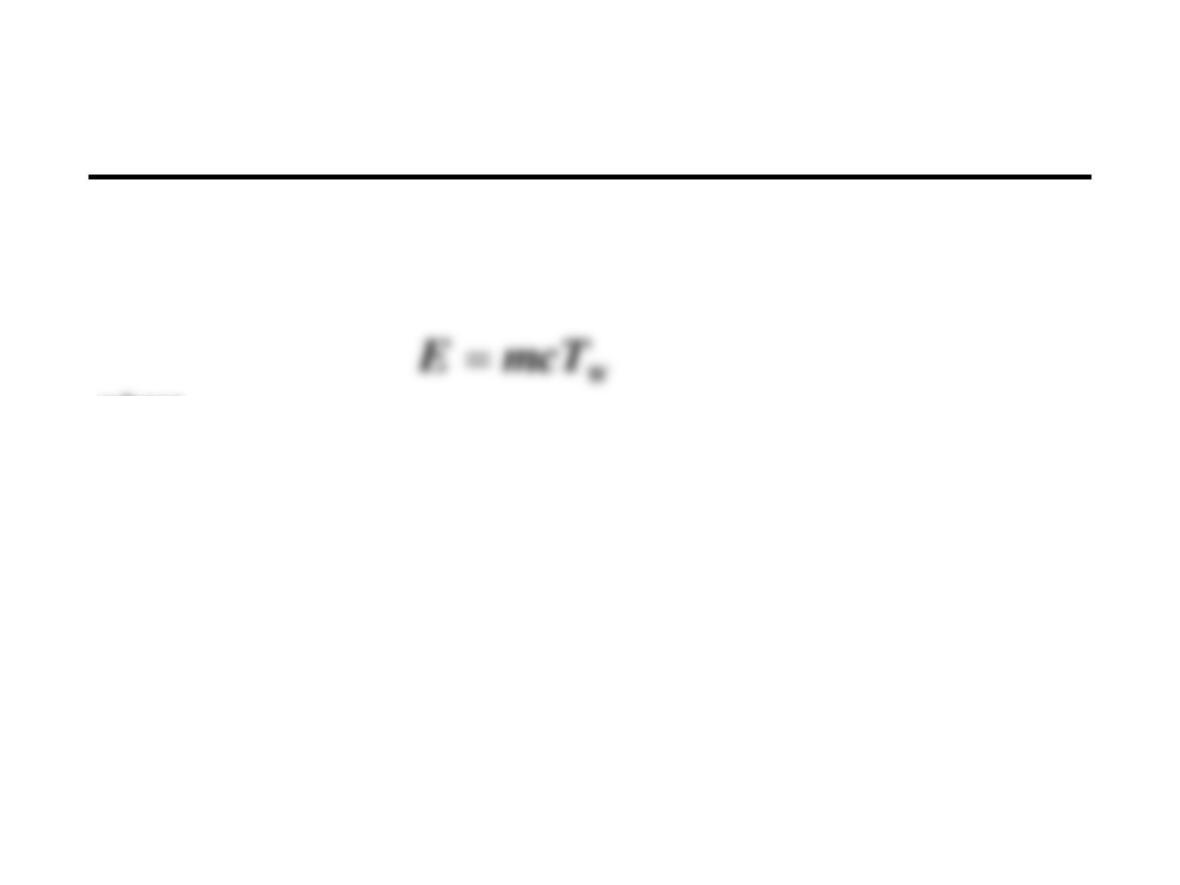
The thermal energy stored in the water is
where
=m
mass of the water
=c
specific heat of water
Exposed Water Pipe in Cyclical
Ambient Temperature (4)
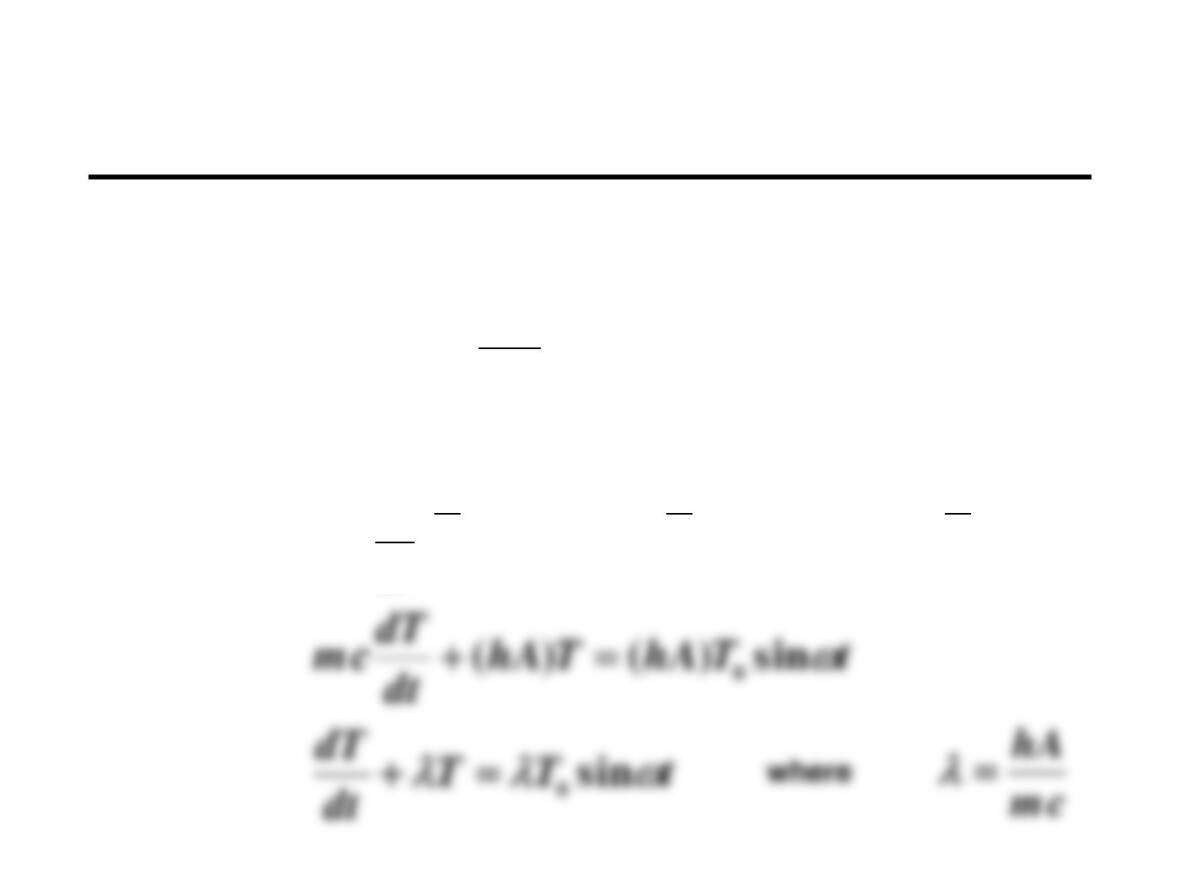
Key physical principle:
which leads to
( ) ( )
TTtTThATT
dt
d
mc
)()sin(
0
+−+=+
q
dt
dE =
Exposed Water Pipe in Cyclical
Ambient Temperature (5)
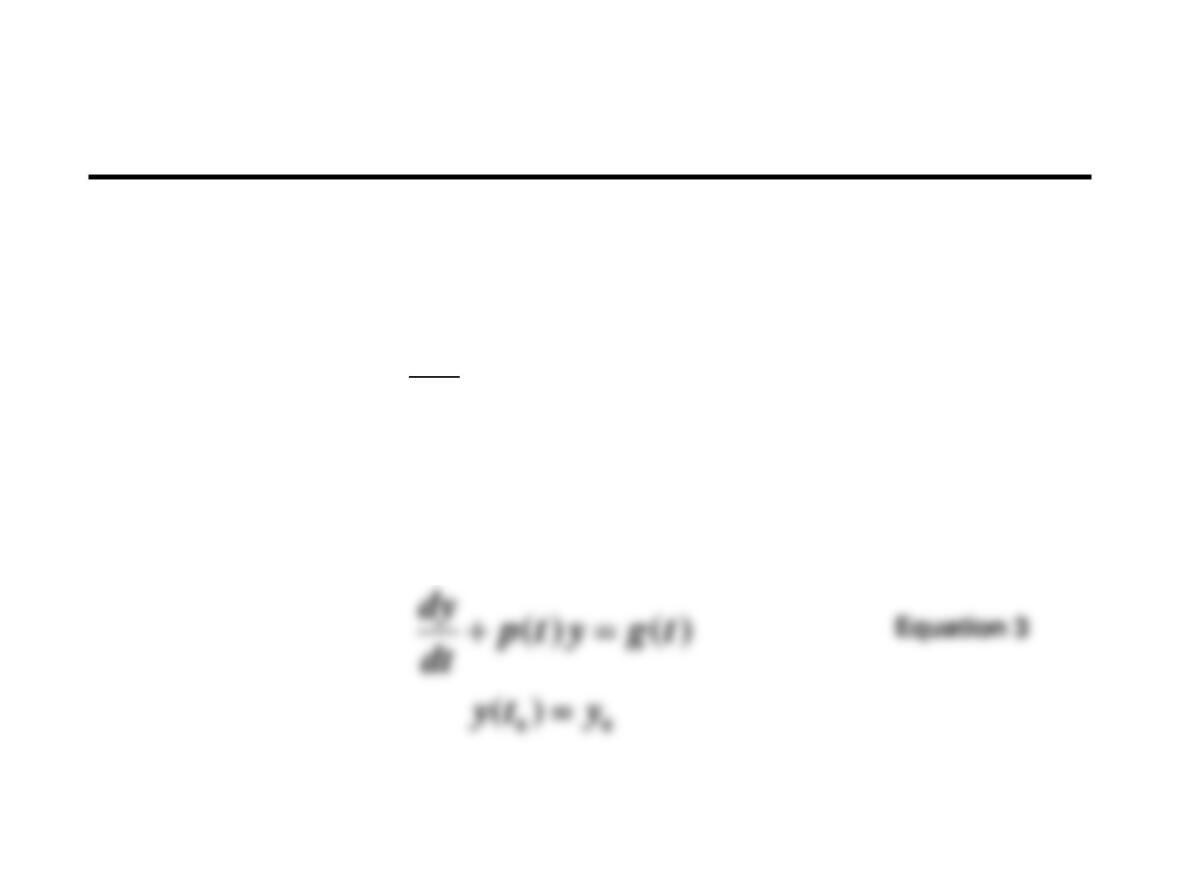
How do we solve
Let’s be more inclusive and ask how do we solve the general linear
first order nonhomogeneous equation
tTT
dt
dT
sin
0
=+
?
Equation 2
General Solution to Nonhomogeneous
Linear First Order ODEs
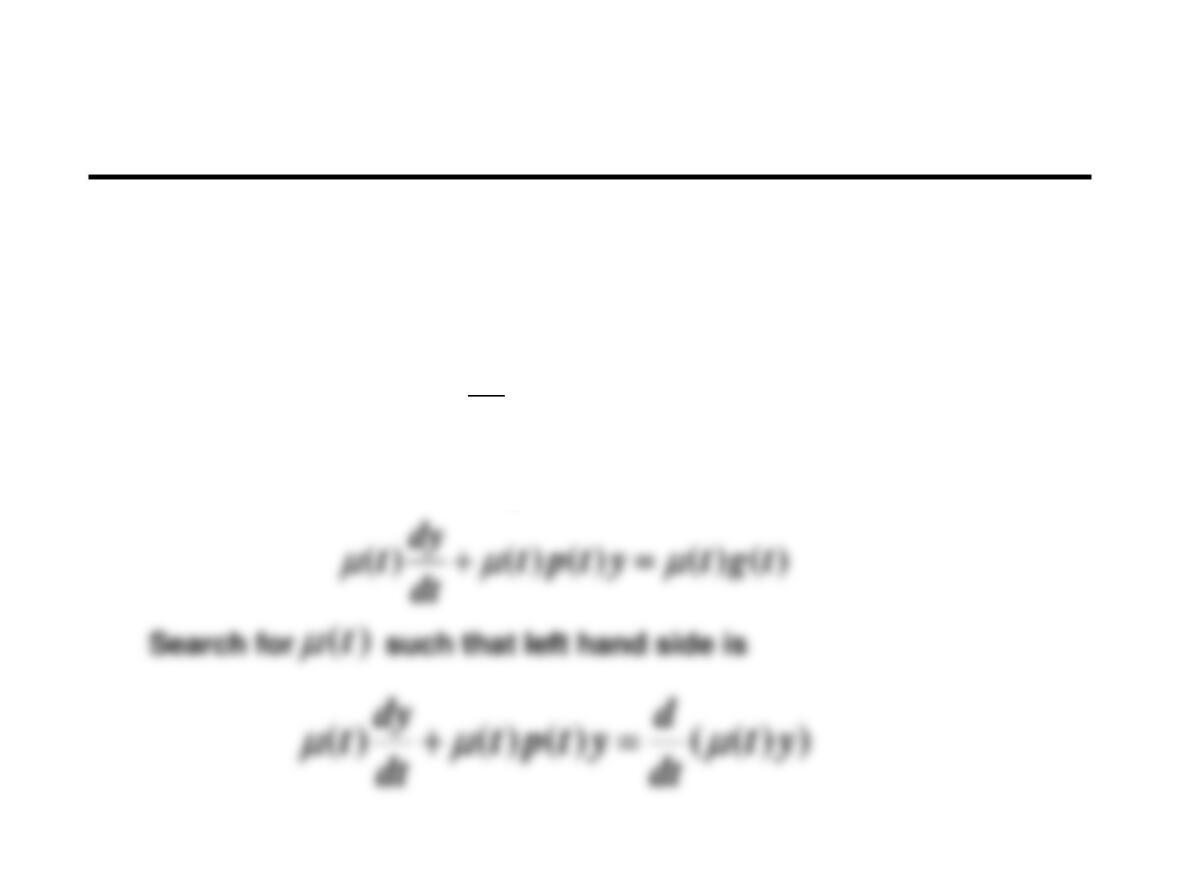
We begin by searching for an integrating factor that,
when multiplied into the equation, turns the left-hand side into
Multiplying Equation 3 by :
)(t
))(( yt
dt
d
)(t
)(t
General Solution to Nonhomogeneous
Linear First Order ODEs (2)
y
dt
d
dt
dy
tyt
dt
d
ytpt
dt
dy
t
+==+ )())(()()()(
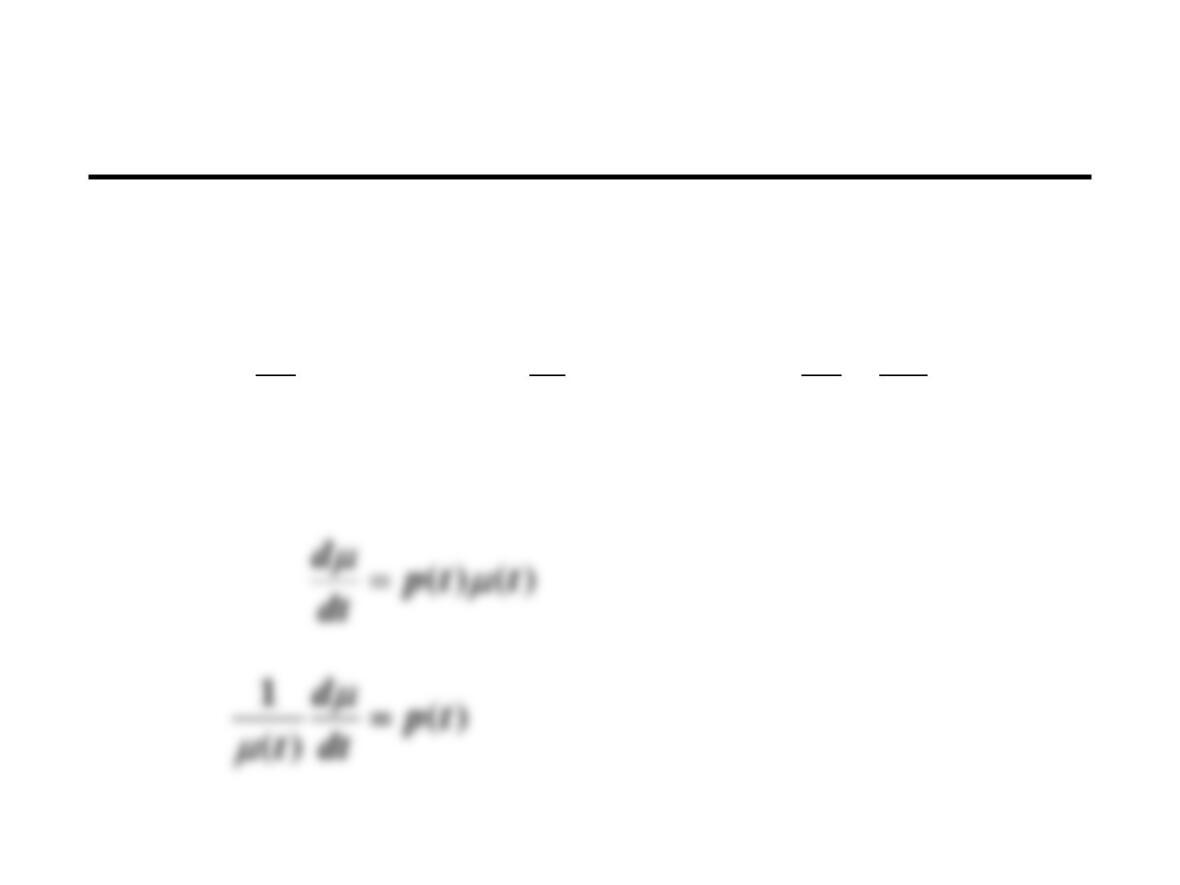
We must have
which means that
General Solution to Nonhomogeneous
Linear First Order ODEs (3)
)())((ln tpt
dt
d=
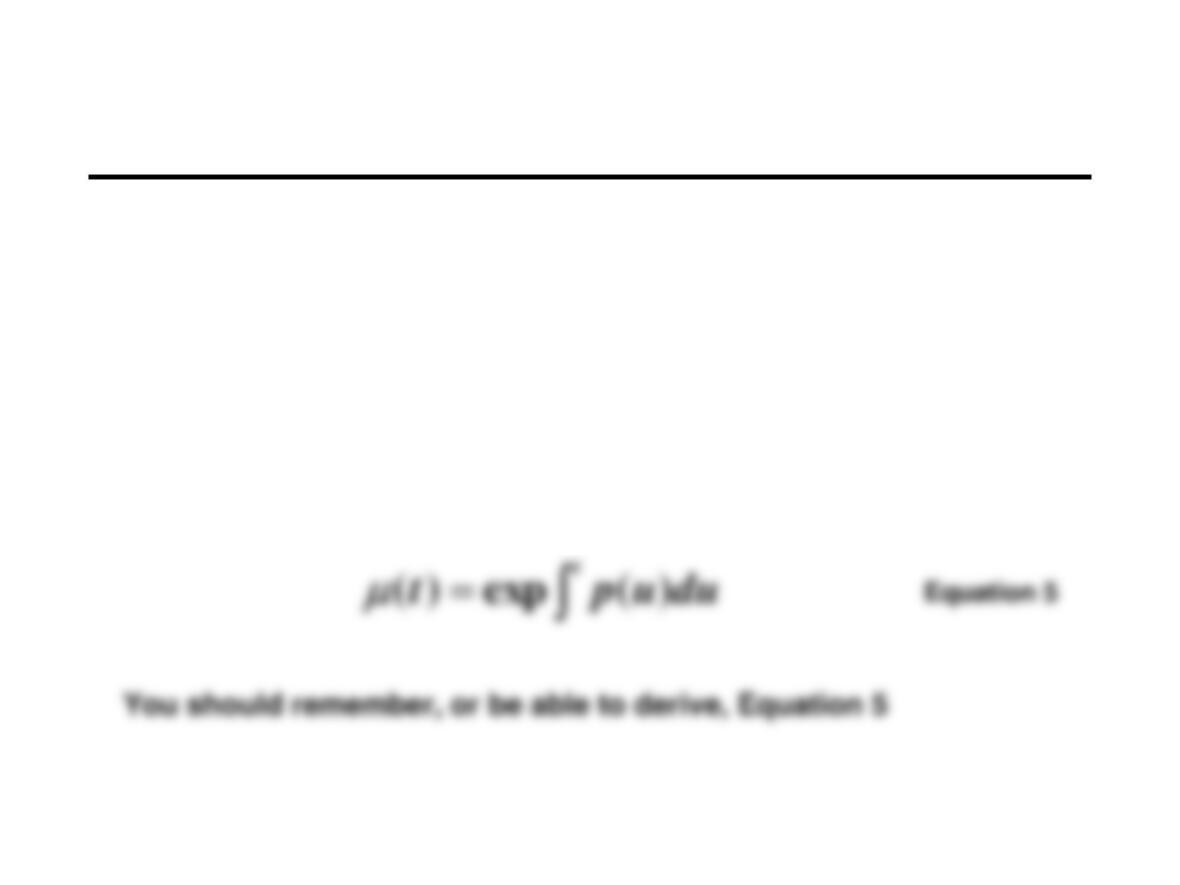
=t
tduuptt
0
)())(/)(ln( 0
General Solution to Nonhomogeneous
Linear First Order ODEs (4)
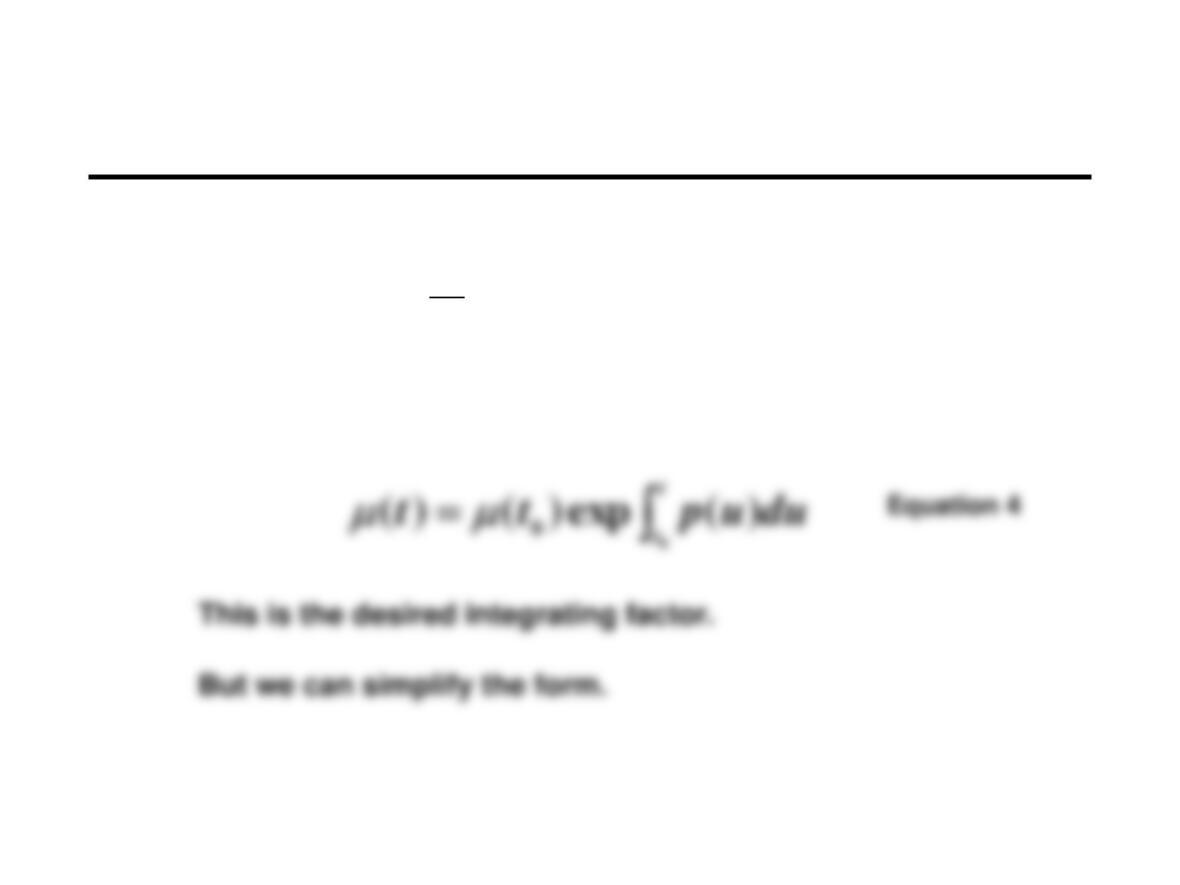
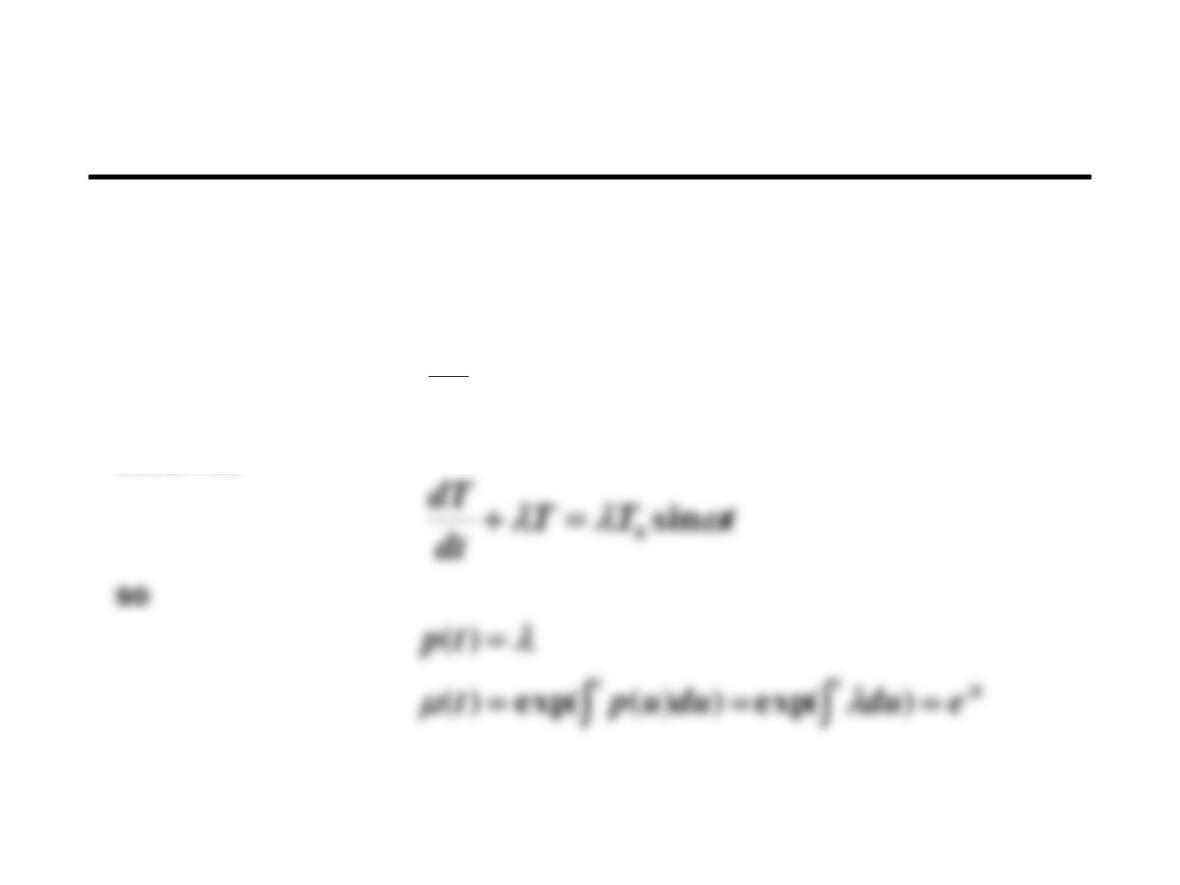
It also suffices to use the indefinite integral form:
We do not know what value to assign to but it turns out not
to matter. (The value cancels out.) So we set
)( 0
t
1)( 0=t
Exposed Water Pipe in Cyclical
Ambient Temperature (6)
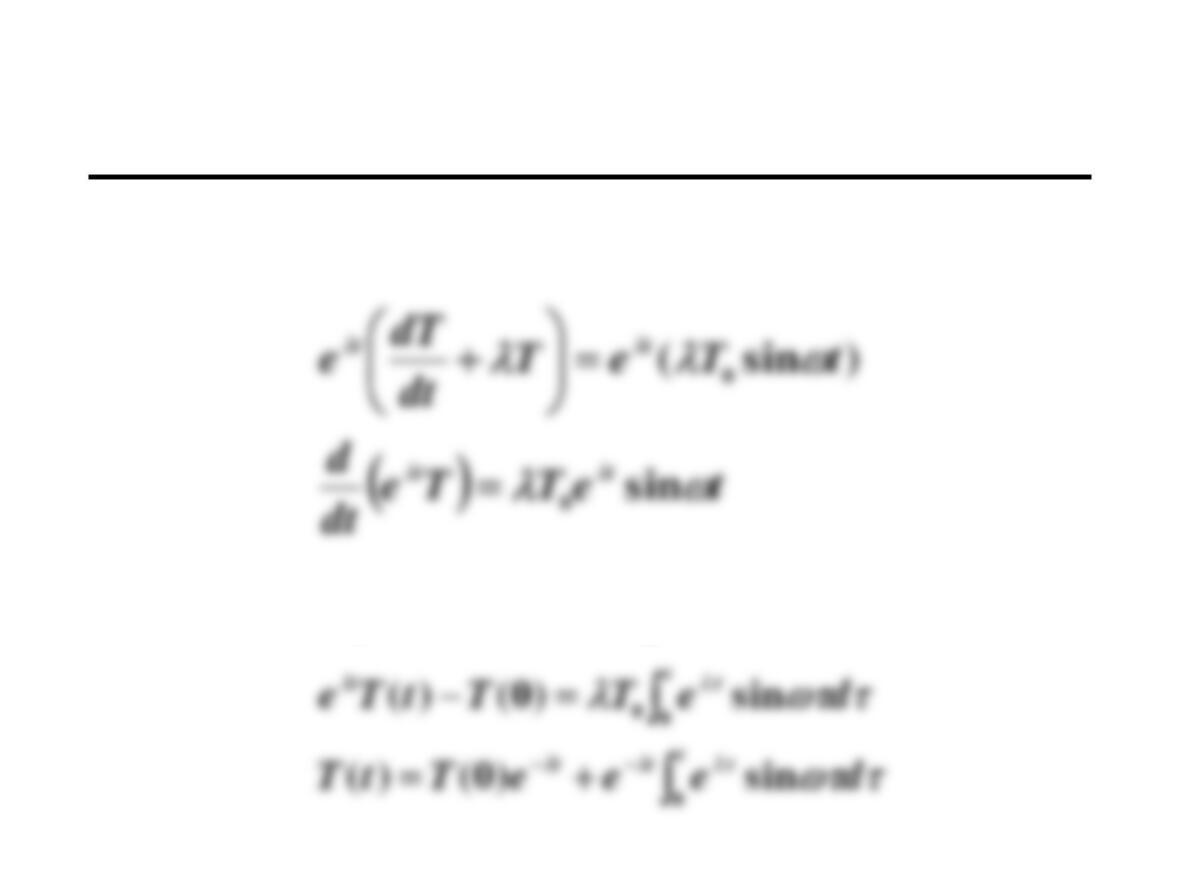
For the water pipe temperature problem (Equation 2):
)()( tgytp
dt
dy =+
becomes
Exposed Water Pipe in Cyclical
Ambient Temperature (7)
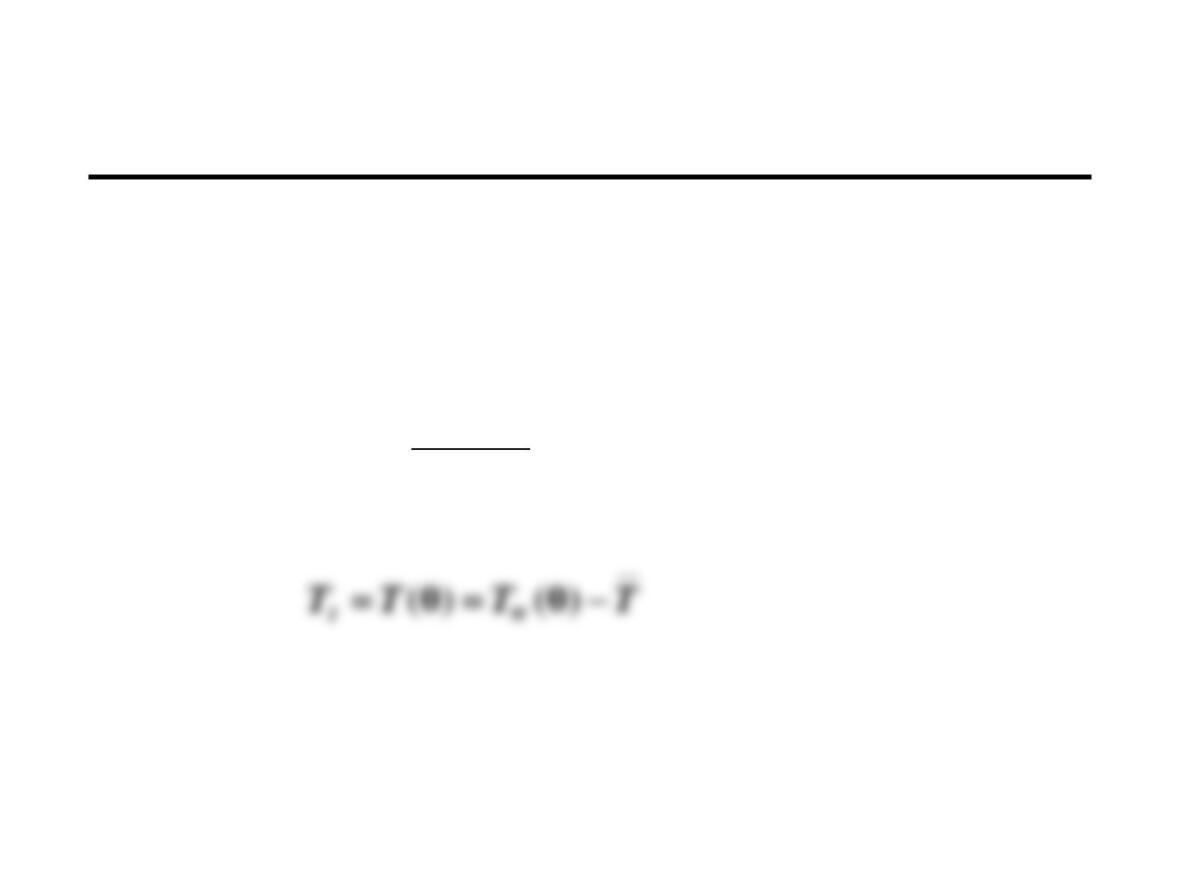
Applying the integration factor to Equation 2:
Now the value of the integration factor becomes clear:
We can solve the problem with an integration:
Exposed Water Pipe in Cyclical
Ambient Temperature (9)
where
))cos()sin(()( 0
22
tt
IettTeTtT
−− +−
+
+=
After performing the integral we have
Inhomogeneous First Order Linear ODEs:
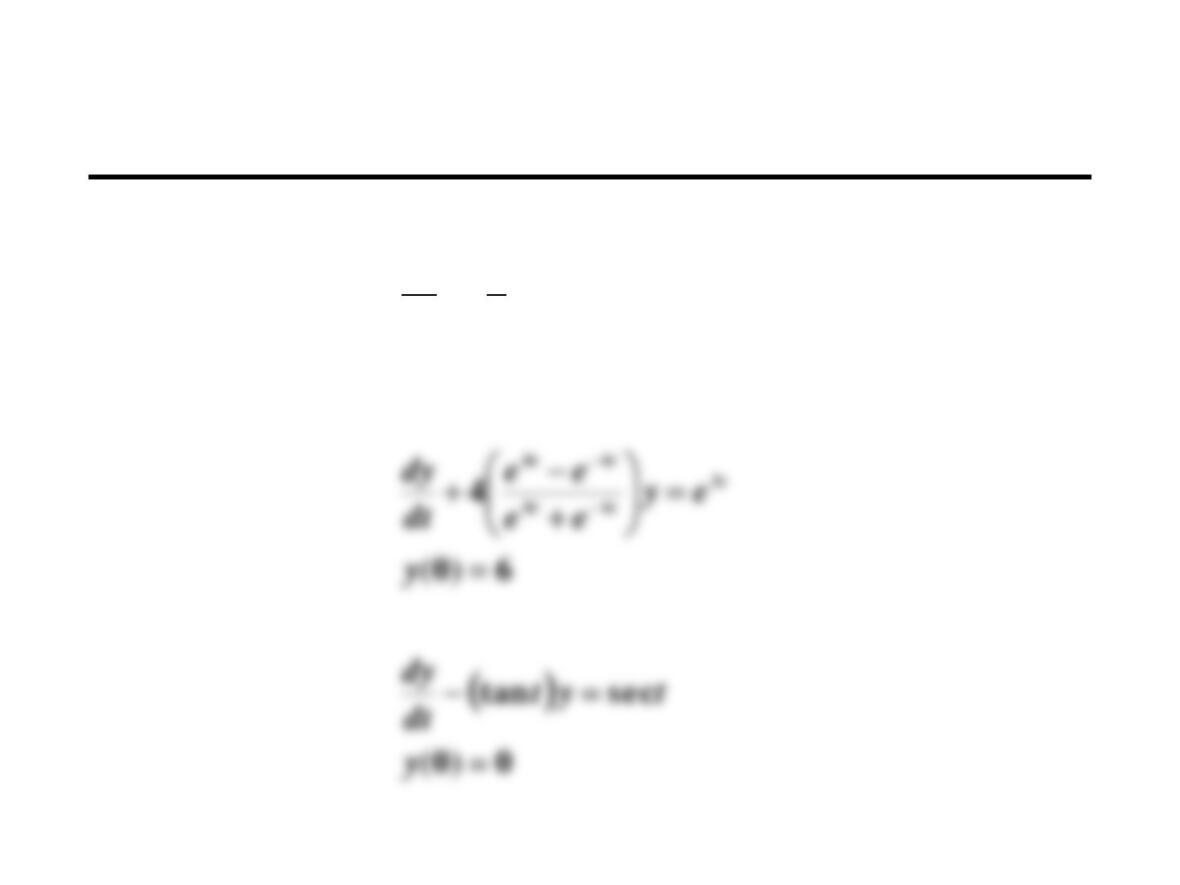
In-class Problems
2)1(
4
2
=
=
+
y
y
tdt
dy
Homework Assignment 2
In text:
Read: Chapter 2
Work: On course website: Homework Assignment #2 Problems