
Class 2 notes
Differential Equations
for Engineers:
the Essentials
Agenda: Class 2
First order linear differential equations:
(1) Engineering example: RC circuit
(2) General solution of homogeneous equation
Homework Assignment 2

First Order Linear Differential Equations
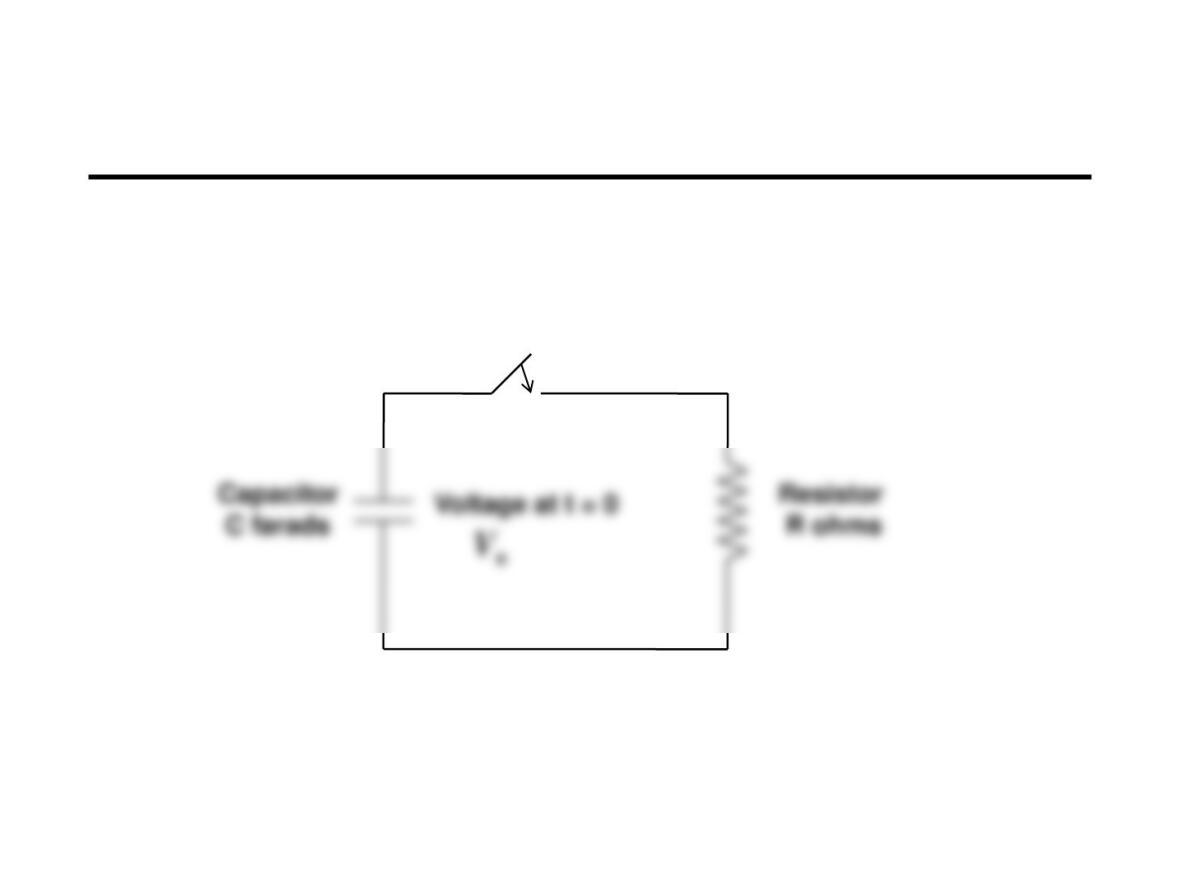
Example: The RC Electrical Circuit
Example: RC Electrical Circuit
Switch closes at t = 0
Example: RC Circuit (2)
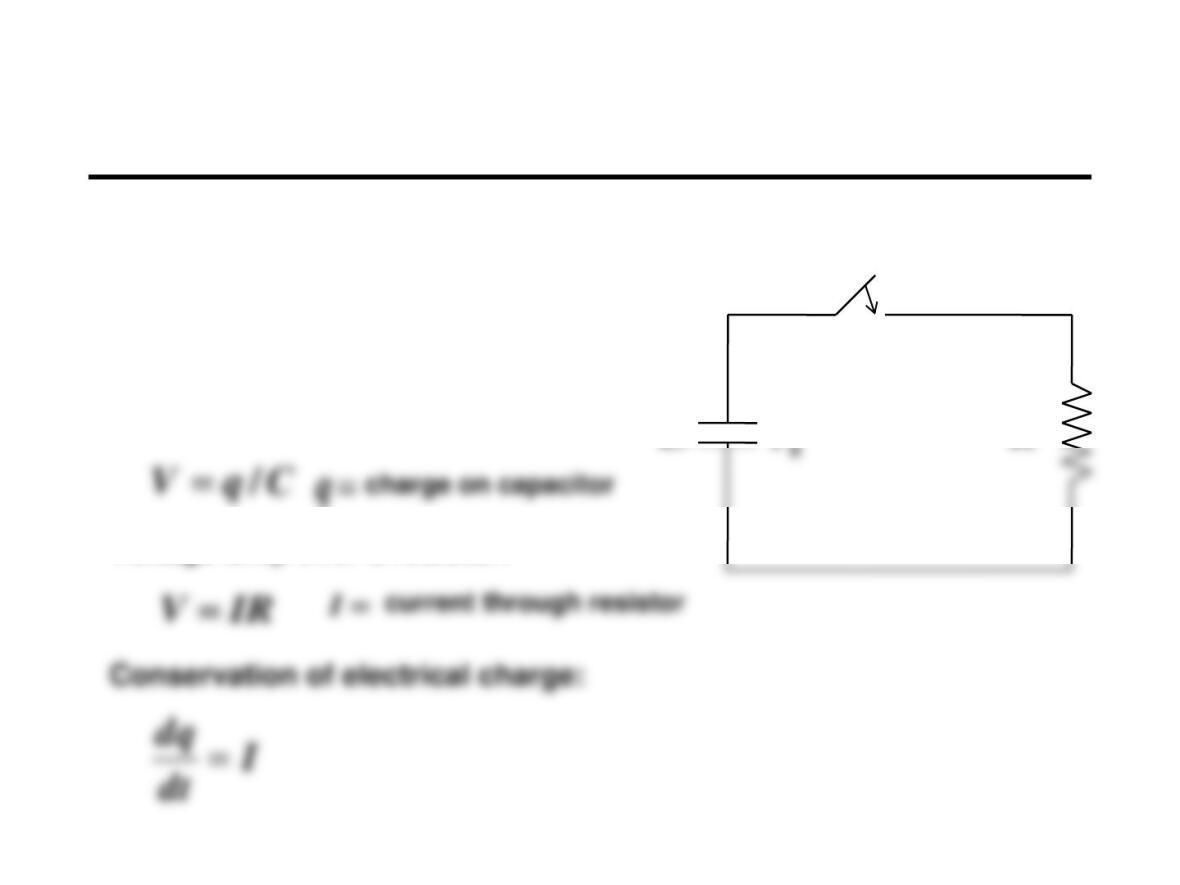
Kirchhoff’s Law:
Sum of voltage drops around a
closed circuit = 0
Voltage drop over a capacitor:
Voltage drop over a resistor:
Closes at t = 0
C
R
Example: RC Circuit (3)
Closes at t = 0
0
0
=+
=+
VR
dt
dq
VIR
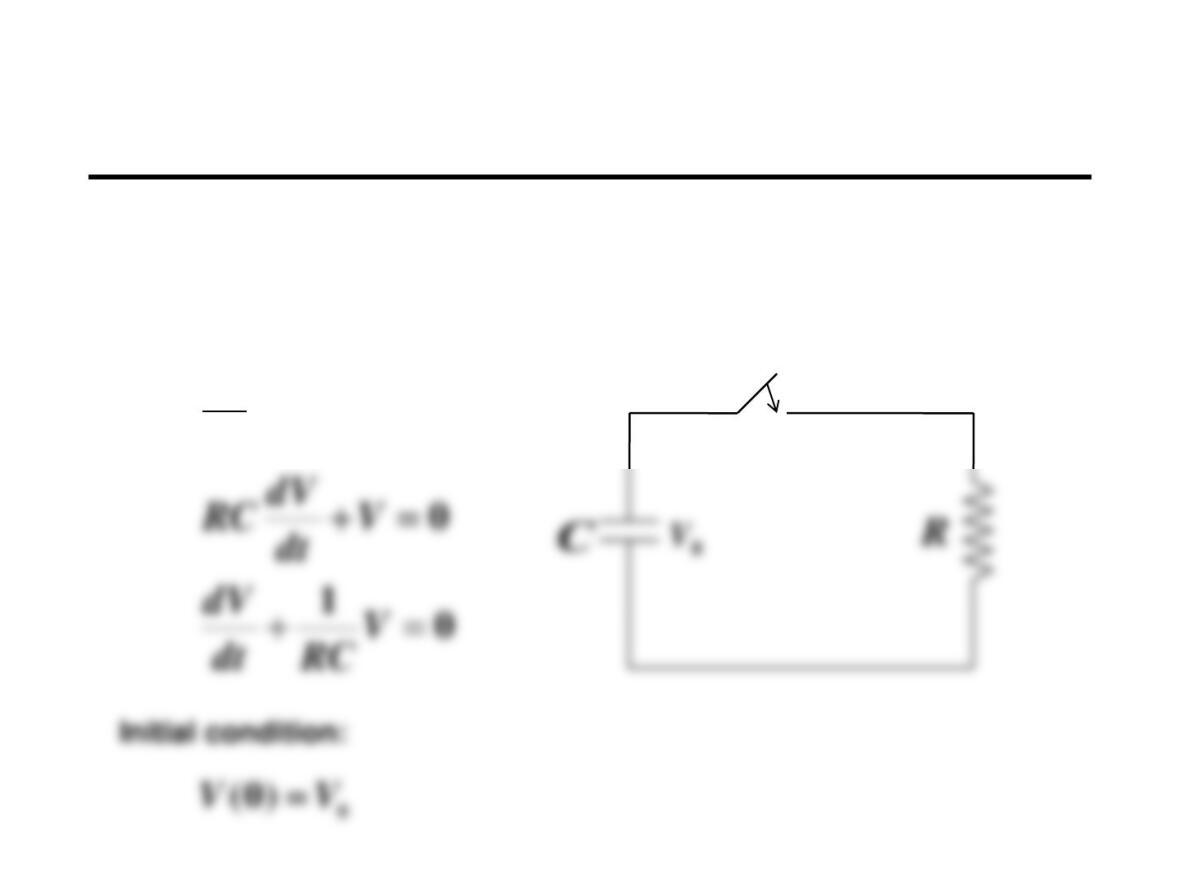
Resulting differential equation
Example: RC Circuit (4)
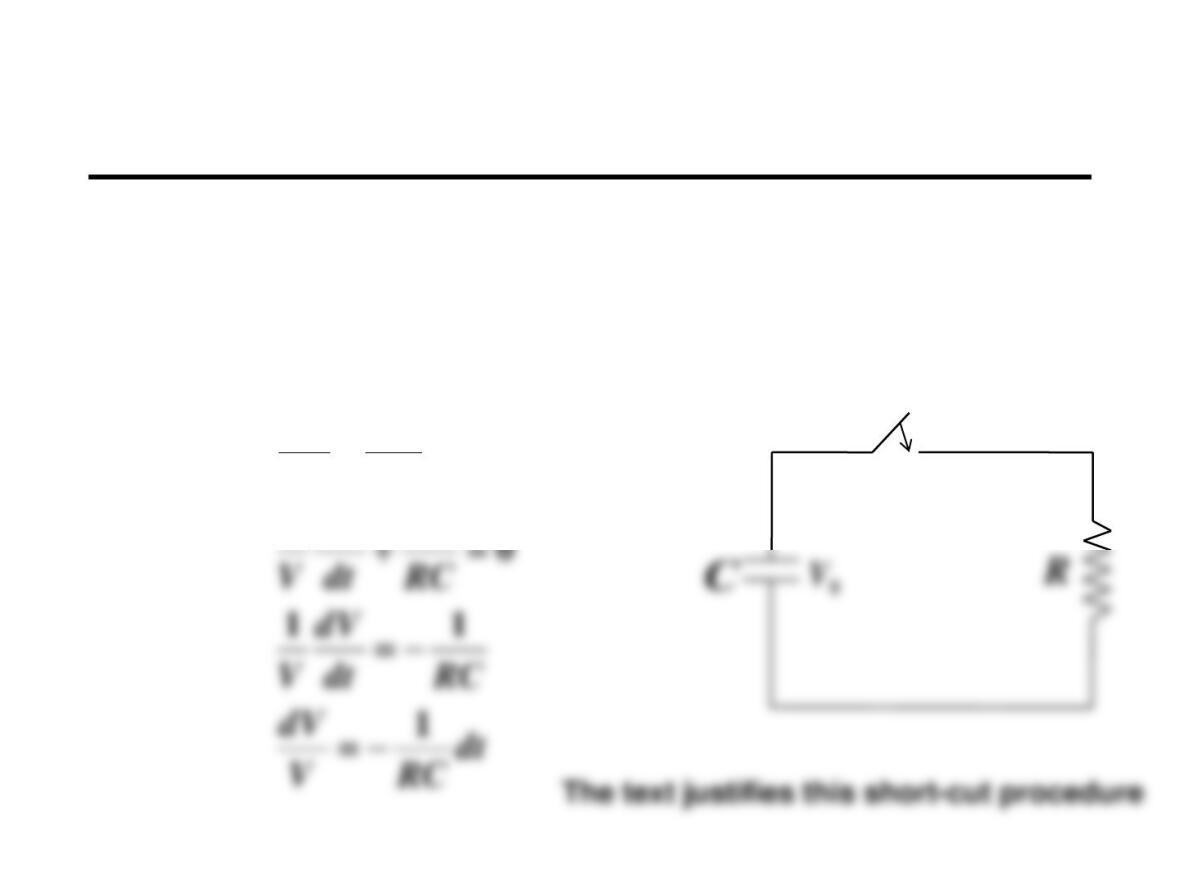
This is a linear first order ODE. To solve it, we separate variables: i.e.,
we put all terms involving Von the left side and all terms involving t
on the right: specifically, we divide by V, move 1/RC to the right side
and multiply by dt :
Closes at t = 0
dV
V
RCdt
dV
11
0
1
=+
Example: RC Circuit (5)
Closes at t = 0
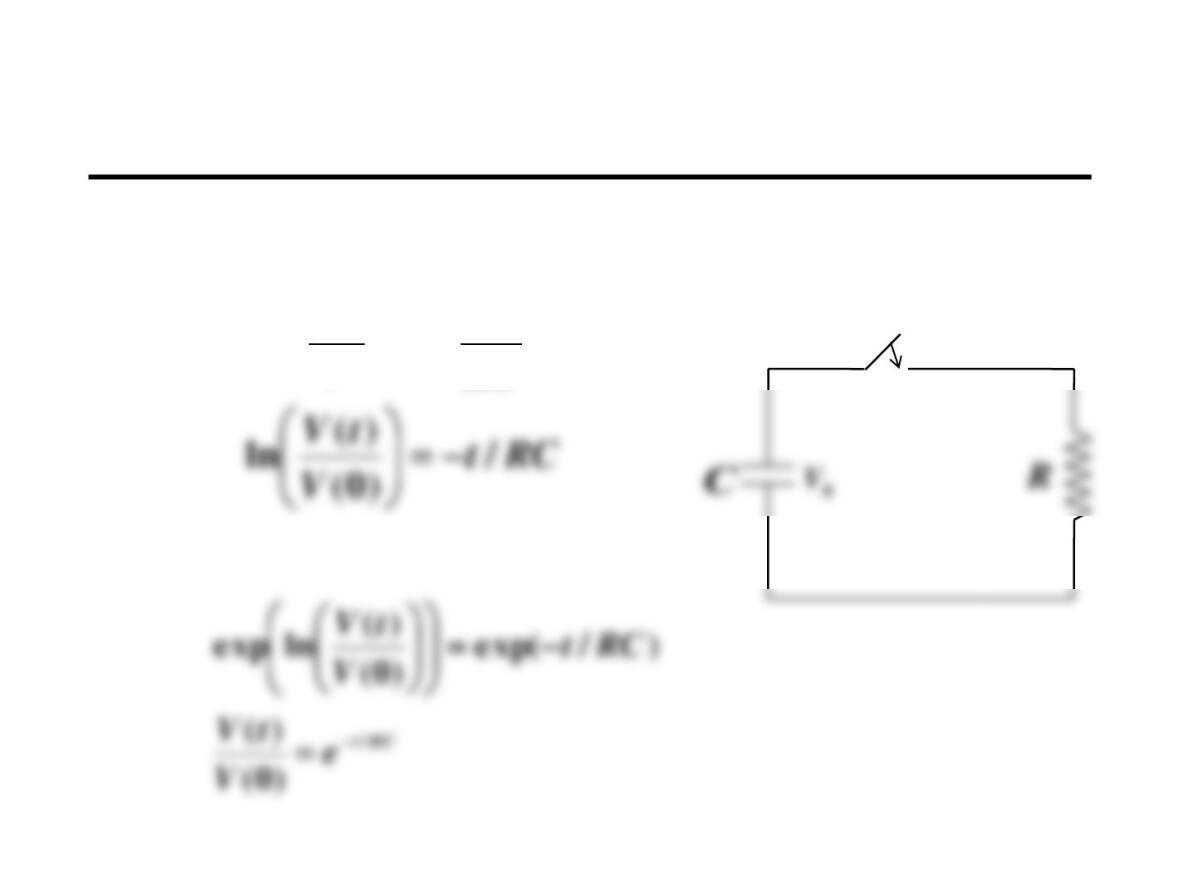
Next, we integrate both sides:
Taking the exponential of both sides:
RC
dt
V
dV
tV
V
t
)(
)0( 0
−=
Example: RC Circuit (6)
Hence:
RCt
eVtV −
=)0()(
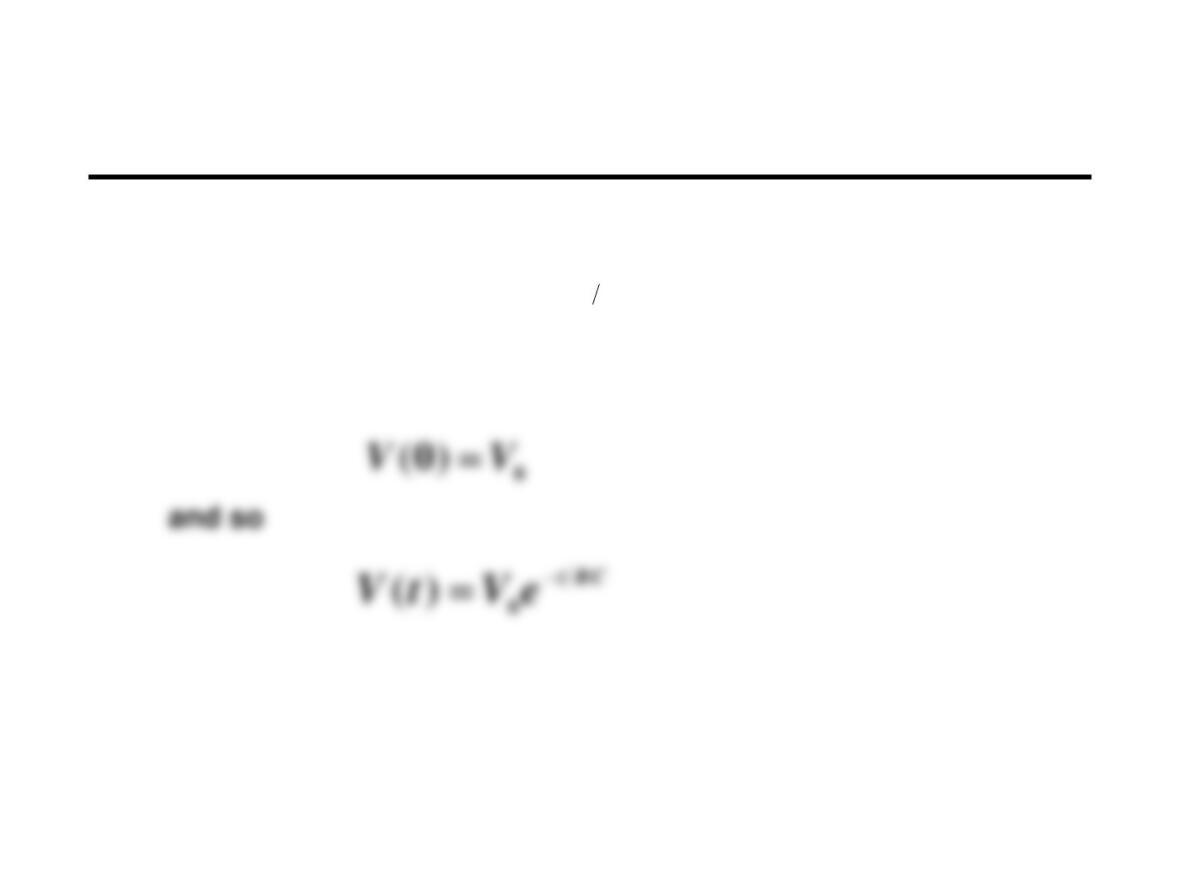
We require that the voltage over the capacitor at time 0 be given by
Example: RC Circuit (7)
Closes at t = 0
0
1=+ V
RCdt
dV
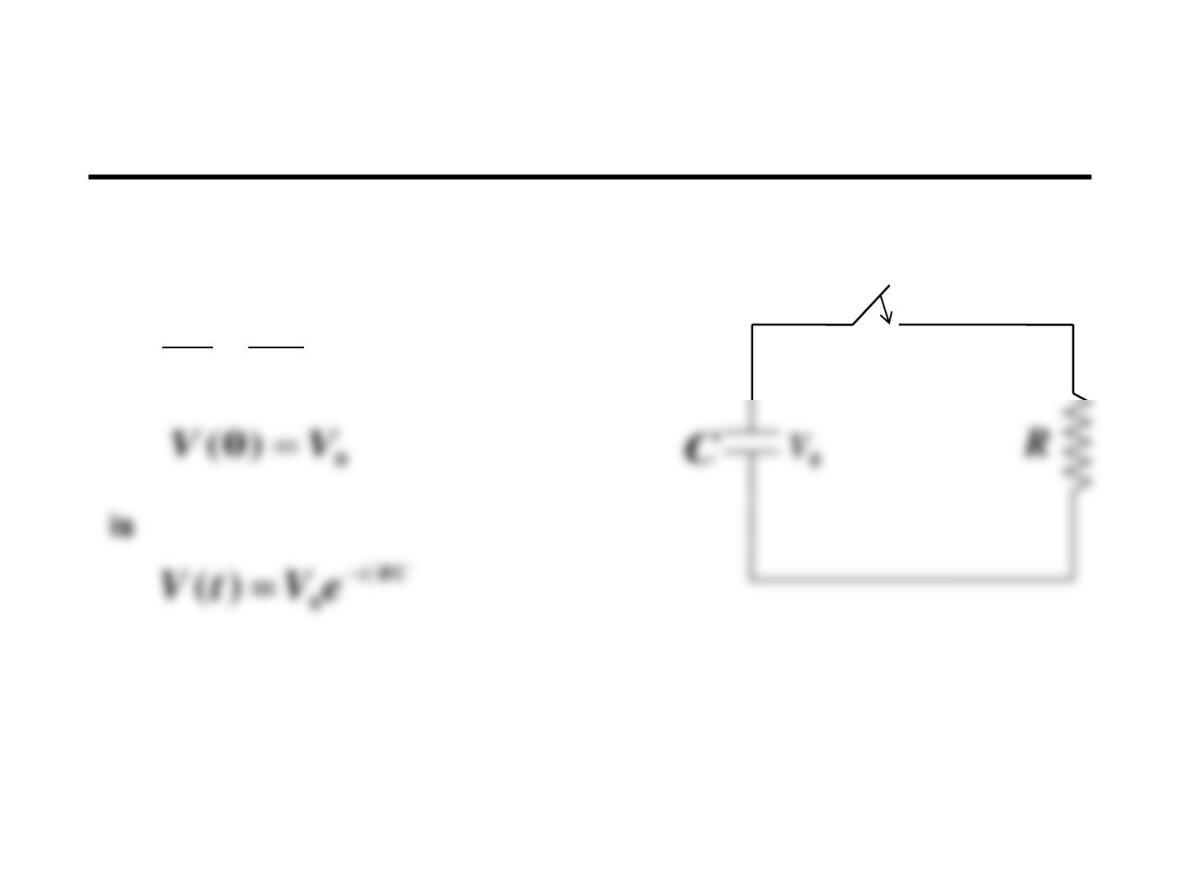
In summary, the solution to
RC
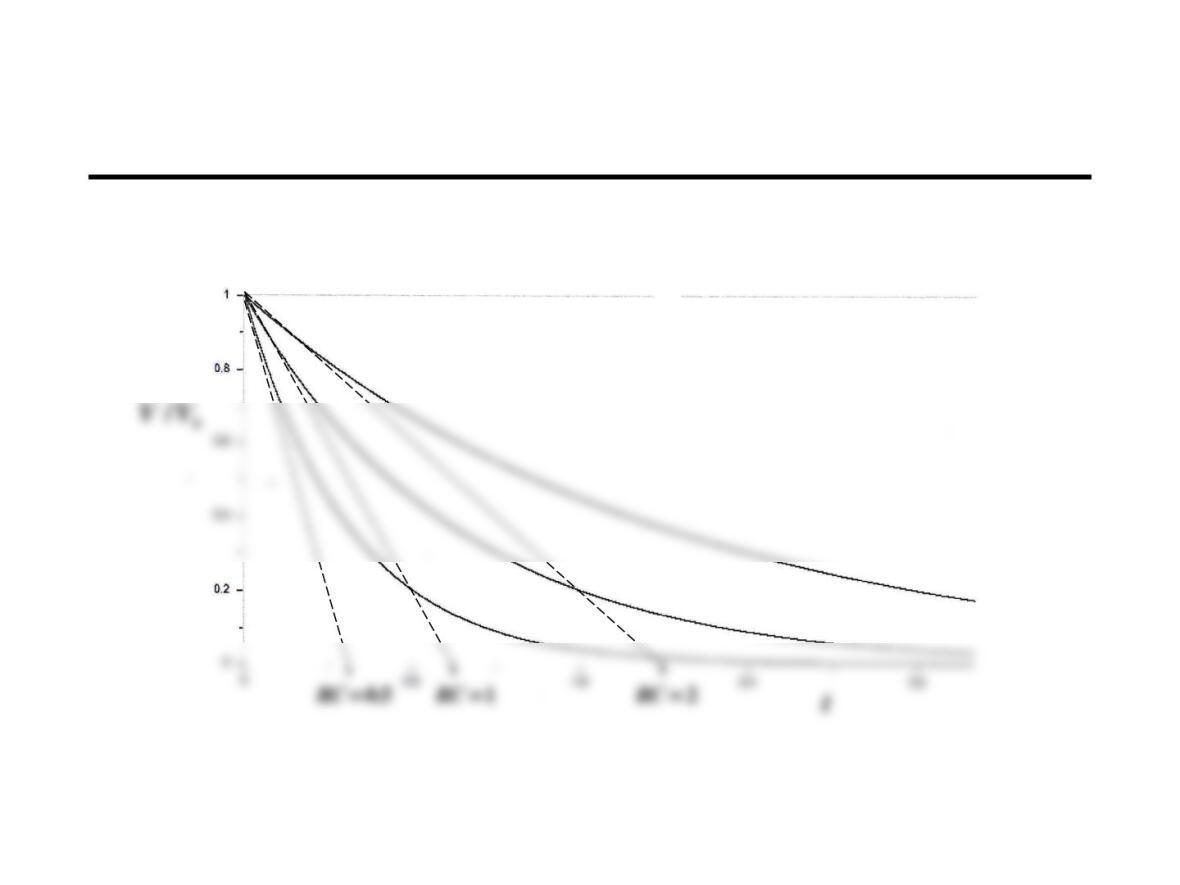
The product has the dimension of time and is called the
time constant for the circuit
Example: RC Circuit (8)
First Order Linear Differential Equations
General Solution of Homogeneous Equation
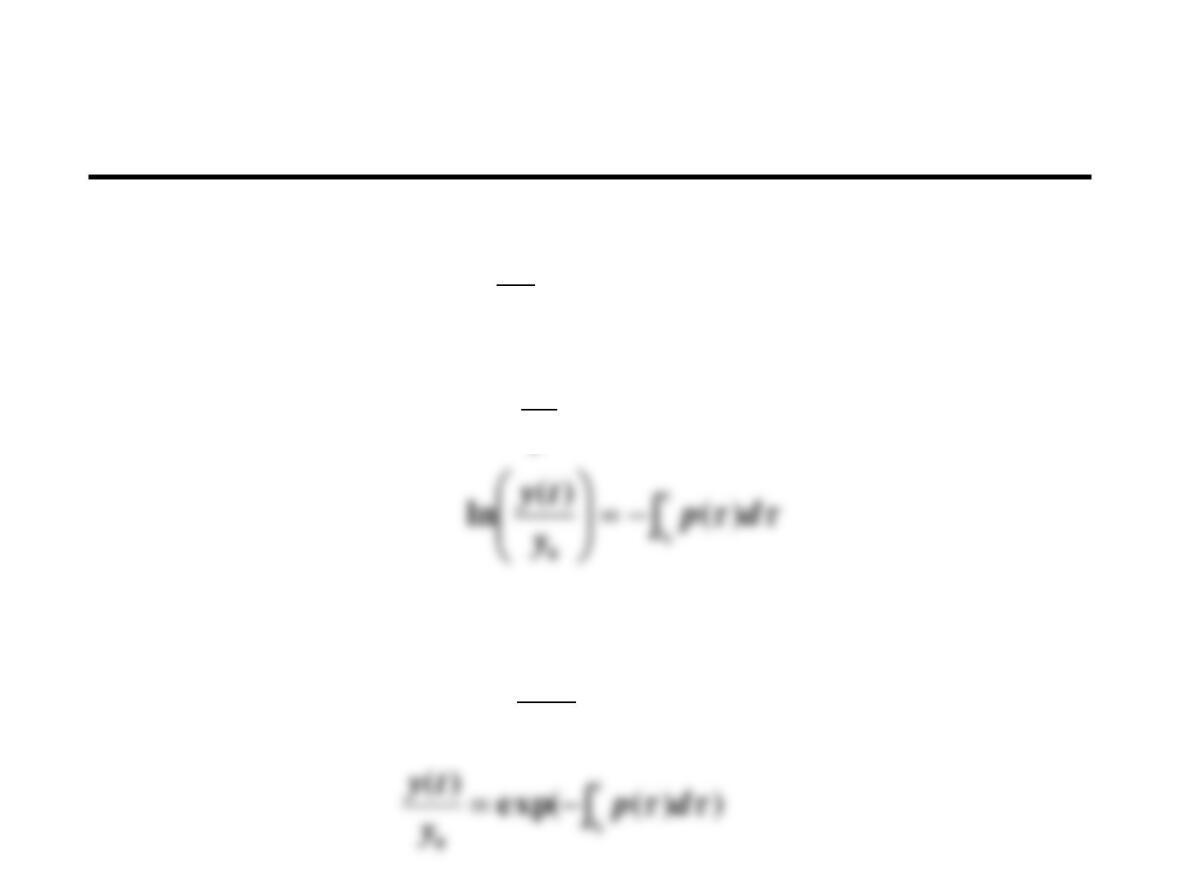
The general form of a first order linear time-varying
ordinary differential equation (ODE) is
How do we solve it?
General Solution of Homogeneous Equation (2)
dttp
y
dy )(−=
−=
ty
y
t
t
dp
y
dy
0 0
)(
)(
−=
t
t
dp
y
ty
0
))(exp(
)(
lnexp
0
We separate variables
Integrate both sides
Take the exponential of both sides
General Solution of Homogeneous Equation (3)
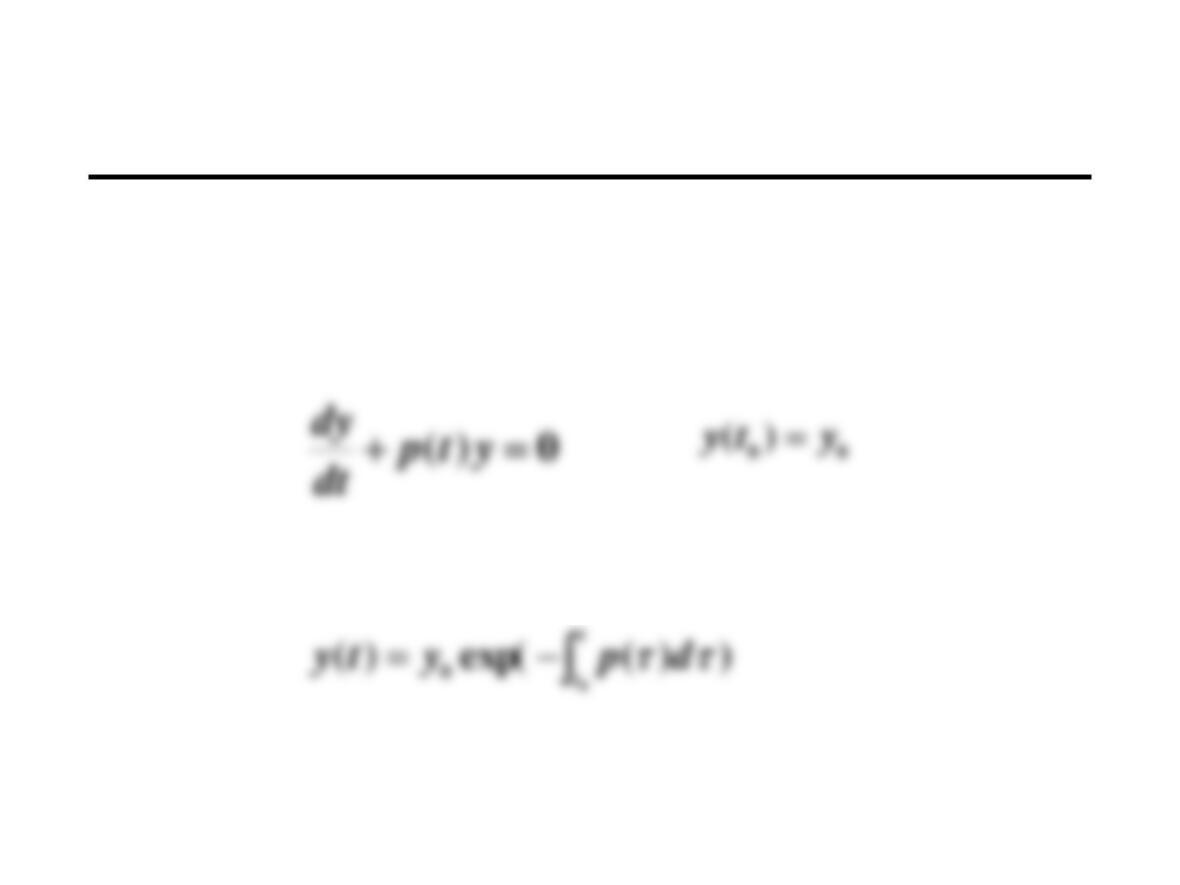
Summary:
The solution of
is
Success depends entirely on being able to do the integral
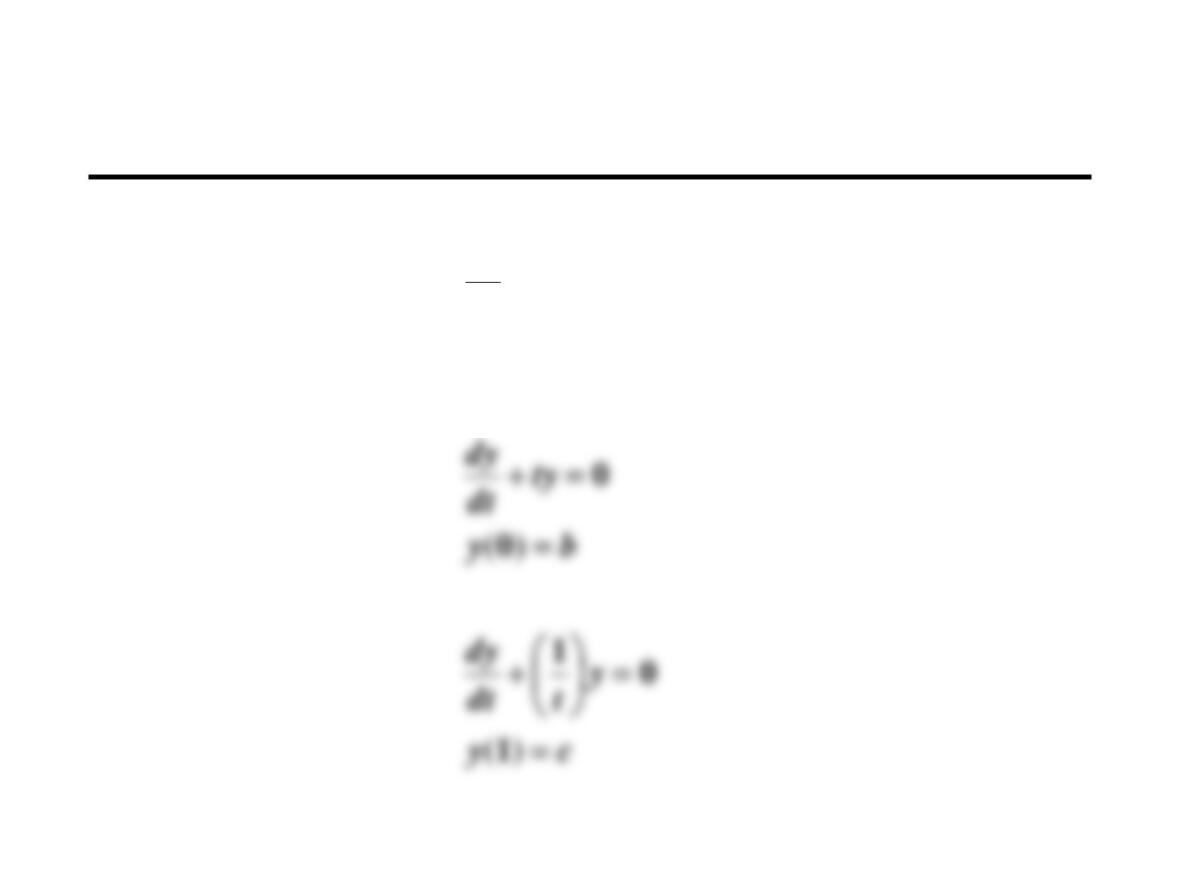
Homogeneous First Order Linear ODEs:
In-class problems
ay
ky
dt
dy
=
=+
)0(
0