
Applied Statistics and Probability for Engineers, 7th edition 2017
2-21
Let A denote the event that the patient was treated with ribavirin plus interferon alfa, and let B denote the event that the
response was complete. Determine the following probabilities:
(a) P(A B) (b) P(A B) (c) P(A B)
2.4.11. The article “Clinical and Radiographic Outcomes of Four Different Treatment Strategies in Patients with Early
Rheumatoid Arthritis,” [Arthritis & Rheumatism (2005, Vol. 52, pp. 3381–3390)], considered four treatment groups. The
groups consisted of patients with different drug therapies (such as prednisone and infliximab): sequential monotherapy
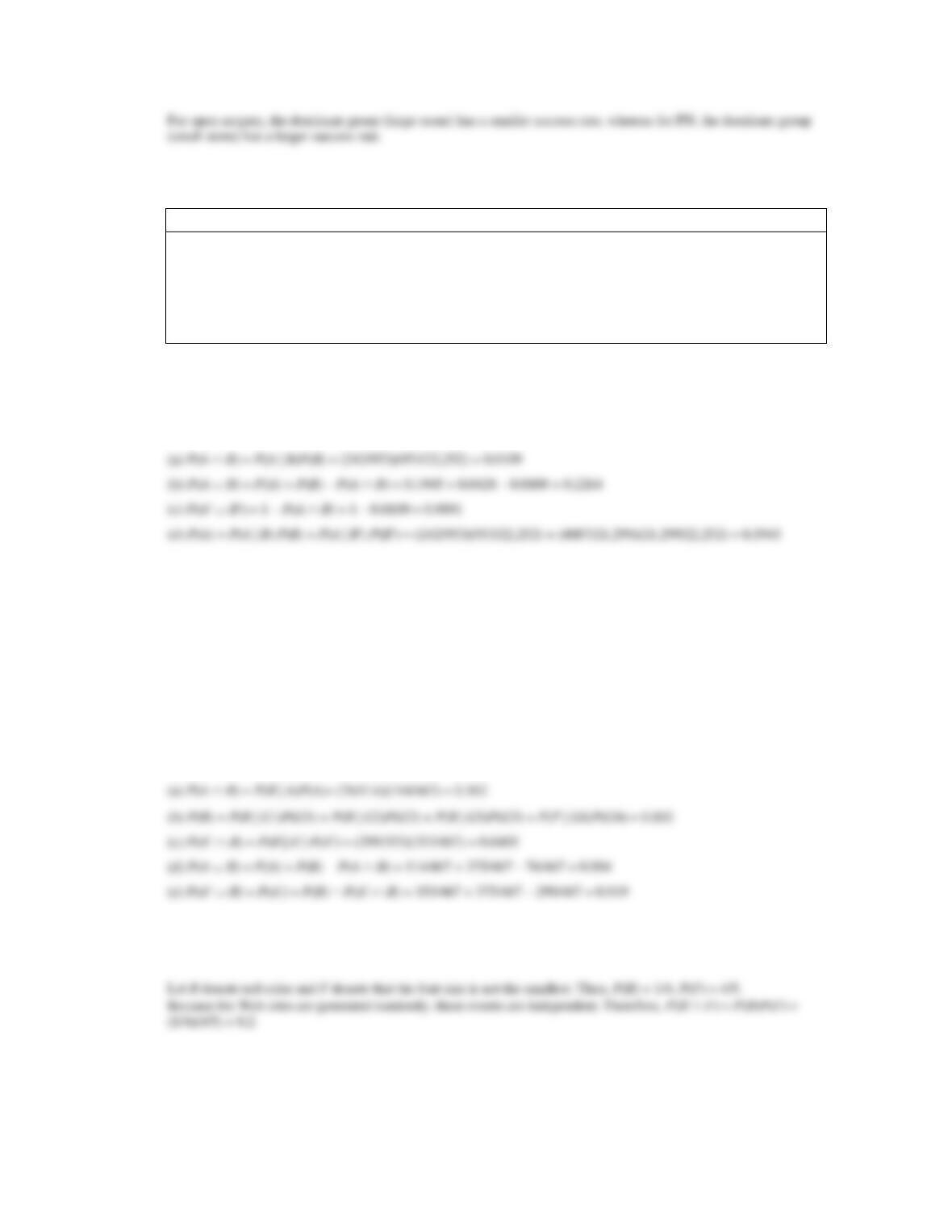
(group 1), step-up combination therapy (group 2), initial combination therapy (group 3), or initial combination therapy
with infliximab (group 4). Radiographs of hands and feet were used to evaluate disease progression. The number of
patients without progression of joint damage was 76 of 114 patients (67%), 82 of 112 patients (73%), 104 of 120 patients
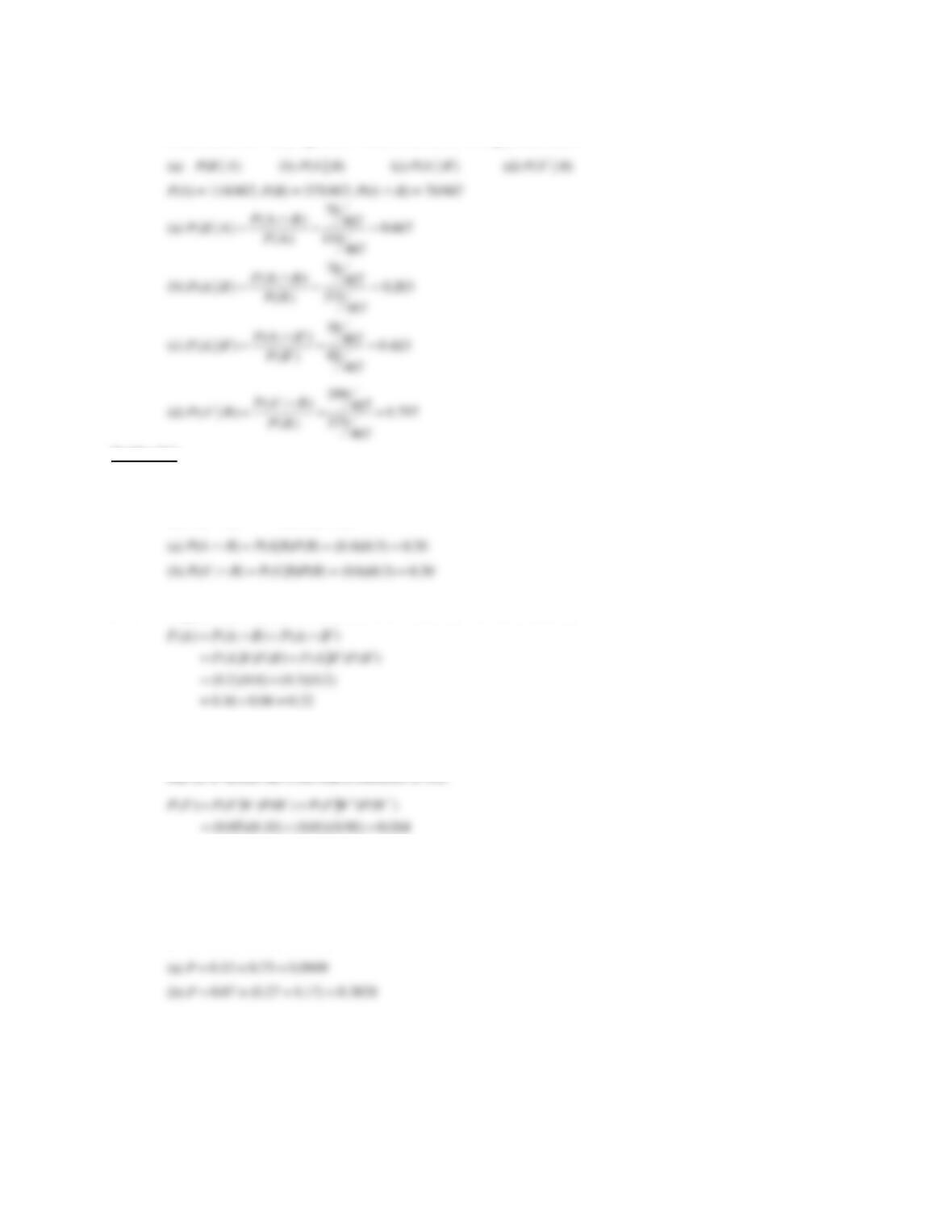
(87%), and 113 of 121 patients (93%) in groups 1–4, respectively. Suppose that a patient is selected randomly. Let A
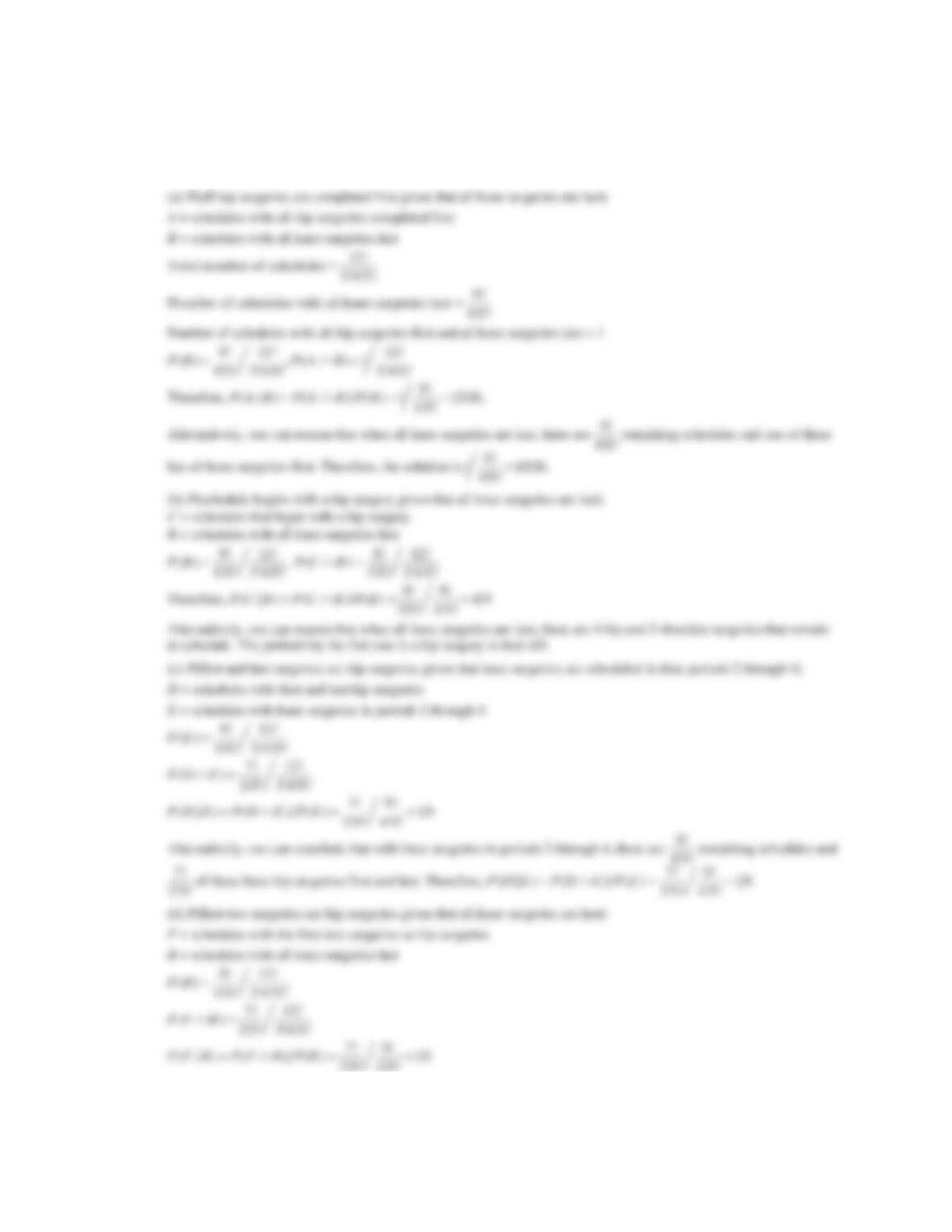
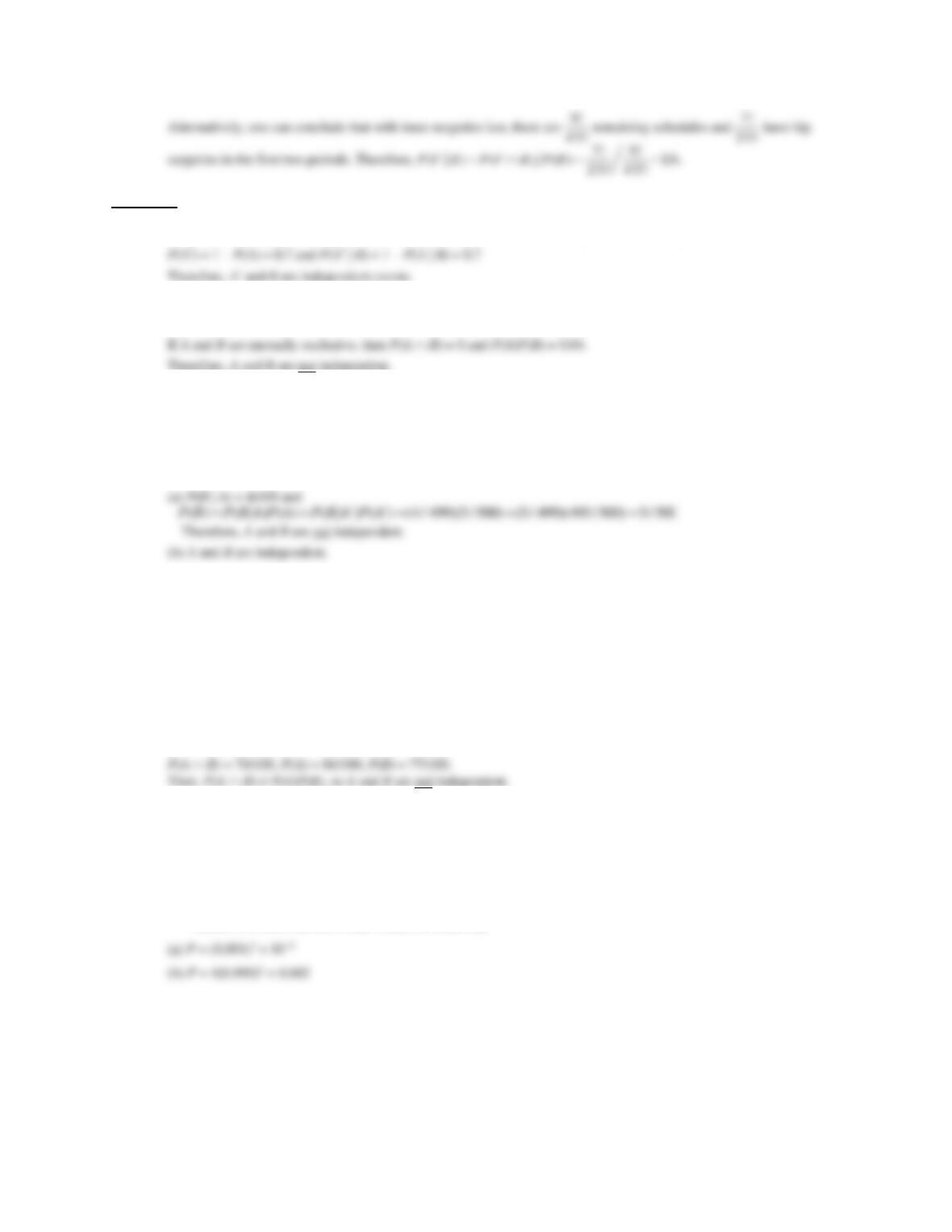
denote the event that the patient is in group 1, and let B denote the event that there is no progression. Determine the
following probabilities:
(a) P(A B) (b) P(A B) (c) P(A B)
==
+++
=114 114
0.244
114 112 120 121 467
()PA
=+ + + ==
+++
76 82 104 113 375
0.8029
114 112 120 121 467
()PB
= = 76 0.162
467
()P A B
Section 2-5
2.5.1. The analysis of results from a leaf transmutation experiment (turning a leaf into a petal) is summarized by type
of transformation completed:
Total Textural Transformation
Yes
No
Total Color Transformation
Yes
243
26
No
13
18
(a) If a leaf completes the color transformation, what is the probability that it will complete the textural
transformation?
(b) If a leaf does not complete the textural transformation, what is the probability it will complete the color
transformation?
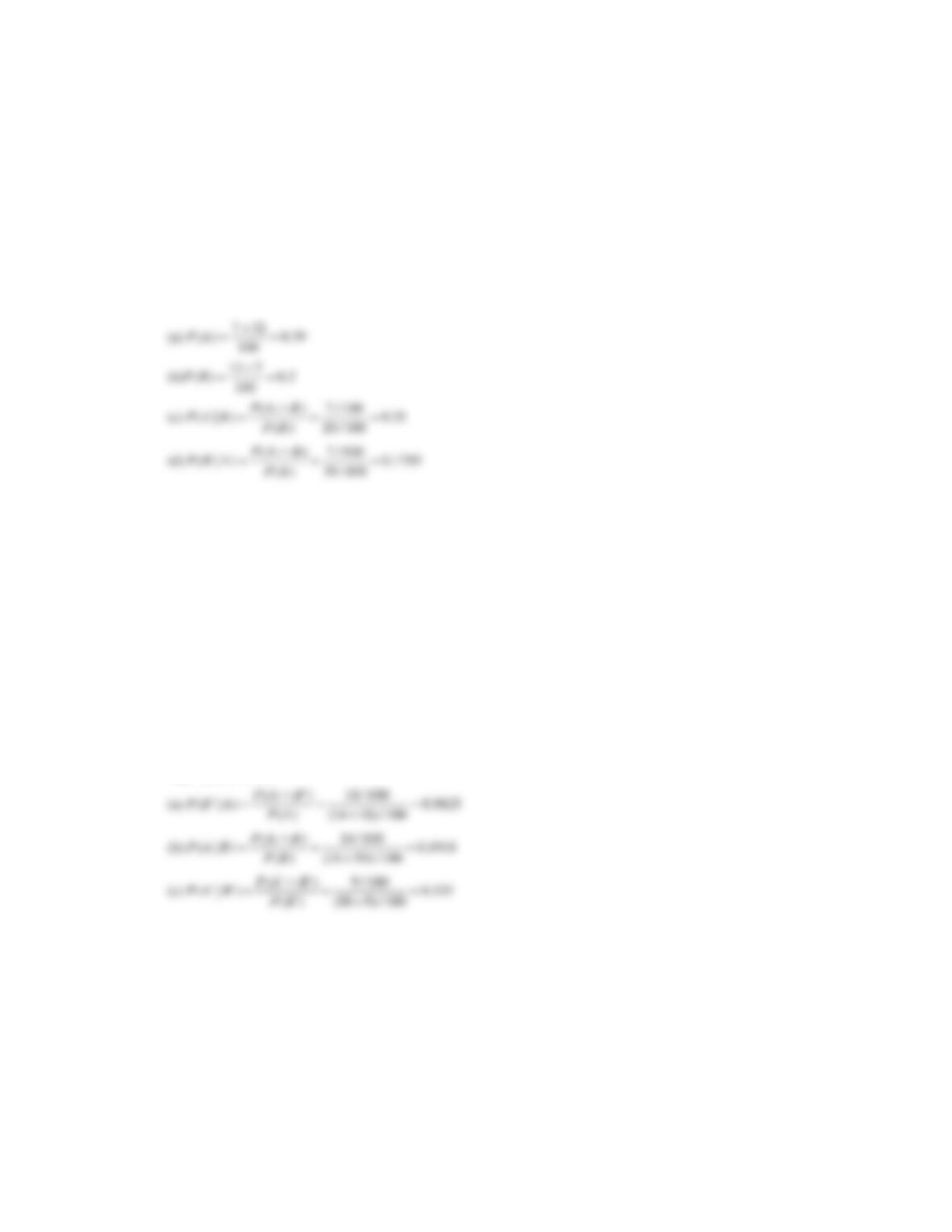
Let A denote the event that a leaf completes the color transformation and let B denote the event that a leaf completes the
textural transformation. The total number of experiments is 300.
2.5.2. Samples of skin experiencing desquamation are analyzed for both moisture and melanin content. The results
Applied Statistics and Probability for Engineers, 7th edition 2017
2-22
from 100 skin samples are as follows:
Melanin Content
High
Low
Moisture Content
High
13
7
Low
48
32
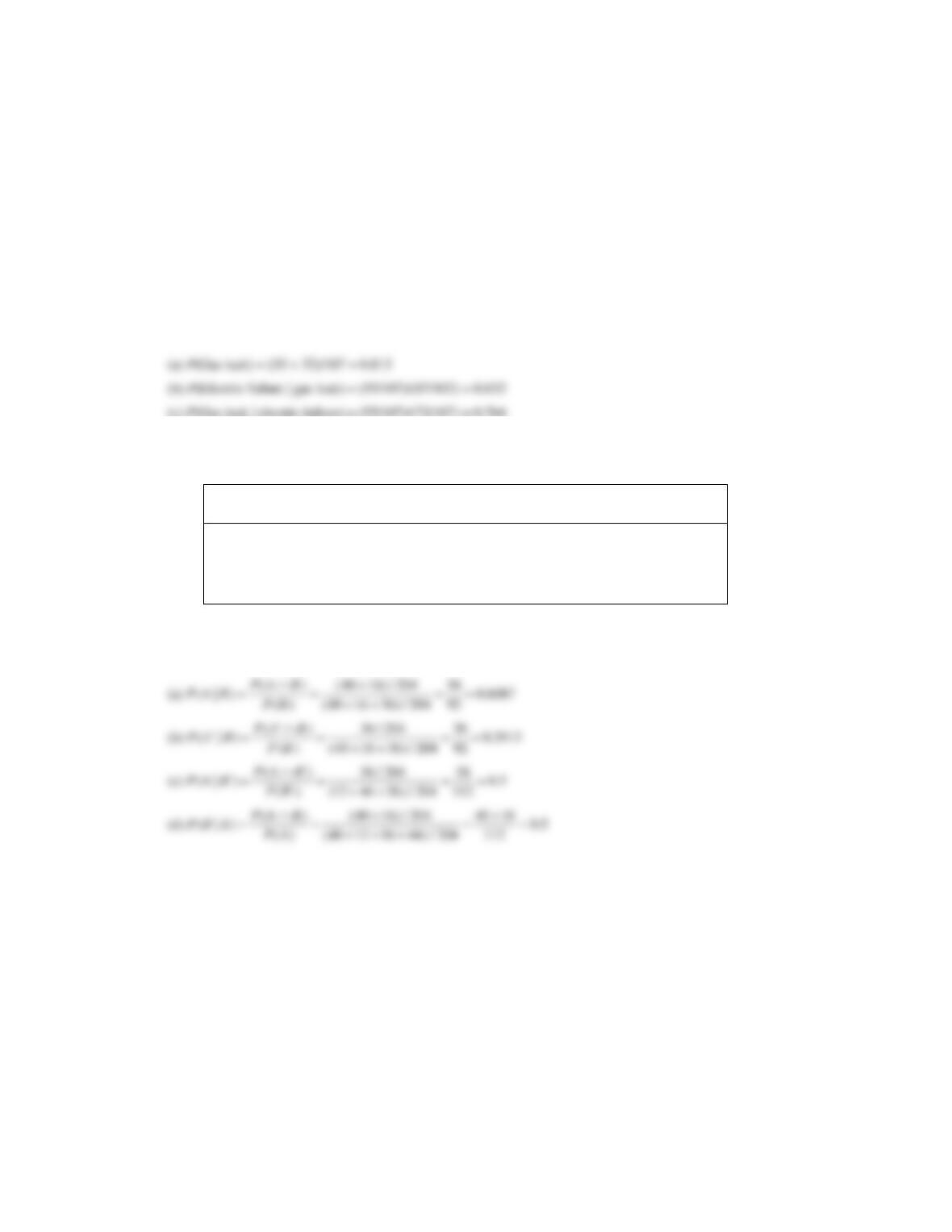
Let A denote the event that a sample has low melanin content, and let B denote the event that a sample has high
moisture content. Determine the following probabilities:
(a) P(A) (b) P(B) (c) P(A | B) (d) P(B | A)
2.5.3. The following table summarizes the number of deceased beetles under autolysis (the destruction of a cell after its death
by the action of its own enzymes) and putrefaction (decomposition of organic matter, especially protein, by
microorganisms, resulting in the production of foul-smelling matter):
Autolysis
High
Low
Putrefaction
High
14
59
Low
18
9
(a) If the autolysis of a sample is high, what is the probability that the putrefaction is low?
(b) If the putrefaction of a sample is high, what is the probability that the autolysis is high?
(c) If the putrefaction of a sample is low, what is the probability that the autolysis is low?
Let A denote the event that autolysis is high, and let B denote the event that putrefaction is high. The total number of
experiments is 100.
Applied Statistics and Probability for Engineers, 7th edition 2017
2-23
2.5.4. A maintenance firm has gathered the following information regarding the failure mechanisms for air-conditioning
systems:
Evidence of Gas Leaks
Yes
No
Evidence of Electrical Failure
Yes
55
17
No
32
3
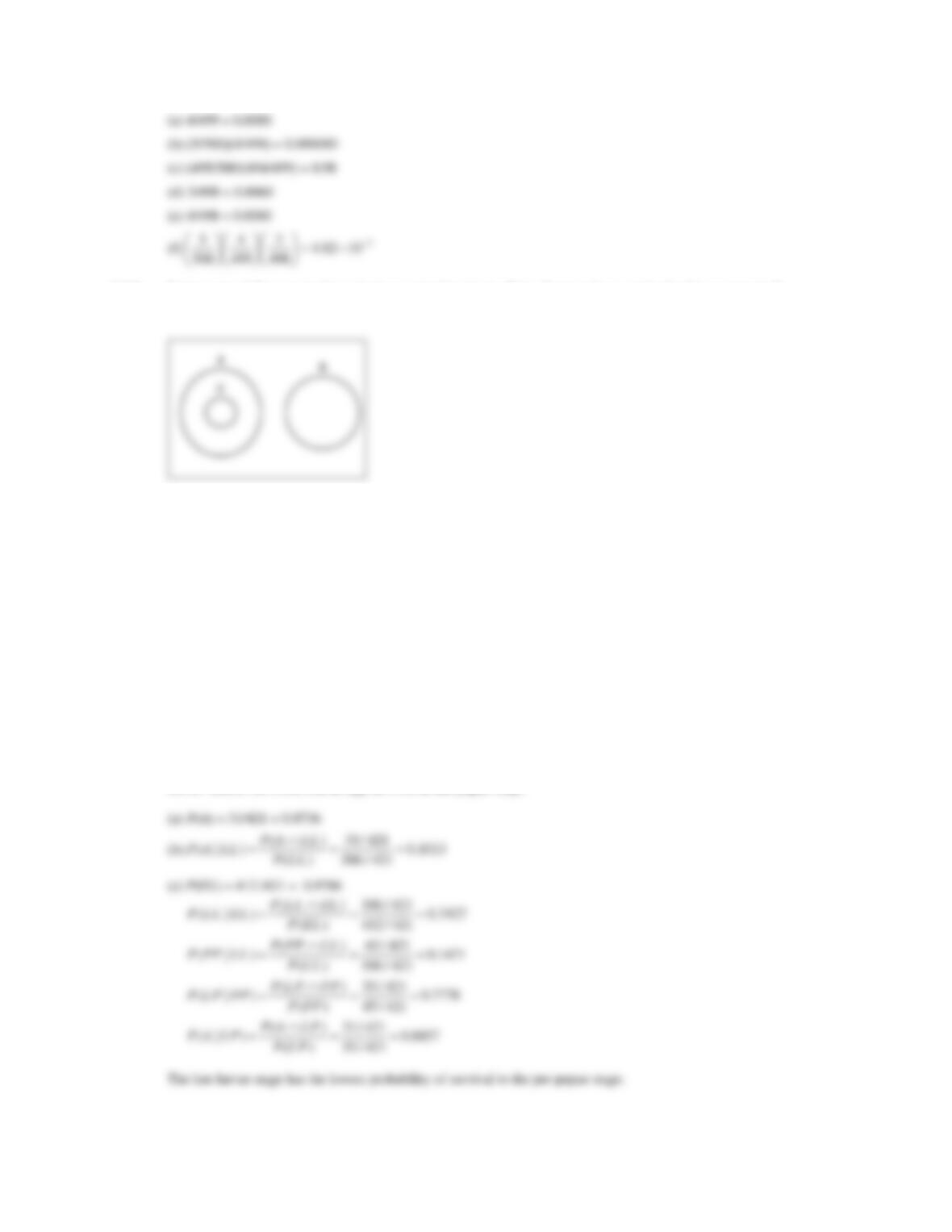
The units without evidence of gas leaks or electrical failure showed other types of failure. If this is a representative
sample of AC failure, find the probability of the following.
(a) Failure involves a gas leak
(b) There is evidence of electrical failure given that there was a gas leak
(c) There is evidence of a gas leak given that there is evidence of electrical failure
(c) P(Gas leak | electric failure) = (55/107)/(72/107) = 0.764
2.5.5. Consider the endothermic reactions given below. Let A denote the event that a reaction’s final temperature is
271 K or less. Let B denote the event that the heat absorbed is above target.
Final Temperature
Conditions
Heat Absorbed (cal)
Below Target
Above Target
266 K
12
40
271 K
44
16
274 K
56
36
Determine the following probabilities.
(a) P(A | B) (b) P(A | B) (c) P(A | B) (d) P(B | A)
2.5.6. A batch of 500 containers for frozen orange juice contains 5 that are defective. Two are selected, at random, without
replacement from the batch.
(a) What is the probability that the second one selected is defective given that the first one was defective?
(b) What is the probability that both are defective?
(c) What is the probability that both are acceptable?
Three containers are selected, at random, without replacement, from the batch.
(d) What is the probability that the third one selected is defective given that the first and second ones selected were
defective?
(e) What is the probability that the third one selected is defective given that the first one selected was defective and
the second one selected was okay?
(f) What is the probability that all three are defective?
Applied Statistics and Probability for Engineers, 7th edition 2017
2-24
2.5.7. Suppose A and B are mutually exclusive events. Construct a Venn diagram that contains the three events A, B,
and C such that P(A |C) = 1 and P(B |C) = 0.
2.5.8. An article in The Canadian Entomologist (Harcourt et al., 1977, Vol. 109, pp. 1521–1534) reported on the life of the
alfalfa weevil from eggs to adulthood. The following table shows the number of larvae that survived at each stage of
development from eggs to adults.
Eggs
Early Larvae
Late Larvae
Pre-pupae
Late Pupae
Adults
421
412
306
45
35
31
(a) What is the probability an egg survives to adulthood?
(b) What is the probability of survival to adulthood given survival to the late larvae stage?
(c) What stage has the lowest probability of survival to the next stage?
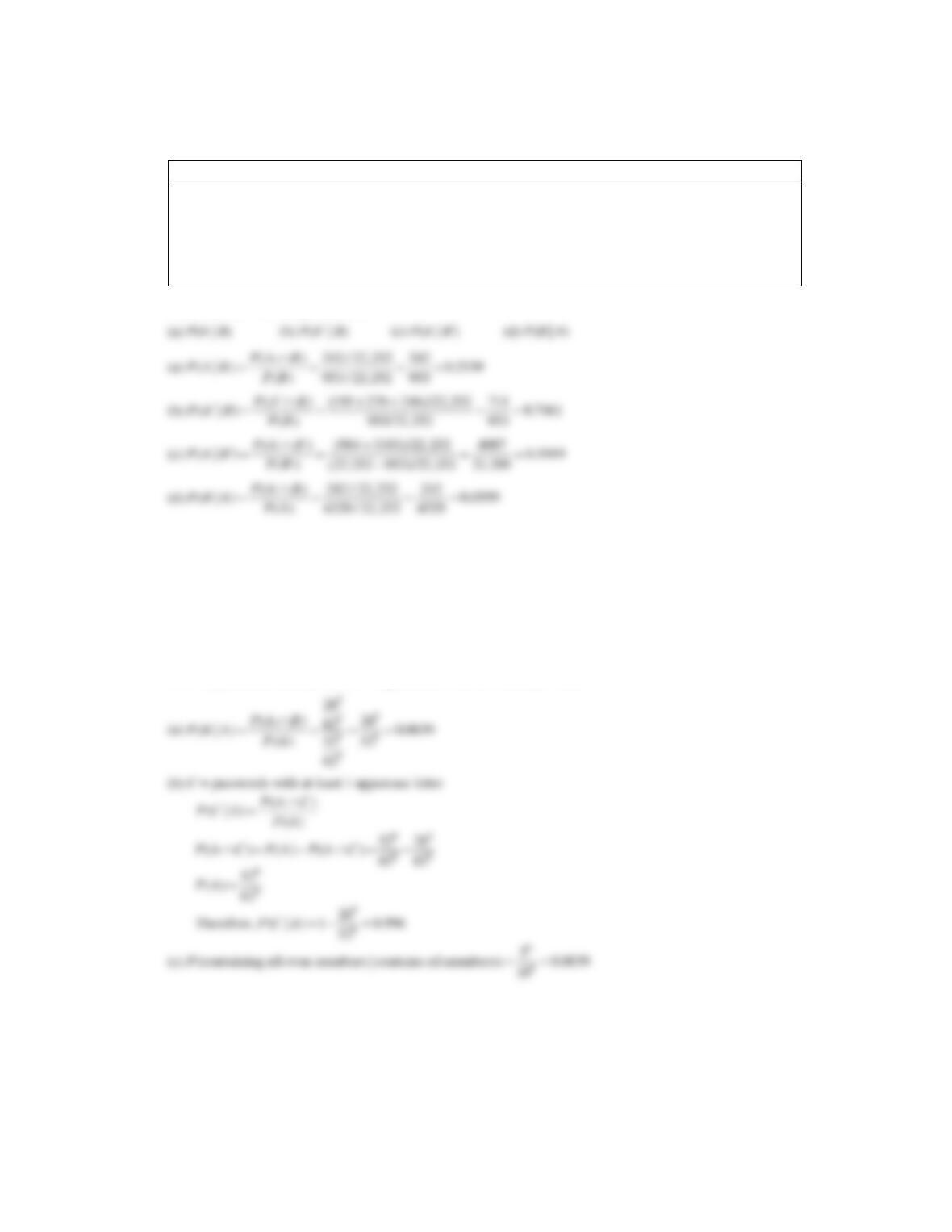
Let A denote the event that an egg survives to an adult.
Let EL denote the event that an egg survives at early larvae stage.
Let LL denote the event that an egg survives at late larvae stage.
Let PP denote the event that an egg survives at pre-pupae larvae stage.
Let LP denote the event that an egg survives at late pupae stage.
Applied Statistics and Probability for Engineers, 7th edition 2017
2-25
2.5.9. Consider the hospital emergency room data given below. Let A denote the event that a visit is to hospital 4, and
let B denote the event that a visit results in LWBS (at any hospital).
Hospital
1
2
3
4
Total
Total
5292
6991
5640
4329
22,252
LWBS
195
270
246
242
953
Admitted
1277
1558
666
984
4485
Not admitted
3820
5163
4728
3103
16,814
Determine the following probabilities.
2.5.10. A computer system uses passwords that contain exactly eight characters, and each character is one of the
26 lowercase letters (a–z) or 26 uppercase letters (A–Z) or 10 integers (0–9). Let Ω denote the set of all possible
passwords. Suppose that all passwords in Ω are equally likely. Determine the probability for each of the following:
(a) Password contains all lowercase letters given that it contains only letters.
(b) Password contains at least 1 uppercase letter given that it contains only letters.
(c) Password contains only even numbers given that is contains all numbers.
Let A = passwords with all letters, B = passwords with all lowercase letters
2.5.11. The article “Clinical and Radiographic Outcomes of Four Different Treatment Strategies in Patients with Early
Rheumatoid Arthritis,” [Arthritis & Rheumatism (2005, Vol. 52, pp. 3381–3390)], considered four treatment groups.
The groups consisted of patients with different drug therapies (such as prednisone and infliximab): sequential
monotherapy (group 1), step-up combination therapy (group 2), initial combination therapy
(group 3), or initial combination therapy with infliximab (group 4). Radiographs of hands and feet were used to
evaluate disease progression. The number of patients without progression of joint damage was 76 of 114 patients
(67%), 82 of 112 patients (73%), 104 of 120 patients (87%), and 113 of 121 patients (93%) in groups 1–4, respectively.
Applied Statistics and Probability for Engineers, 7th edition 2017
2-26
Suppose that a patient is selected randomly. Let A denote the event that the patient is in group 1, and let B denote the
event that there is no progression. Determine the following probabilities:
Section 2-6
2.6.1. Suppose that P(A | B) = 0.4 and P(B) = 0.5. Determine the following:
(a) P(A B) (b) P(A B)
2.6.2. Suppose that P(A | B) = 0.2, P(A | B) = 0.3, and P(B) = 0.8. What is P(A)?
2.6.3. The probability is 1% that an electrical connector that is kept dry fails during the warranty period. If the connector is
ever wet, the probability of a failure during the warranty period is 5%. If 90% of the connectors are kept dry and 10%
are wet, what proportion of connectors fail during the warranty period? Let F denote the event that a connector fails
and let W denote the event that a connector is wet.
2.6.4. Heart failures are due to either natural occurrences (87%) or outside factors (13%). Outside factors are related to
induced substances (73%) or foreign objects (27%). Natural occurrences are caused by arterial blockage (56%), disease
(27%), and infection (e.g., staph infection) (17%).
(a) Determine the probability that a failure is due to an induced substance.
(b) Determine the probability that a failure is due to disease or infection.
2.6.5. The edge roughness of slit paper products increases as knife blades wear. Only 1% of products slit with new blades
have rough edges, 3% of products slit with blades of average sharpness exhibit roughness, and 5% of products slit with
worn blades exhibit roughness. If 25% of the blades in manufacturing are new, 60% are of average sharpness, and 15%
are worn, what is the proportion of products that exhibit edge roughness?

Applied Statistics and Probability for Engineers, 7th edition 2017
2-27
Let R denote the event that a product exhibits surface roughness. Let N, A, and W denote the events that the blades are
new, average, and worn, respectively. Then,
2.6.6. A lot of 100 semiconductor chips contains 20 that are defective.
(a) Two are selected, at random, without replacement, from the lot. Determine the probability that the second chip
selected is defective.
(b) Three are selected, at random, without replacement, from the lot. Determine the probability that all are defective.
Let A and B denote the events that the first and second chips selected are defective, respectively.
2.6.7. Computer keyboard failures are due to faulty electrical connects (12%) or mechanical defects (88%). Mechanical
defects are related to loose keys (27%) or improper assembly (73%). Electrical connect defects are caused by defective
wires (35%), improper connections (13%), or poorly welded wires (52%).
(a) Find the probability that a failure is due to loose keys.
(b) Find the probability that a failure is due to improperly connected or poorly welded wires.
2.6.8. An article in the British Medical Journal [“Comparison of treatment of renal calculi by operative surgery, percutaneous
nephrolithotomy, and extracorporeal shock wave lithotripsy” (1986, Vol. 82, pp. 879–892)] provided the following
discussion of success rates in kidney stone removals. Open surgery had a success rate of 78% (273/350) and a newer
method, percutaneous nephrolithotomy (PN), had a success rate of 83% (289/350). This newer method looked better,
but the results changed when stone diameter was considered. For stones with diameters less than 2 centimeters, 93%
(81/87) of cases of open surgery were successful compared with only 83% (234/270) of cases of PN. For stones greater
than or equal to 2 centimeters, the success rates were 73% (192/263) and 69% (55/80) for open surgery and PN,
respectively. Open surgery is better for both stone sizes, but less successful in total. In 1951, E. H. Simpson pointed out
this apparent contradiction (known as Simpson’s paradox), and the hazard still persists today. Explain how open
surgery can be better for both stone sizes but worse in total.
Applied Statistics and Probability for Engineers, 7th edition 2017
2-28
2.6.9. Consider the hospital emergency room data given below. Let A denote the event that a visit is to hospital 4, and
let B denote the event that a visit results in LWBS (at any hospital).
Hospital
1
2
3
4
Total
Total
5292
6991
5640
4329
22,252
LWBS
195
270
246
242
953
Admitted
1277
1558
666
984
4485
Not admitted
3820
5163
4728
3103
16,814
Determine the following probabilities.
(a) P(A B) (b) P(A B) (c) P(A B) (d) Use the total probability rule to determine P(A)
P(A) = 4329/22,252 = 0.1945, P(B) = 953/22,252 = 0.0428
2.6.10. The article “Clinical and Radiographic Outcomes of Four Different Treatment Strategies in Patients with Early
Rheumatoid Arthritis,” [Arthritis & Rheumatism (2005, Vol. 52, pp. 3381–3390)], considered four treatment groups.
The groups consisted of patients with different drug therapies (such as prednisone and infliximab): sequential
monotherapy (group 1), step-up combination therapy (group 2), initial combination therapy
(group 3), or initial combination therapy with infliximab (group 4). Radiographs of hands and feet were used to
evaluate disease progression. The number of patients without progression of joint damage was 76 of 114 patients
(67%), 82 of 112 patients (73%), 104 of 120 patients (87%), and 113 of 121 patients (93%) in groups 1–4, respectively.
Suppose that a patient is selected randomly. Let A denote the event that the patient is in group 1, and let B denote the
event for which there is no progression. Determine the following probabilities:
(a) P(A B) (b) P(B) (c) P(AB) (d) P(A*B) (e) P(AB)
A = group 1, B = no progression
2.6.11. A Web ad can be designed from four different colors, three font types, five font sizes, three images, and five text
phrases. A specific design is randomly generated by the Web server when you visit the site. Determine the probability
that the ad color is red and the font size is not the smallest one.
2.6.12. A hospital operating room needs to schedule three knee surgeries and two hip surgeries in a day. Suppose that an
operating room needs to schedule three knee, four hip, and five shoulder surgeries. Assume that all schedules are
equally likely. Determine the following probabilities:
(a) All hip surgeries are completed first given that all knee surgeries are last.
Applied Statistics and Probability for Engineers, 7th edition 2017
2-29
(b) The schedule begins with a hip surgery given that all knee surgeries are last.
(c) The first and last surgeries are hip surgeries given that knee surgeries are scheduled in time periods 2 through 4.
(d) The first two surgeries are hip surgeries given that all knee surgeries are last.
Applied Statistics and Probability for Engineers, 7th edition 2017
2-30
Section 2-7
2.7.1. If P(A | B) = 0.3, P(B) = 0.8, and P(A) = 0.3, are the events B and the complement of A independent?
2.7.2. If P(A) = 0.2, P(B) = 0.2, and A and B are mutually exclusive, are they independent?
2.7.3. A batch of 500 containers of frozen orange juice contains 5 that are defective. Two are selected, at random, without
replacement, from the batch. Let A and B denote the events that the first and second containers selected are defective,
respectively.
(a) Are A and B independent events?
(b) If the sampling were done with replacement, would A and B be independent?
2.7.4. Disks of polycarbonate plastic from a supplier are analyzed for scratch and shock resistance. The results from 100 disks
are summarized as follows:
Shock Resistance
High
Low
Scratch
Resistance
High
70
9
Low
16
5
Let A denote the event that a disk has high shock resistance, and let B denote the event that a disk has high scratch
resistance. Are events A and B independent?
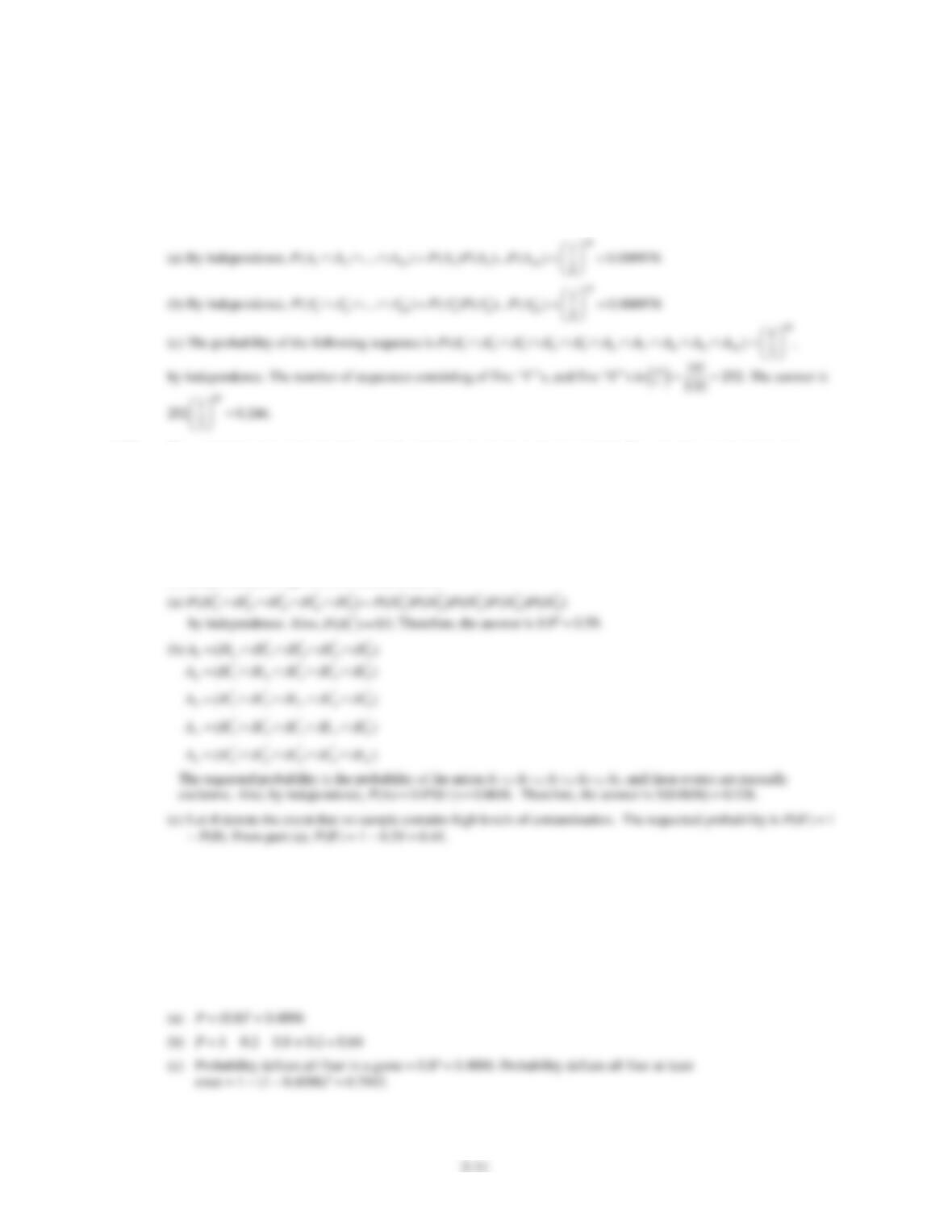
2.7.5. Redundant array of inexpensive disks (RAID) is a technology that uses multiple hard drives to increase the speed
of data transfer and provide instant data backup. Suppose that the probability of any hard drive failing in a day is 0.001
and the drive failures are independent.
(a) A RAID 0 scheme uses two hard drives, each containing a mirror image of the other. What is the probability of
data loss? Assume that data loss occurs if both drives fail within the same day.
(b) A RAID 1 scheme splits the data over two hard drives. What is the probability of data loss? Assume that data loss
occurs if at least one drive fails within the same day.
Applied Statistics and Probability for Engineers, 7th edition 2017
2.7.6. A test of a printed circuit board uses a random test pattern with an array of 10 bits is equally likely to be 0 or 1.
Assume the bits are independent.
(a) What is the probability that all bits are 1s?
(b) What is the probability that all bits are 0s?
(c) What is the probability that exactly 5 bits are 1s and 5 bits are 0s?
Let Ai denote the event that the ith bit is a one.
2.7.7. The probability that a lab specimen contains high levels of contamination is 0.10. Five samples are checked, and
the samples are independent.
(a) What is the probability that none contain high levels of contamination?
(b) What is the probability that exactly one contains high levels of contamination?
(c) What is the probability that at least one contains high levels of contamination?
It is useful to work one of these exercises with care to illustrate the laws of probability. Let Hi denote the event that the
ith sample contains high levels of contamination.
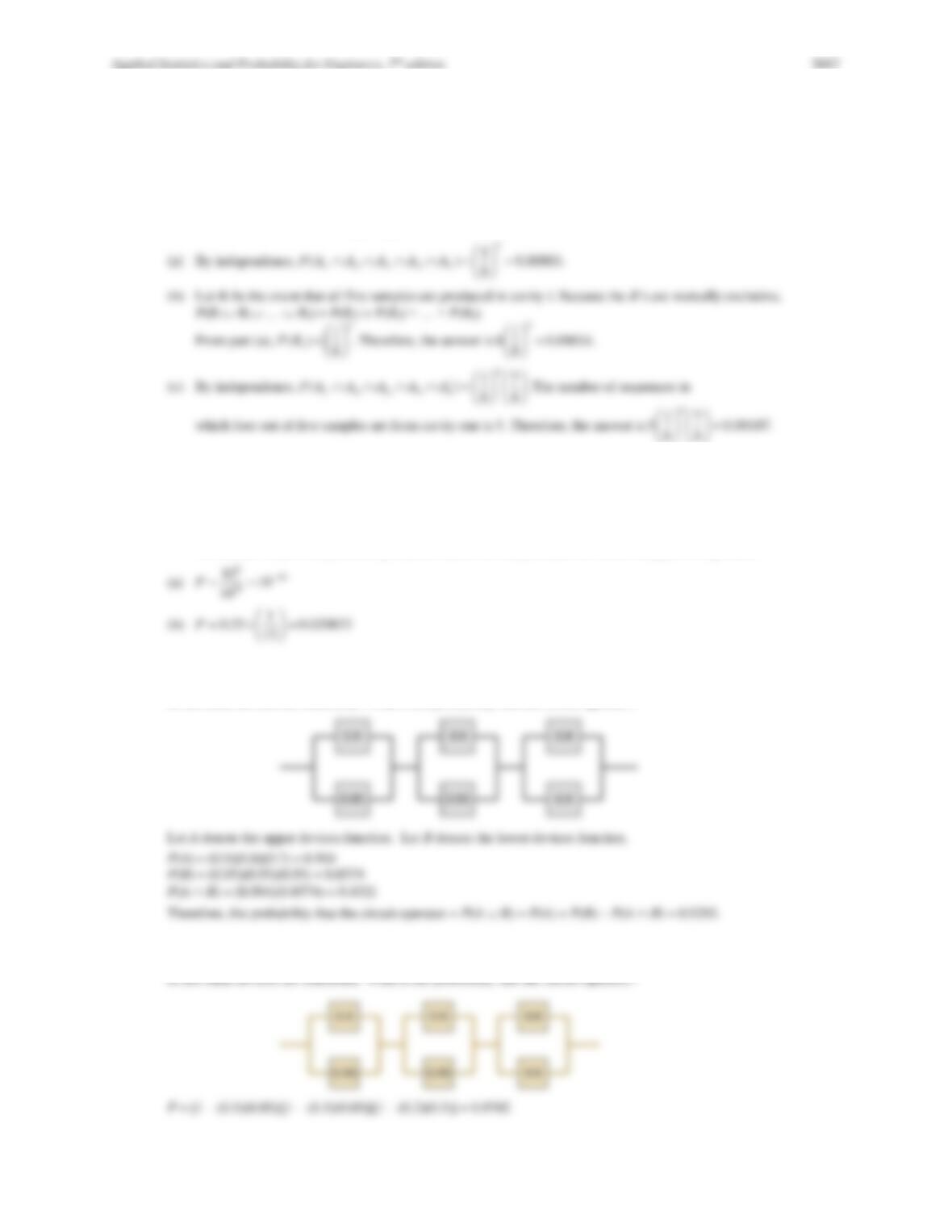
2.7.8. A player of a video game is confronted with a series of four opponents and an 80% probability of defeating
each opponent. Assume that the results from opponents are independent (and that when the player is defeated by an
opponent the game ends).
(a) What is the probability that a player defeats all four opponents in a game?
(b) What is the probability that a player defeats at least two opponents in a game?
(c) If the game is played three times, what is the probability that the player defeats all four opponents at
least once?
2-32
2.7.9. Eight cavities in an injection-molding tool produce plastic connectors that fall into a common stream. A sample is
chosen every several minutes. Assume that the samples are independent.
(a) What is the probability that five successive samples were all produced in cavity 1 of the mold?
(b) What is the probability that five successive samples were all produced in the same cavity of the mold?
(c) What is the probability that four out of five successive samples were produced in cavity 1 of the mold?
Let A denote the event that a sample is produced in cavity one of the mold.
2.7.10. A credit card contains 16 digits. It also contains the month and year of expiration. Suppose there are 1 million credit
card holders with unique card numbers. A hacker randomly selects a 16-digit credit card number.
(a) What is the probability that it belongs to a user?
(b) Suppose a hacker has a 25% chance of correctly guessing the year your card expires and randomly selects 1 of the
12 months. What is the probability that the hacker correctly selects the month and year of expiration?
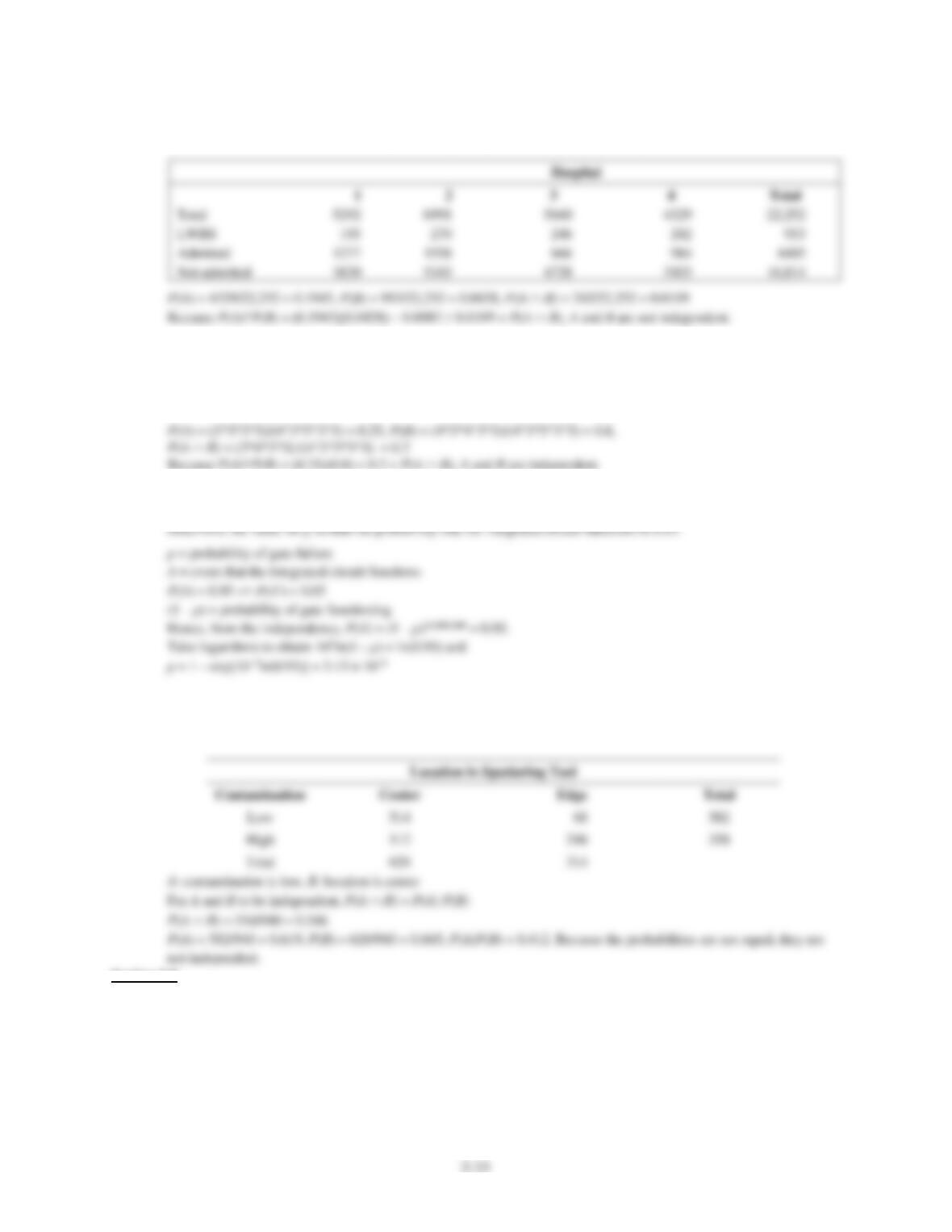
2.7.11. The following circuit operates if and only if there is a path of functional devices from left to right. The probability that
each device functions is as shown. Assume that the probability that a device is functional does not depend on whether
or not other devices are functional. What is the probability that the circuit operates?
2.7.12. The following circuit operates if and only if there is a path of functional devices from left to right. The probability that
each device functions is as shown. Assume that the probability that a device is functional does not depend on whether
Applied Statistics and Probability for Engineers, 7th edition 2017
2.7.13. Consider the hospital emergency room data given below. Let A denote the event that a visit is to hospital 4, and let B
denote the event that a visit results in LWBS (at any hospital). Are these events independent?
2.7.14. A Web ad can be designed from four different colors, three font types, five font sizes, three images, and five text
phrases. A specific design is randomly generated by the Web server when you visit the site. Let A denote the event that
the design color is red, and let B denote the event that the font size is not the smallest one. Are A and B independent
events? Explain why or why not.
2.7.15. An integrated circuit contains 10 million logic gates (each can be a logical AND or OR circuit). Assume the probability
of a gate failure is p and that the failures are independent. The integrated circuit fails to function if any gate fails.
2.7.16. The following table provides data on wafers categorized by location and contamination levels. Let A denote the event
that contamination is low, and let B denote the event that the location is center. Are A and B independent? Why or why
not?
Section 2-8
2.8.1. Customers are used to evaluate preliminary product designs. In the past, 95% of highly successful products received
good reviews, 60% of moderately successful products received good reviews, and 10% of poor products received good
reviews. In addition, 40% of products have been highly successful, 35% have been moderately successful, and 25%
have been poor products.
(a) What is the probability that a product attains a good review?
(b) If a new design attains a good review, what is the probability that it will be a highly successful product?