
CHAPTER 17
MULTI-VARIABLE PLANT
OBJECTIVES
Describe the various problems associated with operating process equipment and
systems.
REVIEW QUESTIONS
1. Identify the four methods of troubleshooting and list the most important
feature to each.
There are a number of troubleshooting methods that can be used with
these models. Methods vary depending on individual educational faculty,
consultants, and industry. The basic approach to most methods includes
the development of a good educational foundation.
Method One: Educational
• Basic knowledge of the equipment and technology
• Understanding of the math, physics and chemistry associated with
the equipment
• Study equipment arrangements in systems
• Study process control instrumentation
• Operate equipment in complex arrangements
• Troubleshoot process problems
Troubleshooting is a process that requires a wide array of skills and
techniques. Modern control instrumentation includes; indicators, alarms,
transmitters, controllers, control valves, transducers, analyzers, interlocks,
etc. The primary goal is to control variables like temperature, pressure,
flow, level, or analytical variables. It is possible to control large, complex
processes from a single room. In these types of systems, process set
points and process variables on controllers should clearly reflect each other.
Process problems are quickly identified when these two do not line up.
Example: If the flow rate is set at 200 gpm and the process variable is 175
gpm, a 25 gpm difference exists. This could indicate a serious problem.
Method Two: Instrumental
• Basic understanding of process control instrumentation
• Basic understanding of the unit process flow plan
Method Three: Experiential
• Experience operating specific equipment and system
• Familiarity with past problems and solutions
• Ability to think outside the box
• Critical thinking- identify and challenge assumptions
• Evaluates, monitors, measures, tests alternatives
• Troubleshoot process problems
Method Four: Scientific
• Grounded in principles of mathematics, physics, and chemistry
• Theory-based operations
• Good understanding of equipment design and operation
• Views the problem from the outside in.
2. Identify the ten troubleshooting models used in this text.
In this text ten different troubleshooting models have been studied. These
models include:
• pump and tank model
• compressor model
• heat exchanger model
• cooling tower model
• boiler model
• furnace model
3. In Figure 17-5, explain why the FIC-202 is attempting to open the valve to
100%.
4. In Figure 17-5, explain why FIC-201 has closed the valve.
5. In Figure 17-6, explain why the pressure did not immediately drop to zero.
6. In Figure 17-7, explain why Ti-202D is reading 205ºF.
When P-202 failed the flow through Ex-202 stopped. Heat transfer between
7. In Figure 17-7, explain why TIC-100 has closed the valve.
8. In Figure 17-7, explain why Ti-202B is reading 185.5ºF.
9. In Figure 17-8, explain why Pi-300A is reading 72 psig.
10. In Figure 17-8, explain why Pi-300B is reading 19 psig.
11. In Figure 17-8, explain why TIC-301 is opening the valve to 100%.
Due to restricted flow from Ex-204 the controller is attempting to increase
12. In Figure 17-9, explain why FIC-402B is opening the valve to 100%.
13. In Figure 17-10, explain why TR-1 is reading 405ºF.
14. In Figure 17-11, explain why the level in D-204 is dropping while the
controller is in AUTO.
When the cooling water failed the ability of the condenser to condense the
15. In Figure 17-12, explain why AIC-210 is reading 61%.
When FCV-211 fails in the closed position, all solvent (toluene) flow is
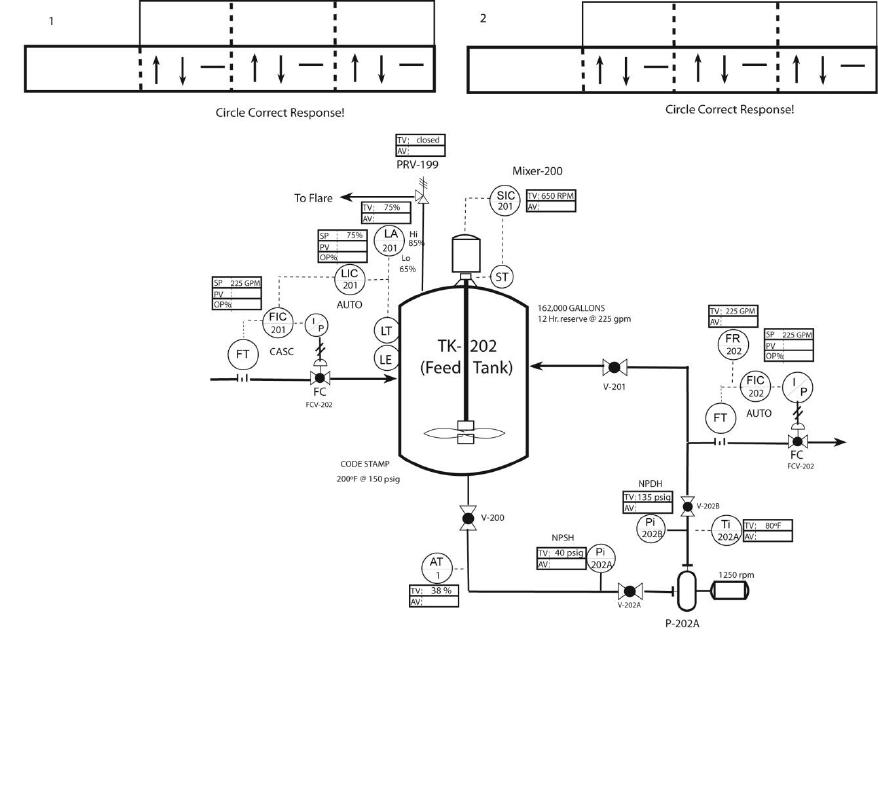
NAME:____________________________ TEST A
DATE:____________________________ “Developed by Instructor”
CHAPTER SEVENTEEN TEST MULTI-VARIABLE PLANT
1.
Pumps
1
2
3
4
5
6
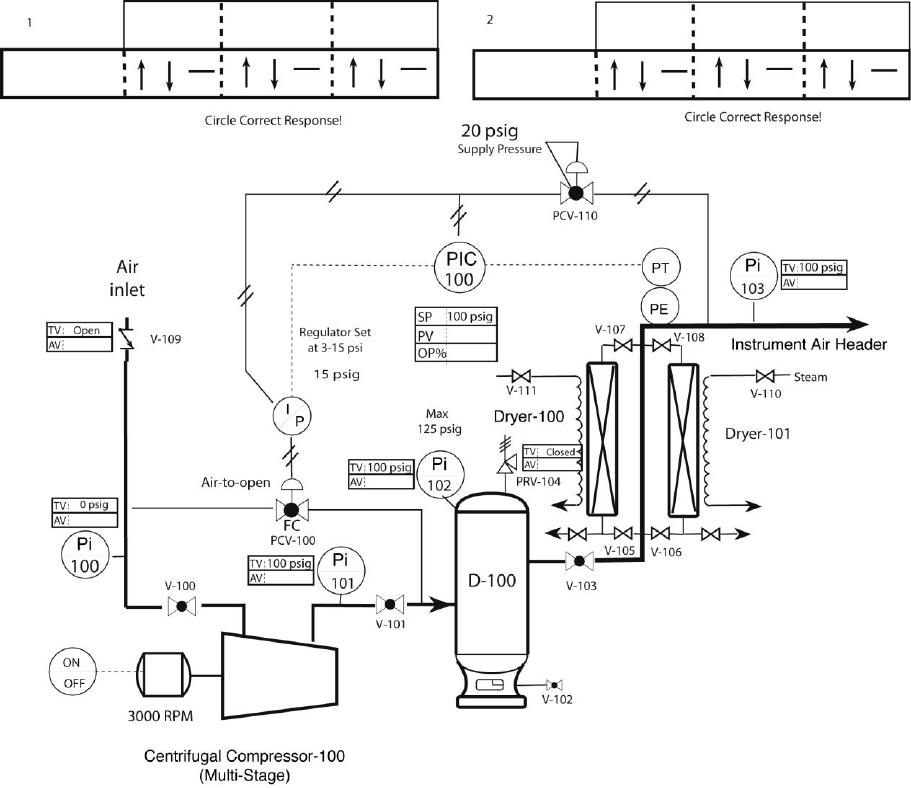
2.
Compressors
1
2
3
4
5
6
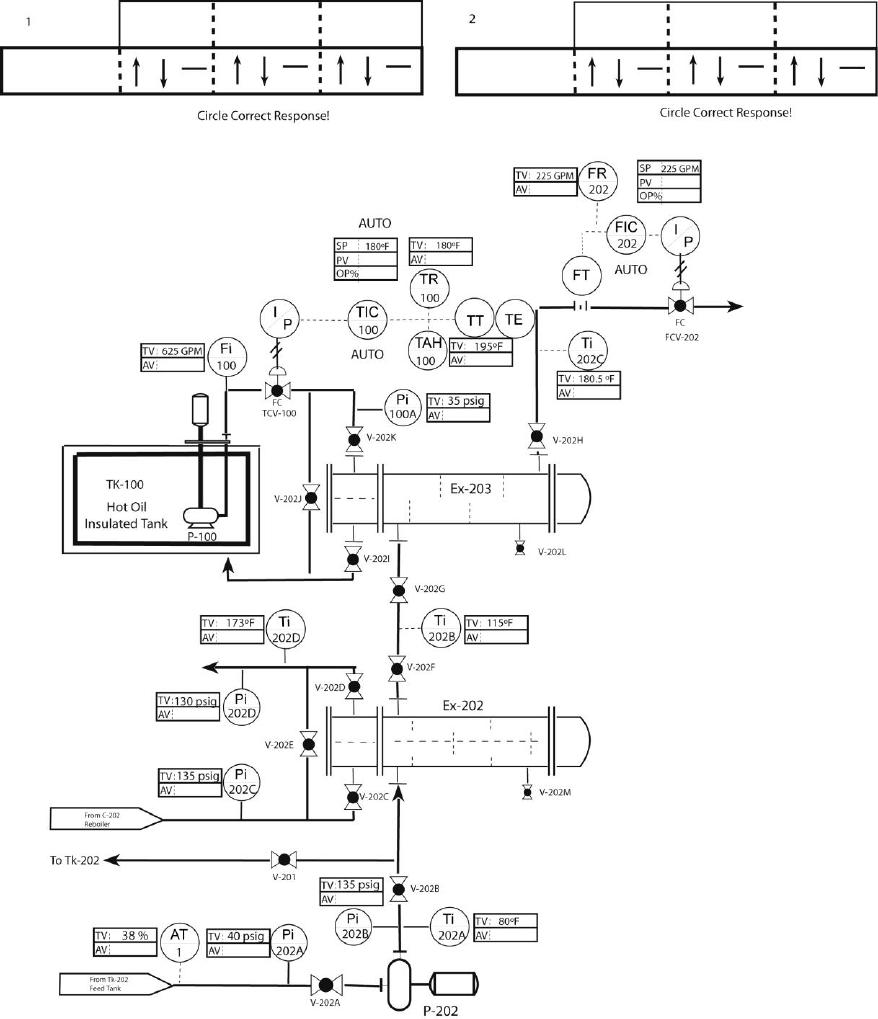
3.
Heat Exchangers
1
2
3
4
5
6
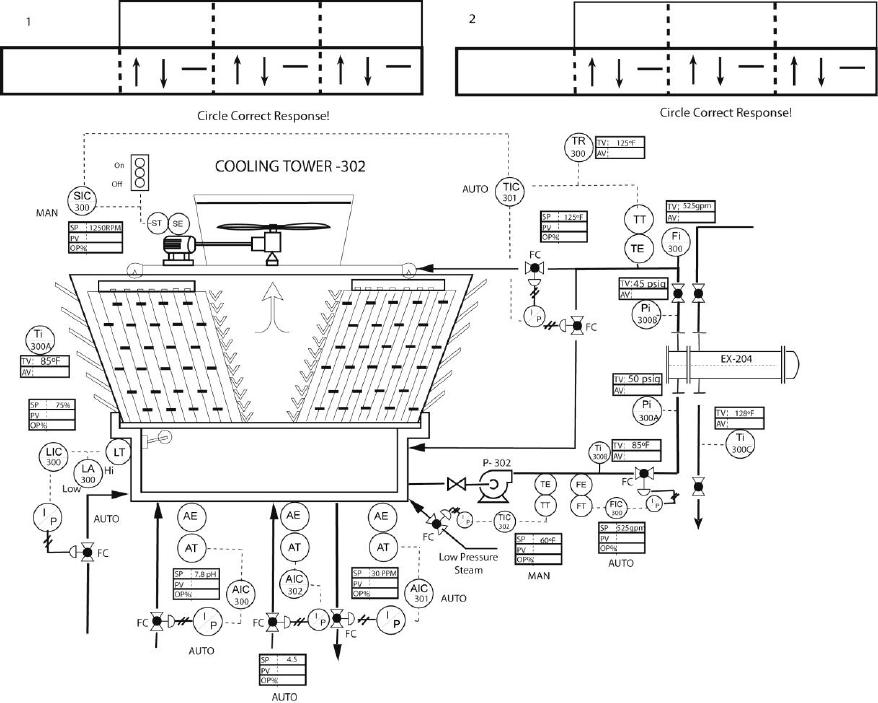
4.
Cooling Tower
1
2
3
4
5
6
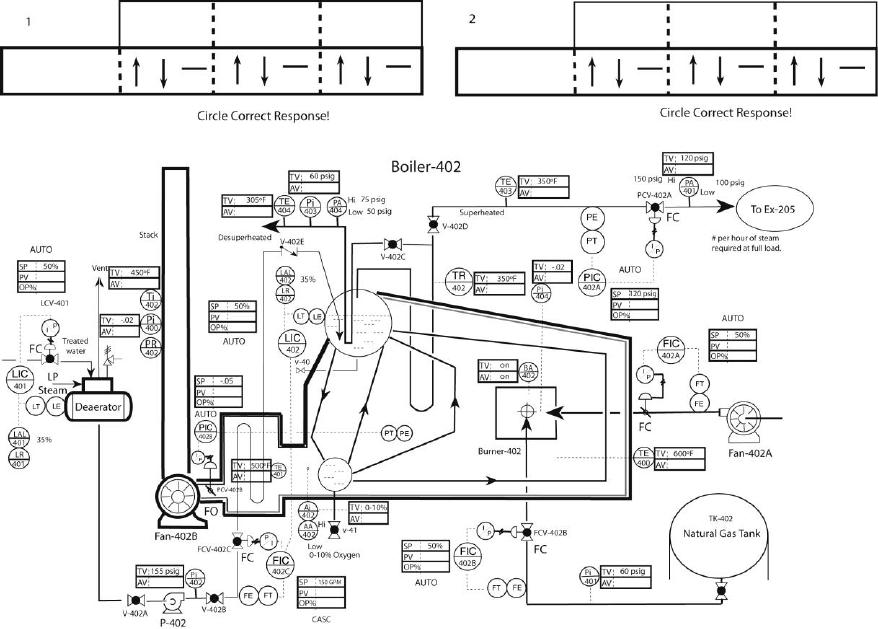
5.
Boiler
1
2
3
4
5
6
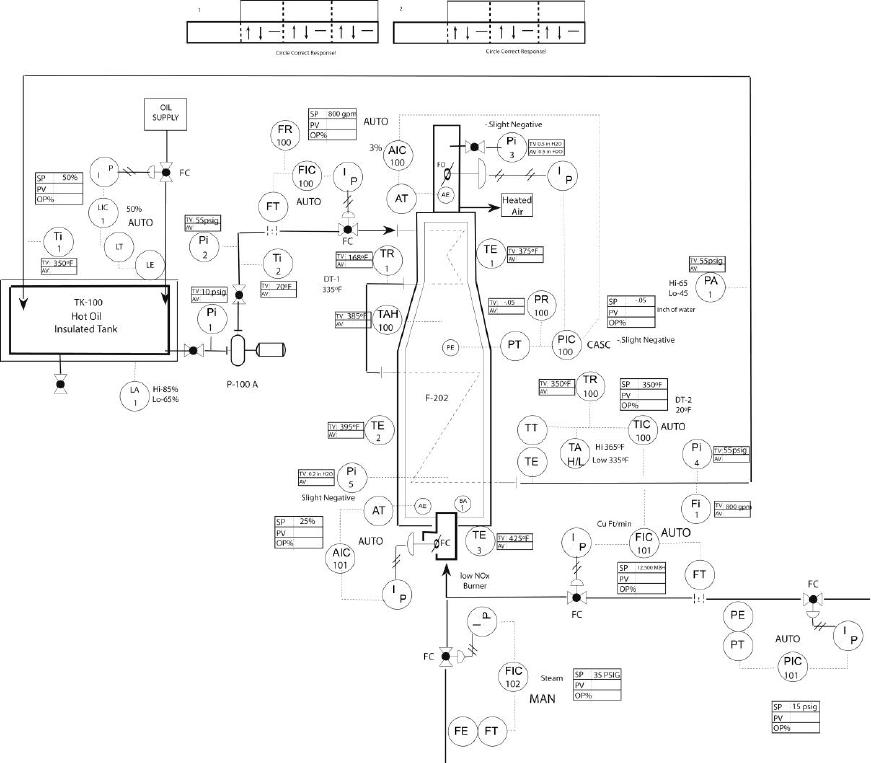
6.
Furnace
1
2
3
4
5
6
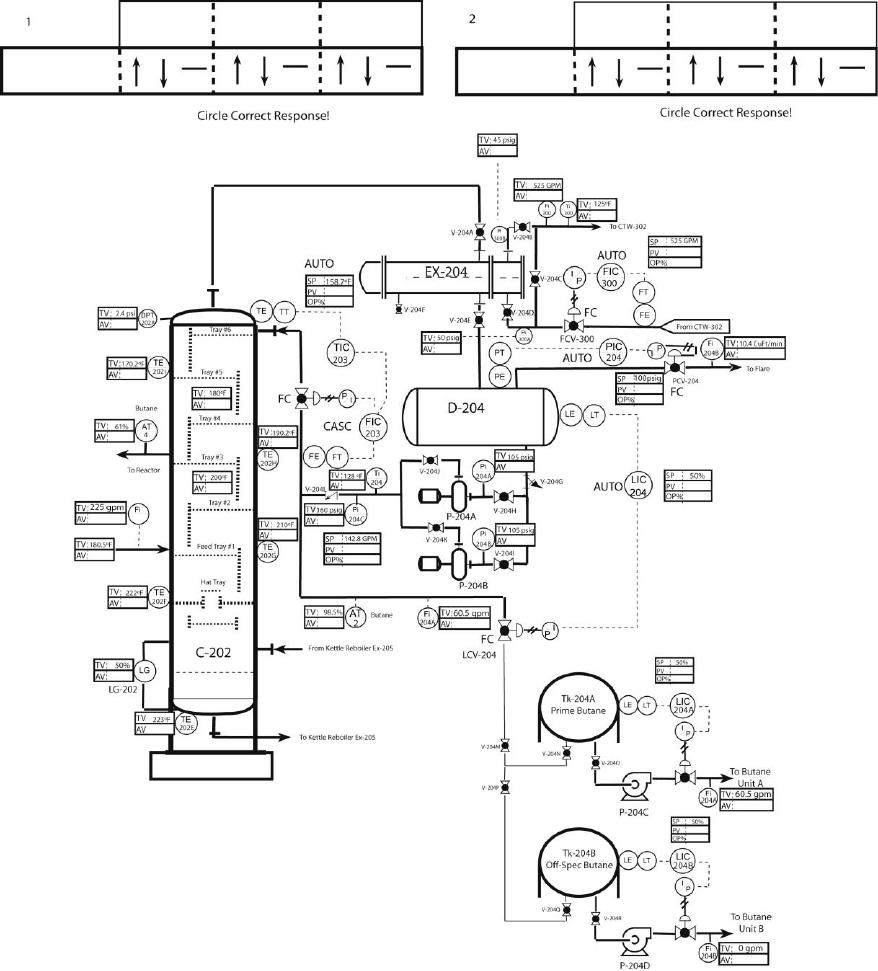
7.
Distillation
1
2
3
4
5
6
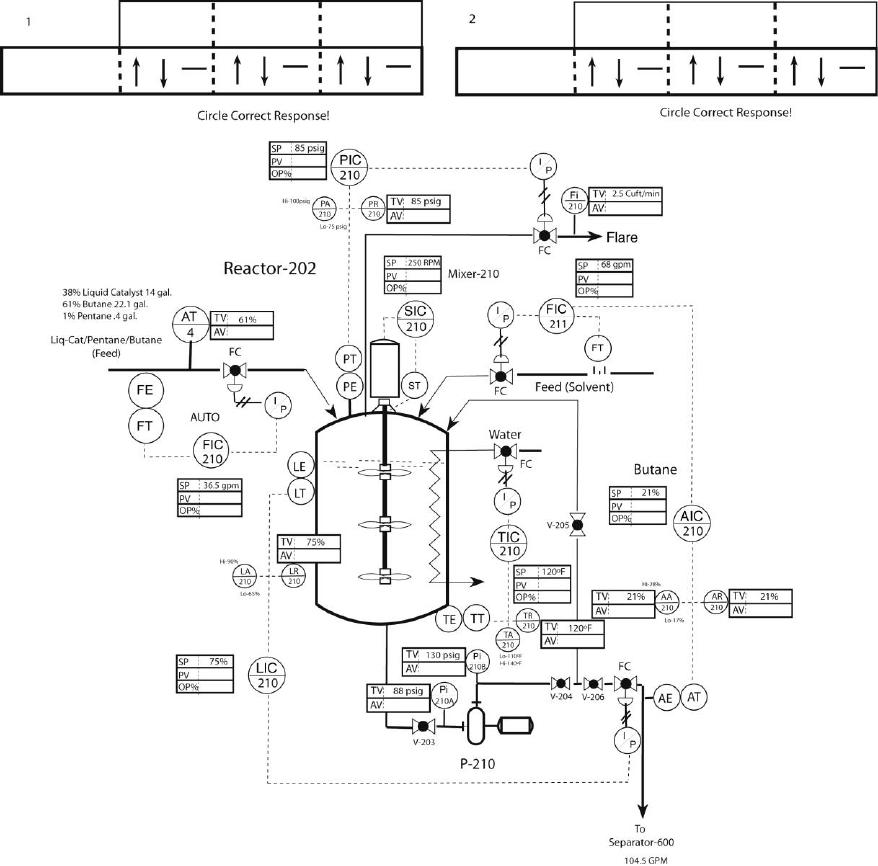
8.
Reactor
1
2
3
4
5
6
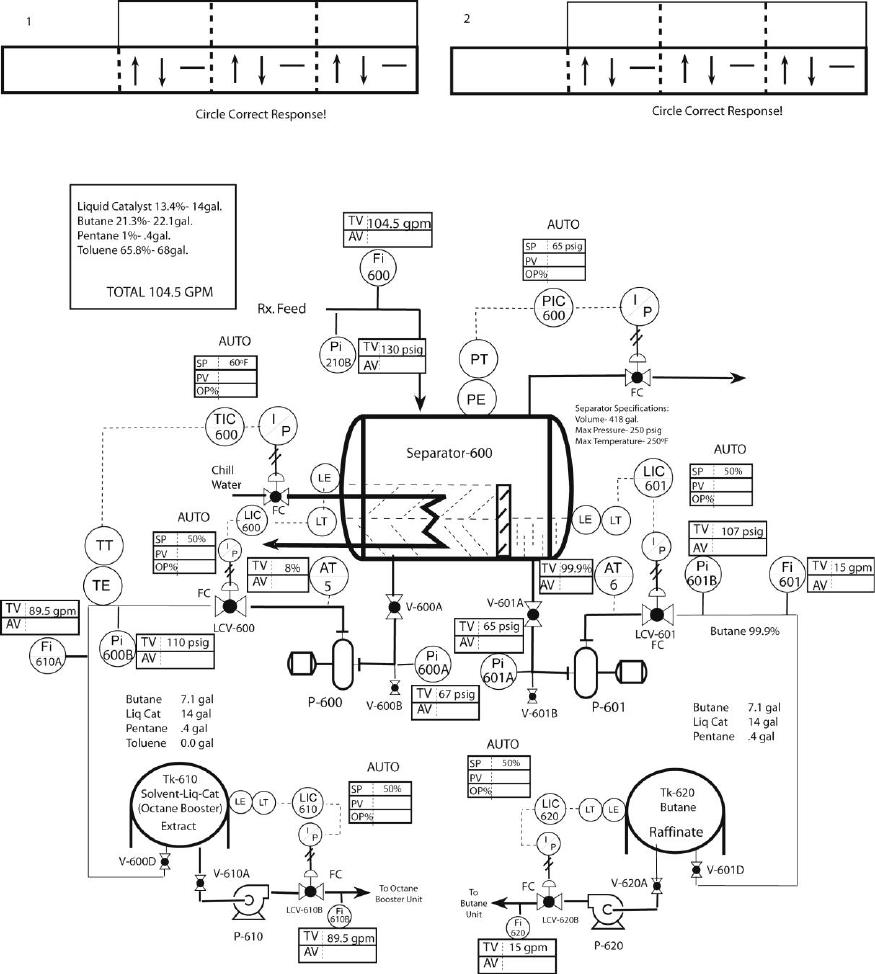
9.
Separator
1
2
3
4
5
6
Answer Key CHAPTER 17 TEST A
MULTI-VARIABLE MODEL “DEVELOPED BY INSTRUCTOR”