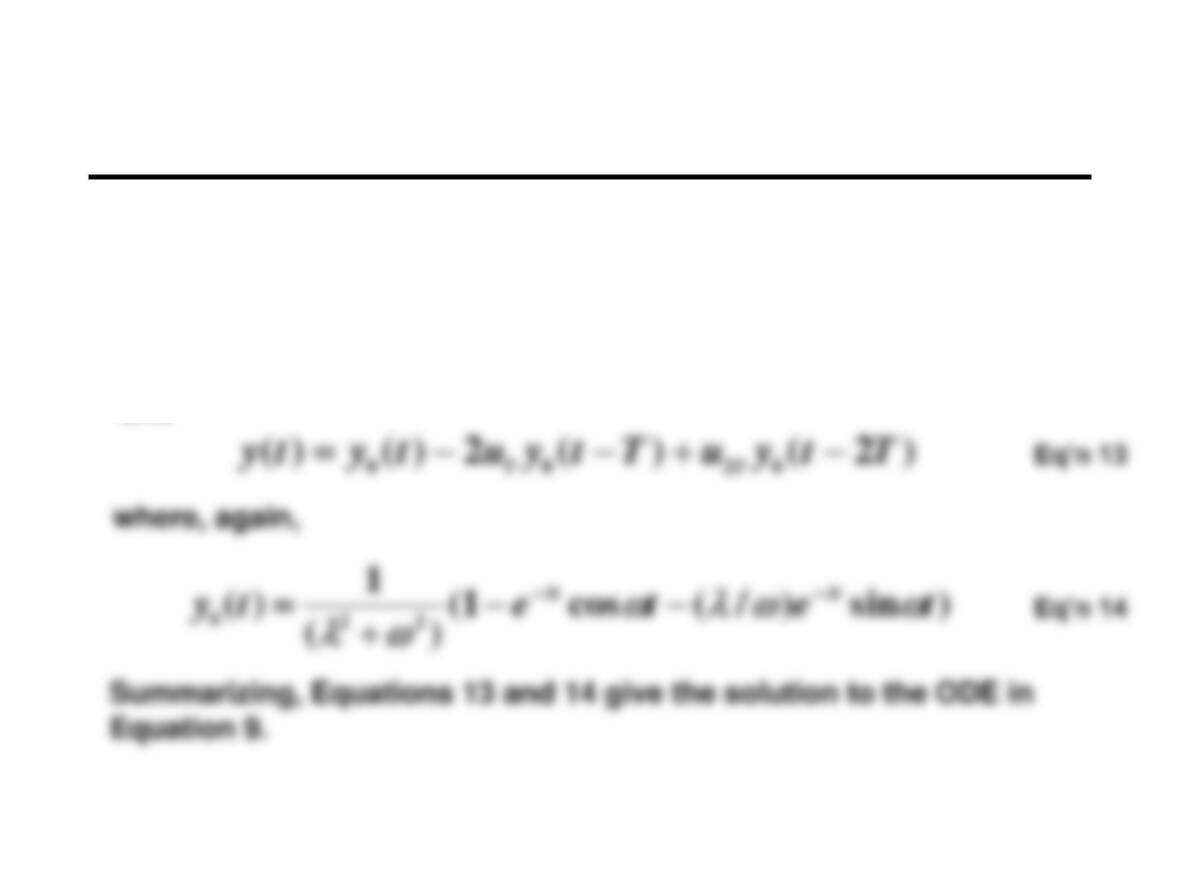
Response to
(non-repeated) square wave input (10)
Therefore
)2()(
)()(
020
21
00
1
TtyusYeL
TtyusYeL
T
sT
T
sT
−=
−=
−−
−−
and
Laplace Transforms
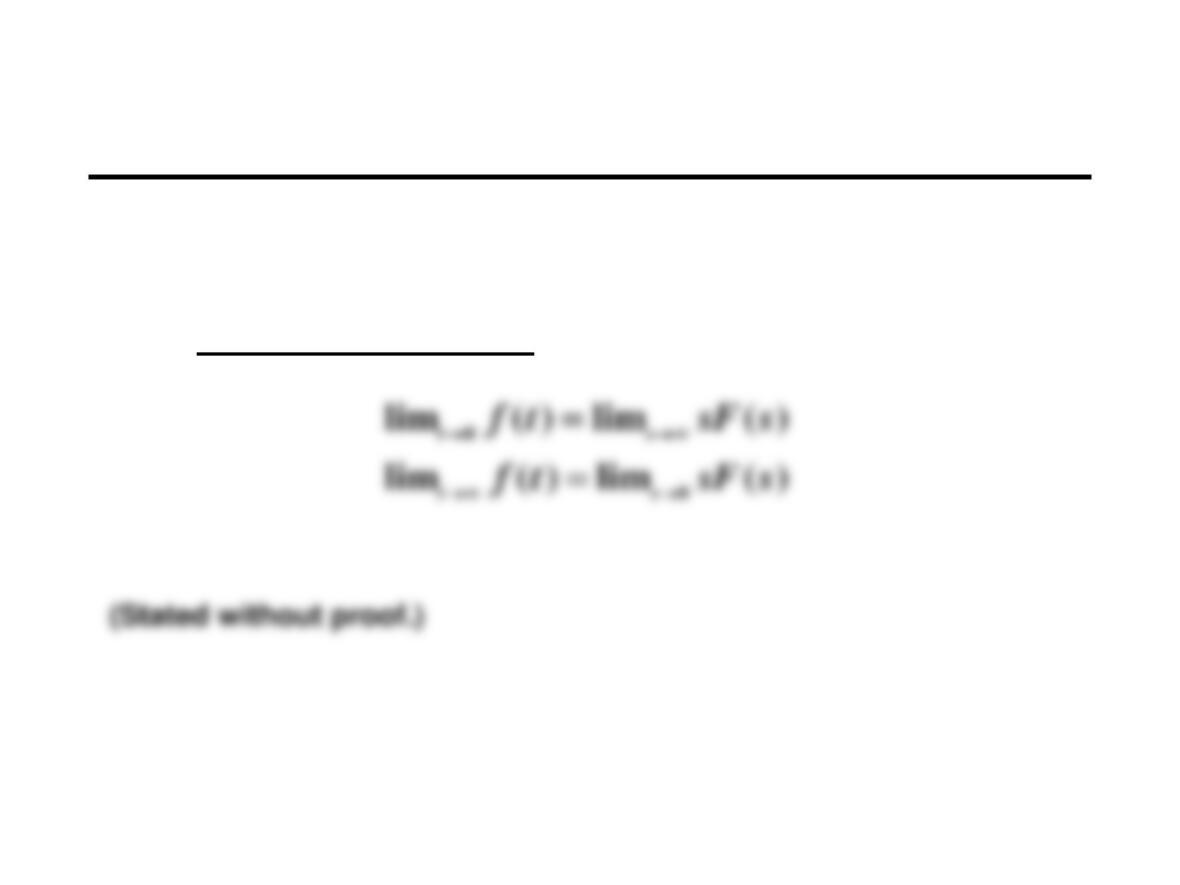
Initial and Final Value Theorems
Initial and Final Value Theorems
Let be a continuous function with Laplace transform
)(tf
)(sF
Then, provided the limits exist,
Laplace Transforms
Response to a
periodic input
Response to a periodic input
)()( tgTtg =+
We examine here the response of a stable, damped nth order
linear time-invariant system governed by
The Laplace transform of such an input is
)(…
2
2
2
1
1
1tgya
dt
yd
a
dt
yd
a
dt
yd
n
n
n
n
n
n
n
=++++ −
−
−
−
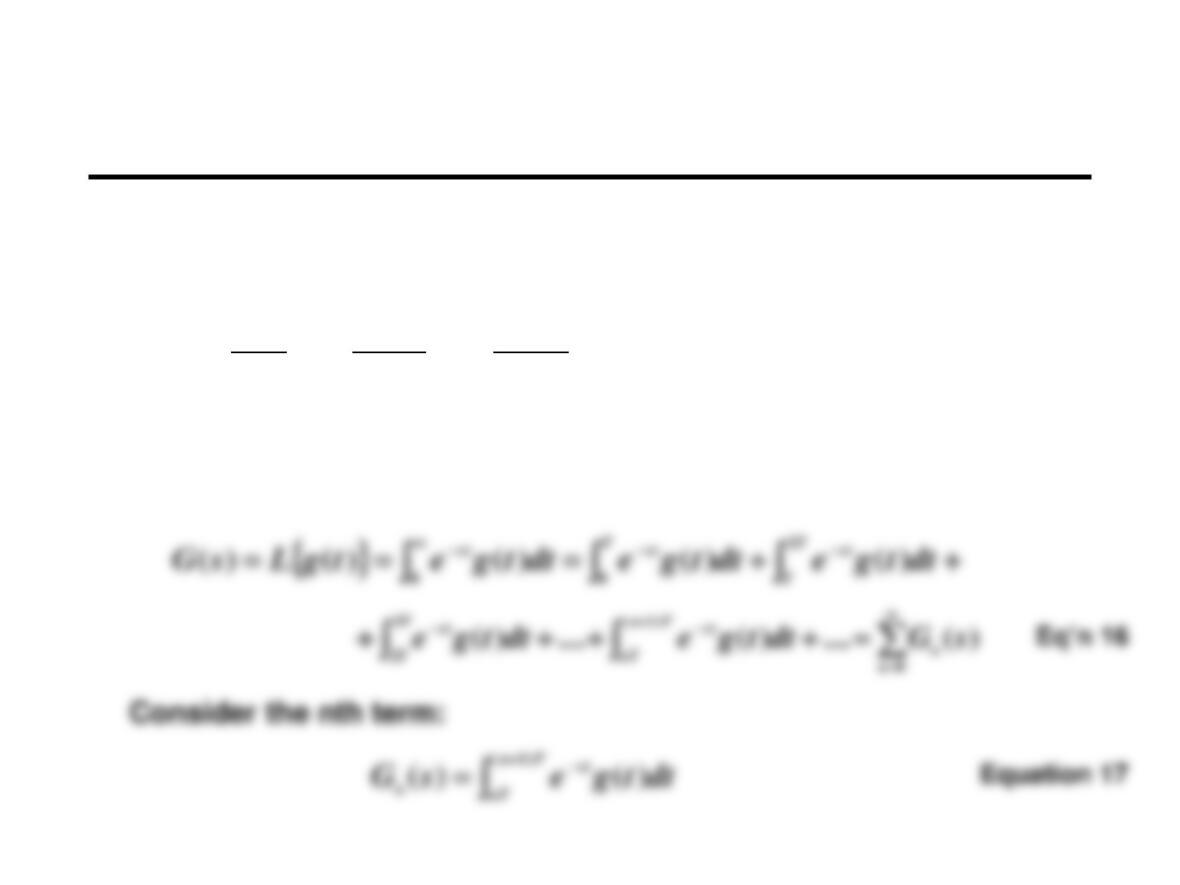
when the input is periodic; i.e.
Equation 15
Response to a periodic input (2)
nTtt −=
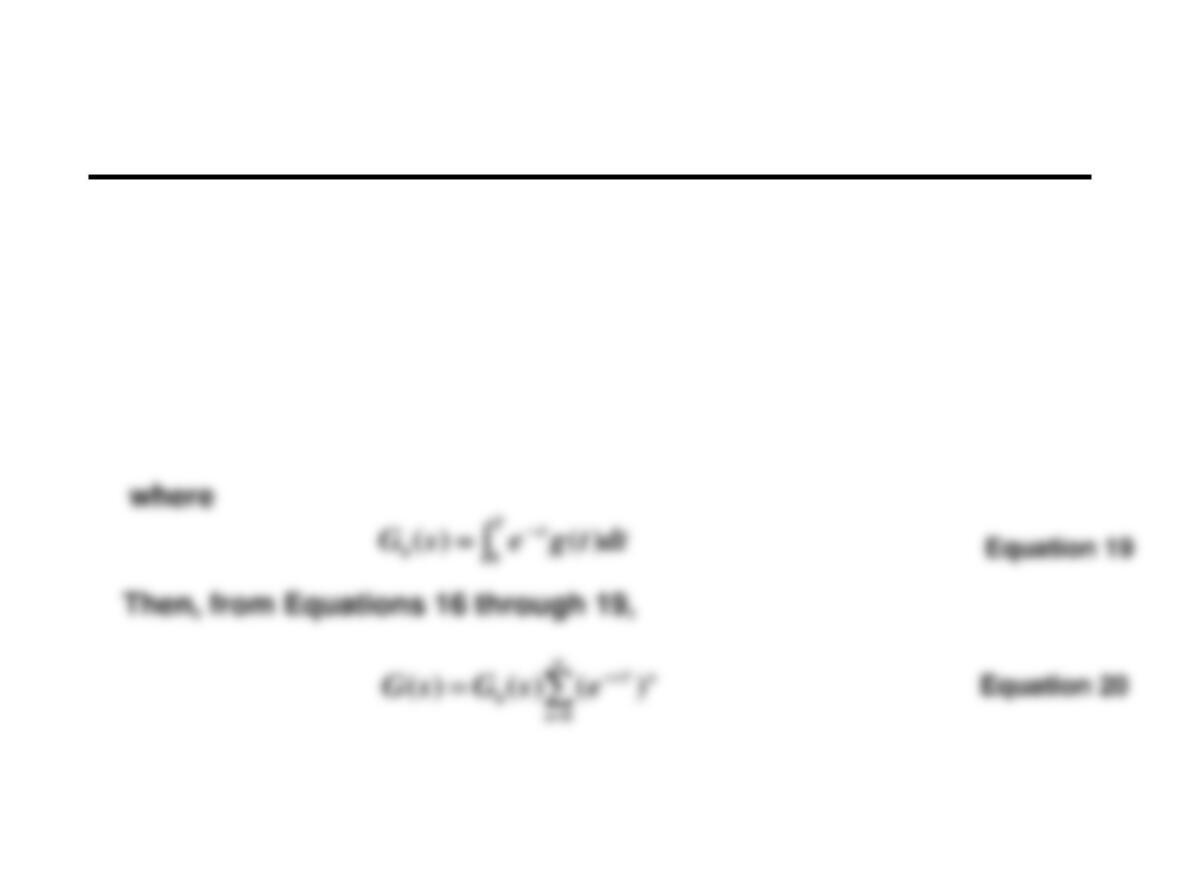
Let . Then, considering the periodicity of ,
)(tg
=
=
+
=+
−+
−TnTts
TnTts
ntdtgetdnTtgesG 0
)(
0
)( )()()(
)()()( 0
0sGetdtgee nsT
TtsnsT −
−− =
Equation 18
Response to a periodic input (3)
Now
=−
=
01
1
n
n
x
x
Response to a periodic input (4)
Theorem:
The response of a stable, damped nth order linear time-invariant
system to a bounded periodic input is eventually periodic.
Proof:
n
nn
sT
asas
sG
esY +++
=− −
−
…
)(
)1)((1
1
0
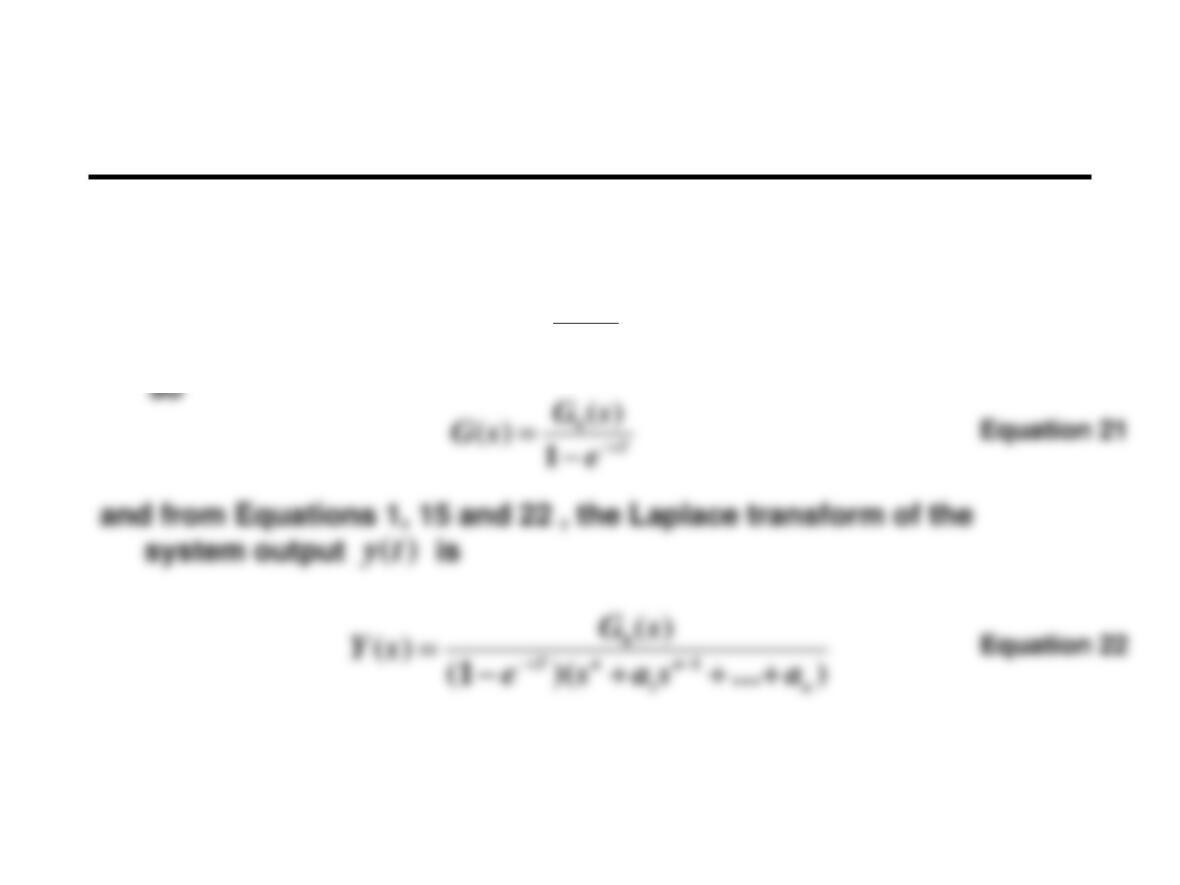
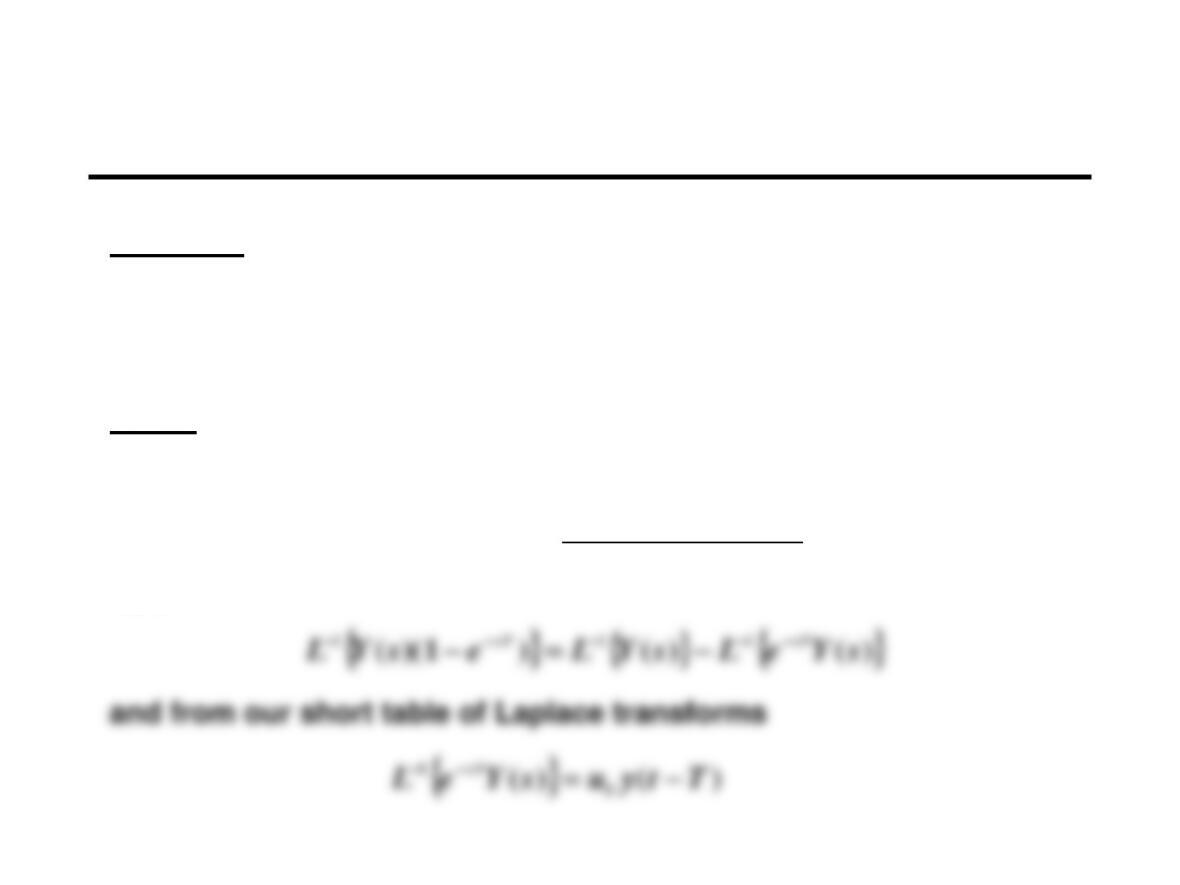
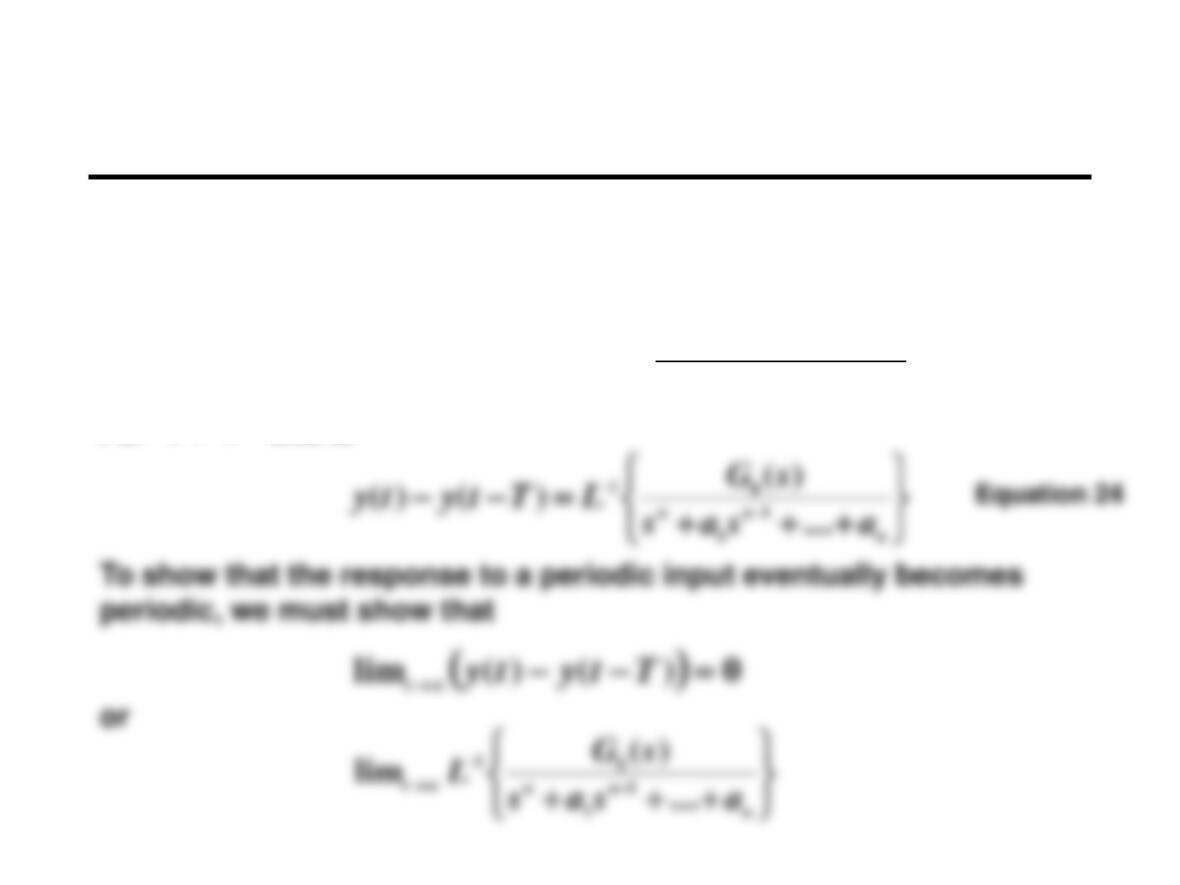
From Equation 22
Now
Equation 23
Response to a periodic input (5)
+++
=−− −
−
n
nn
Tasas
sG
LTtyuty ...
)(
)()( 1
1
0
1
Hence the inverse Laplace transform of Equation 23 is
For this is
Tt
Response to a periodic input (6)
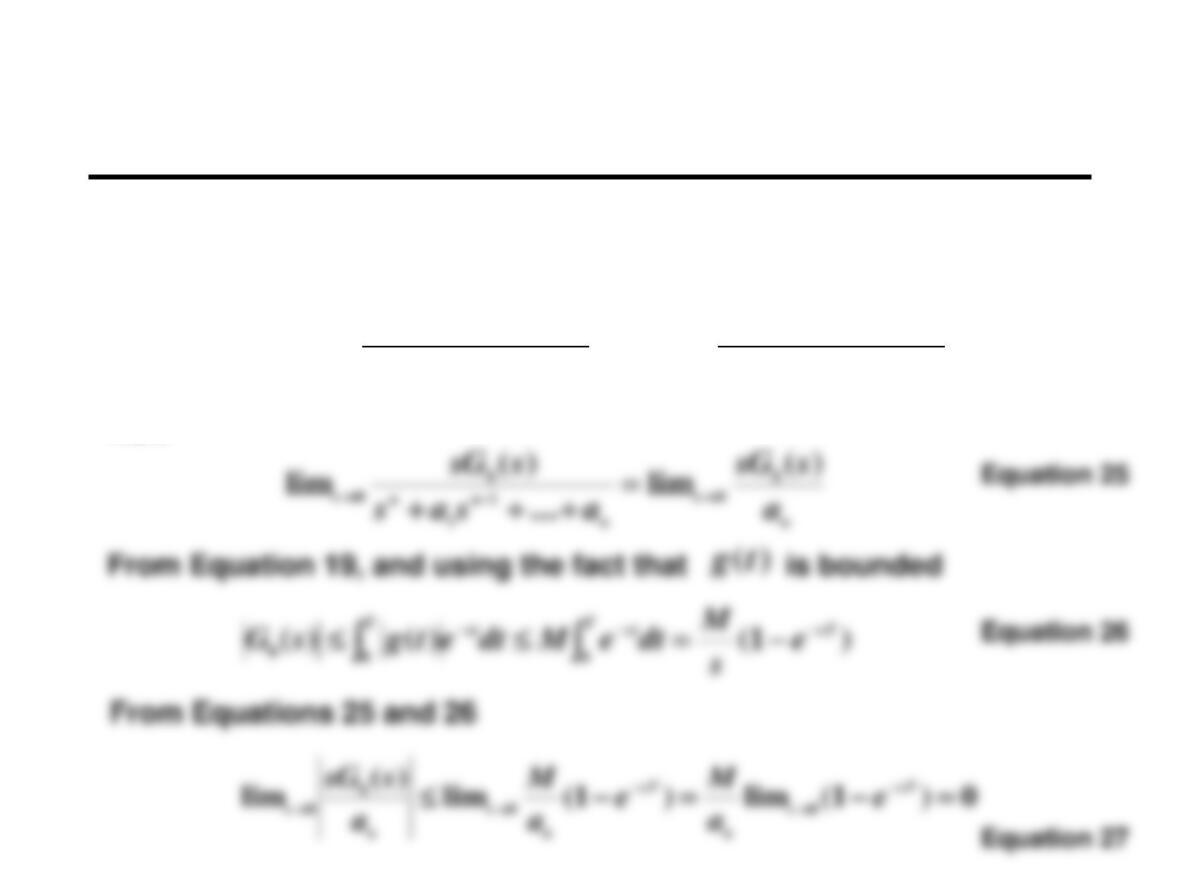
The text discusses how we can be certain that the limit exists in
this case. The argument depends on the system being stable
and damped. With the limit known to exist, we may apply the
final value theorem.
Response to a periodic input (7)
n
nn
s
n
nn
tasas
ssG
asas
sG
L+++
=
+++ −
→
−
−
→ …
)(
lim
…
)(
lim 1
1
0
0
1
1
0
1
From the final value theorem
Now
Response to a periodic input (8)
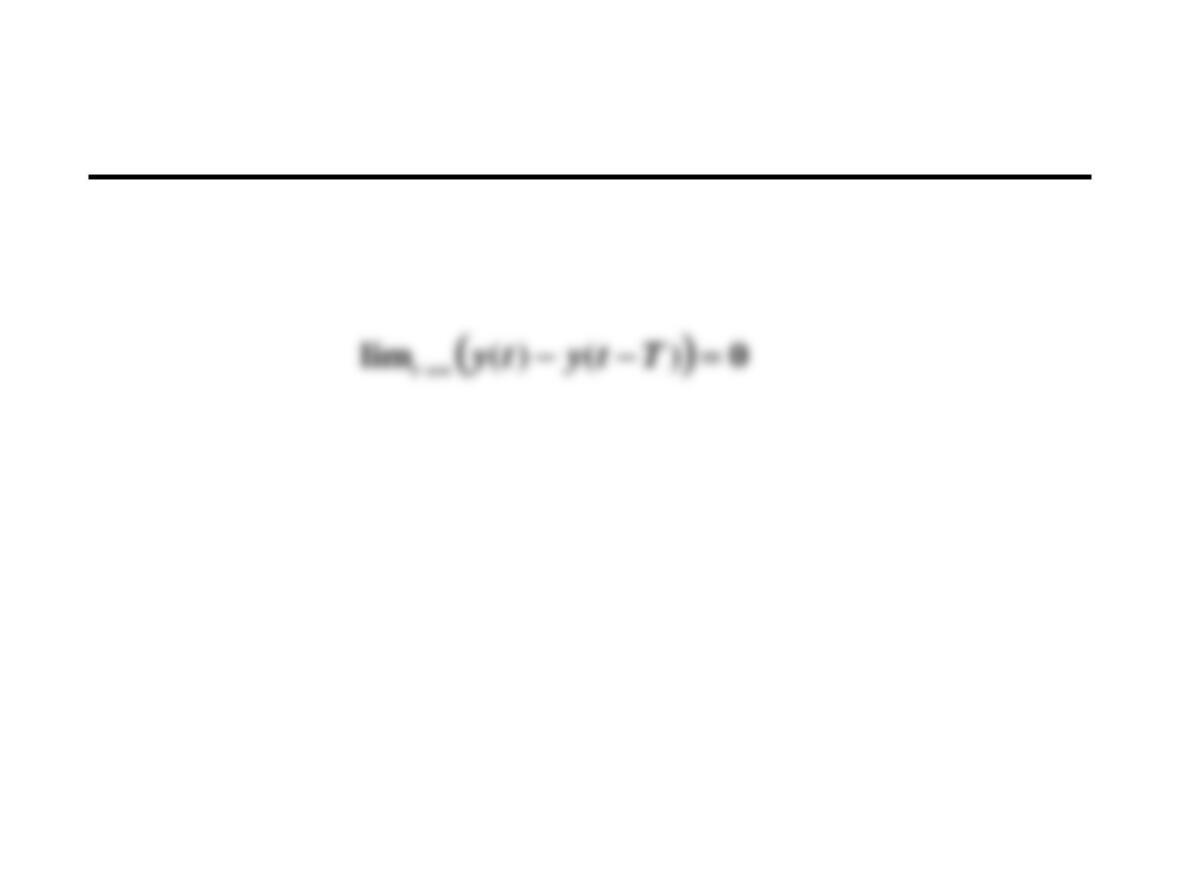
From Equations 24, 25 and 27
as was to be shown.
Homework Assignment 15
Read:
In text, Chapter 7, Section 7.6
Work: