CHAPTER 13
FURNACE MODEL
OBJECTIVES
• Describe the various components of the furnace system
• Describe the principles of heat transfer in the furnace system
• Describe the hot oil system
• Describe the furnace system
• Draw a simple block flow diagram of the furnace model
• List the safety aspects associated with the furnace system
• Describe the furnace instrumentation systems
• List the operational specifications for the furnace system
• Solve various troubleshooting scenarios
• Identify common problems associated with furnace operation
• Operate a hot oil and furnace system
REVIEW QUESTIONS
1. Describe how you would respond to a plugged burner tip.
Plugged burner tips tend to make the flame pattern appear erratic as it
2. Explain how you would repair a hazy firebox or smoking stack.
3. Describe sagging or bulged tubes.
Sagging tubes occur when guides or supports break, or when the inside of
4. Do broken furnace supports require immediate shutdown of the furnace?
5. Describe what you would do if the burner flame went out.
6. Explain how to start-up F-202. List each step.
The following procedures were developed using the principles of
Action Notes
2. Purge furnace for 15 minutes with Steam.
4. Set FIC-100 to 200 gpm.
6. Monitor process pressures.
8. Monitor process pressures and level in TK-100.
10. Set PIC-100 to .05 and CASC to AIC -100.
12. Set AIC-101 to 21% and place in AUTO
14. Increase FIC-100 to 600 gpm.
16. Increase FIC-100 to 800 gpm and put controller in AUTO
18. Increase FIC-101 to 12,500 MBH and CASC to TIC- 100
20. Cross-Check process variables with SPEC sheet.
7. Explain how pressure is controlled in a furnace. Draw each control system.
8. Explain what causes a tube to vibrate and describe how to stop it.
Vibrating tubes tend to jump or move back and forth. Typically this occurs
9. List the pressures found in the furnace.
10. Explain the purpose of PIC 101.
11. Explain the purpose of FIC 101 and describe how it operates.
12. Describe how FIC 100 operates in manual.
13. Describe what happens when excess air enters the furnace.
The furnace typically operates with a little excess of air to ensure complete
combustion. Modern burner design consumes 100% of the fuel with a
FIC-102 controls the flow of steam to the furnace burners and furnace. It is
15. Explain how AIC-101 operates and its relationship to AIC 100.
AIC- 100 Analytical indicating Controller. The purpose of this control system
is to monitor and control excess air-flow through the system directly below
the damper control valve. It is cascaded to the pressure control system.
NAME:____________________________ TEST A
DATE:____________________________
CHAPTER THIRTEEN TEST
FURNACE MODEL
1. The flow of air through a furnace is referred to as:
a. suction
b. draft
c. air velocity
d. O2 %
2. The amount of combustibles in the flue gas:
a. O2 %
b. percent combustibles
c. flue gas range
d. flue gas concentration
3. When a burner flame goes out during operation it is referred to as:
a. flame out
b. burn out
c. fire out
d. flash back
4. Carbon deposits are most likely to be found in the:
a. convection section terminal penetrations
b. pre-heat tube
c. radiant tube
d. convection tube
5. Ensuring proper air concentration is critical because:
a. fuel burns cleaner and hotter if air mixture is correct
b. fuel burns cleaner and hotter if air mixture is incorrect
c. fuel burns poorly and cooler if air mixture is incorrect
d. a & c
e. b & c
6. Tubes located above the shock bank:
a. conduction tubes
b. radiant tubes
c. convection tubes
d. bridgewall tubes
7. Name five common furnace problems and describe each.
a.
b.
c.
d.
8. Complete CH4 + 2O2 combustion produces _____ and _______ .
9. Convective heat transfer accounts for:
a. 30% to 40%
b 40% to 50%
c. 60% to 70%
d. 70% to 80%
10. An air preheater is a:
a. Cost saving system used to heat the air before it enters the burner
b. Device located at the burner tip
c. Narrow neck between the convection section and stack
d. Type of furnace that heats air before it mixes with fuel at burner
11. When a furnace tube or section of refractory gets too hot:
a. flame impingement
b. scorching
c. hot spot
d. shock bank
12. The air registers are located on the:
a. burner
b. fuel line
c. steam line
d. peep block
13. Carbon deposits found inside furnace tubes:
a. carbonization
b. fouling
c. coking
d. mineral deposits
14. The refractory lining on a furnace is composed of all of the following
except:
15. The section of the furnace that reaches the highest temperature is the:
a. convection section
b. radiant section
c. shock bank
d. firebox
16. Most fired furnaces use:
a. natural gas
b. kerosene
c. fuel oil
d. a & c
17. The stack damper in a furnace is set to give from:
a. 0.05 to 0.15 inches of water
b. 0.15 to 0.25 inches of water
c. 0.25 to 0.35 inches of mercury
d. 0.35 to 0.45 inches of water
18. Radiant heat transfer accounts for:
a. 30% to 40%
b 40% to 50%
c. 60% to 70%
d. 70% to 80%
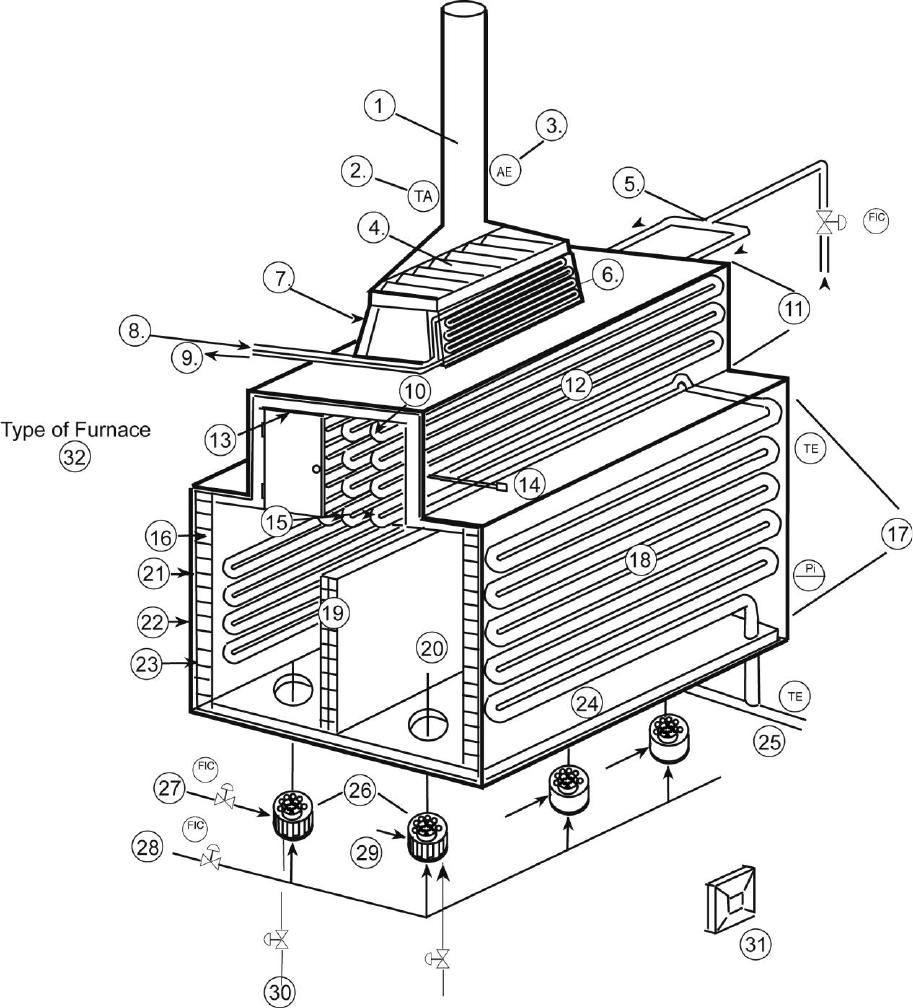
19. Label the following furnace.
19-1
19-2
19-3
19-4
19-5
19-6
19-7
19-8
19-9
19–10
19–11
19–12
19–13
19–14
19–15
19–16
19–17
19–18
19–19
19–20
19–21
19–22
19–23
19–24
19–25
19–26
19–27
19–28
19–29
19–30
19–31
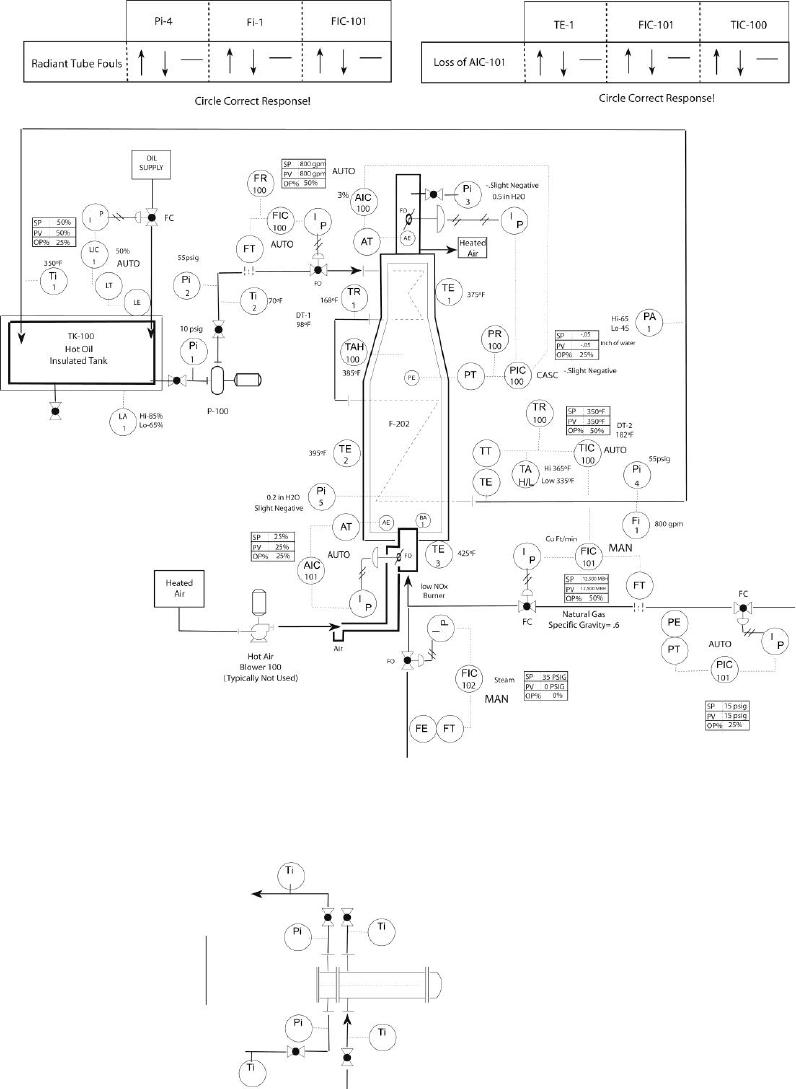
20.
1
2
3
4
5
6
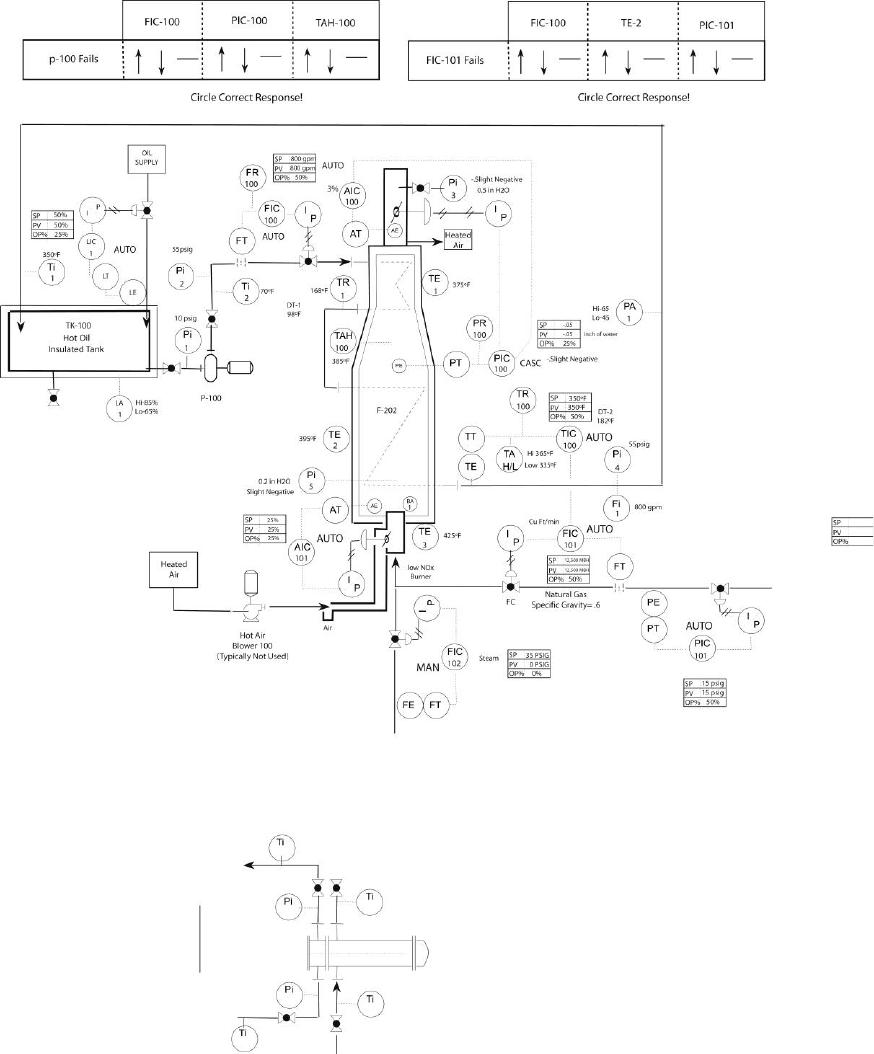
21.
1
2
3
4
5
6
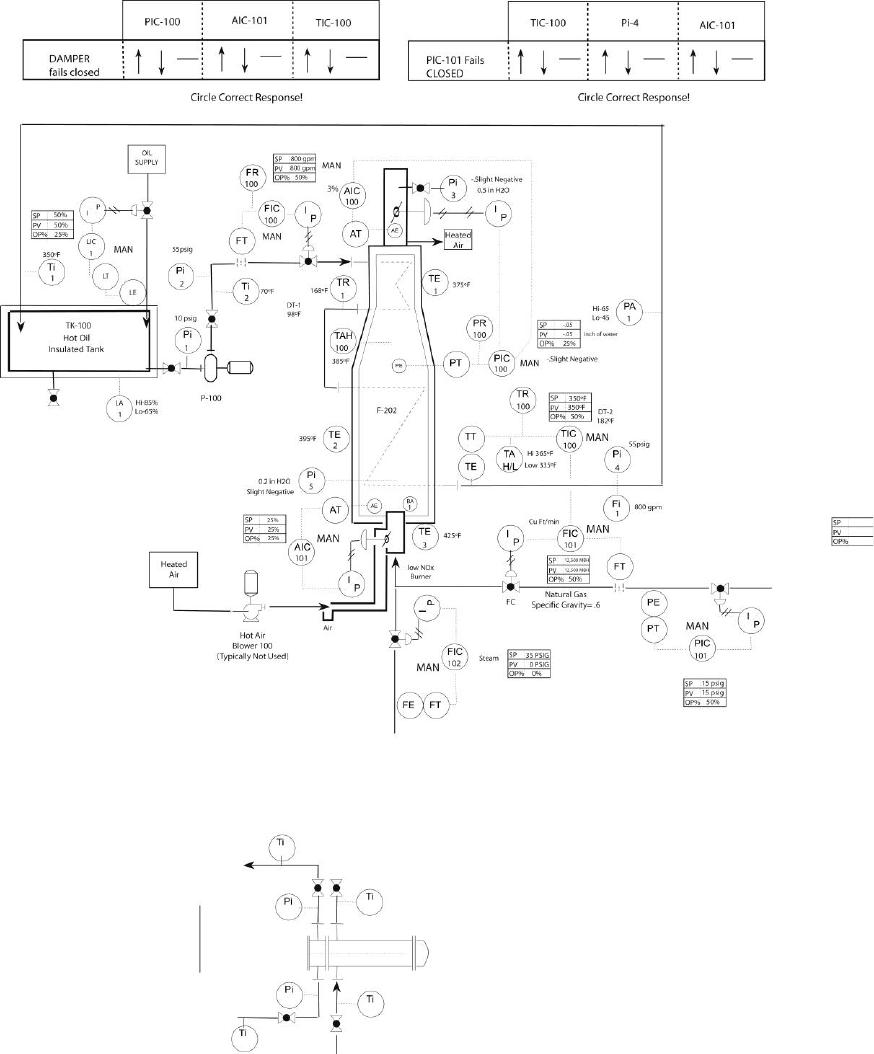
22.
1
2
3
4
5
6
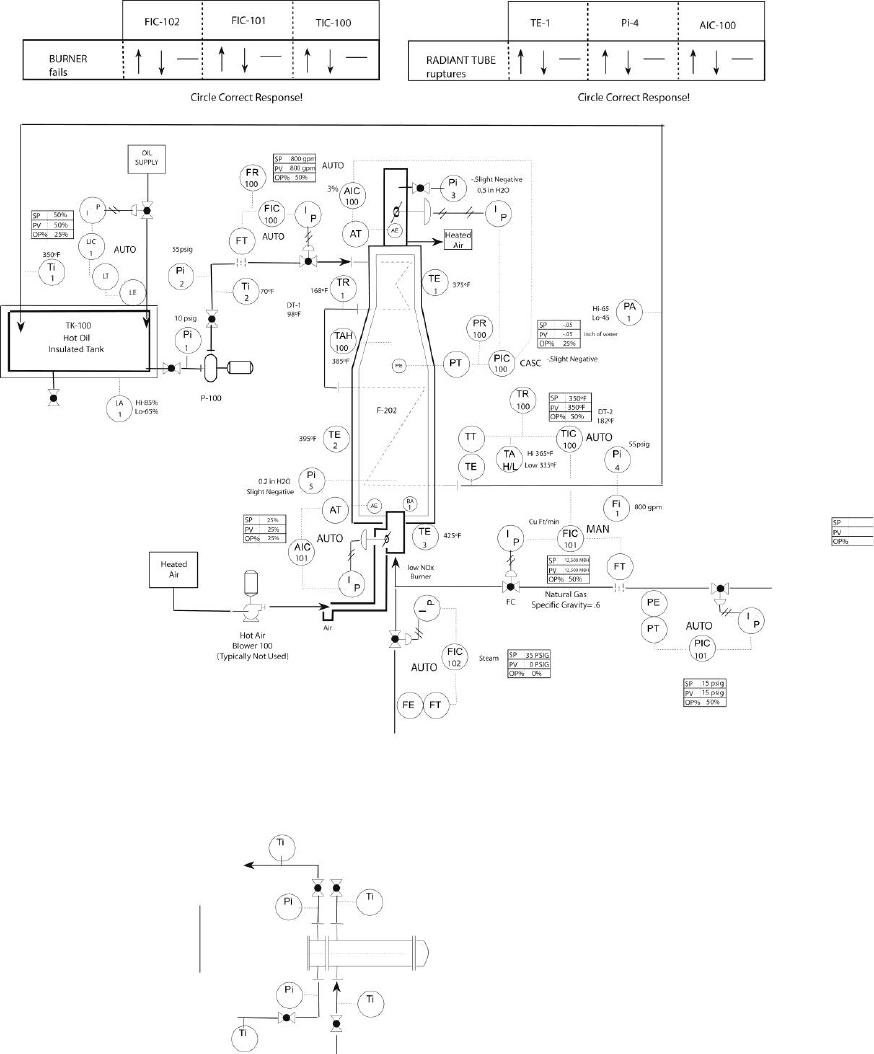
23.
1
2
3
4
5
6
Answer Key CHAPTER 13 TEST A
FURNACE MODEL