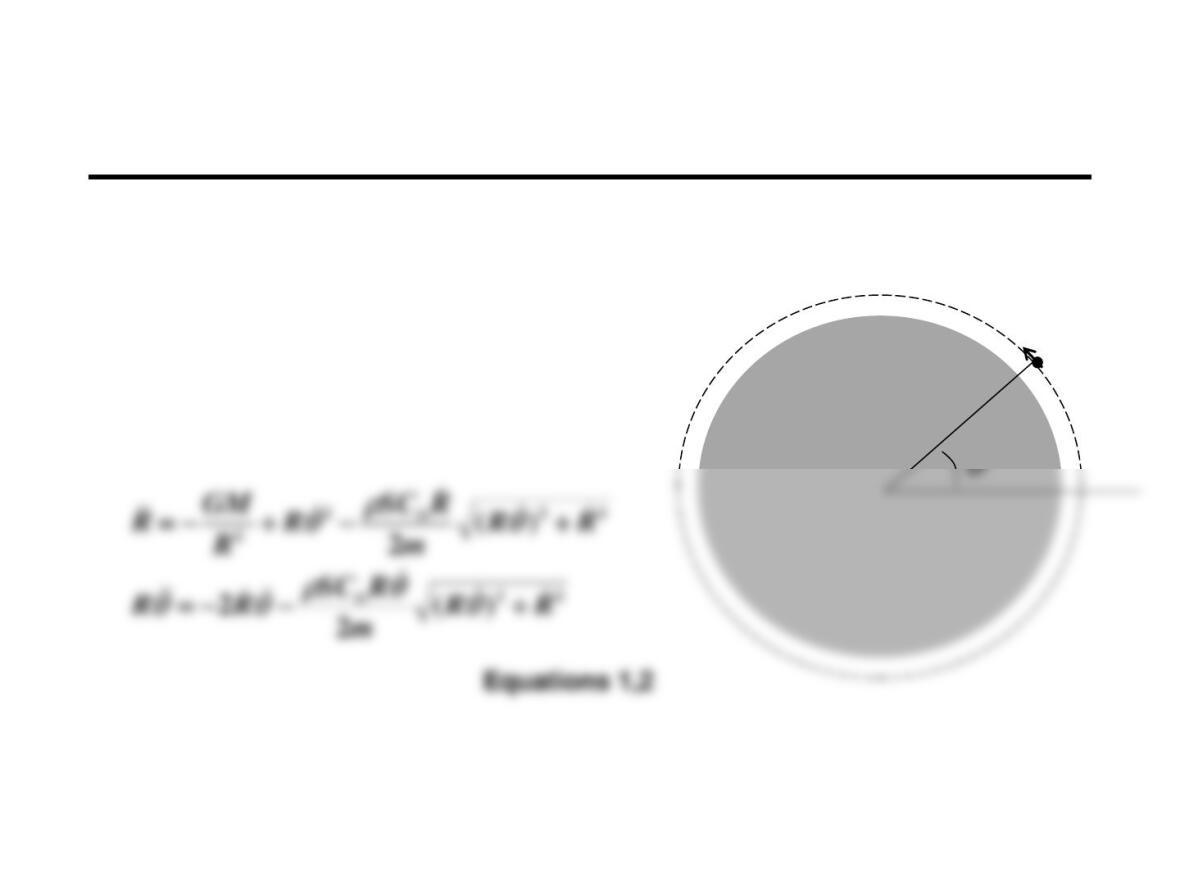
Satellite Orbit Stability (3)
We can convert the equations of
motion into polar coordinates and
obtain
R
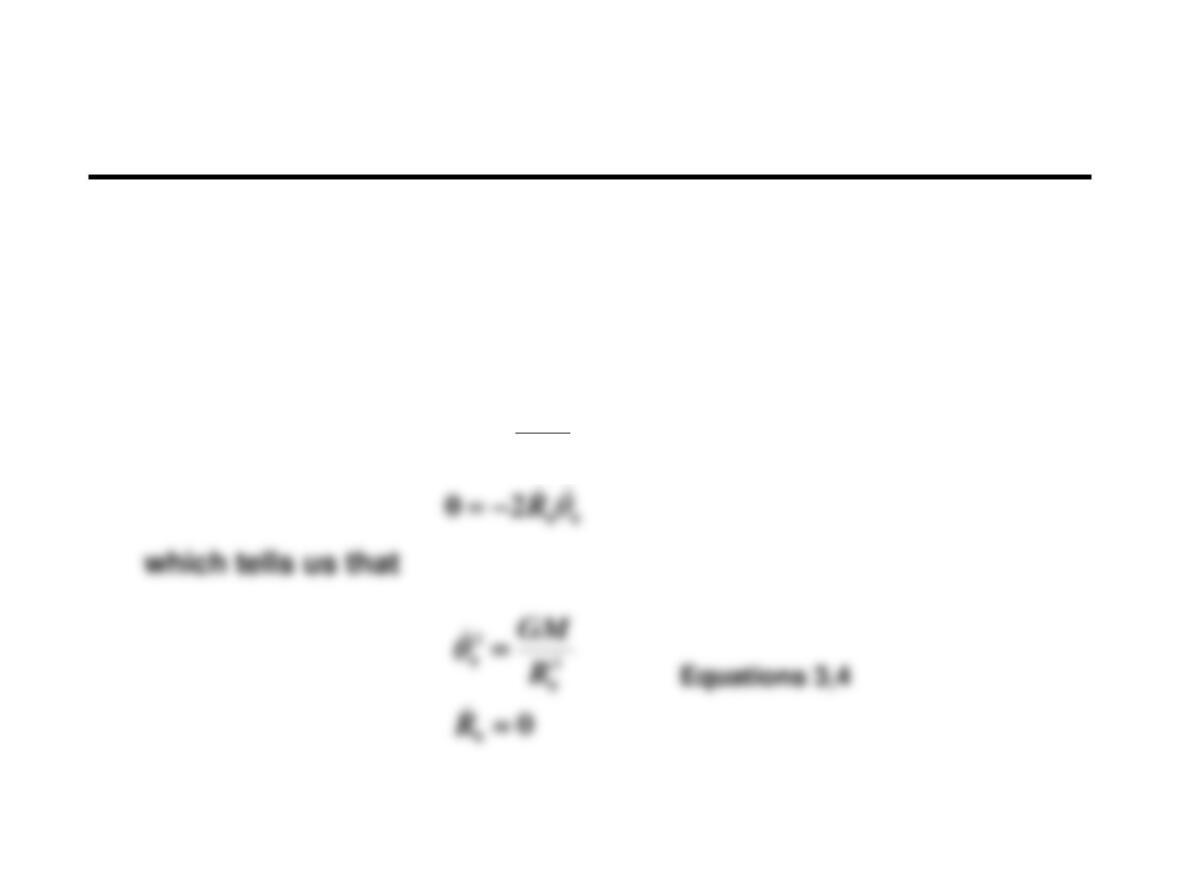
Satellite Orbit Stability (4)
We now assume that the air density is small enough that drag can be
considered a perturbation about a nominally circular zero-drag
trajectory. The nominal trajectory is thus defined by the equations
2
00
2
0
0
R
R
GM
+−=
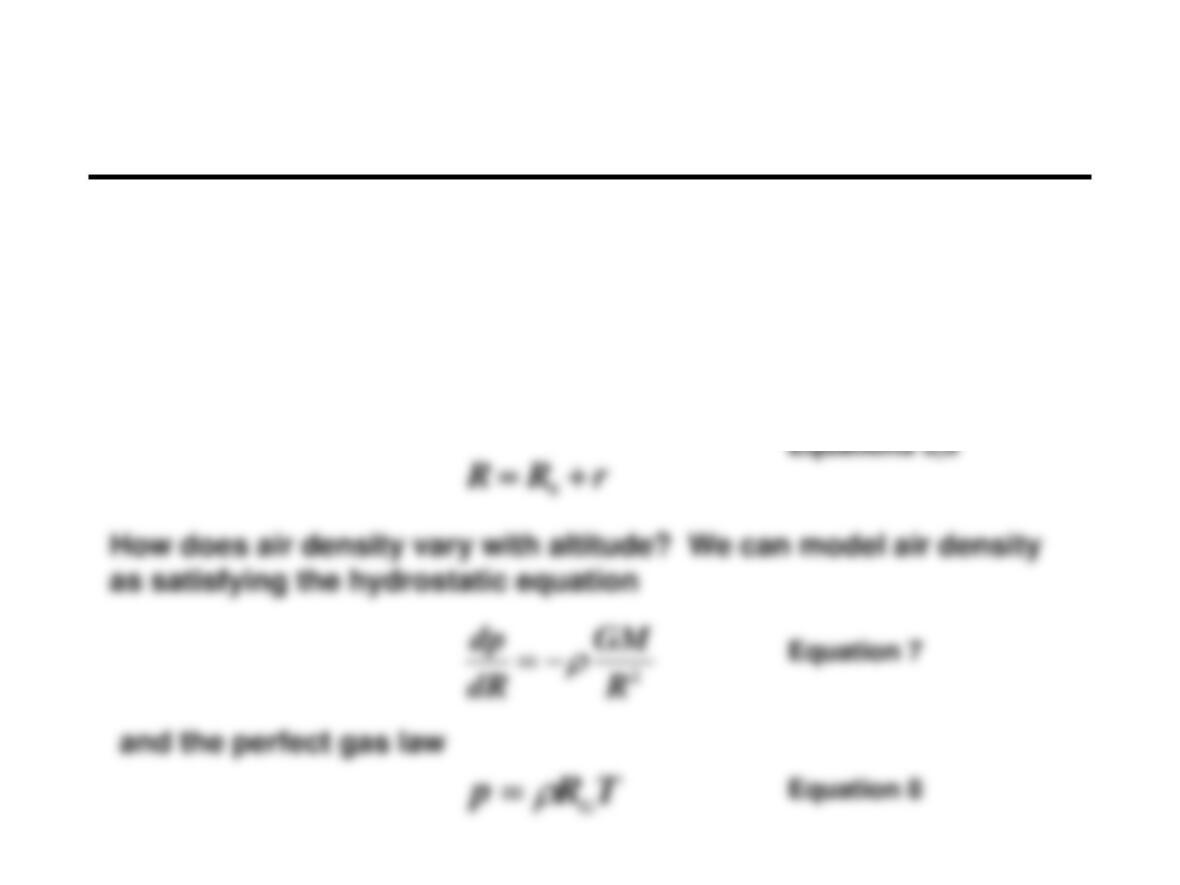
Satellite Orbit Stability (5)
=
For simplicity let .
Now consider small deviations from the nominal trajectory:
+=
0
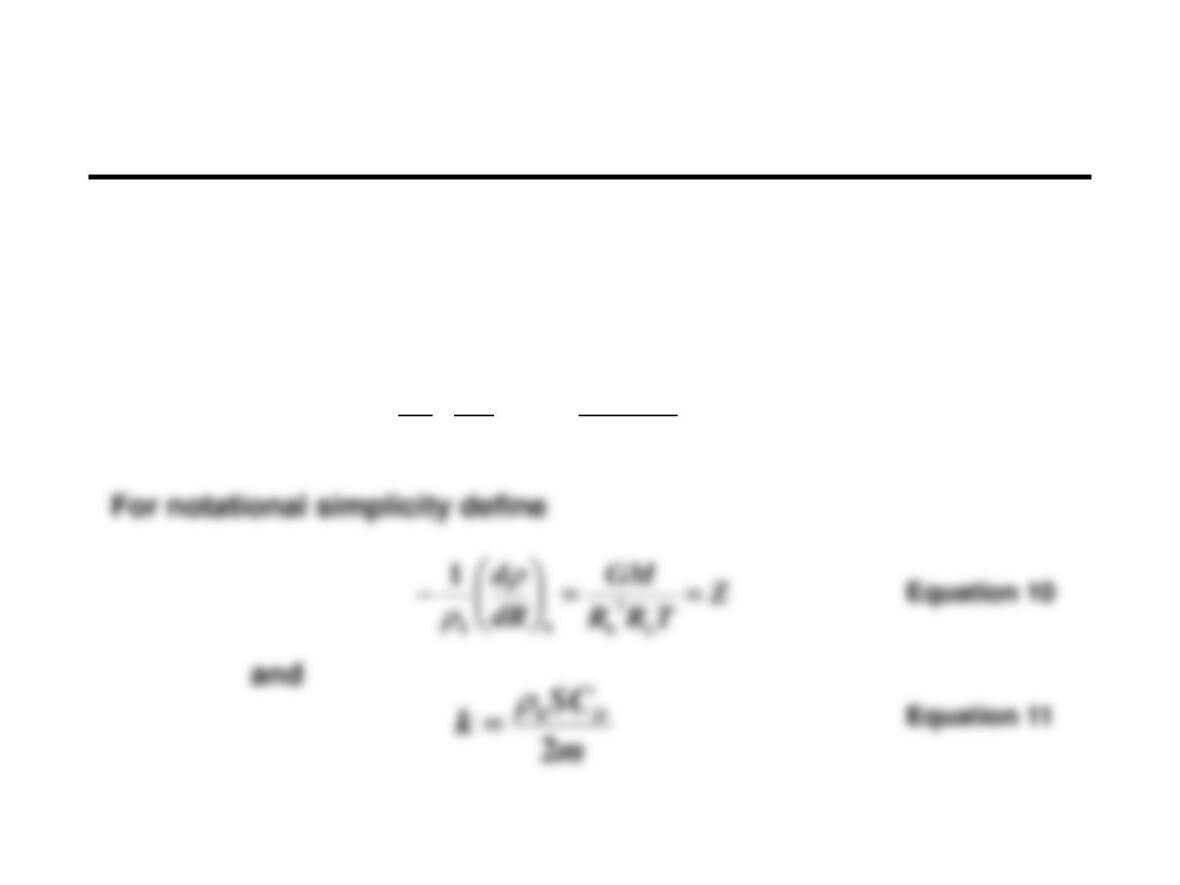
Satellite Orbit Stability (6)
From Equations 7 and 8, if one assumes that, locally, the temperature
Tdoes not depend on altitude,
TRR
GM
dR
d
G
2
0
0
0
1−=
Equation 9
Satellite Orbit Stability (7)
Challenge Problems 6.2, 6.3 and 6.4 guide us through the following
steps:
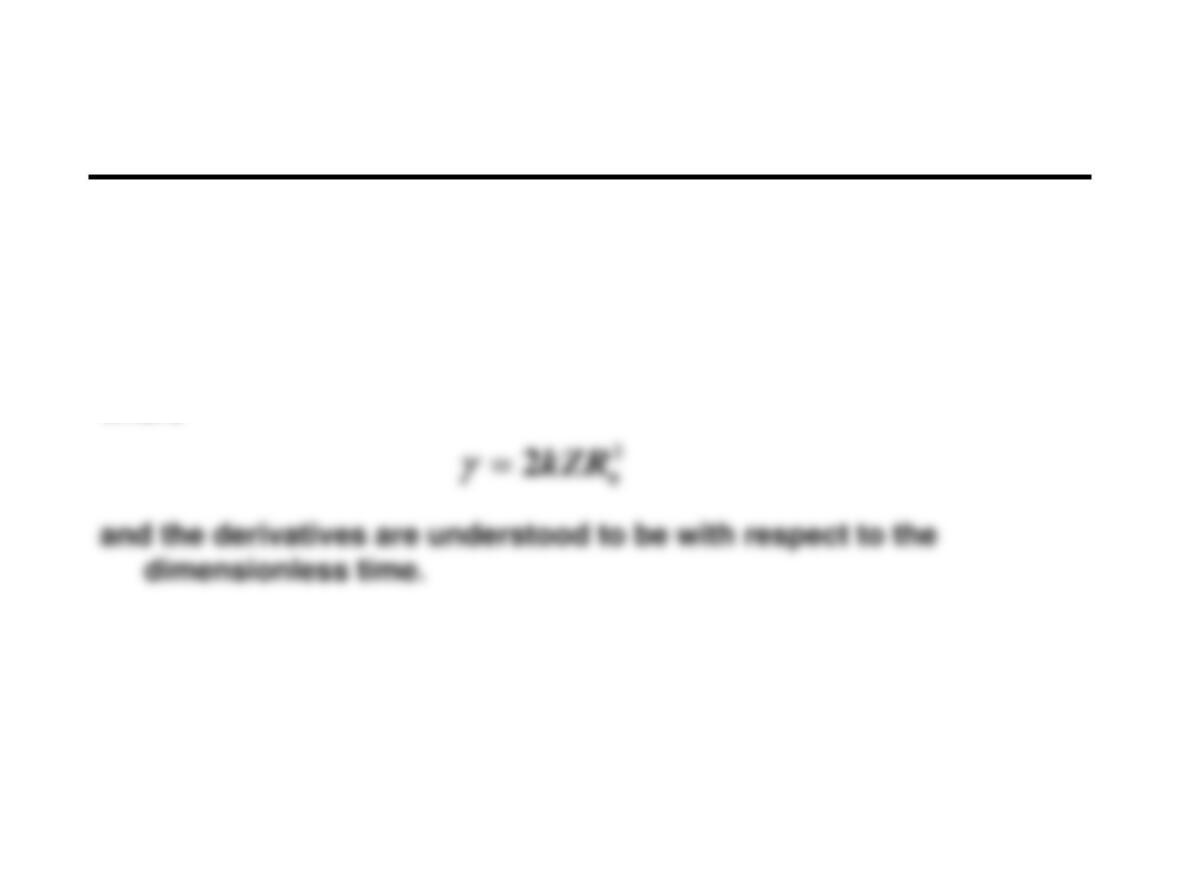
(a) Linearization of Equations 1 and 2, making use of Equations 3
through 11, resulting in two coupled ODEs for and
r
v
r
Satellite Orbit Stability (8)
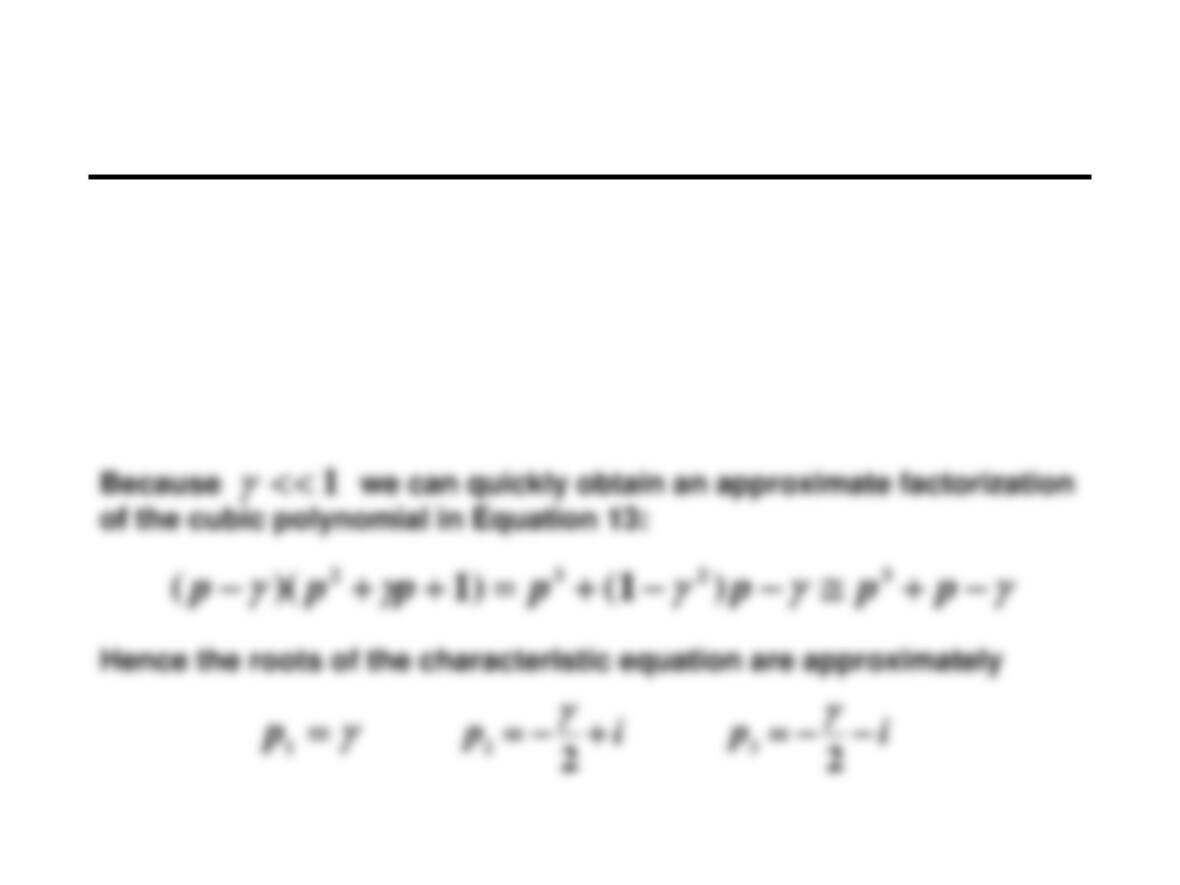
The result is
where
0
*** =−+ rrr
Equation 12
Satellite Orbit Stability (9)
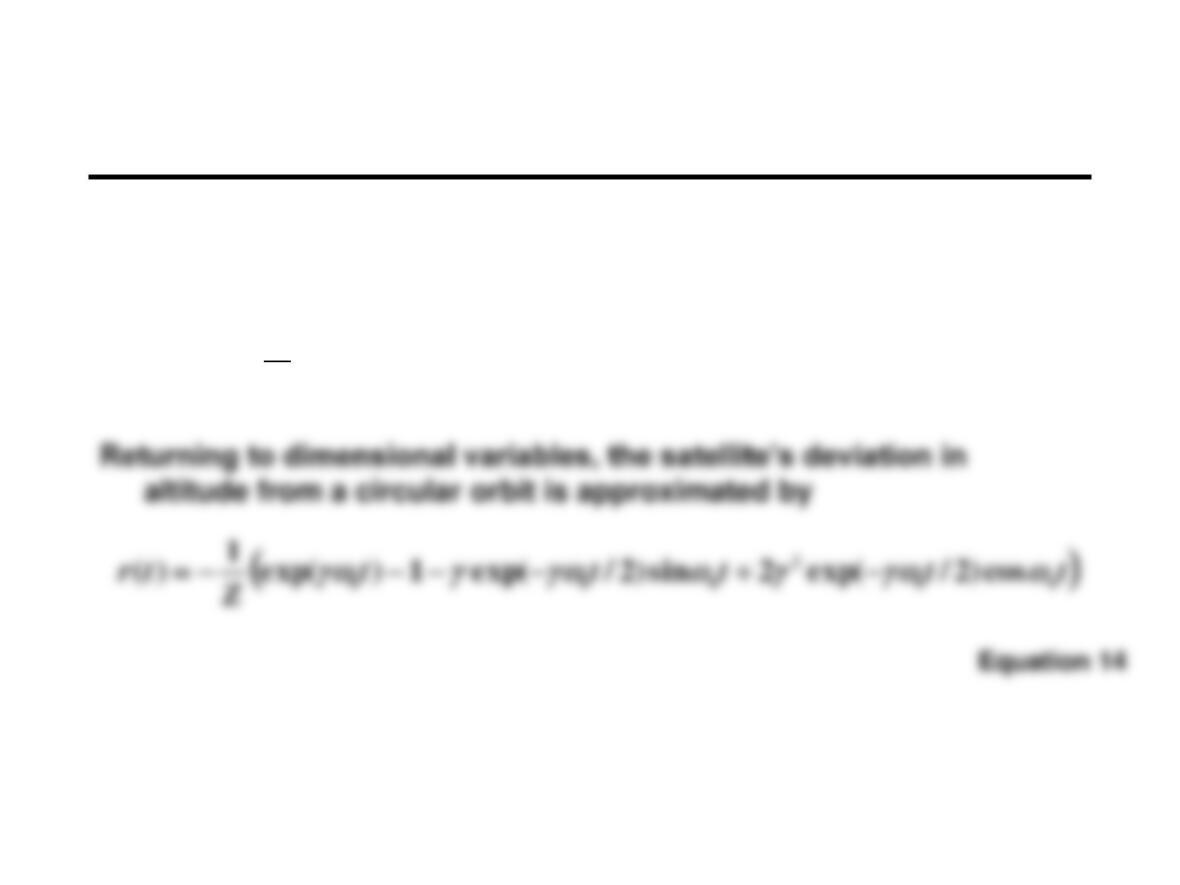
To solve Equation 12 we try and determine the
characteristic equation
*
*
pt
er =
0
3=−+
pp
Equation 13
Satellite Orbit Stability (10)
Expressing and selecting the coefficients to
satisfy the initial conditions we find, approximately,
3*32*21*1* rcrcrcr ++=
( )
**
2
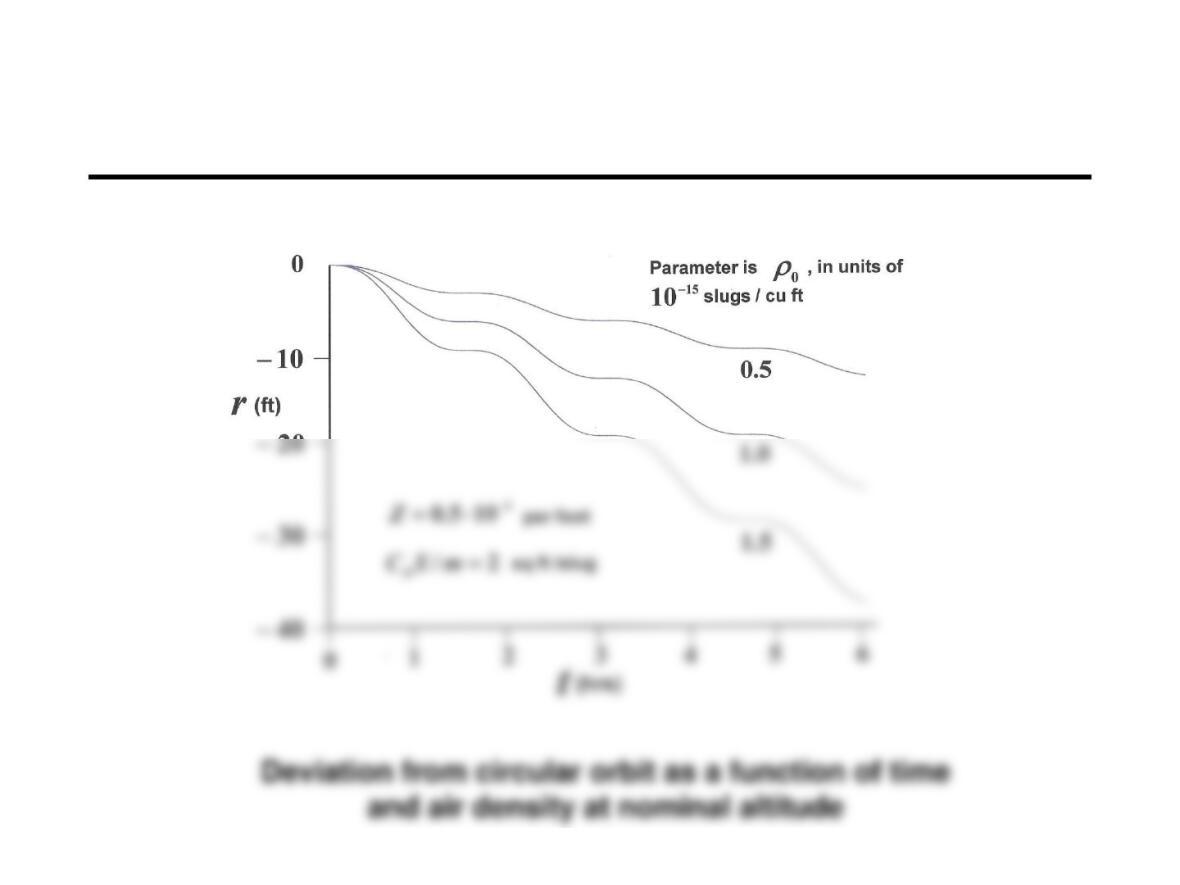
***** cos)2/exp(2sin)2/exp()exp(
1
)( ttttt
Z
tr
−+−−−=
Satellite Orbit Stability (12)
Satellite Orbit Stability (13)
Equation 14 shows that a low earth orbit is unstable; the satellite will
begin to fall at an accelerating rate.
Homework Assignment 11
Read:
In text, Chapter 6
Work: