Example: Cruise Control (8)
Then Equation 2 becomes
As we have just seen, the solution to Equation 3 can be written
sin2 2
2
2
gy
dt
dy
dt
yd −=++
Equation 3
−−= t
tdgtKty
0
)sin)(()(
Equation 4
Example: Cruise Control (9)
We know from a previous lecture that
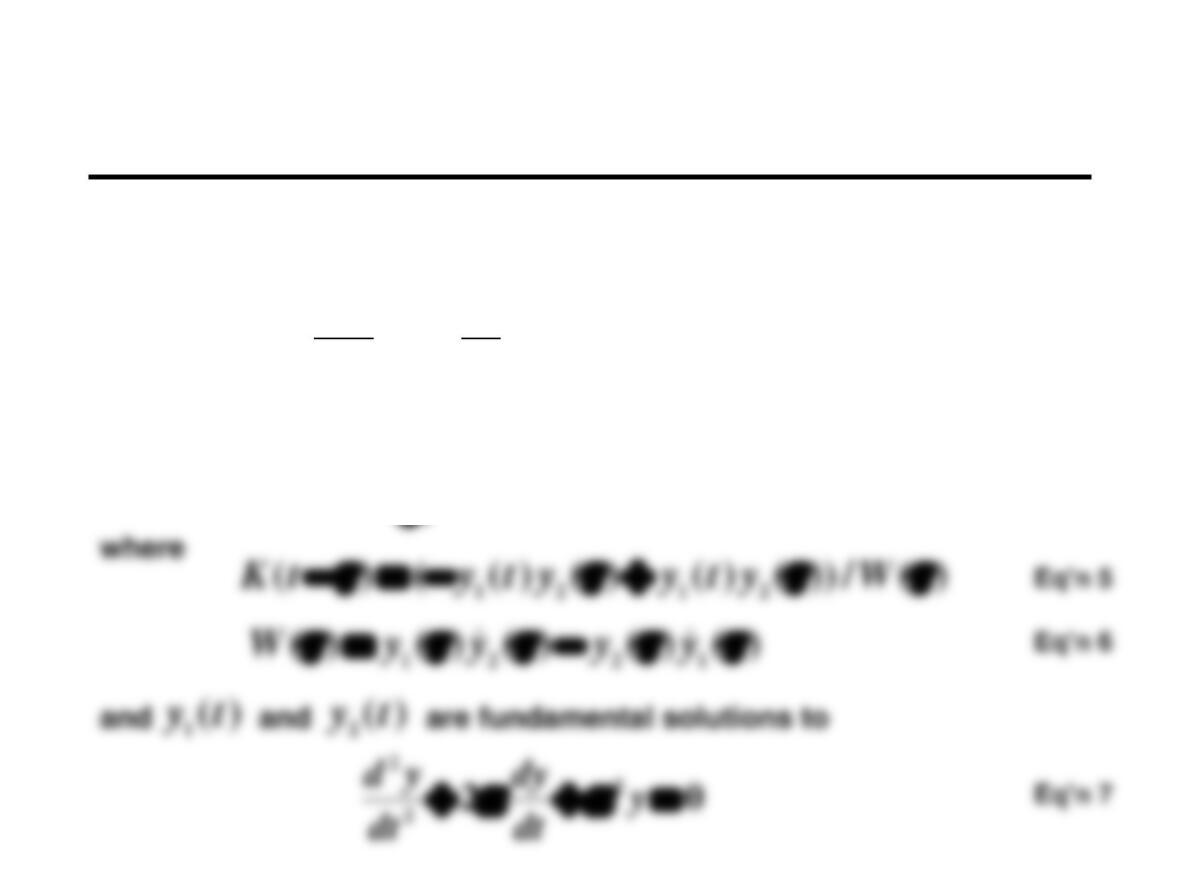
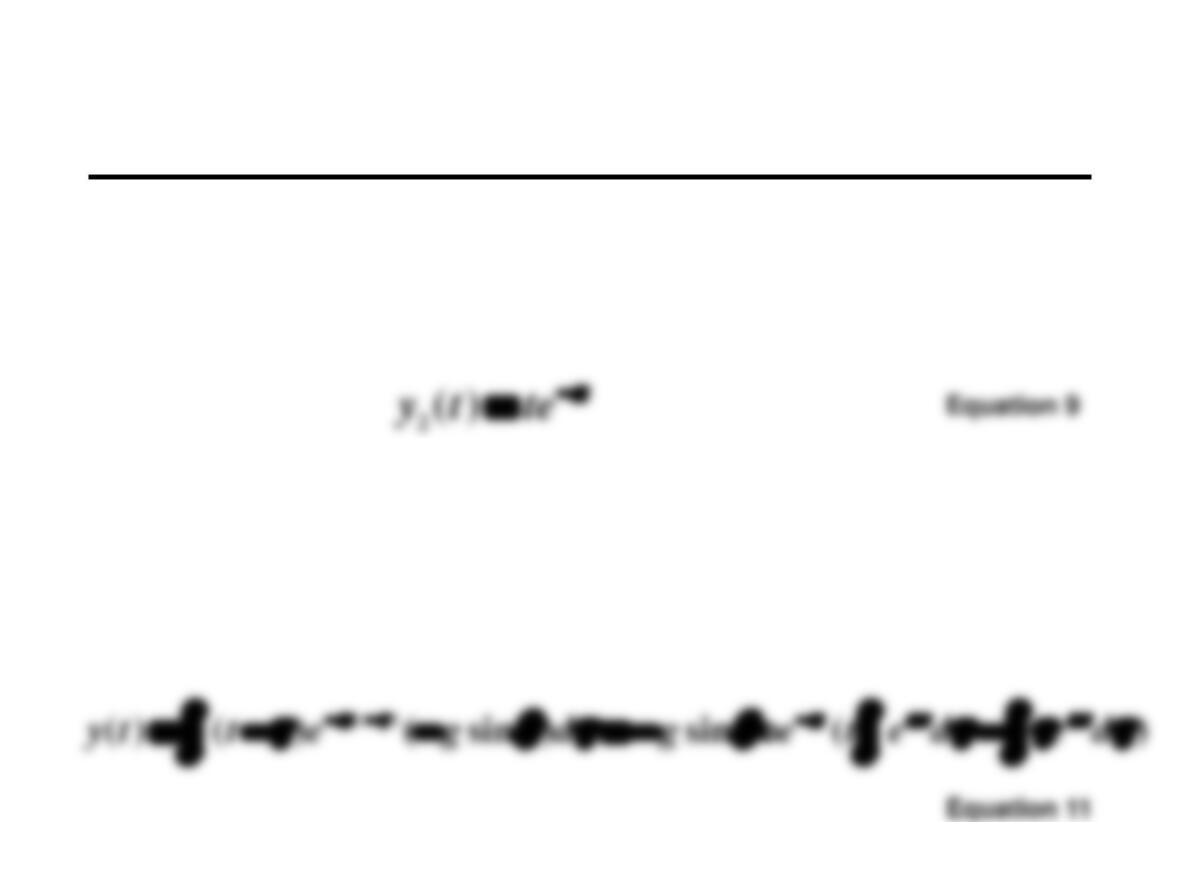
are fundamental solutions to Equation 7. Substituting Equations 8
and 9 into Equations 5 and 6 results in
Substituting Equation 10 into Equation 4 leads to
)(
)()(
−−
−=− t
ettK
t
ety
−
=
)(
1
Equation 8
Equation 10
Example: Cruise Control (10)
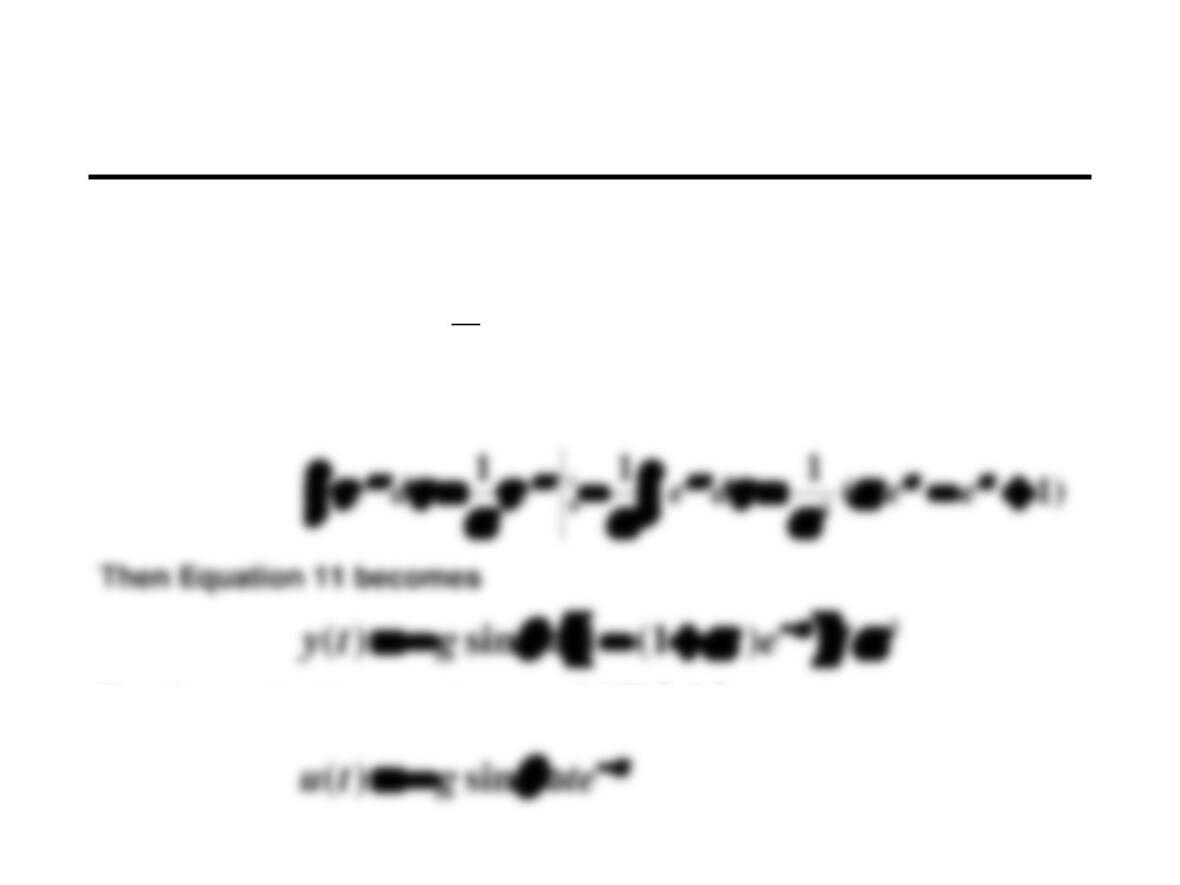
Now
and integrating by parts
Recall now that the speed error so
)1(
1
0−=
ede
t
dtdytu /)( =
Example: Cruise Control (11)
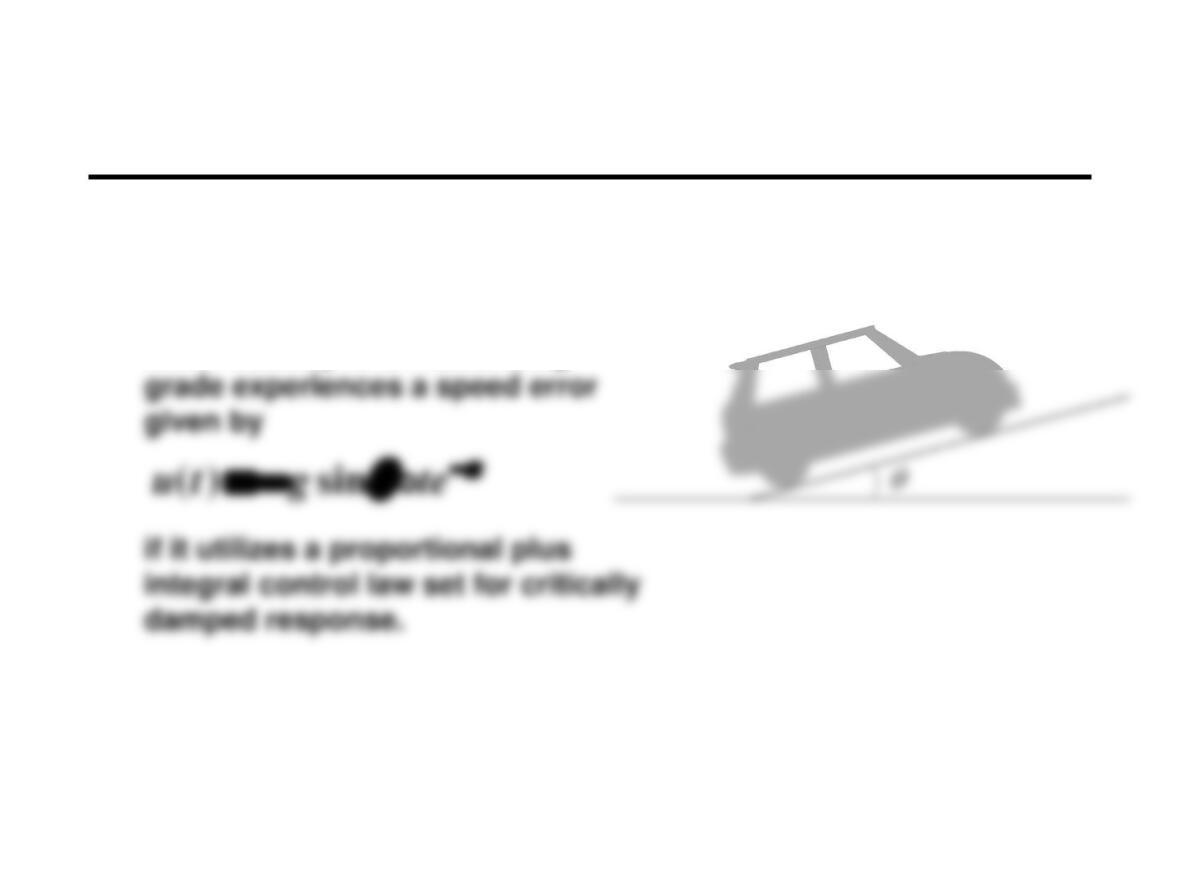
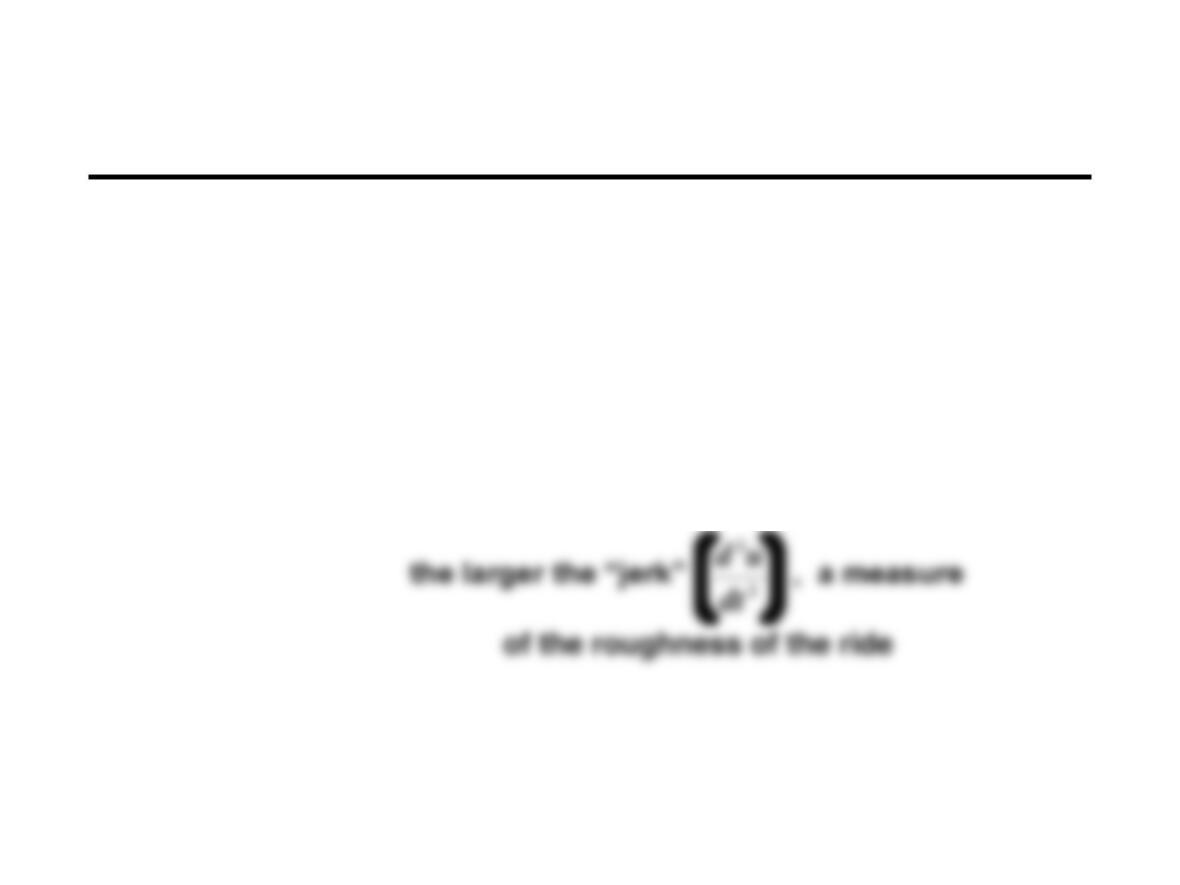
In summary, an automobile in cruise
control mode transitioning from a
level roadway to an ascending
Note that the steady state error is zero.
Example: Cruise Control (12)
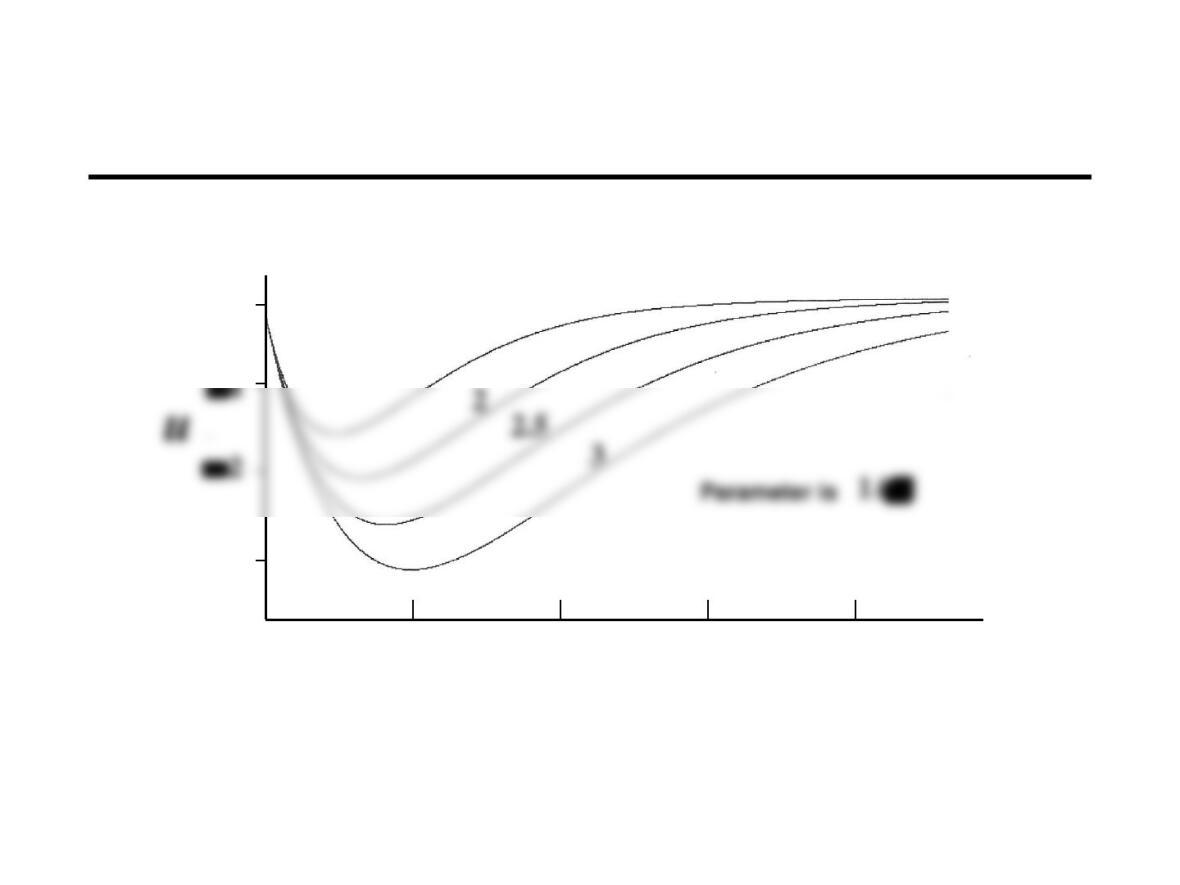
An engineering design decision:
What value to make ?
The larger is :
the smaller the maximum speed error
t
0
3−
0
3
6
9
12
5.1
Example: Cruise Control (13)
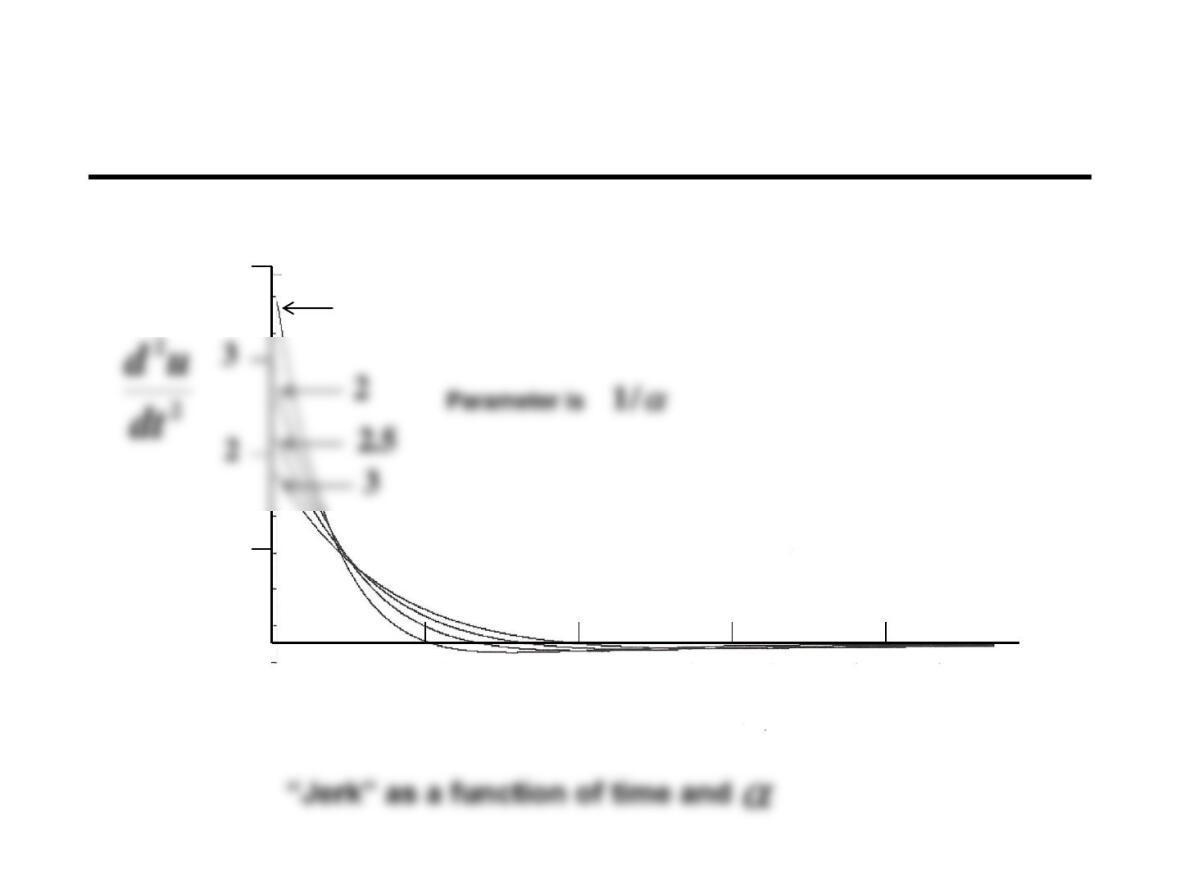
Speed error as a function of time and
t
0
3
6
9
12
0
1
4
5.1
Example: Cruise Control (14)
Second Order Differential Equations
Another Approach to Solving Linear Time-
Invariant Nonhomogeneous ODEs
Another Solution Approach
Method of undetermined coefficients
It works for most input functions of interest.
Procedure for the
Undetermined Coefficients Method
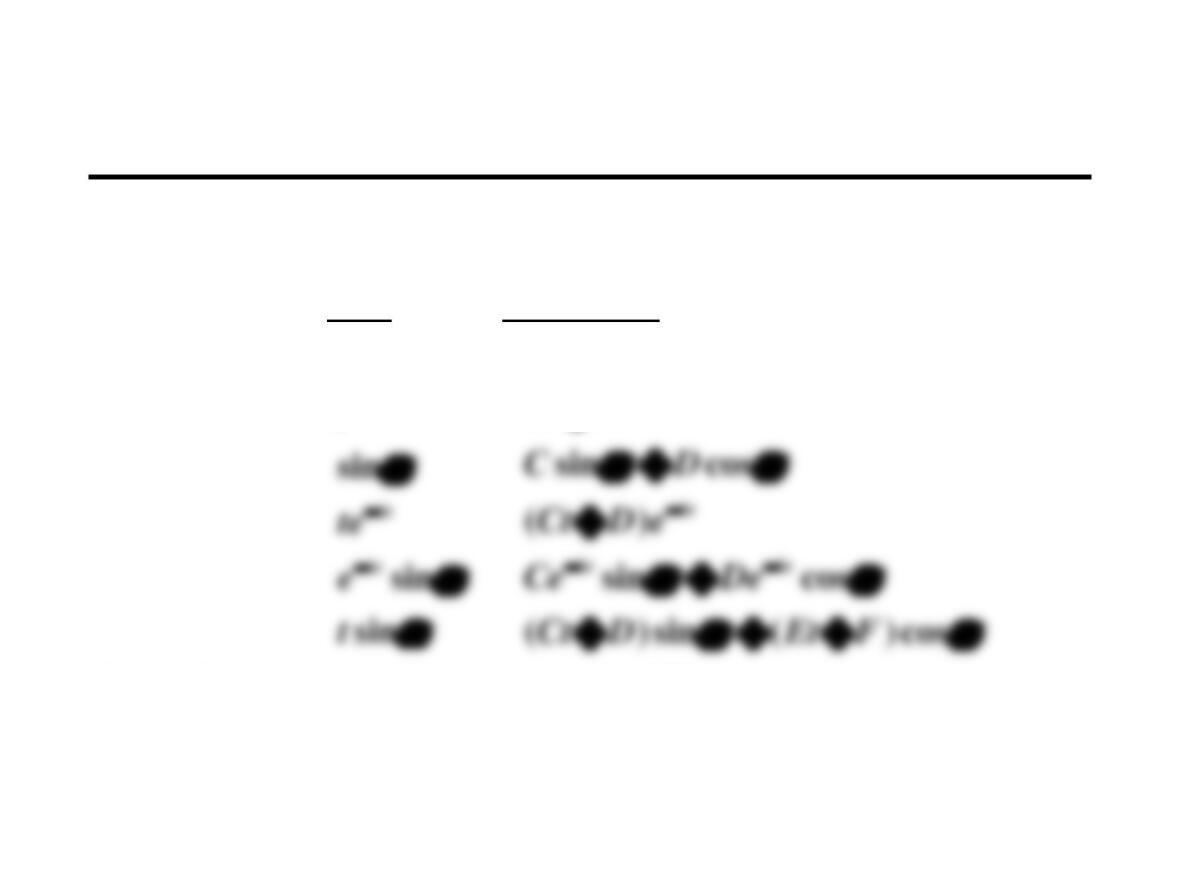
Step 1: Guess a form for the solution based on the form of the input, adding
terms appropriately and using undetermined coefficients
Examples: input trial solution
Step 2: Substitute the trial solution into the ODE and try to solve for the
undetermined coefficients. If you find more equations than unknowns try
adding another term to your initial guess.
t
e
kt
−
DCt
Ce
kt
+
−
Procedure for the Trial and Error Method (2)
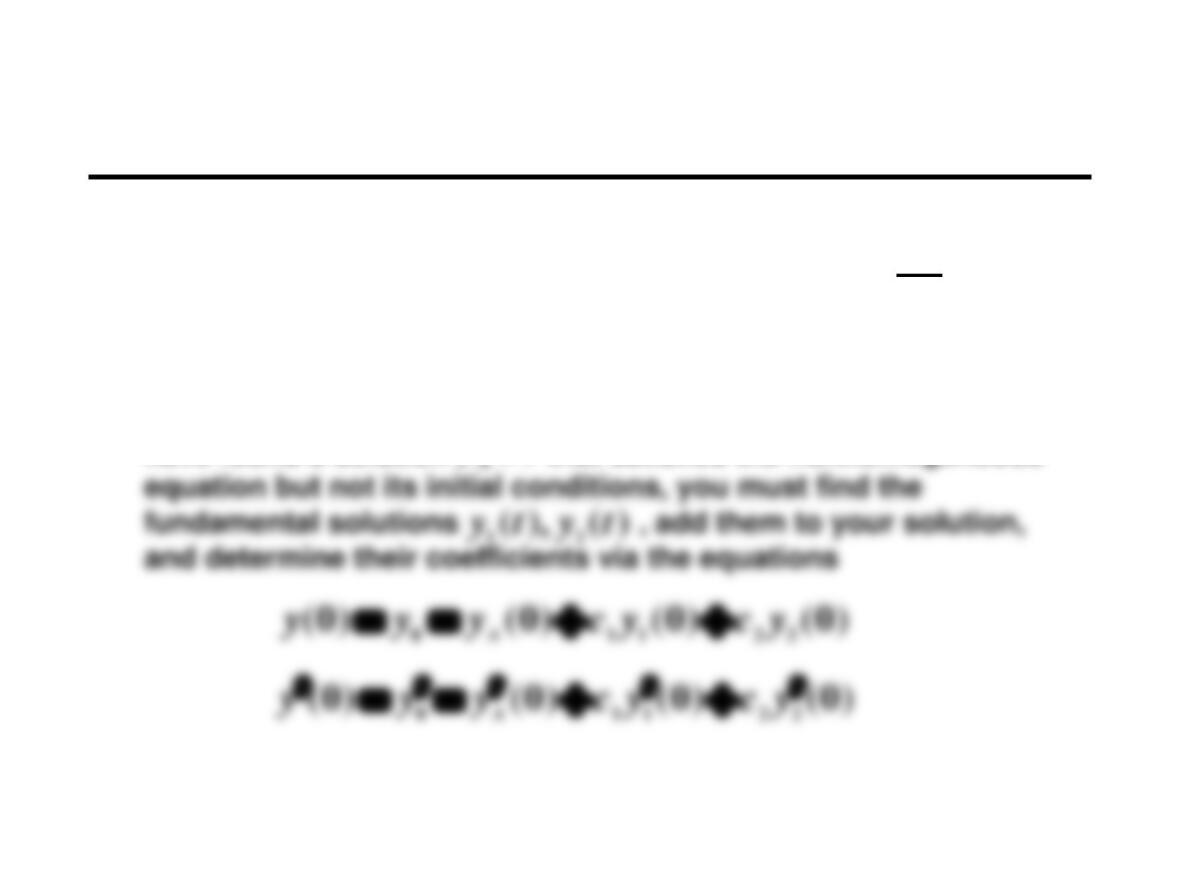
Step 3: If a solution that meets given initial conditions is not required
(i.e., if only the steady-state solution is needed) you can avoid
altogether the task of finding the fundamental solutions.
If a solution that meets given initial conditions is required and you
have found a solution that satisfies the nonhomogeneous
)(tyA