Undetermined Coefficient Method:
When It Doesn’t Work
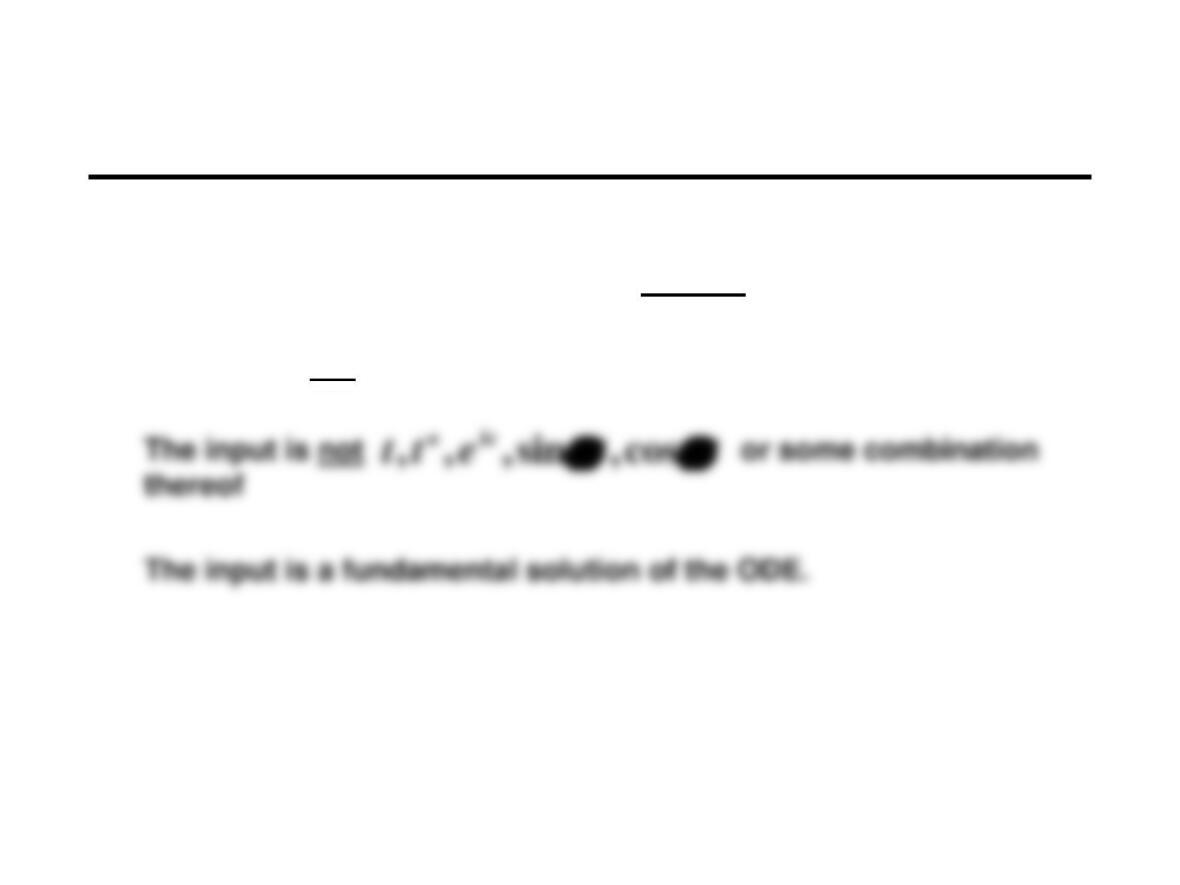
The Undetermined Coefficient Method doesn’t work when:
The ODE is not linear time-invariant

Second Order Differential Equations
Engineering Example: LRC Circuit with
Sine Wave Source
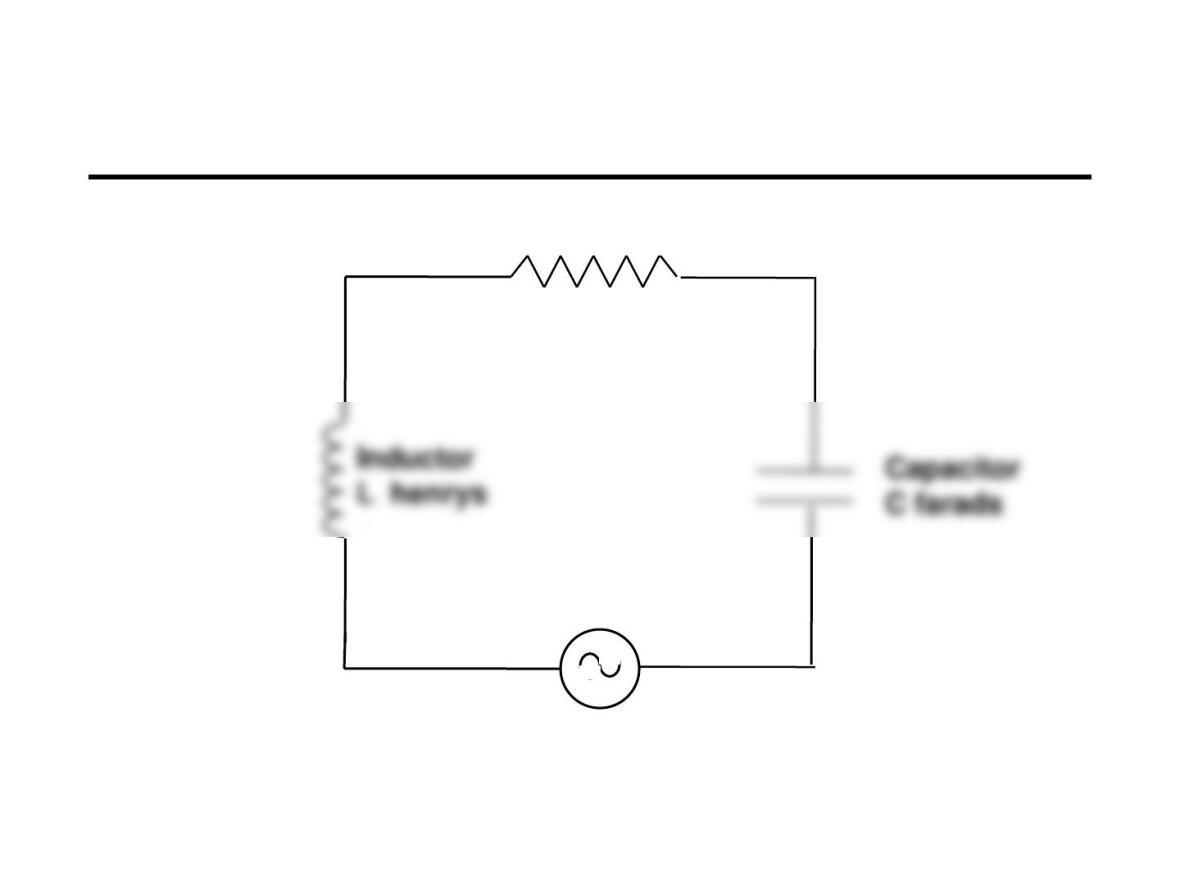
LRC Circuit with Sine-wave Source
Resistor
R ohms
Sine-wave voltage source
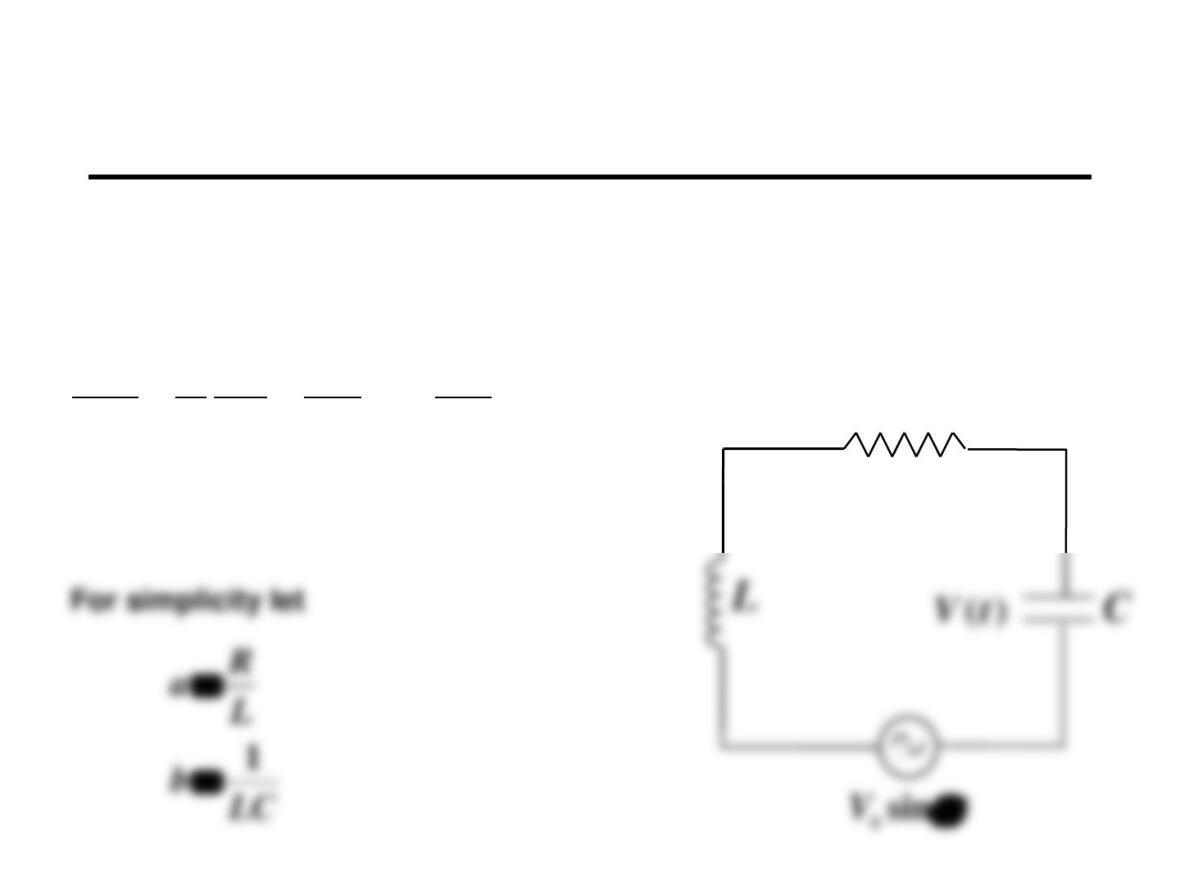
LRC Circuit with Sine-wave Source
Using Kirchhoff’s Law (sum of voltage drops
around closed circuit = 0) we find
What is ?
tV
LC
V
LCdt
dV
L
R
dt
Vd
sin
11
0
2
2
=++
)(tV
R
Undetermined Coefficient Approach
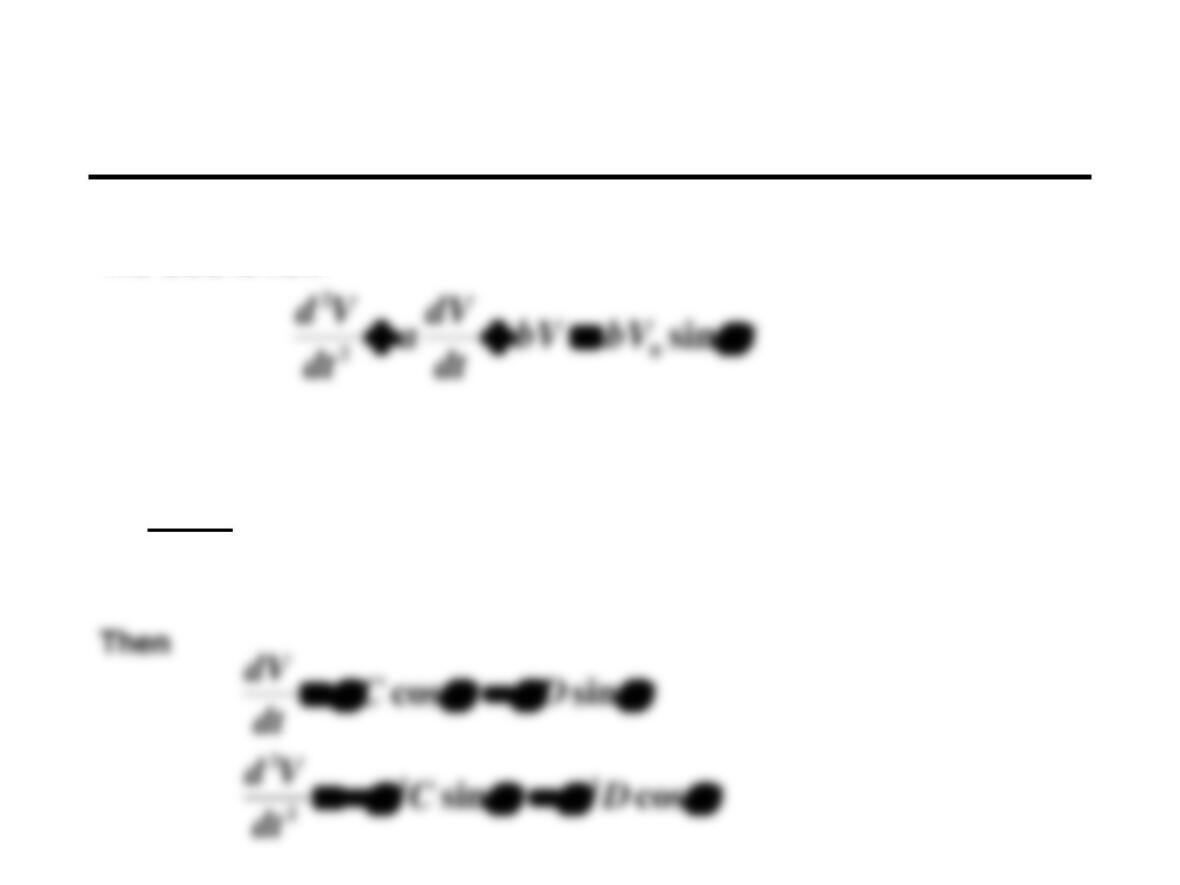
The ODE is now
Given that the ODE input is
we guess that the solution has the form
tbVtg
sin)( 0
=
tDtCtV
cossin)( +=
Undetermined Coefficient Approach (2)
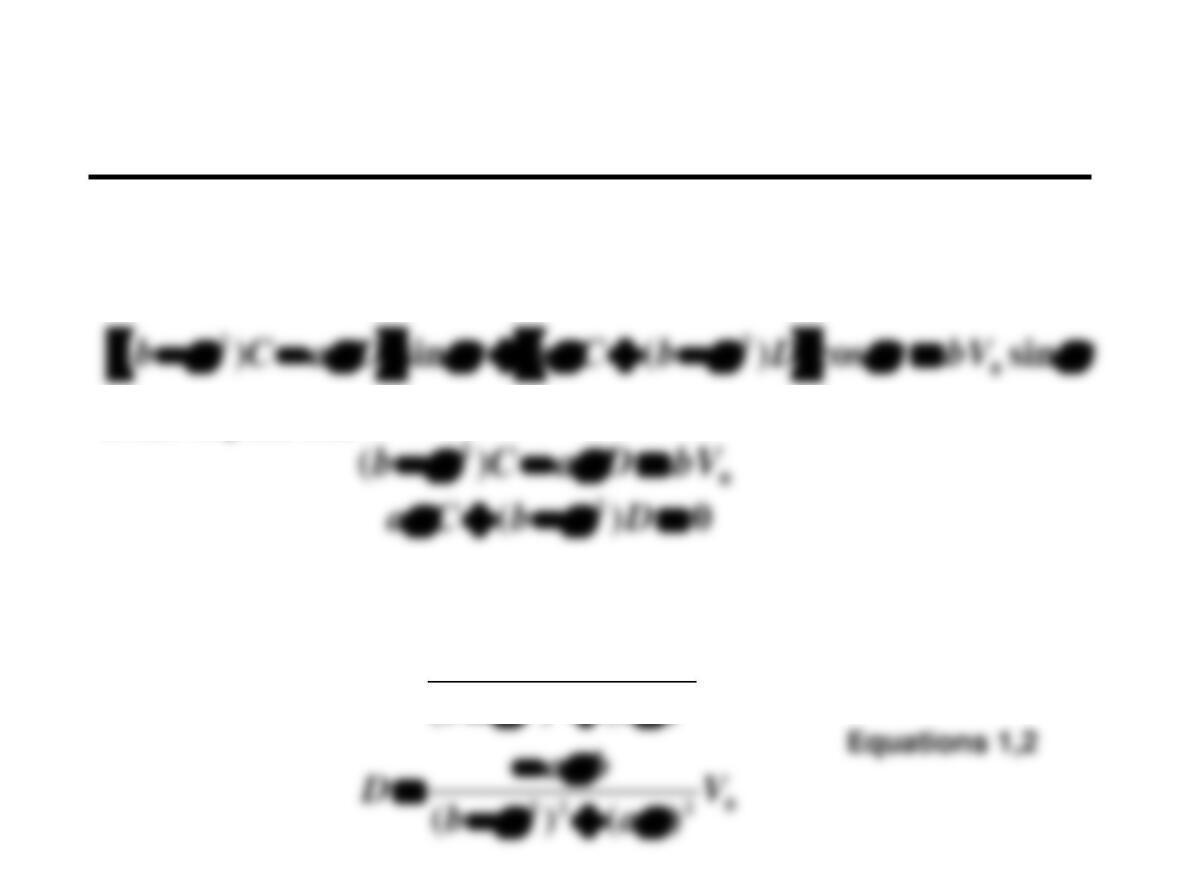
Substituting these into the ODE we find after some rearranging that
we must have
which implies that
This is two linear equations in two unknowns. The solutions are
0
222
2
)()(
)(
V
ab
bb
C
+−
−
=
Undetermined Coefficient Approach (3)
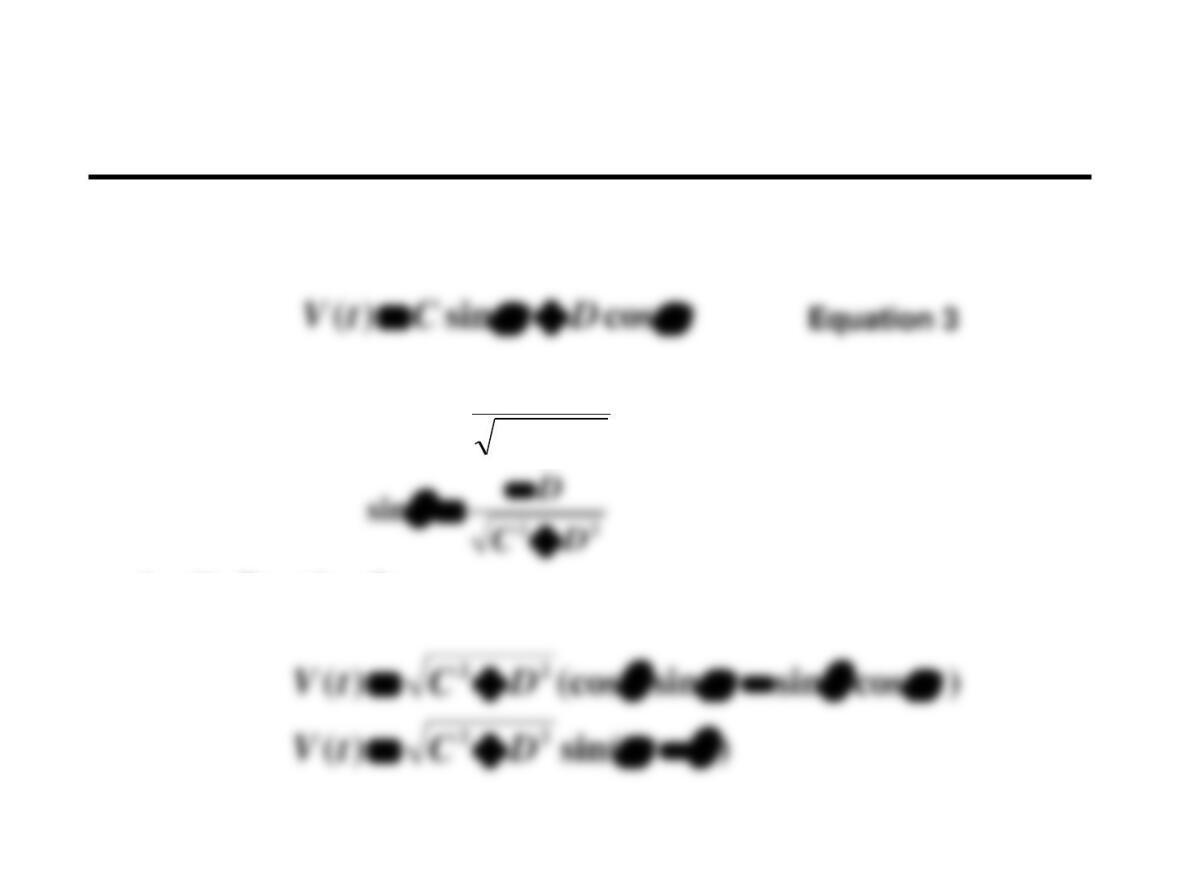
We can simplify the form of the answer. Instead of writing
We can define
and write Equation 3 as
22
cos
DC
C
+
=
Undetermined Coefficient Approach (4)
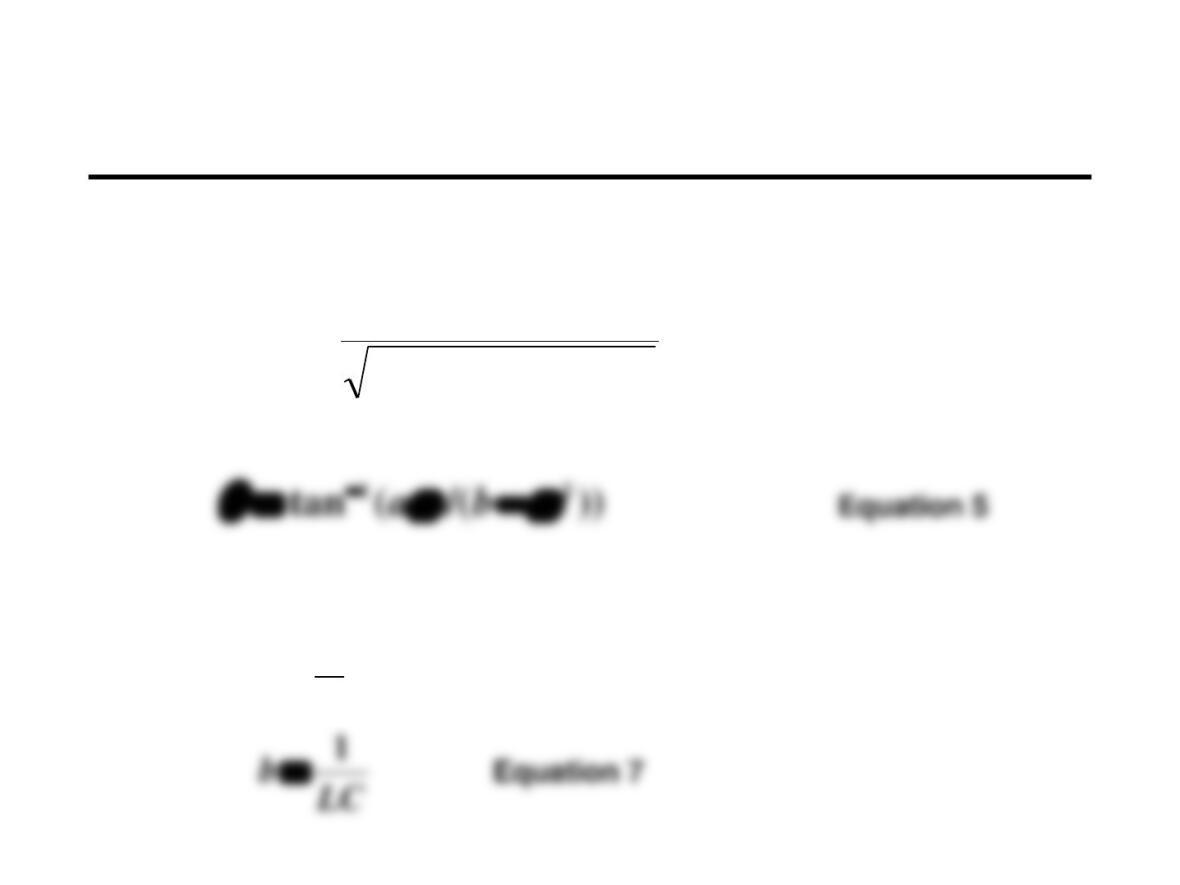
The full answer, then, is
where
Recall that, here,
)sin(
)()(
)(
0
222
−
+−
=
tV
ab
b
tV
L
R
a
=
Equation 4
Equation 6
Frequency Response
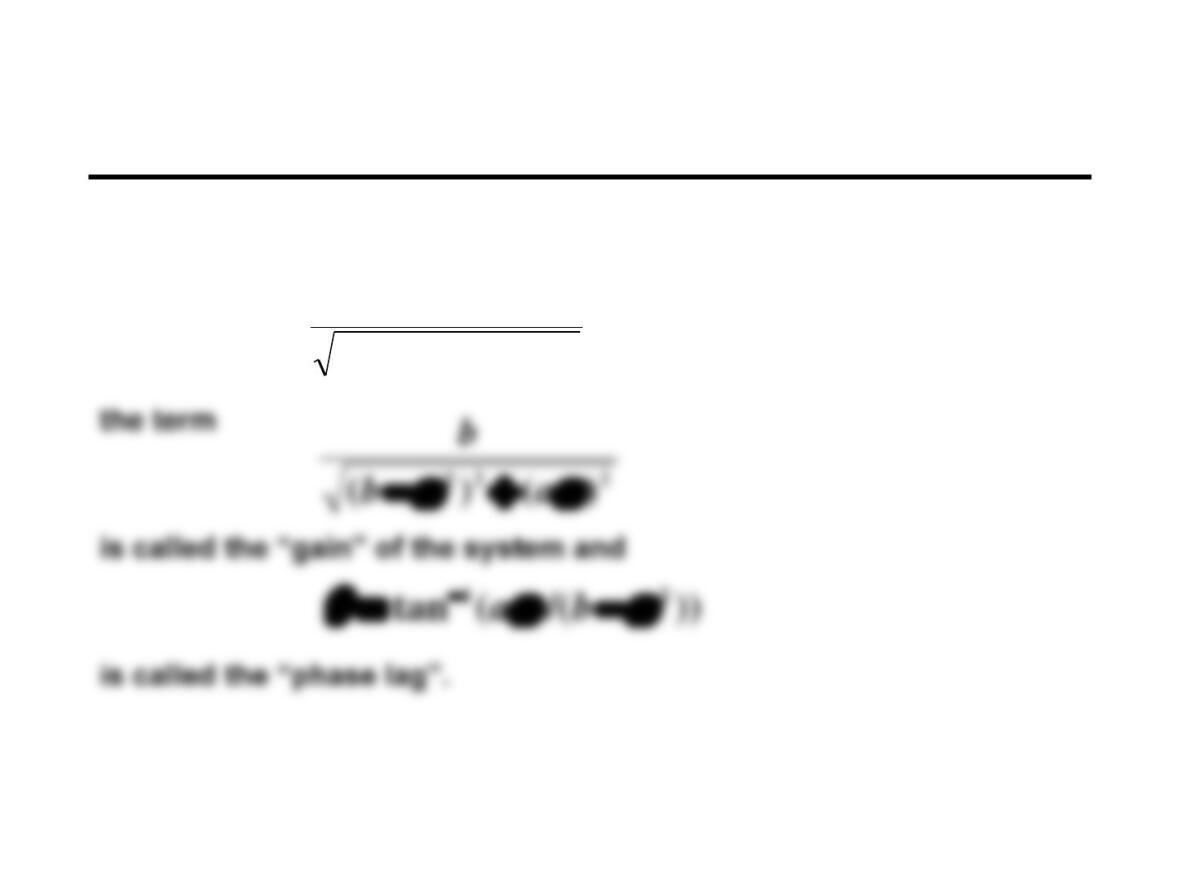
Since the circuit input is and the output is
tV
sin
0
)sin(
)()( 0
222
−
+− tV
ab
b
Homework Assignment 10
Read:
In the text, Chapter 5, Sections 5.3 and 5.4
Work: