
Differential Equations
for Engineers:
the Essentials
Class 1 notes
Agenda: Class 1
Administrative matters
Course objectives
Importance of DEs for engineers
Administrative Matters
Homework, tests, attendance and grading policy
Textbook
Support software
Homework, Tests & Grading Policy*
Homework assignments: reading and problems to solve. Homework does not
have to be handed in and is not graded.
Tests: Three short quizzes (half-period) (15%)
Three full-period tests (25%)
*Suggestions
Textbook
Differential Equations for Engineers: the Essentials
by David V. Kalbaugh

Support Software
(Intructor’s choices for computer programs for numerical integration)
Course website use
Posted on course website on university intranet as course
progresses*:
All lectures
Occasional informational supplements to lectures
Course Learning Process
Your learning is a joint responsibility –yours and mine. The duties
below are yours:
•Attend class and pay active attention
•After class, review the class notes posted on course website and
ensure you understand them
Course Objectives
Provide the student
a grasp of the fundamentals of ordinary differential equations
(primarily) and partial differential equations (secondarily):
how to solve them
nature and behavior of the solutions
Importance of DEs to Engineers
Engineers must understand, utilize and control many physical
phenomena that are described by differential equations
Differential equations are the language of much of physics

In addition, many large scale systems designed and controlled by
engineers are modeled by differential equations, e.g.:
industrial processes
Importance of DEs to Engineers (2)

Review of Mathematical Foundations
Foundations
Mathematics is a cumulative discipline.
Foundations
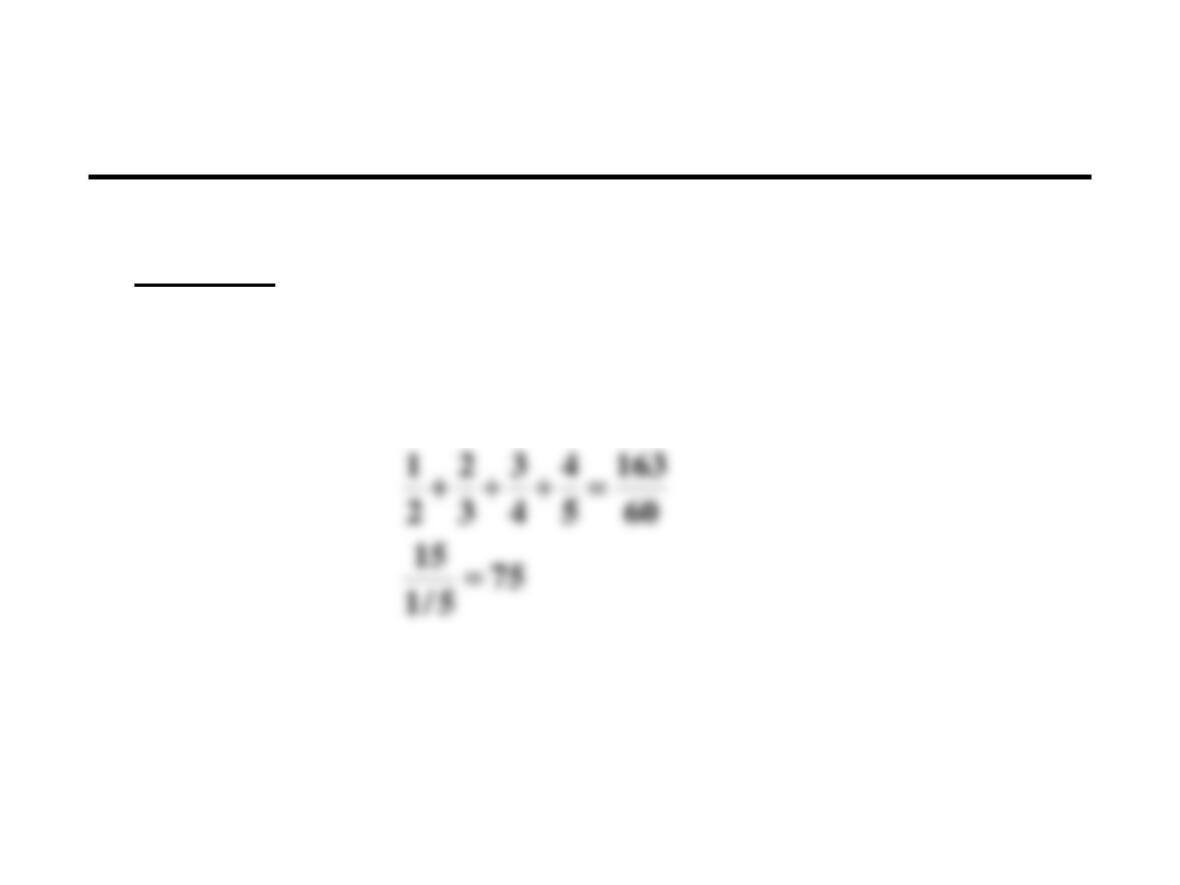
In arithmetic, we learned to add, subtract, multiply and divide
numbers.
For example:
Foundations (2)
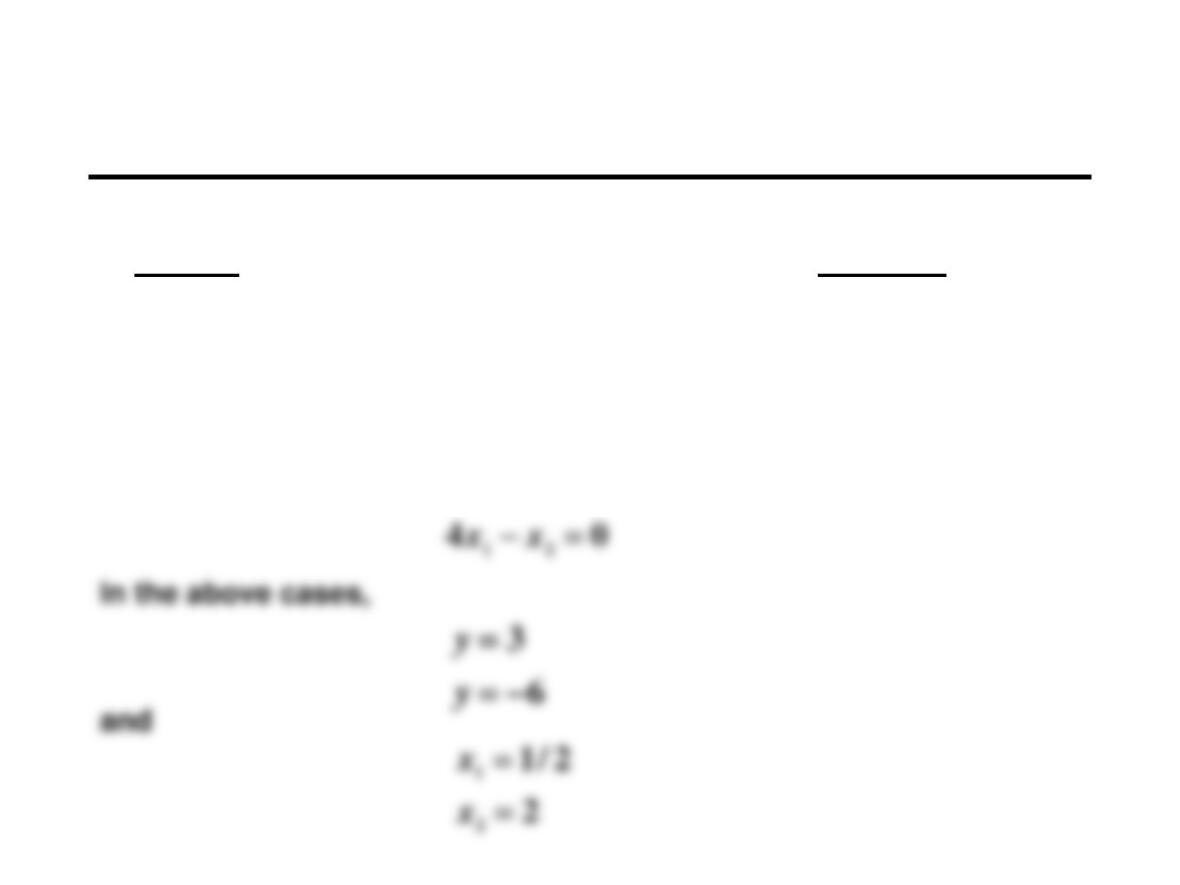
In algebra, we confronted equations with unknown variables whose
solutions were numbers. For example, quadratic equations
or sets of linear equations such as
32
21
=+
xx
0183
2=−+ yy
Foundations (3)
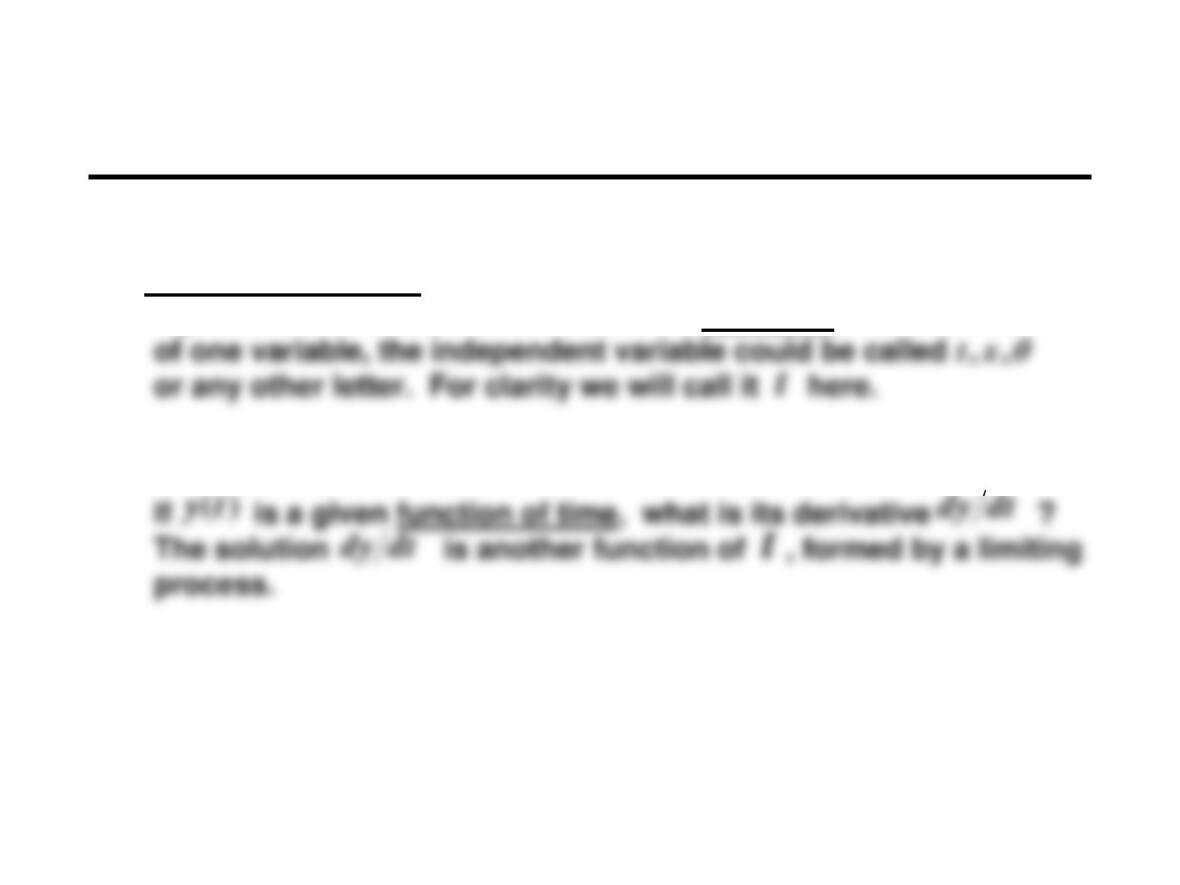
In differential calculus, we moved up a level of complexity to
equations that had solutions that were functions. For functions
We answered questions of the form:
Foundations (4)
In integral calculus, we answered questions of the form:
If is a given function of time, what is its integral ? The
solution is another function of , formed by a limiting process.
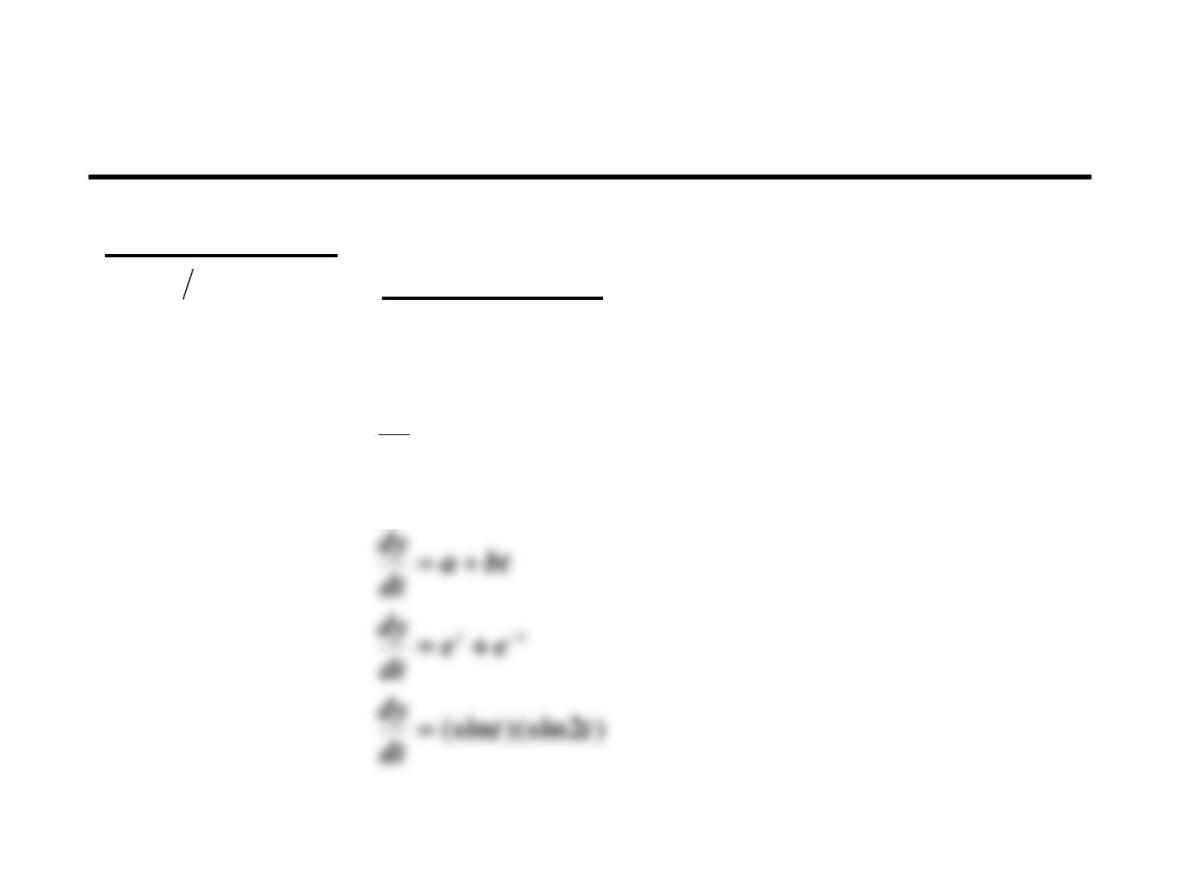
Note that in integral calculus we solved problems of the form:
dtdy
)(ty
t
)(
tf
dt
dy
=
for example:
)(ty
Foundations (5)
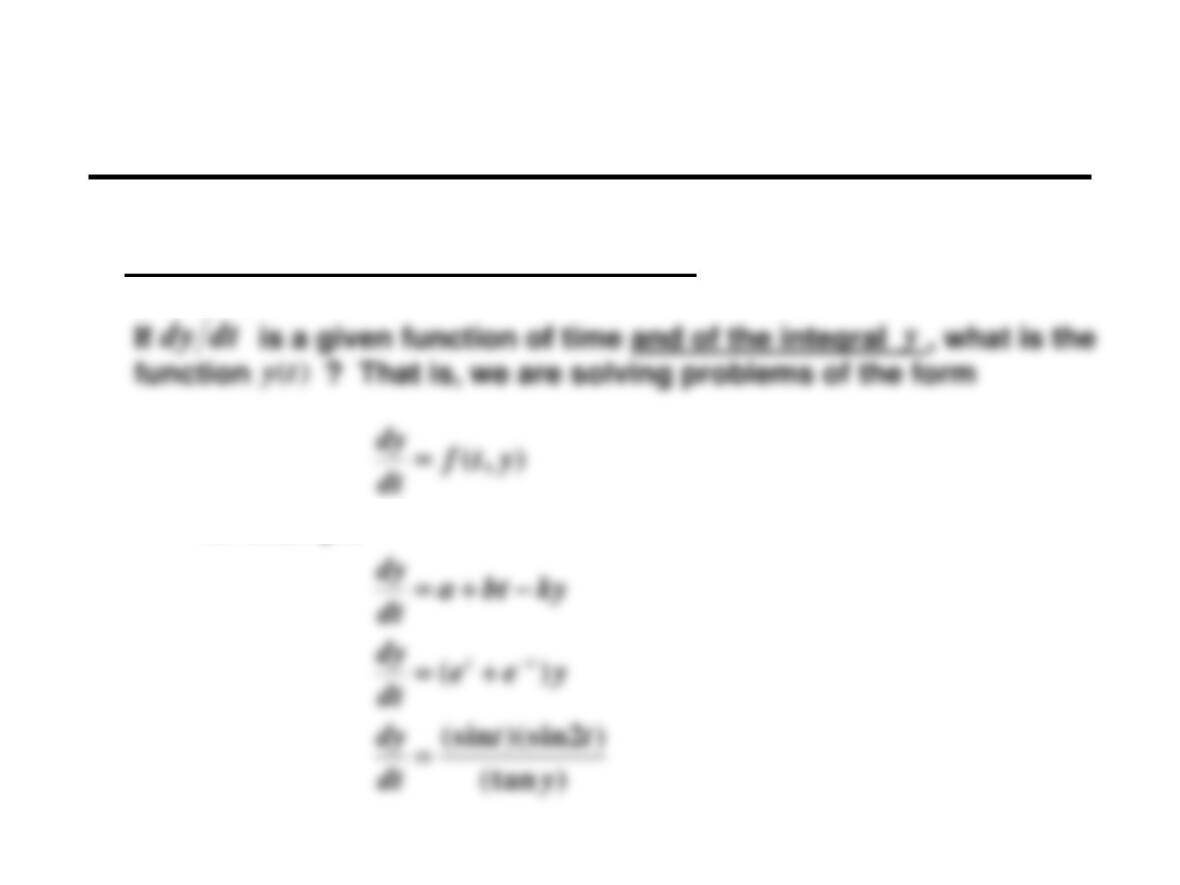
In first order ordinary differential equations, we are answering questions
of the form:
for example