Lecture Notes
Lussier, Human Resource Management, Third Edition
SAGE Publishing, 2018
Lecture Notes
Chapter 9: Rights and Employee Management
Learning Objectives
After studying this chapter, you should be able to do the following:
9-2 Identify the rights that management has in modern organizations.
9-4 Identify the factors that positive leadership takes into account to be successful.
Annotated Chapter Outline
I. Rights and Employee Management
a. Before organizations can develop, discipline, or terminate employees and develop
high-performance teams, HR must understand employee and management rights.
II. Employee Rights
Lecture Notes
Lussier, Human Resource Management, Third Edition
SAGE Publishing, 2018
III. Rights and Privileges
a. Privileges
i. Grants individuals are allowed to do based on permission from authorities.
b. Rights
i. Factors individuals are allowed to do without permission required from authorities.
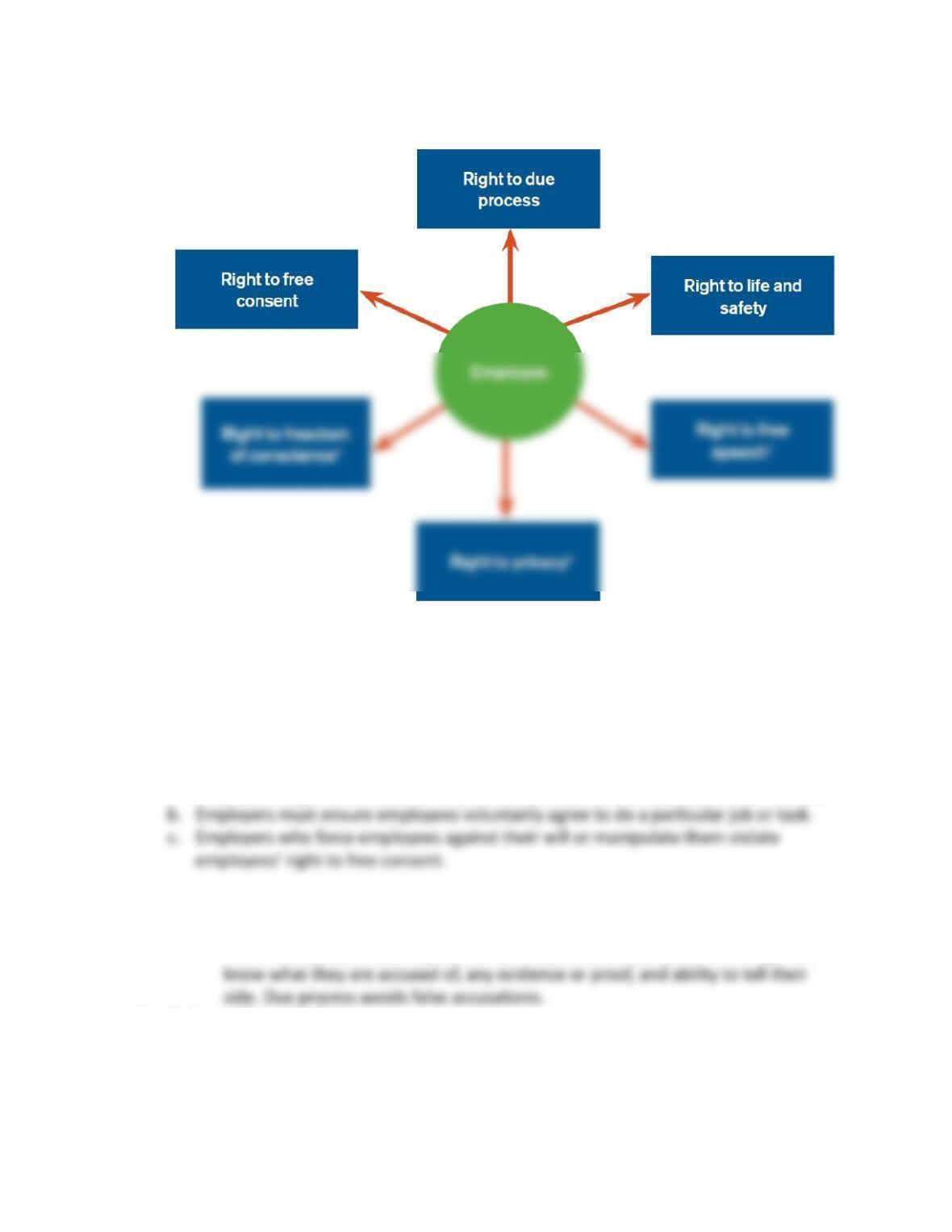
IV. Employee Rights: Right of Free Consent
a. Employees’ right to know what they’re asked to do and consequences of that action.
V. Types of Rights
a. Right to Due Process
i. When employers contemplate disciplinary action, employees have a right to
b. Right to Life and Safety
i. Employees’ right to be protected from harm to the best of employers’ ability
c. Right of Freedom of Conscience (Limited)
Lecture Notes
Lussier, Human Resource Management, Third Edition
SAGE Publishing, 2018
i. Employees should not be asked to do something that violates their values and
beliefs as long as these reflect societal norms.
d. Right to Privacy (Limited)
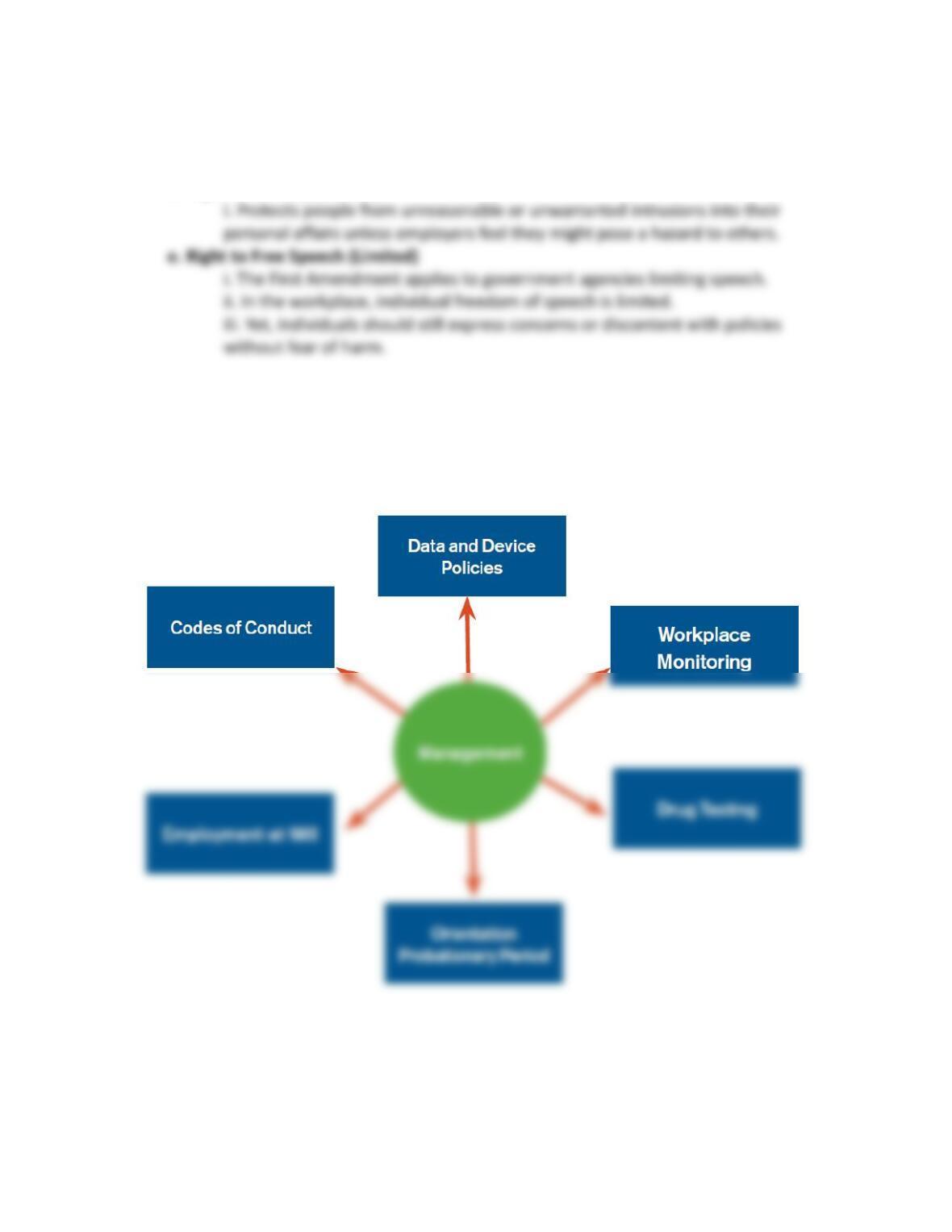
VI. Management Rights
a. Based on necessity for organization to protect itself and its employees from persons who
may intentionally or unintentionally harm.
b. Managers must weigh individuals’ rights against potential harm done to organization by
allowing individuals to express those rights.
c. Codes of conduct
i. Employers have a right to create a code of employee conduct. It must identify firm’s
ethics and values and serve as a guide to individual action.
d. Workplace monitoring
Lecture Notes
Lussier, Human Resource Management, Third Edition
SAGE Publishing, 2018
f. Orientation (probationary) periods
i. Give firms time to assess new employees and their capabilities before integrating them
into organization (typically 60 – 90 days).
g. Drug testing
i. Generally for workplace safety, but testing must be done in either a universal or
random form.
VII. Management Rights
a. Employers cannot terminate employees for:
i. Filing a legitimate worker’s compensation claim.
ii. Refusing to lobby for a particular political candidate at boss’s request.
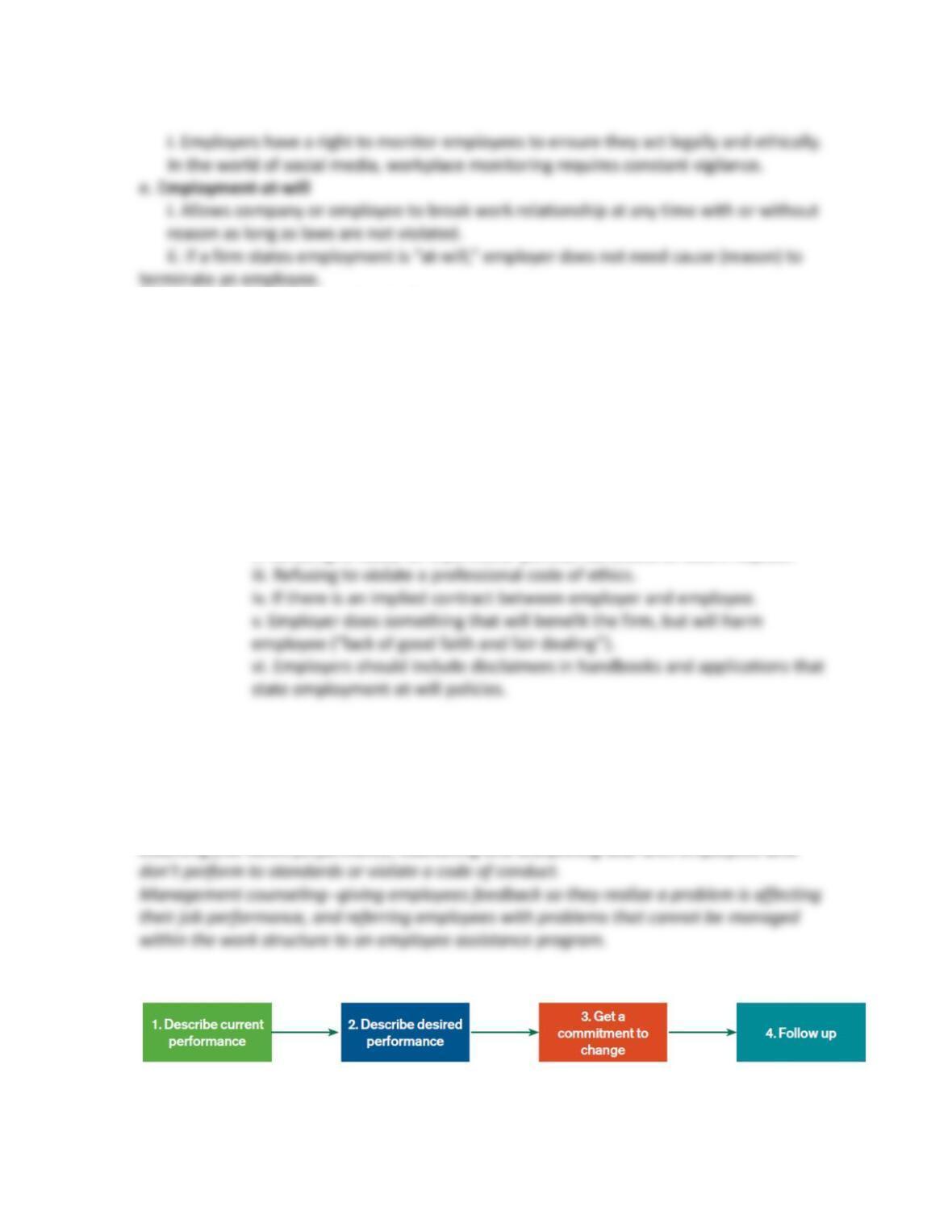
VIII. Coaching
a. Motivational feedback to maintain and improve performance.
b. Determining Corrective Coaching Action
i. Offer training when ability holds back performance.
ii. Offer motivational coaching when motivation is lacking.
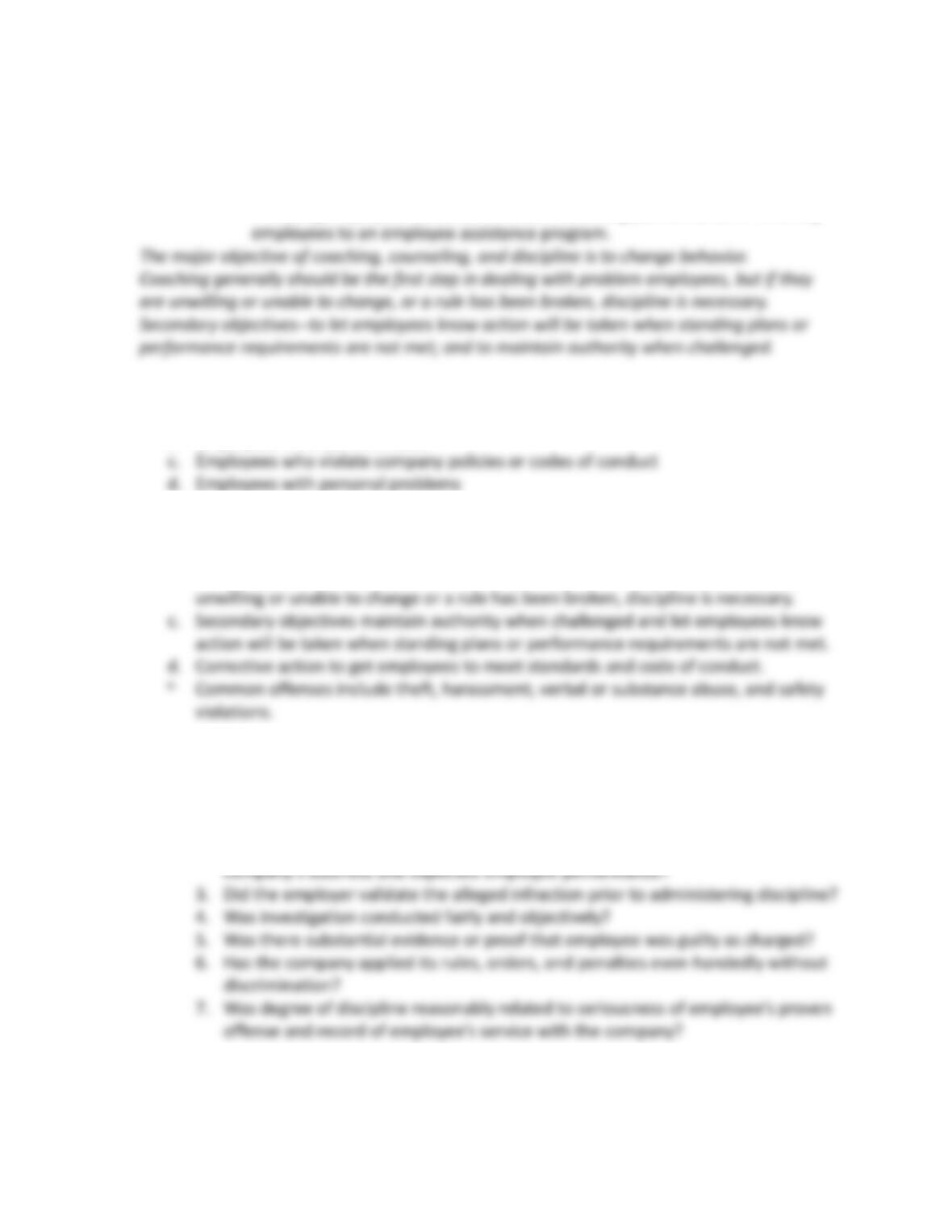
Coaching fine-tunes performance; counseling and disciplining deal with employees who
VIX. Coaching Model
X. Counseling
Lecture Notes
Lussier, Human Resource Management, Third Edition
SAGE Publishing, 2018
a. Counseling and disciplining deal with employees who don’t perform to standards or
violate a code of conduct.
b. Management counseling
i. Helping employees understand what is affecting performance or referring
XI. Types of Problem Employees
a. Employees who lack ability
b. Employees who lack motivation
XII. Disciplining
a. Major objective of coaching, counseling, and discipline is to change behavior.
b. Coaching should be the first step in dealing with problem employees, but if they are
XIII. Just Cause
a. Seven tests of fairness and due process in disciplinary actions (that originated in
union grievance arbitrations).
1. Did the employee receive fair warning?
2. Is the rule reasonably related to the orderly, efficient, and safe operation of the
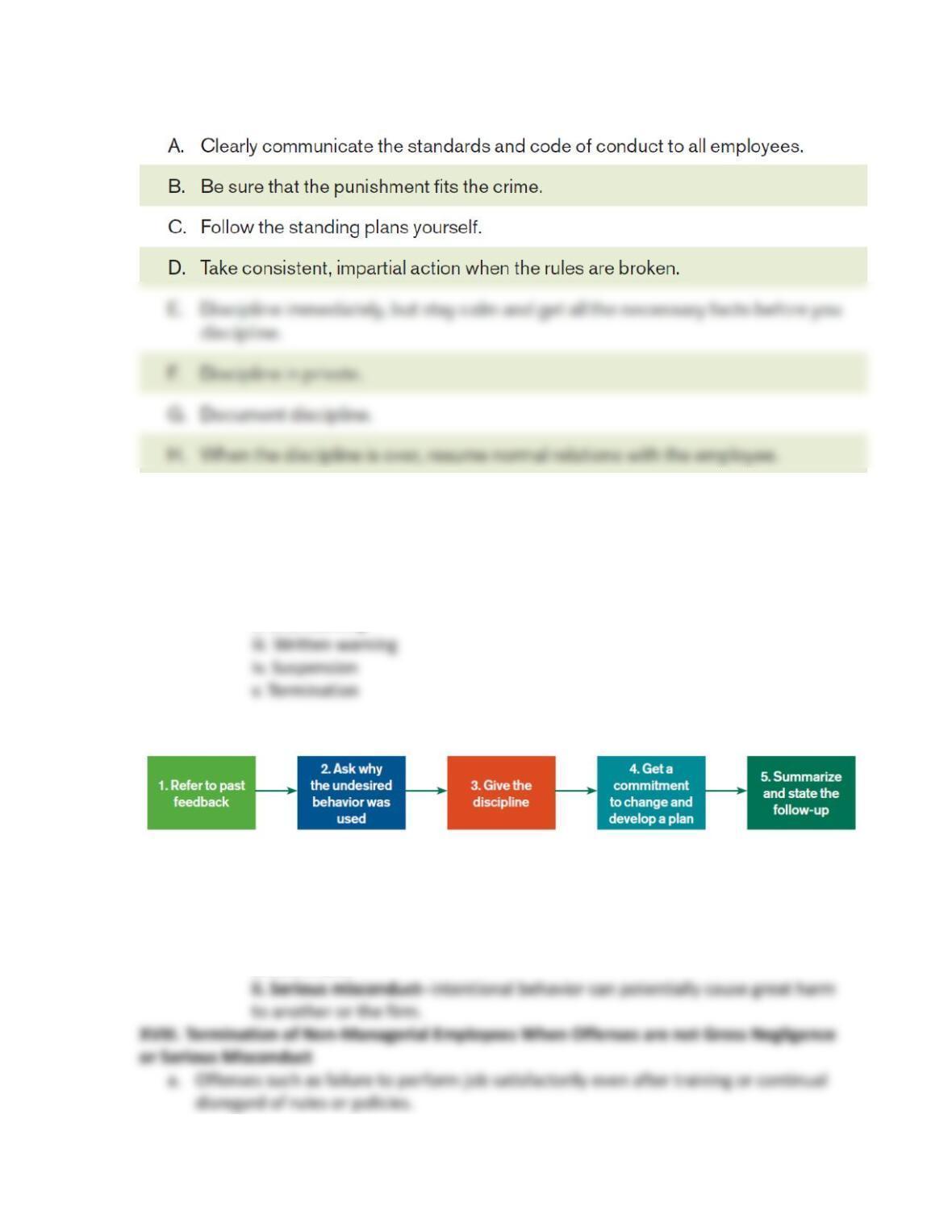
XIV. Guidelines for Effective Discipline
Lecture Notes
Lussier, Human Resource Management, Third Edition
SAGE Publishing, 2018
XV. Progressive Discipline
a. Employer provides employee with opportunities to correct poor behavior before
termination.
b. Steps:
i. Informal coaching talk
ii. Oral warning
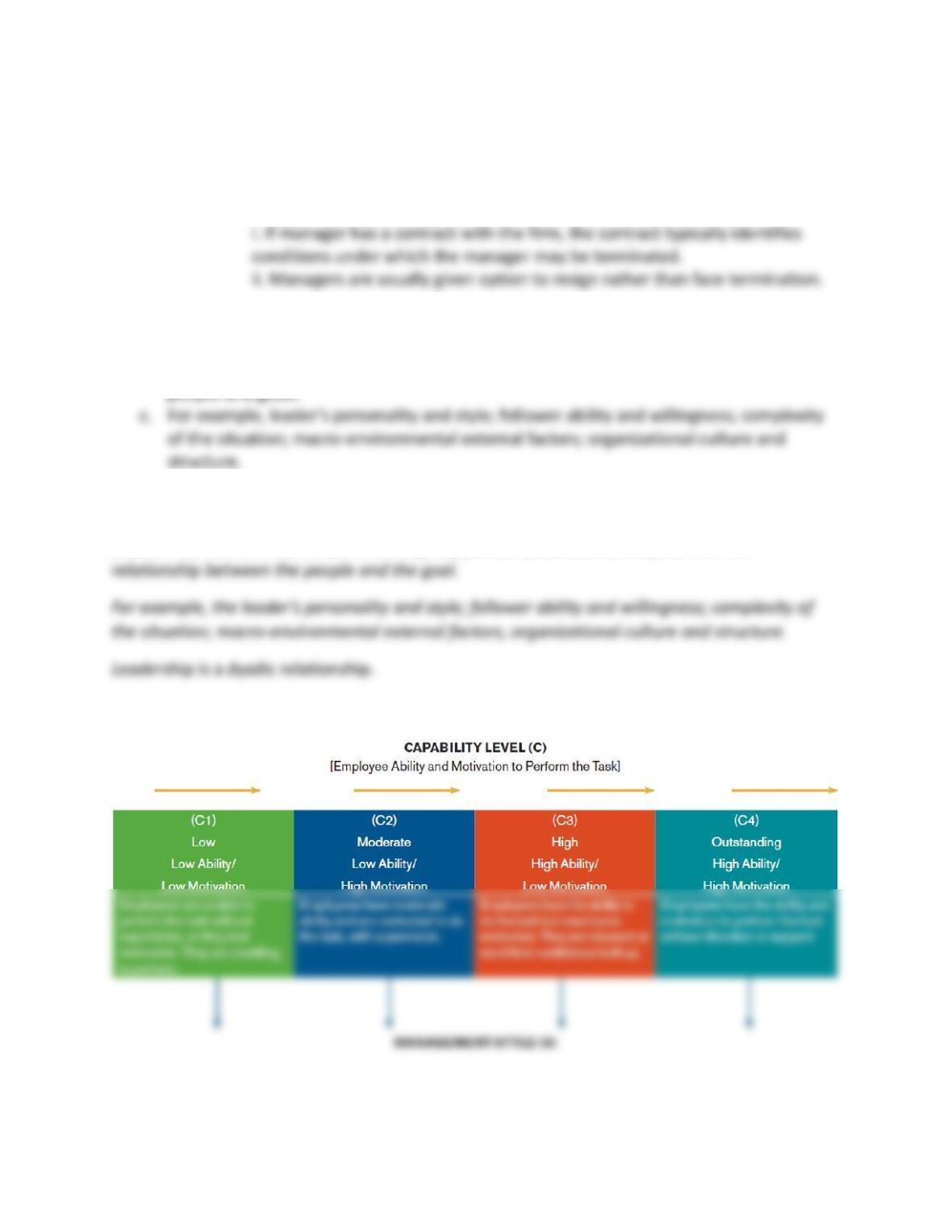
XVI. The Discipline Model
XVII. Termination
a. Necessary when an employee cannot be made into a productive member of the
workforce.
b. Causes for dismissal immediately following investigation
i. Gross negligence—a serious failure to exercise care in the work
environment.
Lecture Notes
Lussier, Human Resource Management, Third Edition
SAGE Publishing, 2018
b. After making the initial determination, subject the evidence to a review by another
manager, legal counsel, or HR representative to ensure the decision is objective.
XIX. Termination of Managerial Employees
a. Follow just cause procedures and consider:
XX. Leadership
a. Influencing employees to work toward achievement of organizational objectives.
b. Leaders have to consider contingency factors that interfere with relationship between
Is the process of influencing employees to work toward the achievement of organizational
objectives?
Leaders have to take into account contingency factors—factors that interfere with the
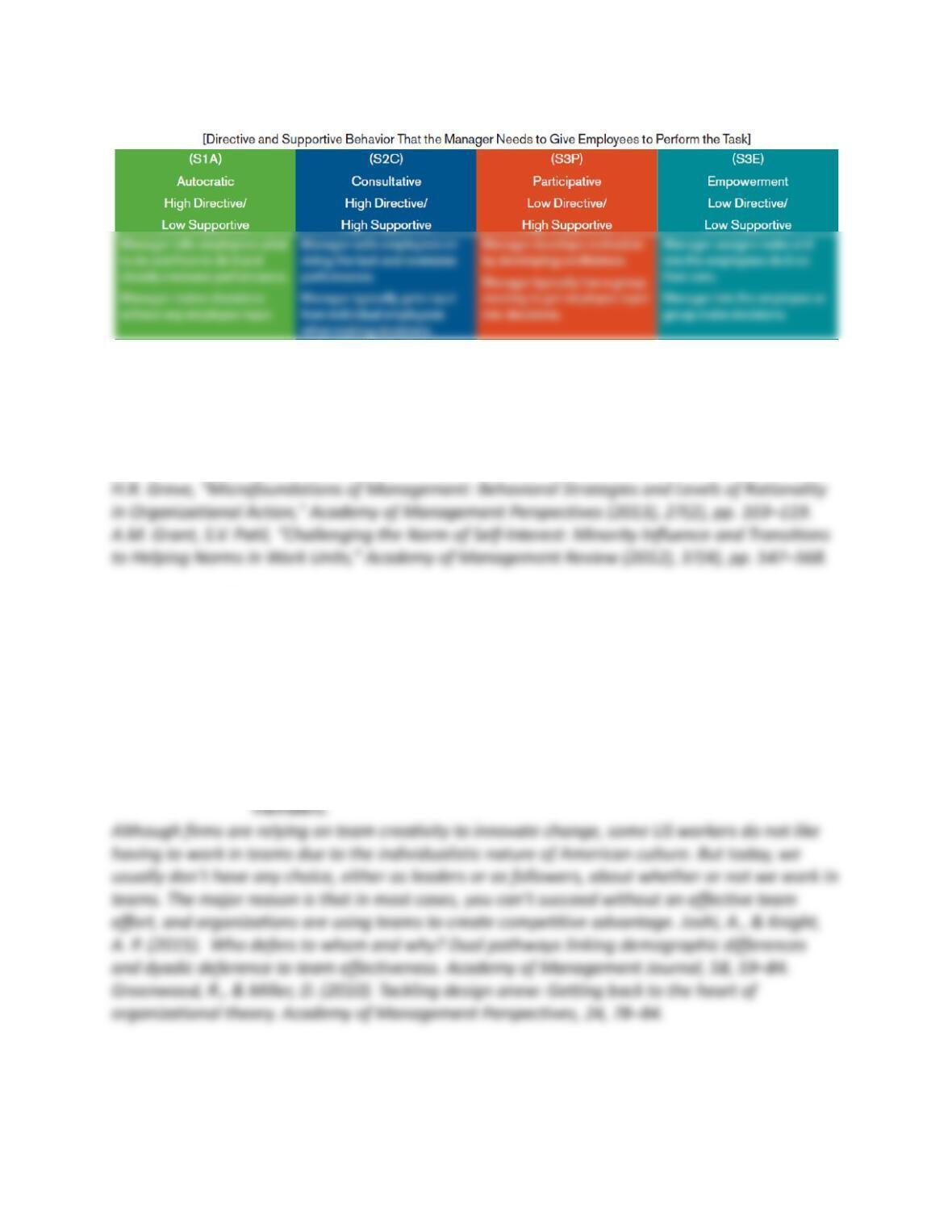
XXI. Situational Management
Lecture Notes
Lussier, Human Resource Management, Third Edition
SAGE Publishing, 2018
Management is typically understood as taking place in a situation, so leaders need to change
their behavior to meet the situational characteristics. This is often called contingency leadership
or situational leadership. M.A. Hogg, D. Van Knippenberg, D.E. Rast, “Intergroup Leadership in
Organizations: Leading Across Group and Organizational Boundaries,” Academy of Management
Review (2012), 37(2), pp. 232–255.
XXII. Building Effective Work Teams
a. Team building is a widely used Organizational Development (OD) technique because
intra- and inter-team effectiveness affect the entire organization.
b. Typical team-building goals:
i. Clarify team objectives and members’ responsibilities.
ii. Identify why team isn’t accomplishing objectives.
iii. Develop problem-solving, decision-making, objective-setting, and planning
skills.
iv. Develop relationships based on trust and understanding of group
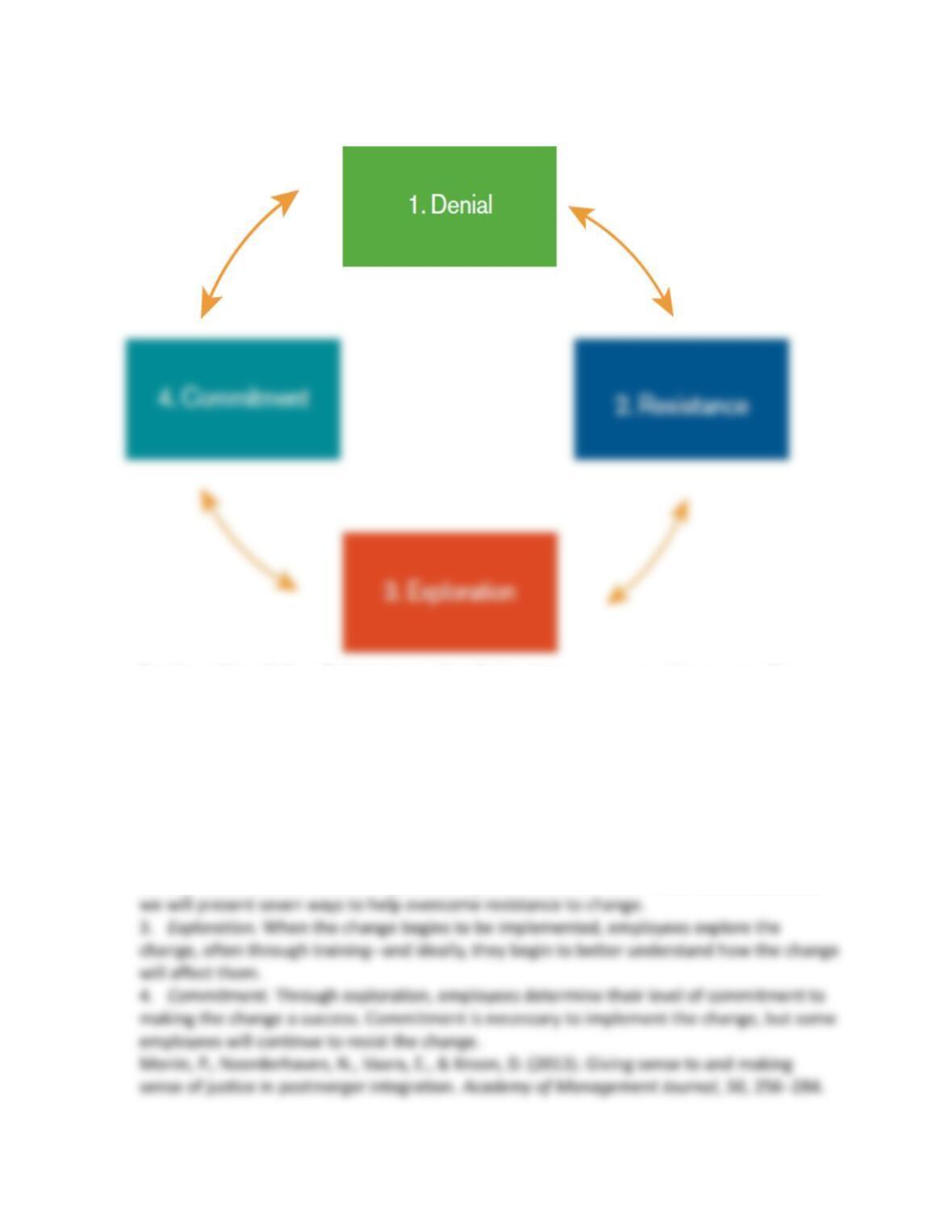
XXIII. Stages of the Change Process
Lecture Notes
Lussier, Human Resource Management, Third Edition
SAGE Publishing, 2018
People go through four distinct stages when facing change, so we need to manage change
through each stage. The four stages of the change process are denial, resistance,
exploration, and commitment. They are presented in Exhibit 9-5 and are described using HP
as an example below. Notice that the stages in Exhibit 9-5 are laid out in a circular formation
because change is an ongoing process, not a linear one. People can regress, as the arrows
show.
1. Denial. Changes are often difficult to understand or accept. So when people first hear
that change is coming, they may deny that it will affect them.
2. Resistance. Once people get over the initial shock and realize that change is going to be a
reality, they often resist the change. This stage is so important that in the next subsection,
Lecture Notes
Lussier, Human Resource Management, Third Edition
SAGE Publishing, 2018
Shin, J. , Taylor, M. S., & Seo, M. G. (2012). Resources for change: The relationships of
organizational inducements and psychological resilience to employees’ attitudes and
behaviors toward organizational change. Academy of Management Journal, 55, 727–748.
XXIV. Overcoming Resistance to Change
a. A main challenge in change management.
b. Seven steps
1. Develop a positive trust climate for change.
2. Plan.
1. Develop a positive trust climate for change. Develop and maintain good human
relations. Make employees realize you have their best interests in mind and develop mutual
trust. Constantly look for better ways to do things. Encouraging employees to suggest changes
and implementing their ideas are important parts of continuous improvement.
2. Plan. Implementing changes successfully requires good planning. You need to identify
3. Clearly state why the change is needed and how it will affect employees. Employees
want and need to know why the change is necessary and how it will affect them, both positively
4. Create a win-win situation. We have a desire to win. The goal of human relations is to
meet employee needs while achieving departmental and organizational objectives. To overcome
resistance to change, be sure to answer the other parties’ unasked question, “What’s in it for
me?” When people can see how they benefit, they are more willing to change. If the
5. Involve employees. To create a win-win situation, involve employees. A commitment to
change is usually critical to its successful implementation. Employees who participate in
Lecture Notes
Lussier, Human Resource Management, Third Edition
SAGE Publishing, 2018
changes dictated to them. To get employee involvement and commitment to change, phrase
your own ideas as if they were someone else’s.
6. Provide support and evaluation. To overcome resistance to change, employees need to
know that managers are there to help them cope with the changes. So, relationships matter.
7. Create urgency. When you decide on a change, you have to move fast. Many people
procrastinate on making changes. A feeling of urgency is the primary driver toward taking
action. If something is perceived as urgent, it is given a high priority and is often done
immediately.
Goldsmith, M. (2009). What got you here won’t get you there: How successful people became
even more successful. Academy of Management Perspective, 23, 103–105.
Henisz, W. J. (2011). Leveraging the financial crisis to fulfill the promise of progressive
management. Academy of Management Learning & Education, 10, 298–321.
Cuban, M. (2013, April 11). Motivate yourself. Businessweek , online.
Welch, J., & Welch, S. (2009, March 2). How not to succeed in business. Businessweek, p. 74.

Lecture Notes
Lussier, Human Resource Management, Third Edition
SAGE Publishing, 2018
Ford, J. D., Ford, L. W., & D’Amelio, A. (2008). Resistance to change: The rest of the story.
Academy of Management Review, 33, 362–377.
Chakravorty, S. S. (2010, January 25). Where process improvement projects go wrong. The Wall
Street Journal, p. R6.