
Lecture Notes
Lussier, Human Resource Management, Third Edition
SAGE Publishing, 2018
Lecture Notes
Chapter 7: Learning and Development
Learning Objectives
After studying this chapter, you should be able to do the following:
7-2 Briefly discuss the steps in the training and development process and the common
challenges to the process.
7-4 Discuss each of the major training delivery types.
Annotated Chapter Outline
I. Training and Competencies
a. Training
i. Offer based on competencies employees need to perform jobs successfully.
b. Competency models
i. Identify knowledge, skills, and abilities (KSA) needed to perform a job or to
Lecture Notes
Lussier, Human Resource Management, Third Edition
SAGE Publishing, 2018
Competency models—identify the knowledge, skills, and abilities (KSA) needed in order to
perform a particular job in the organization and the types of training a new employee or
one who changes jobs will need.
II. Training and Employee Development
a. Training
i. Teaching employees skills necessary to perform job duties.
b. Employee development
i. Ongoing education to improve knowledge and skills for present and future jobs
within the firm.
III. When Is Training Needed?
a. New employee orientation
i. Introducing new employees to organization and their jobs.
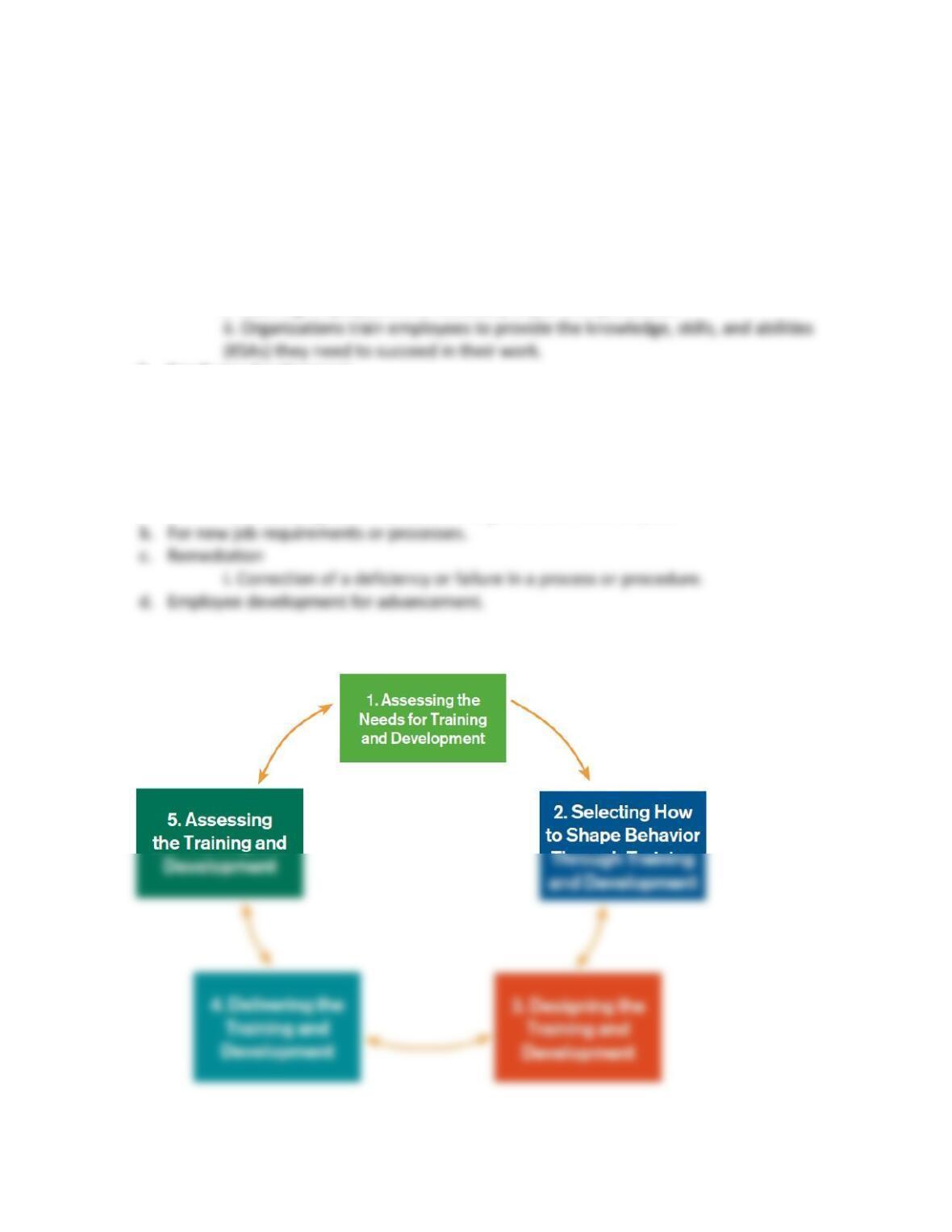
IV. Steps in the Training Process
Lecture Notes
Lussier, Human Resource Management, Third Edition
SAGE Publishing, 2018
V. Needs Assessment
a. Analyzing difference between what is occurring within the job(s) and what is required
based on firm’s operations and goals.
b. When not done correctly:
i. Training courses may be poorly designed (e.g., cover wrong info).
VI. Challenges to the Training Process
a. Unprepared workforce—Many people hired are ill-prepared in educational basics.
b. Return on investment/cost justification—Training is time consuming and expensive.
c. Resistance to change and employee insecurity.
VII. Learning
a. Trainers must understand how people learn so they can shape or change employee
behavior effectively.
b. Classical conditioning—stimulus-response; results in direct, involuntary, learned
behaviors.
c. Operant conditioning—direct, voluntary learned behavior; result of desiring rewards and
Lecture Notes
Lussier, Human Resource Management, Third Edition
SAGE Publishing, 2018
VIII. Shaping Behavior
VIV. Shaping Behavior—Methods
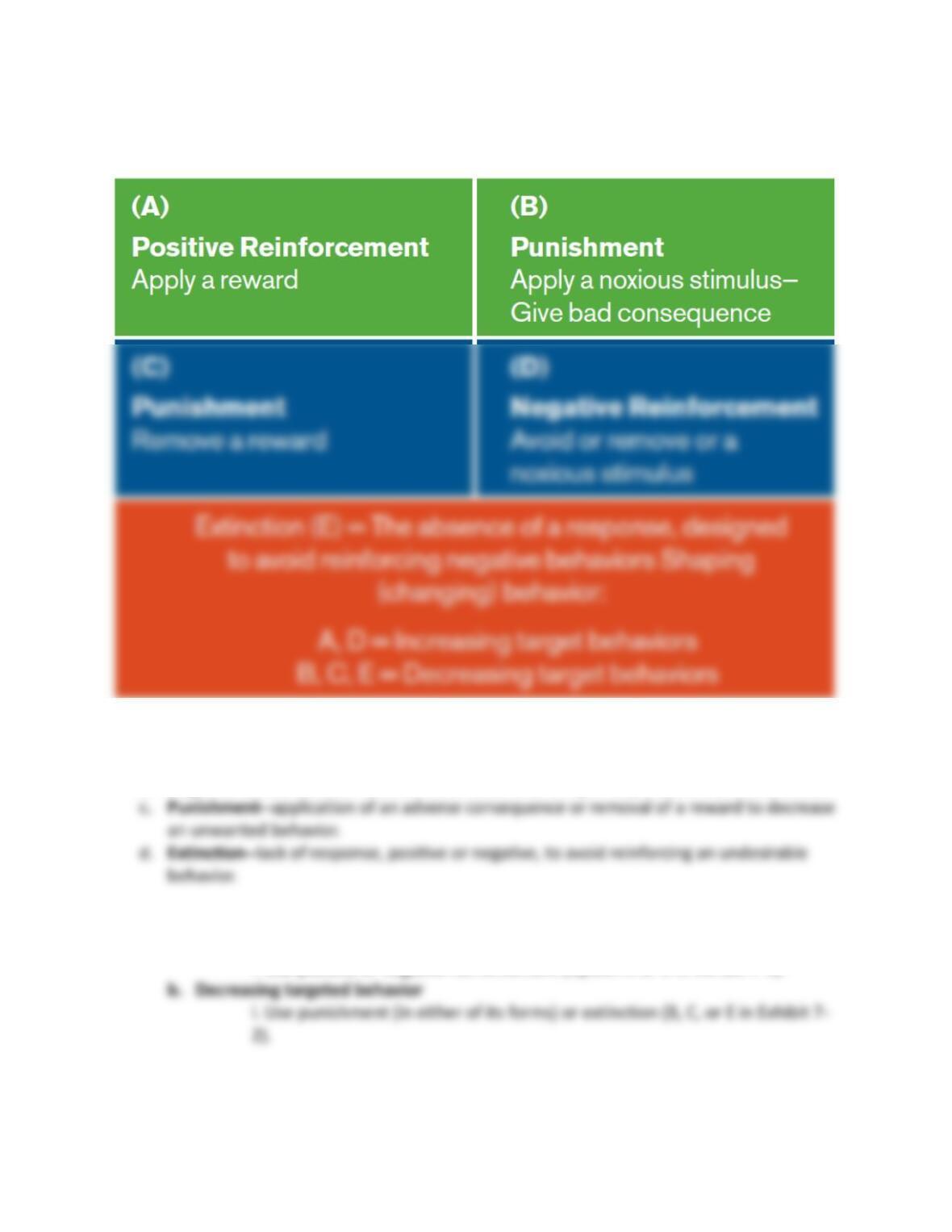
a. Positive reinforcement—provide a reward in return for a constructive action.
b. Negative reinforcement—withdrawal of a harmful thing in response to a positive action.
V. Strategies for Shaping Behavior
a. Increasing targeted behavior
i. Use positive or negative reinforcement (Option A or D in Exhibit 7-2).
VI. Learning Styles
a. Neil Fleming’s learning styles
Lecture Notes
Lussier, Human Resource Management, Third Edition
SAGE Publishing, 2018
i. Visual
ii. Auditory
iii. Tactile
a. David Kolb’s learning styles
i. How people experience and act on the environment
Lecture Notes
Lussier, Human Resource Management, Third Edition
SAGE Publishing, 2018
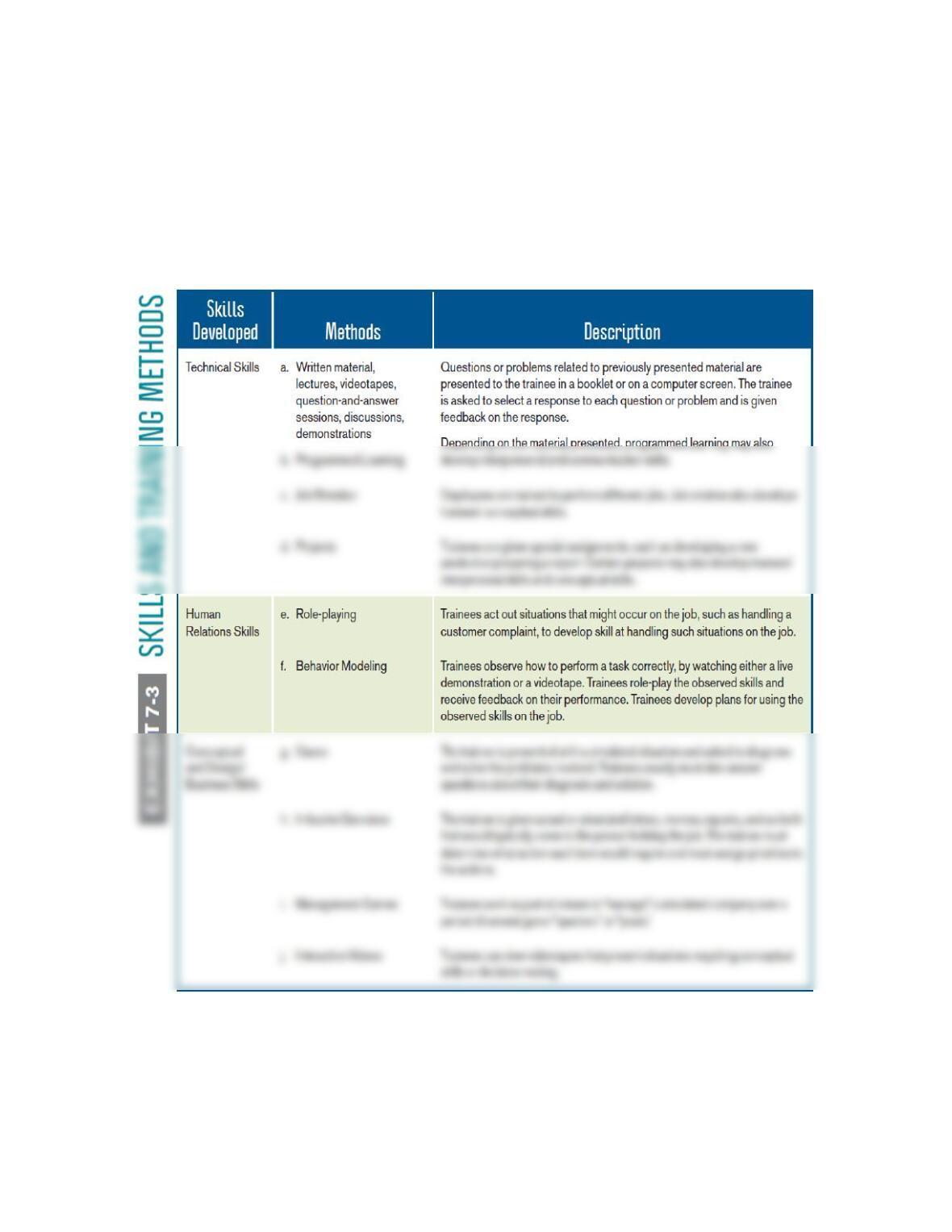
VII. Delivery of Training
a. Choice depends to some extent on:
i. Information being transferred.
VIII. On-the-Job Training Versus Job Instructional Training
a. On-the-Job Training (OJT)
i. Done at work site with resources employees use to perform job.
b. Job Instructional Training
i. A successful OJT four-step model:
ii. Preparation of the trainee.
VIV. On–the-Job Training Advantages
a. Most people learn best by doing and explanations.
b. Training can be immediately transferred to job.
IX. On–the-Job Training Disadvantages
a. One-to-one training is expensive. Often disrupts work environment.
b. Trainers may not know how to teach, may be unmotivated or unable to transfer their
X. Classroom Training Advantages
a. Provides consistent knowledge or information to large numbers of people about topics.
b. Many students can be trained simultaneously.
c. Info provided to trainees is typically more consistent than OJT.
Lecture Notes
Lussier, Human Resource Management, Third Edition
SAGE Publishing, 2018
XI. Classroom Training Disadvantages
a. A passive environment where learners absorb info provided.
XII. Distance or E–Learning
a. Synchronous distance learning
i. Trainees sign into a website where instructors interact with students and teach
topics.
b. Asynchronous distance learning
XIII. Distance or E-Learning Advantages
a. Training is constantly available and students learn at own pace.
b. No need for classrooms or for an instructor to be available.
XIV. Distance or E-Learning Disadvantages
a. Trainees require self-discipline.
b. Trainer may not respond directly to student needs and questions.
XV. Simulations Advantages
a. Low risk method of training individuals on how to react to a complex situation.
b. Realism allows convincing emulation of physical situations.
XVI. Simulations Disadvantages
a. Can become “a video game” and not taken seriously.
b. Systems and simulations may be expensive to create and maintain applications.
Lecture Notes
Lussier, Human Resource Management, Third Edition
SAGE Publishing, 2018
XVII. Assessing Training
a. Has training achieved the shaped behavior identified through the needs assessment?
XVIII. Four-Level Evaluation Method
a. Reaction—how individuals respond to the training process.
XIX. Types of Development
a. Talent Management and Development
i. Follows the same five steps as the training process.
b. Career Development
i. Firms make career paths and career counseling available.
XX. Common Methods of Employee Development
a. Formal Education—courses and degree programs.
b. Experience—job-related experiences, for example, job rotation.
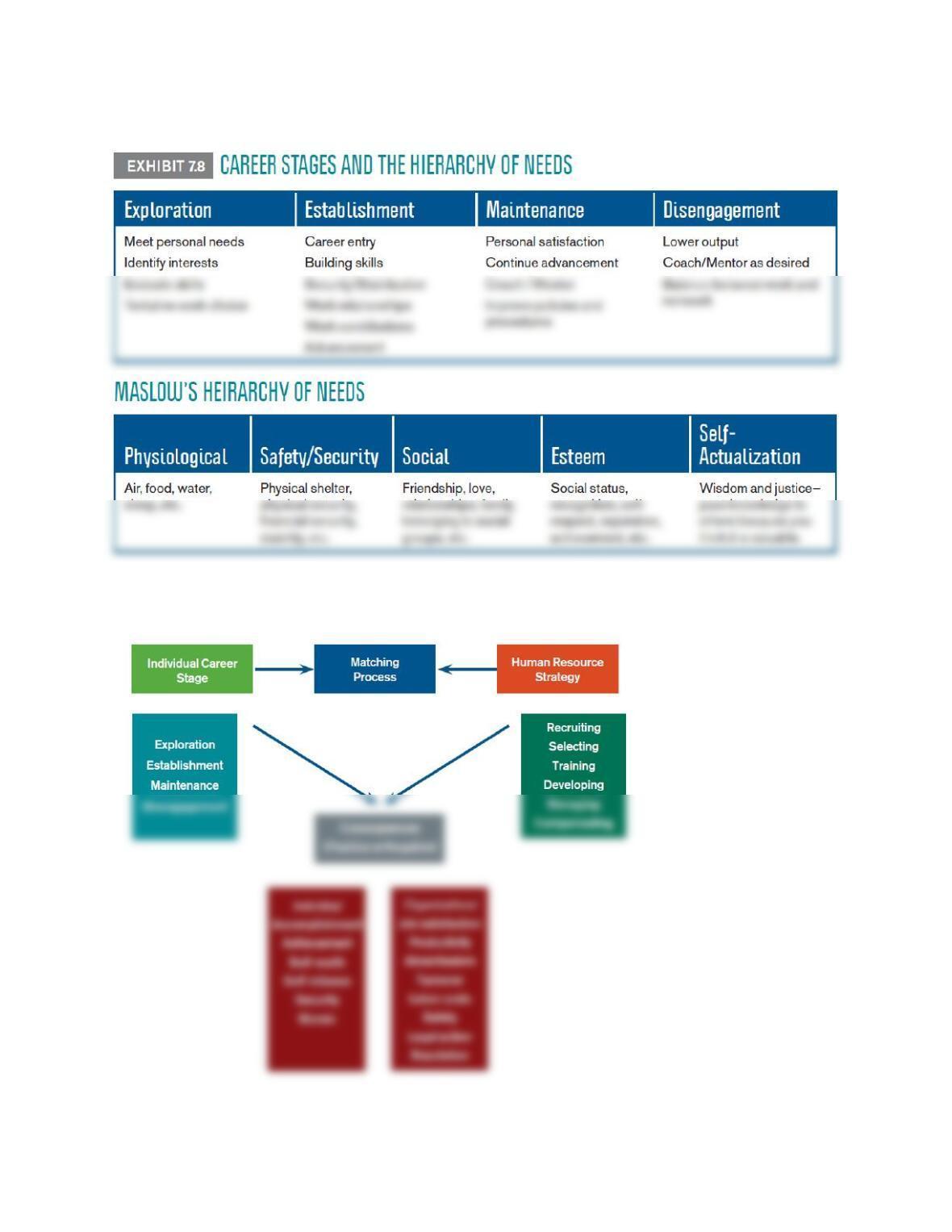
XXI. Career Stages and the Hierarchy of Needs
Lecture Notes
Lussier, Human Resource Management, Third Edition
SAGE Publishing, 2018
XXII. Consequences of Career Planning