
Lecture Notes
Lussier, Human Resource Management, Third Edition
SAGE Publishing, 2018
Lecture Notes
Chapter 4: Matching Employees with Jobs
Learning Objectives
After studying this chapter, you should be able to do the following:
4-2 Discuss the reason for job analysis, and identify the five major options available and
expected outcomes of the process.
4-4 Describe the four major tools for motivational job design.
Annotated Chapter Outline
I. Employee and Job Matching
a. Employers matched with the right job maximize productivity.
b. Mismatched workers tend to have lower job satisfaction, absenteeism, and turnover.
To maximize productivity, employers must match the right people with the right jobs,
Lecture Notes
Lussier, Human Resource Management, Third Edition
SAGE Publishing, 2018
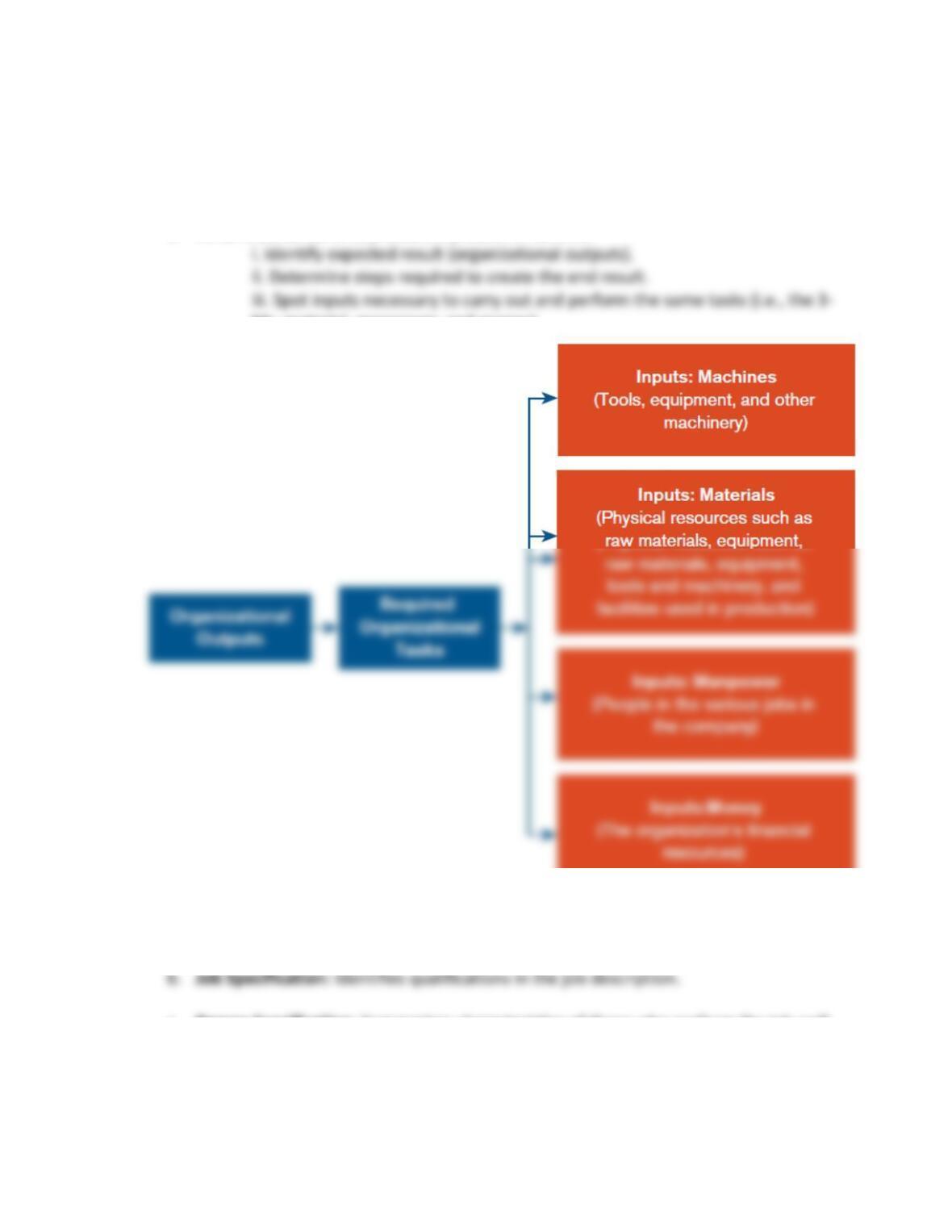
II. Work Flow Analysis
a. What must be done to produce a product or service:
i. Identify expected result (organizational outputs).
III. Descriptions and Specifications
a. Job Description: Identifies major tasks, duties, and responsibilities of a job.
b. Job Specification: Identifies qualifications in the job description.
IV. Job Analysis
a. Identifies work performance and working conditions.

Lecture Notes
Lussier, Human Resource Management, Third Edition
SAGE Publishing, 2018
b. Results include duties, responsibilities, skills, knowledge, outcomes (i.e. job
V. Databases and Job Analysis
a. Free and continually updated:
i. Department of Labor’s Dictionary of Occupational Titles (DOT).
ii. O*NET.
b. Commercial databases are also available.
VI. Four Common Job Analysis Methods
a. Questionnaires—identify functions of a particular job.
VII. Job Analysis and the Nature of Jobs
a. Job analysis is valuable when jobs are stable. It offers less value when jobs are not
well-defined.
VIII. Task Versus Competency-Based Jobs
a. Task-based job
i. A function of tasks performed within the job.
ii. Best for jobs in stable, bureaucratic organizations.
b. Competency-based job
IX. Examples of Tasks and Competencies in a Sales Role
a. Sales Tasks
i. Determine pricing.
ii. Generate sales quotes.
Lecture Notes
Lussier, Human Resource Management, Third Edition
SAGE Publishing, 2018
X. Job Design Versus Job Redesign
a. Job design
i. Identifies tasks that employees are responsible for and how those tasks will be
accomplished.
XI. Organizational Structure and Job Design
a. Rigid bureaucratic structures with strong centralized decision making need jobs that are
XII. Five Approaches to Job Design and Redesign
a. Mechanistic Job Design—Task specialization, skill simplification, and repetition. The
traditional pyramidal pattern of organizing.
b. Organic Job Design—Based on metaphors for constructing social organizations.
Leaves the system open to environment and opportunities.
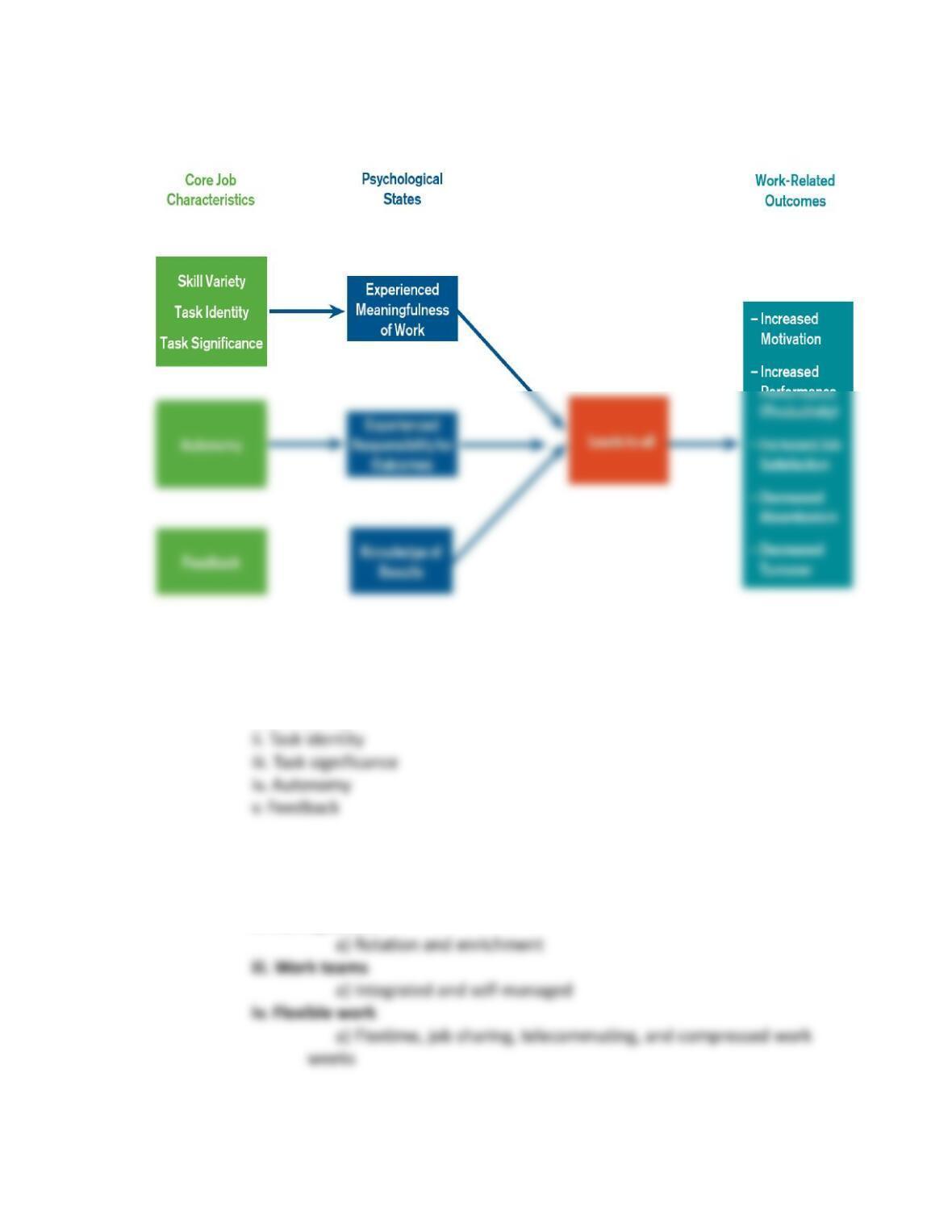
XIII. The Job Characteristics Model (JCM)
Lecture Notes
Lussier, Human Resource Management, Third Edition
SAGE Publishing, 2018
XIV. The Job Characteristics Model of Job Design
a. Five core job characteristics to improve employees’ productivity and quality of
working life:
i. Skill variety
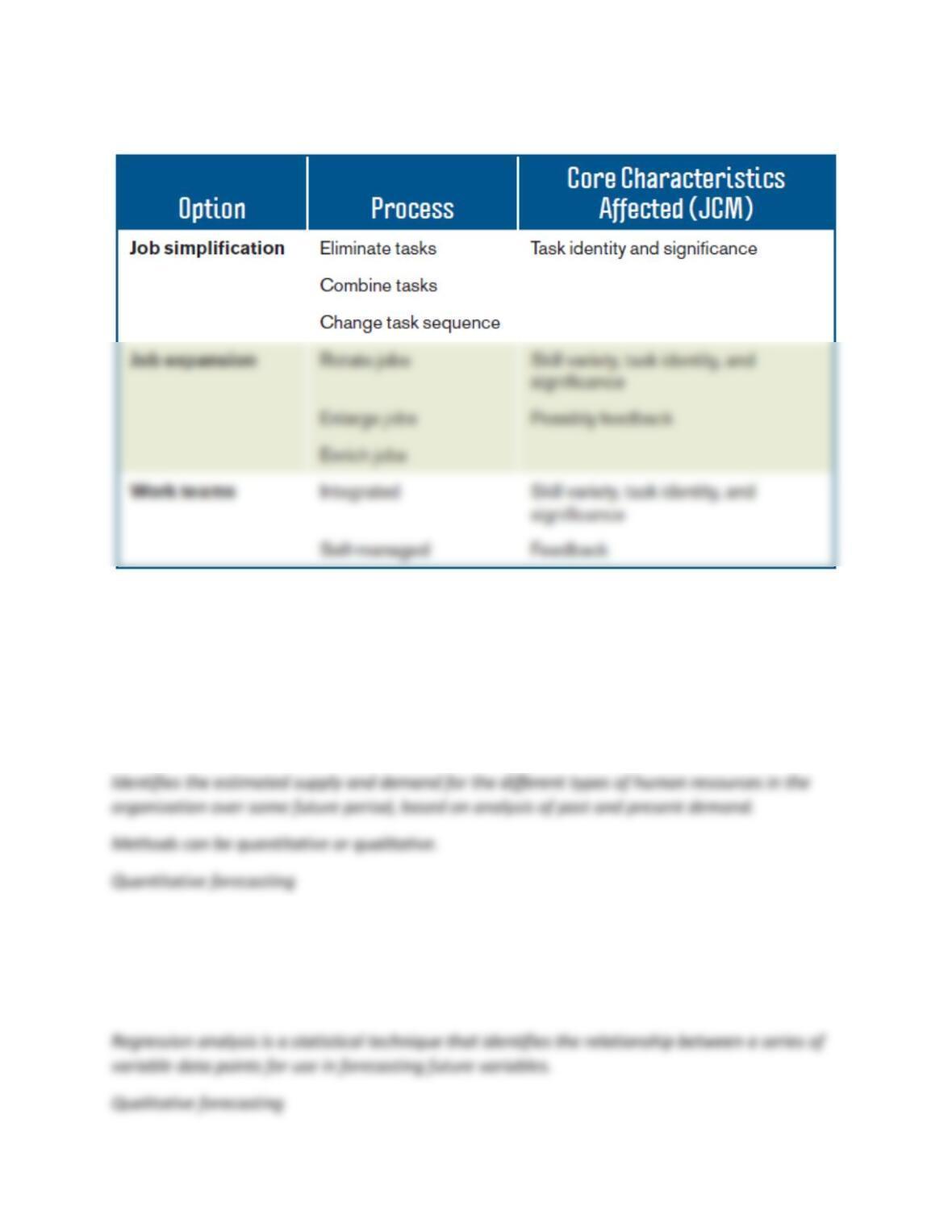
XV. Designing Motivational Jobs
a. Tools include:
i. Job simplification
ii. Job expansion
XVI. Job Design Options, Process, and the JCM
Lecture Notes
Lussier, Human Resource Management, Third Edition
SAGE Publishing, 2018
Whether jobs are designed to be motivational, mechanistic, etc., depends on type of work and
culture of the organization and country.
XVII. HR Forecasting
a. Identifies estimated supply and demand for different types of HR.
b. Based on analysis of past and present demand.
c. Methods can be quantitative or qualitative.
HR forecasting
Trend analysis is the process of reviewing historical items such as revenues, and relating those
changes to some business factor to form a predictive chart.
Ratio analysis is the process of reviewing historical data and calculating specific proportions
between a business factor (such as production) and the number of employees needed.

Lecture Notes
Lussier, Human Resource Management, Third Edition
SAGE Publishing, 2018
XVIII. Quantitative Forecasting
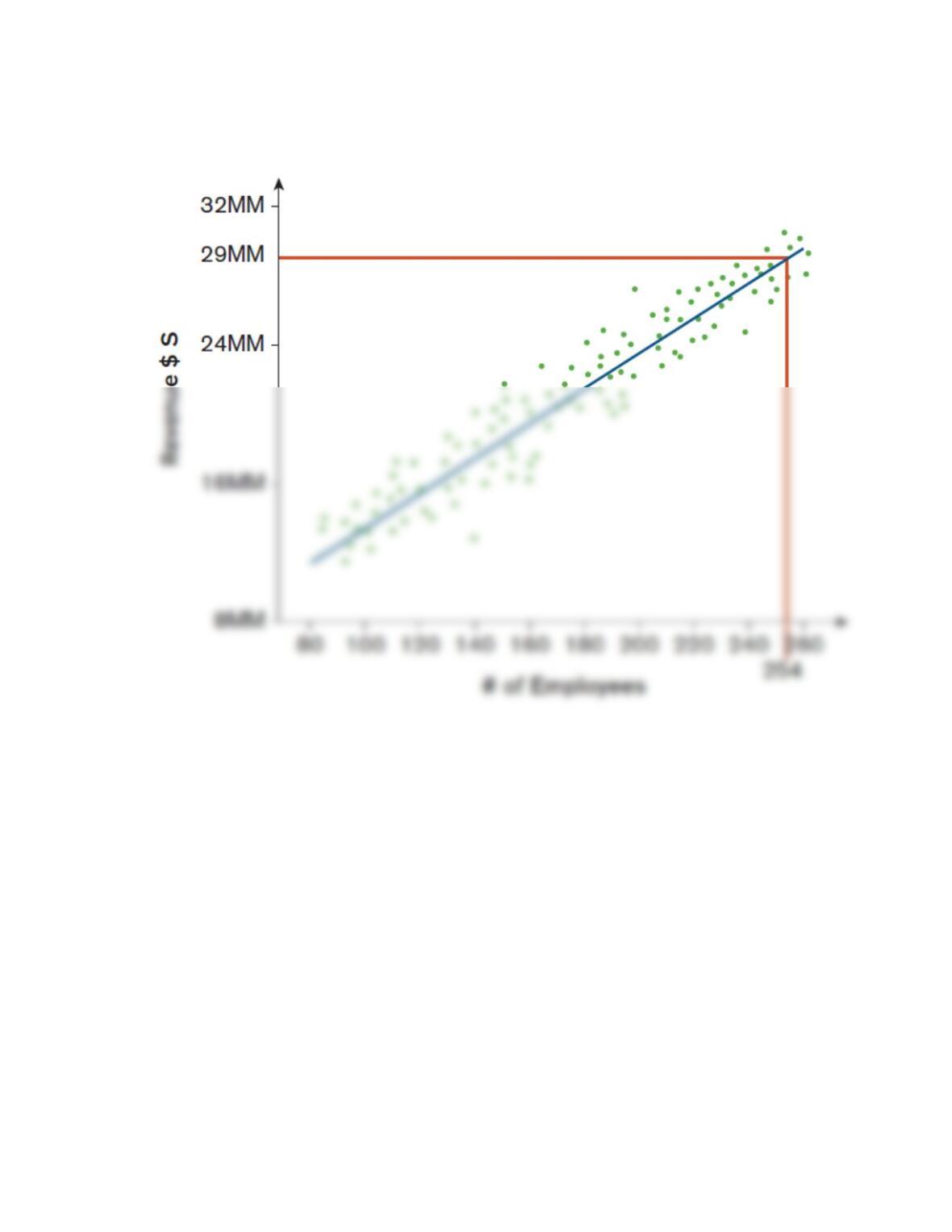
a. Trend Analysis
i. Reviewing historical items (such as revenues) and relating changes to business
factors to form a predictive chart.
b. Ratio Analysis
c. Regression Analysis
i. Identifies relationship between a series of variable data points to forecast
future variables.
Trend analysis is the process of reviewing historical items such as revenues, and relating
XIV. Quantitative Forecasting Analysis
Lecture Notes
Lussier, Human Resource Management, Third Edition
SAGE Publishing, 2018
XV. Qualitative Forecasting
d. Non-quantitative methods are usually based on knowledge of a pool of experts in a
subject or an industry.
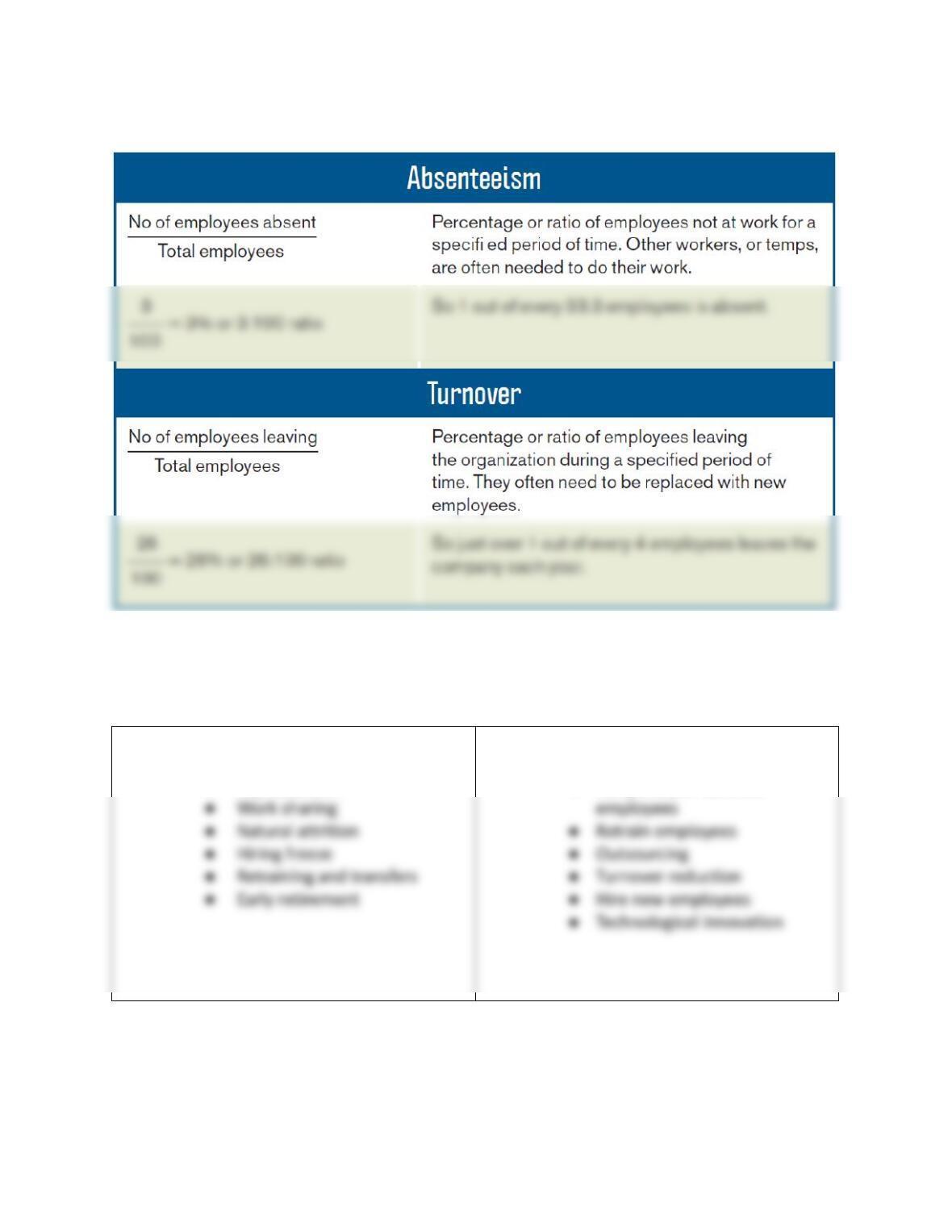
XVI. Measuring Absenteeism and Turnover
Lecture Notes
Lussier, Human Resource Management, Third Edition
SAGE Publishing, 2018
XVII. Reconciling Internal Labor Supply and Demand
a. Employers need the right numbers of employees with the right skill sets in the
organization at the right time.
Options for a Surplus
● Downsizing and layoffs
● Pay reduction
Options for a Shortage
● Overtime
● Temporary or contract
XVIII. Succession Planning
a. Type of forecasting done to:
i. Have people ready to move into vacated positions.
ii. Make predictions for leadership requirements.

Lecture Notes
Lussier, Human Resource Management, Third Edition
SAGE Publishing, 2018