Lecture Notes
Lussier, Human Resource Management, Third Edition
SAGE Publishing, 2018
Lecture Notes
I. Chapter 2: Strategy-Driven Human Resource Management
A. Learning Objectives
After studying this chapter, you should be able to do the following:
2-2 Discuss how having a vision and mission helps organizations design a strategy and focus their
resources.
2-4 Identify and describe the major components of organizational structure and why it is important to
understand them.
2-6 Identify areas of HRM where data analytics and other HR technologies can have an effect on
organizational success.
Annotated Chapter Outline
I. Strategy and Strategic Planning
Lecture Notes
Lussier, Human Resource Management, Third Edition
SAGE Publishing, 2018
a. Looks at the organization, its environment today, and expected future goals
Strategy and strategic planning deal with looking at the organization and its environment—
today and in the expected future—and determining what the organization wants to do to meet
the requirements of that expected future.
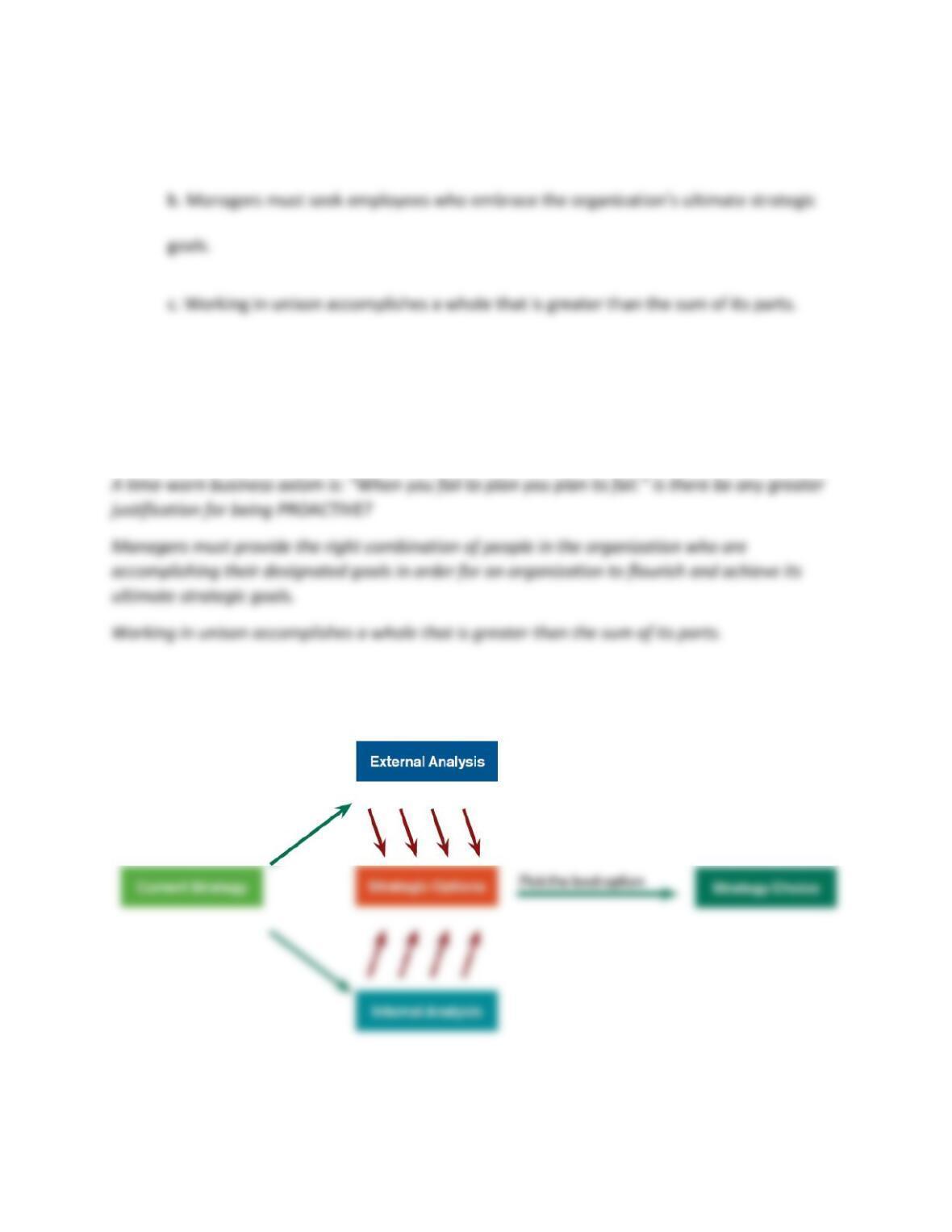
Strategy and strategic planning in the 21st century and the environment
II. Strategic Choice
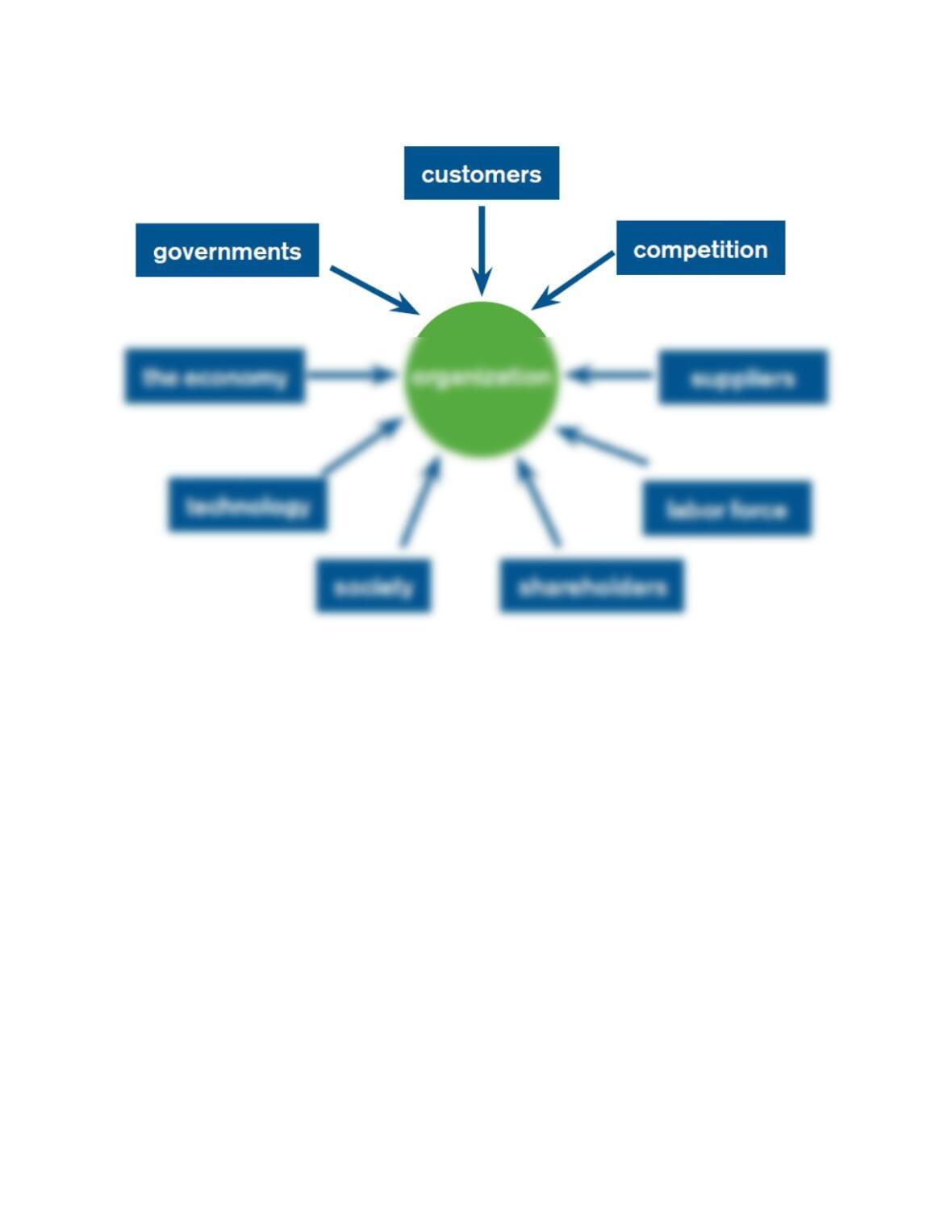
III. External Influences Managers Cannot Control
Lecture Notes
Lussier, Human Resource Management, Third Edition
SAGE Publishing, 2018
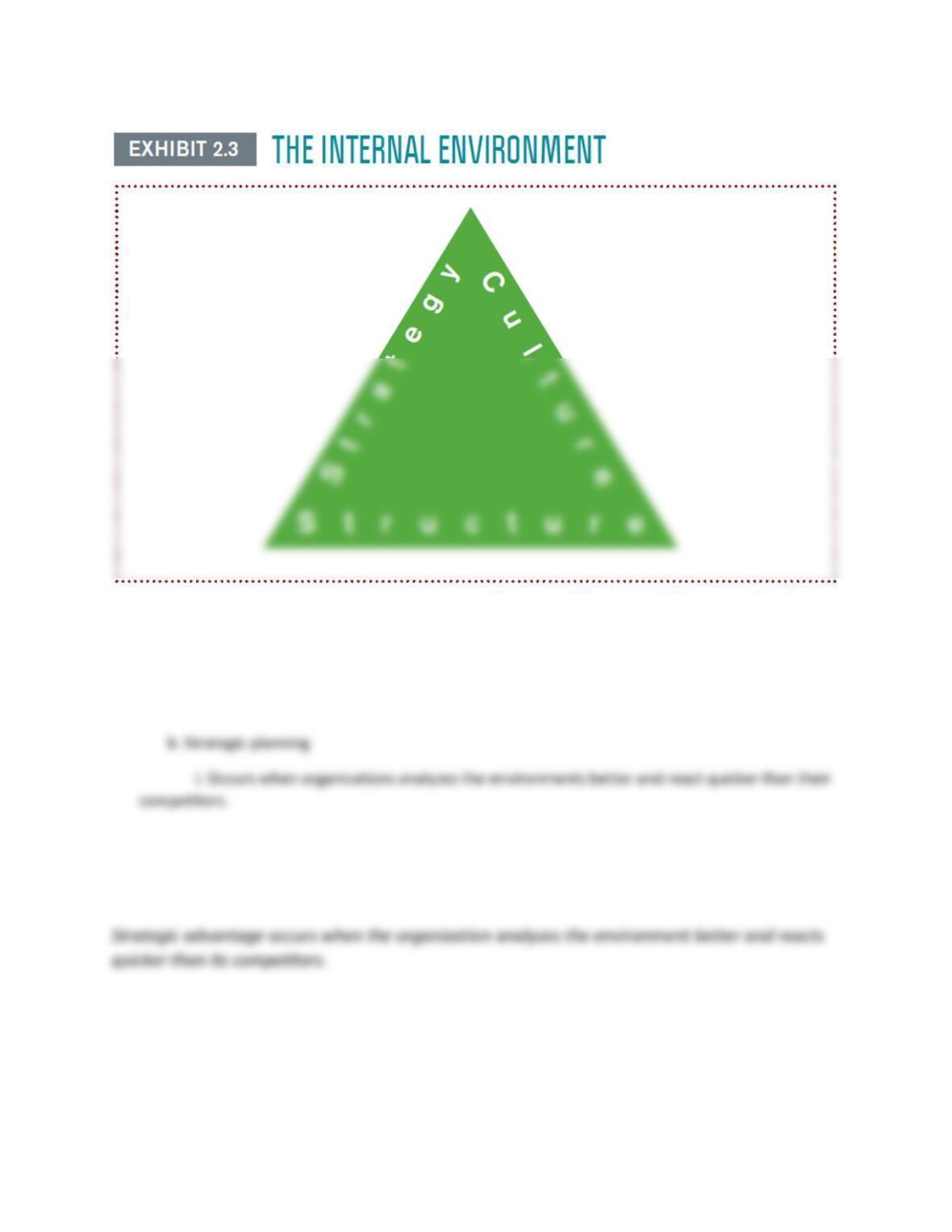
IV. Internal Influences Managers Can Control
Lecture Notes
Lussier, Human Resource Management, Third Edition
SAGE Publishing, 2018
V. Strategy and Strategic Planning
a. Strategy
i. Looks at the external environment and the internal (organizational) environment to
create strategic advantages.
Strategy is a plan of action to achieve a particular set of objectives.
It looks at the external environment and the internal (organizational) environment in order to
create strategic advantage.
VI. Three Strategic Questions
These questions may appear simplistic, but they are the essence of business success:
1. What is the present situation?
Lecture Notes
Lussier, Human Resource Management, Third Edition
SAGE Publishing, 2018
2. Where do we want to go?
3. How do we plan to get there?
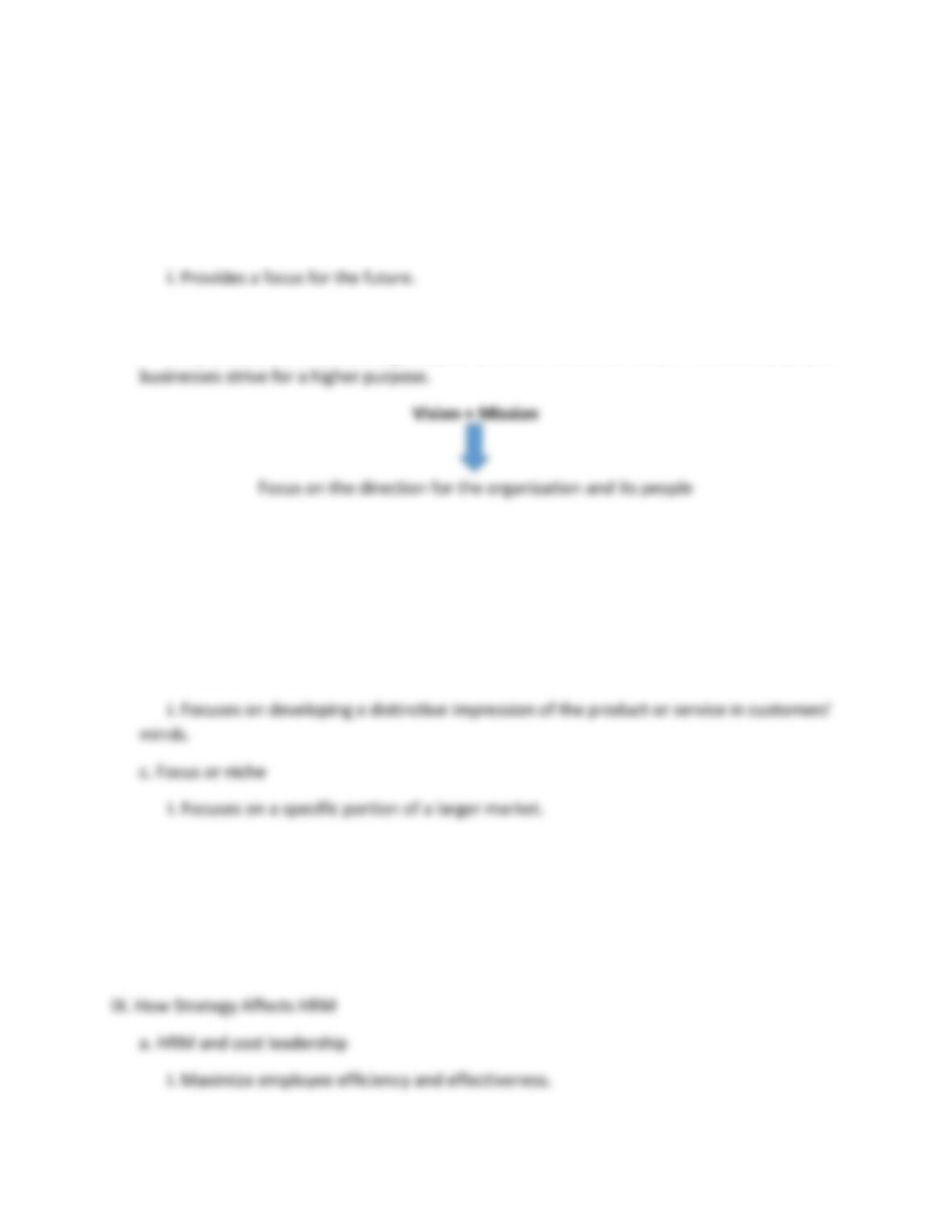
VII. Vision and Mission
a. Vision
b. Mission
i. Expectations of what the organization will do to realize the vision. The most successful
VIII. Types of Strategies
a. Cost leadership
i. Focuses on lowering organizational costs required to create products or services.
b. Broad differentiation
HRM and cost leadership—maximize employee efficiency and effectiveness through highly
specialized jobs that require people to repeat the same task–
HRM and differentiation—maximize employee flexibility and adaptability through jobs that
require cross-functional teams to innovate and try new processes in uncertain environments.
Lecture Notes
Lussier, Human Resource Management, Third Edition
SAGE Publishing, 2018
ii. Highly specialized jobs.
Iii. Requires employees to repeat the same task.
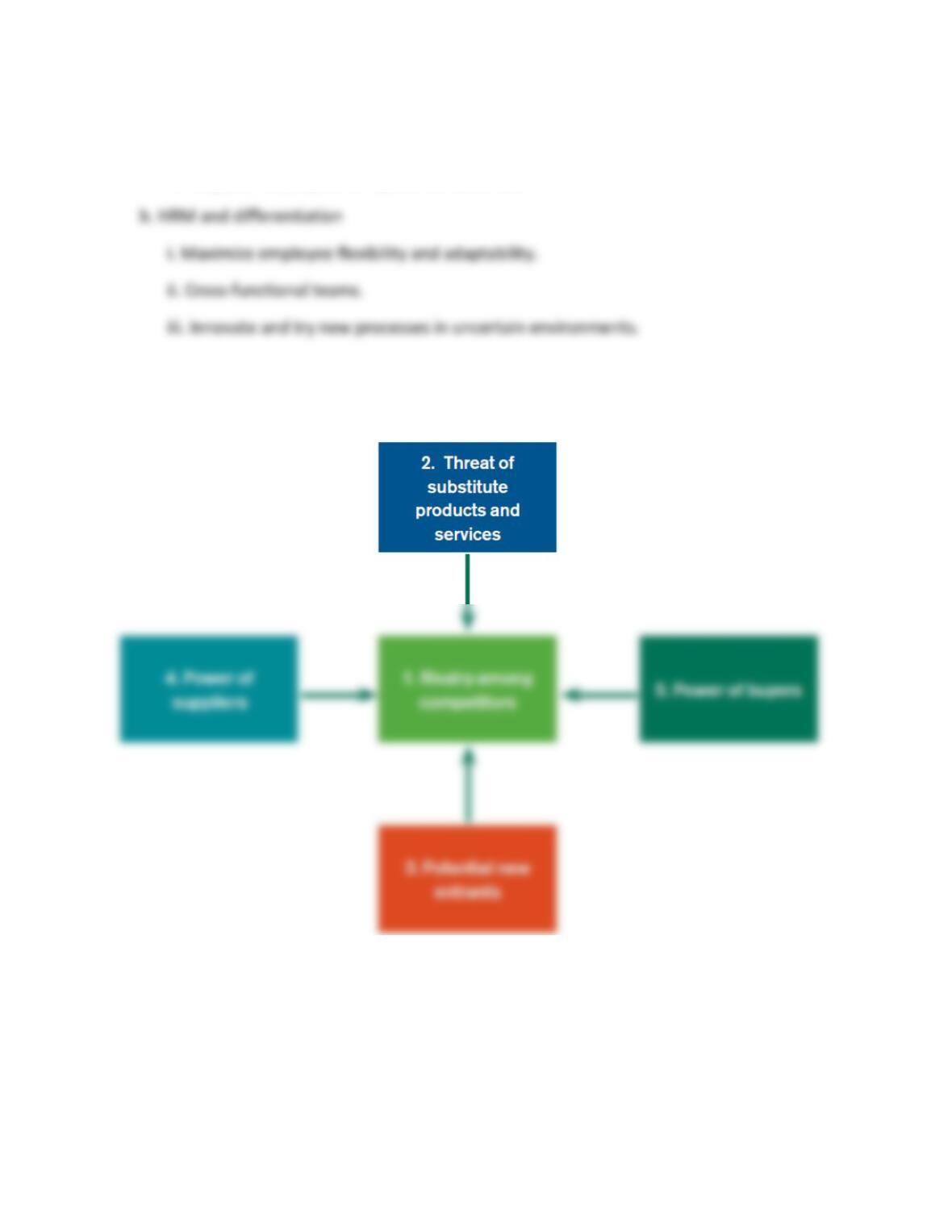
X. Michael Porter’s Five-Forces Competitive Analysis
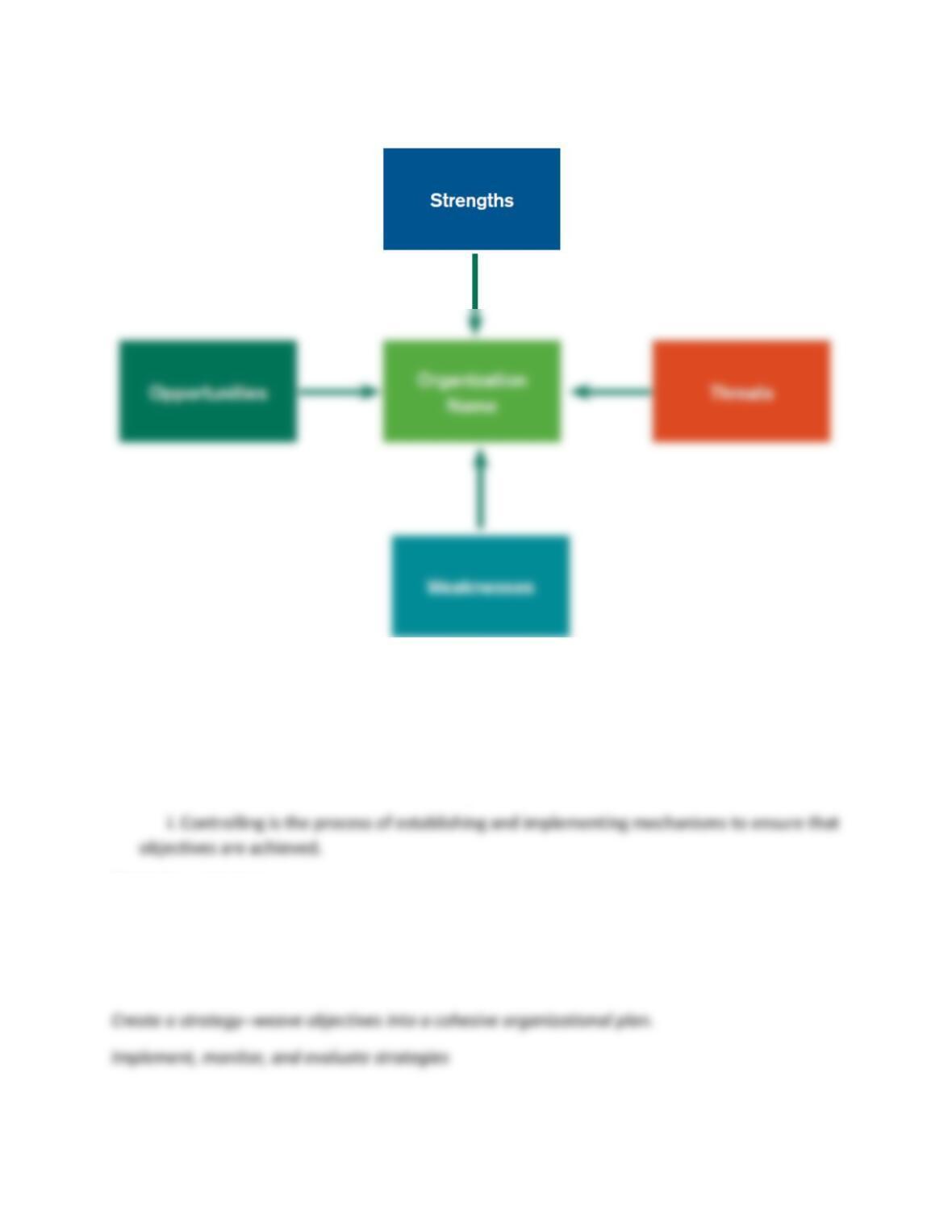
X. SWOT Analysis
Lecture Notes
Lussier, Human Resource Management, Third Edition
SAGE Publishing, 2018
XI. Designing a Strategy
a. Set objectives
b. Create a strategy
c. Implement, monitor, and evaluate strategies
Designing a strategy
Set objectives
Objectives state what is to be accomplished in singular, specific, and measurable terms with a
target date.
Lecture Notes
Lussier, Human Resource Management, Third Edition
SAGE Publishing, 2018
Controlling is the process of establishing and implementing mechanisms to ensure that
objectives are achieved. What gets measured and rewarded gets done!
XII. How HR Promotes Strategy
a. Through employees
i. Recruiting
b. Through the organization
i. Evaluating objectives and company characteristics
XIII. Organizational Structure
a. Determines how an organization groups its resources to accomplish its mission.
i. Complexity: degree of vertical, horizontal, and spatial differentiation within the
organization.
The best structure is one that allows the firm to marshal its resources and implement its
strategies successfully.
XIV. How Structure Affects Employee Behavior and HRM
a. Employee behavior
Lecture Notes
Lussier, Human Resource Management, Third Edition
SAGE Publishing, 2018
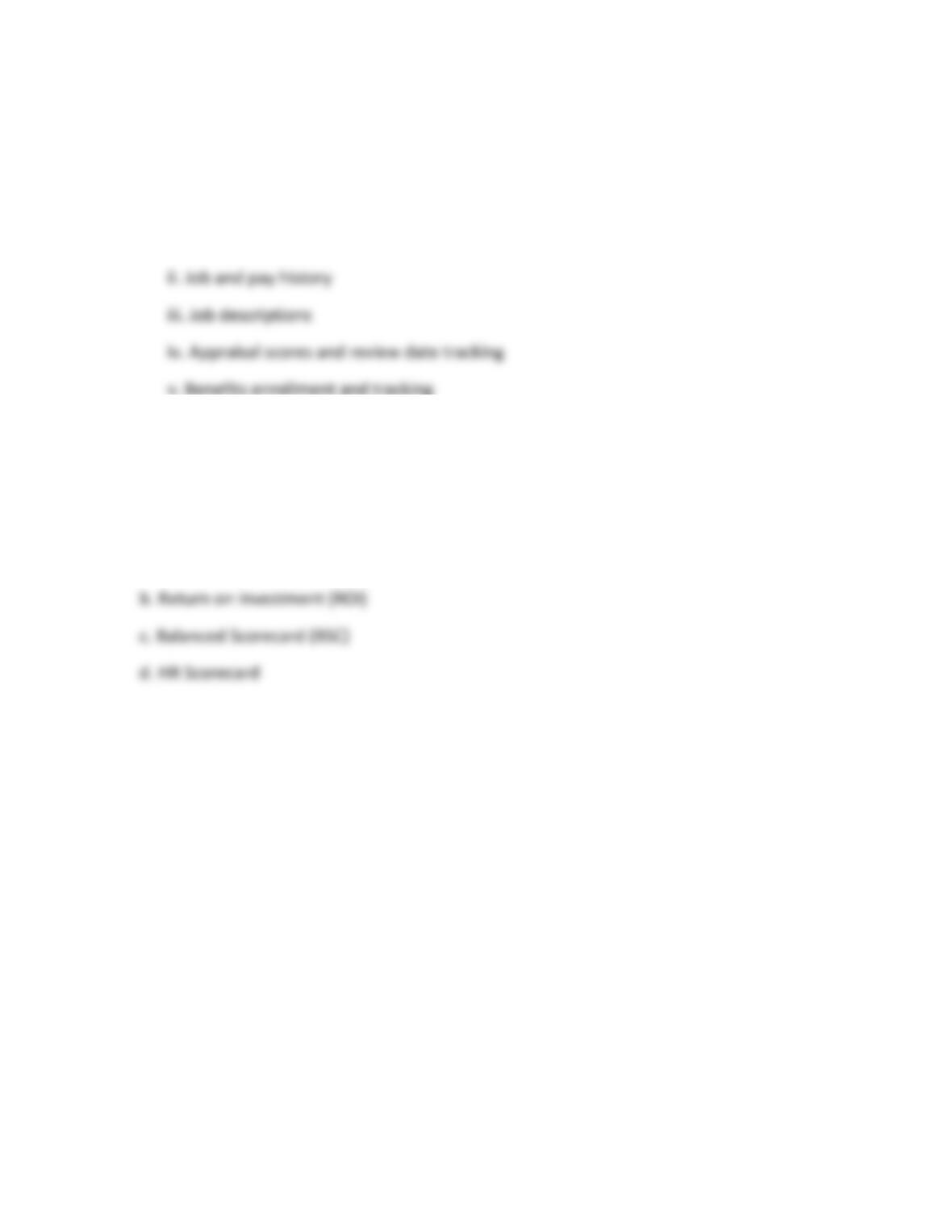
XV. Organizational Culture
a. Employees’ shared values, beliefs, and assumptions about appropriate behavior.
Refers to members’ shared values, beliefs, and assumptions about appropriate behavior. The
role of Human Resources is not to dictate and impose cultural values but to redefine and shape
the culture of an organization.
It affects how and why employees do what they do, because individuals typically adapt their
actions to conform to those that the culture values.
XVI. Culture Artifacts and Levels of Culture
Lecture Notes
Lussier, Human Resource Management, Third Edition
SAGE Publishing, 2018
XVII. Human Resource Information Systems (HRIS)
a. HRIS are database management systems that manage and manipulate data that influence
organizational performance, like:
i. Attendance and leave tracking
v. Benefits enrollment and tracking
Also used when considering promotions, transfers, team assignments, and other daily
activities.
XVIII. Measurement Tools for Strategic HRM
a. Economic Value Added (EVA)