Lecture Notes
Lussier, Human Resource Management, Third Edition
SAGE Publishing, 2018
Lecture Notes
Chapter 13: Employee Benefits
Learning Objectives
After studying this chapter, you should be able to do the following:
13–2 Identify and summarize the major components of OASDI and the Medicare program.
13-4 Briefly describe the main categories of voluntary benefits available to organizations.
Annotated Chapter Outline
I. Overview of Benefits Management
a. Benefits are indirect compensation of value to employees.
b. Some are mandatory due to federal and state statutes. Others are optional based on
desires of firm.
c. According to the U.S. Bureau of Labor Statistics, benefits average roughly 30% of total
employee compensation cost.
Lecture Notes
Lussier, Human Resource Management, Third Edition
SAGE Publishing, 2018
II. Strategic Value of Benefits Programs
a. Because people demand more and better benefits to match how they live, companies
add new benefits.
b. Requires HR to spend time monitoring benefits’ cost and value.
c. Benefits provide incentives to employees to continue working for firm because they are
cared for.
III. Why Benefits Grow as a Portion of Overall Compensation
a. Tax advantages—many benefits are deductible expenses.
b. Statutory requirements—unemployment insurance, worker’s compensation insurance,
and FMLA are government mandated employer expenses.
Growth in the cost of providing employee benefits has occurred for a number of reasons. Let’s
take a quick look at some of the biggest reasons for growth in benefits programs in the United
States and worldwide.
Tax advantages. One reason benefits are growing is that there are federal and sometimes state
tax advantages for companies that provide them. If the company provides its employees with a
benefit, the firm can write off all or part of the cost of providing the benefit. Sometimes the
Lecture Notes
Lussier, Human Resource Management, Third Edition
SAGE Publishing, 2018
such as unemployment, workers’ compensation, family and medical leave, and the Affordable
Care Act or ACA (we will discuss each of these shortly). Each time Congress or the states require
employers to provide a new benefit, the cost to employers for providing benefits goes up.
Buying in bulk. Virtually everyone now knows that if you buy things in larger quantities, you get
them cheaper (think Sam’s Club or Costco). Buying benefits in bulk works the same way. If
companies buy benefits in bulk for employees, it is cheaper than if the employee buys the same
benefits individually.
As you can see, there are a variety of reasons why the costs of benefits have grown in the last 80
years. And once a benefit becomes part of the employee’s compensation package, it is very hard
to delete that benefit in the future. We consider them an entitlement (Chapter 12)—we feel that
the company owes us this benefit. So the cost of providing benefits almost never goes down; it
just keeps going up. However, some companies, especially companies with fewer than 50
IV. Considerations in Providing Benefits Programs
a. Amounts
i. Affordability to the firm.
b. Mix
Lecture Notes
Lussier, Human Resource Management, Third Edition
SAGE Publishing, 2018
i. Various mixes include retirement benefit, health insurance, life and disability
insurance, dental care, public transportation vouchers, and so on.
c. Flexibility
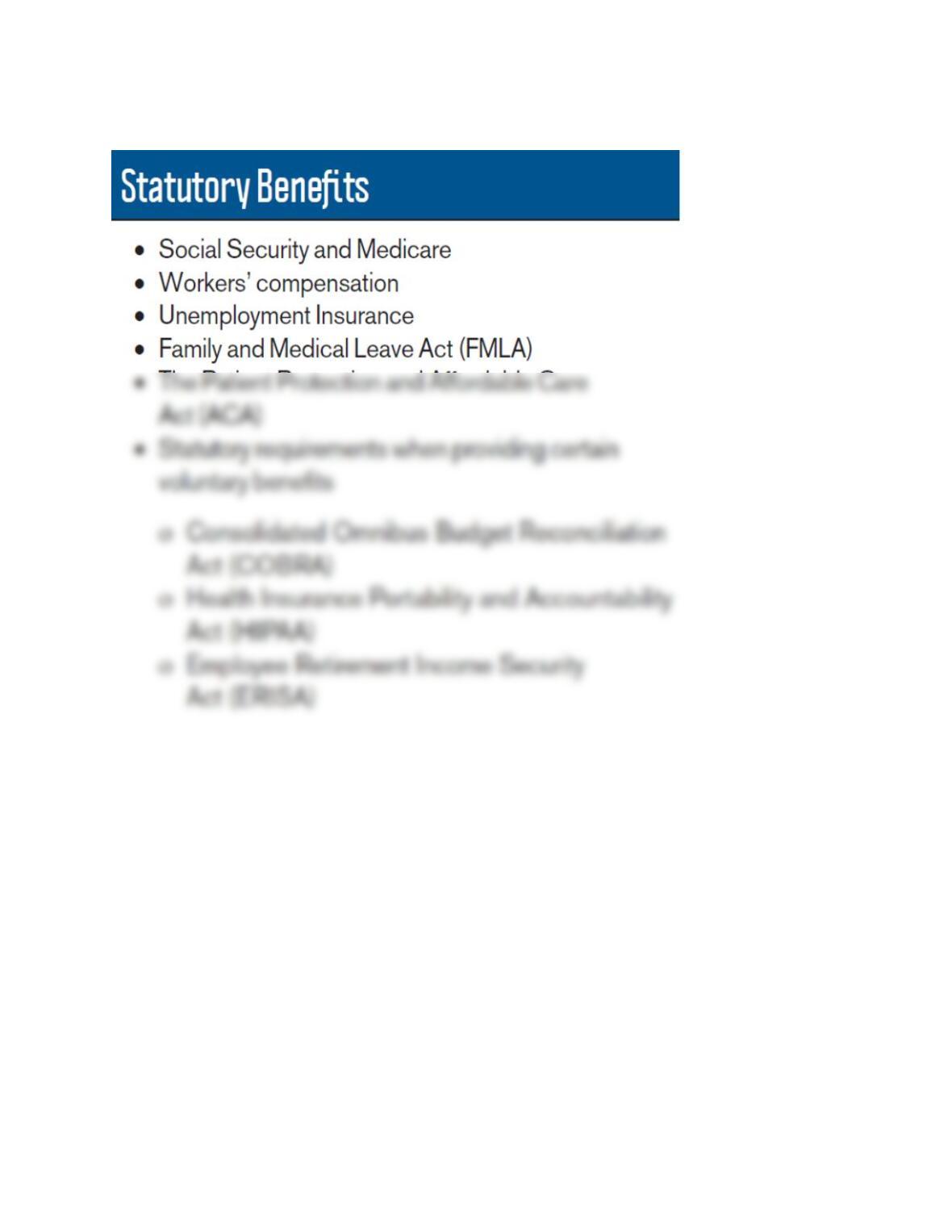
V. Statutory Benefits
a. Social security
i. Old age, survivors, and disability insurance (OASDI) programs.
b. Retirement
c. Disability and survivor benefits
d. Medicare
i. National healthcare program for elderly or disabled.
e. Workers’ compensation
i. Provides medical treatment and temporary payments to employees who are
injured on job or become ill because of job.
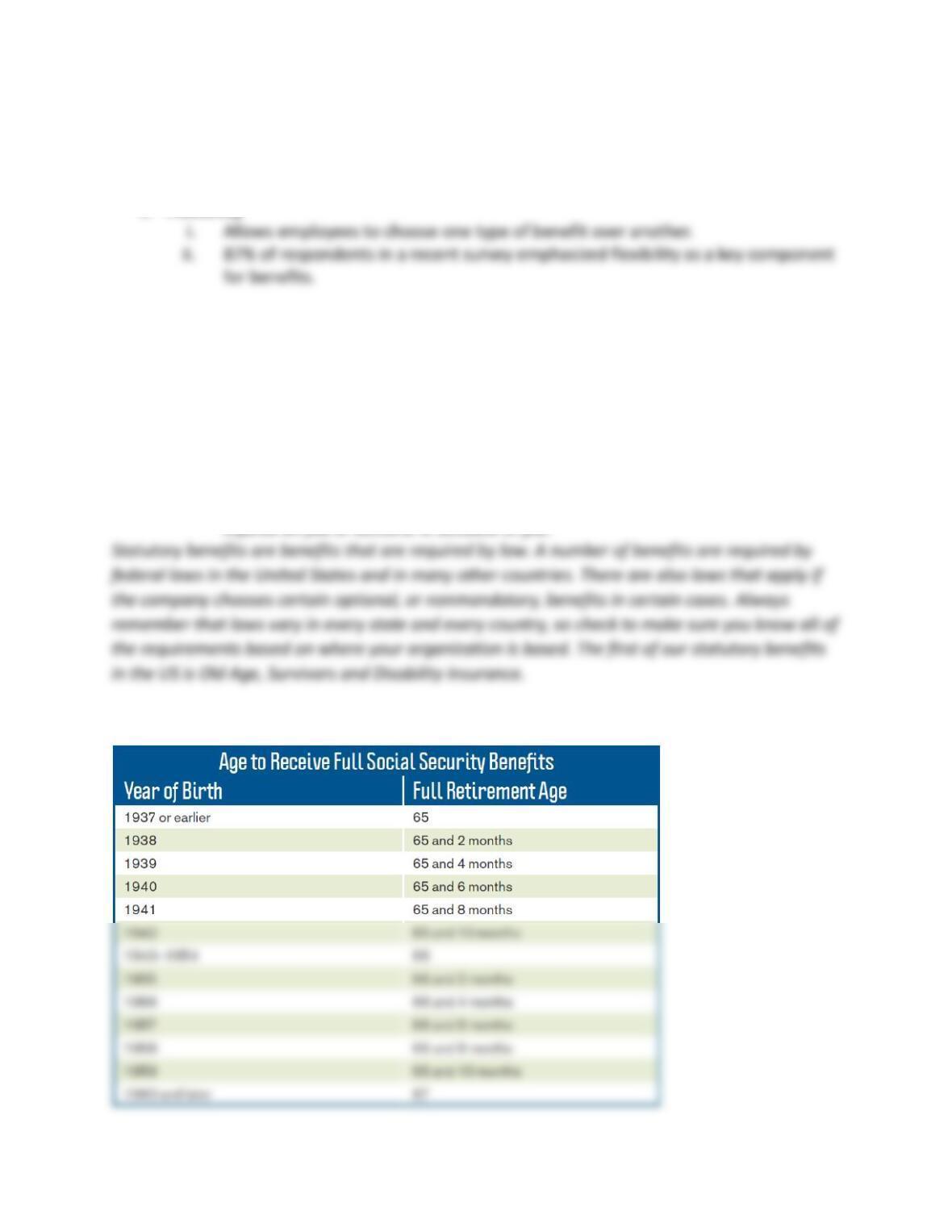
VI. Full Social Security Retirement Age
Lecture Notes
Lussier, Human Resource Management, Third Edition
SAGE Publishing, 2018
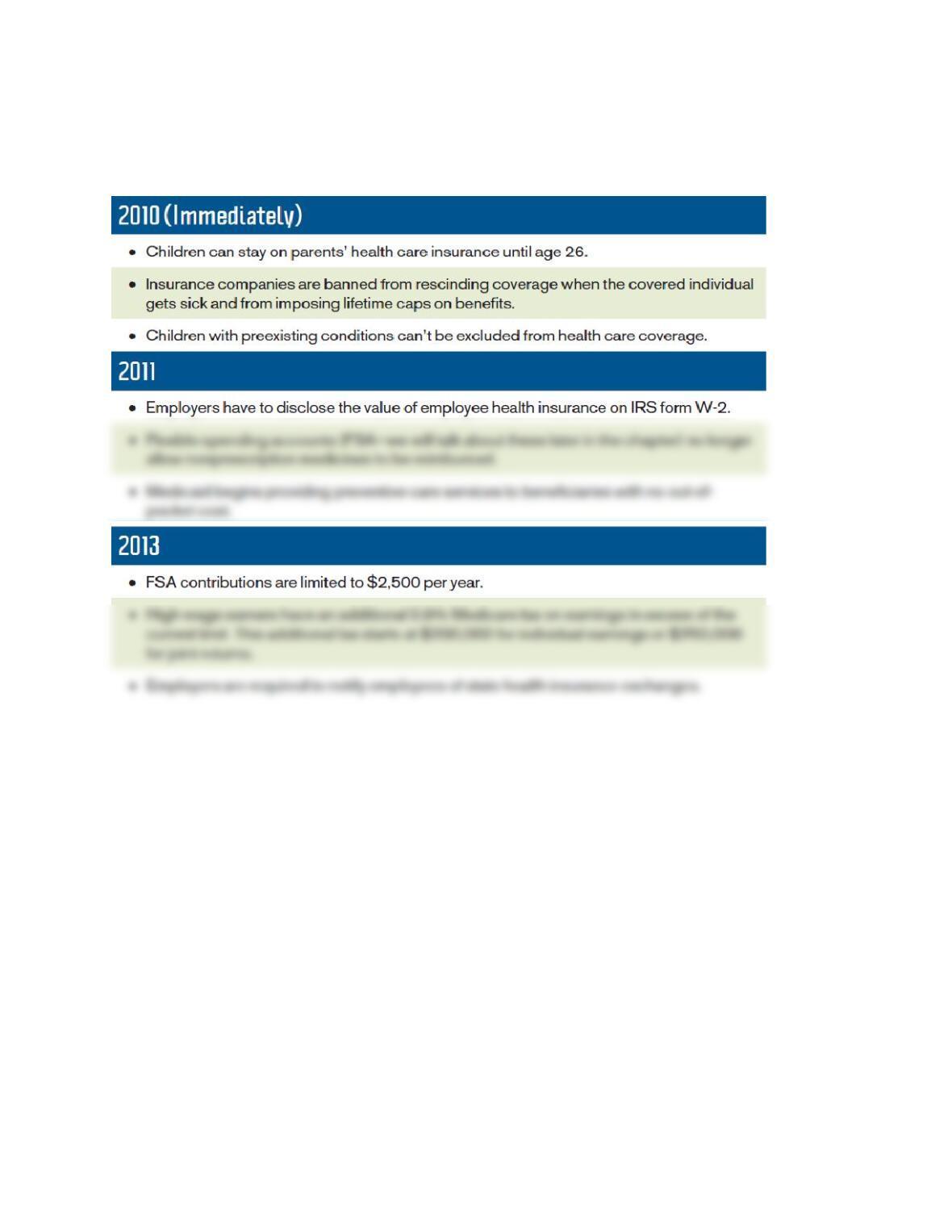
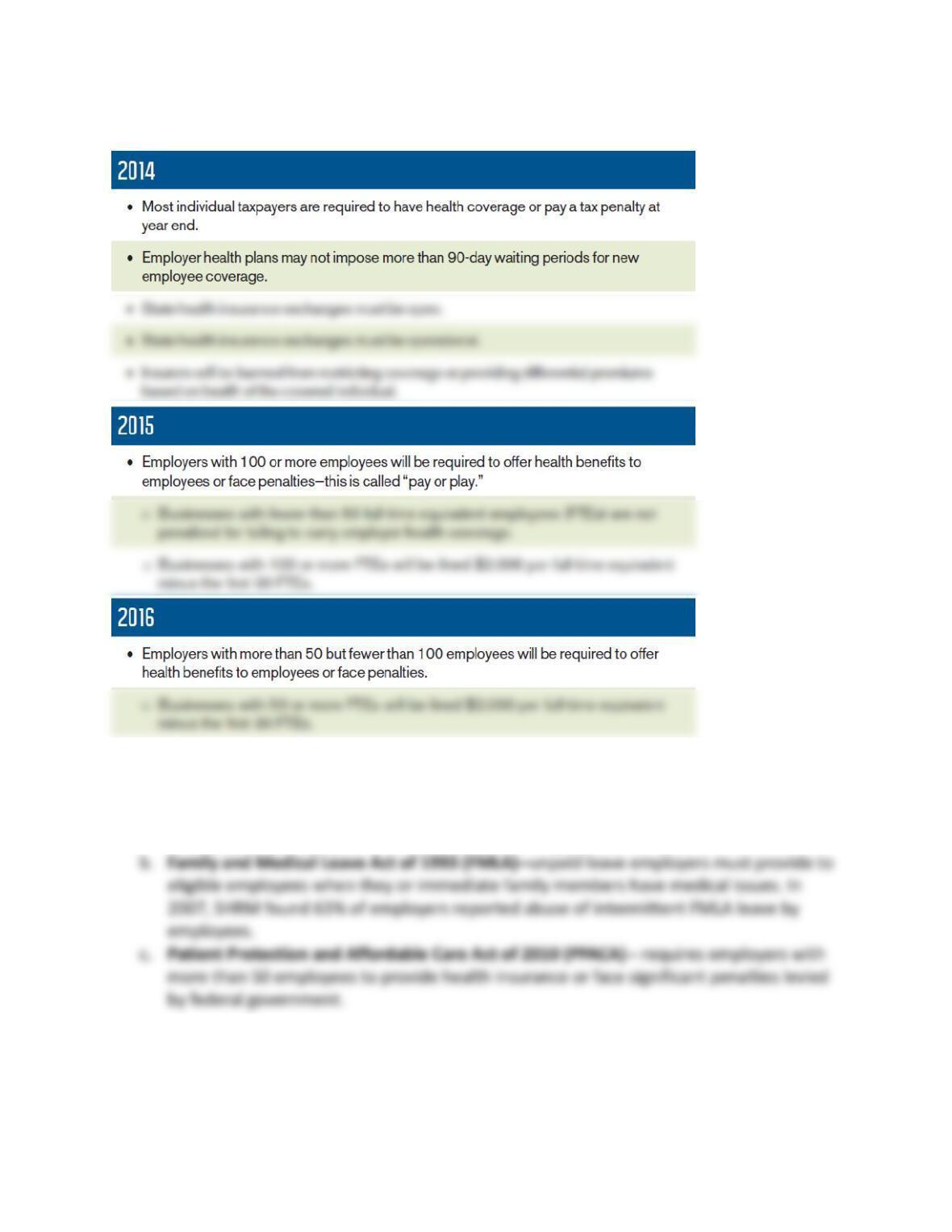
VII. Affordable Care Act
Lecture Notes
Lussier, Human Resource Management, Third Edition
SAGE Publishing, 2018
VIII. Statutory Benefits
a. Unemployment Insurance—federal program managed by states. Provides payments for a
fixed period to employees who lost their jobs through no fault of their own.
IX. Consolidated Omnibus Budget Reconciliation Act of 1985 (COBRA)
a. Requires employers to offer temporary health insurance to individuals who leave their
employment for at least 18 months and up to 36 months.
Lecture Notes
Lussier, Human Resource Management, Third Edition
SAGE Publishing, 2018
X. Health Insurance Portability and Accountability Act of 1996 (HIPAA)
a. If an employee had group health insurance at a previous job and if new employer has
health care coverage, the firm is required to provide opportunity to participate in their
health insurance plan.
XI. Employee Retirement Income Security Act of 1974 (ERISA)
a. Major provisions:
i. Eligibility—available to employees over 21 who have worked in firm for one year.
ii. Vesting—maximum time a firm can retain company contributions to employee’s
account.
Vesting. A second major provision of ERISA is the vesting rules. Vesting provides for a
maximum amount of time beyond which the employee will have unfettered access to their
retirement funds, both employee contributions and employer contributions. Most
retirement plans today take in contributions from both the employer and the employee.
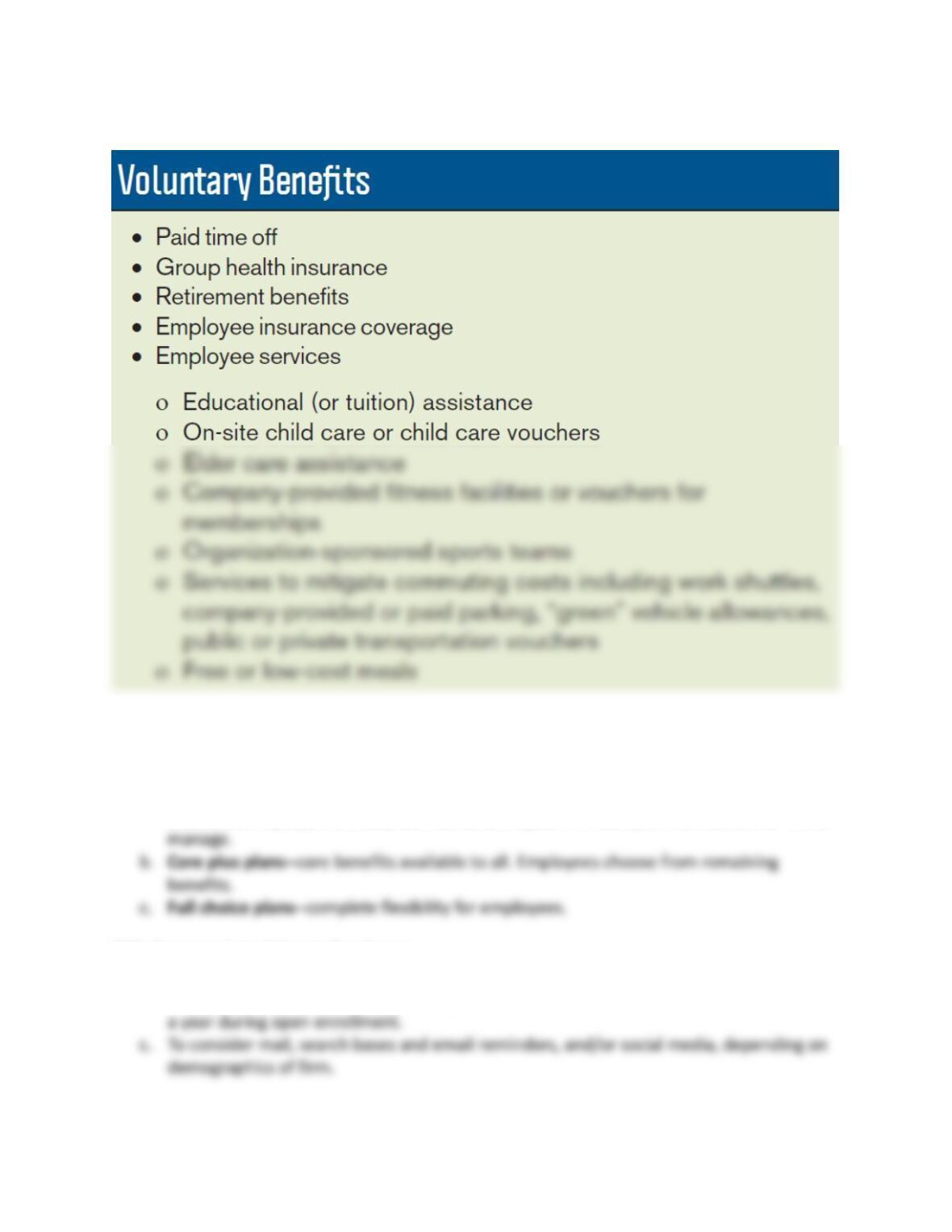
XII. Voluntary Benefits
a. Paid Time Off or PTO—average cost of is approximately US$1 for every $10 in direct
wages.
b. Vacation or Annual Leave—average vacation time in 2007 was 15 days.
XIII. Voluntary Benefits—Group Health Insurance
a. Traditional health care plans typically cover a set percent of fees for medical services.
b. Health maintenance organization (HMO)—managed care that provides health
maintenance services and medical care.
Lecture Notes
Lussier, Human Resource Management, Third Edition
SAGE Publishing, 2018
XIV. Utilization Analysis
a. Review of program cost and comparison of costs with rate of program’s usage by
members of company.
XV. Retirement Benefits: Defined Benefit Plan
a. Not mandatory, but if provided, firm must comply with ERISA provisions.
b. Employer-provided benefit plans are available to 74% of full-time workers and 39% of
part-time workers in private industry.
c. Defined benefit plan provides retiree with a specific amount and type of benefit that will
be available when employee retires.
According the Bureau of Labor Statistics, employer-provided retirement plans are available to
77% of all full-time workers and 38% of part-time workers in private industry. They are not
XVI. Retirement Benefits: Defined Contribution Plan
a. Defined contribution plan identifies only amount of funds that go into a retirement
account, not what employee will receive upon retirement.
Defined benefit versus defined contribution plans. A defined benefit plan provides the retiree
with a specific amount and type of benefits that will be available when the individual retires.
Lecture Notes
Lussier, Human Resource Management, Third Edition
SAGE Publishing, 2018
XVII. 401k and 403b Plans
a. 401k retirement plan—savings investment account for individual employees of
corporations.
XVIII. Retirement Benefits
a. Matching contributions—many employers that offer a 401k or 403b provide matching
contributions up to a set maximum.
XIX. Employee Insurance Coverage
a. Life insurance
b. Disability insurance—short-term and/or long-term protection
c. Life and health insurance
XX. Employee Benefits
Lecture Notes
Lussier, Human Resource Management, Third Edition
SAGE Publishing, 2018
Lecture Notes
Lussier, Human Resource Management, Third Edition
SAGE Publishing, 2018
XXI. Administration of Benefits
Flexible benefit (cafeteria) plans—employees choose from multiple options.
a. Modular plans—employees choose benefits from modules, each with a different mix of
insurance, employee services, and retirement options. These plans are easiest for HR to
XXII. Communicate Value to Employees
a. To understand true cost and value of benefits employees receive from firm.
b. To provide information through multiple communication channels more often than once