
Lecture Notes
Lussier, Human Resource Management, Third Edition
SAGE Publishing, 2018
Lecture Notes
Chapter 11: Compensation Management
Learning Objectives
After studying this chapter, you should be able to do the following:
11–2 Identify the seven basic issues that make up the organization’s compensation
strategy.
11–4 Briefly describe the concept of comparable worth and highlight the other legal
issues in compensation.
11–5 Identify the three types of job evaluation and discuss whether they are more
objective or subjective in form.
Annotated Chapter Outline
I. Compensation
a. Total of an employee’s pay and benefits.
Lecture Notes
Lussier, Human Resource Management, Third Edition
SAGE Publishing, 2018
b. Costs are frequently 65–70% of total production costs in today’s firms.
c. Affects process of attracting and retaining employees.
i. Firms should design system to meet various needs of employees.
II. Compensation System
a. Includes anything that employees may value and desire and that employers can offer in
exchange.
b. Compensation components
i. Rewards that can be classified as monetary and in-kind payments.
III. Types of Compensation
a. Base pay
i. Wages are paid on an hourly basis. Salary is based on a time period.
b. Wage and salary add-ons
i. Includes overtime pay, shift differential, premium pay for working weekends
1. Base pay. This is typically a flat rate, either as an hourly wage or salary. Many employees
consider this to be the most important part of the compensation program, and it is therefore
a major factor in their decision to accept or decline the job.
2. Wage and salary add-ons. This includes overtime pay, shift differential, premium pay for
working weekends and holidays, and other add-ons.
3. Incentive pay. Also called variable pay, incentive pay is pay for performance, and it
commonly includes items such as piece work in production and commissioned sales. Pay for
performance, especially in the form of short-term incentive pay, continues to increase as a
Lecture Notes
Lussier, Human Resource Management, Third Edition
SAGE Publishing, 2018
4. Benefits. This is indirect compensation that provides something of value to the employee.
You need to include benefits in your system, because they cost the company a lot of money
even though they aren’t direct compensation to the employee. Benefits are expensive
costing employers 25–35% of total employee compensation. Benefits may include health
insurance; payments to employees if they are unable to work because of sickness or
IV. Direct Versus Indirect Compensation
a. Direct compensation
i. Base pay, salary add-ons, and incentive pay—all of which appear in a pay check.
b. Indirect compensation
i. Provides something of value to employee (i.e., benefits), such as sickness and
accident protection, retirement pay contributions, cafeteria services, and
company physicals.
V. Motivation and Compensation Planning
a. Goal of compensation
i. To motivate employees to perform what the firm needs.
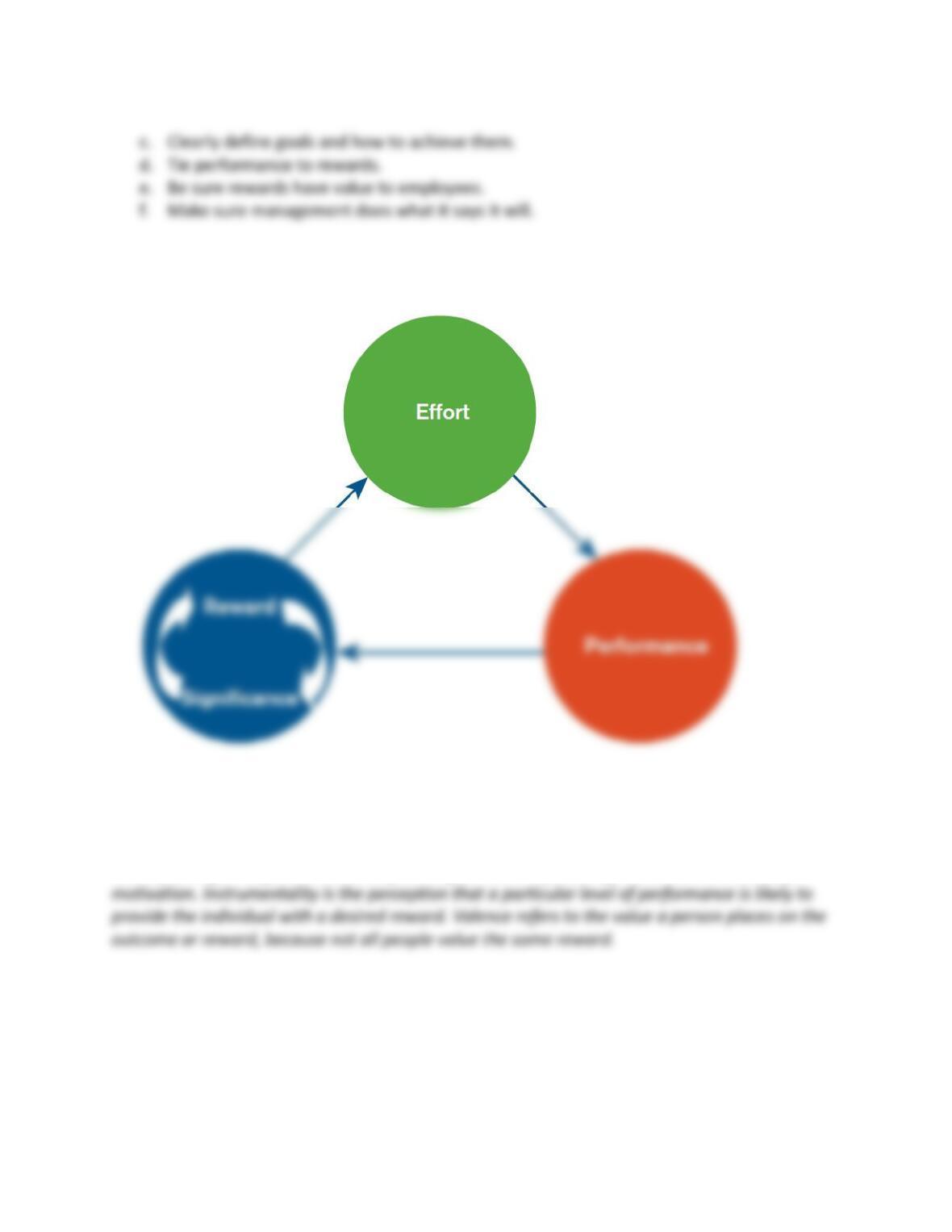
b. Expectancy theory
i. Developed by Victor Vroom at Yale. He postulated that employees believe
rewards for accomplishing a task are worth the effort.
Lecture Notes
Lussier, Human Resource Management, Third Edition
SAGE Publishing, 2018
VI. Expectancy Theory and Compensation
Expectancy theory is based on Victor Vroom’s formula: Motivation = Expectancy
Instrumentality
Valence. Vroom, V. H. (1964). Work and Motivation. New York: John Wiley &
Sons.
Expectancy is the person’s perception of their ability to accomplish or probability of
accomplishing an objective. Generally, the higher one’s expectancy, the better the chance for
VII. Motivation and Compensation Planning
a. Equity theory
i. J. Stacy Adams developed that employees are motivated when ratio of their perceived
outcomes to inputs is at least roughly equal to other referent individuals.
ii. Employees who perceive being under-rewarded decrease inputs and increase outcomes.
iii. Employees who perceive being over-rewarded are not usually bothered.
Lecture Notes
Lussier, Human Resource Management, Third Edition
SAGE Publishing, 2018
iv. Employees who perceive being equitably rewarded will continue to perform if content
that their incomes and outputs are in balance.
1. Managers should be aware that equity is based on perception, which may not be correct.
Possibly, managers can create equity or inequity, so the manager’s role is to be the arbiter of
2. Rewards should actually be equitable. When employees perceive that they are not
3. High performance should be rewarded, but employees must understand the inputs
needed to attain certain outcomes. When using incentive pay, managers should clearly specify
the exact requirements to achieve the incentive. As discussed in Chapter 8, a manager should be
able to state objectively why one person got a higher merit raise than another did.
VIII. Learning Theories
a. Positive reinforcement
i. If employees get something they want in return for doing what firm needs, they are
more likely to continue doing the same.
VIX. Organizational Philosophy → Decisions
a. Ability to pay
i. What is your company’s pay policy? Are employees viewed as assets or
investments?
Lecture Notes
Lussier, Human Resource Management, Third Edition
SAGE Publishing, 2018
iv. Skill-based or competency-based?
v. At, above, or below the Market—Efficiency Wage Theory ?
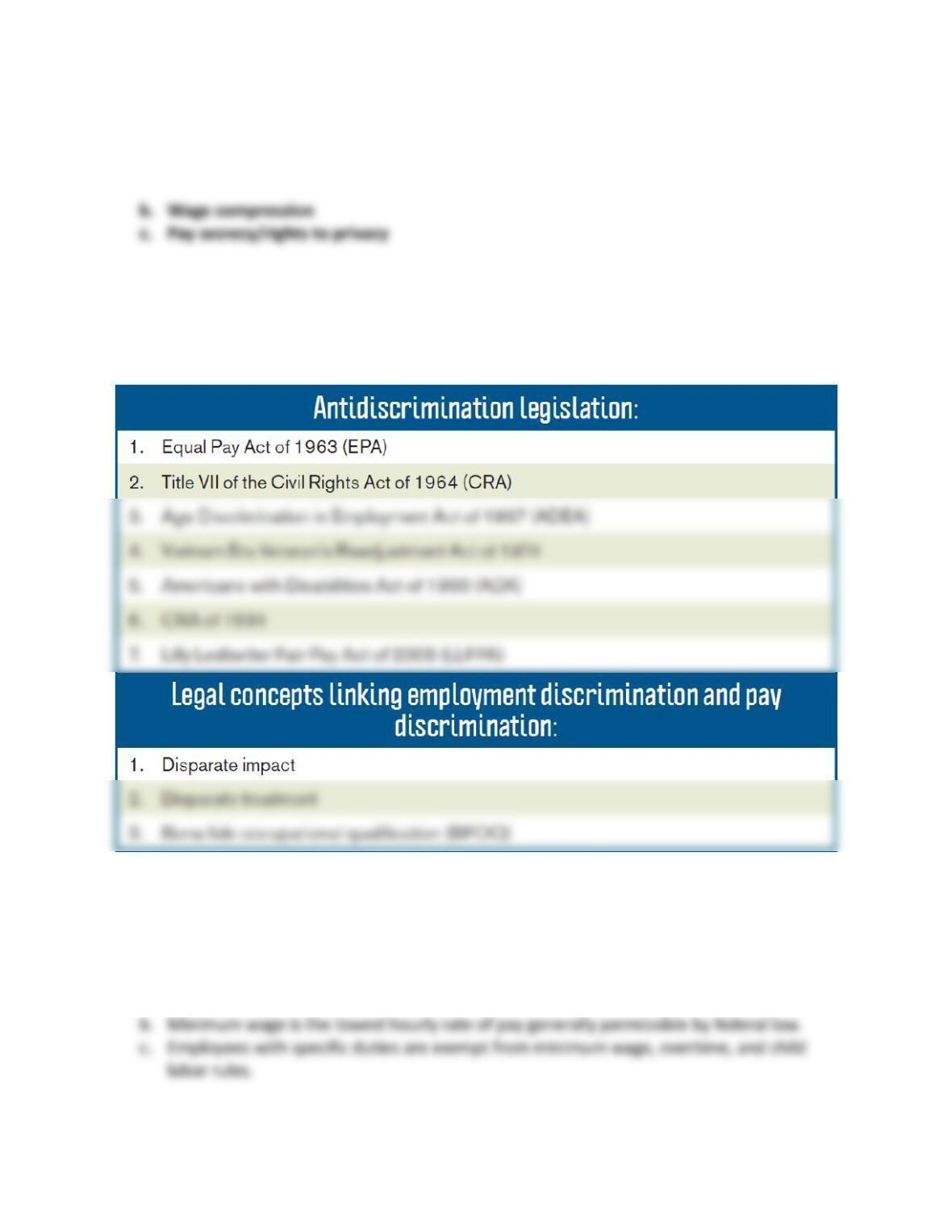
X. Legal and Fairness Issues in Compensation
a. Firms must offer equal pay for equal work unless there is a difference in productivity,
seniority, merit, or other factors “other than sex.”
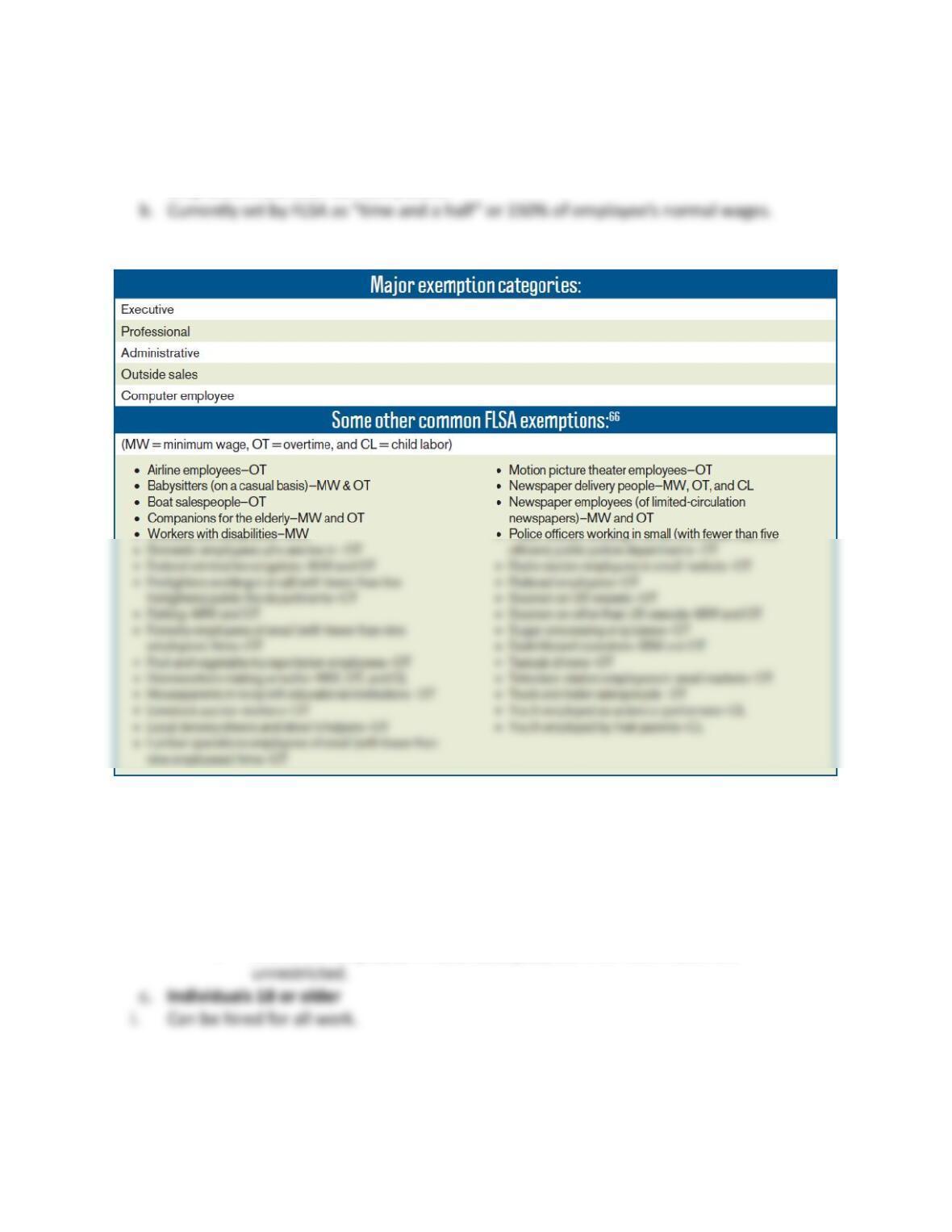
XI. Major EEO Laws and Legal Concepts
Virtually every equal employment opportunity (EEO) law identifies compensation as one of the
employment actions where discrimination is prohibited if it is based on a protected
characteristic.
XII. Fair Labor Standards Act (FLSA)of 1938 (Amended)
a. Covers minimum wage, overtime issues, and child labor rules for most U.S.-based
businesses.
Lecture Notes
Lussier, Human Resource Management, Third Edition
SAGE Publishing, 2018
XIII. Overtime
a. Federally mandated, higher-than-minimum wage, required for nonexempt employees if
they work more than 40 hours/week.
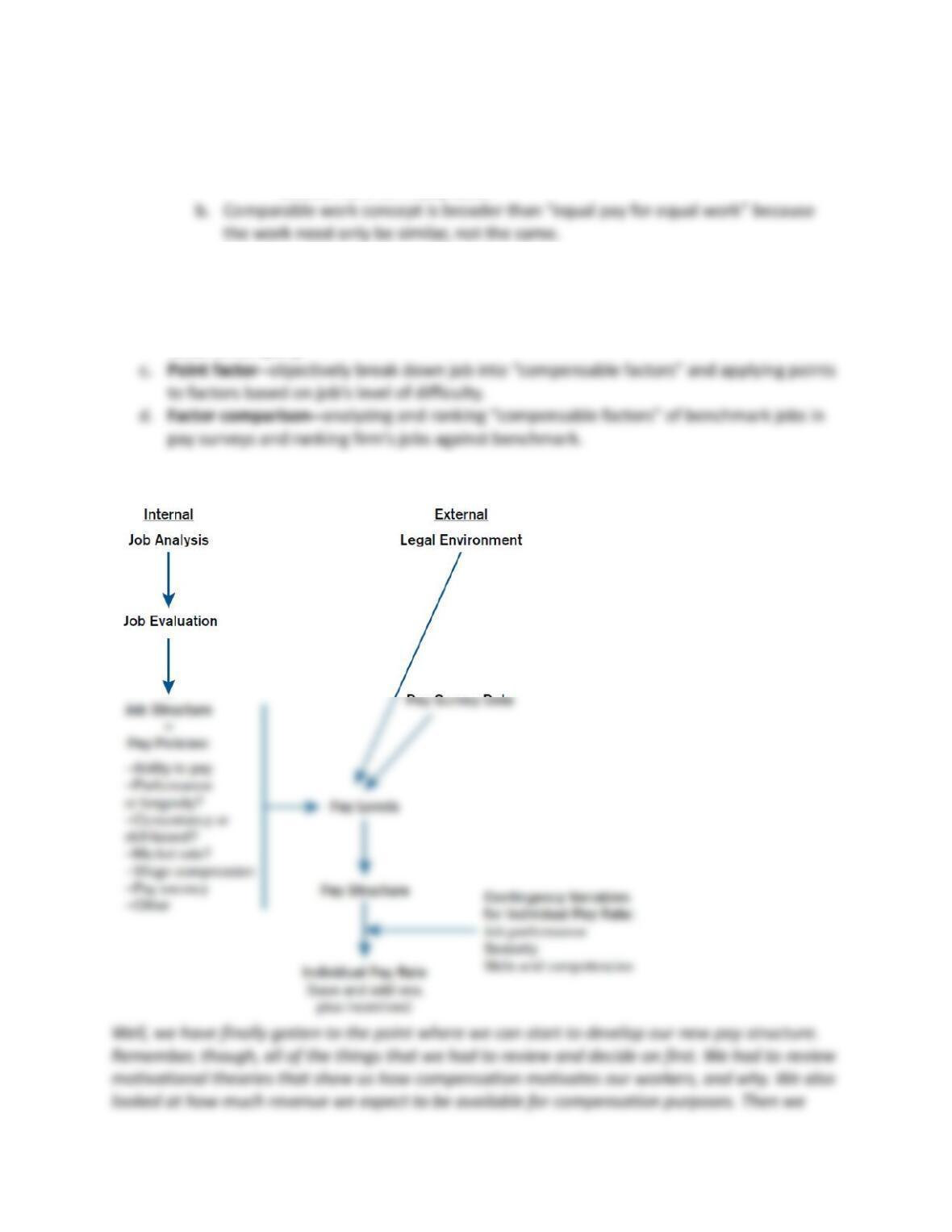
XIV. Common Exemptions
XV. FLSA and Child Labor
a. 14 and 15 year olds
i. May work outside school hours no more than “three hours on a school day, 18
hours in a school week, eight hours on a non-school day, and 40 hr in a non-
school week.” Permissible work hours are also restricted.
b. 16 and 17 year olds
i. Cannot be employed in hazardous jobs, but their work hours are
XVI. Pay Equity and Comparable Worth
a. Comparable worth
Lecture Notes
Lussier, Human Resource Management, Third Edition
SAGE Publishing, 2018
i. When jobs are distinctly different but entail similar levels of ability,
responsibility, skills, and working conditions, they are of equal value and
should have same pay scale.
XVII. Job Evaluation
a. Determining worth of each position relative to other positions.
b. Job ranking—subjectively ordering jobs from lowest to highest or vice versa in terms of
value to company.
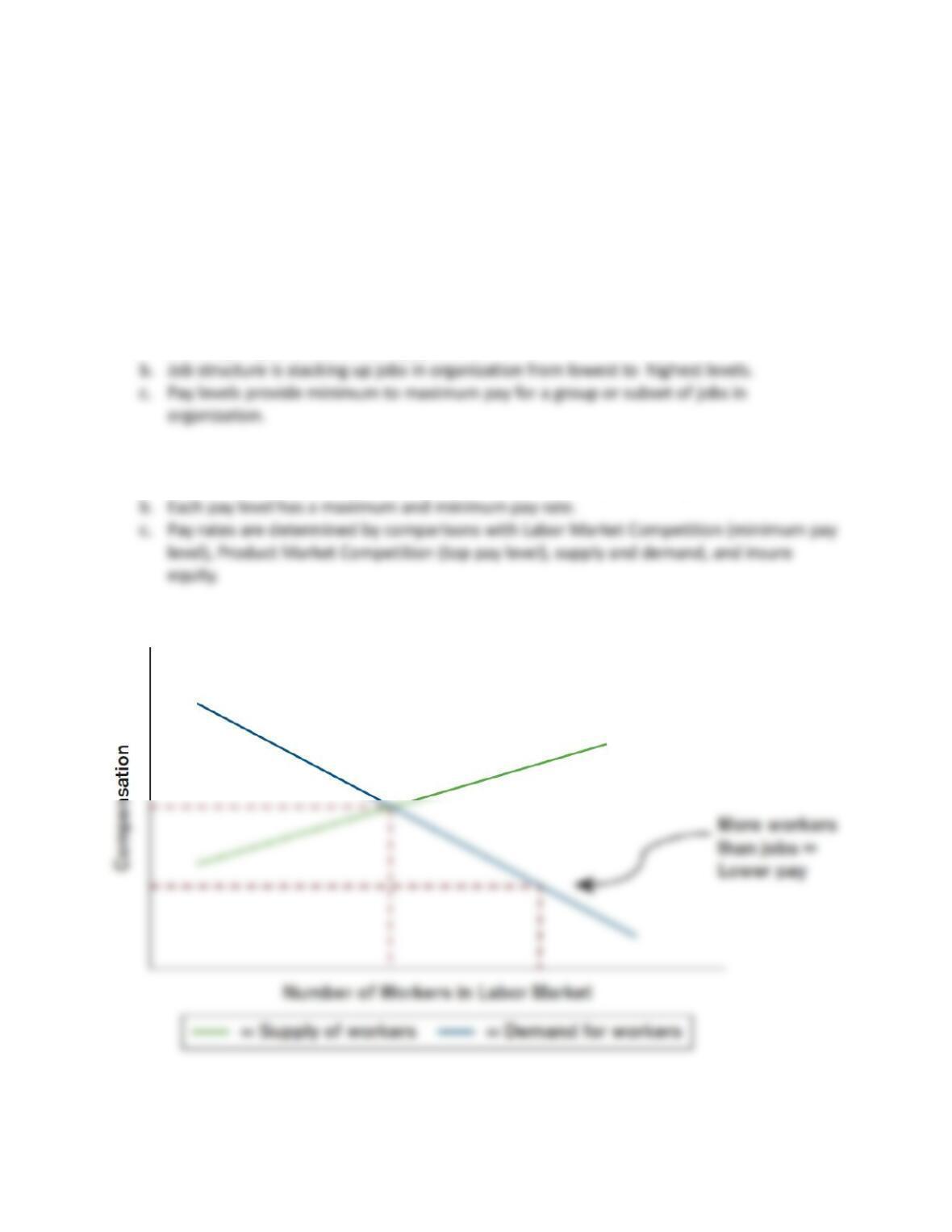
XVIII. Creation of a Pay Structure and Individual Pay Rates
Lecture Notes
Lussier, Human Resource Management, Third Edition
SAGE Publishing, 2018
reviewed each of our pay policies to make sure they were fresh in our minds so that we could
maintain consistency in our compensation system.
We also reviewed each of the major federal laws concerning compensation and equity, and we
went through the process of ensuring that our job analysis files were up-to-date. From these, we
were able to complete job evaluations of each of the jobs in the organization. We also most
likely researched external equity using one or more industry-specific pay surveys.
XIX. Job Structure and Pay Levels
a. Pay structure creates a hierarchy of jobs and their rates of pay within the organization.
Made up of job structures and pay levels.
XX. Creation of Pay Levels
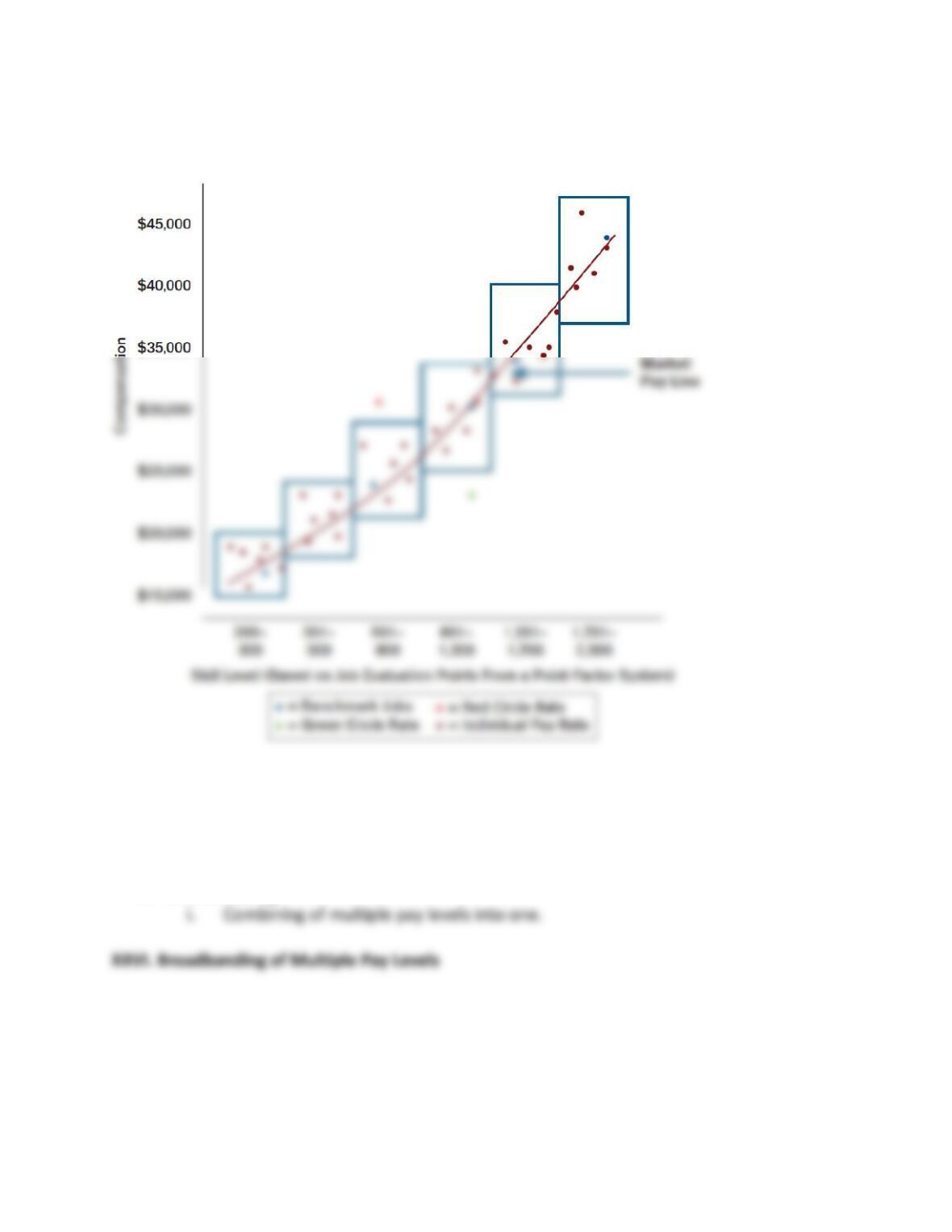
a. A single pay level (“pay grade”) is made of several to many different jobs.
XXI. Supply and Demand Curve
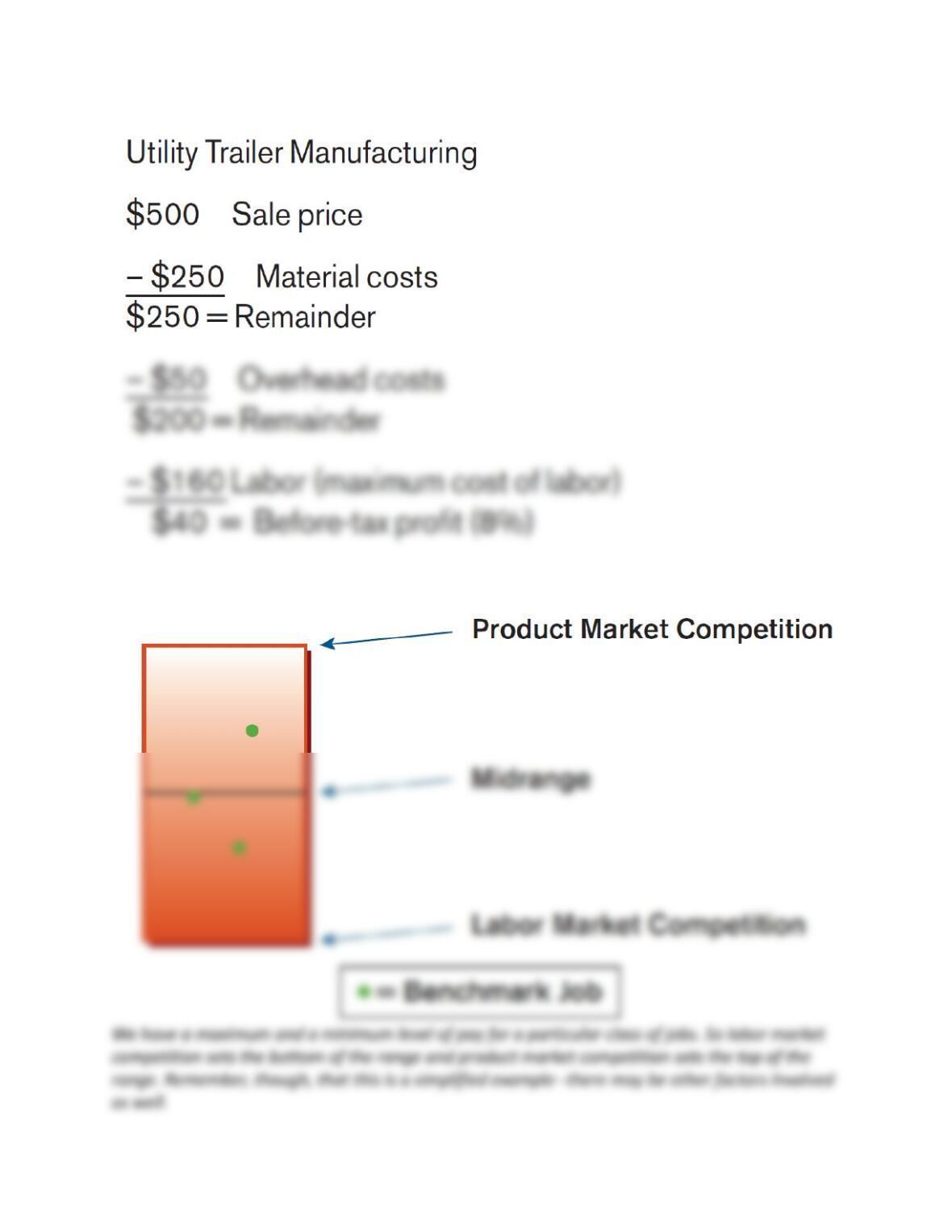
XXII. Product Market Competition Limits
Lecture Notes
Lussier, Human Resource Management, Third Edition
SAGE Publishing, 2018
XXIII. Pay Levels
Lecture Notes
Lussier, Human Resource Management, Third Edition
SAGE Publishing, 2018
XXIV. Pay Structure
XXV. Delayering and Broadbanding
a. Delayering
i. Changing company structure to rid vertical hierarchy (reporting levels). Process
of “flattening” hierarchical levels found in command and control organizational
structures.
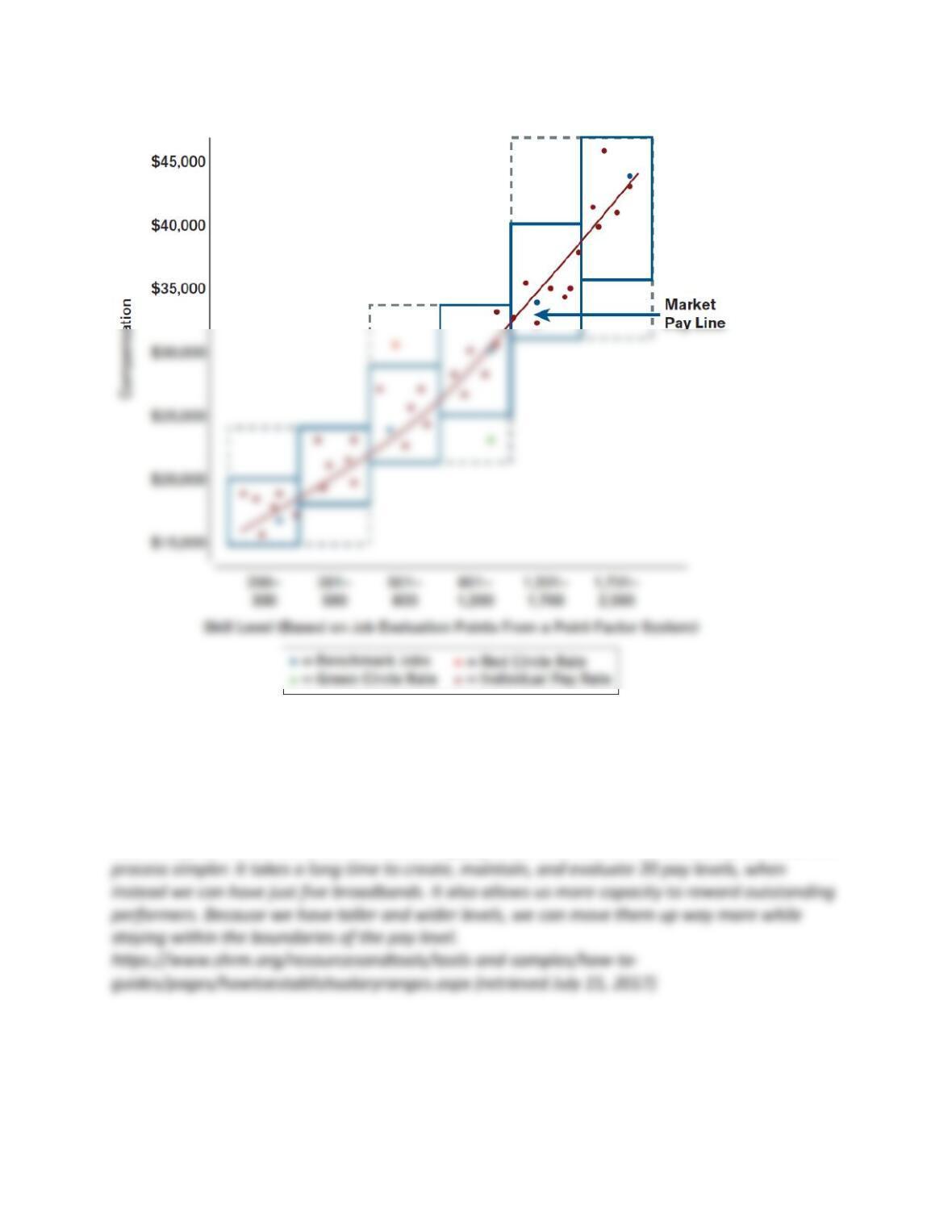
b. Broadbanding
Lecture Notes
Lussier, Human Resource Management, Third Edition
SAGE Publishing, 2018
A trend over many years now has been to lower the number of pay levels using one of two
options—either delayering or broadbanding. Delayering is the process of changing the company
structure to get rid of some of the vertical hierarchy (reporting levels) in an organization. On the
other hand, broadbanding is accomplished by combining multiple pay levels into one. What is
the benefit of combining levels either vertically or horizontally in this way? Is it that we can
make bigger groups, and bigger is always better? Well, bigger isn’t always better, but in this
case it may be. When we lower the number of pay levels that we have to deal with, we make the