
Lecture Notes
Lussier, Human Resource Management, Third Edition
SAGE Publishing, 2018
Lecture Notes
Chapter 10: Employee and Labor Relations
Learning Objectives
After studying this chapter, you should be able to do the following:
10–1 Discuss the value of trust and communication in organizations. How do the message-
sending and the message-receiving processes help improve trust?
10–2 Discuss the primary reason why measuring job satisfaction is so difficult, identify the best
10–4 Briefly discuss the union certification process, the NO TIPS rules for labor elections, and
the concept of collective bargaining.
10–5 Briefly discuss what management can do to limit union organizing efforts.
Annotated Chapter Outline
I. Labor Relations
Lecture Notes
Lussier, Human Resource Management, Third Edition
SAGE Publishing, 2018
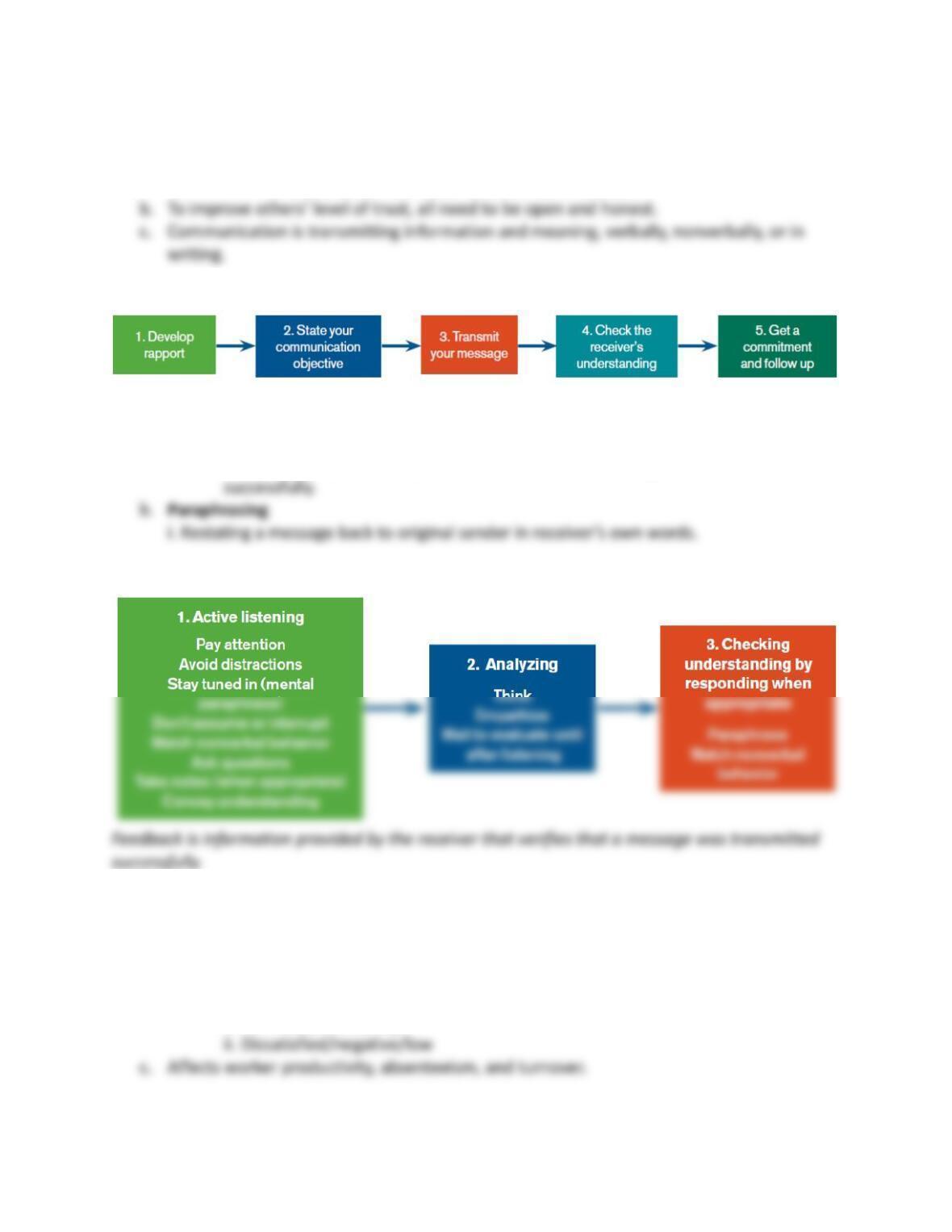
a. Functions of trust and communication
i. Trust is faith in character and actions of another.
II. The Message-Sending Process
III. Checking Understanding
a. Feedback
i. Information provided by receiver that verifies a message was transmitted
IV. The Message-Receiving Process
Paraphrasing is the process of restating a message back to the original sender in the receiver’s
own words.
V. Job Satisfaction
a. Feelings of well-being and acceptance of place in organization.
b. Generally measured along a continuum from:
i. Satisfied/positive/high
Lecture Notes
Lussier, Human Resource Management, Third Edition
SAGE Publishing, 2018
VI. Job Dissatisfaction
a. Causes of poor organizational outcomes, including:
i. Losing good employees and costly turnover
VII. Measuring Job Satisfaction
a. Difficult to measure accurately because it is an attitude.
b. Firms must rely on employees’ honesty in self-reporting their level of satisfaction on job
VIII. Ways to Measure Job Satisfaction
a. Faces scale
i. Employees circle the face that matches their satisfaction.
ii. Best for a brief job satisfaction assessment.
b. Job satisfaction survey (JSS)
i. Organizational development survey that is valid and reliable for measuring job
satisfaction in workplace. Uses NINE Factors.
ii. Best for an in-depth job satisfaction assessment.
Job satisfaction is difficult to measure accurately because it is an attitude, so firms must rely on
employees’ honesty in self-reporting their level of satisfaction on a job satisfaction (attitude)
VIX Legal Issues in Labor Relations
a. Managers must understand constraints set by labor laws to successfully do their job.
b. Three types of labor relations laws:
i. Laws that deal with unions and unionization
Lecture Notes
Lussier, Human Resource Management, Third Edition
SAGE Publishing, 2018
X. Railway Labor Act (RLA) of 1926
a. Enacted to limit potential for railroad strikes to affect interstate commerce.
b. Provides protection for worker rights to join a union. No more Yellow Dog contracts.
XI. National Labor Relations Act (NLRA) of 1935 (The Wagner Act)
a. Gives employees rights, without fear of persecution, to:
i. Self-organize or form, join, or assist labor organizations
ii. Bargain collectively through representatives of their choosing
XII. Labor Management Relations Act (LMRA) of 1947 (Taft-Hartley Act)
a. Amendment to 1935 NLRA that rebalanced employer and employee rights by prohibiting
specific unfair practices by unions, including:
i. Jurisdictional and wildcat strikes
XIII. Labor Management Reporting and Disclosure Act (LMRDA) of 1959 (The Landrum-Griffin
Act)
a. Requires a series of disclosures by union officials and provides specific rights to union
members.
b. Enacted because of organized crime/national labor union linkages in the 1950s.
XIV. Worker Adjustment and Retraining Notification Act (WARN) of 1988
a. Firms that employ more than 100 full-time employees must notify them of a layoff at
XV. Corporate Whistleblowers and the Law
a. Whistleblowers are employees who tell an organization with authority, outside their
own company, about actions within their company that they believe to be illegal.
b. Whistleblower laws
i. Federal False Claims Act

Lecture Notes
Lussier, Human Resource Management, Third Edition
SAGE Publishing, 2018
ii. Dodd-Frank Act
Express Contracts, Implied XVI. Contracts, and Quasi-Contracts
a. Express contract
i. When agreement between two parties is specifically stated, orally or written.
b. Implied contract
XVI. Other Legal Issues in Labor Relations
a. Wrongful discharge
i. Terminating employee for an illegal reason due to violation of a contract or
violation of a state or federal law.
b. Constructive discharge
i. Occurs when employee is forced to quit because of severe and/or pervasive
harassment or intolerable working conditions.
XVII. Union Organizing
a. People join unions for a variety of reasons, including:
Lecture Notes
Lussier, Human Resource Management, Third Edition
SAGE Publishing, 2018
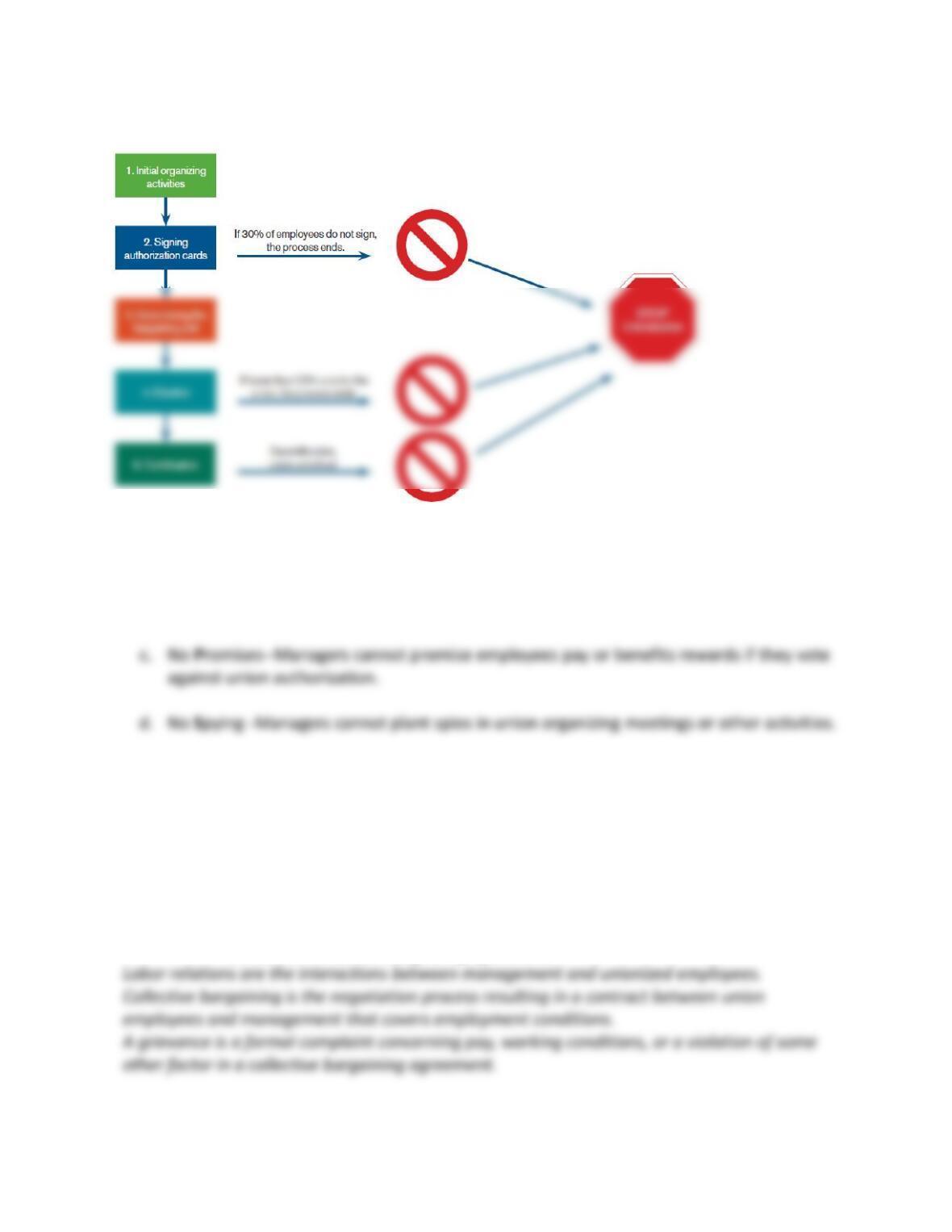
XIX. Union Organizing: The NO TIPS Rule
a. No Threats—Managers cannot threaten firm will shut down a facility that votes for
unionization.
b. No Interrogations—Managers cannot ask employees about union organizing activities.
XX. Labor Relations and Collective Bargaining
a. Labor relations
i. Interactions between management and unionized employees.
b. Collective bargaining
i. Negotiation process resulting in a contract between union employees and
management that covers employment conditions.
c. Grievance
i. Formal complaint concerning pay, working conditions, or violations of other
factors in a collective bargaining agreement.
Lecture Notes
Lussier, Human Resource Management, Third Edition
SAGE Publishing, 2018
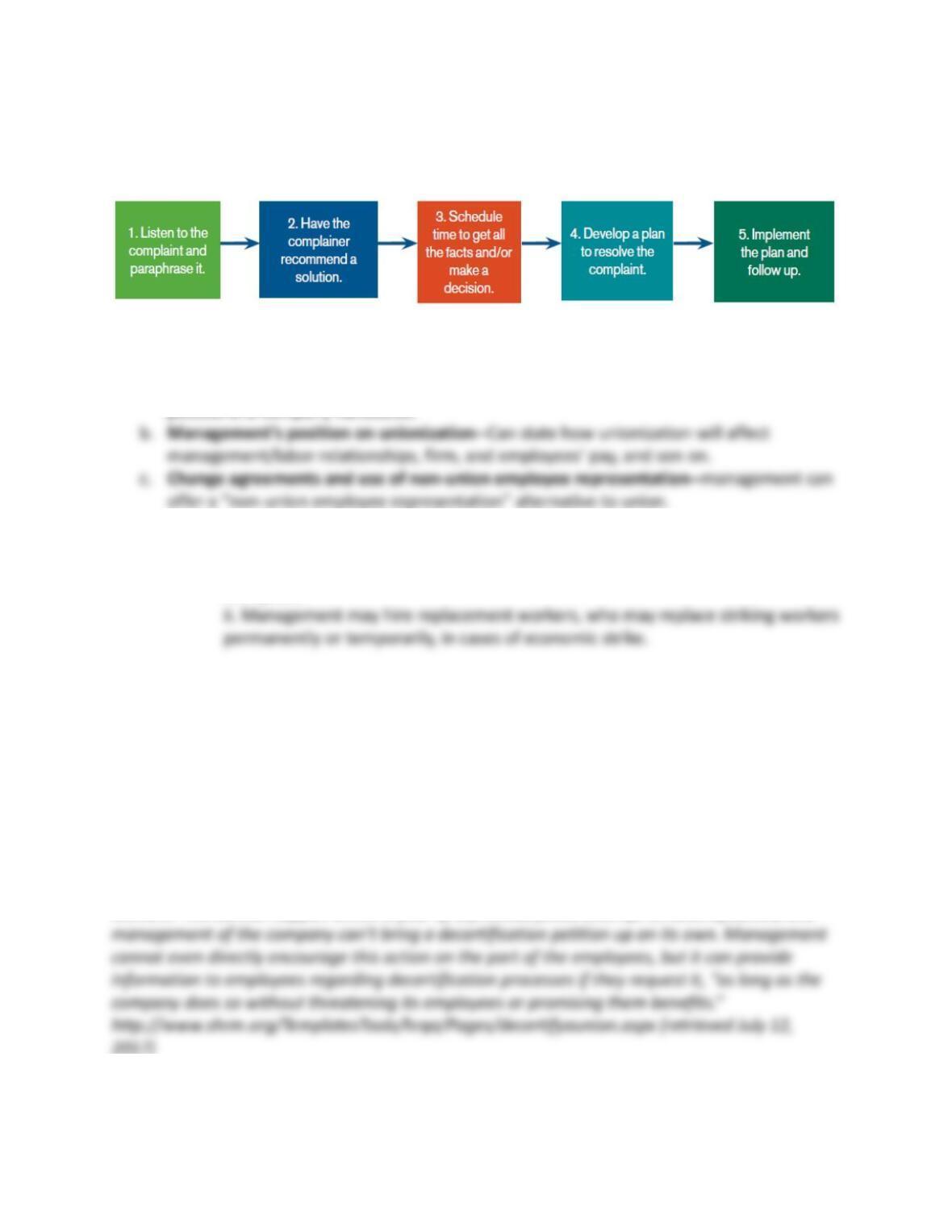
XXI. The Employee Complaint Resolution Model
XXII. Management Rights: Limiting Union Organizing Efforts
a. No unionization on company time—Policy must be consistent with other solicitation
policies and company handbook.
XXIII. Management Rights: Lockouts and Replacement Workers
a. Lockouts
i. Management stops work and physically prevents workers from entering
workplace.
XIV. Management Rights: Decertification Elections
a. Can be held to remove a union, but:
i. Not within a year of a previous attempt at decertification.
ii. Company cannot initiate a decertification petition or encourage a decertification
petition.
iii. If requested by employees, management can provide information to employees
regarding decertification, but cannot threaten employees or promise benefits.
Decertification elections can be held to remove a union as the representative of company
workers. This cannot happen within a year of a previous failed attempt at decertification, and
XV. Managing Conflict
Lecture Notes
Lussier, Human Resource Management, Third Edition
SAGE Publishing, 2018
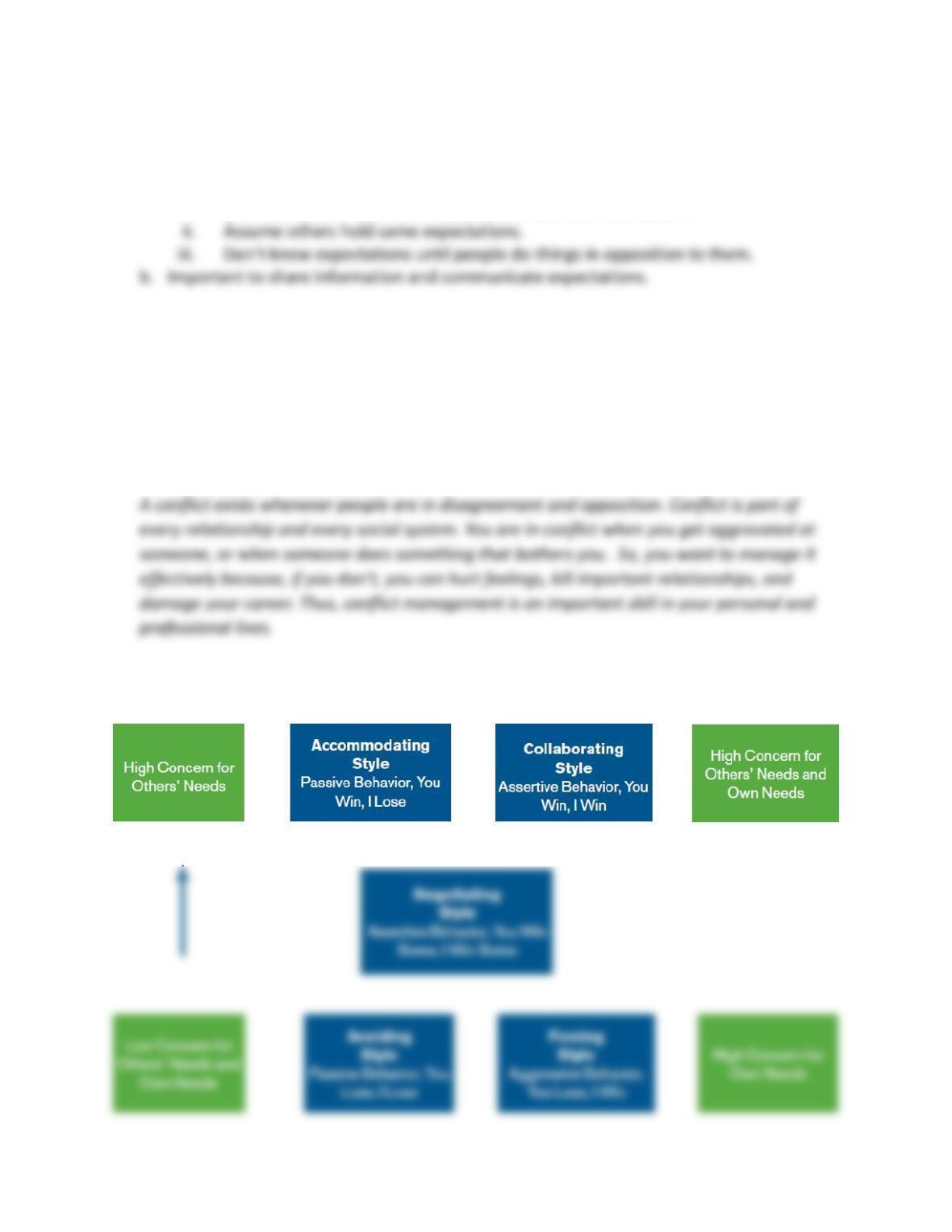
a. Conflicts exist when people are in disagreement and opposition. They occur because
individuals:
i. Don’t let others know their expectations and don’t ask others.
XVI. Functional Versus Dysfunctional Conflict
a. Functional conflict
i. Helps firm meet its goals of increased performance.
b. Dysfunctional conflict
i. Prevents firm from achieving individual and organizational objectives.
c. Conflict management skills can resolve conflicts and maintain relationships before
conflicts become dysfunctional.
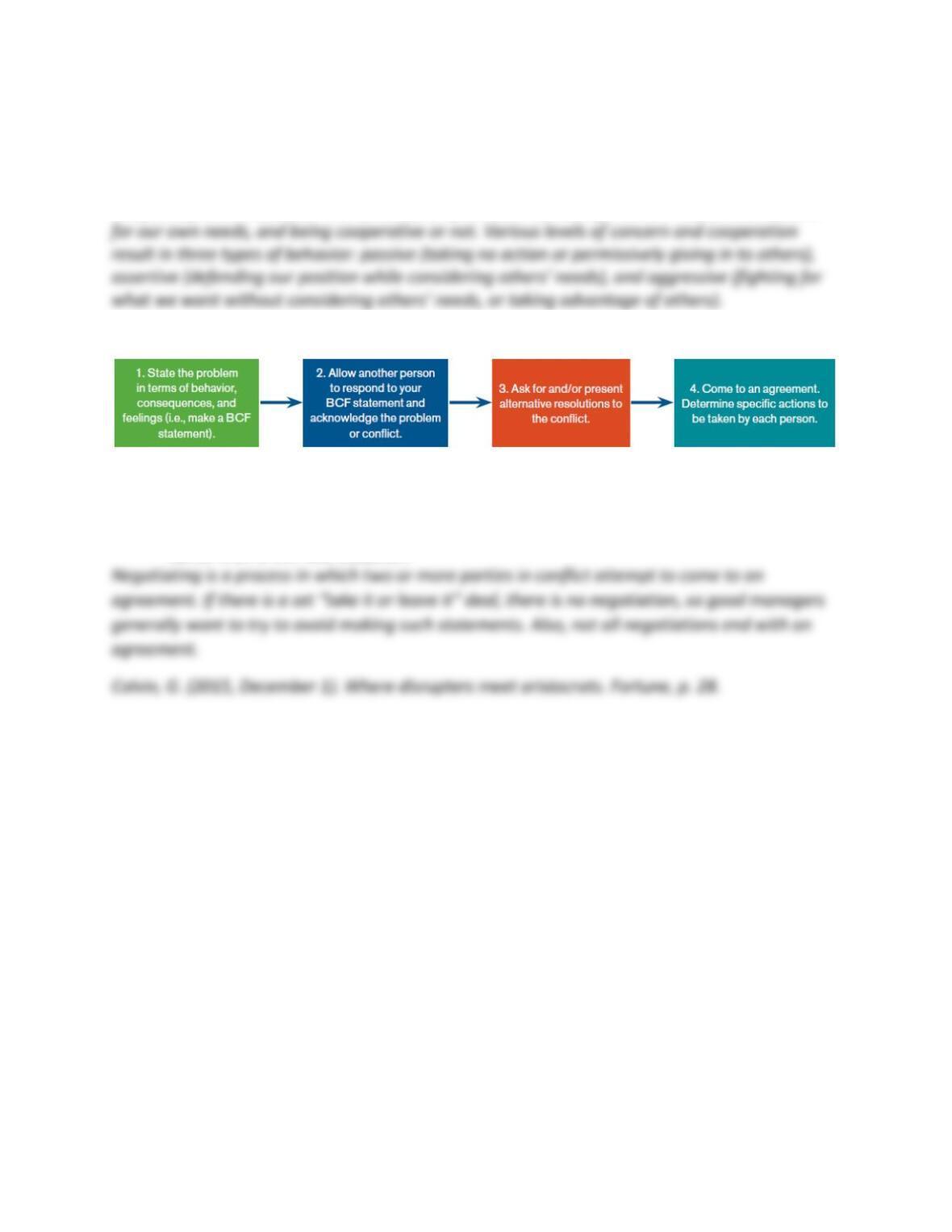
XVII. Conflict Management Styles
Lecture Notes
Lussier, Human Resource Management, Third Edition
SAGE Publishing, 2018
When we are faced with conflict, we have five basic conflict management styles to choose from.
The five styles are based on two dimensions of concern: concern for others’ needs and concern
XVIII. Initiating Conflict Resolution
XIX. Negotiations
a. Process in which two or more parties in conflict attempt to come to an agreement.
b. Ideally, negotiation should be viewed by all parties as “I win some and you win some,”
rather than a win-lose situation.
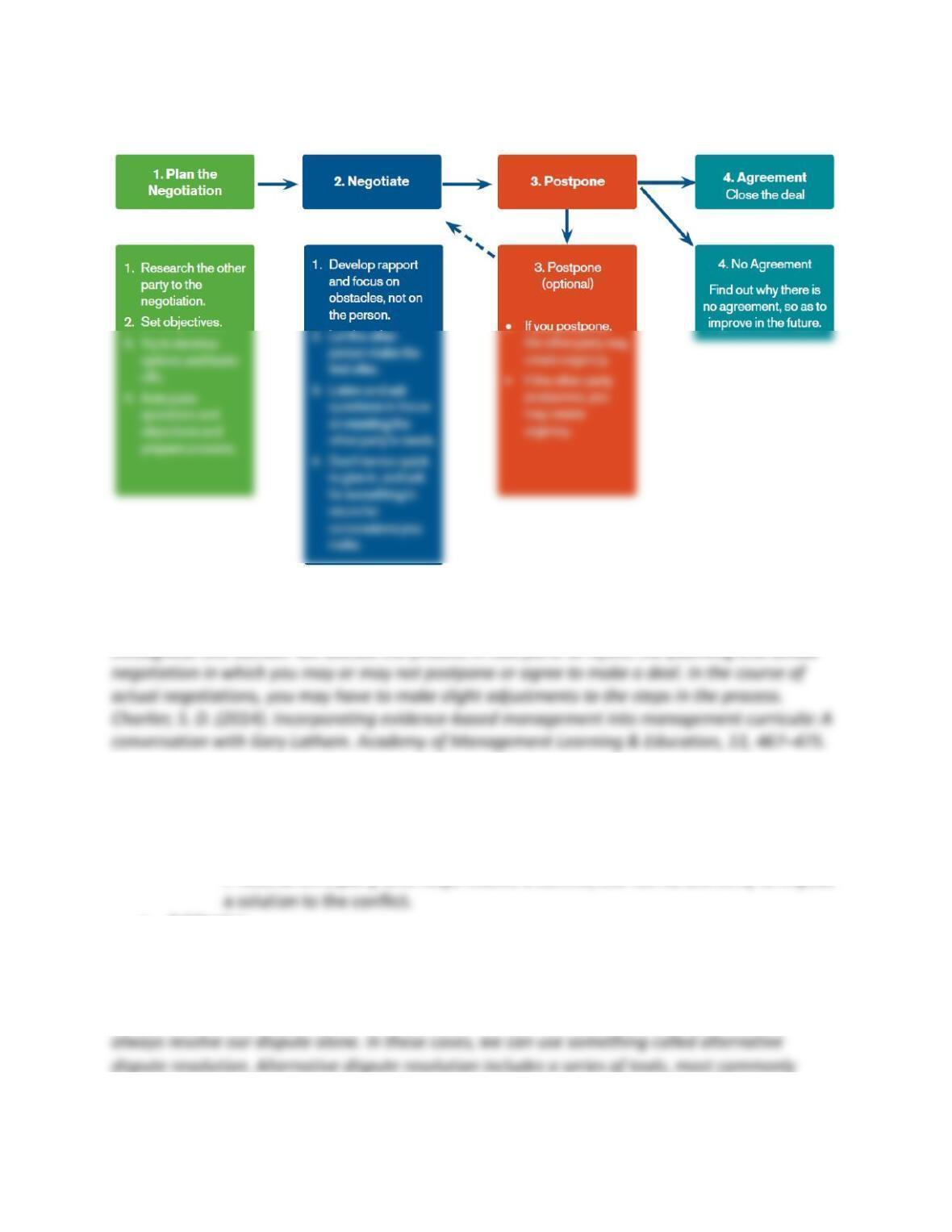
XX. The Negotiation Process
Lecture Notes
Lussier, Human Resource Management, Third Edition
SAGE Publishing, 2018
Not everyone is born a great negotiator, but the skill can be developed. Following the steps in
the negotiation process can help you develop your negotiation skills. The negotiation process
has three and possibly four parts. These steps are summarized in Model 10-5 and discussed
throughout this section. We discuss the process in two parts to reflect the planning and actual
XXI. Alternative Dispute Resolution (ADR)—Mediation and Arbitration
a. When labor and management cannot resolve conflicts, ADR may be used.
b. Mediator
i. Neutral third party who helps resolve a conflict, but has no authority to impose
c. Arbitrator
i. Neutral third party who resolves a conflict by making a binding decision.
Labor and management are required by law to bargain with each other in good faith, and
companies need to maintain effective employee relations—but when in conflict, we cannot

Lecture Notes
Lussier, Human Resource Management, Third Edition
SAGE Publishing, 2018