THE MEXICAN PESO
1
SUGGESTED ANSWERS TO THE MEXICAN PESO
1. What are the causes of the continuing devaluation of the peso since August 1976? Analyze both the immediate
causes (e.g., balance–of-payments deficits) and longer-term, more fundamental causes (e.g., inflation, the
political and economic environment). Concentrate especially on the 1982 and 1994-1995 devaluations of the
peso.
ANSWER. Although high inflation in Mexico is the proximate cause of peso devaluation, it just reflects a
government promising its citizens more than it is demanding from them in taxes. Instead of raising taxes to pay for
2. What role did oil price changes play in Mexico’s difficulties?
3. What indicators of peso devaluation prior to 1982 were there?
4. What were the likely effects of the peso devaluation between 1976 and January 1982 on
a. Mexican companies?
b. Foreign firms operating in Mexico?
c. U.S. companies in border towns catering to Mexicans?
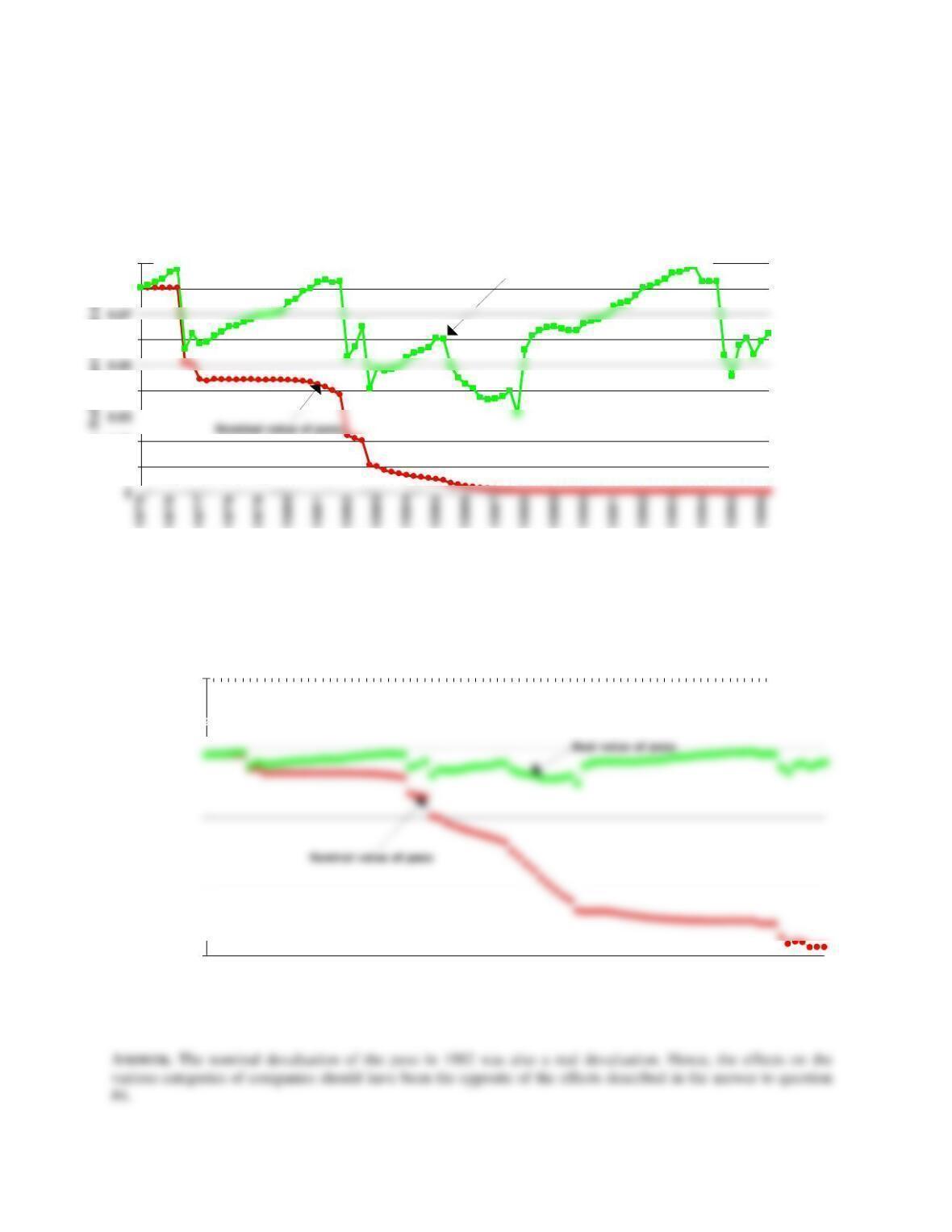
ANSWER. The attached graphs (one is linear and the other loglinear to highlight the nominal exchange rate
THE MEXICAN PESO
2
5. Redo question 4, focusing on the effects of peso devaluation subsequent to February 1982 and prior to December
1994.
NOMINAL U.S. DOLLAR EXCHANGE RATE FOR THE
MEXICAN PESO VERSUS ITS REAL EXCHANGE RATE: 1975–
1996
0.01
0.02
0.04
0.06
0.08
0.09
U .S . D olla rs pe r M e xic an P eso
Real value of peso
THE MEXICAN PESO
3
6. In August 1982, the Mexican government devalued the peso, froze all dollar accounts in Mexican banks, and
imposed currency controls. What were the government’s objectives? How did these actions affect the black
market value of the peso? Why?
ANSWER. The government was trying to stem the outflow of “hot money,” or capital flight. Capital flight, however,
7. How did the Mexican government’s expropriation of Mexico City real estate, following the September 1985
earthquake, affect the value of the peso and why?
ANSWER. Following expropriation of real estate in Mexico City, investors sought to shift a large fraction of their
peso-denominated assets into dollar-denominated assets. According to the Wall Street Journal (November 7, 1985,
p.36), “At the moment, nervous investors are trying to protect their interests by converting pesos into dollars.” As
8. Consider the trust factor with respect to Mexican policies. What have been the probable effects of trust or its lack
on investment in Mexico, Mexican citizens’ investment choices, and the peso’s value?
ANSWER. As property rights became more fragile in Mexico—currency controls, expropriation of banks and real
THE MEXICAN PESO
4
As the figures below show, Salinas kept his promise to reduce the government deficit by cutting public
spending rather than raising taxes.
1986
1987
1988
1989
1990
Mexican budget deficit (% of GNP)
9. Are dollar loans to the Mexican government and Mexican companies exposed to exchange risk?
Explain.
ANSWER. Banks try to cope with currency risk when lending to foreign firms and governments by
10. How did Mexico’s economic policies contribute to its debt crisis? How have subsequent government
policies affected Mexico’s financial health?
ANSWER. Mexico went on a spending spree, paid for by a high rate of monetary expansion. The resulting