
Part III Case Studies
Case III.1 Rolls-Royce Limited
Rolls-Royce Limited, the British aeroengine
manufacturer, suffered a loss of £58 million in
1979 on worldwide sales of £848 million. The
company’s annual report for 1979 (page 4)
blamed the loss on the dramatic revaluation of
the pound sterling against the dollar, from £1
$1.71 in early 1977 to £1 $2.12 by the
end of 1979.
The most important reason for the loss was
the effect of the continued weakness of the
U.S. dollar against sterling. The large civil
engines that Rolls-Royce produces are sup-
plied to American air frames. Because of U.S.
dominance in civil aviation, both as producer
and customer, these engines are usually priced
in U.S. dollars and escalated accordingly to
U.S. indices….
A closer look at Rolls-Royce’s competitive
position in the global market for jet engines
reveals the sources of its dollar exposure. For
the previous several years Rolls-Royce’s export
sales had accounted for a stable 40% of total
sales and had been directed at the U.S. market.
This market is dominated by two U.S. competi-
tors, Pratt and Whitney Aircraft Group (United
Technologies) and General Electric’s aerospace
division. As the clients of its mainstay engine,
the RB 211, were U.S. aircraft manufacturers
(Boeing’s 747SP and 747,00 and Lockheed’s
L1011), Rolls-Royce had little choice in the cur-
rency denomination of its export sales but to
use the dollar.
Indeed, Rolls-Royce won some huge engine
contracts in 1978 and 1979 that were fixed
in dollar terms. Rolls-Royce’s operating costs,
on the other hand, were almost exclusively
incurred in sterling (wages, components, and
debt servicing). These contracts were mostly
pegged to an exchange rate of about $1.80 for
the pound, and Rolls-Royce officials, in fact,
expected the pound to fall further to $1.65.
Hence, they didn’t cover their dollar exposures.
If the officials were correct, and the dollar
strengthened, Rolls-Royce would enjoy windfall
profits. When the dollar weakened instead, the
combined effect of fixed dollar revenues and
sterling costs resulted in foreign exchange losses
in 1979 on its U.S. engine contracts that were
estimated by the Wall Street Journal (March 11,
1980, p. 6) to be equivalent to as much as
$200 million.
Moreover, according to that same Wall Street
Journal article, “the more engines produced and
sold under the previously negotiated contracts,
the greater Rolls-Royce’s losses will be.”
Questions
1. Describe the factors you would need to
know to assess the economic impact on
Rolls-Royce of the change in the dollar:
sterling exchange rate. Does inflation affect
Rolls-Royce’s exposure?
2. Given these factors, how would you calculate
Rolls-Royce’s economic exposure?
3. Suppose Rolls-Royce had hedged its dollar con-
tracts. Would it now be facing any economic
exposure? How about inflation risk?
4. What alternative financial management strate-
gies might Rolls-Royce have followed that
would have reduced or eliminated its economic
exposure on the U.S. engine contracts?
5. What nonfinancial tactics might Rolls-Royce
now initiate to reduce its exposure on
the remaining engines to be supplied under
the contracts? On future business (e.g., diver-
sification of export sales)?
41504_Pt3_Case_Studies_p417-420 3/5/02 7:27 PM Page 417

418 Part III •Case Studies
Case III.2 The Mexican Peso
The basic purpose of this case is to have you
conduct an in-depth analysis of government
macroeconomic policies on firms and banks doing
business with Mexico. The vehicle being used is
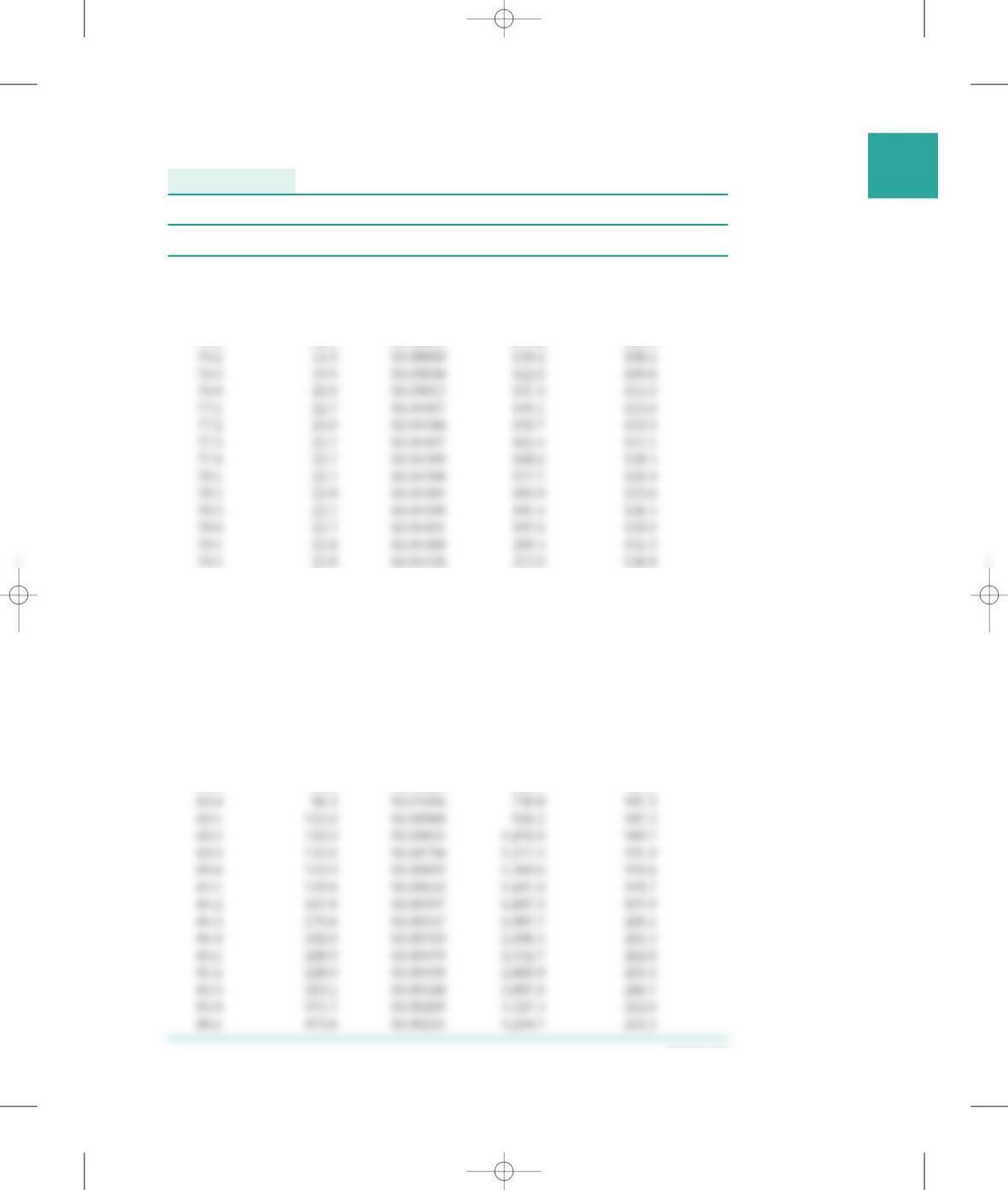
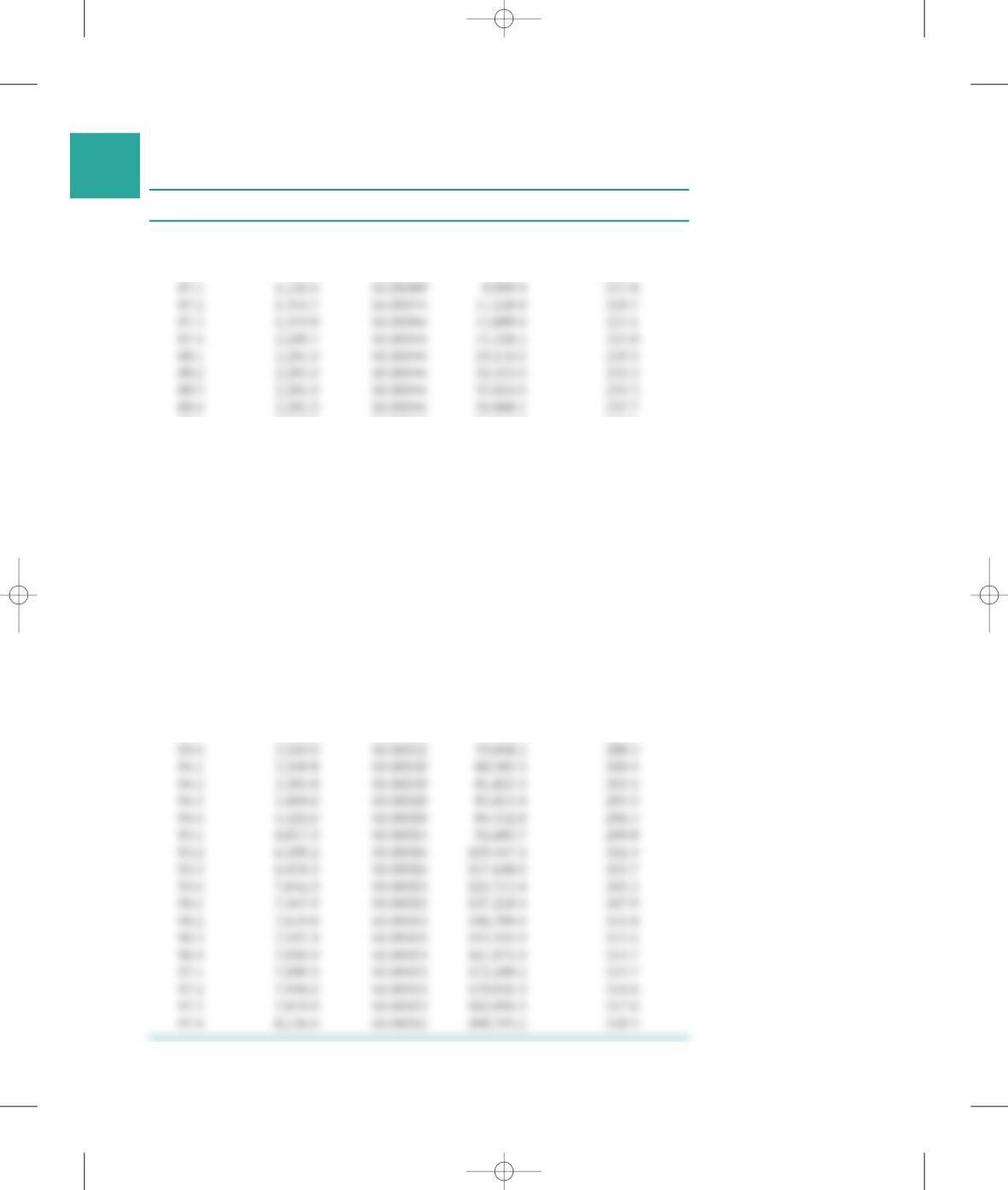
the Mexican peso. See Exhibit III 2.1 for statistics
related to exchange rates and price indexes in
the United States and Mexico for the period
1976–1997. Using these data, please address the
following questions.
Questions
1. What are the causes of the continuing devalua-
tion of the peso since August 1976? Analyze
both the immediate causes (e.g., balance-of-
payments deficits) and longer-term, more fun-
damental causes (e.g., inflation, the political
and economic environment). Concentrate espe-
cially on the 1982 and 1994–1995 devalua-
tions of the peso.
2. What role did oil price changes play in Mexico’s
difficulties?
3. What indicators of peso devaluation prior to
1982 and 1994 were there?
4. What were the likely effects of the peso deval-
uation between 1976 and January 1982 on
a. Mexican companies?
b. Foreign firms operating in Mexico?
c. U.S. companies in border towns catering to
Mexicans?
5. Redo question 4, focusing on the effects of
peso devaluation subsequent to February 1982
and prior to December 1994.
6. In August 1982, the Mexican government
devalued the peso, froze all dollar accounts in
Mexican banks, and imposed currency con-
trols. What are the government’s objectives?
How did these actions affect the black market
value of the peso? Why?
7. How did the Mexican government’s expro-
priation of Mexico City real estate, following
the September 1985 earthquake, affect the
value of the peso and why?
8. Consider the trust factor with respect to
Mexican policies. What have been the proba-
ble effects of trust or its lack on investment in
Mexico, Mexican citizens’ investment choices,
and the peso’s value?
9. Are dollar loans to the Mexican government
and Mexican companies exposed to exchange
risk? Explain.
10. How did Mexico’s economic policies contribute
to its debt crisis? How have subsequent gov-
ernment policies affected Mexico’s financial
health?
6. What additional information would you
require to ascertain the validity of the state-
ment that “the more engines produced and
sold under the previously negotiated
contracts, the greater Rolls-Royce’s losses
will be”?
41504_Pt3_Case_Studies_p417-420 3/5/02 7:27 PM Page 418
Case III.2 •The Mexican Peso 419
Exhibit III 2.1 The Mexican Peso’s Key Statistics: 1975 – 1997
Nominal Exchange Rates (period average)
Year:Quarter Peso:Dollar Dollar:Peso CPI Mexico CPI United States
75:1 12.5 $0.08000 100.0 100.0
75:2 12.5 $0.08000 103.2 101.9
75:3 12.5 $0.08000 107.0 104.1
75:4 12.5 $0.08000 110.4 105.8
76:1 12.5 $0.08000 115.2 106.8
79:3 22.8 $0.04390 225.2 141.3
79:4 22.8 $0.04386 235.6 145.4
80:1 22.9 $0.04376 256.8 151.1
80:2 22.9 $0.04361 271.5 156.6
80:3 23.1 $0.04337 289.3 159.4
80:4 23.3 $0.04301 303.9 163.7
81:1 23.8 $0.04209 328.5 168.0
81:2 24.4 $0.04103 348.4 171.9
81:3 25.2 $0.03968 365.9 176.9
81:4 26.3 $0.03804 389.4 179.3
82:1 45.5 $0.02198 435.0 180.9
82:2 48.0 $0.02082 501.5 183.5
82:3 50.0 $0.02000 606.1 187.0
(Continued)
41504_Pt3_Case_Studies_p417-420 3/5/02 7:27 PM Page 419
420 Part III •Case Studies
Nominal Exchange Rates (period average)
Year:Quarter Peso:Dollar Dollar:Peso CPI Mexico CPI United States
86:2 575.4 $0.00174 4,957.8 212.6
86:3 752.0 $0.00133 5,930.4 214.3
86:4 923.5 $0.00108 7,164.7 215.4
89:1 2,369.0 $0.00042 36,943.5 240.5
89:2 2,460.0 $0.00041 38,435.6 244.3
89:3 2,551.0 $0.00039 39,687.9 246.4
89:4 2,641.0 $0.00038 41,501.0 248.7
90:1 2,733.0 $0.00037 45,621.2 253.0
90:2 2,817.0 $0.00035 48,104.5 255.5
90:3 2,890.6 $0.00035 50,789.0 260.0
90:4 2,945.4 $0.00034 53,783.8 264.3
91:1 2,981.0 $0.00034 57,724.0 266.4
91:2 3,018.2 $0.00033 59,806.8 267.9
91:3 3,055.8 $0.00033 61,443.3 270.0
91:4 3,071.0 $0.00033 64,270.0 272.1
92:1 3,083.5 $0.00032 67,741.4 274.0
92:2 3,122.3 $0.00032 69,576.3 276.3
92:3 3,116.3 $0.00032 70,964.8 278.1
92:4 3,115.4 $0.00032 72,750.1 280.1
93:1 3,097.6 $0.00032 75,130.5 282.5
93:2 3,121.2 $0.00032 76,519.0 284.5
93:3 3,117.8 $0.00032 77,758.8 285.3
41504_Pt3_Case_Studies_p417-420 3/5/02 7:27 PM Page 420