COUNTY OF SACRAMENTO
STATE OF CALIFORNIA
FOR THE FISCAL YEAR ENDED JUNE 30, 2009
DAVE IRISH
DIRECTOR OF FINANCE
COUNTY OF SACRAMENTO
COMPREHENSIVE ANNUAL FINANCIAL REPORT
FOR THE FISCAL YEAR ENDED JUNE 30, 2009
Table of Contents
TABLE OF CONTENTS…………………………………………………………………………………………………………………………………………………………. i
INTRODUCTORY SECTION
Letter of Transmittal …………………………………………………………………………………………………………………………………………………… vii
Acknowledgement …………………………………………………………………………………………………………………………………………………….. xxi
FINANCIAL SECTION
Independent Auditors’ Report……………………………………………………………………………………..…………………………………………………. 1
Basic Financial Statements:
Fund Financial Statements:
Management’s Discussion and Analysis (Required Supplementary Information)…………………………………………………………………. 3
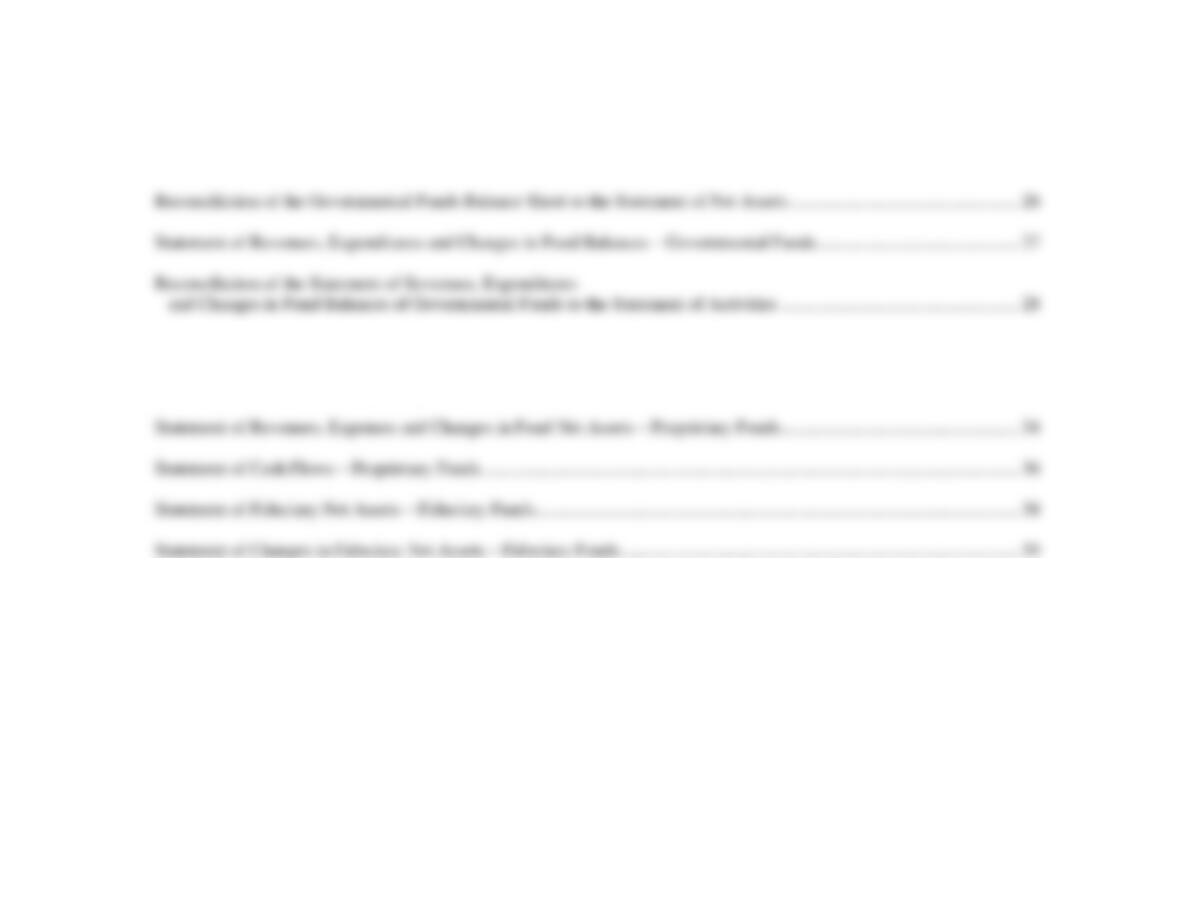
Balance Sheet – Governmental Funds …………………………………………………………………………………………………………………… 25
i
COUNTY OF SACRAMENTO
COMPREHENSIVE ANNUAL FINANCIAL REPORT
FOR THE FISCAL YEAR ENDED JUNE 30, 2009
Required Supplementary Information (Unaudited):
Statement of Revenues and Expenditures – Budget and Actual – General Fund …………………………………………………………. 30
Statement of Net Assets – Proprietary Funds …………………………………………………………………………………………………………. 32
Notes to Basic Financial Statements………………………………………………………………………………………………………………………… 41
Sacramento County Employees’ Retirement System- Schedule of Funding Progress………………………………………….……….. 113
Other Post Employment Benefit (OPEB) Plan – Schedule of Funding Progress ……………………………………………..…………… 114
ii
COUNTY OF SACRAMENTO
COMPREHENSIVE ANNUAL FINANCIAL REPORT
FOR THE FISCAL YEAR ENDED JUNE 30, 2009
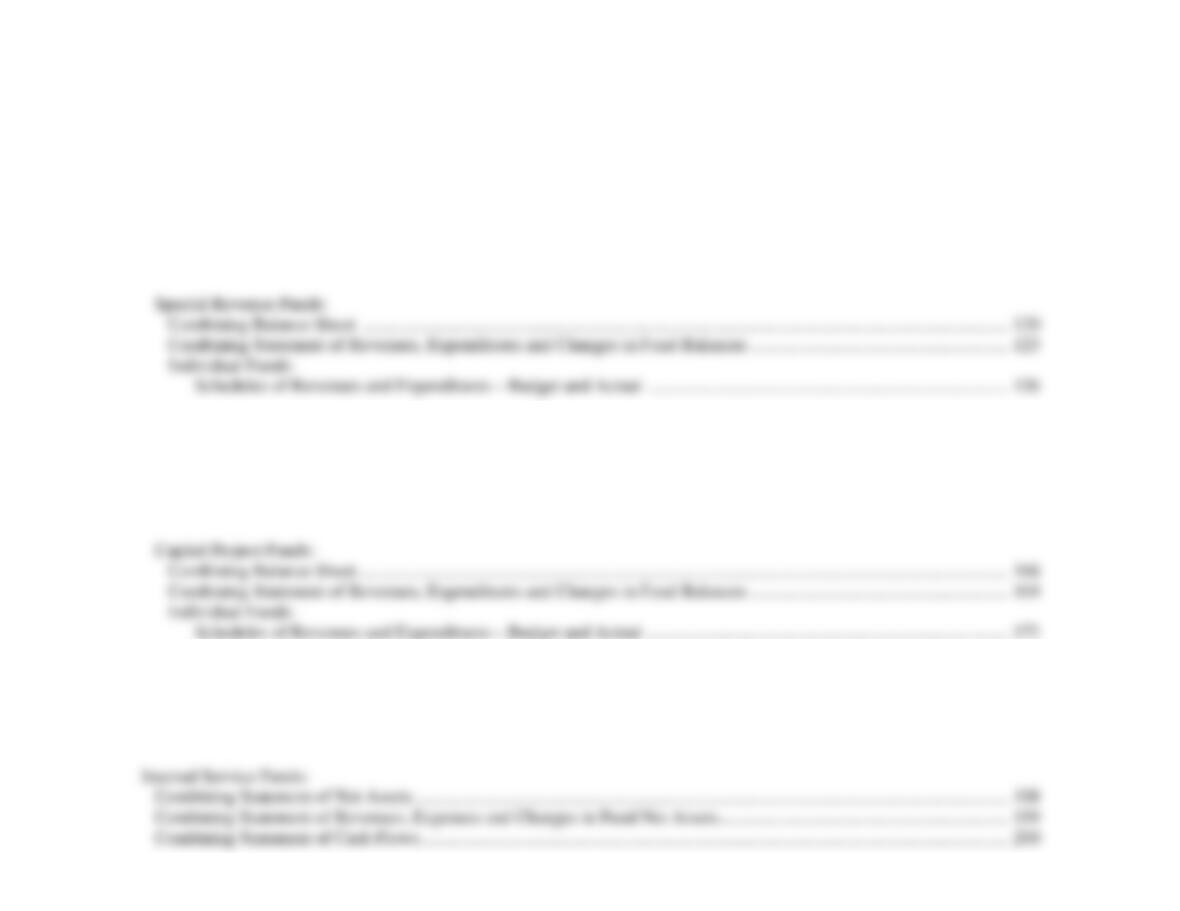
Combining and individual fund statements and schedules:
Nonmajor Governmental Funds:
Combining Balance Sheet………………………………………………………………………………………..………………………………………… 115
Combining Statement of Revenues, Expenditures and Changes in Fund Balances ……………………………………………………. 116
Debt Service Funds:
Combining Balance Sheet……………………………………………………………………………………….………………………………………. 146
Combining Statement of Revenues, Expenditures and Changes in Fund Balances
Individual Funds:
…………………………………………………. 148
Schedules of Revenues and Expenditures – Budget and Actual………………………………………………………………………. 150
Nonmajor Enterprise Funds:
Combining Statement of Net Assets ……………………………………………………………………………….…………………………………… 192
Combining Statement of Revenues, Expenses and Changes in Fund Net Assets…………………………………………….…………. 193
Combining Statement of Cash Flows……………………………………………………………………………….………………………………….. 194
iii
COUNTY OF SACRAMENTO
COMPREHENSIVE ANNUAL FINANCIAL REPORT
FOR THE FISCAL YEAR ENDED JUNE 30, 2009
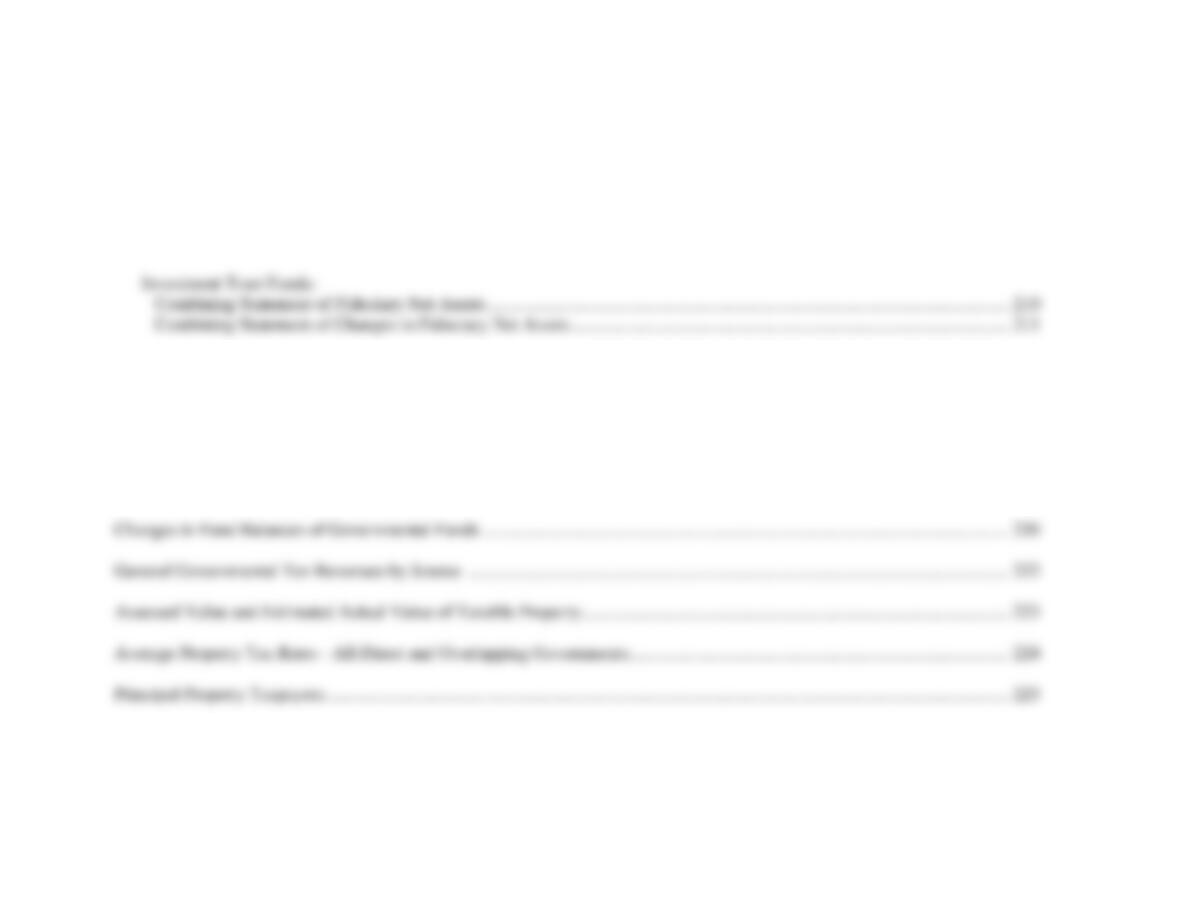
Agency Funds:
Combining Balance Sheet………………………………………………………………………………………..………………………………………… 204
Combining Statement of Changes in Assets and Liabilities …………………………………………………………..……………………….. 205
STATISTICAL SECTION
Net Assets by Component………………………………………………………………………………………………………………………………………….. 214
Changes in Net Assets……………………………………………………………………………………………………………………………………………….. 215
Fund Balances of Governmental Funds ……………………………………………………………………………………………………………………….. 218
County Wide 1% – Secured and Unitary Property Tax Levies and Collections …………………………………………………………………. 226
Ratios of Outstanding Debt by Type……………………………………………………………………………………………………………………………. 227
Legal Debt Margin Information…………………………………………………………………………………….……………………………………………. 228
iv
COUNTY OF SACRAMENTO
COMPREHENSIVE ANNUAL FINANCIAL REPORT
FOR THE FISCAL YEAR ENDED JUNE 30, 2009
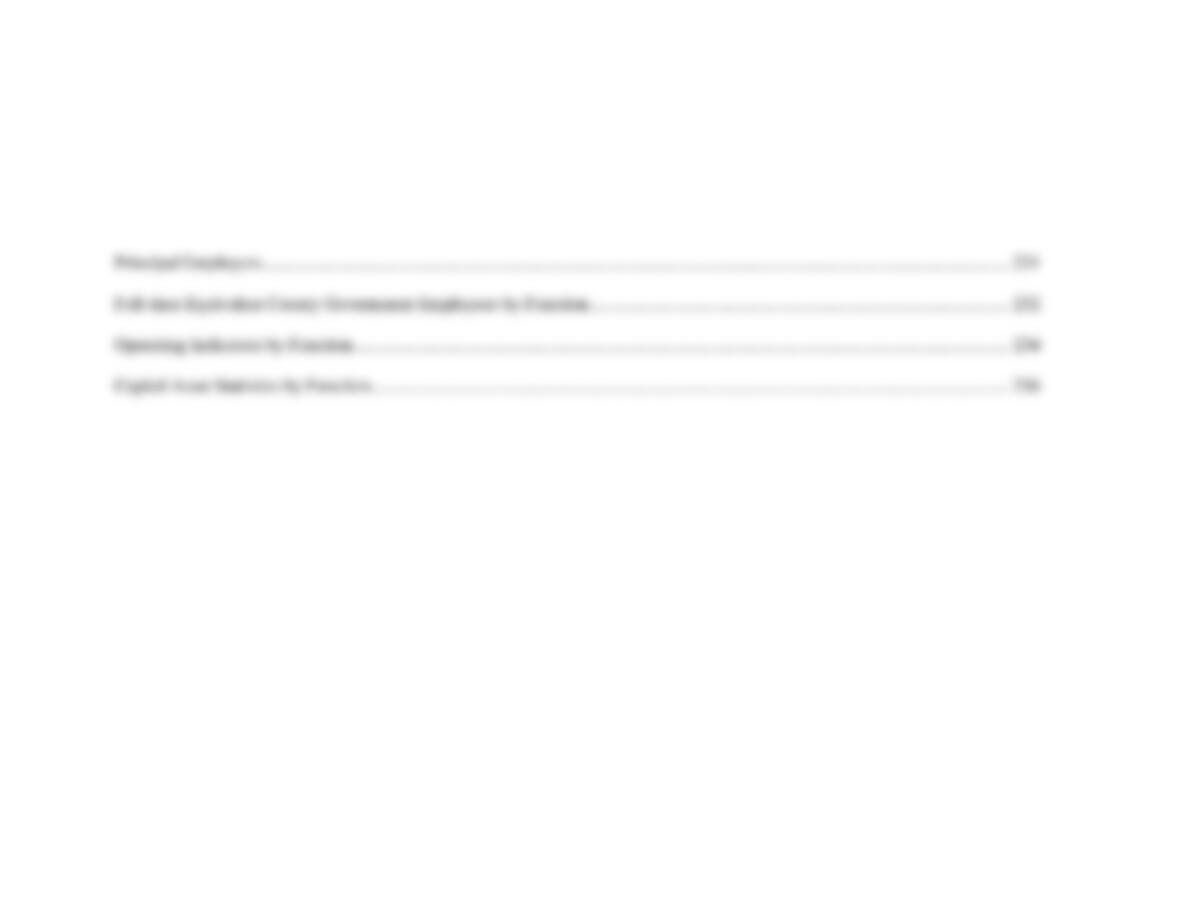
Pledged-Revenue Coverage ……………………………………………………………………………………………………………………………………….. 229
Demographic and Economic Statistics……………………………………………………………………………….………………………………………… 230
v

vi

To the Citizens of Sacramento County January 29, 2010
Internal Services Agency Steven C. Szalay, Interim County Executive
Mark Norris, Agency Administrator
Department of Finance Dave Irish, CPA, Department Director
Auditor-Controller Division
Julie Valverde, County of Sacramento
Assistant Auditor-Controller
January 29, 2010
To the Citizens of Sacramento County
Sacramento, California
Dear Citizens:
The Comprehensive Annual Financial Report (CAFR) of the County of Sacramento (County) for the fiscal year ended June 30, 2009, is hereby submitted in
compliance with Sections 25250 and 25253 of the Government Code of the State of California. Responsibility for both the accuracy of the data and the
completeness and fairness of the presentation, including all disclosures, rests with the County. To the best of our knowledge and belief, the enclosed data are
accurate in all material respects and present fairly the respective financial position of the governmental activities, business-type activities, each major fund and the
aggregate remaining fund information of the County, as of June 30, 2009, and the respective changes in financial position and cash flows, where applicable,
thereof for the year then ended. All disclosures necessary to enable the reader to gain an understanding of the County’s financial activities have been included.
PROFILE OF SACRAMENTO COUNTY
Sacramento County was incorporated in 1850 as one of the original 27 counties of the State of California. The County’s largest city, the City of Sacramento, is the
seat of government for the State of California and also serves as the county seat. Sacramento became the State Capital in 1854.
vii
To the Citizens of Sacramento County January 29, 2010
Sacramento County encompasses approximately 994 square miles in the middle of the 400-mile long Central Valley, which is California’s prime agricultural
region. The County is bordered by Contra Costa and San Joaquin Counties on the south, Amador and El Dorado Counties on the east, Placer and Sutter Counties
on the north, and Yolo and Solano Counties on the west. Sacramento County extends from the low delta lands between the Sacramento and San Joaquin Rivers
north to about ten miles beyond the State Capitol and east to the foothills of the Sierra Nevada Mountains. The southernmost portion of Sacramento County has
direct access to the San Francisco Bay.
The County has a charter form of government. It is governed by a five-member Board of Supervisors, who are elected on a non-partisan basis to serve four-year
terms. Each is elected from one of the five supervisorial districts of the County. Supervisors from District 1, District 2, and District 5 are elected in gubernatorial
election years (2002, 2006, etc.), while supervisors from District 3 and District 4 are elected in presidential election years (2004, 2008, etc.). District boundaries
are adjusted after every federal census to equalize district population.
Other elected officials include the Assessor, District Attorney and Sheriff. A County Executive appointed by the Board of Supervisors runs the day-to-day
business of the County.
ECONOMIC CONDITION AND OUTLOOK
Sacramento County is located in the Central Valley of California and extends from the Delta of the Sacramento and San Joaquin Rivers to the lower range of
foothills of the Sierra Nevada Mountains. To the southwest is the highly urban San Francisco Bay Area. The City of Sacramento, the largest and most populous
city in the County, is both the State Capital and the County Seat. The State Capitol building, many state offices, Sacramento City Hall, and the County
Administration Center are all located in the downtown area of the City of Sacramento.
To the Citizens of Sacramento County
January 29, 2010
Over the last several of years the local economy has been in a downward trend, along with the rest of the State and country. In the Sacramento Metropolitan
Statistical Area (SMSA), which includes Sacramento, El Dorado, Yolo and Placer Counties, there has been an approximate decrease in overall employment
levels of 7.6% between December 2007 and September 2009, due to the general economic slowdown. The unemployment rate has increased from 5.4% in
August 2007 to 11.8% in September 2009. This is similar to the State’s unemployment rate which was 6.4% and 12.2%, respectively, for the same time
periods.
The real estate market in Sacramento County began slowing in Fiscal Year 2006-07 and that slowdown has continued through 2008-09, similar to the rest of
the State and country. The real estate market slowdown caused an almost flat, no-growth rate of current secured property tax revenues for the County
during Fiscal Year 2008-09 as compared to Fiscal Year 2007-08. The main factors were a reduction in resale transactions which in past years had caused
Fiscal Year 2008-2009 represented the first full year of construction of the $1.08 billion “Big Build” at Sacramento International Airport including
completion of the first project element: a new remain overnight aircraft parking pad. The County is using the project delivery approach defined by
California law as design-build contracting and best value procurement. Design-build contracting results in a shorter overall construction timeframe by
awarding a construction contract based on 30% design documents. In the case of this project a minimum of 18 months was saved on the design and
construction schedule. At an assumed escalation factor of 7%, the overall cost savings resulting from this delivery method is estimated to be about $60
Department’s new public spay neuter clinic. This unique government private partnership will provide over 1,000 low cost spay neuter services to
the community annually, further reducing pet overpopulation in the community.
ix
To the Citizens of Sacramento County
January 29, 2010
Community Initiative Program
•
Animal Care and Regulation (Animal Care) in partnership with Sacramento City Animal Services and the Sacramento SPCA was accepted into the
American SPCA’s Community Initiative Program focused to increase the live release rate for shelter animals. The three Sacramento area shelters
Waste Management and Recycling Department
Solid Waste Lifeline Assistance Program
•
The Department received Board of Supervisor approval to institute a Solid Waste Lifeline Assistance Program. This program, which began in July
2008, provides financial assistance to low income individuals to help them pay their solid waste bills.
Kiefer Landfill Module 3, Phases 1 and 2 Liner project
•
The Department finished the construction of the Kiefer Landfill Module 3, Phases 1 and 2 Liner project and received a Project of the Year Award,
2009 from the American Public Works Association for the project.
Water Resources
Vineyard Surface Water Treatment Plant
•
The Sacramento County Water Agency continues to work on the $207 million construction of the Vineyard Surface Water Treatment Plant. This
Department of Transportation
Watt Avenue at Folsom/LRT Grade Separation
•
In November 2009, Sacramento Department of Transportation (SACDOT) completed a $22 million project to build a bridge for light rail trains over
Watt Avenue and to make improvements to all corners of the intersection. The overall project took three years to complete, and motorists
experienced an immediate difference on February 2, 2009 when light rail trains used the bridge for the first time. The blocking delay that occurred
whenever light rail trains crossed Watt Avenue was eliminated and resulted in a safer roadway, much less congestion and a better flow of traffic.
Hazel Avenue Improvement Project
•
A groundbreaking event to celebrate construction startup for Phase 1 of the Hazel Avenue Improvement Project was held on April 3rd, 2009. This
“Complete Street” project will reduce existing and projected traffic congestion, enhance the appearance of the area, and improve safety and mobility
x
To the Citizens of Sacramento County
January 29, 2010
Watt Avenue at U.S. Highway 50 Interchange
•
SACDOT is designing a project to modify the interchange of Watt Avenue at U.S. Highway 50. The project will reconfigure the existing
interchange to improve traffic safety on the interchange, and to relieve congestion on both Watt Avenue and Highway 50. The project also includes
State Route 99 @ Elverta Road Interchange
•
The project will construct a new interchange to replace the existing at-grade intersection in this location. The interchange will be constructed to its
ultimate length including a standard Type L-9 two-quadrant partial cloverleaf interchange with ramp meters and High Occupancy Vehicle (HOV)
I-5 @ Metro Air Parkway Interchange
•
This project is a State Highway project to construct the first phase of a five-lane partial clover Type L-9 interchange for Metro Parkway at Interstate
5 (I-5). The first phase of this project will construct a three-lane overcrossing facility with a median, bike lanes and a sidewalk on the west side.
Metro Air Parkway will connect on the north of the interchange and terminate south of I-5 with a cul-de-sac. South Bayou Road will be realigned to
Estimated construction costs are $18 million with project startup scheduled to begin in 2012.
Hazel Avenue @ U.S. Highway 50 Interchange
•
This project proposes to construct capacity, safety and access improvements at the US Highway 50/Hazel Avenue interchange and the Hazel
Avenue/Folsom Boulevard intersection. Proposed improvements include modifications to the interchange structure and freeway ramps; extension of
Freedom Park Drive /Watt Avenue Enhancements
•
Sacramento Housing and Redevelopment Agency (SHRA) and SACDOT are partnering on a project to make improvements to Freedom Park Drive
as part of efforts to revitalize North Highlands and the continued transformation of the former McClellan Air Force base to civilian uses. The project
xi
To the Citizens of Sacramento County January 29, 2010
DEPARTMENT FOCUS
Each year, we select activities or functions of the County to highlight particular successes or accomplishments. This year, we have selected the following
activities:
Environmental Management Department
In October 2009 the Environmental Health Division in the Environmental Management Department began a pilot program with five inspectors performing
food inspections in the field utilizing computer tablets with EnvisionConnect Remote. In the past the inspectors had to complete an inspection report
utilizing NCR forms. The operator/owner of the facilities received a copy of the hand written report after the inspection was completed. Then the inspector
had to come back into the office and enter the inspection information into the Envision database. That hand written copy was then imaged electronically.
County Engineering
Sacramento Air Quality Management District required all gasoline dispensing facilities to meet new vapor recovery standards by April 1, 2009. Instead of
spending money to upgrade facilities at six County locations, a plan was devised to only upgrade the Conservation Road facility at Branch Center. This
saved nearly a million dollars in upgrades and resolved the problem with the Downtown Garage fueling facility which would have been closed down as no
Coroner
On November 1, 2008, the Sacramento County Coroner’s Office was granted Full Accreditation from the National Association of Medical Examiners
(N.A.M.E.) for the period August 26, 2008 to August 26, 2013. This accreditation means that our facility has met the Standards, Inspection and
Accreditation Criteria, established by NAME, for providing and operating an effective Medicolegal Death Investigation System.
xii

To the Citizens of Sacramento County January 29, 2010
Sheriff’s Department-Correctional Health
Installation of Fully Automated Pharmacy System:
In June 2008, Correctional Health Services signed a contract with McKesson Provider Technologies to establish and install a fully automated pharmacy in
each of the jail facilities. In 2009 the project was implemented successfully. The use of this technology has brought the pharmacy operations in the jails up
Establishment of Telemedicine Program for Specialty Care:
In July 2009, CHS entered into an agreement with American Correctional Solutions to establish a telemedicine program that would provide the services of
eight different specialties such as: cardiology, dermatology, urology and several others. This program allows the medical practice to conduct medical
appointments within the Main Jail facility with the specialist participating in the appointment remotely at their office. The telemedicine equipment is state
Probation
Probation Services Divisions
The River Oak Youth Development and Education Center opened its doors at 5445 Laurel Hills Drive in Sacramento to offer expanded services to minors in
one convenient location. The center is a partnership between Probation, the River Oak Center for Children, Sacramento County Office of Education and
Institutional Services
The Youth Detention Facility implemented Performance-based Standards (PBS), a model for institutional improvement. PBS seeks to identify, monitor, and
enhance conditions and treatment services for incarcerated minors by using national standards and outcome measures. The Youth Detention Facility also
Community Support
From June 15-19, 2009, probation officers participated at the 23rd annual Kops-N-Kids summer camp for Sacramento youth between the ages 9-12. The
camp is a collaboration between local, state and federal law enforcement agencies, local fire departments, educators and community volunteers. Nearly 350
xiii
To the Citizens of Sacramento County
January 29, 2010
Airport System
During fiscal year 2008-2009, the Sacramento County Airport System proceeded as the County pilot for full implementation of the Plant Maintenance
module in the Comprehensive Online Management Personnel and Accounting System for Sacramento County, COMPASS. The use of Plant Maintenance
Department of Human Assistance
Ending Chronic Homelessness Initiative
The Sacramento County Department of Human Assistance (DHA) plays a key role in the Ten Year Plan to End Chronic Homelessness, a plan approved by
the County Board of Supervisors and Sacramento City Council in 2006. The Second Annual Report released in March 2009 reported 320 chronic homeless
people were housed in permanent supportive housing since January 2007. Two hundred, ninety-eight units of permanent supportive housing have been
created in the first two years. The 2009 Homeless count documented a 35% decrease in chronic homelessness in the first two years of the Ten Year Plan.
Document Imaging
Beginning November 2008, the Department of Human Assistance began imaging the entire caseload of 153,000 active cases in compliance with one of the
criteria of the Medi-Cal Personal Identifiable Information (PII) requirements. The project was successfully completed October 1, 2009.
Senior Volunteer Programs
•
The Foster Grandparent Program provides seniors age 60 years or older, low income, willing to serve children with special needs and willing to
serve a minimum of 15 hours a week an opportunity to volunteer in a variety of settings tutoring and mentoring children. They work with infants
and children in hospitals, schools, day care centers, the Children’s Receiving Home, Job Corps and Juvenile Hall. They tutor children in math; hold
and nurture babies who are born prematurely with health problems or parentally exposed to alcohol and other drugs; help children with long term
xiv
To the Citizens of Sacramento County
January 29, 2010
•
The Retired Senior Volunteer Program (RSVP) provides people 55 years of age or older an opportunity to volunteer in activities including
tutoring children or adults; serving as docents for cultural events, nature centers or museums; providing support services at health centers; giving
clerical support or consultant services; making friendly visits to the isolated elderly; preparing, serving, or distributing food, to name just a few.
•
The Senior Companion Program provides people 55 years of age or older who meet certain criteria, an opportunity to help homebound seniors
remain safely and happily in their own homes. Senior Companions must be low income, physically and mentally able to serve, available to serve 20
Senior Nutrition Services
The Program continues to streamline operations in the new kitchen facility located in West Sacramento. During Fiscal Year 2008-09, the Program prepared,
delivered and served 616,127 meals to 7,086 seniors, an average of 850 at 25 congregate sites and 1,614 to homebound seniors each weekday. On average,
FINANCIAL INFORMATION
County management is responsible for establishing and maintaining internal controls designed to ensure that the assets of the government are protected from loss,
The County’s accounting records for governmental funds are maintained on the modified accrual basis of accounting. This essentially involves the recording of
revenues when they become measurable and available and the recording of expenditures when the goods and services are received and the related liability
incurred. Accounting records for the County’s Proprietary Funds and Agency and Investment Trust Funds are maintained on the accrual basis of accounting.
Single Audit – As a recipient of federal and state financial assistance, the County is also responsible for ensuring that adequate internal controls are in place to
Budgeting Controls – In addition to accounting controls, the County maintains budgetary controls. The objective of these controls is to ensure compliance with
legal provisions embodied in the annual appropriated budget approved by the Board of Supervisors.
xv
To the Citizens of Sacramento County January 29, 2010
The County prepares and adopts a budget for each fiscal year in accordance with the provisions of Sections 29000 through 29144 of the Government Code and
other statutory provisions. All County departments are required to submit their annual budget requests for the ensuing year. The County Executive Office
reviews each request and a budget is presented to the Board of Supervisors. This budget reflects, as nearly as possible, the estimated revenues and expenditures
for the upcoming year.
The budget is made available for public inspection through a public notice. On the dates stated in the notice, the Board of Supervisors conducts public hearings on
the budget and at the conclusion of the hearings makes a final determination thereon. The budget, which includes the General Fund, Special Revenue Funds, Debt
Service Funds, and Capital Projects Funds, is adopted no later than August 30. The Board may, by resolution, extend on a permanent basis or for a limited time,
the date from August 30 to October 2. Because the final budget must be balanced, any shortfalls in revenue require an equal reduction in anticipated expenditures.
Cash Management
Cash temporarily idle during the year was invested in money market mutual funds, negotiable certificates of deposit, time certificates, commercial paper,
municipal notes, and U.S. Treasury and Agency investments. The average yield on investments during 2008-09 was 2.4310 percent. The yield for a one-year
Constant Maturity U.S. Treasury Note during the same period was 1.06 percent.
Risk Management
The County self-insures for property damage, liability, workers’ compensation, unemployment and dental insurance claims. Self-insurance transactions are
OTHER INFORMATION
Independent Audit – Section 25250 of the Government Code requires an annual audit by independent certified public accountants. The firm of Vavrinek, Trine,
Day & Co., LLP was selected by the County to meet this requirement. The independent auditors’ report on the basic financial statements is included in the
financial section of this report.
xvi