4
5
10
14
17
6
7
8
29
32
18
19
20
21
22
23
24
25
26
27
38
39
40
41
A B C D E F
Inputs
Salary $50,000
Annual Cost of MBA Program $22,000
Required Rate of Return 8%
Solution
Period Cash Flow
Annual Cost of MBA Program $22,000 1 -$58,000
Annual Opportunity Cost $36,000 2 -$58,000
Total Annual Cost $58,000 3$10,500
4$10,500
5$10,500
Salary Gain 6$10,500
17 $17,500
Net Present Value ($7,693)
=E22+NPV(B8,E23:E38)
5) John is considering buying a new car for $15,000 if purchased today. He could also
wait to purchase the vehicle three years from now for $18,000. If John can invest in
the capital markets and earn a 10 percent return, should he purchase the vehicle
today or three years from now? John himself is indifferent about whether he buys
the car today or in three years.
Scenario 1: John buys the car now
Calculator Solution
Calculator Solution
Under the first scenario if John buys the car now, the return of 6 percent is lower than the
return of 10 percent he can earn on his investments.
Inputs
Purchase Price Today $15,000
Purchase Price in 3 years $18,000
Number of Years 3
Investment Return 10%
Solution
Scenario 1: John buys the car now
Purchase Price in 3 years $18,000
Scenario 2: John buys the car in 3 years
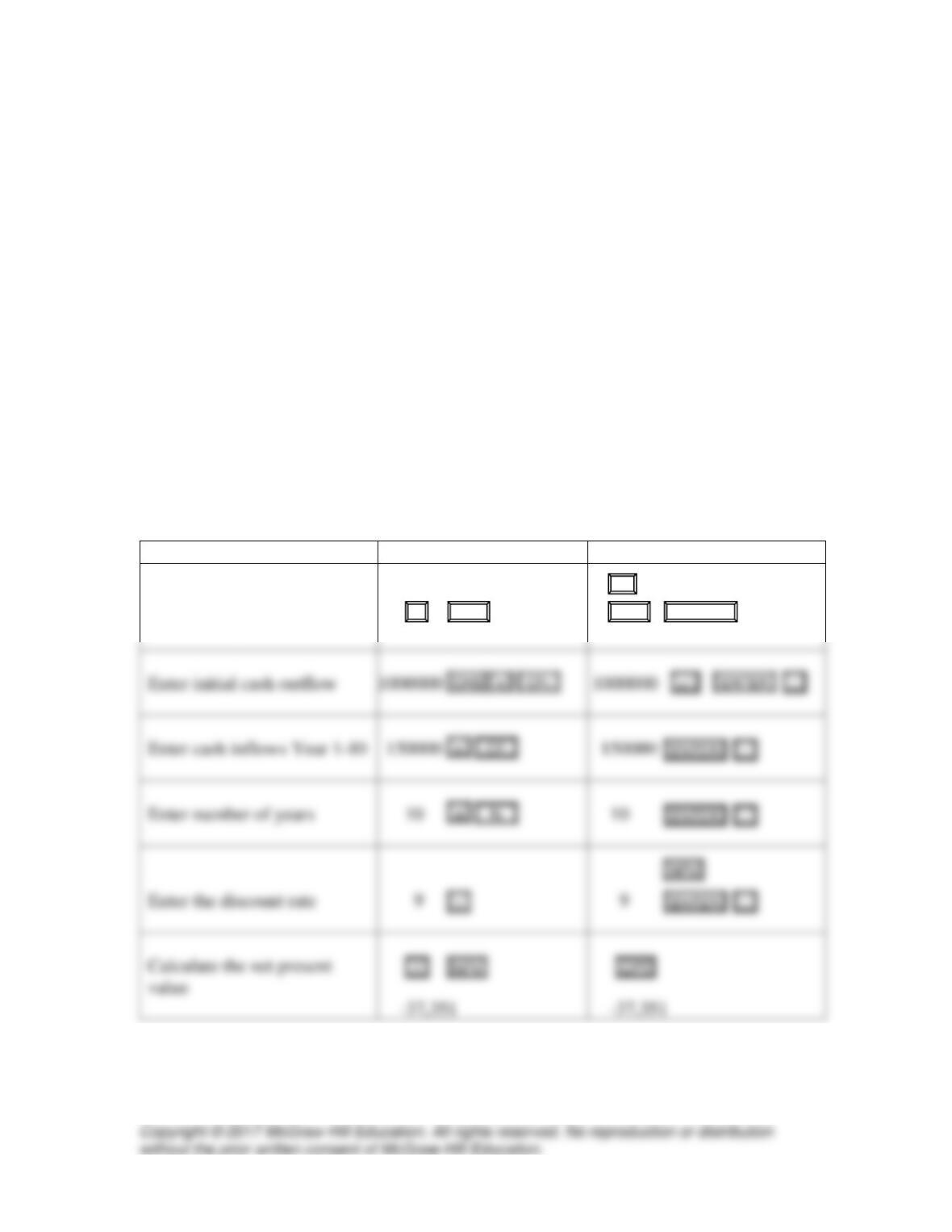
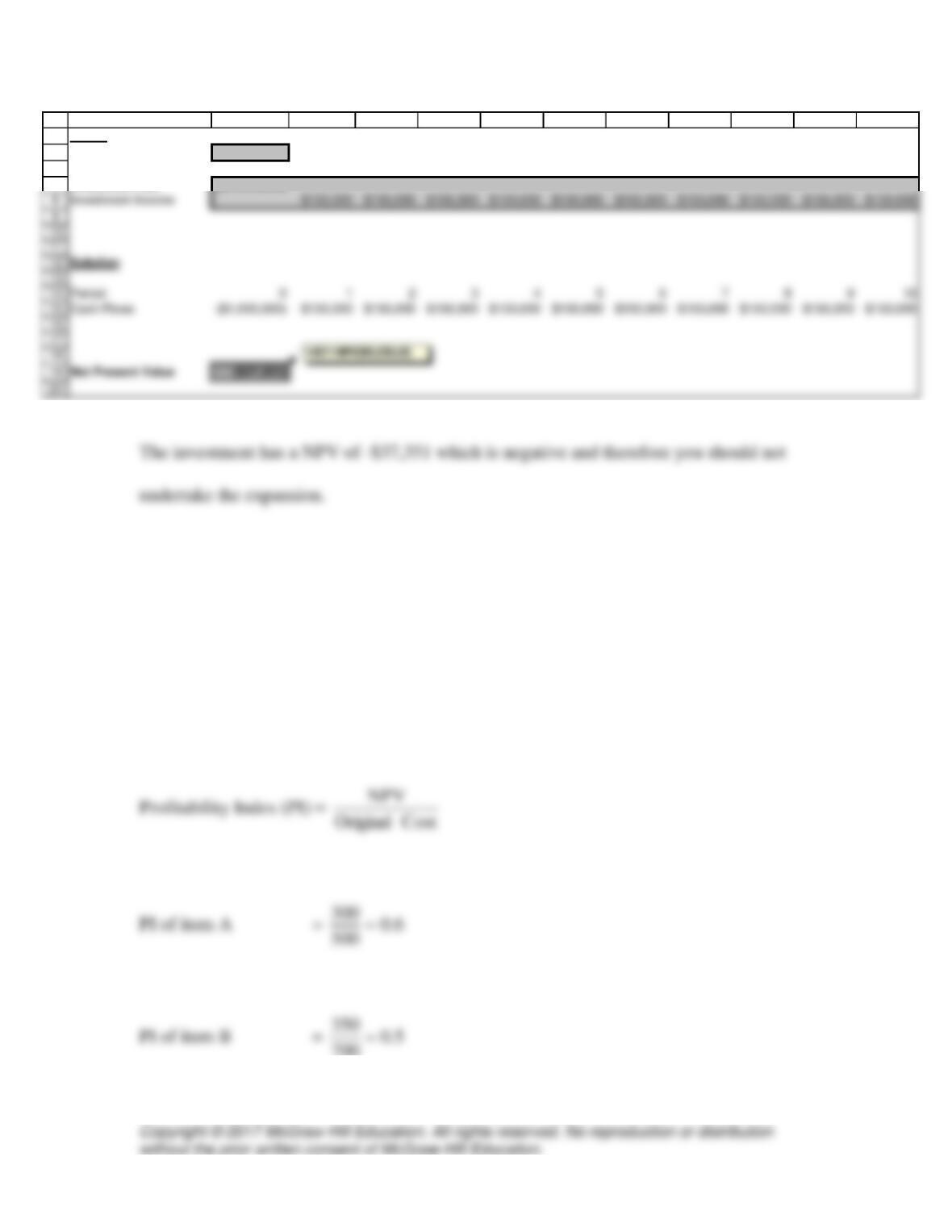
6) As the owner of a business you are faced with an investment decision. The
investment will expand your company’s production plant at a cost of $1 million.
The expansion will generate income of $150,000 per year for ten years, the required
rate of return on the investment is 9 percent. What is the net present value of the
investment, and should you proceed with the expansion?
Calculator Solution
General Calculator Approach
Specific HP12C
Specific TI BA II Plus
-37,351
-37,351
↓
i
↓
f
g
↓
Clear the register
Excel Solution
f
FIN
CF
2nd
CLR Work
4
5
6
7
A B C D E F G H I J K L
Inputs
Required Rate of Return 9%
Period 0 1 2 3 4 5 6 7 8 9 10
Investment Cost ($1,000,000)
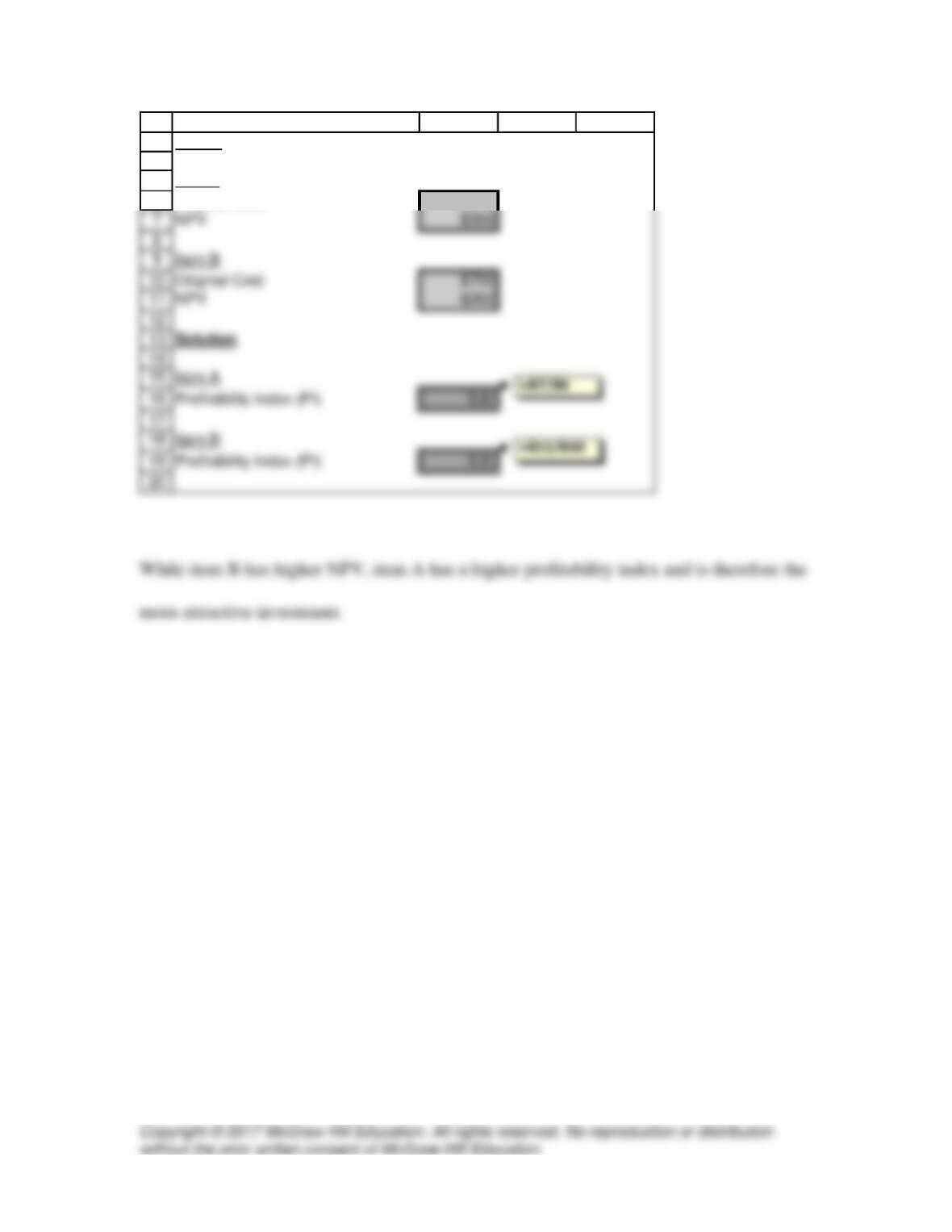
7) Item A has a NPV of $300 and an original cost of $500. Item B has a NPV of $350
and an original cost of $700. What is the profitability index (PI) of items A and B,
and which is a more attractive investment.
Solution
700
Excel Solution
3
4
5
6
Solution
A B C D
Inputs
Item A
Original Cost $500
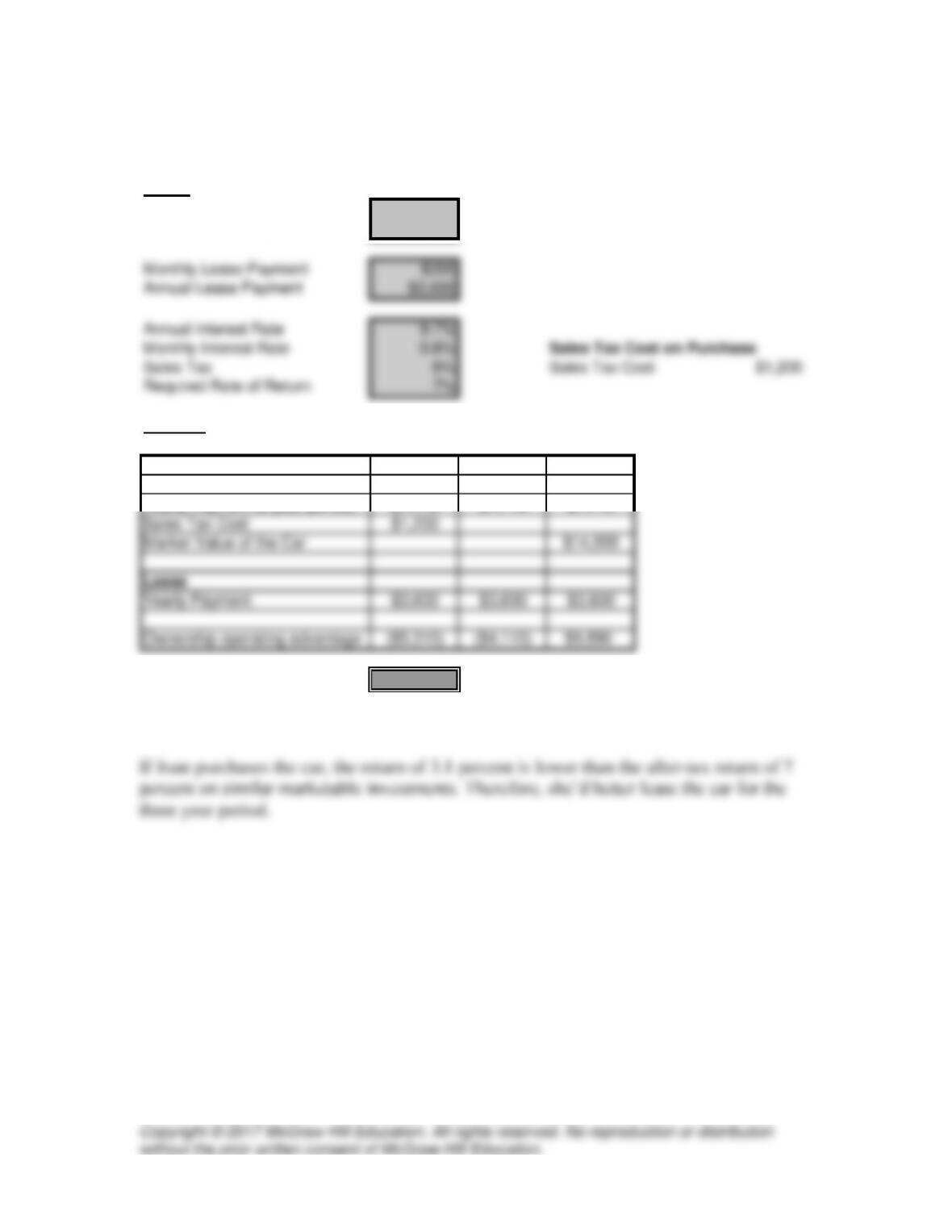
8) Joan has a choice of purchasing a car for $20,000 with 9.7 percent interest cost to
borrow and a three year repayment period for leasing the vehicle. Leasing the auto
would cost $300 a month for a three year term. The sales tax is 6 percent. The car
is expected to have a value of $14,000 at the end of the leasing period. Joan can
obtain 7 percent after tax on similar marketable investments. Should she lease or
buy the car?
Excel Solution
Inputs Auto Loan Repayment (3 year period)
Purchase Price $20,000 Monthly Payment $643
Market Value in 3 years $14,000 Annual Payment $7,710
Solution
Year 1 2 3
Buy
Lease
Ownership operating advantage ($5,310) ($4,110) $9,890
Yearly Payment (3 year period) $7,710 $7,710 $7,710
Internal Rate of Return 3.1%
Car
Lease vs. Buy
ANSWERS TO CASE APPLICATION QUESTIONS
Chapter 8 Household Investments
1) No. We don’t know because we have not performed a retirement needs analysis.
2) Assuming the current furnace would last no more than 8 years the new furnace
has an attractive return and should be purchased.
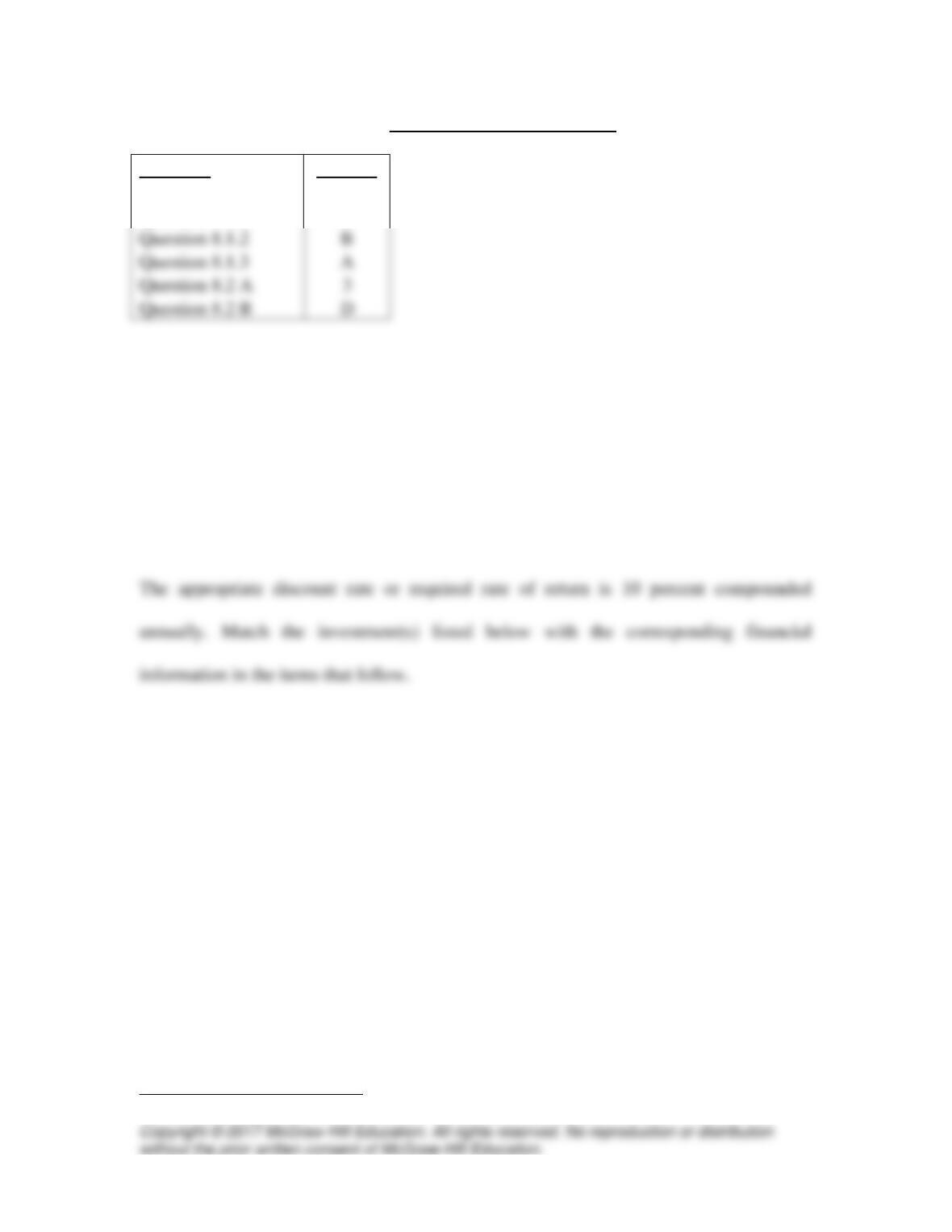
Answers to CFP® Questions
Question
Answer
Question 8.1.1
D
Question 8.1.2
B
Question 8.1.3
A
Question 8.2 A
Question 8.2 B
D
SOLUTIONS TO SELECTED CFP® CERTIFICATION EXAMINATION
PROBLEMS1
8.1
Investment A costs $10,000,000 and offers a single cash inflow of $13,000,000 after one
year. Investment B costs $1,000,000 and will be worth $2,000,000 at the end of the year.
A. Investment A
B. Investment B
C. Both A and B
D. Neither A nor B
1. ___ The net present value (NPV) is $818,182 and the internal rate of return is
30 percent.
2. ___ The NPV is $818,182 and the internal rate of return is 100 percent.
3. ___ The NPV is $1,818,182 and the internal rate of return is 30 percent.
1 The solutions supplied are those of the author and not of the CFP Board.
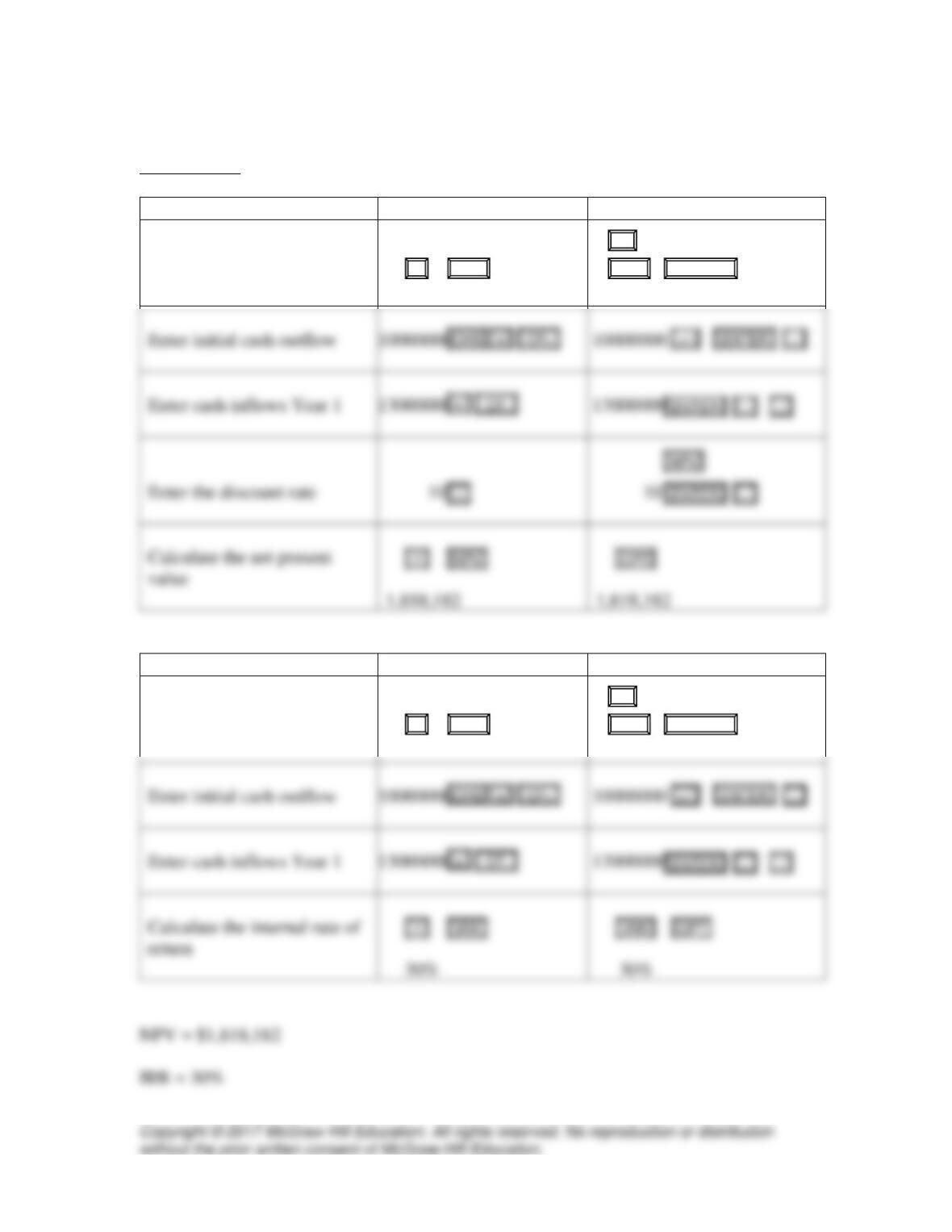
Solution:
Investment A
General Calculator Approach
Specific HP12C
Specific TI BA II Plus
Clear the register
Enter initial cash outflow
Enter cash inflows Year 1
Enter the discount rate
10
10
Calculate the net present
value
1,818,182
1,818,182
↓
↓
f
CHS
↓
↓
General Calculator Approach
HP12C
TI BA II Plus
Clear the register
Enter initial cash outflow
Enter cash inflows Year 1
Calculate the internal rate of
return
30%
30%
f
↓
CHS
↓
↓
f
FIN
CF
2nd
CLR Work
f
FIN
CF
2nd
CLR Work
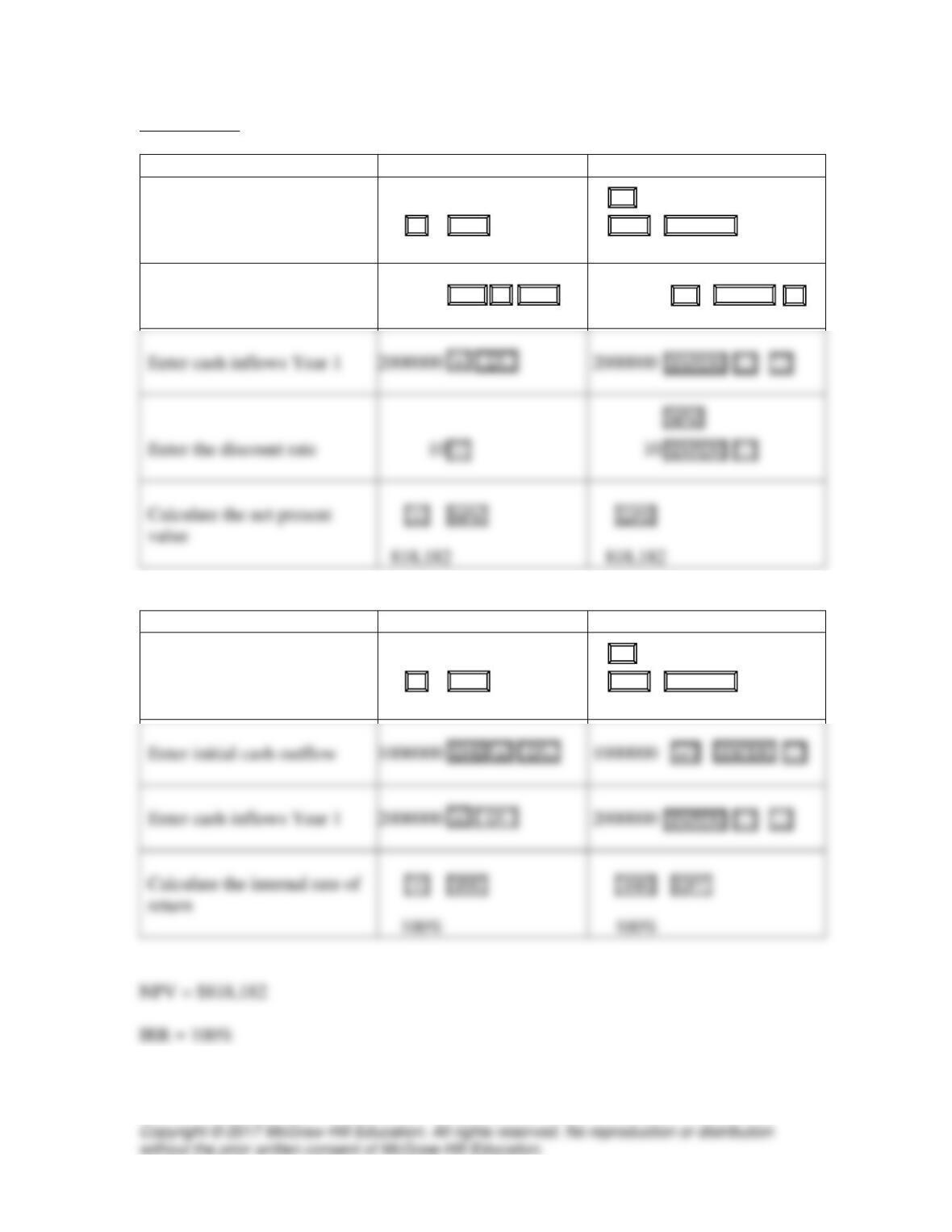
Investment B
General Calculator Approach
Specific HP12C
Specific TI BA II Plus
Clear the register
Enter initial cash outflow
1000000
1000000
Enter the discount rate
10
10
Calculate the net present
value
i
ENTER
↓
f
↓
↓
General Calculator Approach
HP12C
TI BA II Plus
Clear the register
Enter initial cash outflow
1000000
1000000
Enter cash inflows Year 1
2000000
2000000
return
f
IRR
IRR
CF0
ENTER
↓
g
CHS
ENTER
↓
↓
The correct answers are:
CF0
ENTER
↓
f
FIN
CF
2nd
CLR Work
g
CHS
+/–
f
FIN
CF
2nd
CLR Work
30 percent.
8.2
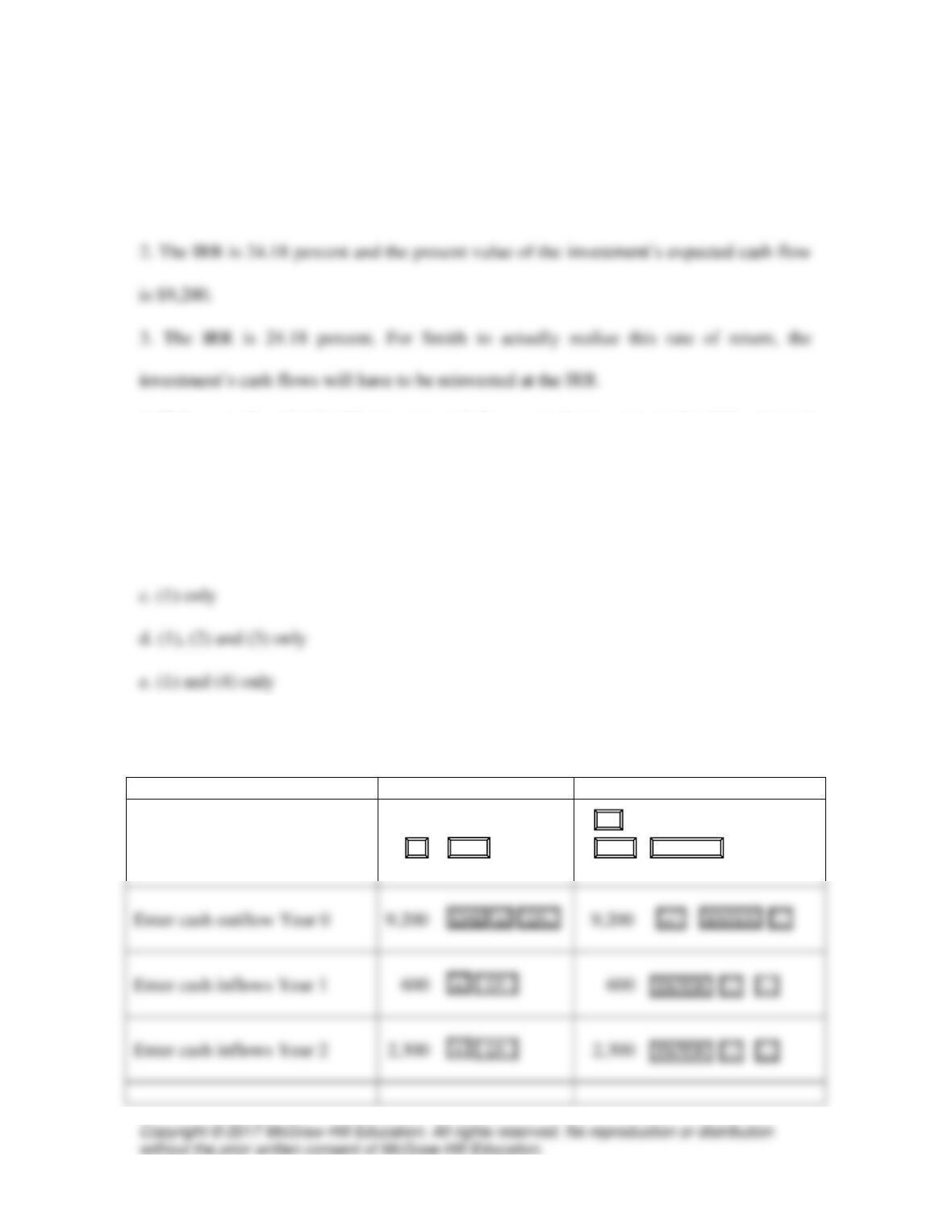
Smith invests in a limited partnership that requires an outlay of $9,200 today. At the end
of years 1 through 5, he will receive the after-tax cash flows shown below. The
partnership will be liquidated at the end of the fifth year. Smith is in the 28 percent tax
bracket.
Years Cash Flows
0 ($9,200) CF0
A. The after-tax IRR of this investment is
1. 17.41 percent
B. Which of the following is/are correct?
1. The IRR is the discount rate that equates the present value of an investment’s expected
costs with the present value of the expected cash inflows.
4. If the cost of capital for this investment is 9 percent, the investment should be rejected
because its net present value will be negative.
a. (2) and (4) only
b. (2) and (3) only
Solution:
General Calculator Approach
HP12C
TI BA II Plus
Clear the register
Enter cash outflow Year 0
9,200
9,200
Enter cash inflows Year 1
↓
CHS
↓
↓
↓
f
FIN
CF
2nd
CLR Work
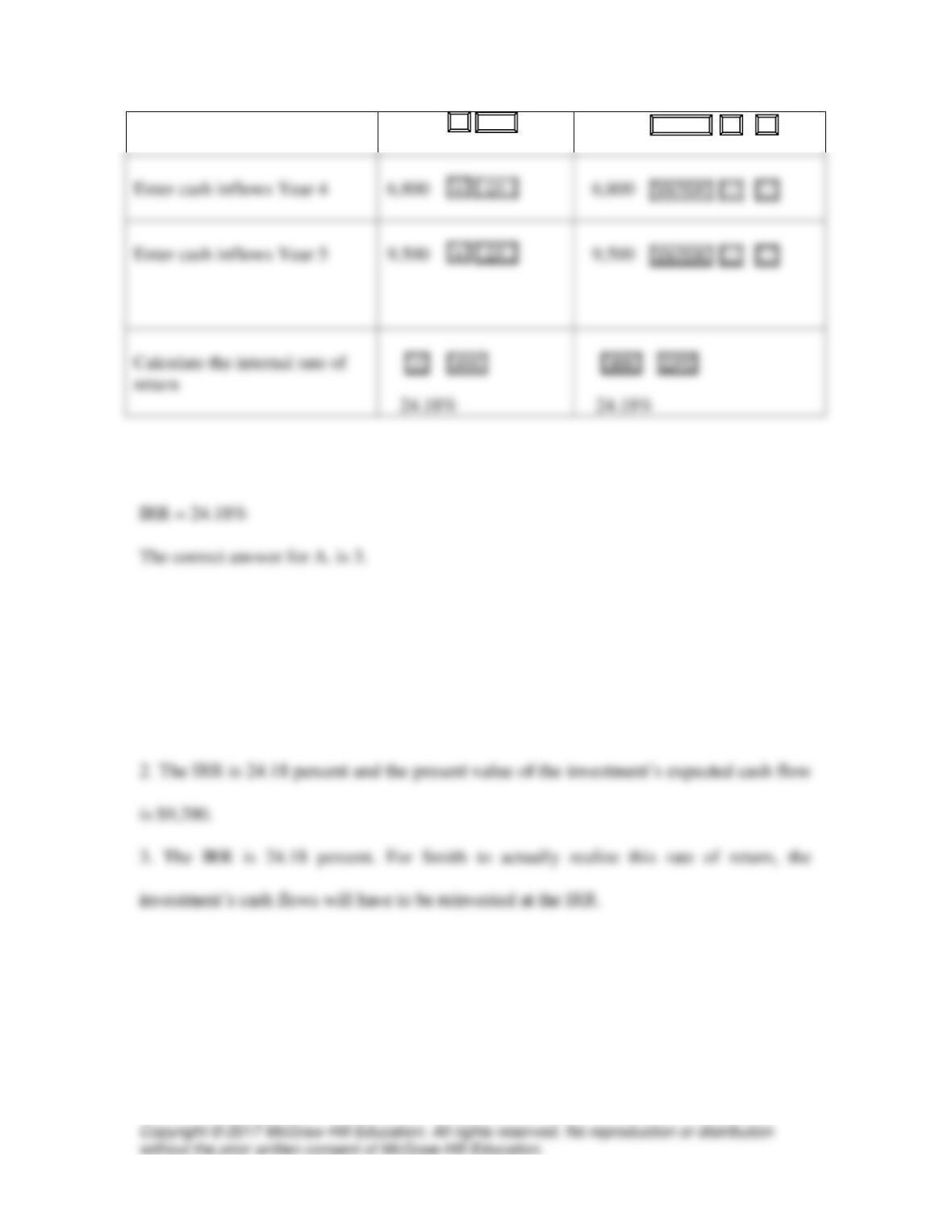
Enter cash inflows Year 3
2,200
2,200
Enter cash inflows Year 4
6,800
6,800
return
IRR
IRR
CFj
g
ENTER
↓
↓
g
ENTER
↓
↓
Here are the correct statements:
1. The IRR is the discount rate that equates the present value of an investment’s expected
costs with the present value of the expected cash inflows.
CFj
g
ENTER
↓
↓