Chapter 8
Bond Valuation and Risk
Outline
Bond Valuation Process
Explaining Bond Price Movements
Sensitivity of Bond Prices to Interest Rate Movements
Bond Price Elasticity
Duration
Bond Investment Strategies
Matching Strategy
Valuation and Risk of International Bonds
Chapter 8: Bond Valuation and Risk ❖ 2
Key Concepts
1. Explain the logic behind how bond prices are affected by interest rates.
POINT/COUNTER-POINT:
Does Governance of Firms Affect the Prices of Their Bonds?
POINT: No. Bond prices are primarily determined by interest rate movements and therefore are not
affected by the governance of the firms that issued bonds.
COUNTER-POINT: Yes. Bond prices reflect the risk of default. Firms that impose more effective
WHO IS CORRECT? Use the Internet to learn more about this issue and then formulate your own opinion.
ANSWER: A bond’s price is based on the investor’s required rate of return, and investors may accept a
Questions
1. Bond Investment Decision. Based on your forecast of interest rates, would you recommend that
investors purchase bonds today? Explain.
ANSWER: Students that expect interest rates to rise should expect bond prices to decline in the
2. How Interest Rates Affect Bond Prices. Explain the impact of a decline in interest rates on:
a. An investor’s required rate of return.
ANSWER: An investor’s required rate of return should decrease.
b. The present value of existing bonds.
c. The prices of existing bonds.
3. Relevance of Bond Price Movements. Why is the relationship between interest rates and bond prices
important to financial institutions?
4. Source of Bond Price Movements. Determine the direction of bond prices over the last year and
explain the reason for it.
ANSWER: If prices of existing bonds have increased, this is normally because interest rates have
5. Exposure to Bond Price Movements. How would a financial institution with a large bond portfolio
be affected by falling interest rates? Would it be affected by a greater degree than a financial
institution with a greater concentration of bonds (and fewer short-term securities)? Explain.
ANSWER: The market value of the financial institution’s bond portfolio will increase. A financial
6. Comparison of Bonds to Mortgages. Since fixed-rate mortgages and bonds have similar payment
flows, how is a financial institution with a large portfolio of fixed-rate mortgages affected by rising
interest rates? Explain.
ANSWER: A financial institution with a large portfolio of fixed-rate mortgages is adversely affected
7. Coupon Rates. If a bond’s coupon rate is greater than the investor’s required rate of return on the
bond, would the bond’s price be greater than or less than its par value? Explain.
8. Bond Price Sensitivity. Is the price of a long-term bond or the price of a short-term security
more sensitive to a change in interest rates? Why?
ANSWER: The price of a long-term bond is more sensitive to a change in interest rates than the price
9. Required Return on Bonds. Why does the required rate of return for a particular bond change over time?
ANSWER: The required rate of return on a bond changes because of a change in interest rates, or a

Chapter 8: Bond Valuation and Risk ❖ 4
10. Inflation Effects. Assume that inflation is expected to decline in the near future. How could this
affect future bond prices? Would you recommend that financial institutions increase or decrease their
concentration in long-term bonds based on this expectation? Explain.
ANSWER: Since lower inflation normally causes a decline in interest rates (other things being equal),
11. Bond Price Elasticity. Explain the concept of bond price elasticity. Would bond price elasticity
suggest a higher price sensitivity for zero-coupon bonds or high-coupon bonds that are offering the
same yield to maturity? Why? What does this suggest about the market value volatility of mutual
funds containing zero-coupon Treasury bonds versus high-coupon Treasury bonds?
ANSWER: Bond price elasticity measures the percentage change in a bond’s price in response to a
12. Economic Effects on Bond Prices. An analyst recently suggested that there will be a major
economic expansion that will favorably affect the prices of high-rated fixed-rate bonds, because the
credit risk of bonds will decline as corporations improve their performance. Assuming that the
economic expansion occurs, do you agree with the conclusion of the analyst? Explain.
ANSWER: The decline in the credit risk will result in slightly lower bond premiums, which would
13. Impact of War. When tensions rise or war erupts in the Middle East, bond prices in many countries
tend to decline. What is the link between problems in the Middle East and bond prices? Would you
expect bond prices to decline more in Japan or in the United Kingdom as a result of the crisis? (The
answer is tied to how interest rates may change in those countries.) Explain.
ANSWER: The crisis led to an anticipated shortage of oil, which can fuel inflation. Those countries
14. Bond Price Sensitivity. Explain how bond prices may be affected by money supply growth, oil
prices, and economic growth.
ANSWER: Any factors that affect inflationary expectations may affect interest rate expectations and
therefore affect the demand for bonds. Higher oil prices, excessive money supply growth, and strong

Chapter 8: Bond Valuation and Risk ❖ 5
15. Impact of Oil Prices. Assume that oil-producing countries have agreed to reduce their oil production
by 30 percent. How would bond prices be affected by this announcement? Explain.
ANSWER: Reduced oil production implies higher oil prices, higher interest rates, and lower bond
16. Impact of Economic Conditions. Assume that breaking news causes bond portfolio managers to
suddenly expect much higher economic growth. How might bond prices be affected by this
expectation? Explain. Now assume that breaking news causes bond portfolio managers to suddenly
anticipate a recession. How might bond prices be affected? Explain.
ANSWER: Higher economic growth places upward pressure on interest rates and downward pressure
Advanced Questions
17. Impact of the Fed on Bond Prices. Assume that the bond market participants suddenly expect the
Fed to substantially increase the money supply.
a. Assuming no threat of inflation, how would this expectation affect bond prices?
ANSWER: Without the threat of inflation, an increase in the money supply could reduce interest rates
b. Assuming that inflation may result, how would bond prices be affected?
c. Given your answers to (a) and (b), explain why expectations of the Fed’s increase in the money
supply may sometimes cause bond market participants to disagree about how bond prices will be
affected.
ANSWER: Some bond market participants may expect that the Fed’s actions will cause higher
18. Impact of a Weak Dollar on Bond Prices. The value of the dollar is monitored by bond market
participants over time.
a. Explain why expectations of a weak dollar could reduce bond prices in the U.S.
Chapter 8: Bond Valuation and Risk ❖ 6
ANSWER: If the dollar weakens, U.S. inflation may rise, and U.S. interest rates may rise. Thus, bond
b. On some occasions, news of the dollar weakening did not have any impact on bond markets.
Assuming that no other information offsets the impact, explain why the bond markets may
not have responded to the announcement.
ANSWER: If the weakening of the dollar was already anticipated by the bond market, the
19. International Bonds. A U.S. insurance company purchased British 20-year Treasury bonds instead
of U.S. 20-year Treasury bonds because the coupon rate was 2 percentage points higher on the British
bonds. Assume that the insurance company sold the bonds after five years. Its yield over the five-year
period was substantially less than the yield it would have received on the U.S. bonds over the same
five-year period. Assume that the U.S. insurance company had hedged its exchange rate exposure.
Given that the lower yield was not because of default risk or exchange rate risk, explain how the
British bonds could have generated a lower yield than the U.S. bonds. (Assume that either type of
bond could have been purchased at the par value.)
ANSWER: If British interest rates increased or remained constant while U.S. interest rates declined,
20. International Bonds. The pension fund manager of Utterback (a U.S. firm) purchased German 20-
year Treasury bonds instead of U.S. 20-year Treasury bonds. The coupon rate was 2 percent lower on
the German bonds. Assume that the manager sold the bonds after five years. The yield over the five-
year period was substantially more than the yield it would have received on the U.S. bonds over the
same five-year period. Explain how the German bonds could have generated a higher yield than the
U.S. bonds for the manager, even if the exchange rate is stable over this five-year period. (Assume
that the price of either bond was initially equal to its respective par value). Be specific.
ANSWER: The German interest rates could have declined while U.S. interest rates increased, so that

Chapter 8: Bond Valuation and Risk ❖ 7
21. Implications of a Shift in the Yield Curve. Assume the yield curve experiences a sudden shift, such
that the new yield curve is higher and more steeply sloped today than it was yesterday. If a firm issues
new bonds today, would its bonds sell for higher or lower prices than if it had issued the bonds
yesterday? Explain.
22. How Bond Prices May Respond to Prevailing Conditions. Consider the prevailing conditions for
inflation (including oil prices), the economy, the budget deficit, and the Fed’s monetary policy that
could affect interest rates. Based on these conditions, do you think bond prices will increase or
decrease during this semester? Offer some logic to support your answer. Which factor do you think
will have the biggest impact on bond prices?
ANSWER: This question is open-ended. It requires students to apply the concepts that were presented
23. Interaction Between Bond and Money Markets. Assume that you maintain bonds and money
market securities in your portfolio, and you suddenly believe that long-term interest rates will rise
substantially tomorrow (even though the market does not share the same view), while short-term
interest rates will remain the same.
a. How would you rebalance your portfolio between bonds and money market securities?
b. If the market suddenly recognizes that long-term interest rates will rise tomorrow, and that they
respond in the same manner as you, explain how the demand for these securities (bonds and
money market securities), the supply of these securities for sale, and the prices and yields of these
securities will be affected.
c. Assume that the yield curve is flat today. Explain how the slope of the yield curve will change
tomorrow in response to the market activity.
ANSWER: The yield curve will become upward-sloping because the yield offered on bonds will rise,
24. Impact of the Credit Crisis on Risk Premiums. Explain how the prices of bonds were affected by a
change in the risk-free rate during the credit crisis that began in 2008. Explain how bond prices were
affected by a change in the credit risk premium during the credit crisis.
ANSWER: The risk-free rate declined, which placed upward pressure on bond prices. However, the
Chapter 8: Bond Valuation and Risk ❖ 8
25. Systemic Risk. Explain why systemic risk is a source of concern in the bond and other debt
markets. Also explain how the Financial Reform Act of 2010 was intended to reduce systemic risk.
ANSWER: Systemic risk refers to the potential collapse of the entire market or financial system.
Many financial institutions rely heavily on debt to fund their operations, and they are interconnected
26. Link between Market Uncertainty and Bond Yields When stock market volatility is high,
corporate bond yields tend to increase. Which market forces cause the increase in corporate bond
yields under these conditions?
ANSWER: The high stock market volatility partially reflects high uncertainty of investors about
27. Fed’s Impact on Credit Risk The Fed’s open market operations can change the money supply,
which can affect the risk-free rate offered on bonds. Why might the Fed’s policy also affect the risk
premium on corporate bonds?
28. Contagion Effects Explain why a credit crisis in one country may be transmitted to other
countries.
ANSWER: Economic conditions are often correlated between countries (due to international
CRITICAL THINKING QUESTION
Impact of Credit Crisis on Bond Markets. The credit crisis was caused by the mortgage market, yet it
had a serious impact on bond markets. Write a short essay on how the bond market was affected and offer
your opinion on how the bond market may attempt to insulate itself from a credit crisis in the future.
ANSWER
Chapter 8: Bond Valuation and Risk ❖ 9
The credit crisis resulted from excessive credit that was granted in the mortgage market in the 2004-2006
period, which resulted in a housing bubble. During 2008, it was obvious that many of these mortgages
Interpreting Financial News
Interpret the following comments made by Wall Street analysts and portfolio managers.
a. “Given the recent uncertainty about future interest rates, investors are fleeing from zero-coupon
bonds.”
b. “Catrell Insurance Company invests heavily in bonds, and its stock price increased substantially
today in response to the Fed’s signal that it plans to reduce interest rates.”
Chapter 8: Bond Valuation and Risk ❖ 10
c. “Bond markets declined when the Treasury flooded the market with its new bond offering.”
If the Treasury issues new bonds, the supply of bonds may exceed the demand, causing a decline
Managing in Financial Markets
As an investor, you plan to invest your funds in long-term bonds. You have $100,000 to invest. You may
purchase highly rated municipal bonds at par with a coupon rate of 6 percent; you have a choice of a
maturity of 10 years or 20 years. Alternatively, you could purchase highly rated corporate bonds at par
a. What is the annual interest you would earn (before taxes) on the municipal bond? On the
corporate bond?
b. Assume that you are in the 20 percent tax bracket. If the level of credit risk and the liquidity for
the municipal and corporate bonds are the same, would you invest in the municipal bond or the
corporate bond? Why?
c. Assume that you expect all yields paid on newly issued notes and bonds (regardless of maturity)
to decrease by a total of 4 percentage points over the next two years, and to increase by a total of
2 percentage points over the following three years. Would you select the 10-year maturity or the
20-year maturity for the type of bond you plan to purchase? Why?
Select the 20-year bond as long as you are confident about your expectations. The general level
Problems
1. Bond Valuation. Assume the following information for an existing bond that provides annual coupon
payments:
Par value = $1,000

Chapter 8: Bond Valuation and Risk ❖ 11
Coupon rate = 11%
Maturity = 4 years
Required rate of return by investors = 11%
a. What is the present value of the bond?
ANSWER:
b. If the required rate of return by investors were 14 percent instead of 11 percent, what would be
the present value of the bond?
ANSWER:
PV of Bond = PV of Coupon Payments + PV of Principal
c. If the required rate of return by investors were 9 percent, what would be the present value of the
bond?
ANSWER:
2. Valuing a Zero-Coupon Bond. Assume the following information for existing zero-coupon bonds:
Par value = $100,000
Maturity = 3 years
Required rate of return by investors = 12%
How much should investors be willing to pay for these bonds?
ANSWER:
PV of Bond = PV of Coupon Payments + PV of Principal
Chapter 8: Bond Valuation and Risk ❖ 12
3. Valuing a Zero-Coupon Bond. Assume that you require a 14 percent return on a zero-coupon bond
with a par value of $1,000 and six years to maturity. What is the price you should be willing to pay
for this bond?
ANSWER:
PV of Bond = PV of Coupon Payments + PV of Principal
4. Bond Value Sensitivity to Exchange Rates and Interest Rates. Cardinal Company, a U.S.-based
insurance company, considers purchasing bonds denominated in Canadian dollars, with a maturity of
six years, a par value of C$50 million, and a coupon rate of 12 percent. The bonds can be purchased
at par by Cardinal and would be sold four years from now. The current exchange rate of the Canadian
dollar is $0.80. Cardinal expects that the required return by Canadian investors on these bonds four
years from now will be 9 percent. If Cardinal purchases the bonds, it will sell them in the Canadian
secondary market four years from now. The exchange rates are forecast as follows:
Year Exchange Rate of C$
1 $0.80
2 0.77
3 0.74
4 0.72
5 0.68
6 0.66
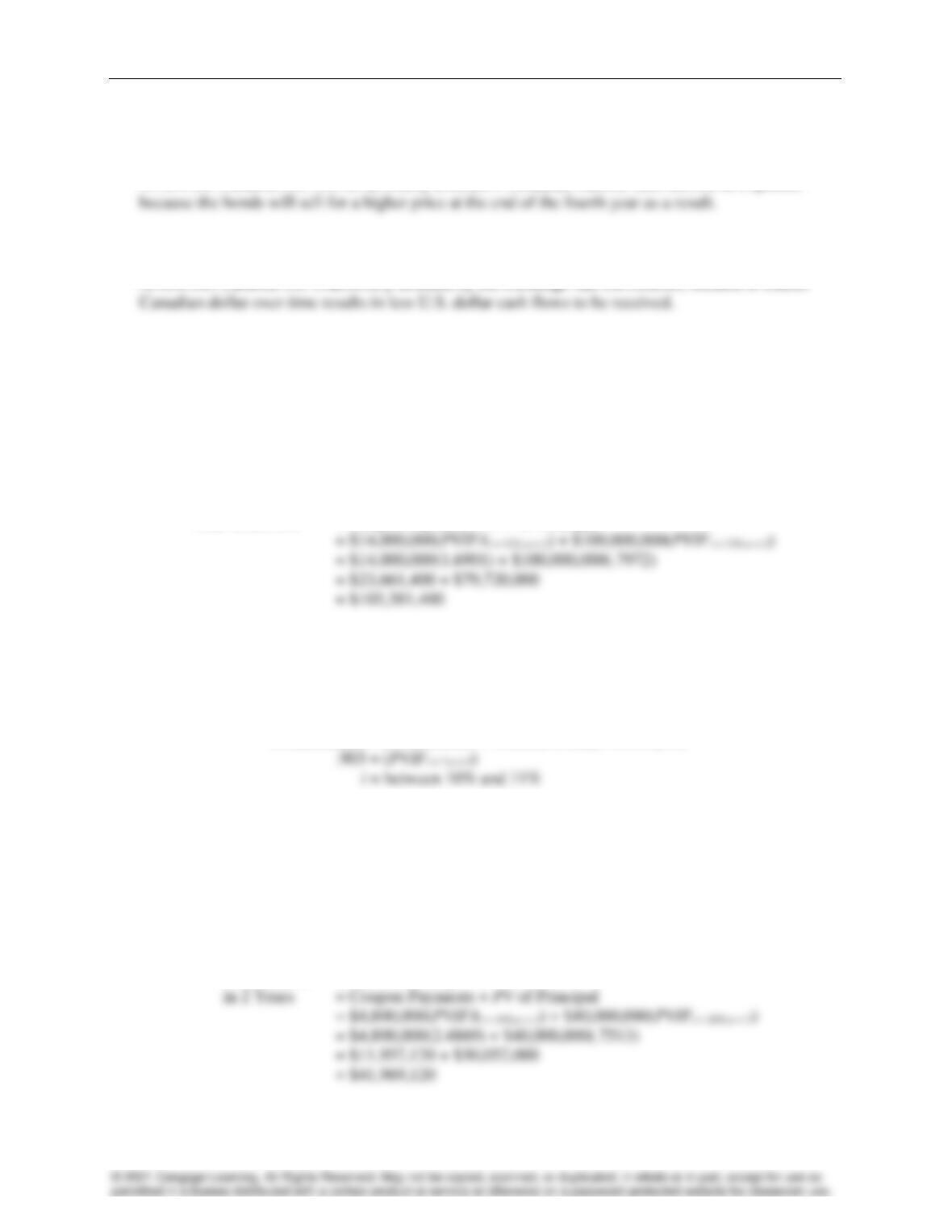
a. Refer to earlier examples in this chapter to determine the expected U.S. dollar cash flows to
Cardinal over the next four years. Refer to Chapter 3 to determine the present value of a bond.
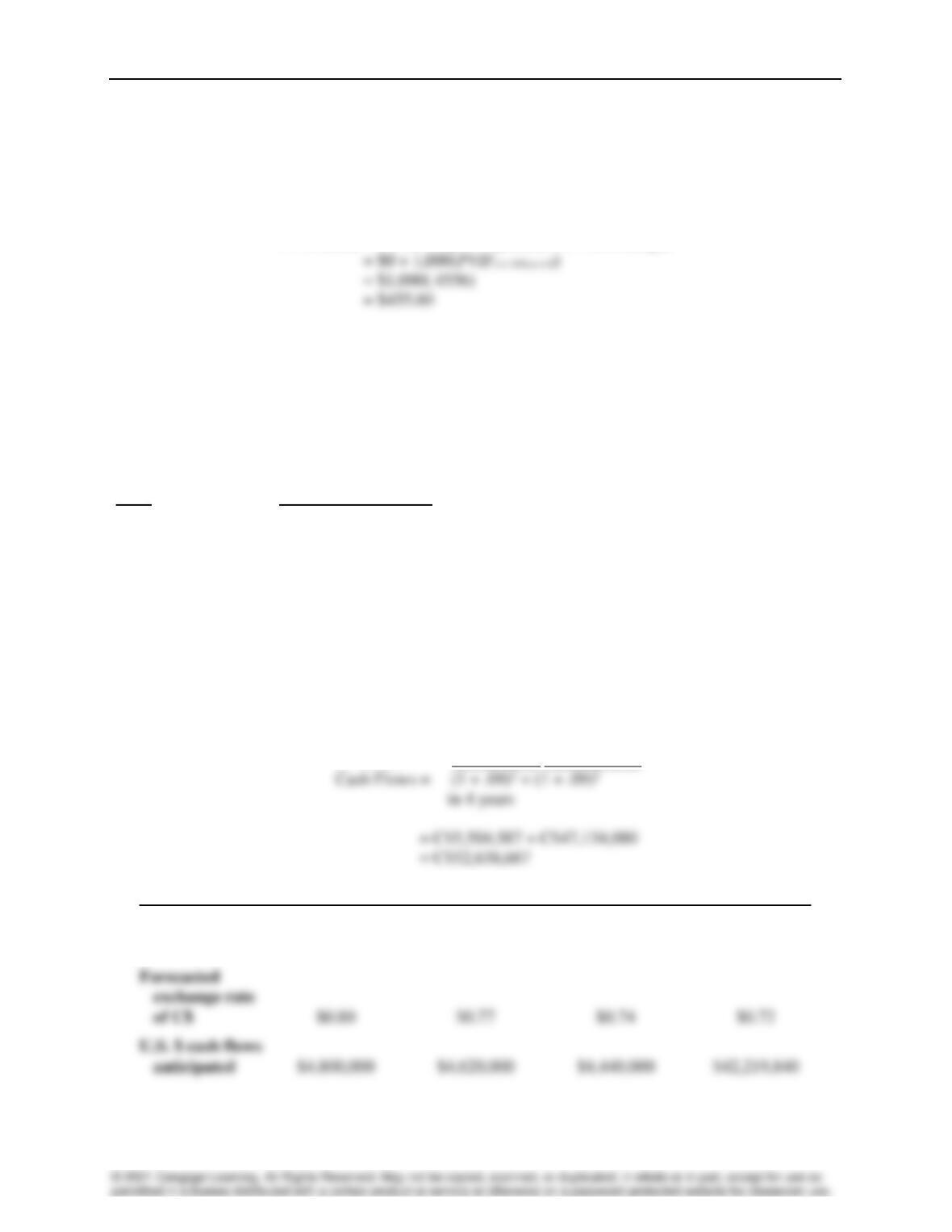
ANSWER:
PV of C$ C$6,000,000 C$56,000,000
Year 1 2 3 4
C$ cash flows C$6,000,000 C$6,000,000 C$6,000,000 C$6,000,000
anticipated +C$52,638,667
Chapter 8: Bond Valuation and Risk ❖ 13
b. Does Cardinal expect to be favorably or adversely affected by the interest rate risk?
Explain.
c. Does Cardinal expect to be favorably or adversely affected by exchange rate risk? Explain.
5. Predicting Bond Values. (Use the chapter appendix to answer this problem.) Bulldog Bank has just
purchased bonds for $106 million that have a par value of $100 million, three years remaining to
maturity, and an annual coupon rate of 14 percent. It expects the required rate of return on these
bonds to be 12 percent one year from now.
a. At what price could Bulldog Bank sell these bonds for one year from now?
ANSWER:
PV of Bonds One PV of Remaining
Year from Now = Coupon Payments + PV of Principal
b. What is the expected annualized yield on the bonds over the next year, assuming they are to be
sold in one year?
ANSWER:
$106,000,000 = ($14,000,000 + $103,381,400)(PVIFi = ?,n = 1)
6. Predicting Bond Values. (Use the chapter appendix to answer this problem.) Sun Devil Savings has
just purchased bonds for $38 million that have a par value of $40 million, five years remaining to
maturity, and a coupon rate of 12 percent. It expects the required rate of return on these bonds to be
10 percent two years from now.
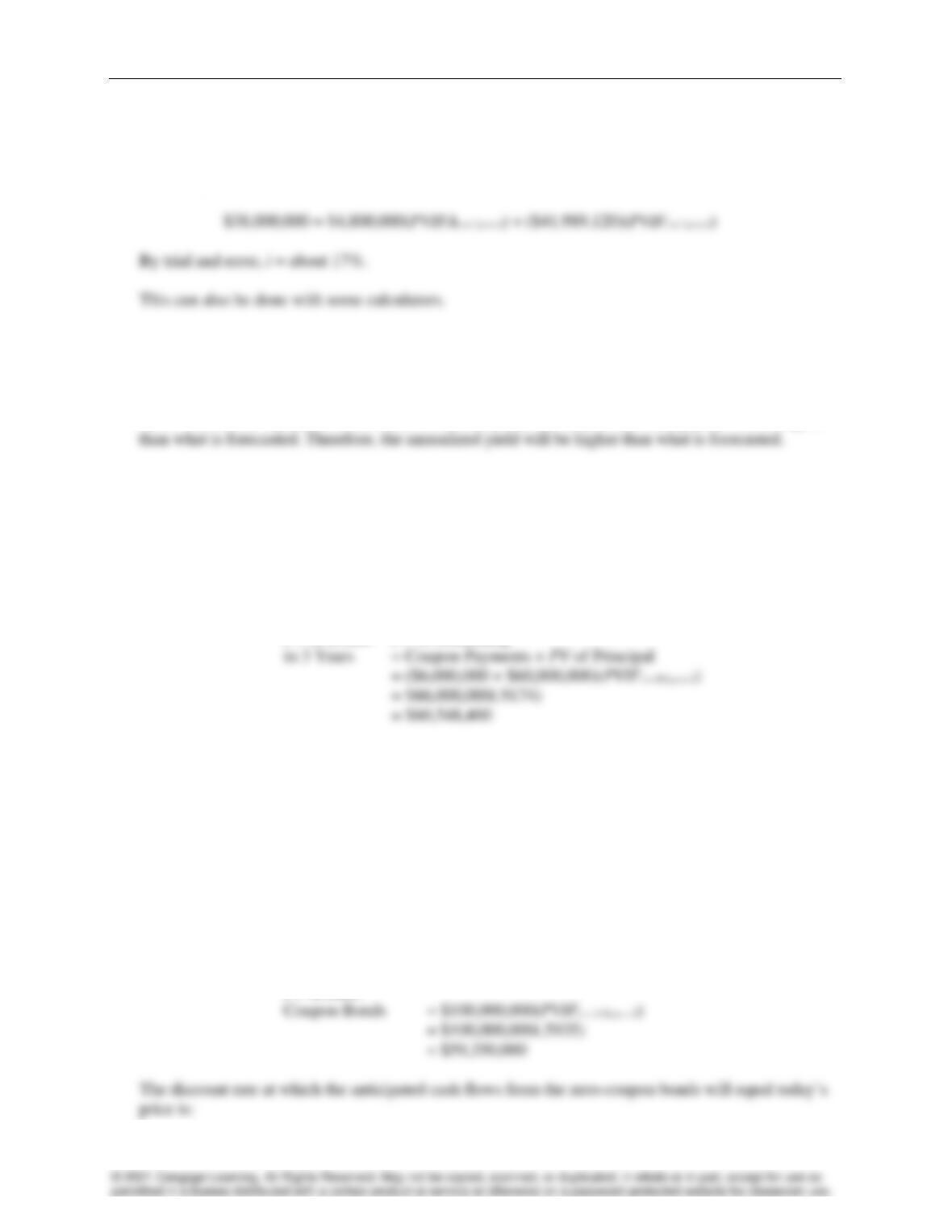
a. At what price could Sun Devil Savings sell these bonds for two years from now?
ANSWER:
PV of Bonds PV of Remaining
Chapter 8: Bond Valuation and Risk ❖ 14
b. What is the expected annualized yield on the bonds over the next two years, assuming they are to
be sold in two years?
ANSWER:
c. If the anticipated required rate of return of 10 percent in two years is overestimated, how would
the actual selling price differ from the forecasted price? How would the actual annualized yield
over the next two years differ from the forecasted yield?
ANSWER: If the required rate of return is overestimated, then the actual selling price will be higher
7. Predicting Bond Values. (Use the chapter appendix to answer this problem.) Spartan Insurance
Company plans to purchase bonds today that have four years remaining to maturity, a par value of
$60 million, and a coupon rate of 10 percent. Spartan expects that in three years, the required rate of
return on these bonds by investors in the market will be 9 percent. It plans to sell the bonds at that
time. What is the expected price it will sell the bonds for in three years?
ANSWER:
8. Bond Yields. (Use the chapter appendix to answer this problem.) Hankla Company plans to purchase
either (1) zero-coupon bonds that have ten years to maturity, a par value of $100 million, and a
purchase price of $40 million, or (2) bonds with similar default risk that have five years to maturity, a
9 percent coupon rate, a par value of $40 million, and a purchase price of $40 million.
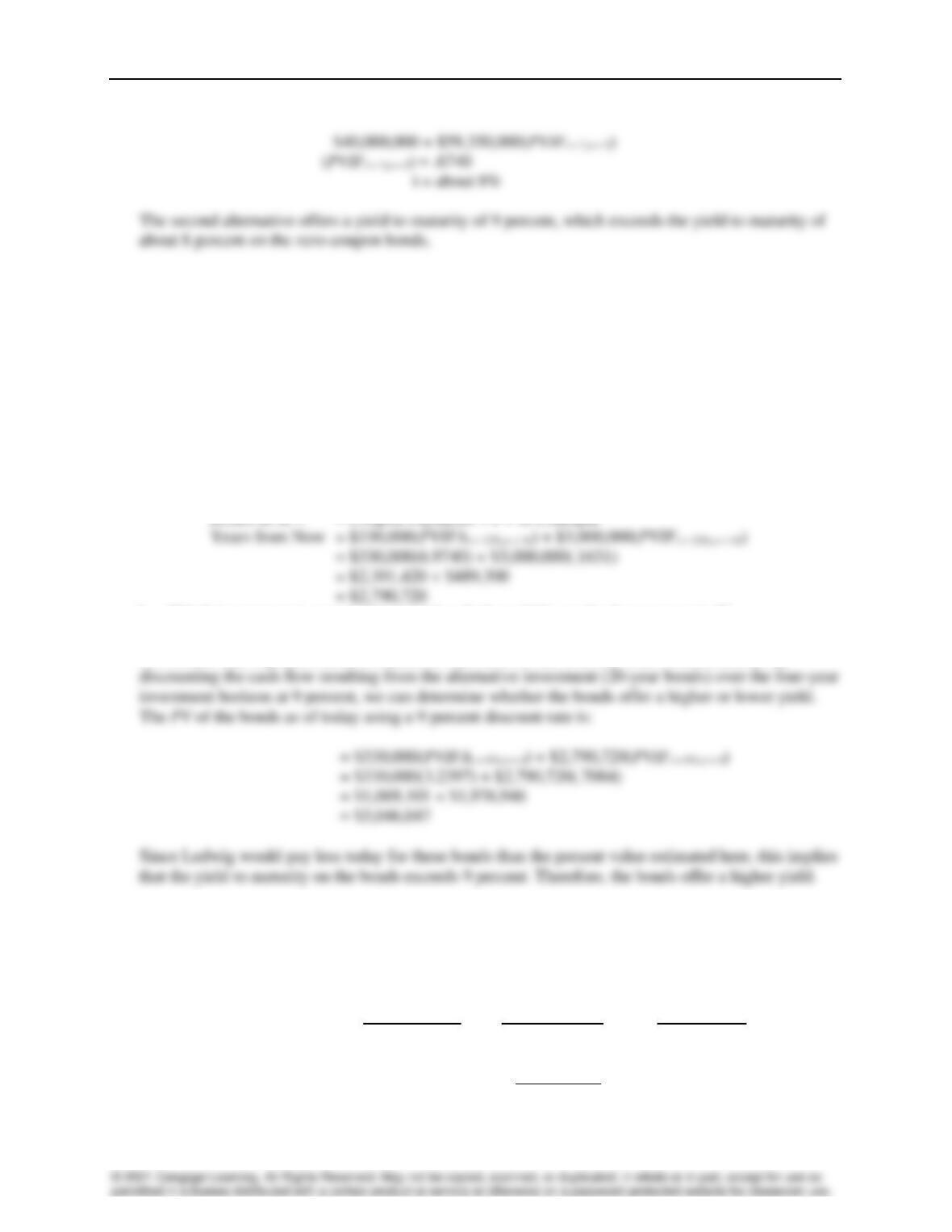
Hankla can invest $40 million for five years. Assume that the market’s required return in five years is
forecasted to be 11 percent. Which alternative would offer Hankla a higher expected return (or yield)
over the five-year investment horizon?
ANSWER: The PV of zero-coupon bonds five years from now is based on the PV of the par value to
be received 5 years after that point in time:
Chapter 8: Bond Valuation and Risk ❖ 15
9. Predicting Bond Values. (Use the chapter appendix to answer this problem.) The portfolio manager
of Ludwig Company has excess cash that is to be invested for four years. He can purchase either (1)
four-year Treasury notes that offer a 9 percent yield, or (2) new 20-year Treasury bonds for $2.9
million that offer a par value of $3 million and an 11 percent coupon rate with annual payments. The
manager expects that the required return on these same 20-year bonds will be 12 percent four years
from now.
a. What is the forecasted market value of the twenty-year bonds in four years?
ANSWER:
PV of 20-Year PV of Remaining
b. Which investment is expected to provide a higher yield over the four-year period?
ANSWER: Ludwig could achieve a yield of 9 percent on the Treasury notes with certainty. By
10. Predicting Bond Portfolio Value. (Use the chapter appendix to answer this problem). Ash
Investment Company manages a broad portfolio with this composition:
Years
Present Remaining
Par Value Market Value to Maturity
Zero-coupon bonds $200,000,000 $ 63,720,000 12
8% Treasury bonds 300,000,000 290,000,000 8
11% corporate bonds 400,000,000 380,000,000 10
$733,720,000
Chapter 8: Bond Valuation and Risk ❖ 16
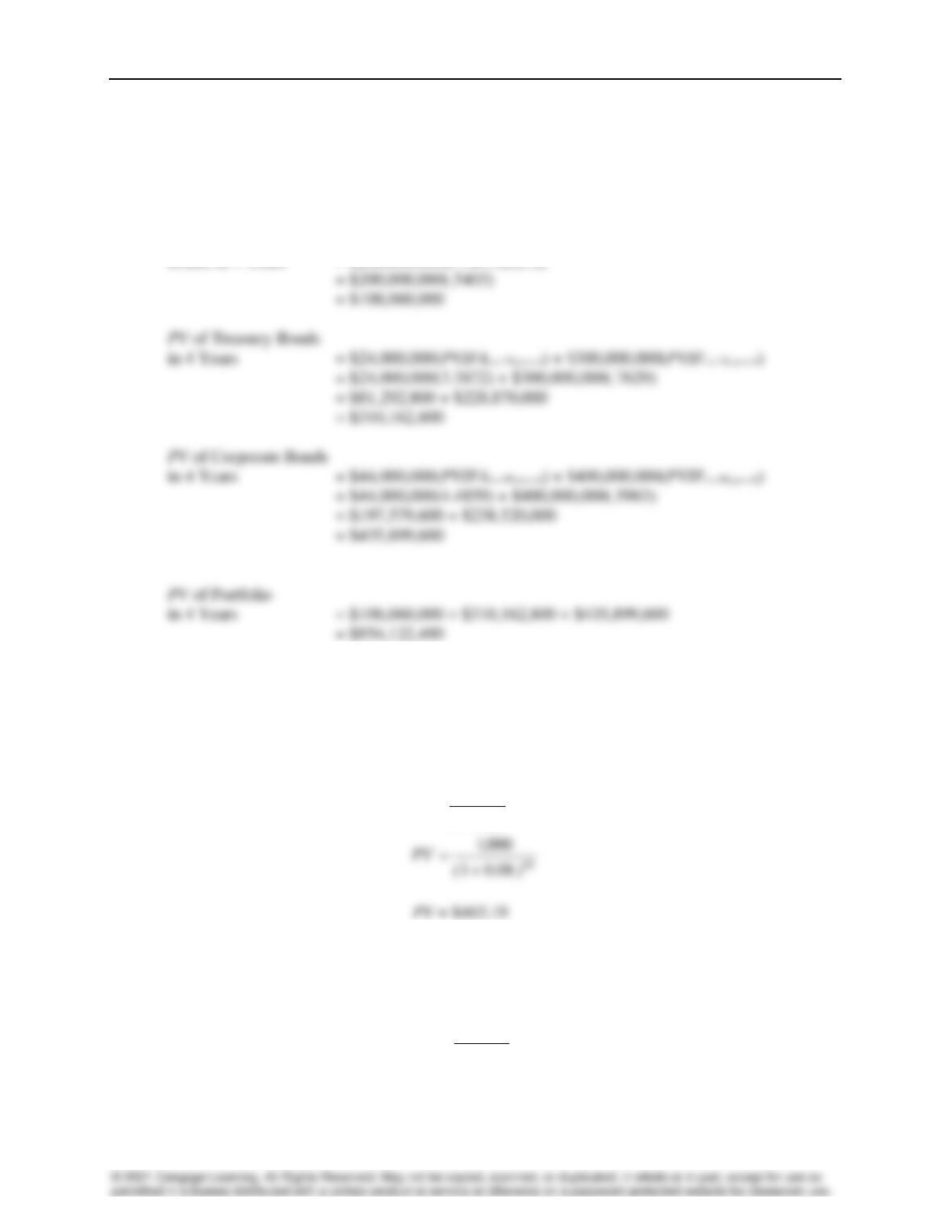
Ash expects that in four years, investors in the market will require an 8 percent return on the zero-
coupon bonds, a 7 percent return on the Treasury bonds, and a 9 percent return on corporate bonds.
Estimate the market value of the bond portfolio four years from now.
ANSWER:
PV of Zero-Coupon
11. Valuing a Zero-Coupon Bond.
a. A zero-coupon bond with a par value of $1,000 matures in 10 years. At what price would this
bond provide a yield to maturity that matches the current market rate of 8 percent?
ANSWER:
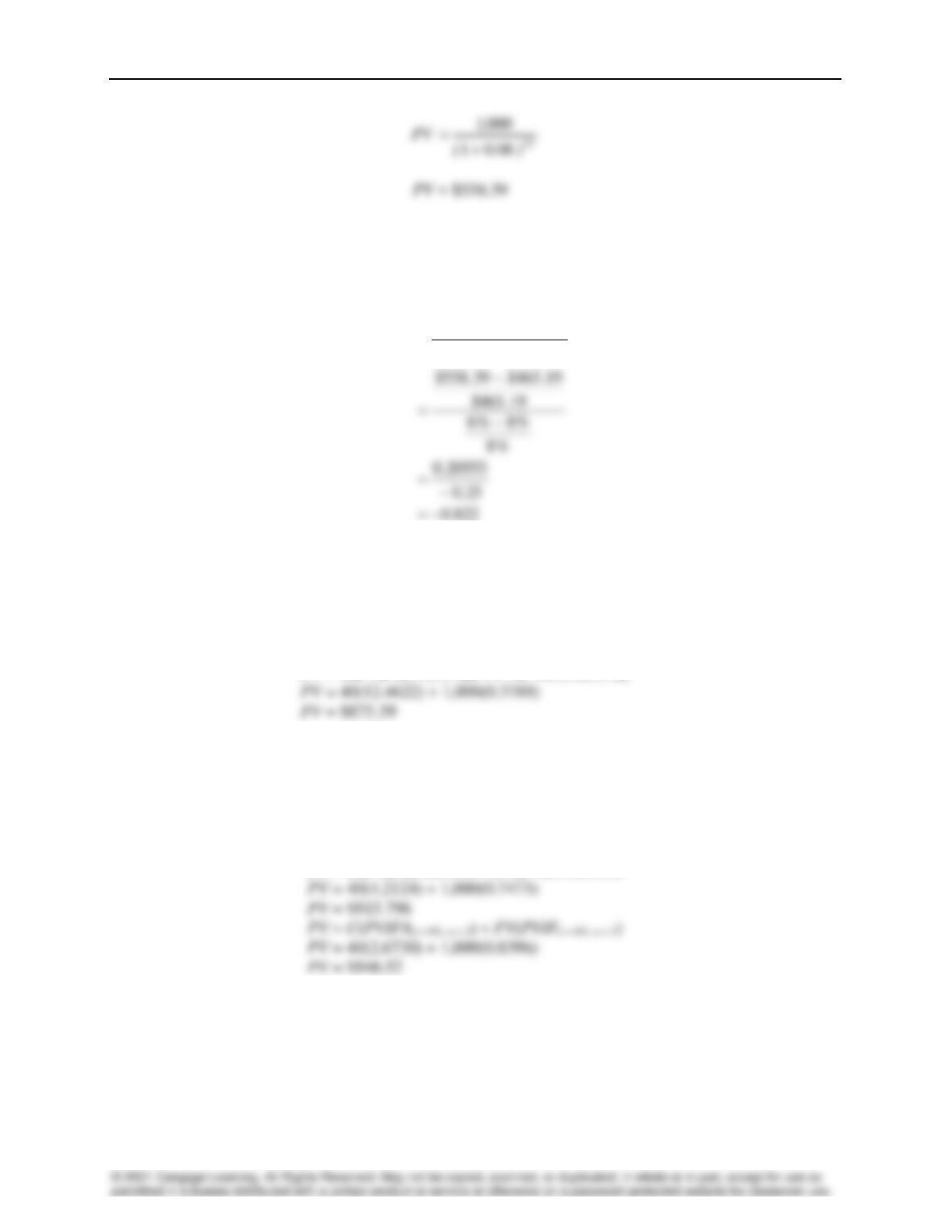
PV
1
1)k(
C
+
=
b. What happens to the price of this bond if interest rates fall to 6 percent?
ANSWER:
PV
1
1)k(
C
+
=
Chapter 8: Bond Valuation and Risk ❖ 17
c. Given the changes in the price of the bond and the interest rate descried in part (b), calculate the
bond price elasticity.
ANSWER:
in changepercent
in changepercent
k
P
Pe
=
12. Bond Valuation. You are interested in buying a $1,000 par value bond with 10 years to maturity and
an 8 percent coupon rate that is paid semiannually. How much should you be willing to pay for the
bond if the investor’s required rate of return is 10 percent?
ANSWER:
13. Predicting Bond Values. You are interested in a bond that pays an annual coupon of 4 percent, has a
yield to maturity of 6 percent and has 13 years to maturity. If interest rates remain unchanged, at what
price would you expect this bond to be selling 8 years from now? Ten years from now?
ANSWER:
14. Sensitivity of Bond Values.
a. How would the present value (and therefore the market value) of a bond be affected if the coupon
payments are smaller and other factors remain constant?
ANSWER: The bond would have a lower present value, since the future cash flows would be smaller.
Chapter 8: Bond Valuation and Risk ❖ 18
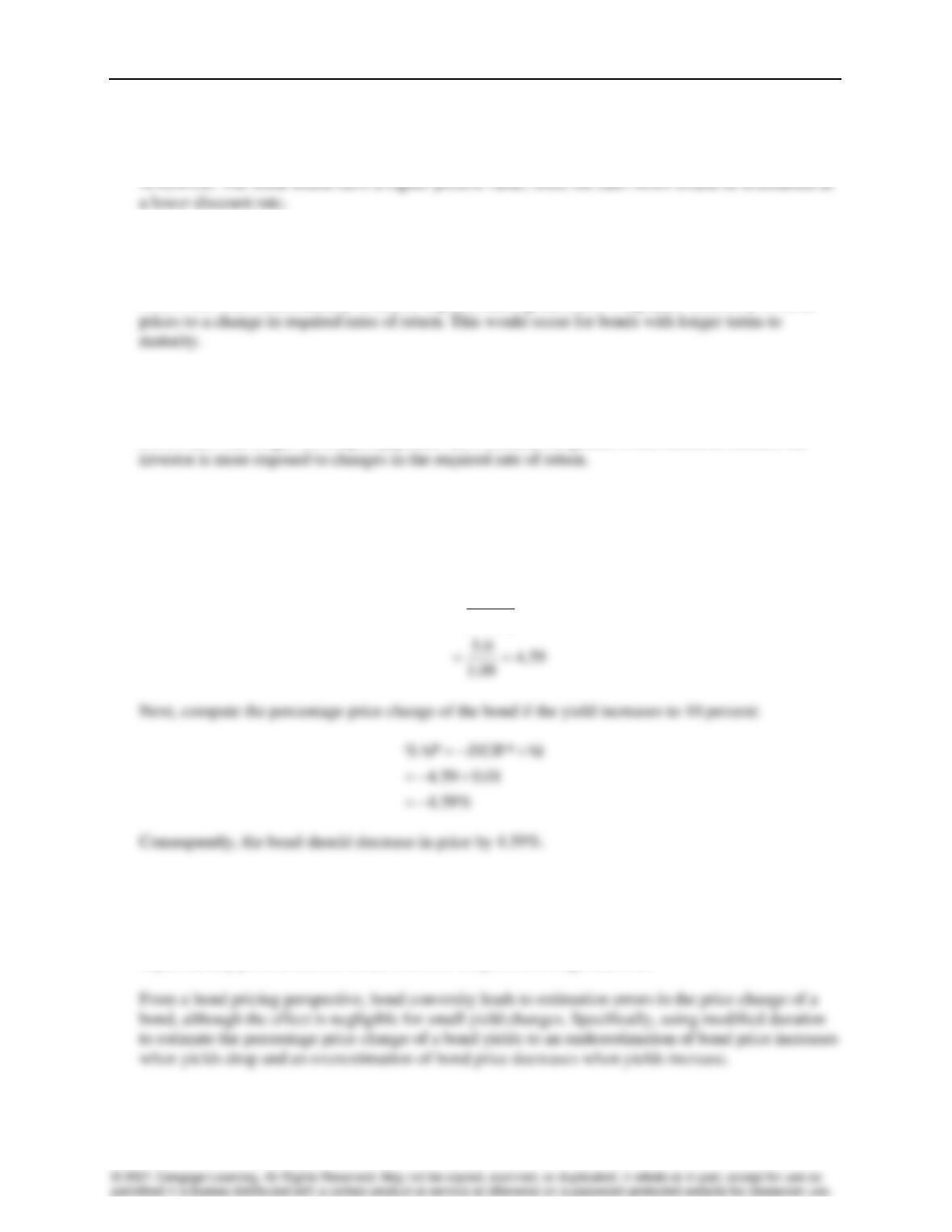
b. How would the present value (and therefore the market value) of a bond be affected if the
required rate of return is smaller and other factors remain constant?
15. Bond Elasticity. Determine how the bond elasticity would be affected if the bond price changed by a
larger amount, holding the change in the required rate of return constant.
ANSWER: The bond elasticity would be higher, meaning that there is a greater sensitivity of bond
16. Bond Duration. Determine how the duration of a bond be affected if the coupons were extended over
additional time periods.
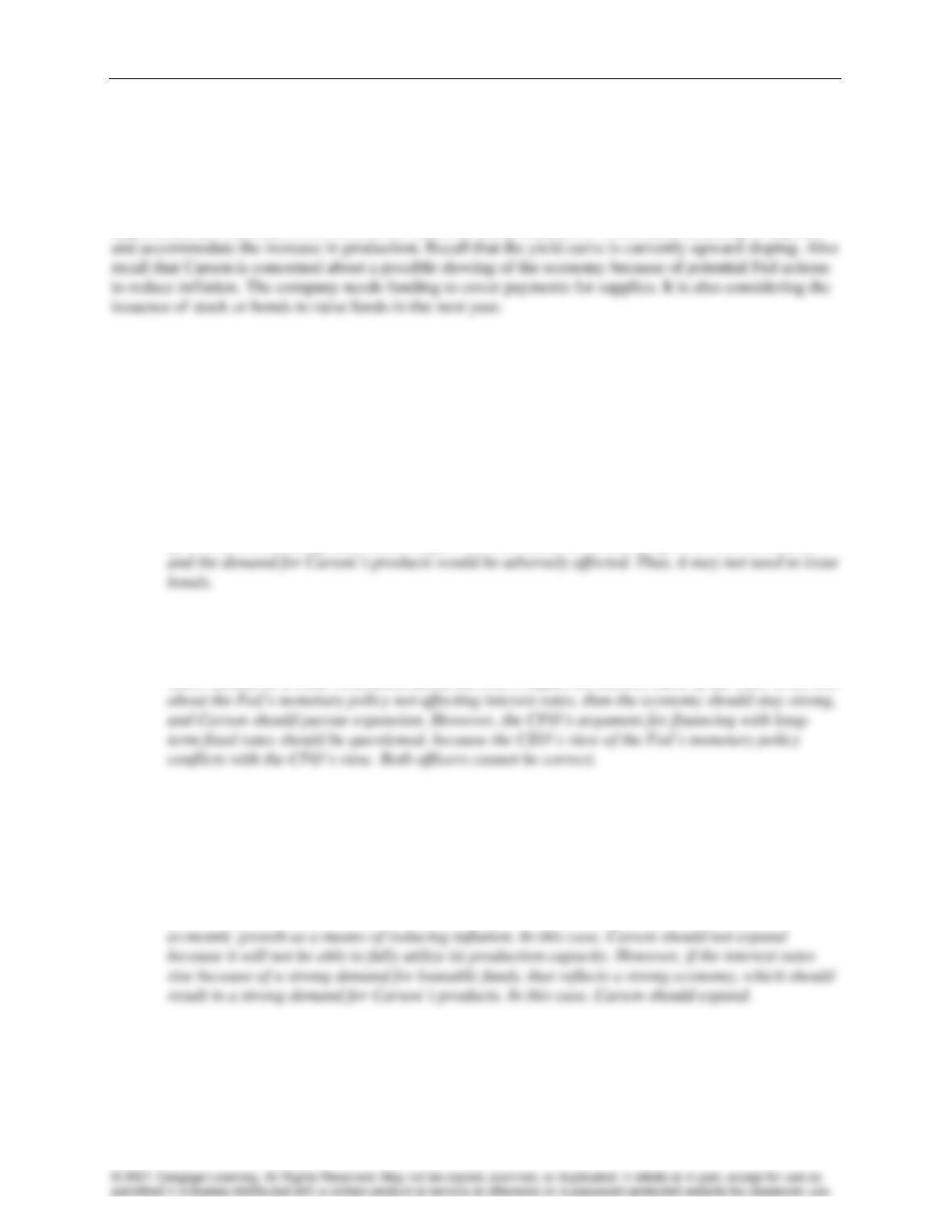
17. Bond Duration. A bond has a duration of 5 years and a yield to maturity of 9 percent. If the yield to
maturity changes to 10 percent, what should be the percentage price change of the bond?
ANSWER: First compute the modified duration of the bond:
1
)k(
DUR
*DUR
+
=
18. Bond Convexity. Describe how bond convexity affects the theoretical linear price-yield relationship
of bonds. What are the implications of bond convexity for estimating changes in bond prices?
ANSWER: Bond convexity illustrates that the price-yield relationship is not linear, but convex. This
is particularly pronounced for bonds with low coupons and long maturities.
Chapter 8: Bond Valuation and Risk ❖ 19
Flow of Funds Exercise
Interest Rate Expectations, Economic Growth, and Bond Financing
If the economy continues to be strong, Carson Company may need to increase its production capacity by
approximately 50 percent over the next few years to satisfy demand. It would need financing to expand
a. At a recent meeting, the Chief Executive Officer (CEO) stated his view that the economy will
remain strong, as the Fed’s monetary policy is not likely to have a major impact on the interest
rates. For this reason, he wants to expand the business to benefit from the expected increase in
demand for Carson’s products. The next step would be to determine how to finance the
expansion. The Chief Financial Officer (CFO) stated that if Carson Company needs to obtain
long-term funds, issuing fixed-rate bonds would be ideal strategy at this point in time because he
expects that the Fed’s monetary policy to reduce inflation and will cause long-term interest rates
to rise. If the CFO is correct about future interest rates, what does this suggest about the future
economic growth, the future demand for Carson’s products, and the need to issue bonds?
If the Fed’s monetary policy causes higher interest rates, the economic growth will be reduced
b. If you were involved in the meeting described here, what do you think needs to be resolved
before deciding to expand the business?
c. At the meeting described here, the Chief Executive Officer (CEO) stated the following:
“The decision to expand should not be dictated by whether interest rates are going to increase.
Bonds should be issued only if the potential increase in interest rates is attributed to a strong
demand for loanable funds rather than the Fed’s reduction in the supply of loanable funds.” What
does this statement mean?
If interest rates rise as a result of the Fed’s actions, its monetary policy is intended to slow