1) Debt is a source of additional cash flow to the household when it needs it. From a
portfolio standpoint it can help bring risk – return characteristics to the desired level.
2) Fixed obligations are fixed-cost items which emanate from household operating
functions. Debt is a financial not an operating item which on a functional cash flow
3) Debt is a contract to repay a sum, generally within a certain time frame and often with
4) Operating risk emanates from normal household uncertainty coming from its
production of internal and external activities. Financial risk comes from the amount
of debt in the household’s capital structure.
5) Operating leverage comes from high fixed costs. The greater the percentage of total
costs that are fixed the greater the operating leverage. Operating leverage means that
6) Nondiscretionary costs are fixed costs that perhaps cannot be cut back permanently;
7) APR stands for annual percentage rate. It is important because it provides a standard
that attempts to provide an easy to understand benchmark which consumers can use
in comparing rates.
8) The borrowing factors are:
a) Sources of debt – types of financing sources.
9) The comparative strengths and weaknesses of fixed-rate and variable-rate mortgages
are:
a) Fixed rate:
i) Advantages:
b) Variable rate:
i) Advantages:
ii) Disadvantages:
10) The advantages of adjustable- and fixed-rate mortgages are:
a) Adjustable Mortgage Advantage – easier to qualify for a loan given its low initial
“teaser” rate.
b) Fixed Rate Advantage – if rates are going to rise you lock in low current fixed
rate.
The recommendation is to find a way to obtain the fixed rate loan at a reasonable rate
11) The adjustable rate loan is lower than the fixed rate one because interest rates risk is
assumed by the home buyer not the financial institution.
12) A home equity loan is better than refinancing when the new loan amount is small, the
13) Not always. Credit cards may be efficient where the loan amount is small in amount,
or the need is cyclical and the borrower will be charged for a small part of the year as
14) The cost is generally lower.
15) Yes, you pay yourself back. However, the interest paid is not deductible and the loan
17) Home equity loans. They are both secured by an established asset and tax deductible
resulting in a low after-tax rate.
18) By paying bills on time. When credit isn’t favorable use these steps:
a) Review your credit report
19) No. $5,000 is not enough to contemplate bankruptcy. Consider consolidating debt and
20) Because pretax interest was included in cash flow from operations and taxes were
reduced by tax-deductible interest payment such as those on a mortgage. In order to
ANSWERS TO CHAPTER PROBLEMS
Chapter 7 Debt
1) Dorothy has the following projected cash flows: Income $65,000, fixed operating
costs excluding interest $44,000, variable outlays $7,000, interest cost $5,000
repayment of debt $6,000.
Projected Good Year1Poor Year2
Income $65,000 $74,750 $55,250
Discretionary Costs 7,000 7,000 7,000
Dorothy‘s Budget Projections
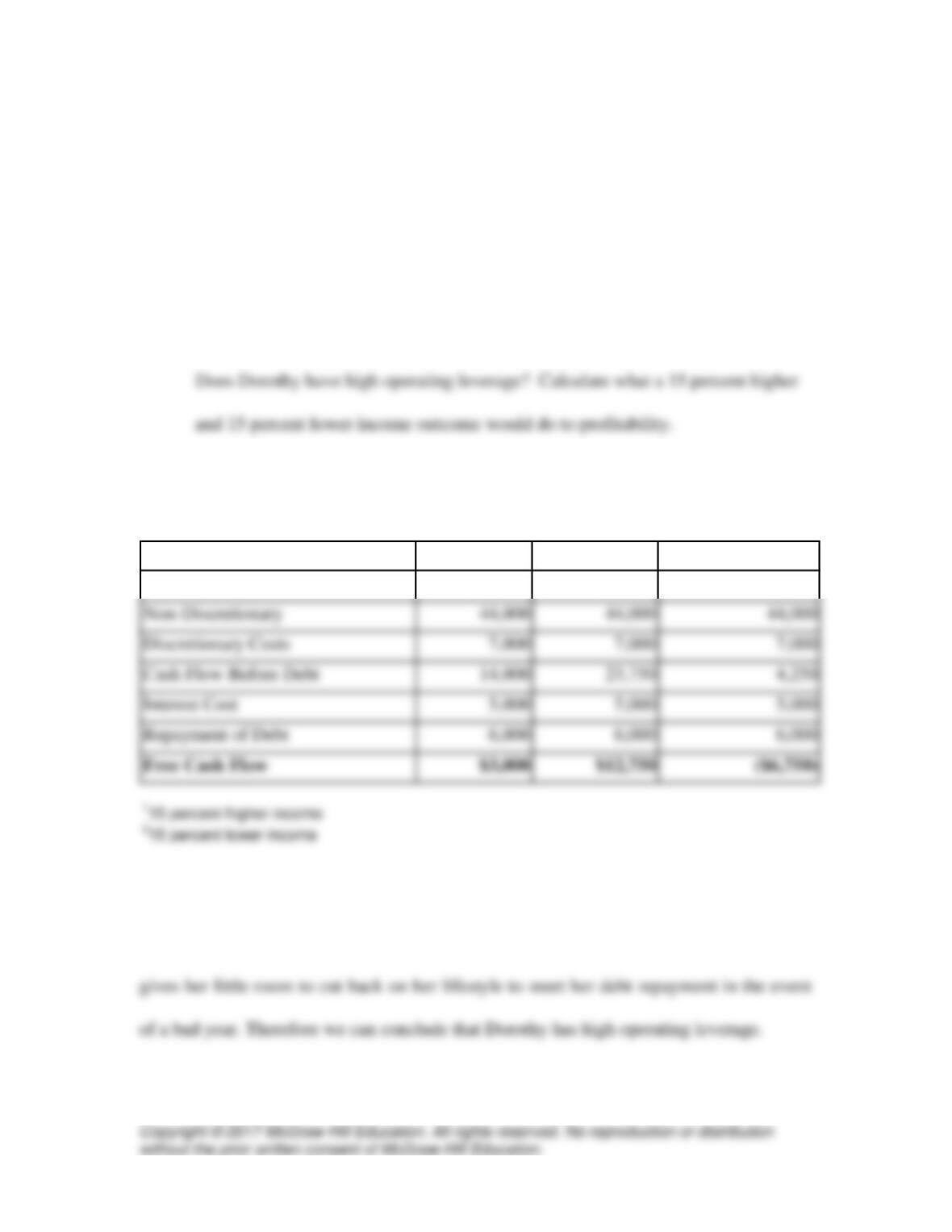
A 15 percent decline in Dorothy’s income could result in a $6,750 deficit and an inability
to pay debts when due. Also, most of her household costs are non-discretionary which
2) John was given a choice of loans of $8,000 with the following characteristics:
a) $1,200 in interest paid at the end of the period
b) $1,200 in interest paid at the beginning of the period
c) $1,200 paid equally over the period with part of the principal retired each
month
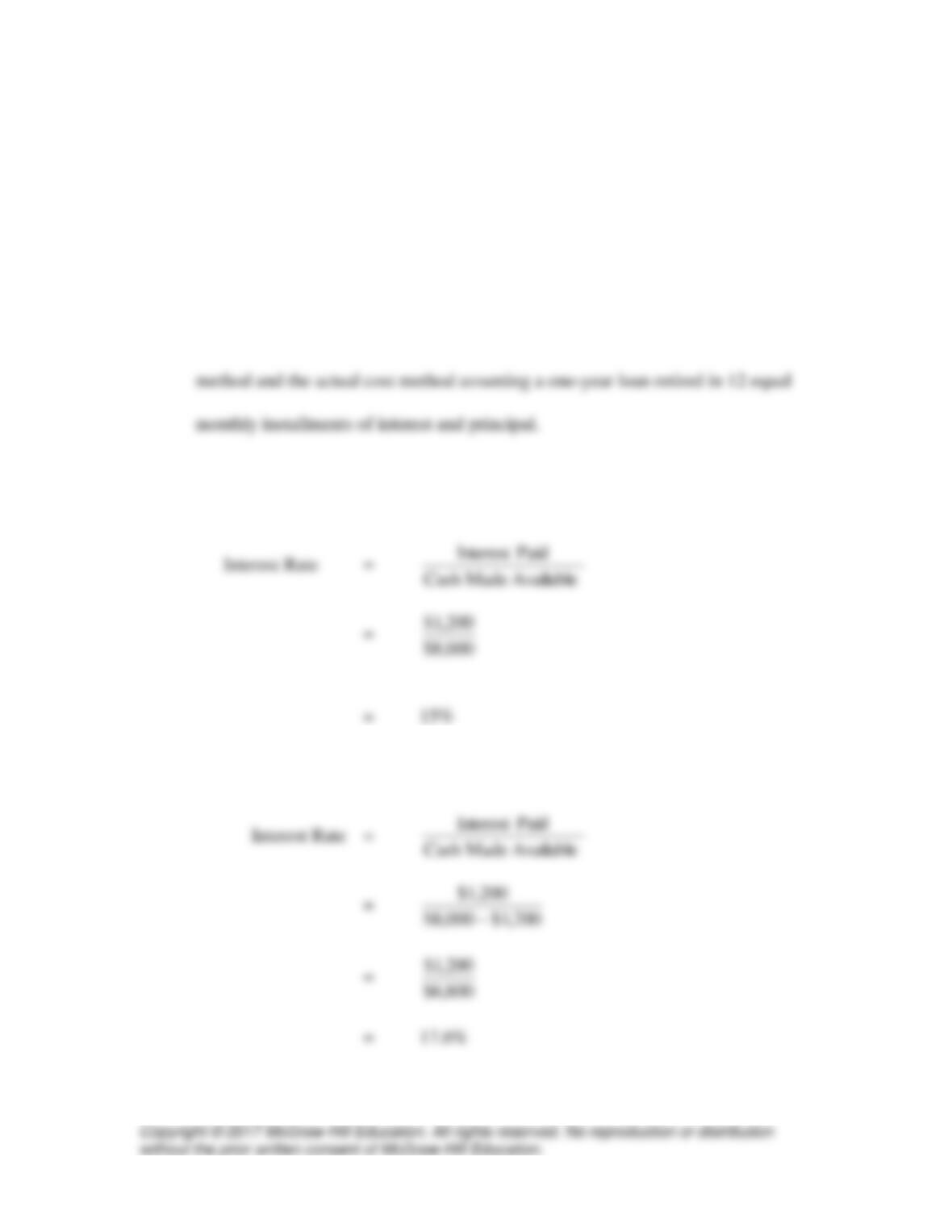
Calculate the interest rate paid. In part (3) calculate using both the approximate
a) $1,200 in interest paid at the end of the period
b) $1,200 in interest paid at the beginning of the period
c) $1,200 paid equally over the period with part of the principal retired each
month
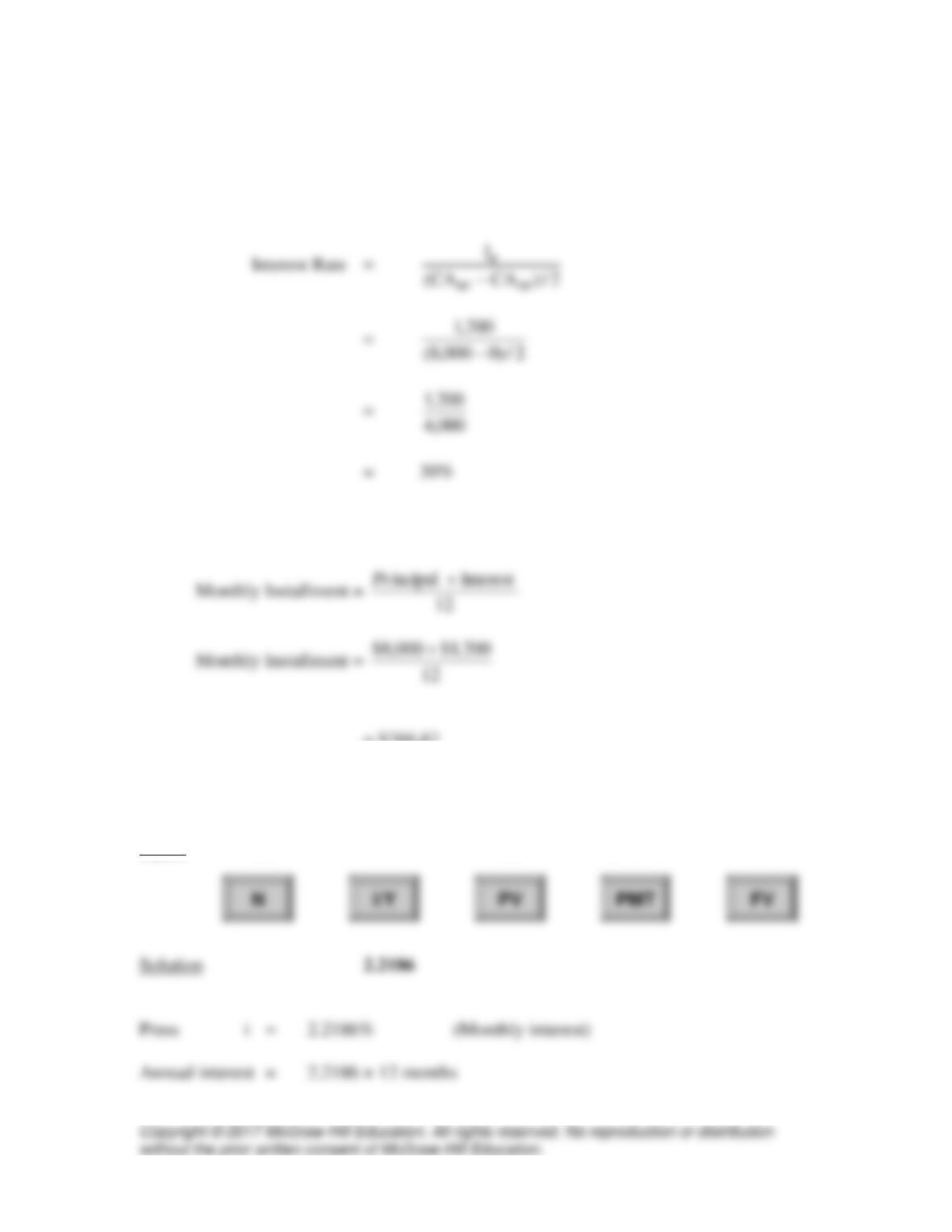
Approximate method:
Actual cost method:
= $766.67
Calculator Solution
Inputs 12 8,000 -766.67
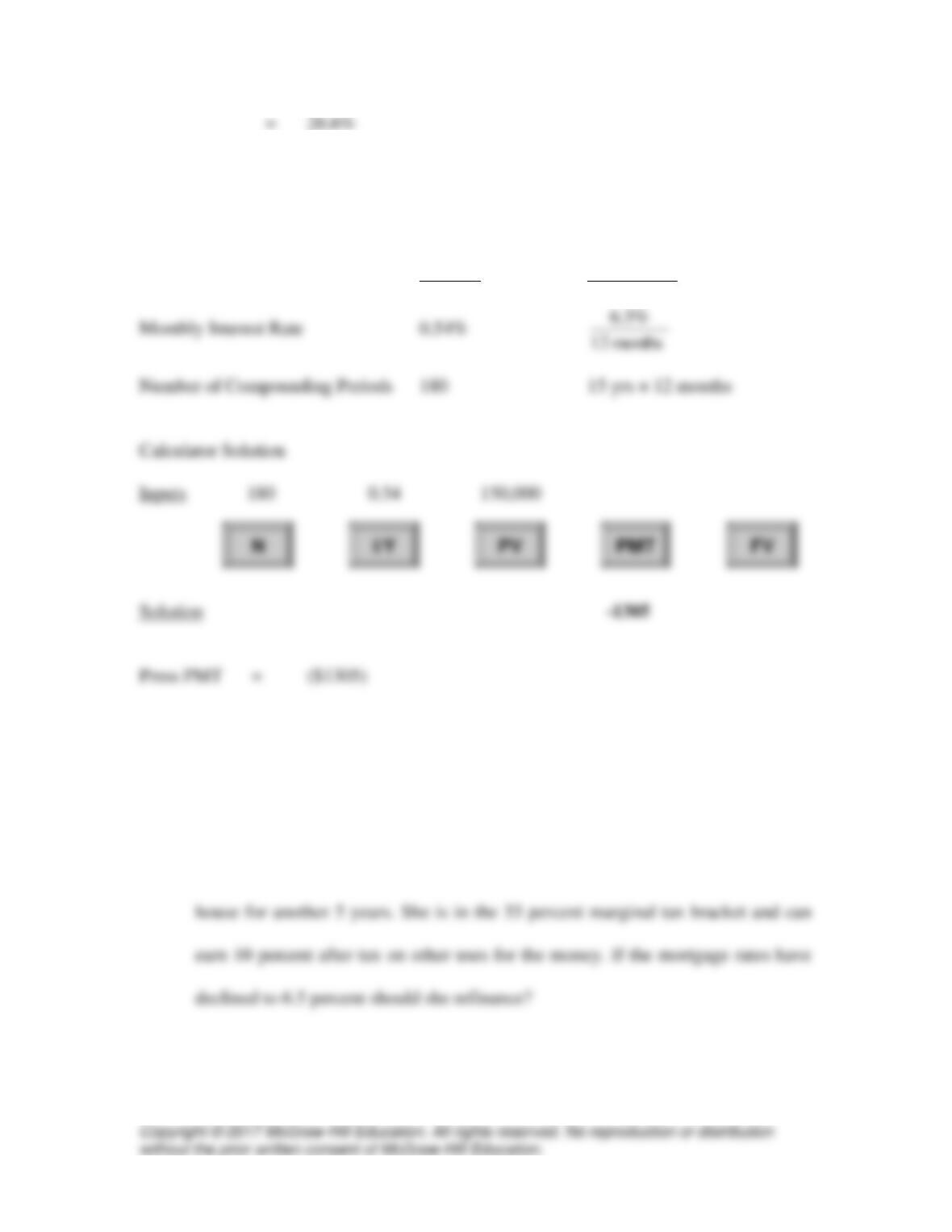
3) Melinda has a 15-year fixed-rate mortgage for $150,000 at a 6.5 percent rate.
Calculate her monthly mortgage payments.
Amount Explanation
Melinda has monthly mortgage payments of $1,305.
4) Martha has 7 years remaining on her $160,000 mortgage, which has a 7.5 percent
rate. She would have to pay $4,500 to refinance. Martha expects to live in the
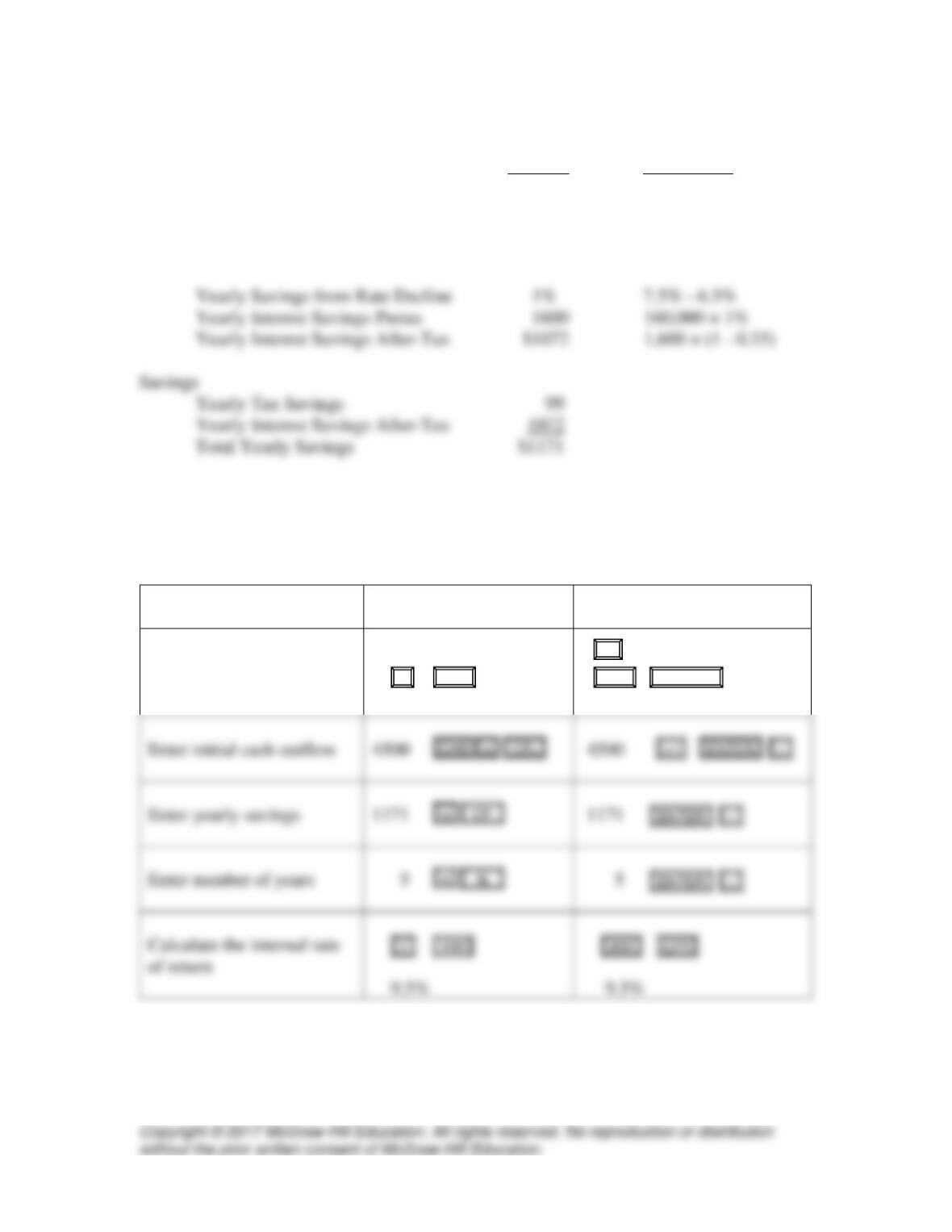
Amount Explanation
Cost to Refinance 4500 As given
Yearly Tax Deductible Amount 300 4,500 15 yrs
Yearly Tax Savings $99 300 × 0.33
Calculator Solution
General Calculator
Approach
HP12C
TI BA II Plus
Clear the register
Enter initial cash outflow
4500
4500
Enter yearly savings
1171
1171
Calculate the internal rate
of return
9.5%
9.5%
CHS
g
g
The 9.5 percent rate of return is lower than the 10 percent investment alternative.
Therefore, the mortgage should not be refinanced.
f
FIN
CF
2nd
CLR Work
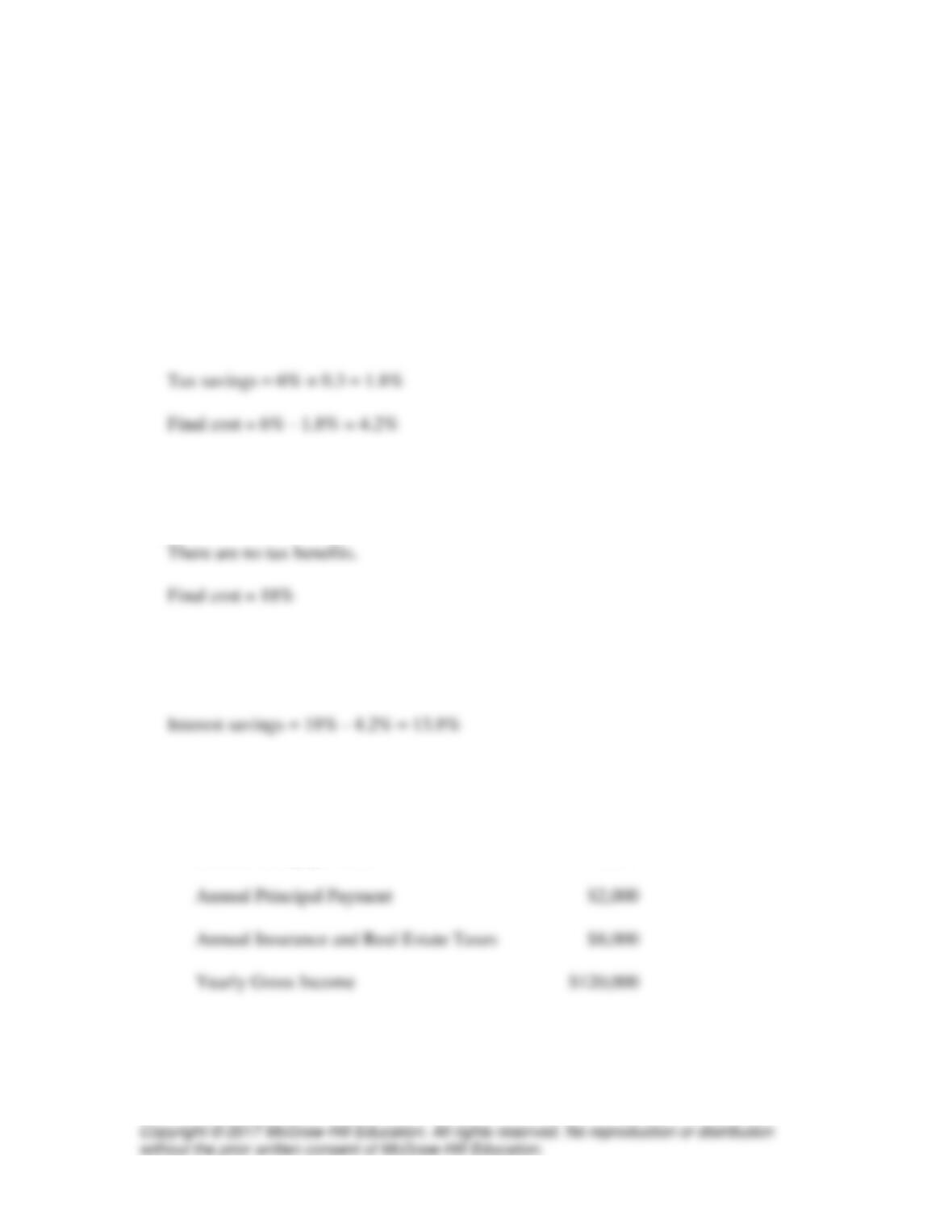
5) How much would a person save by borrowing money at 6 percent for a home
equity loan versus 18 percent for a credit card loan? Assume a marginal tax
bracket of 30 percent.
Home equity loan cost:
Credit card loan cost:
Estimated savings by borrowing for home equity loan versus credit card loan:
6) Given the following statistics calculate the mortgage cost percent.
Annual Mortgage Interest $9,000
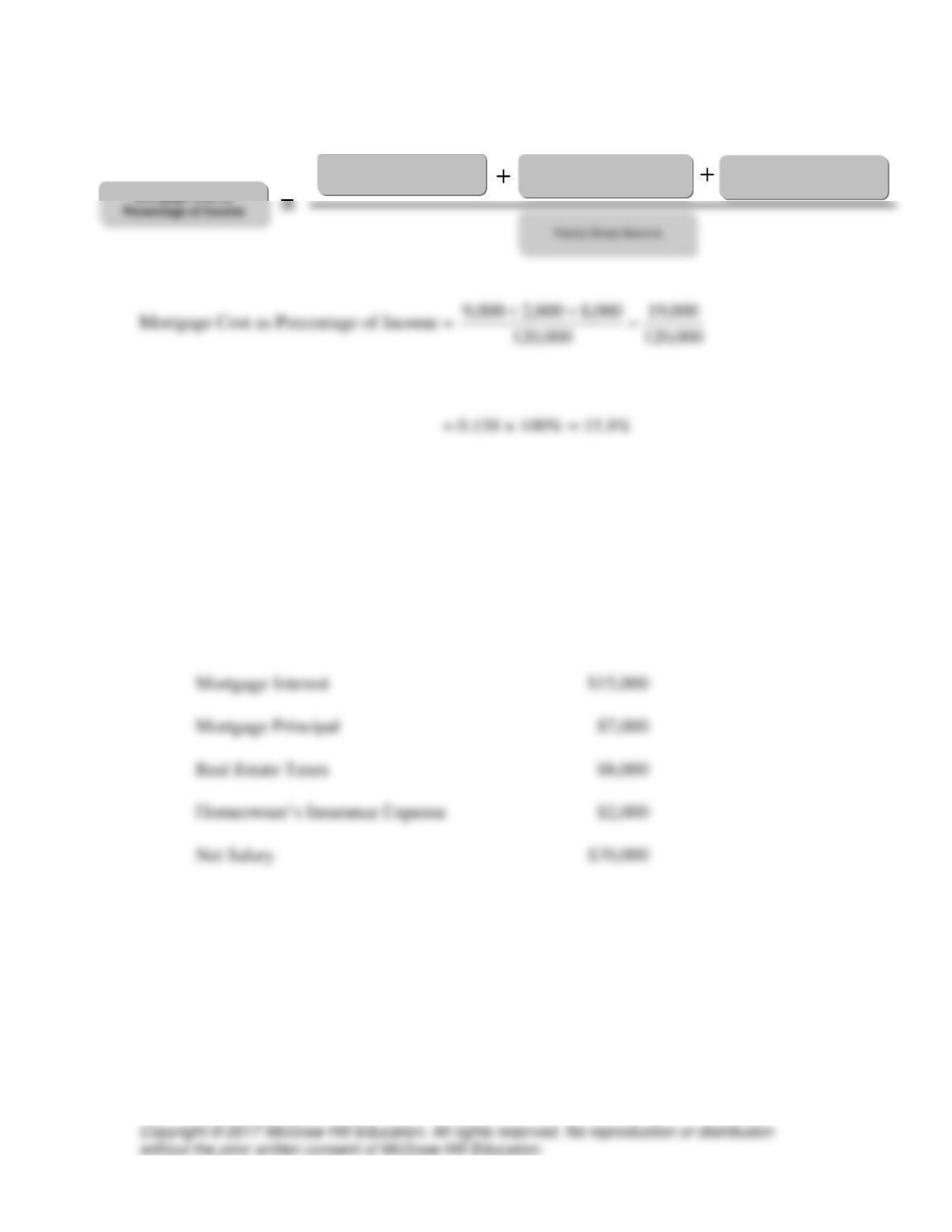
Mortgage Interest
Principal Payment
Real Estate Taxes and
Homeowner’s Insurance
7) Elena is in the 28 percent bracket and has the following real estate and non-real-
estate related costs.
Non Mtge. Interest and Principal $4,000
Calculate total debt as a percentage of income. Is it satisfactory?
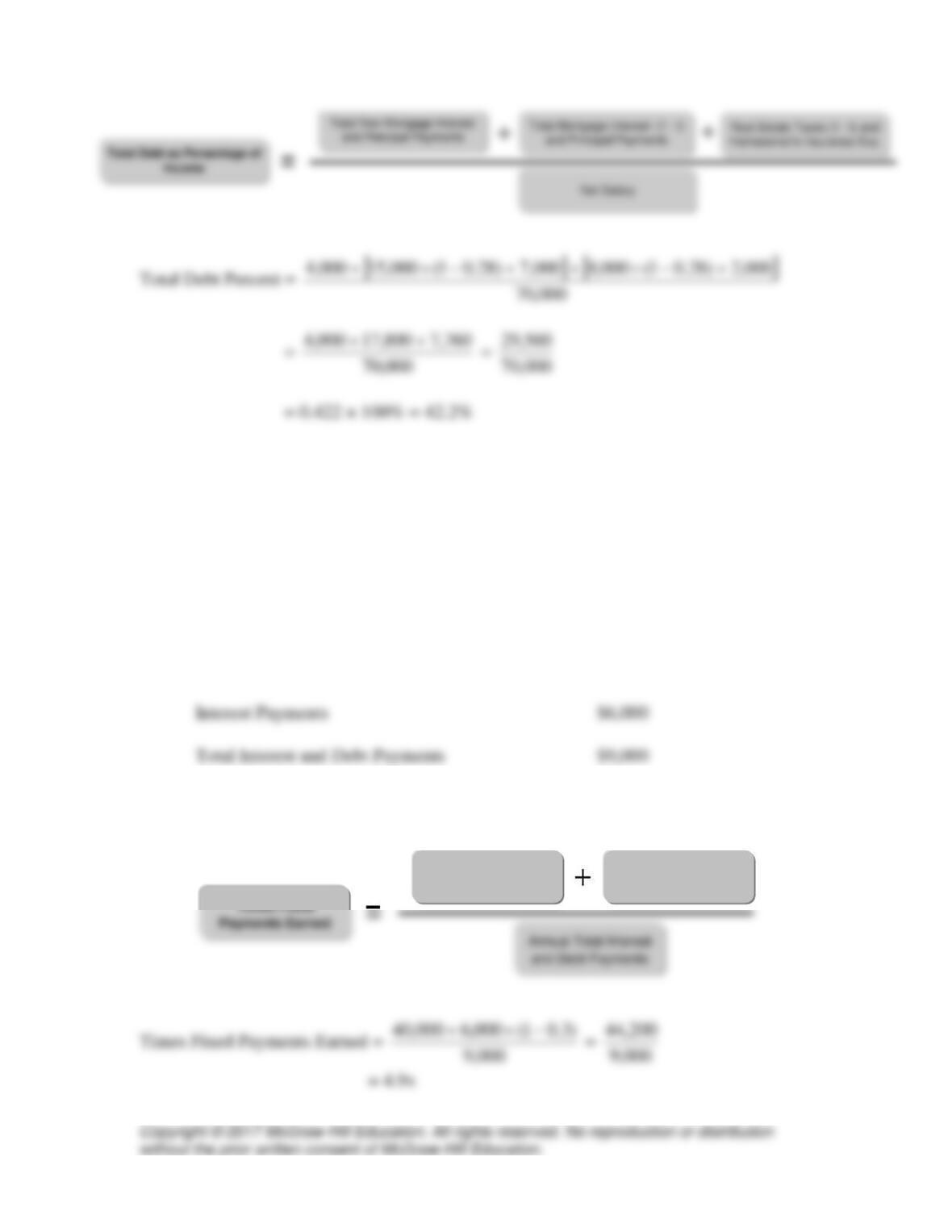
Elena’s debt comprises about 42 percent of her net salary which is a satisfactory figure.
In practice, total debt payments should be under 50 percent of net salary.
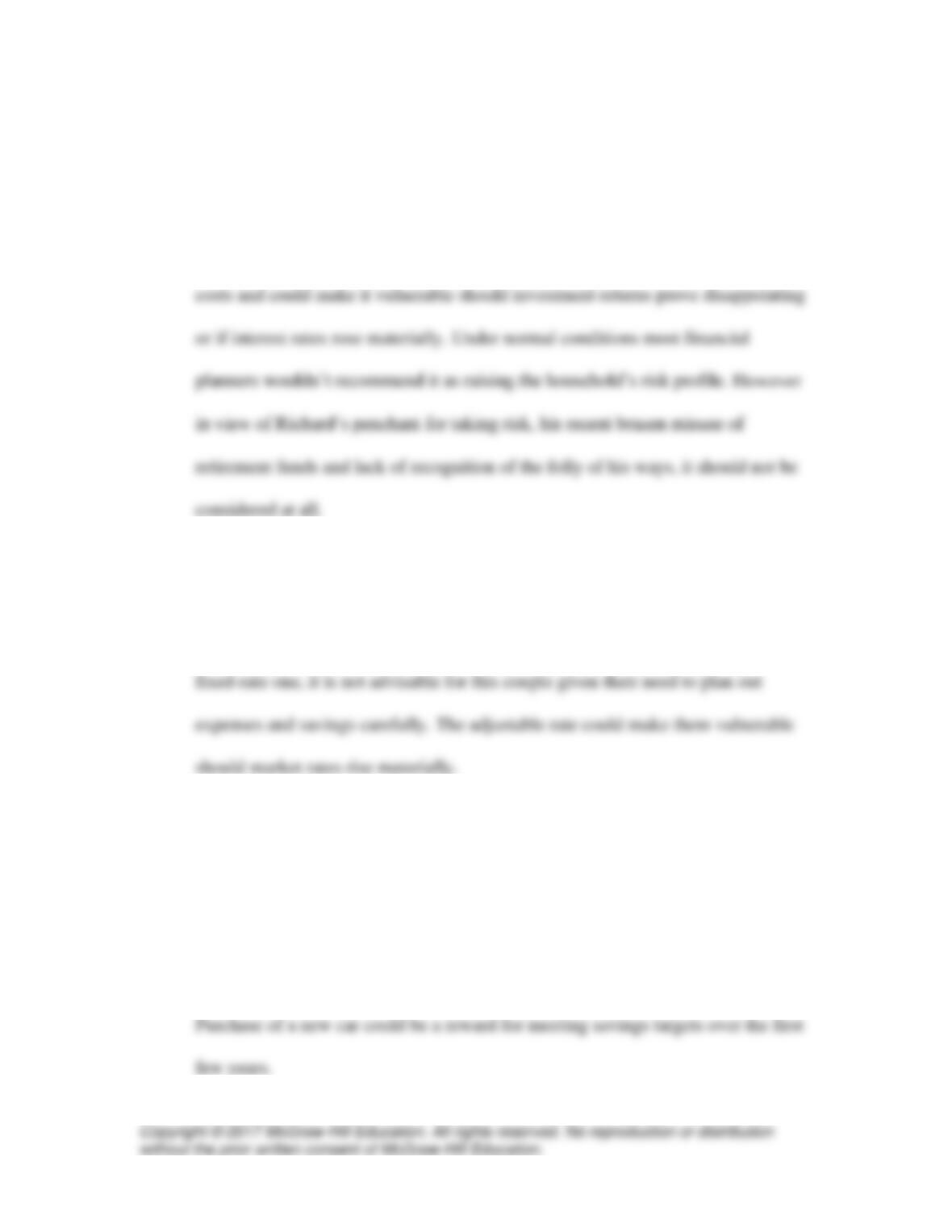
8) Louis had the following cash flow items:
Cash Flow from Operations $40,000
If Louis is in the 30 percent tax bracket, how many times is fixed payments earned?
Cash Flow from
Operations
Interest Payments
(1 – t)
ANSWERS TO CASE APPLICATION QUESTIONS
Chapter 7 Debt
1) Borrowing to place money in the stock market can be considered an investment
use of debt. However it is fraught with risk. It would raise the household’s fixed
2) Generally a 1.5% savings on a mortgage should make it a good investment move
providing no more money is borrowed at the same time.
3) While an adjustable-rate mortgage often has a mildly lower interest cost than a
4) A 15-year rate is better suited to Richard’s attitude. It could compel them to save
more each month. If it wasn’t for that fact a 30-year mortgage could be something
to consider since it isn’t necessary to repay the full amount by end of the life
cycle. However many planners would consider it unconservative.
5) The couple should focus on additional savings. Their present car runs well.
6) Richard’s view of borrowing money using high-cost credit card debt because
7) Monica is portrayed in this case study as a worrier. However that approach
8) The disagreement between the two is probably not new. Perhaps as far back as
their dating, each knew the others personalities and beliefs. It could be portrayed
9) See the completed financial plan in Web Appendix D.
Part 2
1) The pattern of accumulating credit card debit is common. In fact, credit card debt
is the most common type of loan debt in the United States.
2) My recommendation is to treat credit cards as if they were cash and to pay off the
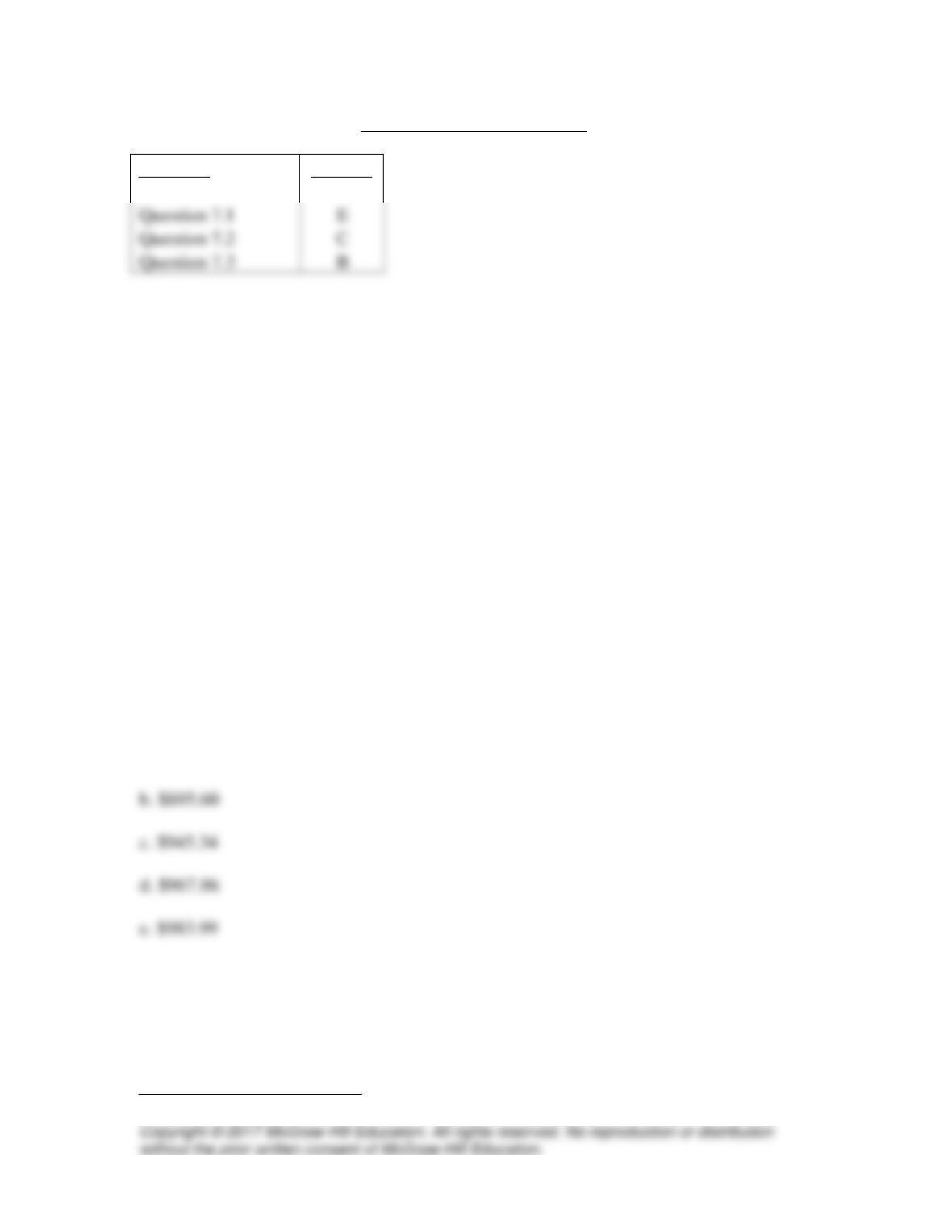
Answers to CFP® Questions
Question
Answer
SOLUTIONS TO SELECTED CFP® CERTIFICATION EXAMINATION
PROBLEMS
1
7.1
The Moores recently found out that they can reduce their mortgage interest rate from 12
percent to 8 percent. The value of homes in their neighborhood has been increasing at the
rate of 7.5 percent annually. If the Moores were to refinance their house with $2,000 in
closing costs in addition to the mortgage balance ($120,056) over a period of time to
coincide with their chosen retirement age in 22 years, what would the monthly payment
be for principal and interest (closing costs are going to be added to the mortgage)?
a. $853.43
Solution:
1
The solutions supplied are those of the author and not of the CFP Board.
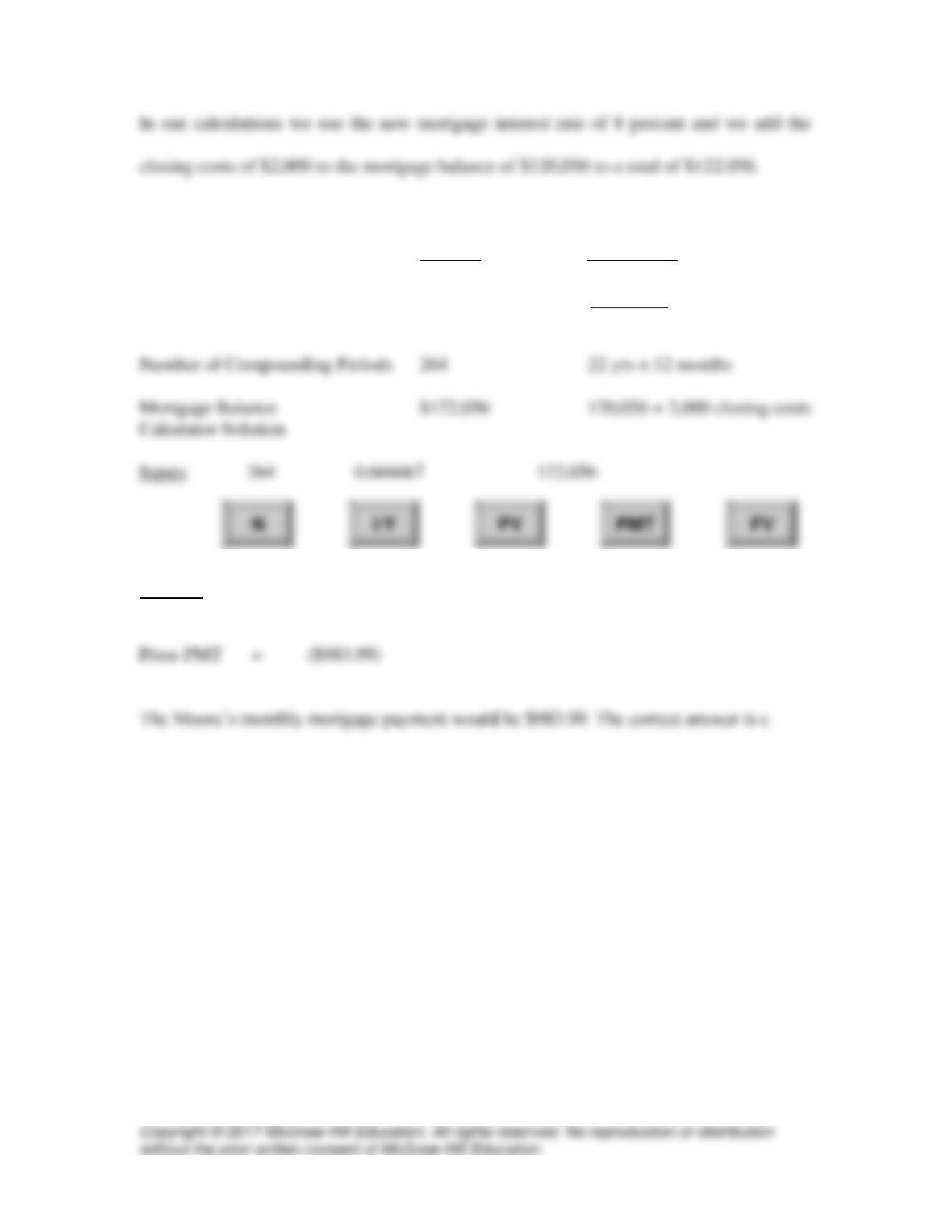
Amount Explanation
Monthly Interest Rate 0.67%
months 12
%8
Solution -983.99