ANSWERS TO CHAPTER QUESTIONS
Chapter 6 Cash Flow Planning
1) Cash flow planning is mapping out future inflows and outflows to determine what
steps have to be taken to assure a smooth-running household.
2) Cash flow is the fuel that allows household finance to operate. If items are not
3) Reasons for saving may include:
a) Pure life cycle motive
b) Investment motive
4) Possible reasons for difficulty in saving may include:
a) Living close to minimum standard of living
5) Five methods for helping people save may include:
a) Put away savings automatically at the beginning of the period.
6) Budgets may be set up by people who like to live a structured life. However, most
people using it do so because they have difficulty in saving in a more free-wheeling
7) A liquidity substitute is an alternative to keeping money in cash, often for use on
unplanned occasions. One example would be a credit card which could be utilized to
8) Financial ratios serve as a measure of performance relative to an established
9) The practice of using a credit card in general can make sense when borrowings are
infrequent. Thus if the negative current ratio was cyclical, say for December holiday
10) A high nondiscretionary cost percentage and a low discretionary one generally
11) The net savings percentage is net cash flow divided by total income. It could be high
and the gross savings percentage be low because the household borrowed significant
ANSWERS TO CHAPTER PROBLEMS
Chapter 6 Cash Flow Planning
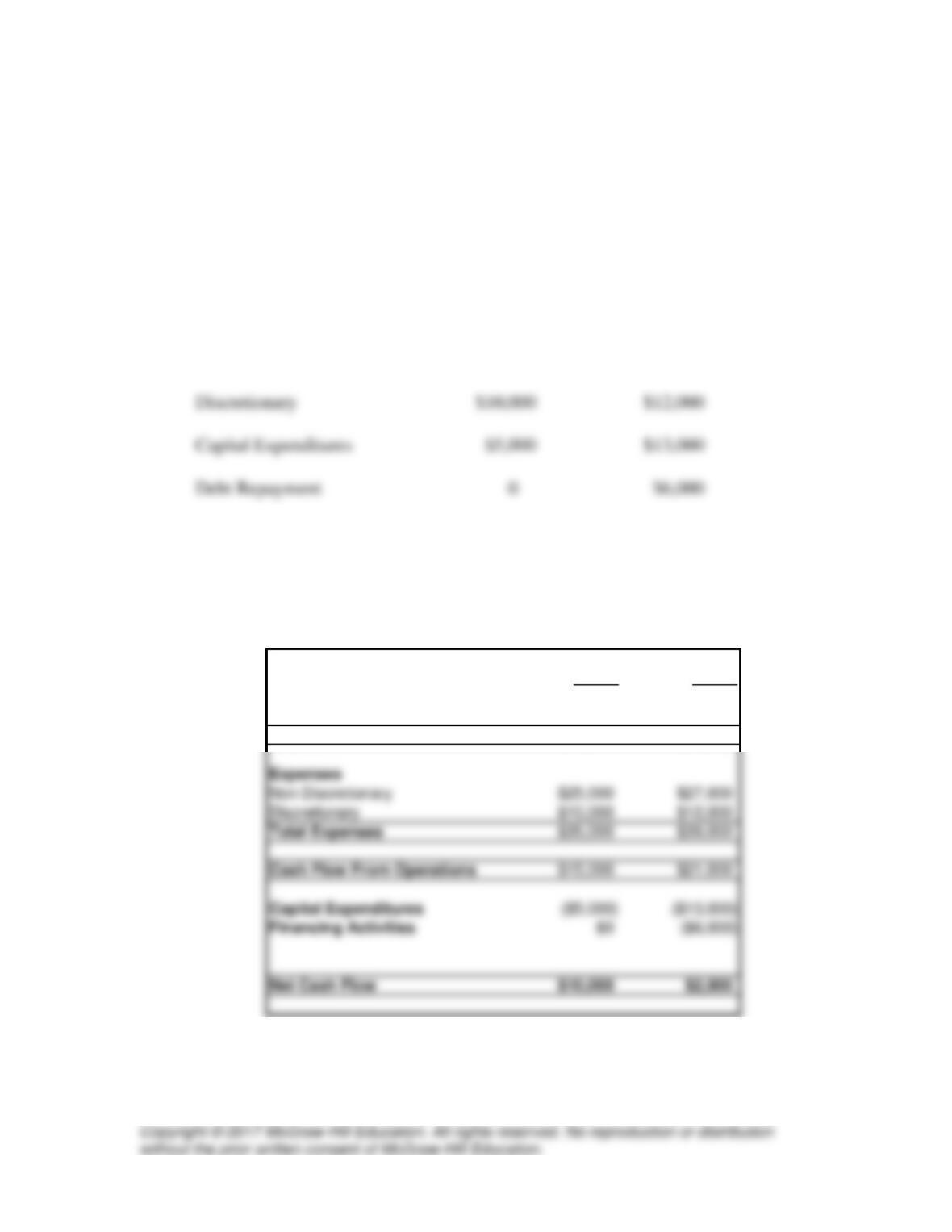
1) April made $50,000 in year 1 and $60,000 in year 2. She had the following yearly
outflows:
Year 1 Year 2
Nondiscretionary $25,000 $27,000
Calculate April’s operating cash flow and net cash flow for each year.
Year 1 Year 2
Income
Salary $50,000 $60,000
Total Income $50,000 $60,000
Expenses
Total Expenses $35,000 $39,000
Cash Flow From Operations $15,000 $21,000
Capital Expenditures ($5,000) ($13,000)
Financing Activities $0 ($6,000)
Net Cash Flow $10,000 $2,000
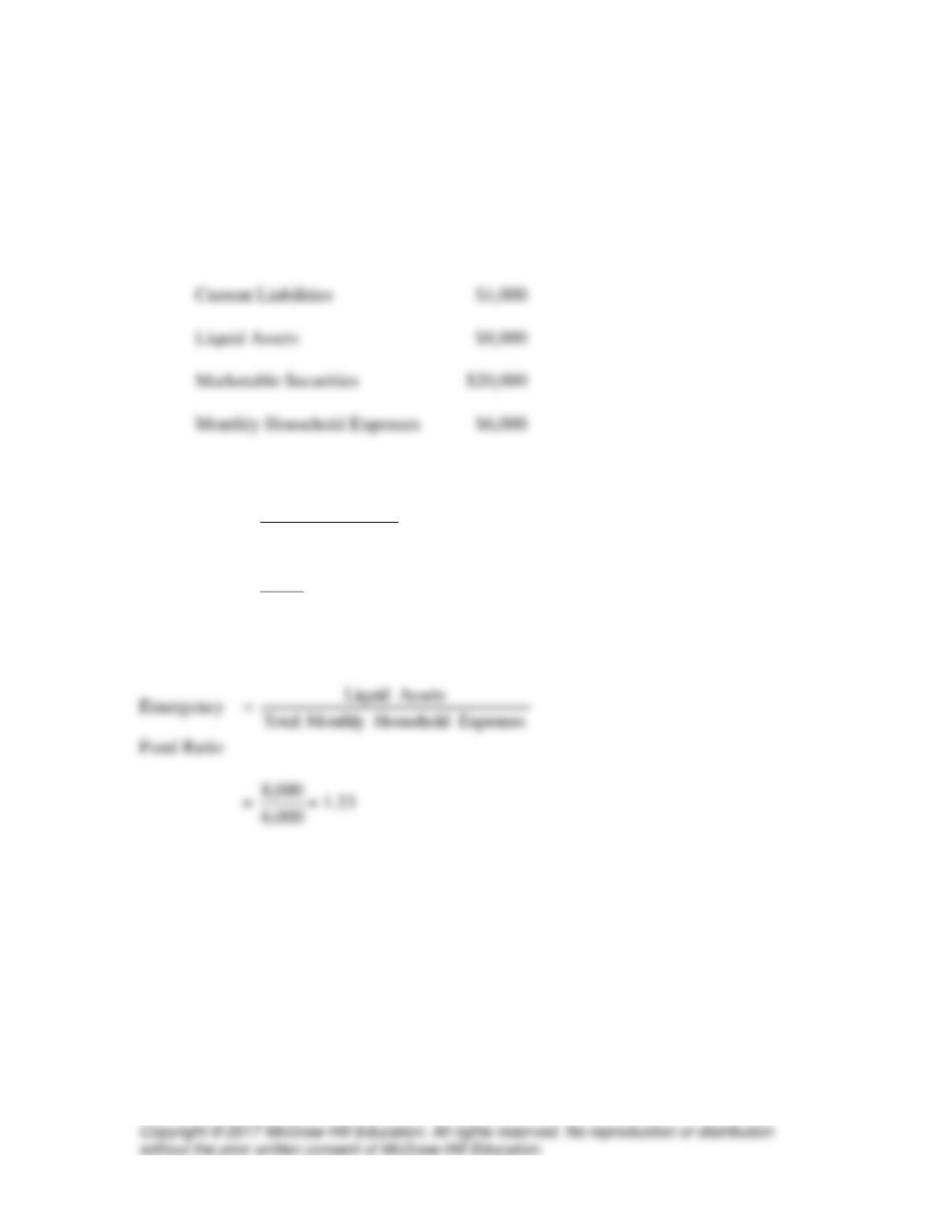
2) Using the following statistics, calculate Jackson’s current and emergency fund
ratios requested.
Current Assets $2,000
Current ratio =
sLiabilitieCurrent
AssetsCurrent
=
000,1
000,2
= 2.0
3) Jamie had the following figures over the past four years.
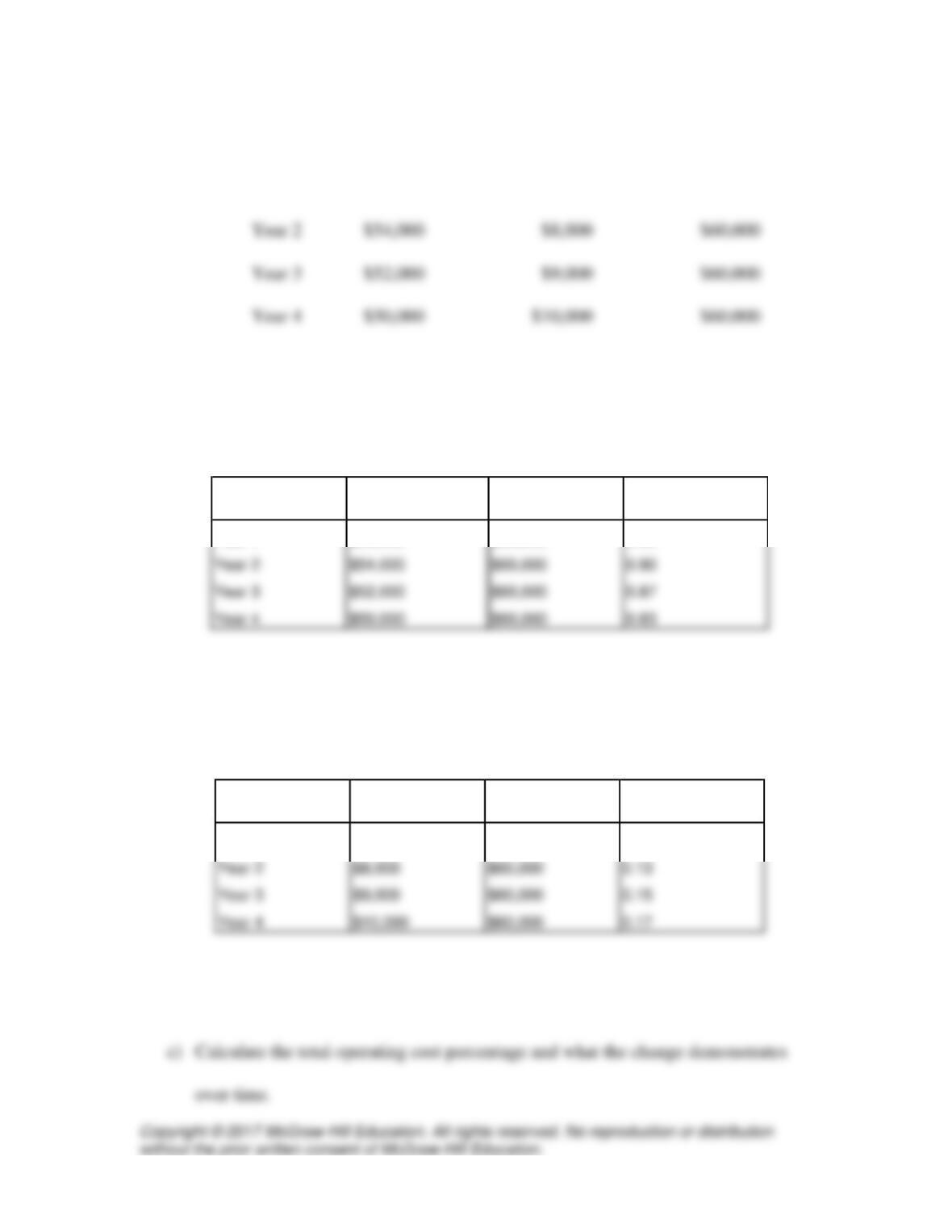
Nondiscretionary Discretionary Total
Cost Cost Income
Year 1 $56,000 $7,000 $60,000
a) Calculate the nondiscretionary cost percentage and what the change in the ratio
demonstrates over time.
Nondiscretionary
Cost
Total
Income
Nondiscretionary
Cost Percentage
Year 1 $56,000 $60,000 0.93
b) Calculate the discretionary cost percentage and what the change demonstrates
over time.
Discretionary
Cost
Total
Income
Discretionary Cost
Percentage
Year 1 $7,000 $60,000 0.12
Nondiscretionary
Cost
Discretionary
Cost
Total
Income
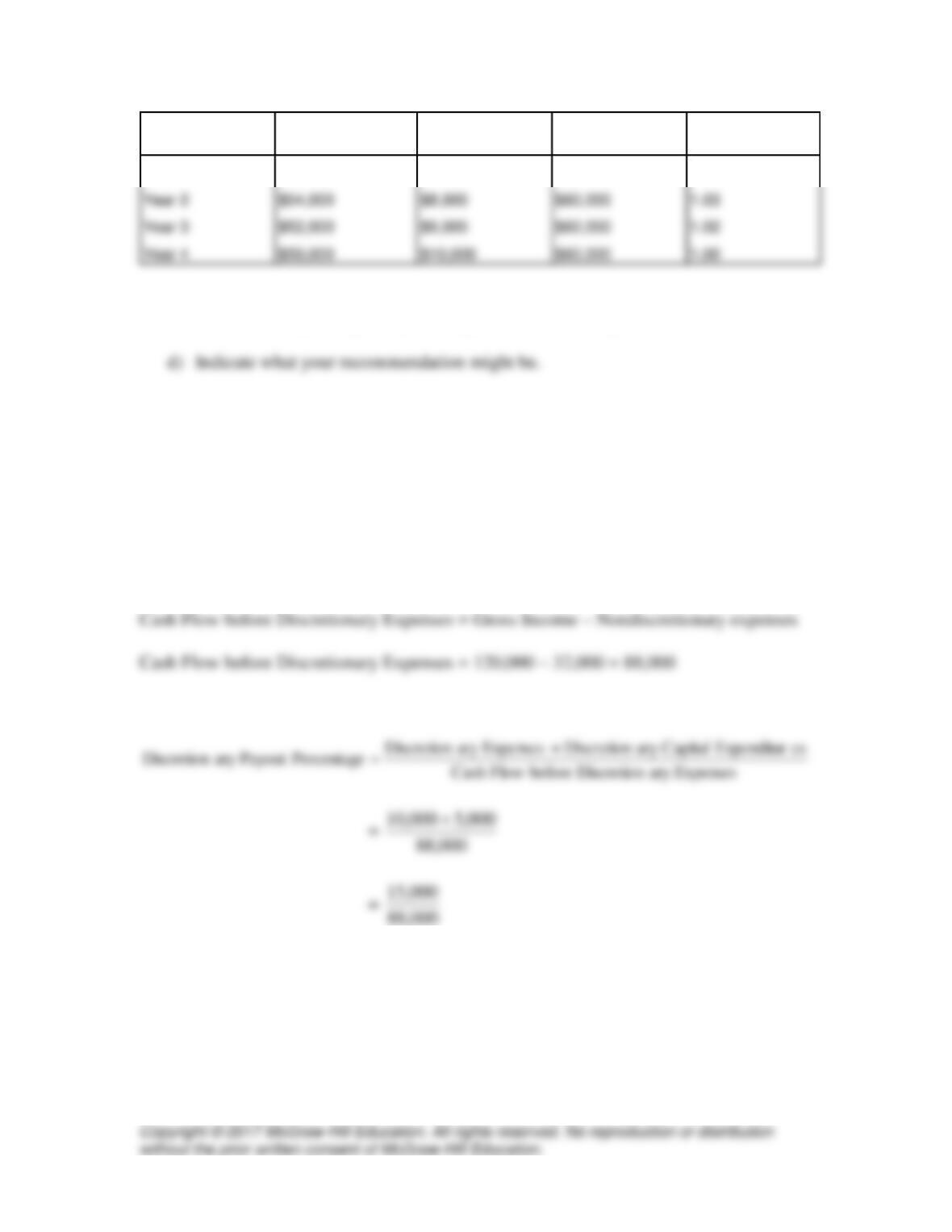
Total Operating
Cost Percentage
Year 1 $56,000 $7,000 $60,000 1.05
The results for total operating cost percentage indicate declining costs over time.
4) Sharon had gross income of $120,000 and nondiscretionary expenses of $32,000.
She also had discretionary expenses of $10,000 and her capital expenditures on
leisure items were $5,000. What is her discretionary payout percentage?
= 0.17 × 100% = 17%
5) Abby had the following statistics:
Net Cash Flow $6,000
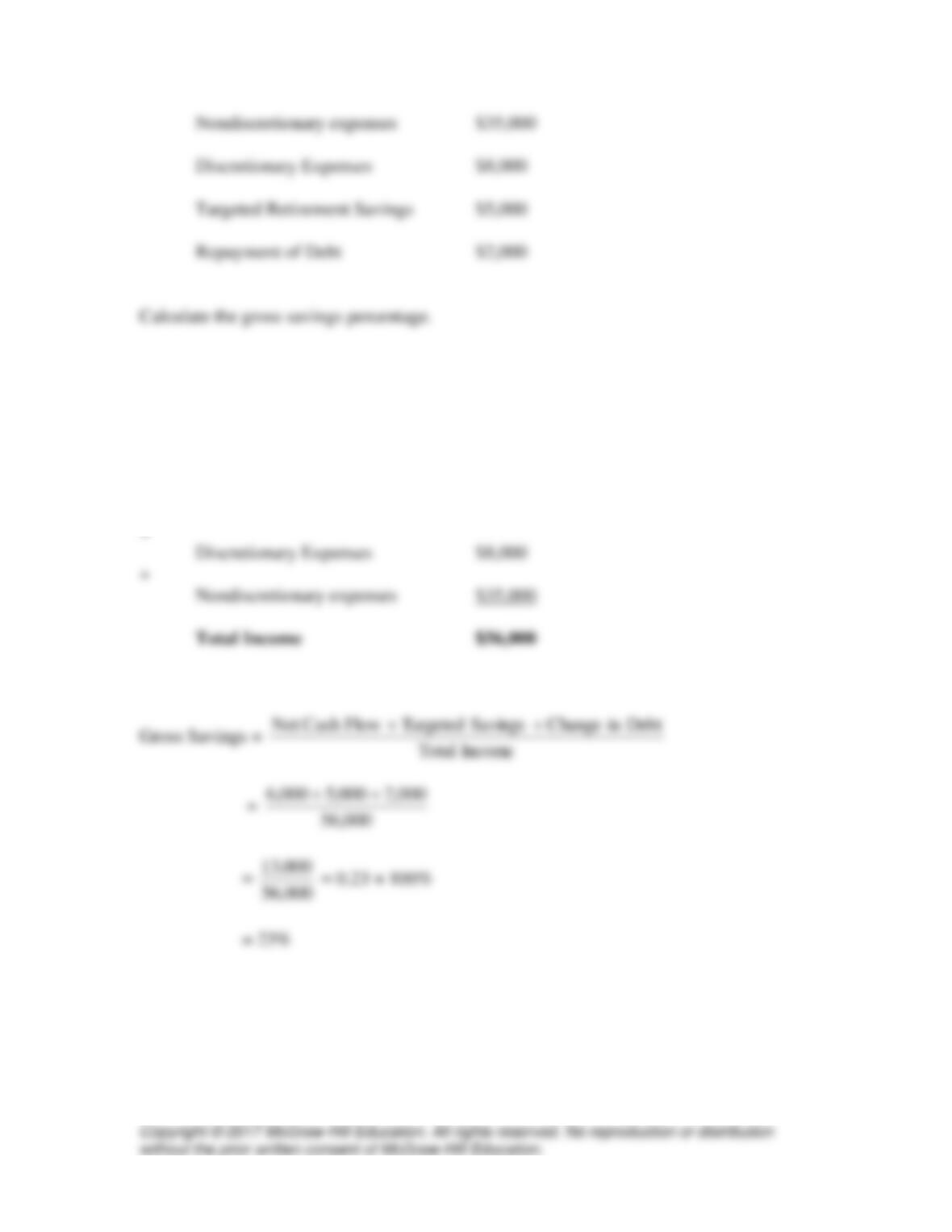
The first step is to find the amount of total income.
Net Cash Flow $6,000
+ Targeted Retirement Savings $5,000
+ Repayment of Debt $2,000
ANSWERS TO CASE APPLICATION QUESTIONS
Chapter 6 Cash Flow Planning
1) Their nondiscretionary expenditures at $76,000 per year are not unreasonable
relative to their income excluding investment income as being part of the
2) Making up a $200,000 loss at age 58 with an age 65 retirement seems
unreasonable. It may indicate that Richard is not being realistic.
3) Monica’s putting away money secretly may indicate her lack of confidence in
4) Agree on household savings figure. Put away savings at the beginning of the
5) The pro forma cash flow statement for Richard and Monica is included in the
completed financial plan.
6) Operating cash flows will rise each year. However, it is not clear whether these
Answers to CFP® Questions
Question
Answer