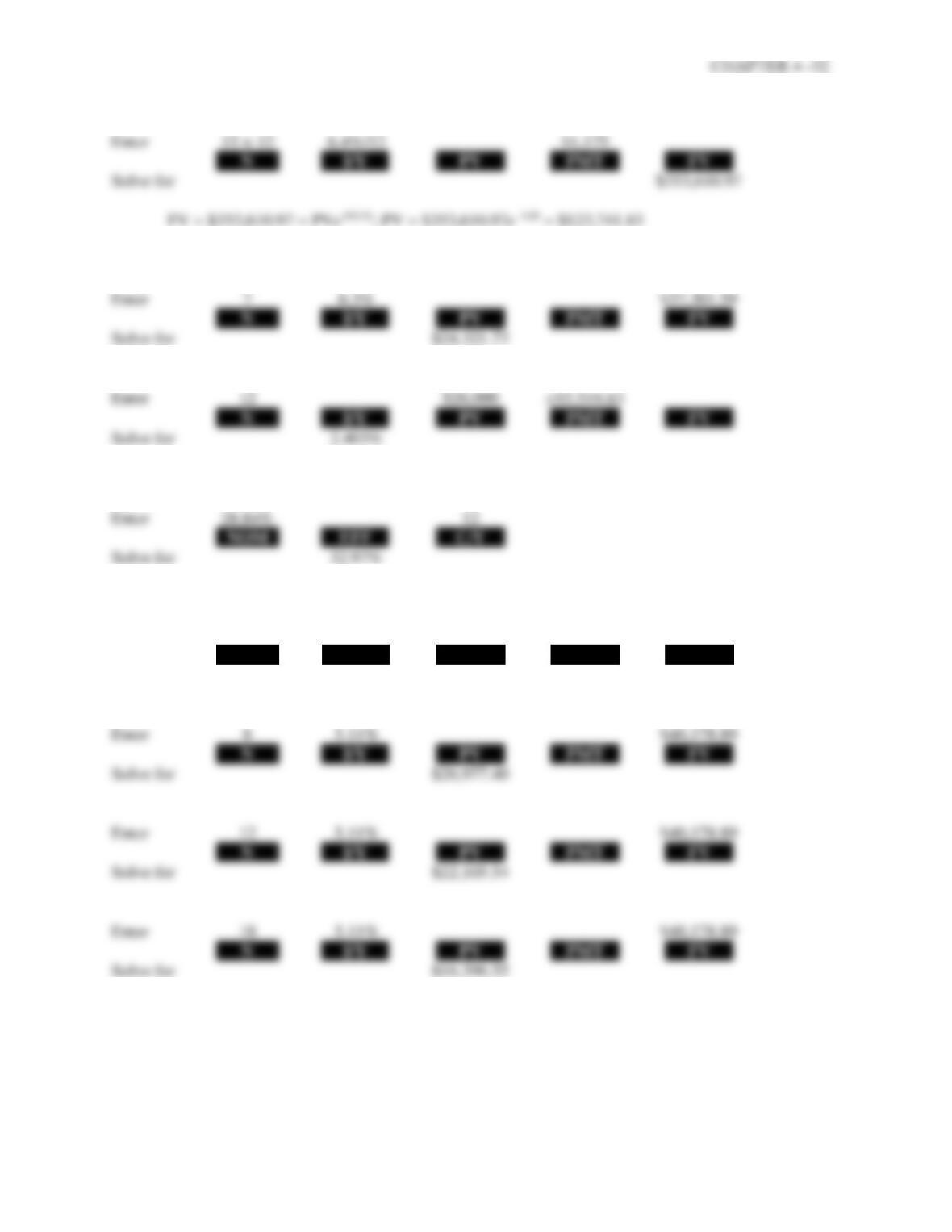
45.
Enter
$1,175
N
I/Y
PV
PMT
FV
Solve for
46. PV@ t = 14: $2,350/.063 = $37,301.59
Enter
N
I/Y
PV
PMT
FV
Solve for
$24,321.73
47.
N
I/Y
PV
PMT
FV
Solve for
APR = 2.403% 12 = 28.84%
Enter
Solve for
48. Monthly rate = .10/12 = .0083; semiannual rate = (1.0083)6 – 1 = 5.11%
Enter
10
5.11%
$5,230
N
I/Y
PV
PMT
FV
Solve for
$40,178.89
Enter
5.11%
N
I/Y
PV
PMT
FV
Solve for
$26,977.40
Enter
12
5.11%
N
I/Y
PV
PMT
FV
Solve for
$22,105.54
Enter
N
I/Y
PV
PMT
FV
Solve for
$16,396.55
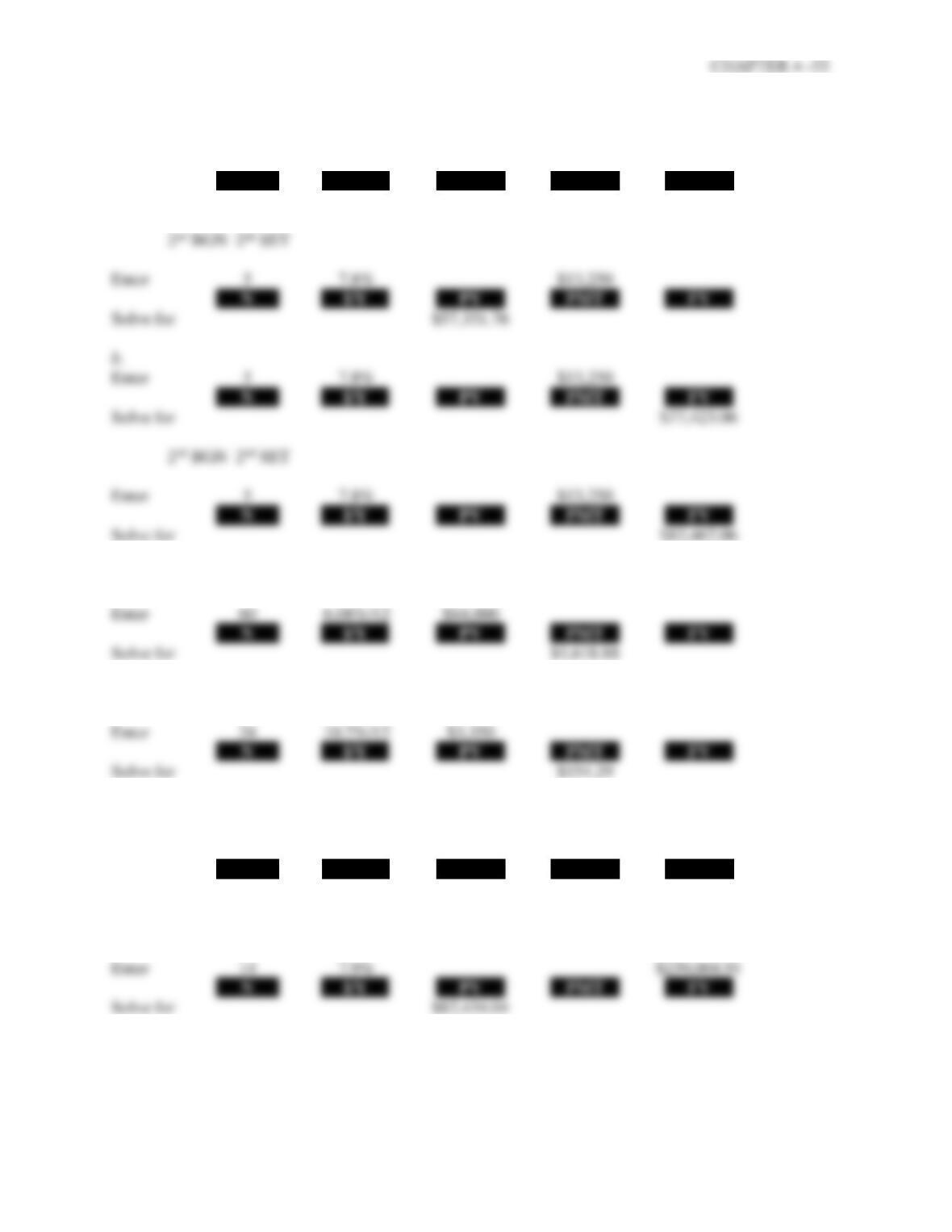
49.
a.
Enter
5
7.8%
$13,250
N
I/Y
PV
PMT
FV
Solve for
$53,183.45
Enter
Solve for
$57,331.76
b.
Enter
Solve for
Enter
5
7.8%
$13,250
N
I/Y
PV
PMT
FV
Solve for
50. 2nd BGN 2nd SET
Enter
Solve for
51. 2nd BGN 2nd SET
Enter
Solve for
52. PV of college expenses:
Enter
4
7.9%
$72,000
N
I/Y
PV
PMT
FV
Solve for
$239,004.91
Cost today of oldest child’s expenses:
Enter
7.9%
Solve for
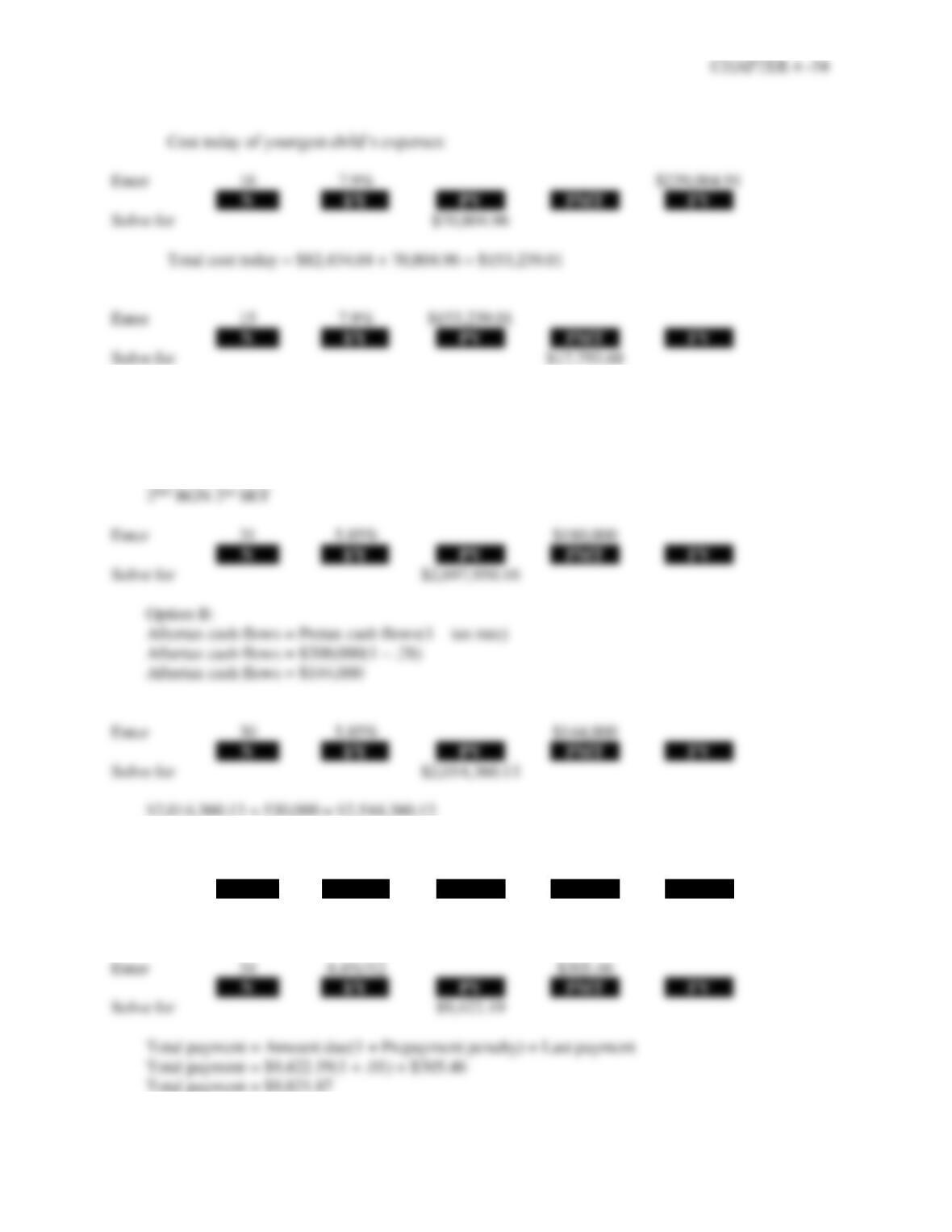
54. Option A:
Aftertax cash flows = Pretax cash flows(1 – tax rate)
Aftertax cash flows = $250,000(1 – .28)
Aftertax cash flows = $180,000
Enter
N
I/Y
PV
PMT
FV
Solve for
Enter
N
I/Y
PV
PMT
FV
Solve for
56.
Enter
5 × 12
6.8%/12
$17,000
N
I/Y
PV
PMT
FV
Solve for
$305.46
Enter
N
I/Y
PV
PMT
FV
Solve for
Enter
N
I/Y
PV
PMT
FV
Solve for
Enter
Solve for
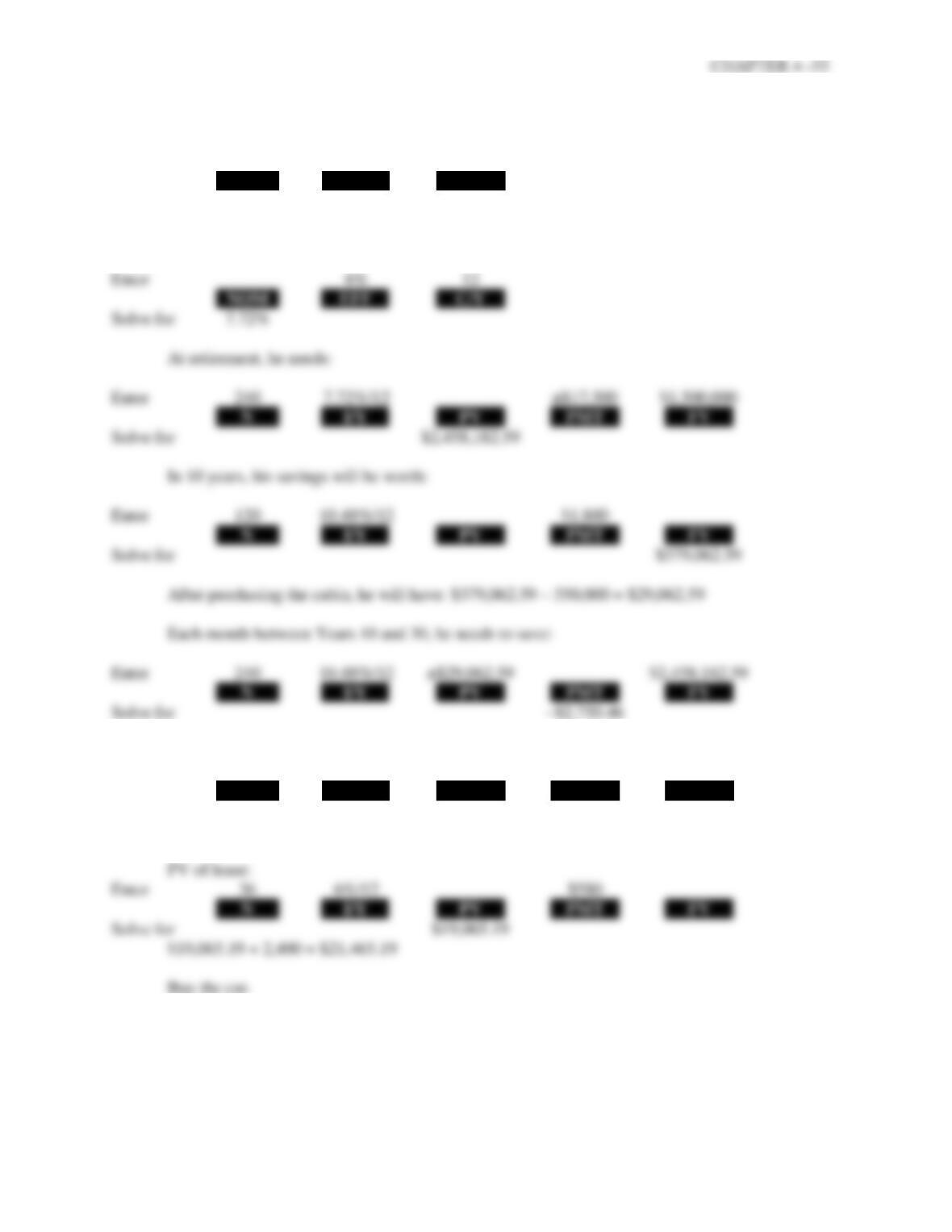
57. Pre-retirement APR:
Enter
11%
12
NOM
EFF
C/Y
Solve for
10.48%
Post-retirement APR:
Enter
Solve for
Enter
Solve for
Enter
10.48%/12
N
I/Y
PV
PMT
FV
Solve for
Enter
10.48%/12
N
I/Y
PV
PMT
FV
Solve for
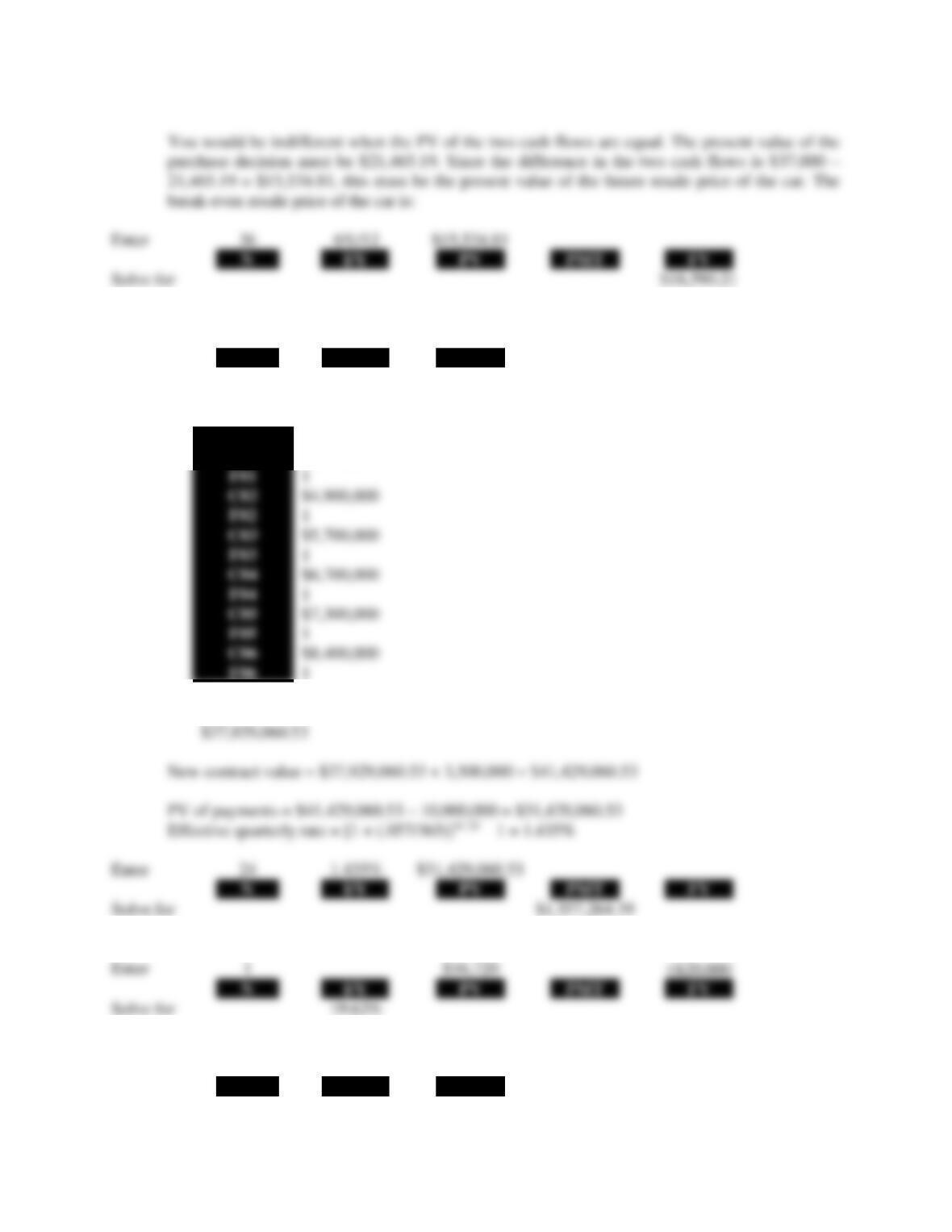
58. PV of purchase:
Enter
36
6%/12
$22,000
N
I/Y
PV
PMT
FV
Solve for
$18,384.19
$37,000 – 18,384.19 = $18,615.81
Enter
Solve for
CHAPTER 4 –
56
59.
Enter
5.7%
365
NOM
EFF
C/Y
Solve for
5.87%
CFo
$7,900,000
C01
$4,300,000
1
C02
$4,900,000
1
C03
$5,700,000
1
$6,700,000
1
$7,300,000
1
C06
$8,400,000
1
I = 5.87%
NPV CPT
$37,929,060.53
Enter
24
1.435%
Solve for
60.
Solve for
19.62%
61.
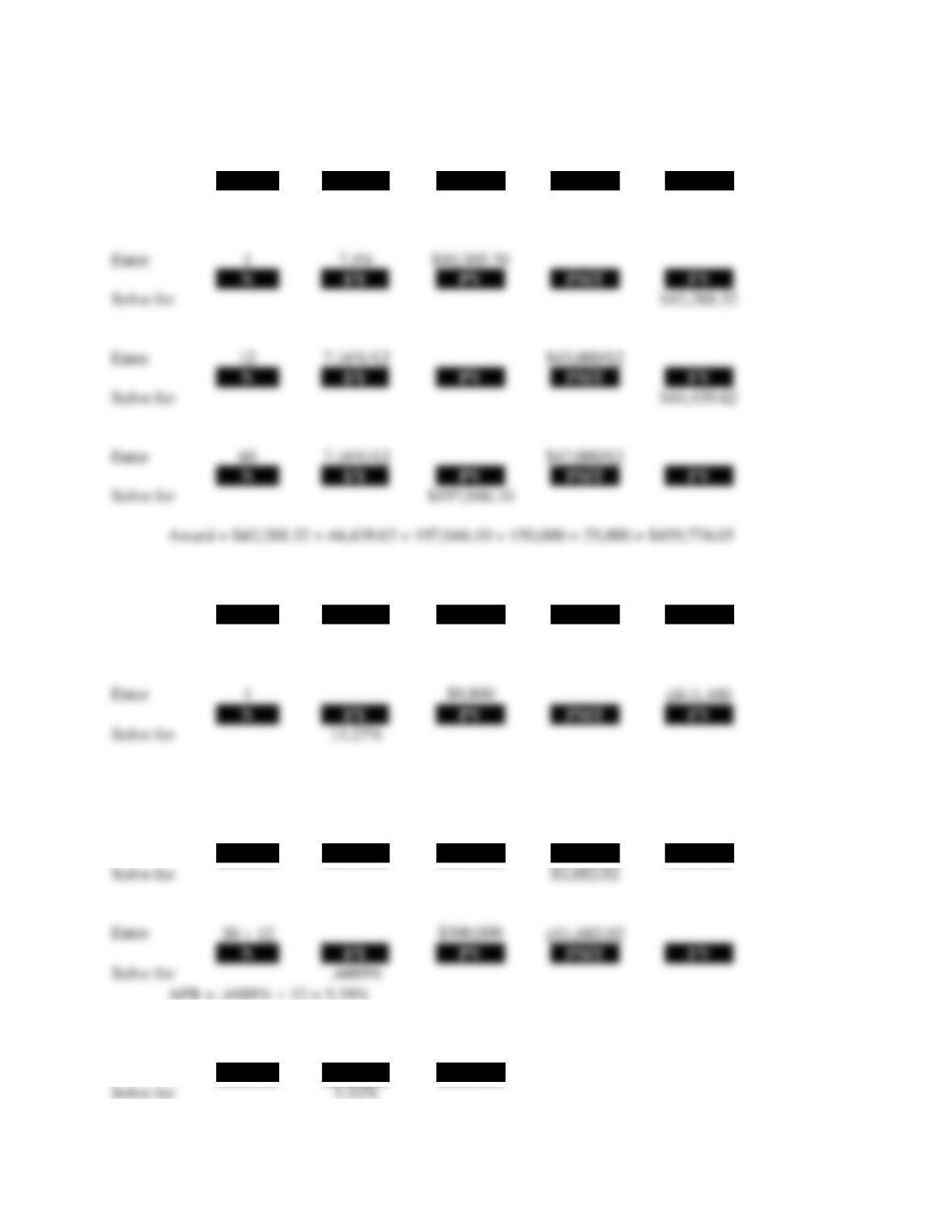
Enter
7.4%
12
NOM
EFF
C/Y
Solve for
7.16%
Enter
36
Solve for
CHAPTER 4 –
57
Enter
12
7.16%/12
$39,000/12
N
I/Y
PV
PMT
FV
Solve for
$40,305.70
62.
Enter
1
$9,700
$10,800
N
I/Y
PV
PMT
FV
Solve for
11.34%
Enter
1
$9,800
$11,100
N
I/Y
PV
PMT
FV
Solve for
13.27%
63. Refundable fee: With the $2,900 application fee, you will need to borrow $302,900 to have
$300,000 after deducting the fee. Solve for the payment under these circumstances.
Enter
30 12
5.30%/12
$302,900
N
I/Y
PV
PMT
FV
Solve for
Enter
30 12
$300,000
N
I/Y
PV
PMT
FV
Solve for
.4489%
Enter
5.39%
12
NOM
EFF
C/Y
Enter
1
N
I/Y
PV
PMT
FV
Solve for
$43,288.32
Enter
12
7.16%/12
$43,000/12
N
I/Y
PV
PMT
FV
Solve for
$44,439.62
Enter
60
7.16%/12
$47,000/12
N
I/Y
PV
PMT
FV
Solve for
CHAPTER 4 –
58
Without refundable fee: APR = 5.30%
64.
N
I/Y
PV
PMT
FV
Solve for
APR = 3.04% 12 = 36.54%
Enter
Solve for
65. Without fee:
Enter
$12,000
$250
N
I/Y
PV
PMT
FV
Solve for
Enter
8.2%/12
$12,000
$250
N
I/Y
PV
PMT
FV
Solve for
N
I/Y
PV
PMT
FV
Solve for
66. Value at Year 6:
Enter
5
11%
$500
N
I/Y
PV
PMT
FV
Solve for
$842.53
Enter
4
11%
$600
N
I/Y
PV
PMT
FV
Solve for
$910.84
Enter
3
11%
$700
N
I/Y
PV
PMT
FV
Enter
Solve for
CHAPTER 4 –
59
Enter
2
11%
$800
N
I/Y
PV
PMT
FV
Solve for
$985.68
At Year 65, the value is:
Enter
59
7%
$5,695.39
N
I/Y
PV
PMT
FV
Solve for
$308,437.08
67. Effective six-month rate = (1 + Daily rate)180 – 1
Effective six-month rate = (1 + .09/360)180 – 1
Effective six-month rate = .0460 or 4.60%
Enter
40
4.60%
$1,900,000
N
I/Y
PV
PMT
FV
Solve for
$34,458,785.87
Enter
4.60%
N
I/Y
PV
PMT
FV
Solve for
$32,942,697.79
68.
CFo
$9,000
$9,000
5
$20,000
4
IRR CPT
8.07%
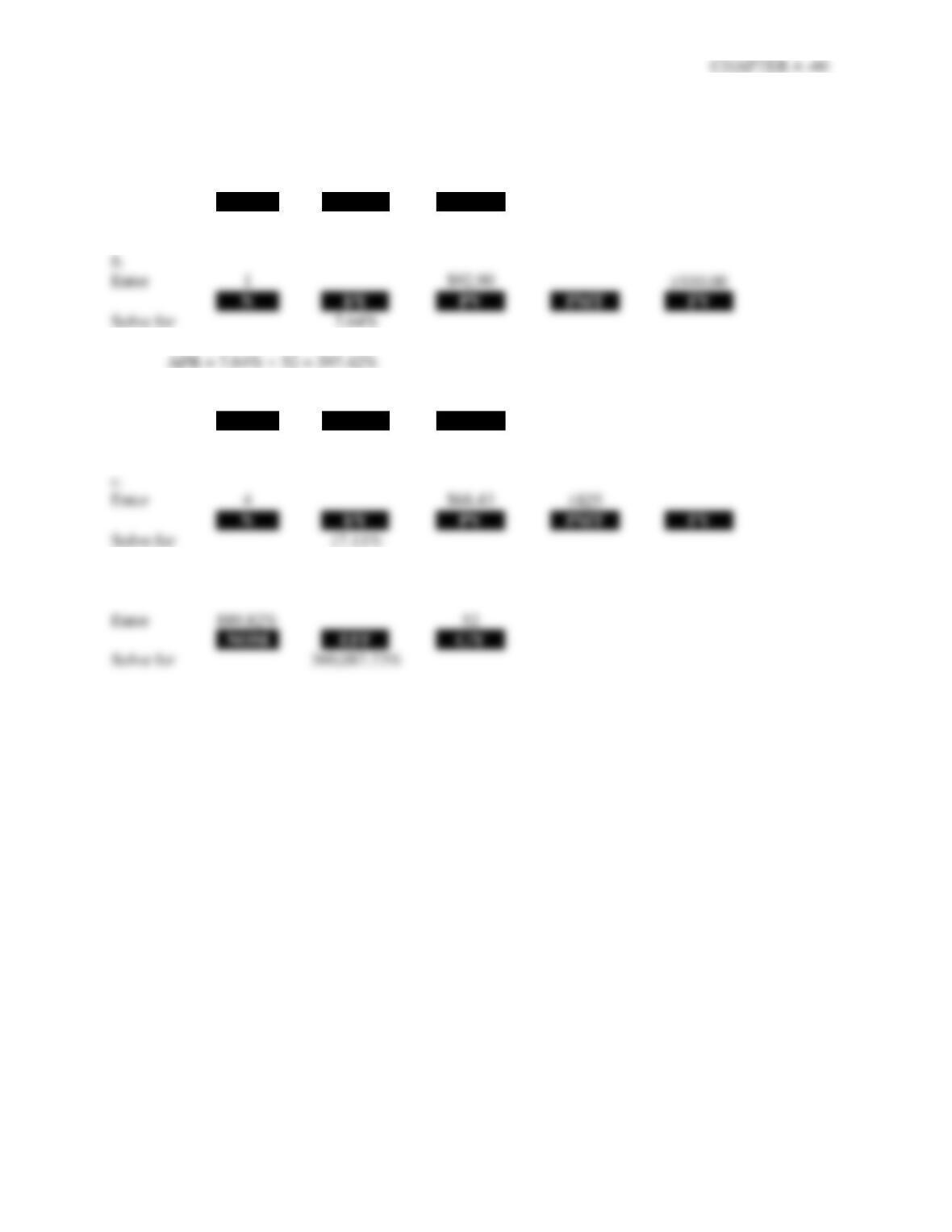
Enter
1
11%
$900
N
I/Y
PV
PMT
FV
Solve for
$999.00
72.
a. APR = 7.1% 52 = 369.20%
Enter
369.20%
52
NOM
EFF
C/Y
Solve for
3,440.40%
Solve for
Enter
397.42%
52
NOM
EFF
C/Y
Solve for
4,504.50%
Solve for
APR = 17.11% 52 = 889.82%
Enter
NOM
EFF
C/Y
Solve for
CHAPTER 4 –
61
CHAPTER 4, APPENDIX
NET PRESENT VALUE: FIRST
PRINCIPLES OF FINANCE
Solutions to Questions and Problems
NOTE: All end-of-chapter problems were solved using a spreadsheet. Many problems require multiple
steps. Due to space and readability constraints, when these intermediate steps are included in this solutions
1. The potential consumption for a borrower next year is the salary during the year, minus the repayment
of the loan and interest to fund the current consumption. The amount that must be borrowed to fund
this year’s consumption is:
Amount to borrow = $100,000 – 80,000 = $20,000
2. The potential consumption for a saver next year is the salary during the year, plus the savings from the
current year and the interest earned. The amount saved this year is:
3. Financial markets arise to facilitate borrowing and lending between individuals. By borrowing and
lending, people can adjust their pattern of consumption over time to fit their particular preferences.
4. a. The present value of labor income is the total of the maximum current consumption. So, solving
for the interest rate, we find:
$86 = $40 + $50/(1 + r)
5. a. The market interest rate must be the increase in the maximum current consumption to the
maximum consumption next year, which is: